Colombarone: A Roman Villa and Early Christian Basilica in Italy
Site at a Glance
- Popularity
- Medium
- Country
- Italy
- Primary era
- Classical
- Eras represented
- Classical, Medieval, Modern
- Civilizations
- Papal States, Roman
- Site type
- Domestic
- Remains
- Villa
On this page8 sections
History
Colombarone is an archaeological complex near Pesaro, Italy, first developed by the Romans as a fourth-century villa, a rural residence or estate, and later used as the site of a basilica, a major Christian church. It is one of the few late Roman residential complexes identified in the Marche region.
Roman villa and sixth-century transition
The villa’s residential use declined before its final abandonment. Repaving, kilns and hearths point to a change from domestic life to productive work. The complex was probably destroyed during the Greek-Gothic War, a sixth-century conflict in Italy between the Byzantine Empire and the Ostrogothic kingdom.
During the sixth century, parts of the complex were abandoned, while the former reception area became a Christian church. This developed into the basilica of San Cristoforo ad Aquilam, named for Saint Christopher.
The basilica through the Middle Ages
The church was altered and enlarged over the following centuries, then became a parish church in the late Middle Ages. The Liber Pontificalis, a collection of biographies of the popes, identifies the basilica as the setting for a meeting in 743 between Eutychius, the Byzantine imperial governor, and Pope Zachary.
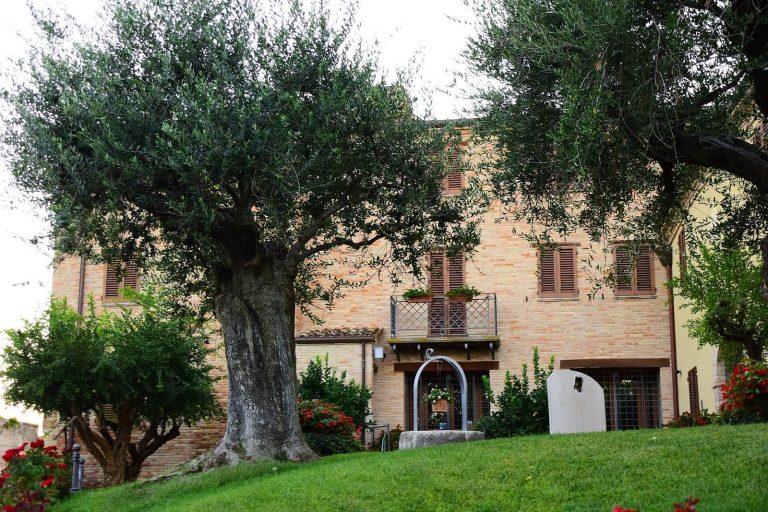
At the end of the twelfth century, the church’s oldest part was demolished and replaced by a building known as the Chiesola. The Chiesola was itself demolished in 1858. A separate small church was built nearby in the nineteenth century, followed by the present parish church in the first decades of the twentieth century.
Rediscovery and excavation
In the eighteenth century, Pesaro scholar and antiquarian Annibale degli Abati Olivieri excavated at Colombarone and proposed that he had found the ancient basilica of San Cristoforo ad Aquilam. Architect Gian Andrea Lazzarini made a plan of the structures uncovered by Olivieri.
Work resumed after researchers rediscovered Lazzarini’s plan in 1980. In 1983, the Municipality of Pesaro and the University of Bologna’s Department of Archaeology began excavations, initially involving archaeologist Nereo Alfieri and later Pier Luigi Dall’Aglio. The excavations confirmed the presence of a basilica and showed that Olivieri’s structures belonged to the fourth-century villa. Work continued for about twenty-five years.
Remains
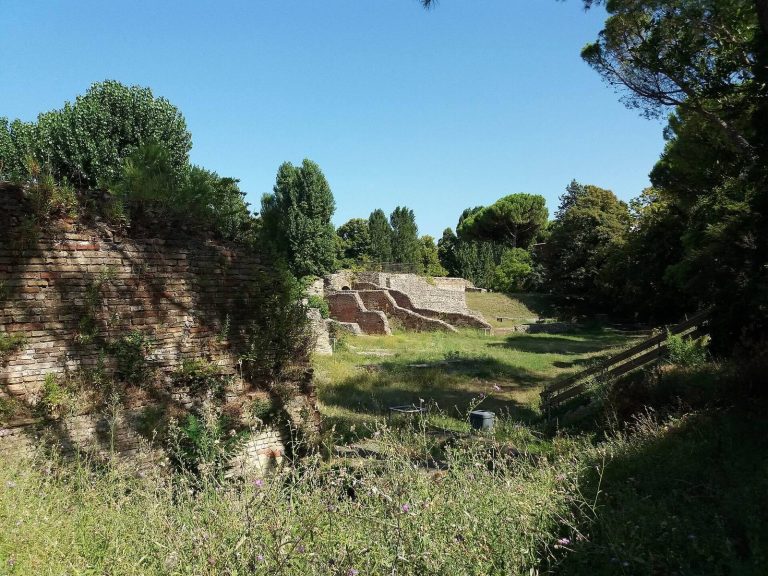
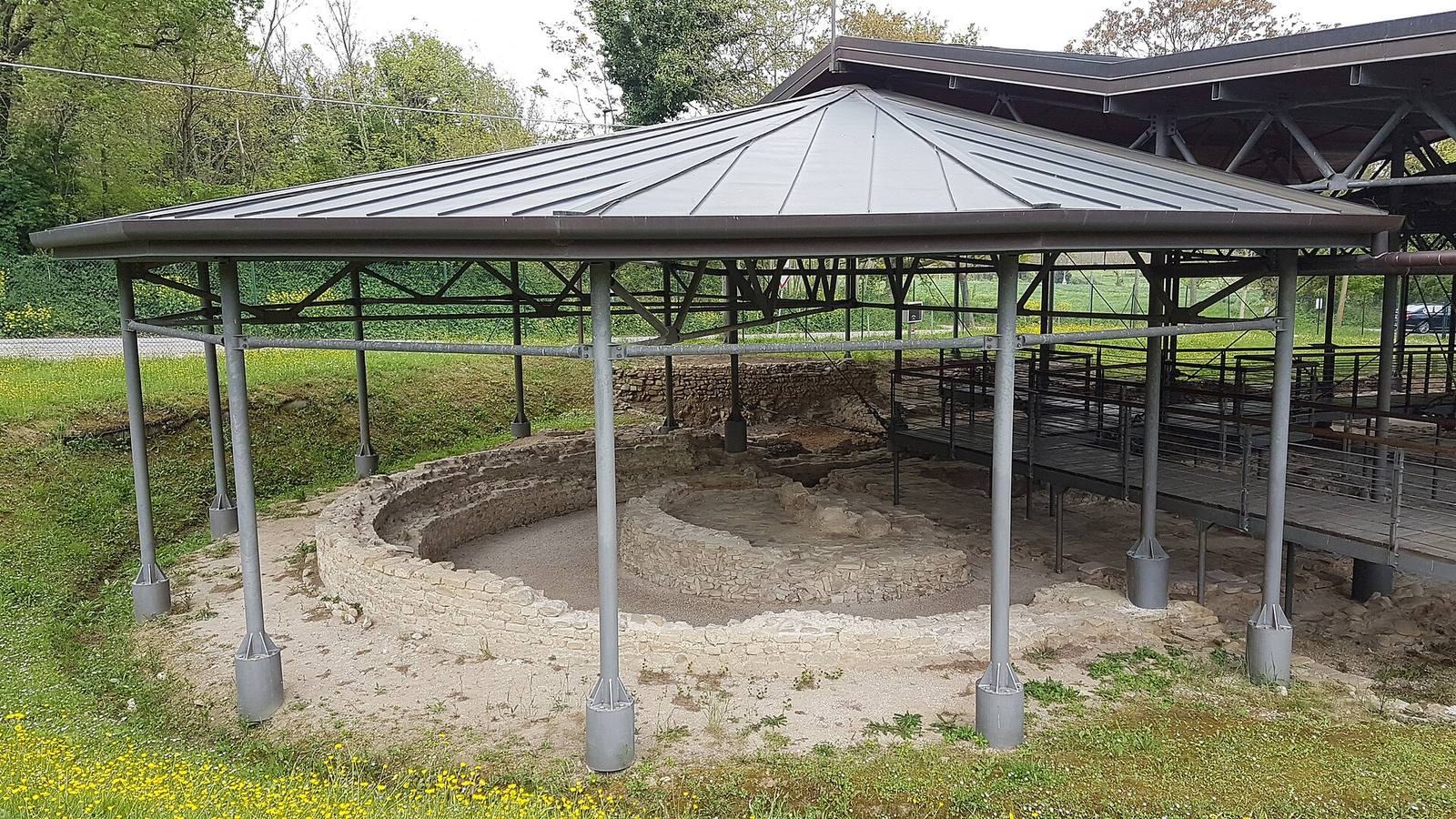
The archaeological area lies within Monte San Bartolo Regional Natural Park, along the final stretch of the Via Flaminia, an ancient Roman road between Pesaro and Rimini. It is near Gradara and Gabicce Mare. The excavated remains include a row of villa rooms, a cemetery associated with the basilica, and a surviving section of a later church wall.
The villa and its finds
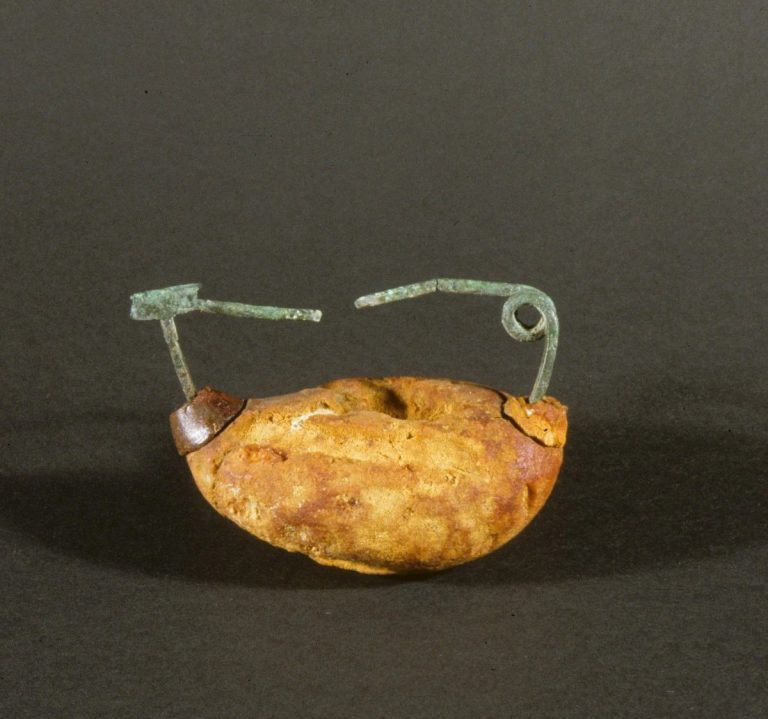
The excavated villa complex comprises five rooms aligned in a row. Their floors include multicolored and black-and-white mosaics with geometric and floral designs. Finds from the villa include bracelets, gold coins, bronze pipework and a column capital, the shaped uppermost part of a column. Large transport jars from eastern regions also reached the site through trade.
Cemetery
A cemetery developed over the villa’s remains and is considered to have been associated with the basilica. One pit grave had a floor made from a mosaic taken from a villa room and contained a bone comb dated to the eighth century.
Later church remains and Antiquarium
A section of the Chiesola’s perimeter wall has been recovered. The Antiquarium, an archaeological museum added in 2019, occupies restored rooms in the nearby nineteenth-century church. Its displays include finds from later investigations and a multimedia reconstruction of the villa rooms, showing colored finishes and wall decorations. The present parish church stands nearby.