Dionysiou Monastery: An Eastern Orthodox Monastery on Mount Athos
Site at a Glance
- Popularity
- High
- Country
- Greece
- Primary era
- Early Modern
- Eras represented
- Medieval, Early Modern
- Civilizations
- Byzantine, Ottoman
- Site type
- Religious
- Remains
- Fortified Monastery
On this page18 sections
History
Dionysiou Monastery is an Eastern Orthodox monastery on Mount Athos in Greece, founded after the mid-14th century by Dionysius of Korisos, a monk from Kastoria. Dedicated to John the Baptist, regarded in Christianity as Jesus’s forerunner, it ranks fifth among Mount Athos’s twenty self-governing monasteries. Dionysiou is also a patriarchal, stavropegic monastery, meaning it is directly subject to a patriarch rather than a local bishop, and belongs to the Ecumenical Patriarchate, the senior patriarchate of the Eastern Orthodox Church.
Patronage and historical change
Dionysius’s brother was Metropolitan of Trebizond. Alexios III Komnenos, emperor of Trebizond, a medieval state on the southern coast of the Black Sea, gave substantial support to the monastery’s construction. A chrysobull, a formal Byzantine imperial charter, issued by Alexios in 1374 remains in the monastery’s archives.
After Constantinople fell in 1453, rulers of Moldavia and Wallachia, historic principalities in southeastern Europe, became benefactors. Toward the end of the 15th century, the Russian pilgrim Isaiah described Dionysiou as Serbian.
A fire in 1535 almost entirely destroyed the monastery, and rebuilding began soon afterward. Resident monks have since undertaken extensive restoration and embellishment. Dionysiou lies within Mount Athos, a UNESCO World Heritage Site.
Remains
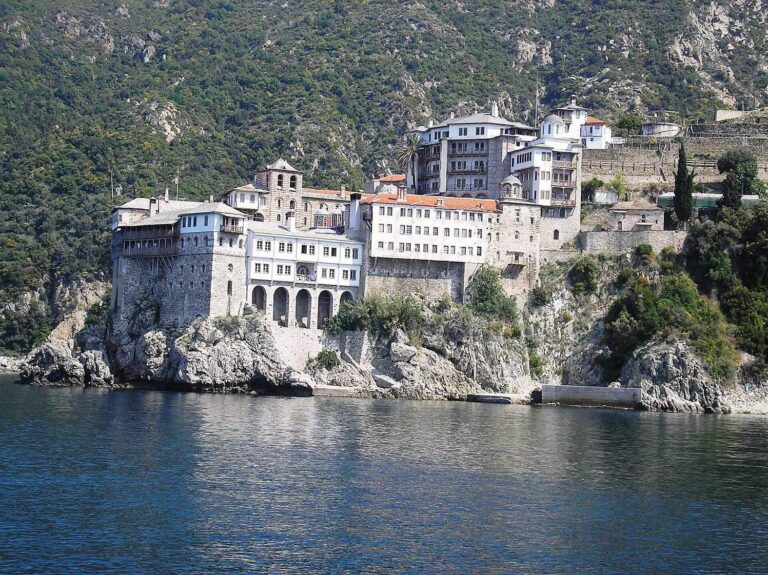
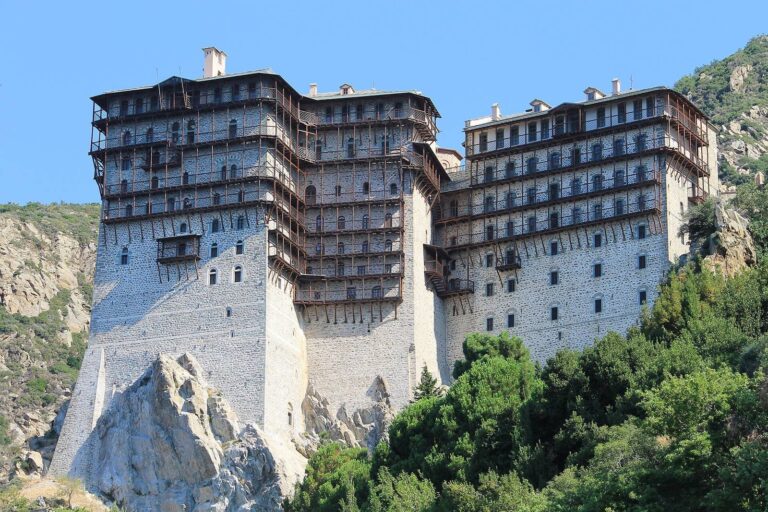
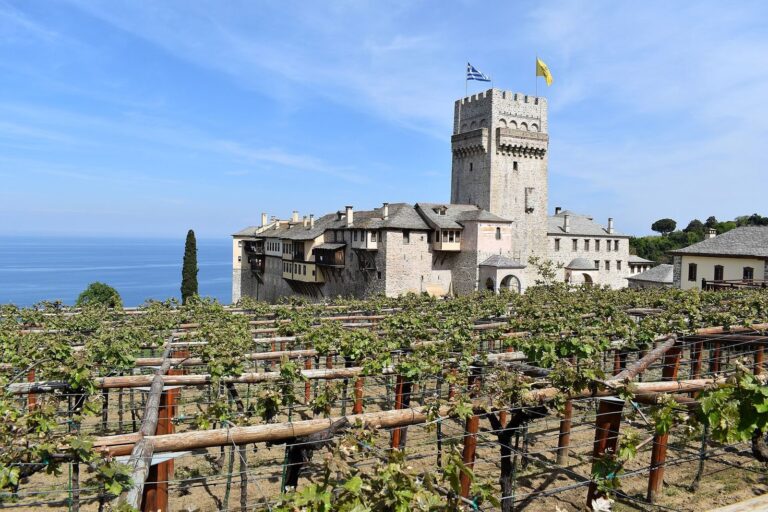
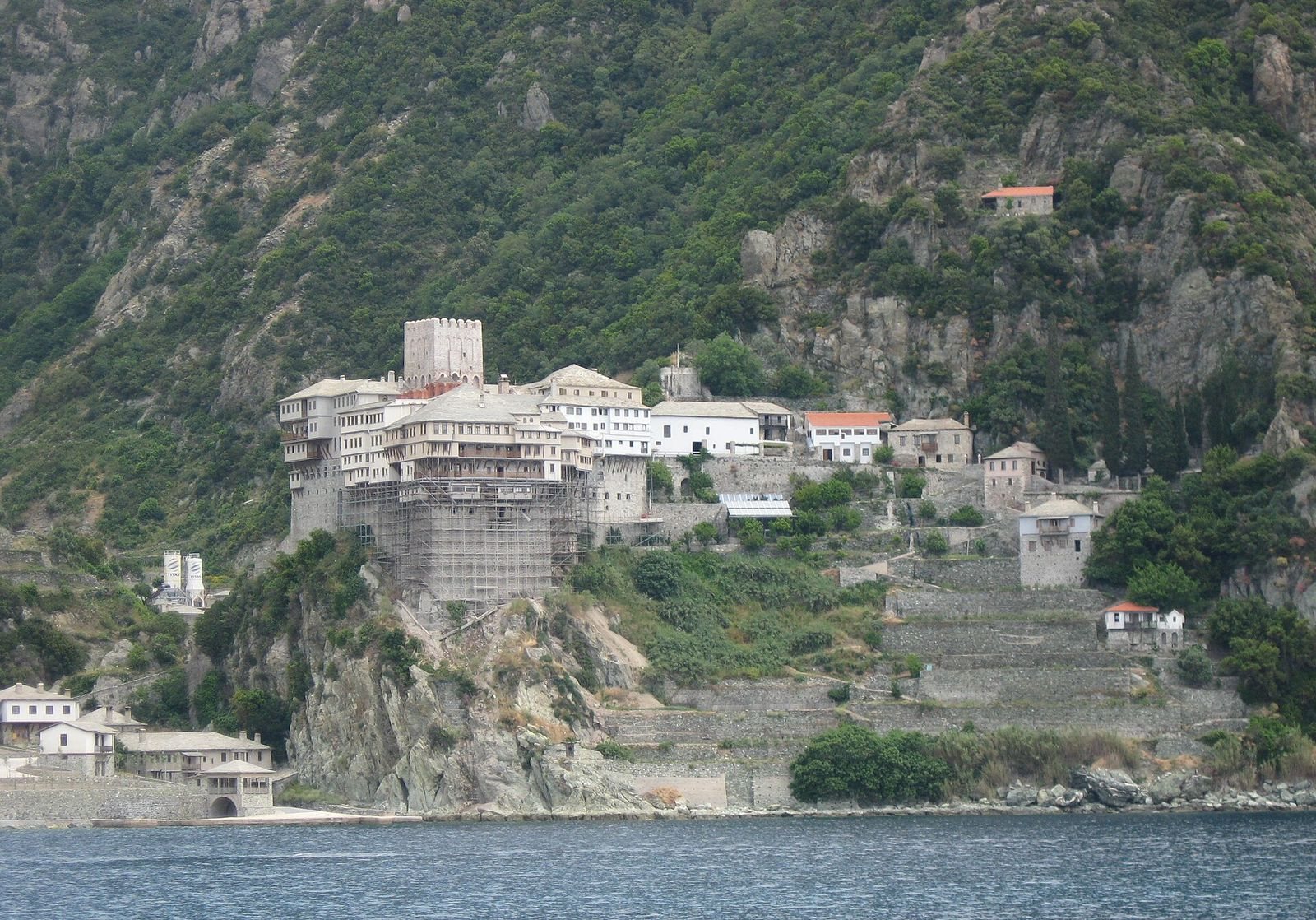
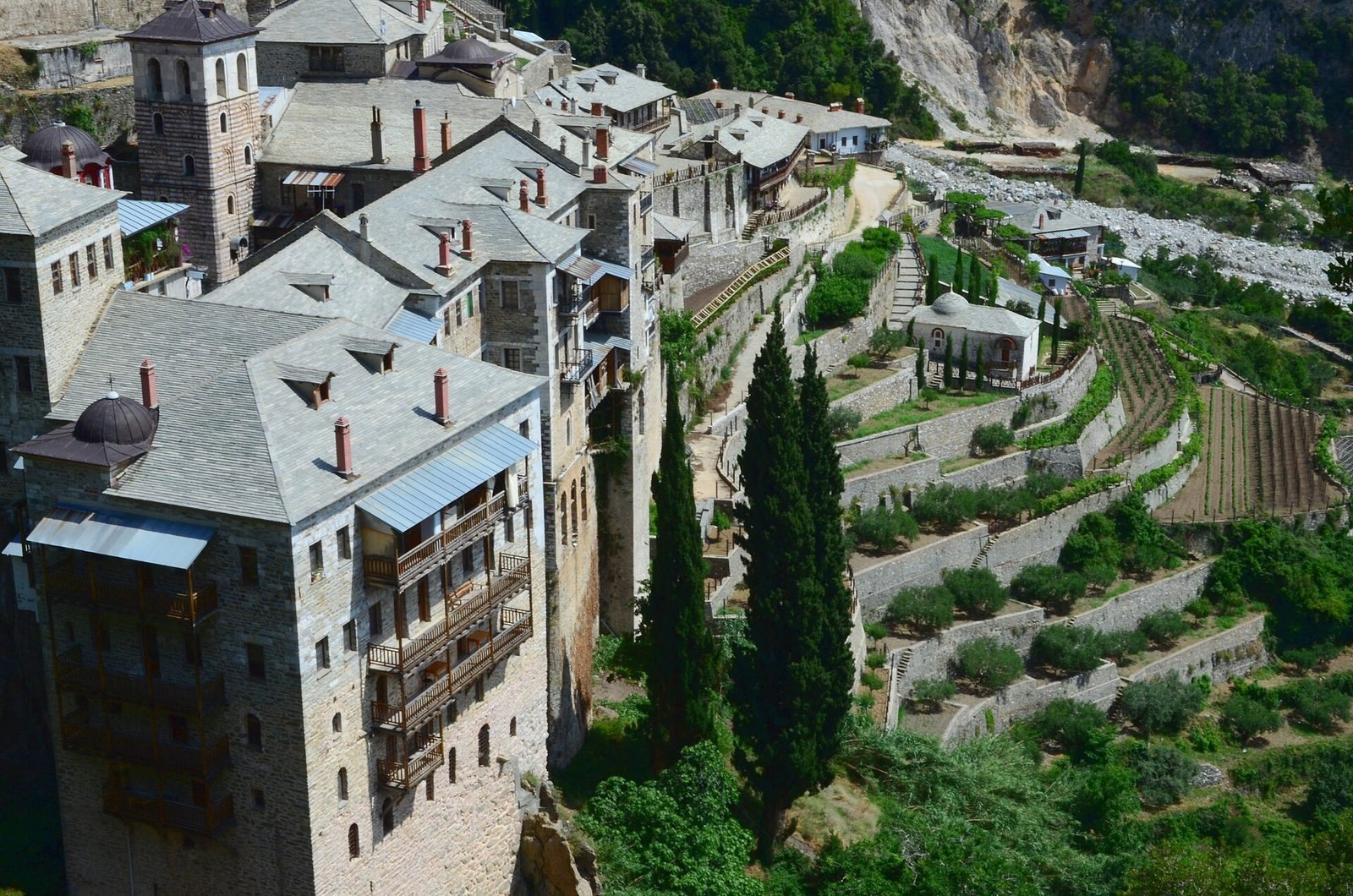
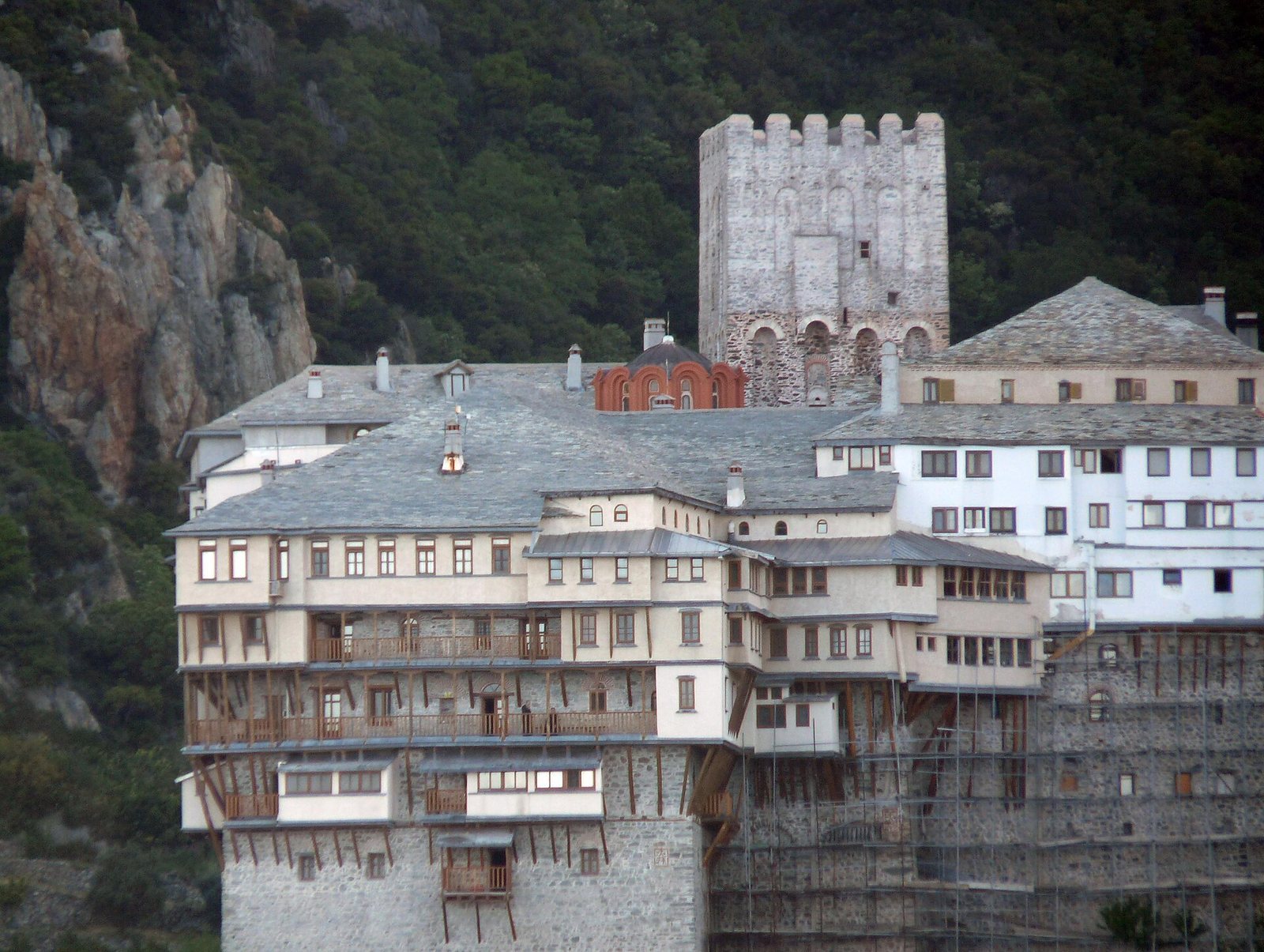
Dionysiou stands on a steep coastal rock on the southwest side of the Athos peninsula, about 80 metres above sea level, between Gregoriou and Saint Paul’s monasteries. Beside a steep descent and overlooking a deep, wooded ravine, its buildings form a tower-like, castle-shaped complex.
Defensive tower
A 25-metre-high defensive tower, built in 1520, forms part of the complex. It was also used at times to store books from the monastery library.
The principal church
Katholikon and decoration
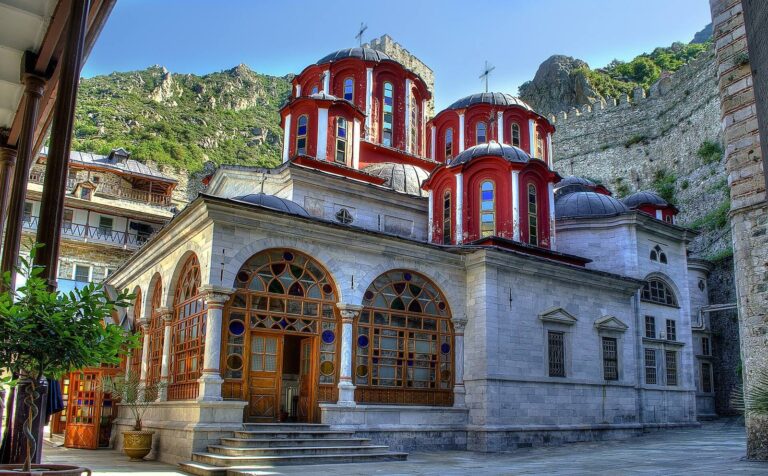
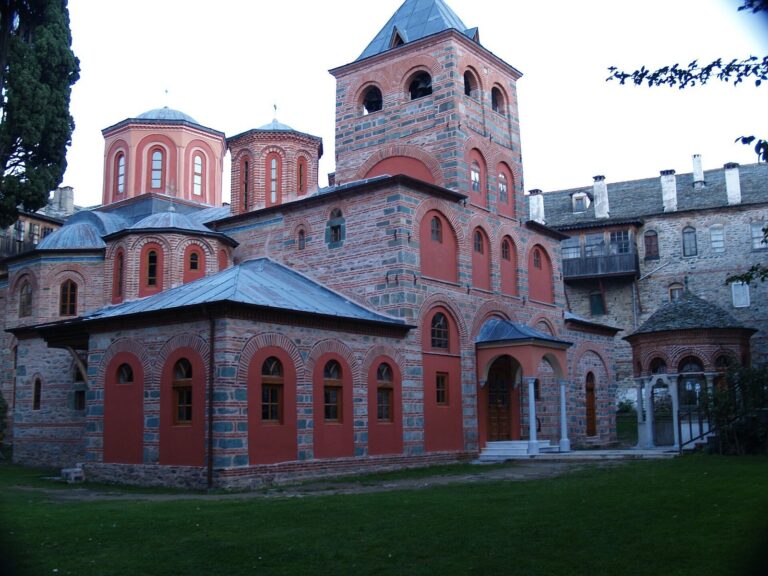
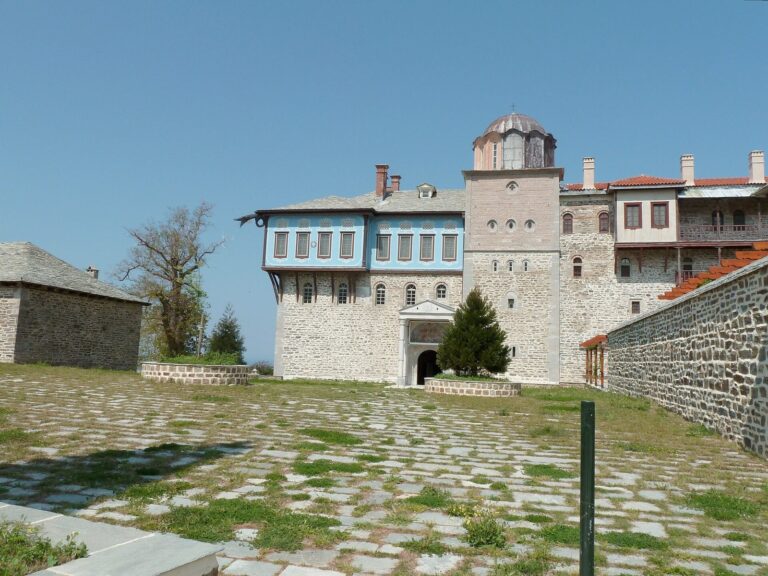
The katholikon, or principal church of the monastery, is dedicated to the Nativity of John the Baptist. Its Byzantine-style structure dates to 1537–1547 and was rebuilt in 1547, during the abbacy of Matthew. Tzortzis painted the church’s frescoes; he was a pupil of Theophanes and a member of the Cretan School, a tradition of post-Byzantine religious painting associated with Crete. A golden iconostasis, the screen of icons separating the sanctuary from the main body of the church, was installed in the 18th century.
Chapel of the Virgin of the Akathist
This vaulted chapel lies within the principal church, to the left of its entrance vestibule. Makarios painted its frescoes in 1615, and Michael Kaisareas repainted them in 1890. The chapel also holds an icon of the Virgin made from wax and mastic.
Other chapels
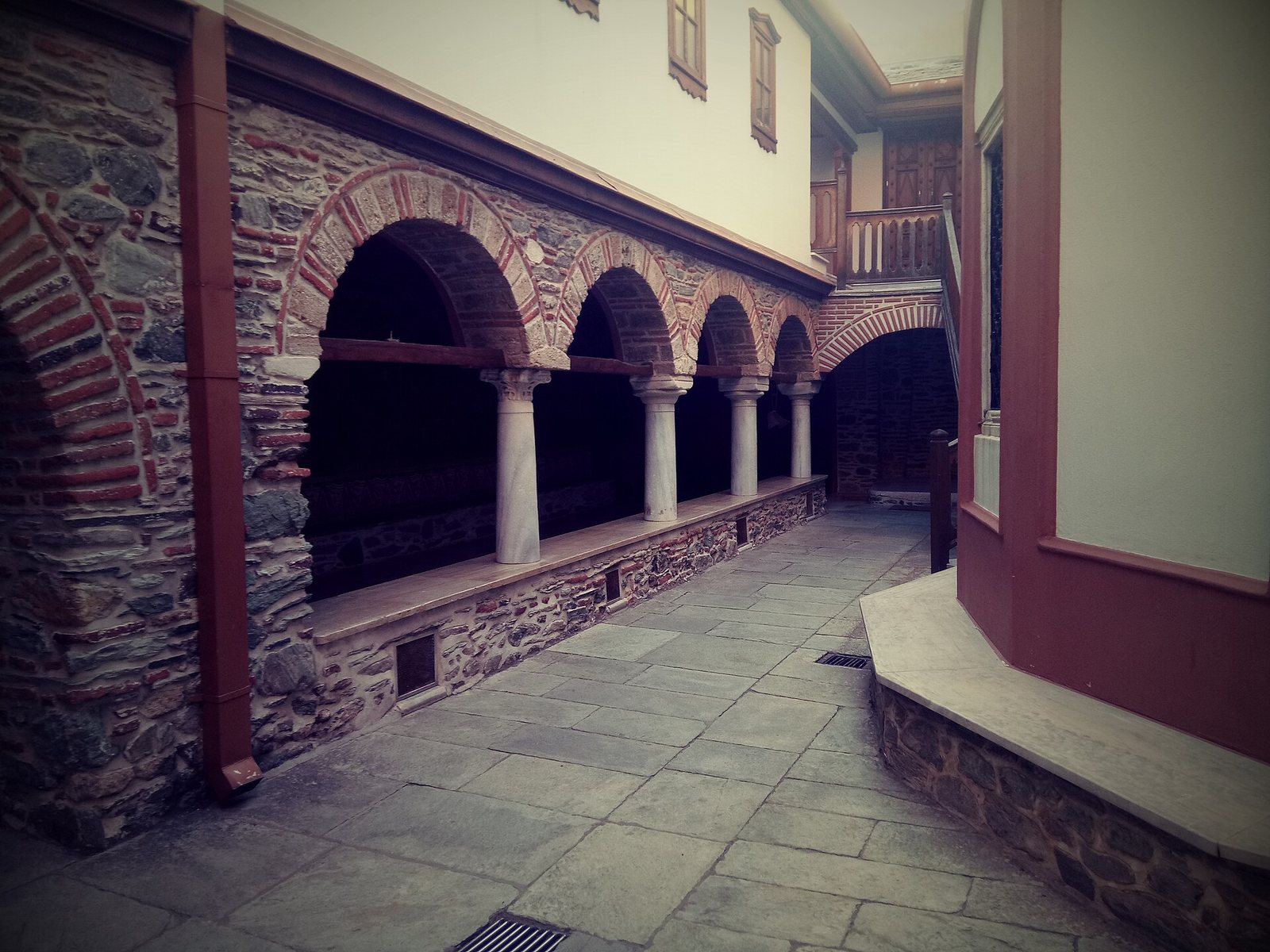
Chapels within the enclosure
Dionysiou has fourteen chapels in all, seven of them within the monastery enclosure. These include chapels dedicated to Saint Niphon, Saint George, the Archangels, Saint John the Theologian, Saint Nicholas, and Saint John Chrysostom. The narthex, or entrance vestibule, of the Saint John the Theologian chapel has frescoes dated to 1608 and attributed to the monks Daniel and Mercurius. Frescoes in the chapels of Saint Nicholas and Saint John Chrysostom date to 1795.
Chapels beyond the enclosure
Six chapels stand outside the enclosure, including those dedicated to the Twelve Apostles and All Saints. The All Saints chapel has frescoes painted in 1627 by the monk Mercurius.
Library and other interior features
Library
The monastery library holds 804 manuscripts and more than 4,000 printed books. Its oldest manuscripts date to the 11th century, including Gospels from that period, while the collection also contains an illustrated Gospel from the 13th century.
Sacristy
The sacristy preserves a bishop’s sakkos, a liturgical vestment, and an epigonation, a stiff, lozenge-shaped vestment worn at the side. Both are associated with Chrysostom of Smyrna, an Orthodox metropolitan who died in 1922 and is venerated as a martyr.
Refectory corridor
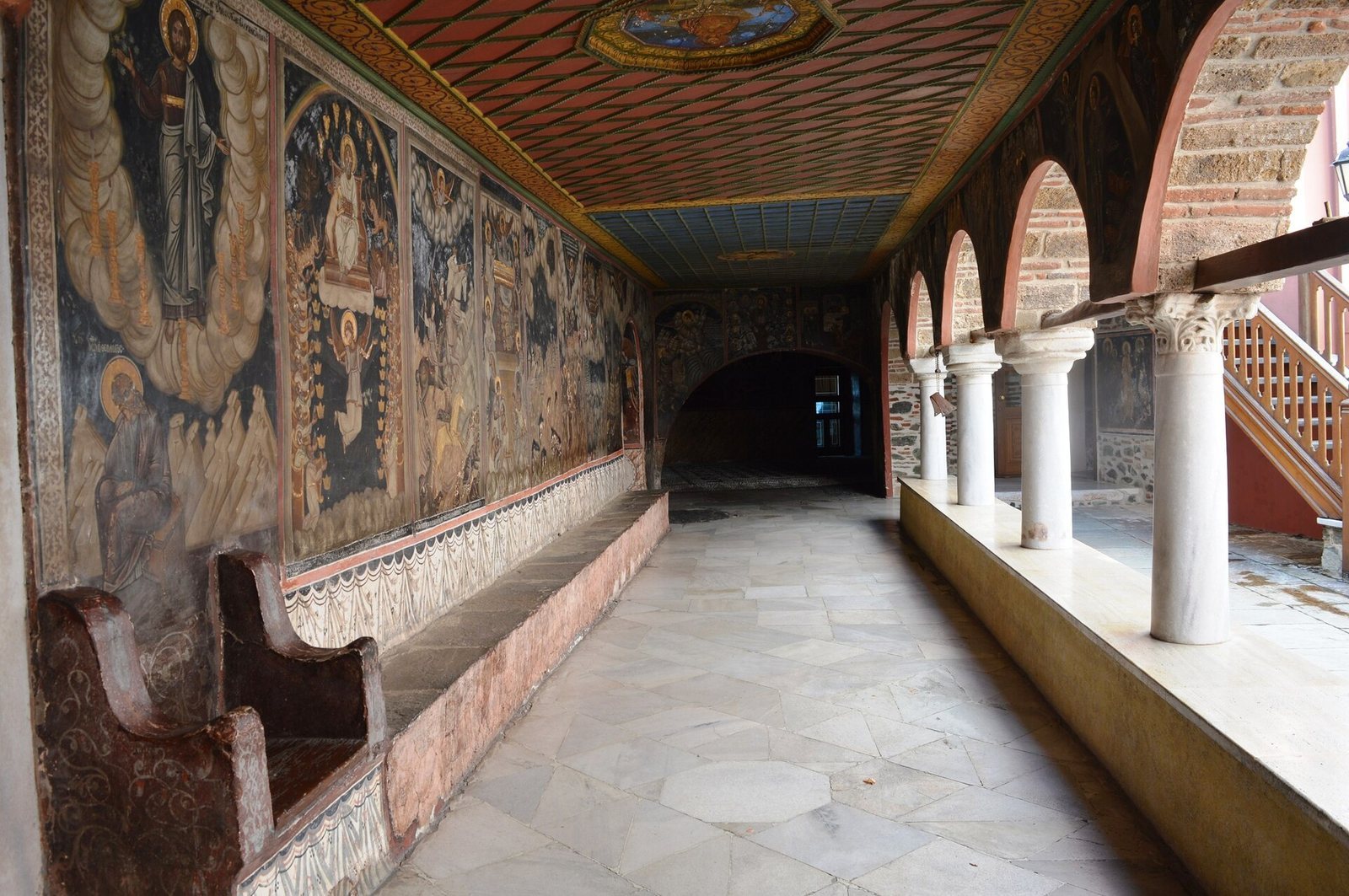
A corridor outside the refectory contains frescoes depicting scenes from the Apocalypse.
Tomb and relics
The monastery cemetery contains the tomb of Saint Niphon, who served as Metropolitan of Thessaloniki and later Patriarch of Constantinople. His relics are also kept in a special crypt in the principal church.
Dependent monastic houses
Cells and office in Karyes
Dionysiou has seven dependent monastic cells, small residences attached to a monastery, five of them in Karyes. These include a cell dedicated to the Nativity of the Theotokos, an Eastern Orthodox title for Mary meaning “God-bearer,” in the square of the Protaton, and a historic cell dedicated to the Annunciation on the outskirts of Karyes, dating to the 15th century. The monastery also maintains a representative office in Karyes dedicated to Saint Stephen.
Dwelling of the Holy Apostles
A dependent monastic dwelling lies near the monastery. The monk Theoklitos Dionysiatis lived at this nearby dwelling of the Holy Apostles.