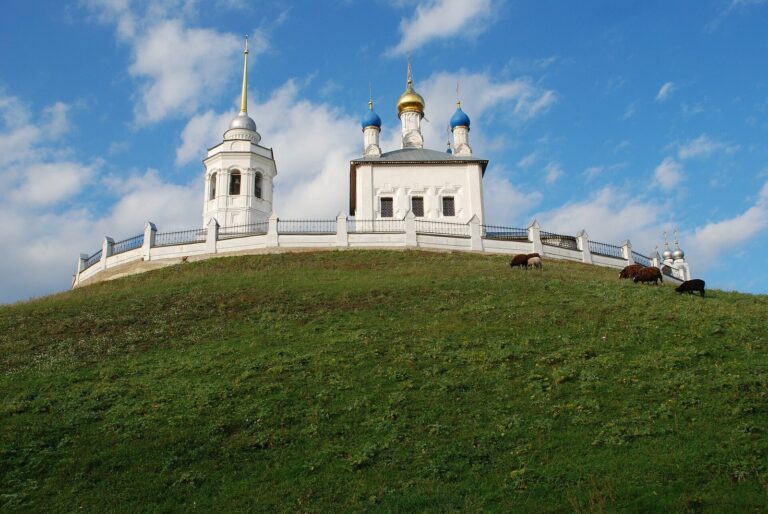
Church of the Intercession in Tula: An Orthodox Parish Church
Site at a Glance
- Popularity
- Low
- Country
- Russia
- Primary era
- Early Modern
- Eras represented
- Early Modern, Modern
- Civilizations
- Russian
- Site type
- Religious
- Remains
- Church
On this page11 sections
History
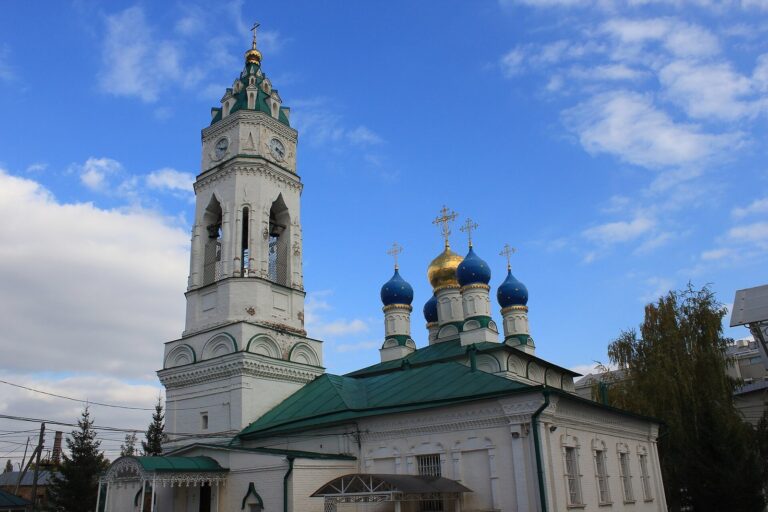
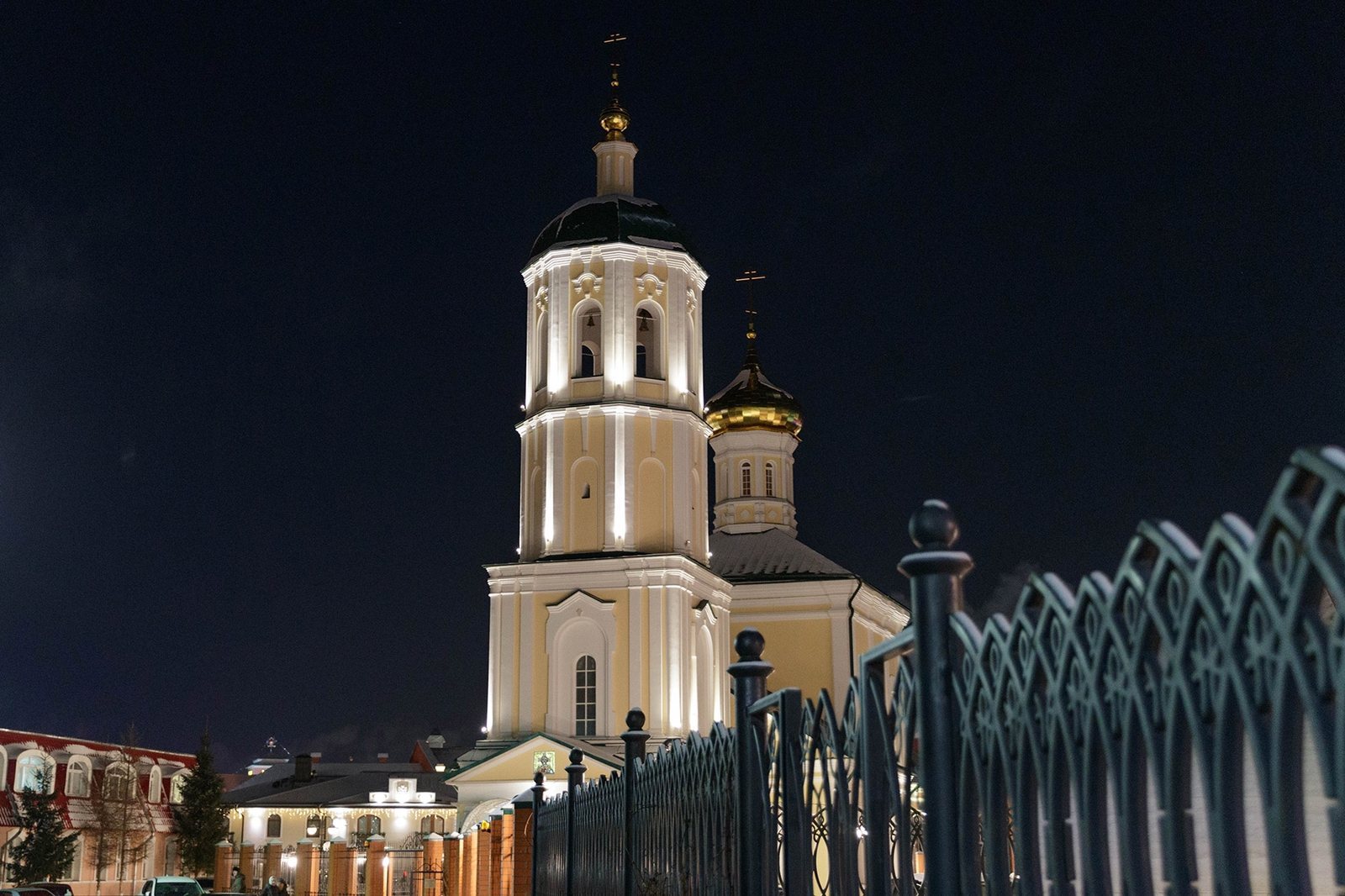
The Church of the Intercession in Tula, Russia, is an Orthodox parish dedicated to the Intercession of the Most Holy Theotokos, the feast commemorating Mary’s protective intercession. Theotokos is the Eastern Christian title for Mary as the mother of Jesus. The present church was built between 1765 and 1790, replacing a sixteenth-century stone building.
The parish and eighteenth-century rebuilding
A parish and a wooden Church of Saint Paraskeva of Friday are first recorded in 1567. Saint Paraskeva is an Orthodox saint associated with Friday devotion. Sixteenth-century records also describe a stone Church of the Intercession with side chapels dedicated to Saint Nicholas and Saint Paraskeva. The earlier stone church remained unchanged for 117 years before a fundamental rebuilding began.
The rebuilding, carried out from 1765 to 1790, followed problems with the cramped, deteriorating refectory and side chapels. In 1768, lightning struck the central roof and damaged the church’s vaulted ceilings. The old building was dismantled, and work on its replacement lasted more than twenty years. Gordey Ivanovich Chernikov, a first-guild merchant (a member of the Russian merchant system’s highest rank) and churchwarden (a lay officer responsible for parish affairs), contributed substantial funds. He died in 1775. Dedicated to the Intercession and consecrated on September 28, 1790, the new church also honored Saint Nicholas the Wonderworker, a widely venerated Christian bishop and saint.
Fire, parish services, and closure
A severe fire in 1834 left only the church walls standing. Parishioners paid for a full restoration through voluntary donations, and the restored church was consecrated in 1838. A parish school operated there from 1896. On September 21, 1914, a church infirmary was consecrated at the site. It was the first church infirmary in Tula.
A campaign to close the church began in late 1929. Workers from private metalworking businesses and the Lenin and Turchaninov samovar factories petitioned the city council to transfer the building to the nearby Metalist club. The city authorities initially refused, and the church remained active for more than two years. On April 26, 1932, the city council presidium voted to close it, citing the need for premises for school and Osoaviakhim training courses. Osoaviakhim was a Soviet organization that promoted aviation and chemical-defense preparedness. The Moscow Regional Executive Committee approved the decision on September 14, 1932. Parishioners appealed, but the All-Russian Central Executive Committee, a central governing body of the early Soviet state, upheld the closure on March 2, 1933.
Secular use and restoration
The former church housed the Krasny Mebelshchik furniture enterprise in 1961. It was placed under state protection as an architectural monument in 1984. In the late 1980s, the building was repaired and transferred to a branch of the Institute of Physics of the Earth for seismic-measuring equipment. After the branch was dissolved in the early 2000s, the church was abandoned. A 1995 presidential decree placed the church, chapel, and shops under protection as a federally significant historical and cultural monument.
The diocese took control of the church in 2009, and restoration began in June 2017. On June 16, 2020, Archpriest Lev Makhno, a senior Orthodox priest who had contributed substantially to the work, led a service on his eightieth birthday. A church-consecration ceremony followed on October 12, 2020.
Remains
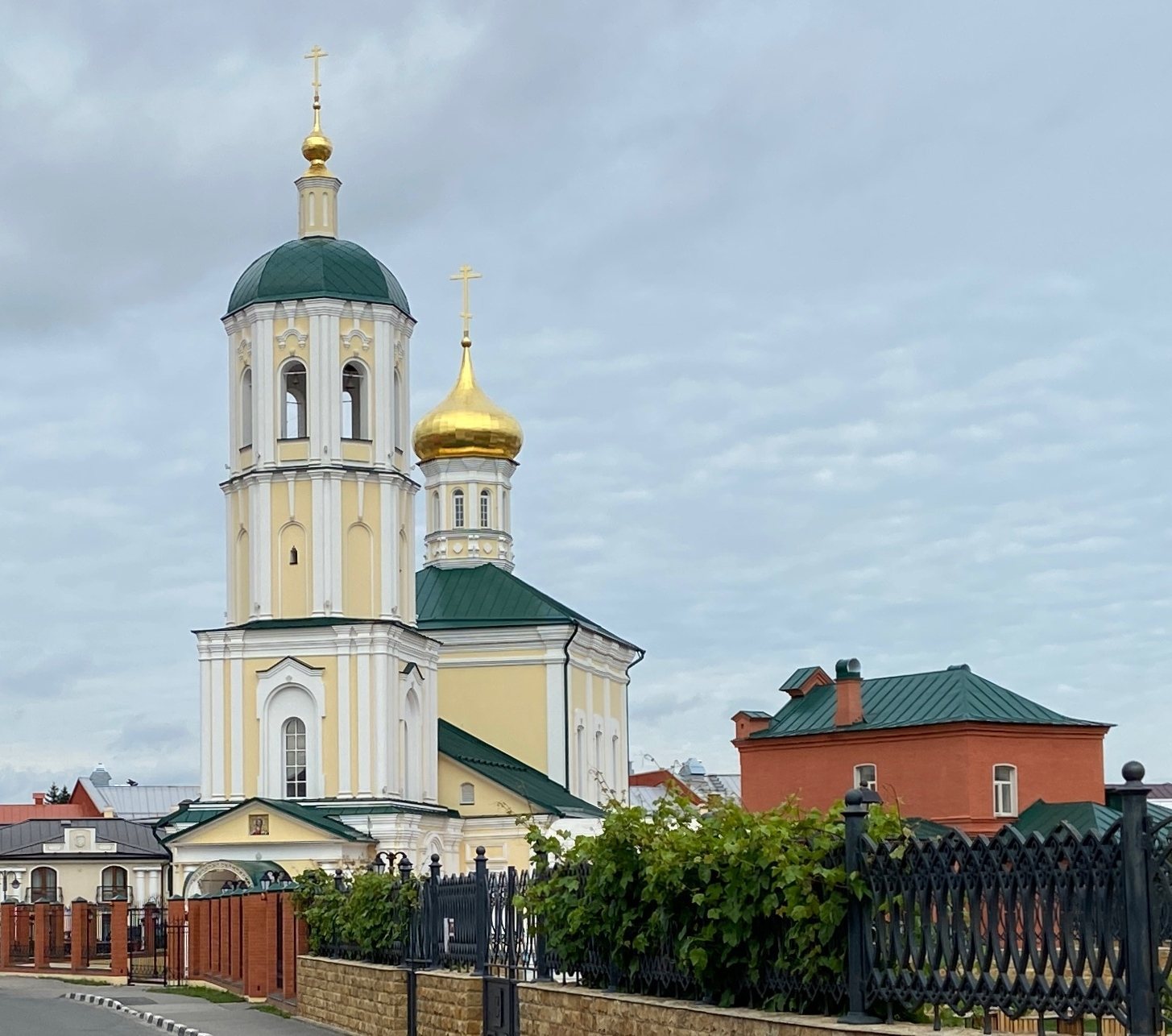
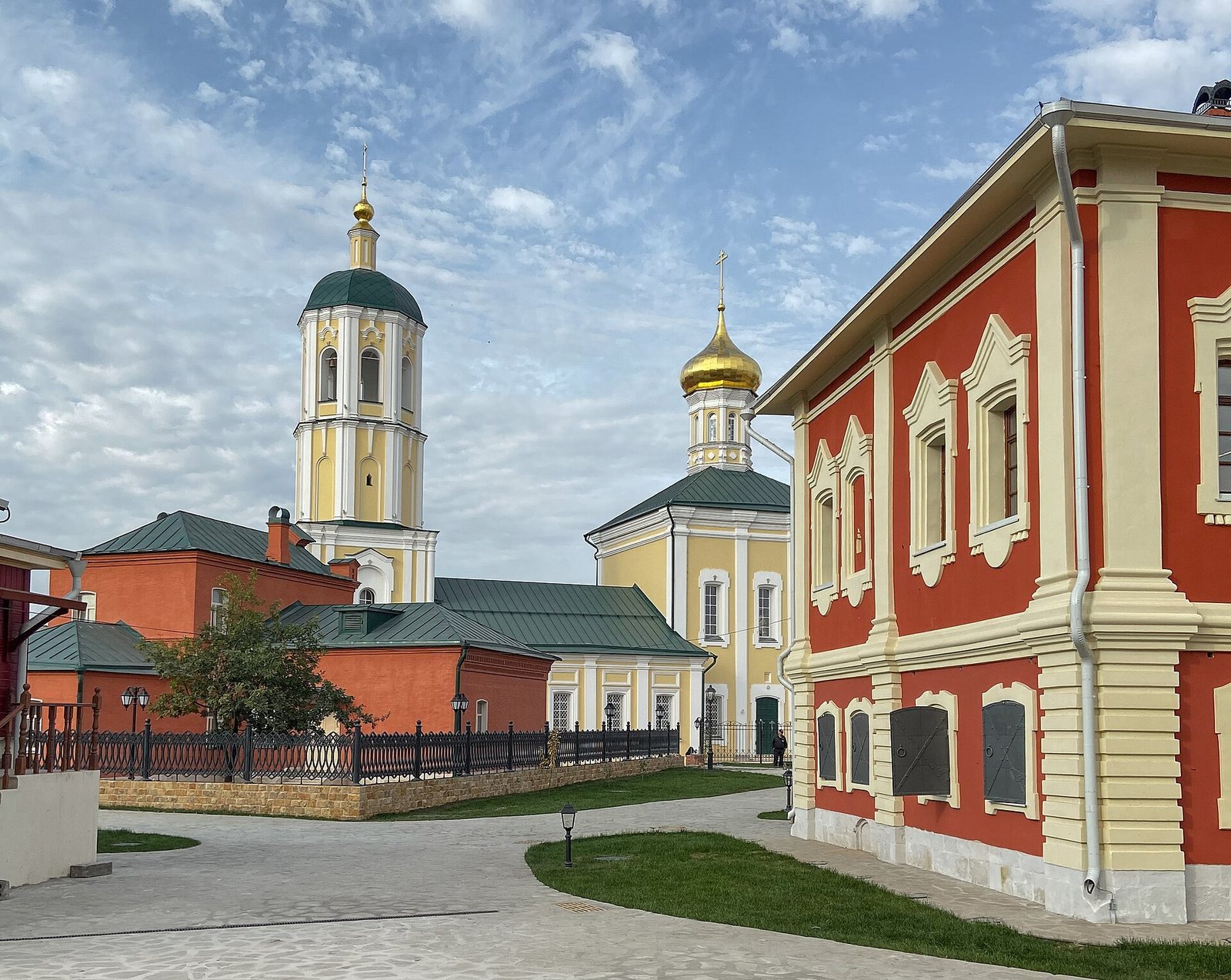
The complex comprises the church building, an associated stone chapel, and shops. The church has a side chapel and a bell tower, while the separate chapel and the church’s furnishings have their own distinct histories.
Church and its fittings
Building and bell tower
The replacement church included a side chapel dedicated to Saint Nicholas the Wonderworker and a bell tower. The tower was later dismantled, and its reconstruction was included in the restoration work that began in 2017. A large bell was installed in 1838 after the earlier bell broke when it fell during the 1834 fire.
Icons and silver furnishings
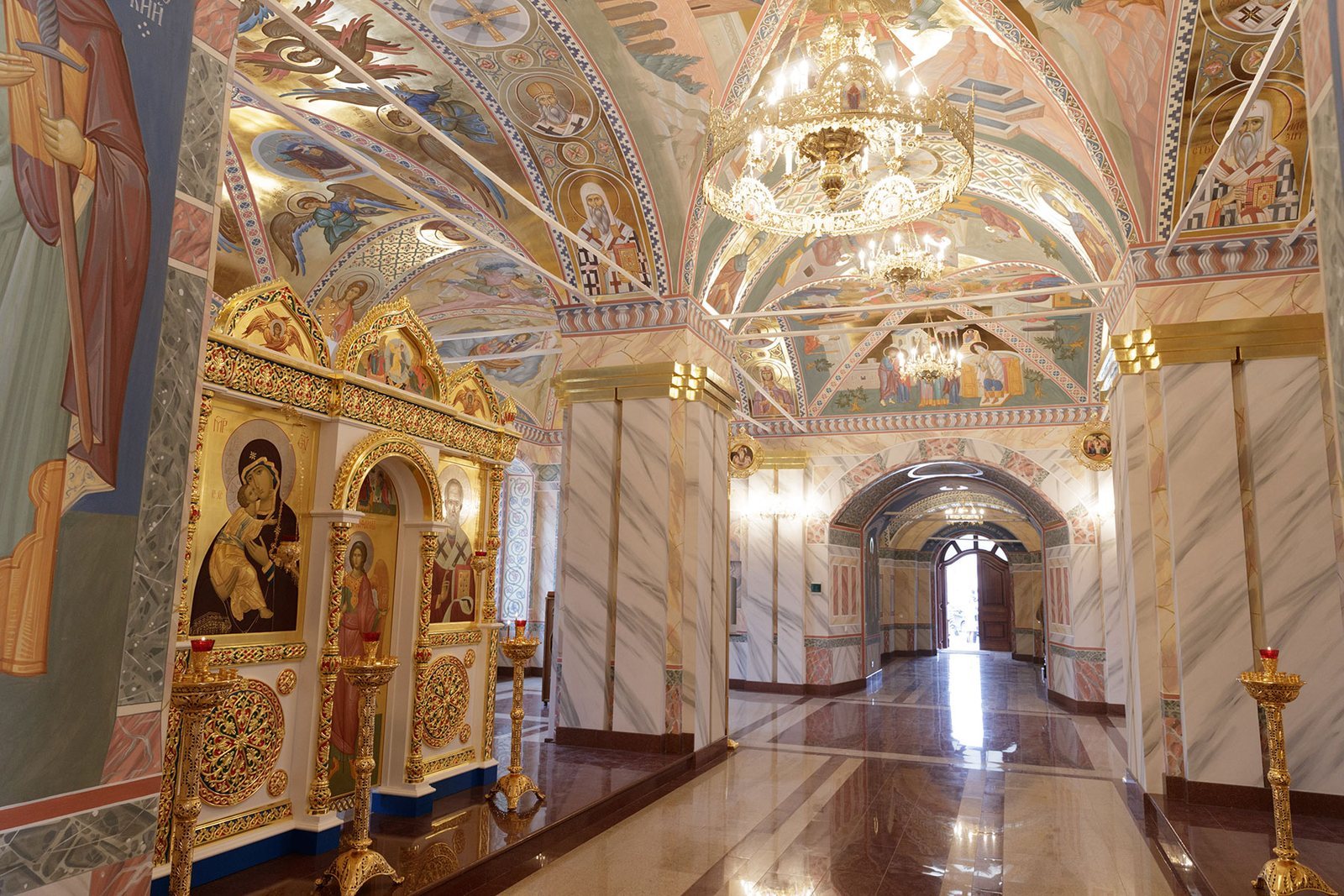
Merchant Grigory Ivanovich Belousov painted the icons in the church’s iconostasis, the screen of icons separating the sanctuary from the main part of an Orthodox church. In 1806, merchant Artemy Lukyanovich Sidnev paid for silver covers for icons of Christ Pantocrator, depicting Christ as ruler of all, and the Mother of God. The two covers together weighed more than 27 Russian pounds, a traditional Russian unit of weight. Merchant Ivan Ivanovich Savishchev funded a silver-gilt cover for the Intercession icon and donated a silver-covered Gospel and a silver altar cross. Silver vessels replaced the church’s earlier tin vessels.
Chapel and churchyard entrance
Stone chapel
The associated chapel is described as Tula’s oldest and was mentioned in 1685. It burned in 1748; a small stone shrine containing an image of the Savior was probably built in its place beside the altar wall. By the early 1760s the shrine had deteriorated, and a stone chapel was erected on the site in 1766. It was rebuilt in 1878 to a design by a government architect serving the province. Its 1879 icon screen was made of polished ash wood, arranged in two tiers, and decorated with columns and carving. After the Revolution, the chapel was used as housing. It was restored and consecrated in 2017.
Holy Gates
In 1685, wooden, roofed Holy Gates, formal gates marking the entrance to a church precinct, stood between the churchyard and Nikolskaya Street. A Deesis, an icon composition centered on Christ with Mary and John the Baptist in prayer, appeared on the gates.