Saint Januarius Church: A Catholic Church in Pozzuoli, Italy
Site at a Glance
- Popularity
- Medium
- Country
- Italy
- Primary era
- Early Modern
- Eras represented
- Classical, Early Modern, Modern
- Civilizations
- Italian, Kingdom of Naples, Roman, Spanish
- Site type
- Religious
- Remains
- Church
On this page11 sections
History
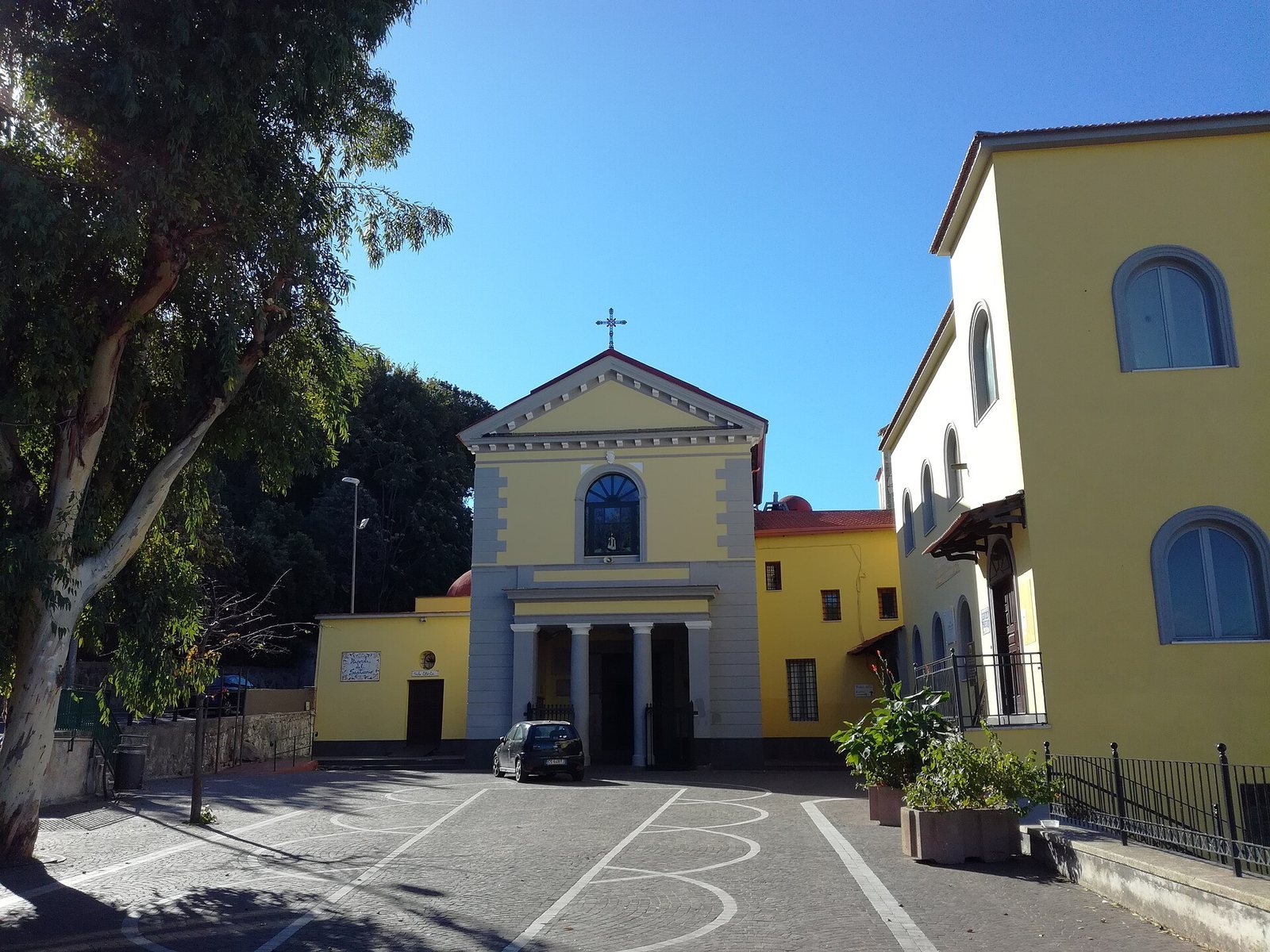
Saint Januarius Church is a Catholic church in Pozzuoli, Italy, built between 1574 and 1580 at the place where Januarius and six companions were beheaded. It replaced an eighth-century chapel, and its construction was strongly desired by the people of Naples. Dedicated to Saint Januarius, also known as San Gennaro, the church stands in Pozzuoli but has belonged to the property holdings of Naples for centuries. It is part of the Diocese of Pozzuoli.
The 1656 plague and restoration
During the plague that killed much of Pozzuoli’s population in 1656, people carried an image of Januarius in procession from the Solfatara to the Flavian Amphitheatre, hoping to end the epidemic. Religious tradition says a yellow mark appeared on the saint’s neck, grew into a swelling the size of a peach, and burst with a smell of burning. Believers understood this as Januarius taking the plague upon himself and freeing the population.
The church’s first restoration began in 1701 and was completed in 1708. Michele Petirro, bishop of Pozzuoli, reconsecrated the building after the work.
Fire and later changes
A fire on the night of 21 to 22 February 1860 severely damaged the church. It was restored to a design by architect Ignazio Rispoli, with the work completed shortly after the cholera outbreak of 1866 and supported by contributions from people in Pozzuoli. Further restoration and embellishment followed in 1877. During those works, a passage connecting the church to a monastery was found, together with beds thought to have been used by sinners.
Around 1926 the church received further embellishment, especially in the form of paintings. On 11 February 1945, Bishop Alfonso Castaldo made it a parish and dedicated it also to the martyrs Festus and Desiderius.
Remains
The church has a simple façade with a deep entrance porch, and its interior is arranged around a single nave flanked by side chapels. An arch separates the nave from the presbytery, the area around the altar. The building’s surviving features include classical columns, painted vaults, carved reliefs, and objects associated with devotion to Januarius.
Façade and entrance porch
Two plain Tuscan columns stand in the entrance porch. Plaques on its walls commemorate the church’s construction in 1580, its restoration, its elevation to parish status in 1945, and a 1697 visit by Giacomo Cantelmo, archbishop of Naples. One inscription states that the municipality of Naples paid for the church’s construction. Above the portal, made of piperno, a volcanic stone used in Campania, is a delicate seventeenth-century relief sculpture showing the face of Jesus. The porch also contains the friars’ choir.
Interior
Nave and presbytery
The single nave has a barrel vault, a long, curved ceiling, with lunettes, arched sections within the vault. Side chapels are set between shallow wall projections called pilasters, topped by Ionic capitals with scroll-shaped forms. The presbytery has a pseudo-dome, a dome-like covering that is not a true dome. Its curved pendentives, which help support the covering, and the adjoining vault were frescoed by L. Tammaro in 1926.
Altars and sculpture
A small altar is topped by a relief sculpture of the martyrdom of Januarius, made in 1695 by Lorenzo Vaccaro, a Neapolitan artist and sculptor. A painting of the same subject by Pietro Gaudioso, dating to about 1678, is displayed on the high altar.
Right-hand chapel
Venerated stone
The chapel holds a stone revered as the place where Januarius was beheaded. Devotional belief says that traces resembling blood turn ruby red in the days before the anniversary of his beheading, while the stone appears black during the rest of the year. In the 1970s, Ennio Moscarella, a scholar of the saint’s cult, identified it instead as a fragment of a sixth-century Christian altar, from the early centuries of Christianity. The fragment is covered with candle wax. Moscarella attributed its gleam to an optical effect caused by heat from the presence of devotees.
Bust of Saint Januarius
A bust of Januarius, by an unknown artist and dating to about the twelfth century, stands in a wall niche in the chapel. The niche was originally a pagan architectural feature, a shrine for a statue of a lar, a Roman household deity. A yellowish mark remains visible on the bust’s neck. A separate legend says armed maritime raiders, known as corsairs, cut off its nose with a sword. Replacement noses commissioned from sculptors would not stay in place. Fishermen repeatedly found an oddly shaped piece of marble in their nets and threw it back, until one recognized it as a nose and brought it to the church. The legend says the stone flew from his hands and returned to its place on the bust.