Santa Maria in Valverde: A Former Carmelite Monastery Church in Italy
Site at a Glance
- Popularity
- Very Low
- Country
- Italy
- Primary era
- Early Modern
- Eras represented
- Early Modern, Modern
- Civilizations
- Kingdom of Sicily, Spanish
- Site type
- Religious
- Remains
- Church
On this page10 sections
History
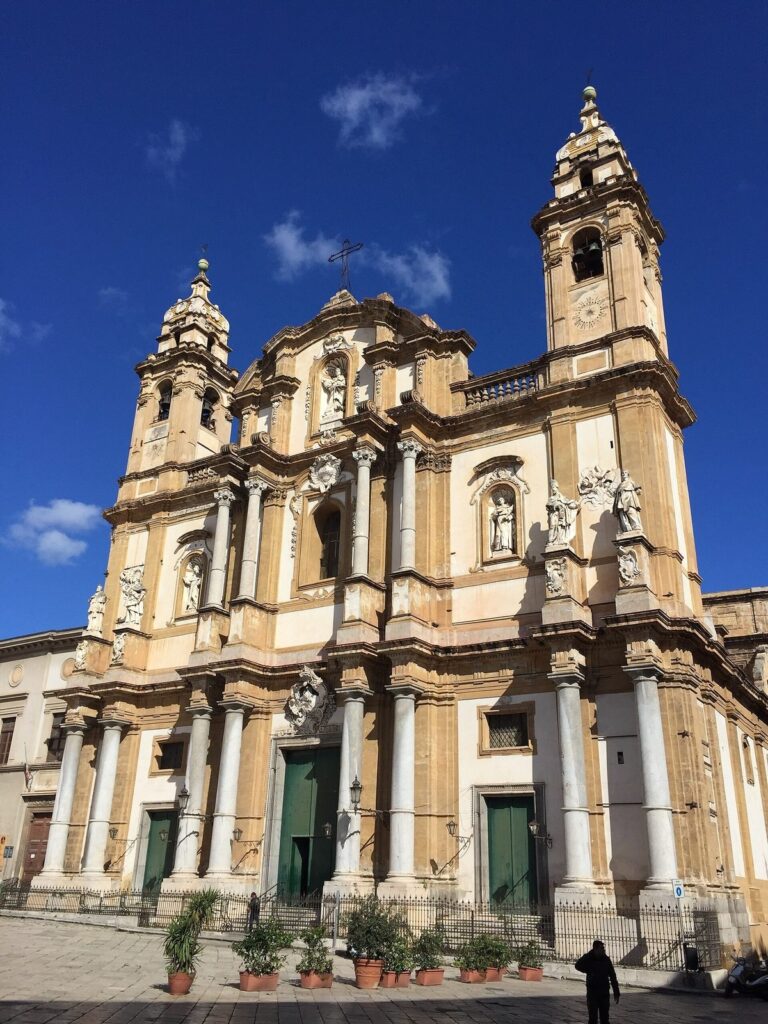
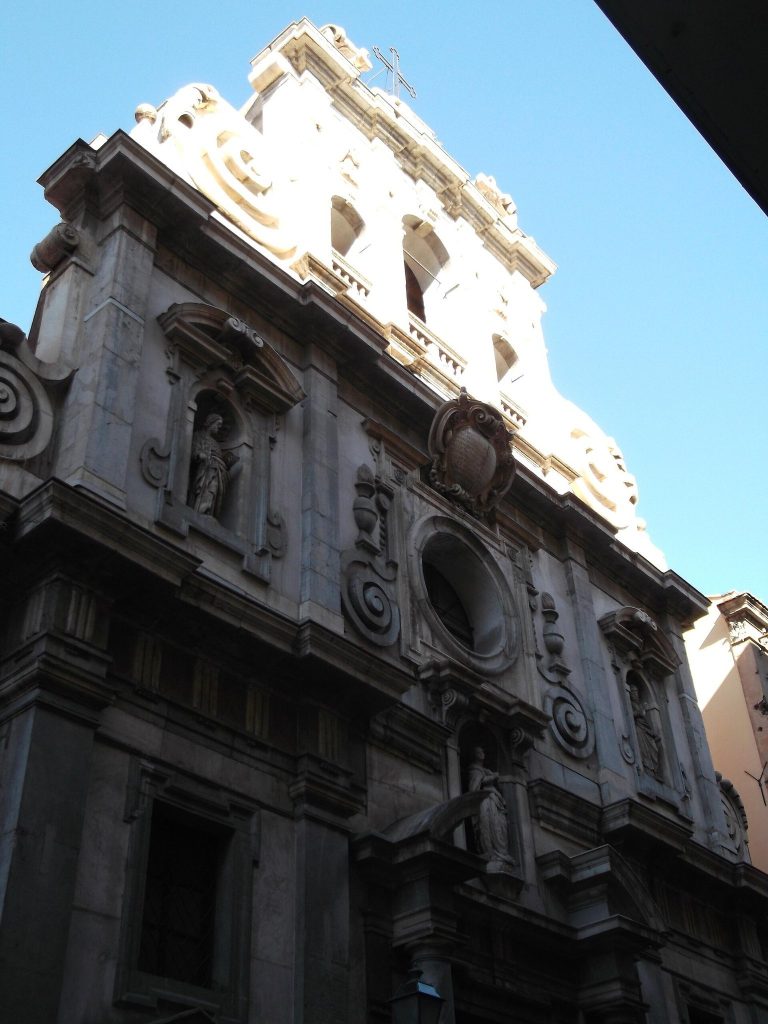
Santa Maria in Valverde is a former Carmelite monastery church near Palermo’s old harbor in Italy, built in 1514 with a neoclassical exterior and a richly decorated Baroque interior, an artistic style marked by elaborate ornament and dramatic forms.
Monastery origins and changing affiliations
A Carmelite monastery was established near the harbor in the 12th century. The Augustinians took it over in 1315, and the Carmelites returned in the 16th century. The church had become associated with the monastery by the 14th century.
Construction and refurbishment
The church was built in 1514. In 1633, it underwent a major refurbishment funded by money left by Camillo Pallavicino, a wealthy Genoese whose daughter had entered the monastery. The work followed designs by Mariano Smiriglio. Interior decoration continued in later phases, with contributions from Paolo Amato, Andrea Palma, and Abate Mango, followed by further work in the 19th century by Giuseppe Patricolo.
The monastery was formally suppressed in 1866 and resumed in 1872. The church is now a Roman Catholic parish in the Archdiocese of Palermo and follows the Roman Rite, the principal liturgical tradition of the Latin Catholic Church.
War damage and restoration
The church suffered heavy damage during the Second World War, a global conflict. Restoration began in 1979–80, and the church was reconsecrated for worship in 1997.
Remains
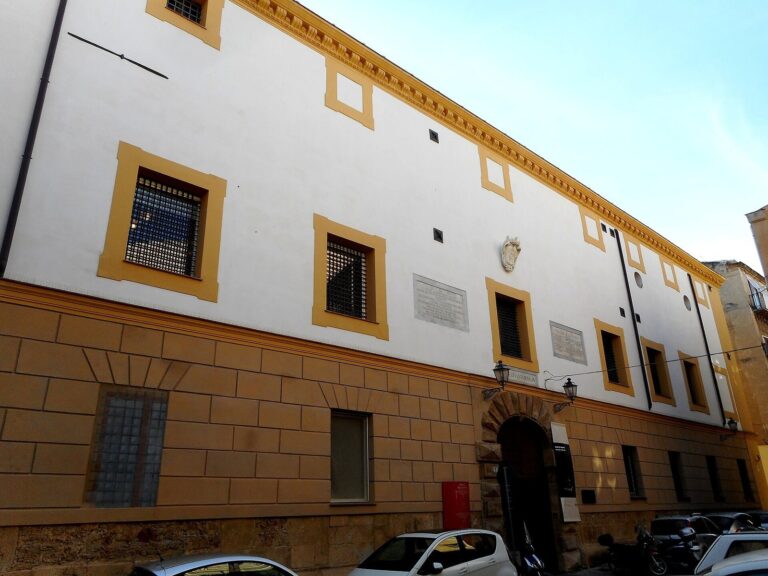
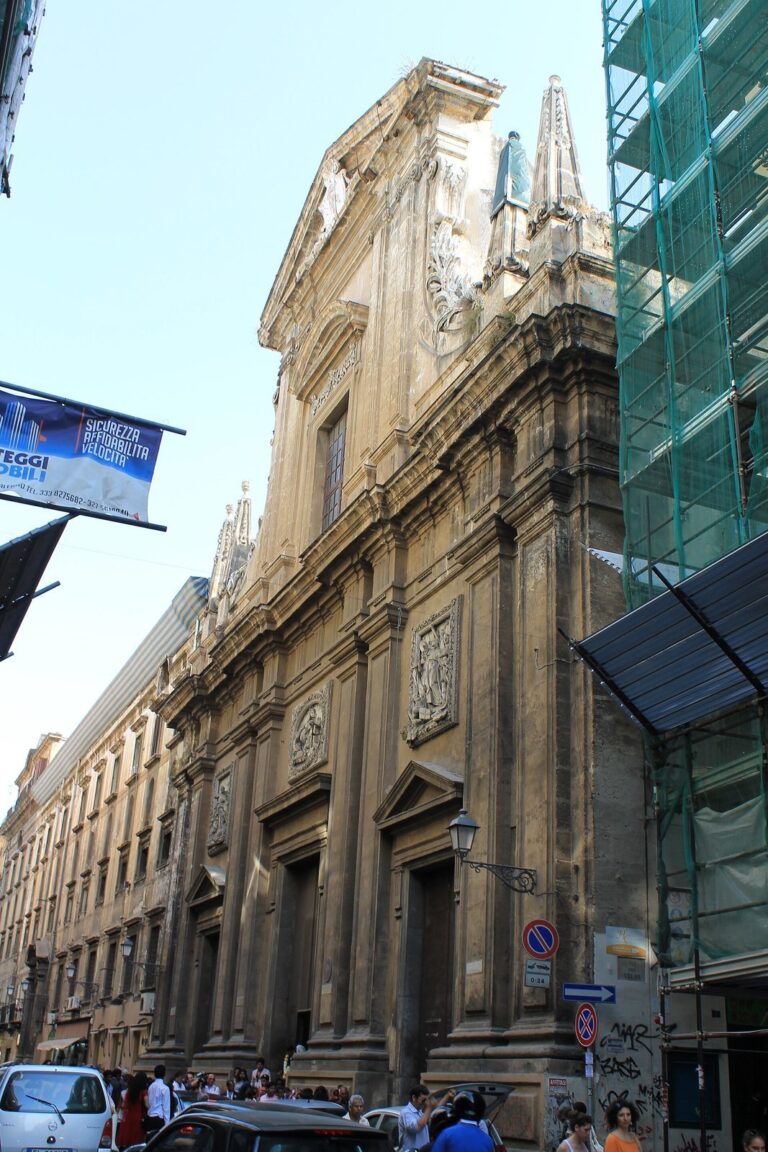
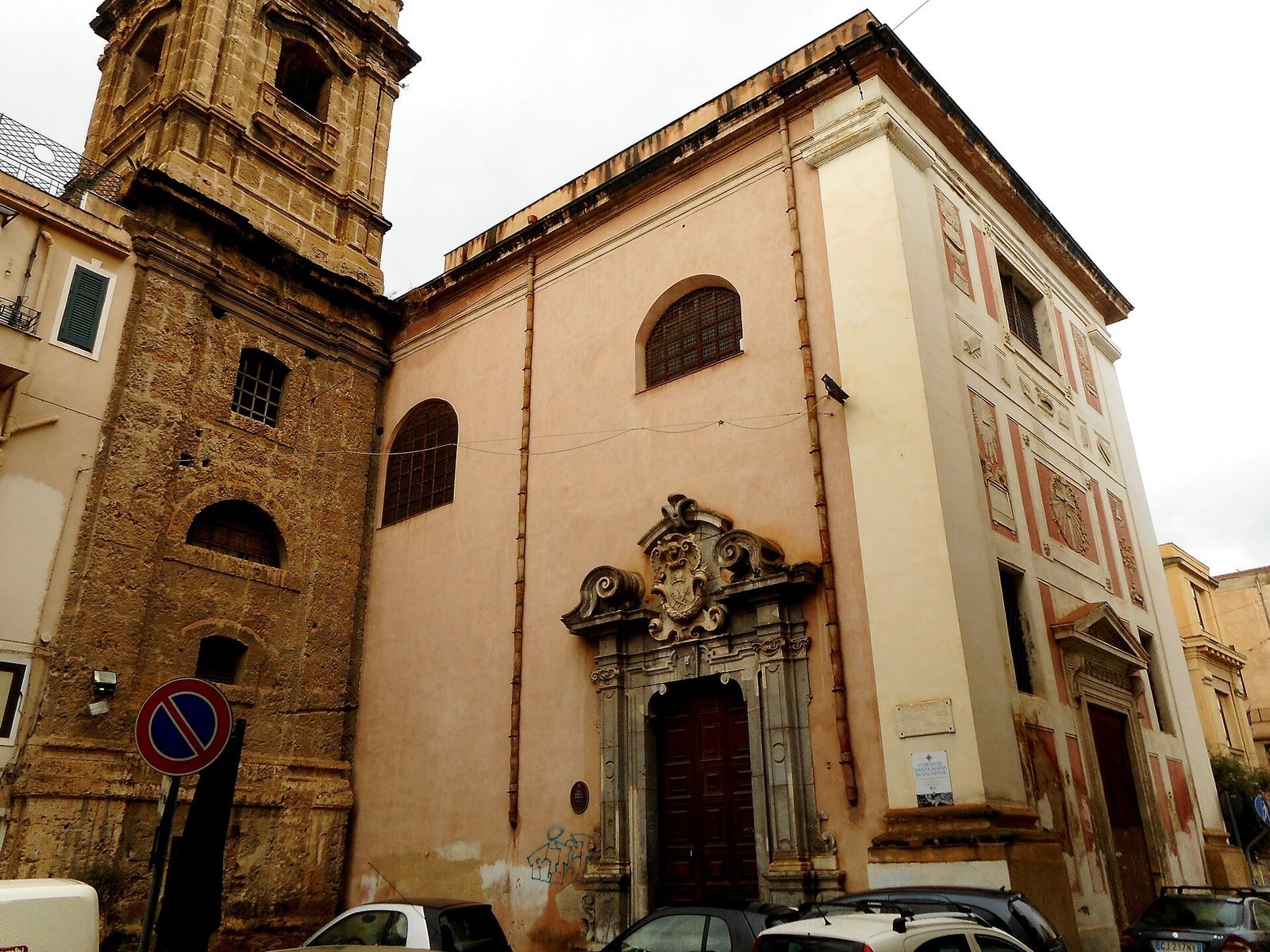
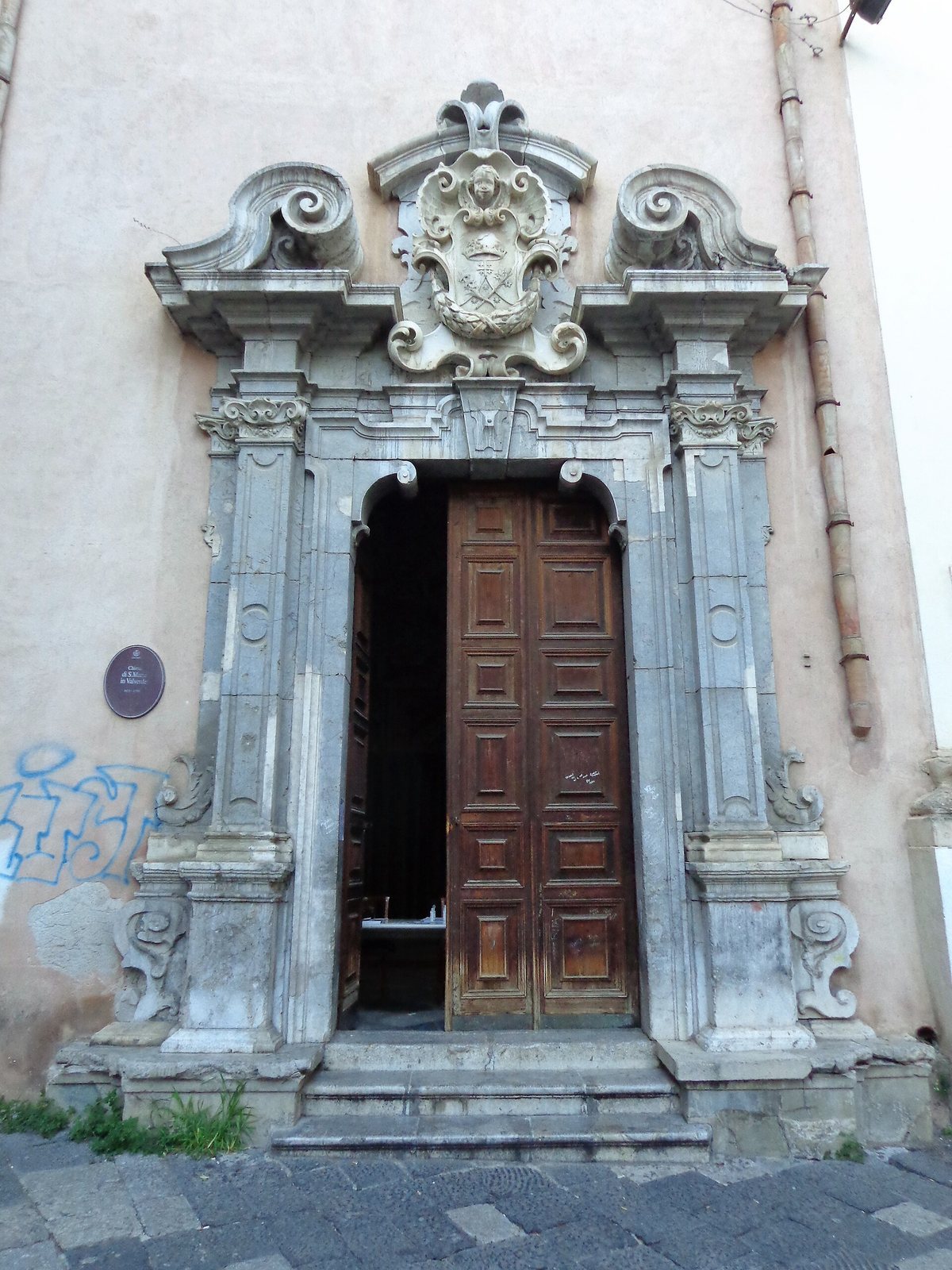
The church’s plan centers on a rectangular hall with a single nave, the main central space. Its box-like exterior is described as neoclassical, while the interior is richly ornamented in the Baroque style. A separate bell tower dating to the 18th century forms part of the complex.
Exterior and bell tower
The exterior includes symbolic relief panels. The bell tower is a distinct structure rather than part of the church’s main body.
Interior
Nave and decoration
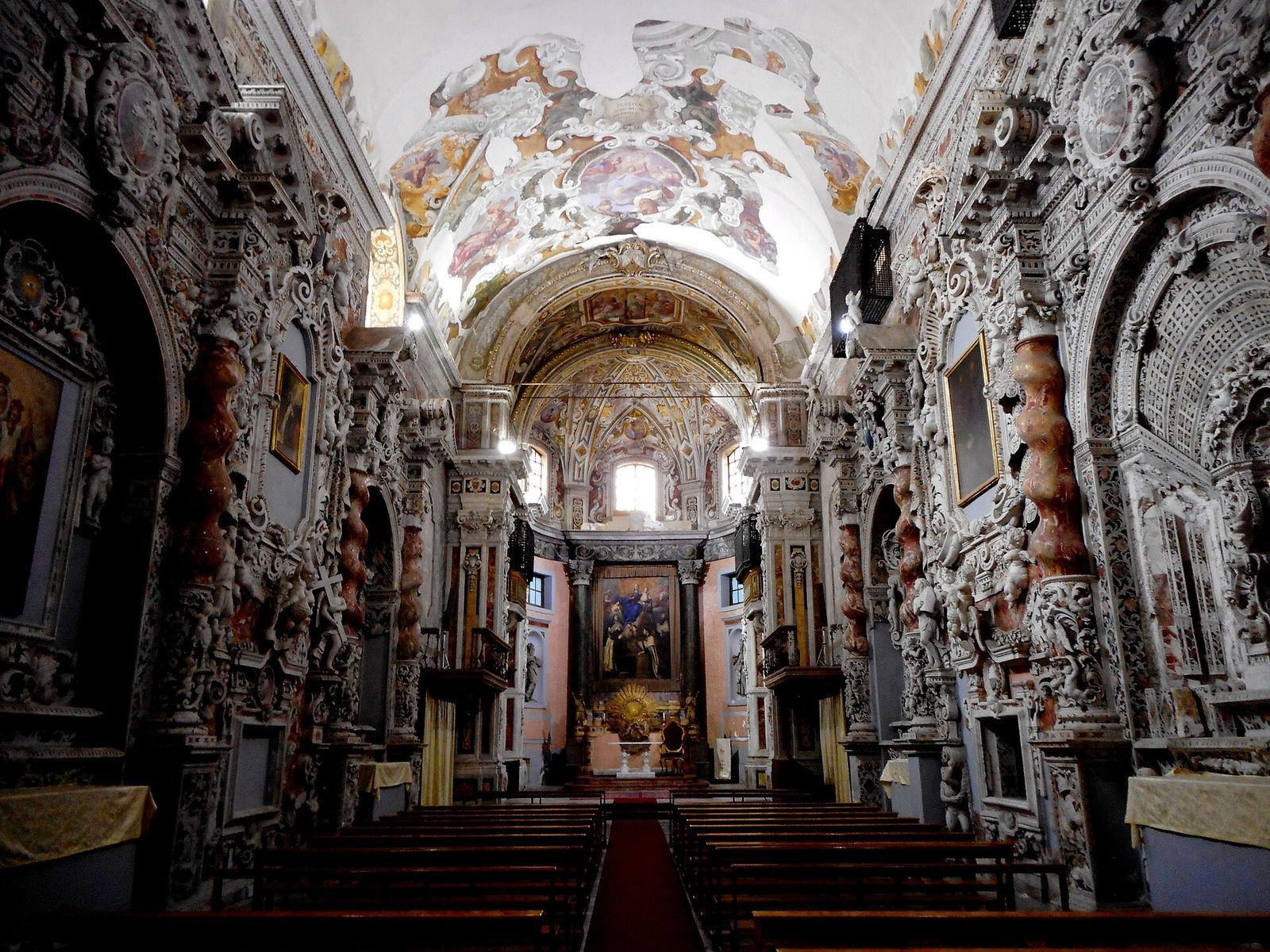
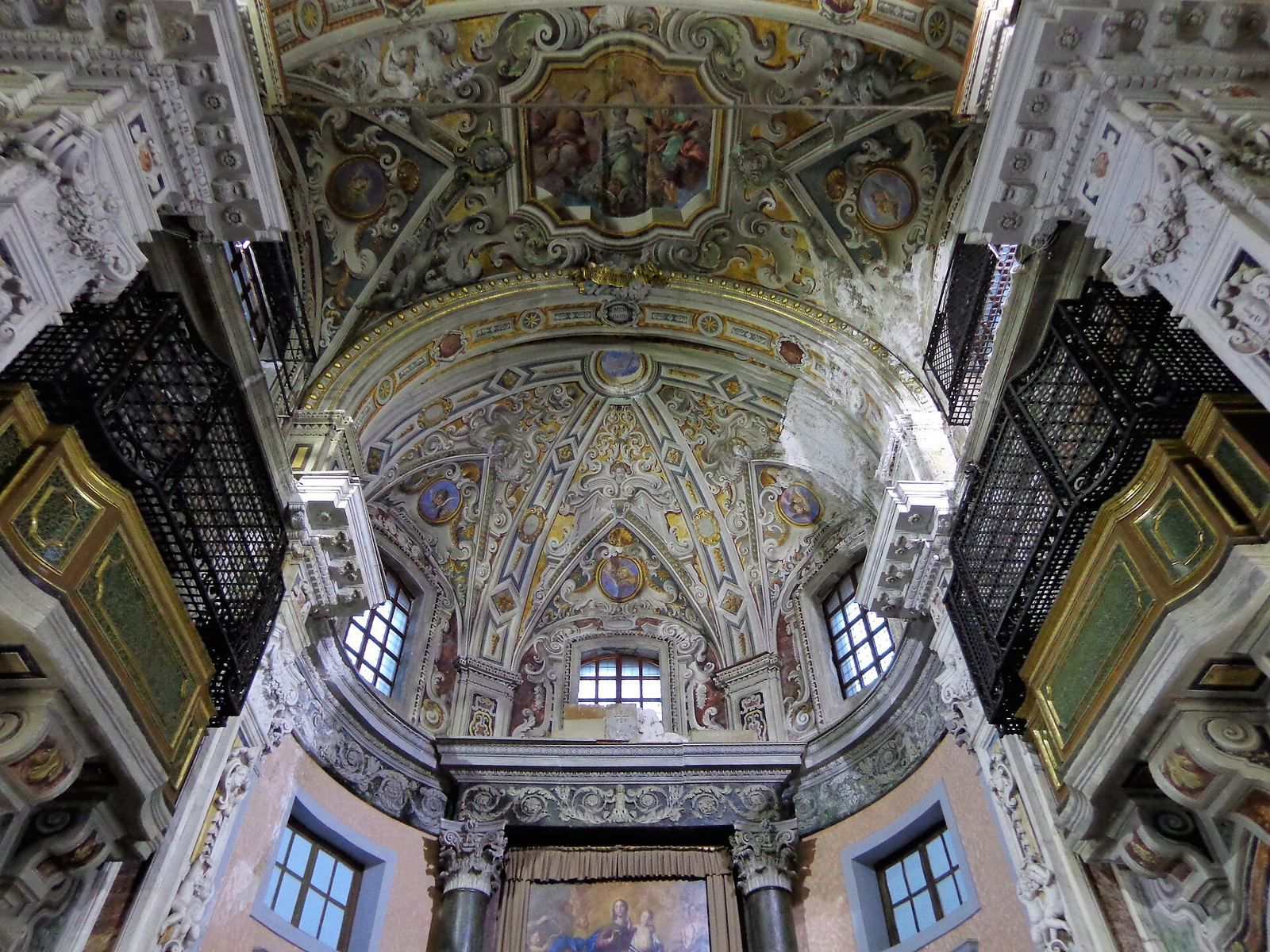
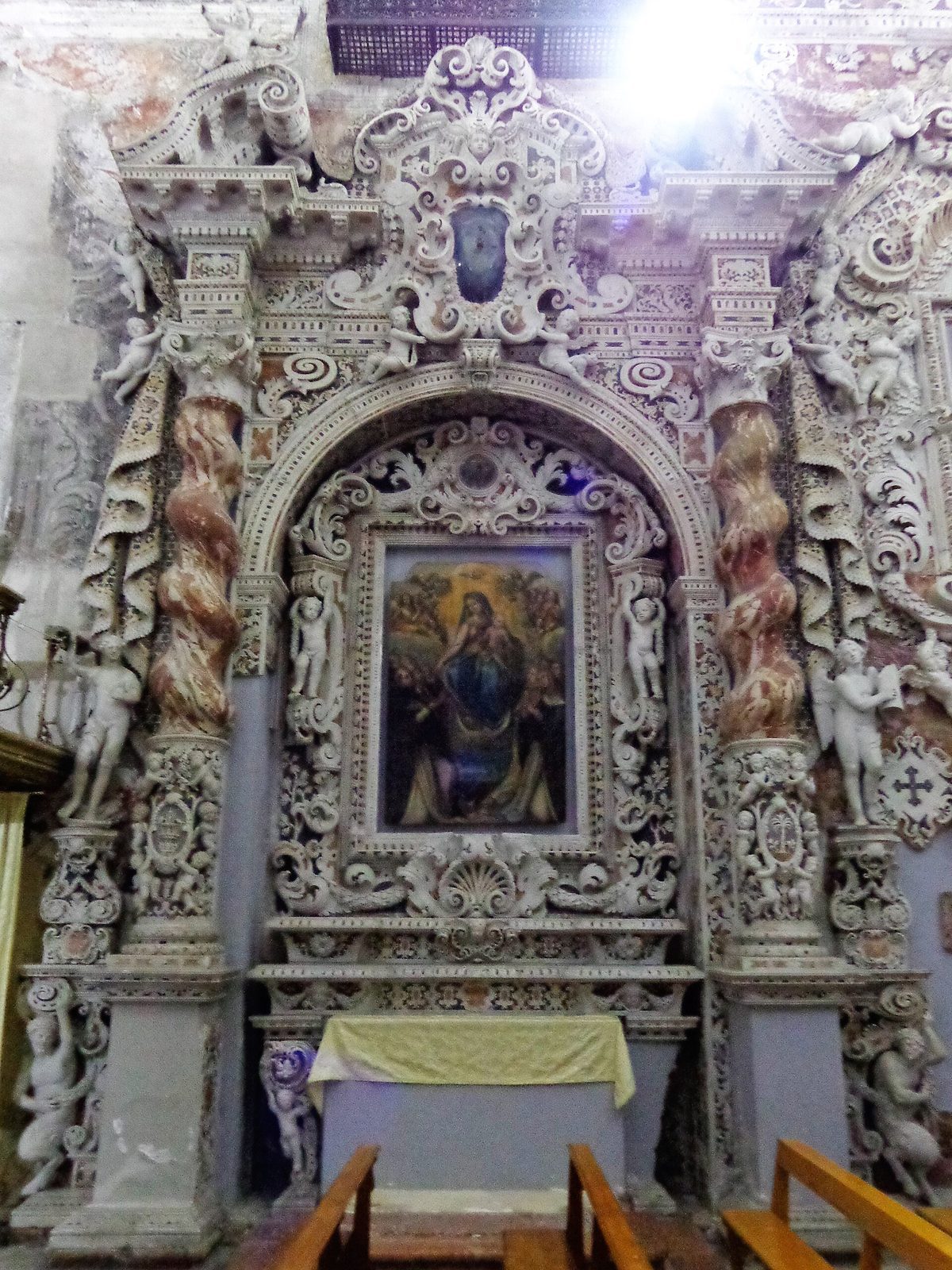
Marble and stucco, a molded plaster decoration, enrich the interior. Twisted marble columns, colored mosaics, and stucco figures of saints, symbolic characters, animals, and plants contribute to its decorative scheme. Figures added in the 18th century were designed by Paolo Amato and completed by Andrea Palma.
Entrance below the choir
The entrance room beneath the choir contains Olivio Sozzi’s 1750 painting of the Virgin in Glory. Fresco decoration above the choir is attributed to Antonio Grano.
Apse and altarpiece
The semicircular apse, the rounded sanctuary end of the church, has decorations by Giuseppe Patricolo and ceiling frescoes attributed to Guglielmo Borremans. The main altarpiece is Pietro Novelli’s 1642 depiction of the Madonna del Carmine.