Cathedral in Gemona del Friuli: A Romanesque-Gothic Parish Church
Site at a Glance
- Popularity
- Medium
- Country
- Italy
- Primary era
- Medieval
- Eras represented
- Medieval, Early Modern, Modern
- Civilizations
- Austrian Empire, Habsburg, Holy Roman Empire, Italian, Venetian
- Site type
- Religious
- Remains
- Cathedral
On this page12 sections
History
The Cathedral in Gemona del Friuli is a Roman Catholic parish church in Italy, dedicated to the Assumption of Mary, the Christian belief that she was taken bodily into heaven. Built in Romanesque-Gothic style between 1290 and 1337 over an earlier church, it was consecrated in 1337 by Giovanni, bishop of Poreč. The cathedral is the town’s principal church and belongs to the Archdiocese of Udine and the Roman Rite, the liturgical tradition of the Latin Catholic Church. Its parish is headed by an archpriest, a senior priest, and is part of the Pedemontana deanery, a local grouping of parishes.
Medieval construction
The cathedral’s façade inscription names Maestro Giovanni as its maker. Giovanni Griglio is also identified as an architect and is credited with major stone-sculpture work associated with the cathedral. Some art historians use “School of Gemona” for works produced during the first half of the fourteenth century at building sites in Gemona and Venzone. The label describes a group of works, not a formal institution.
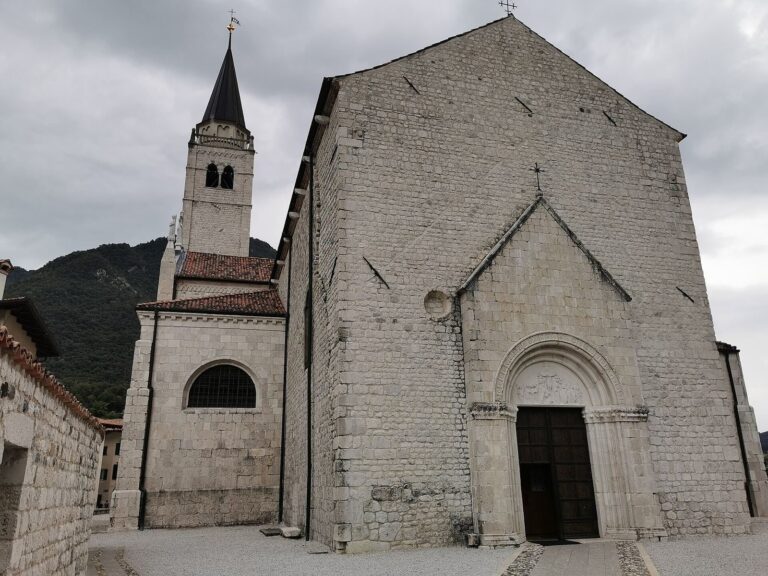
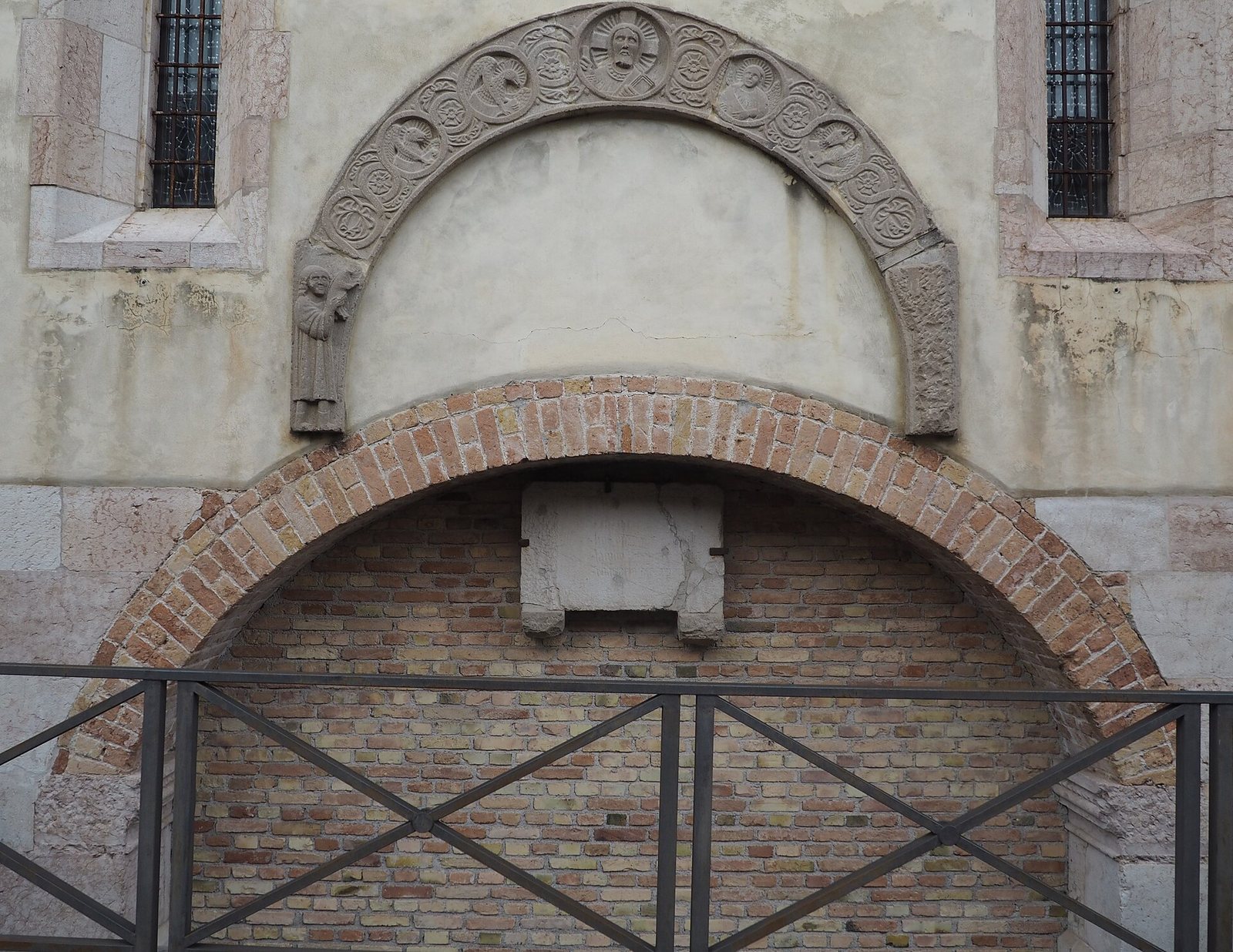
Work on the bell tower began in 1341 and finished in 1369. A plaque above its doorway records the work, which was carried out by Nicolò and Domenico, sons of Giovanni Griglio.
Alterations, war and earthquakes
The cathedral’s façade was extensively altered in 1825–1826. Before the First World War, the tower held four bells, cast in 1423, 1467, 1532 and 1653. On 29 January 1918, Austro-Hungarian troops took the bells for their bronze, intended for cannon production, and dropped them from the belfry. The largest and second-largest bells broke. The 1423 bell survived, though damaged; soldiers dragged it through the streets behind a truck, and parishioners later hid it to prevent its seizure.
After the war, the parish ordered four replacement bells from the Daciano Colbachini foundry in Padua. Cast in 1920, they arrived on 13 June 1921, the feast day of Saint Anthony of Padua, the city’s patron. Parishioners raised them into the tower by hand with ropes over the following days.
The earthquake of 6 May 1976 badly damaged the cathedral. The bell tower collapsed during the 1976 earthquakes, particularly in the two shocks that September, and was completely rebuilt. The fourth bell was damaged beyond repair in the collapse and recast by the Colbachini foundry in 1982.
Remains
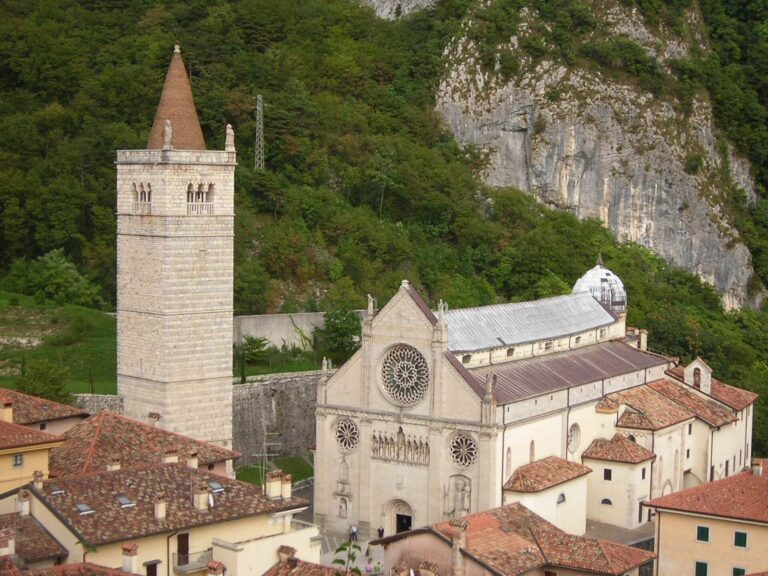
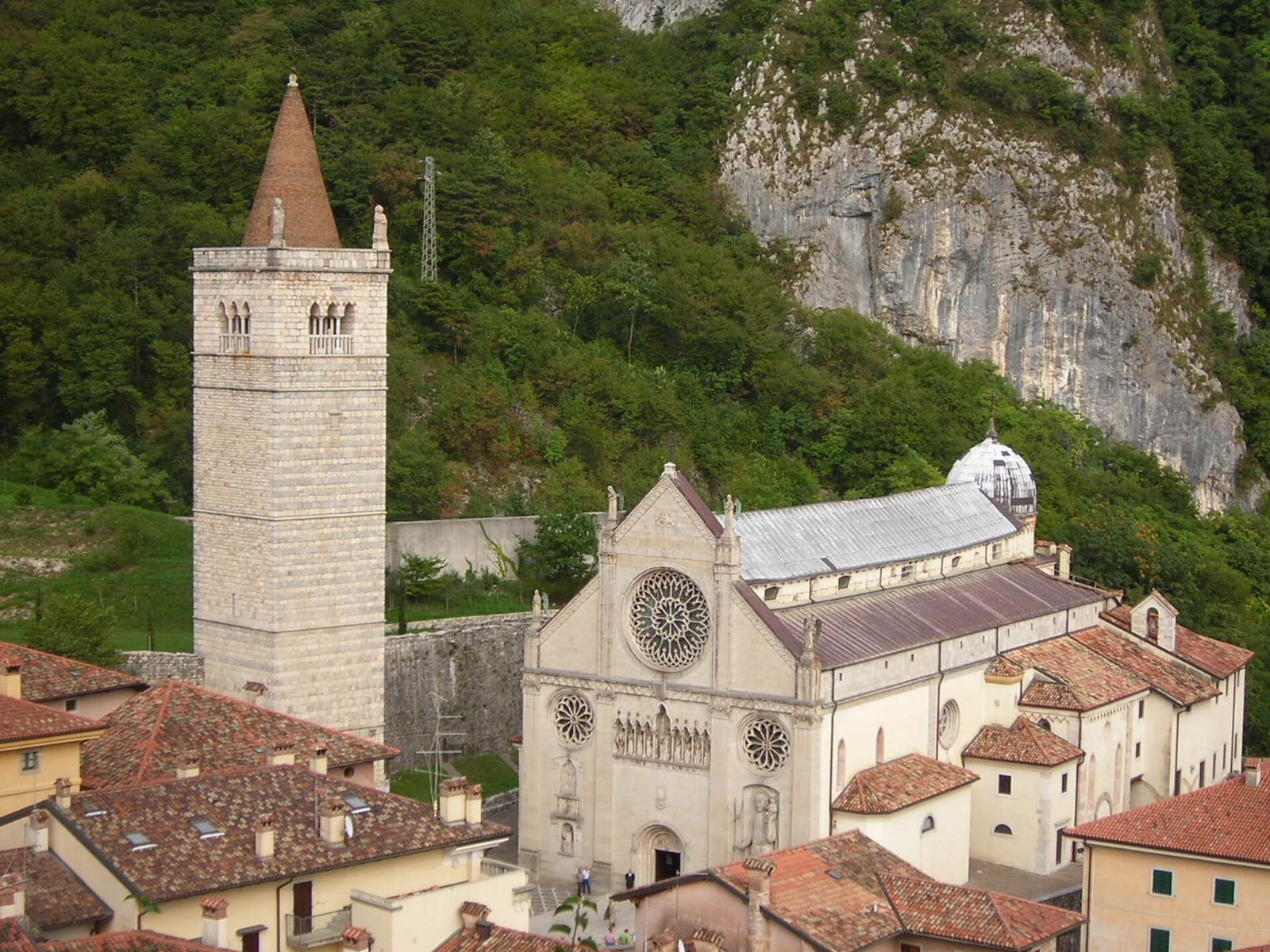
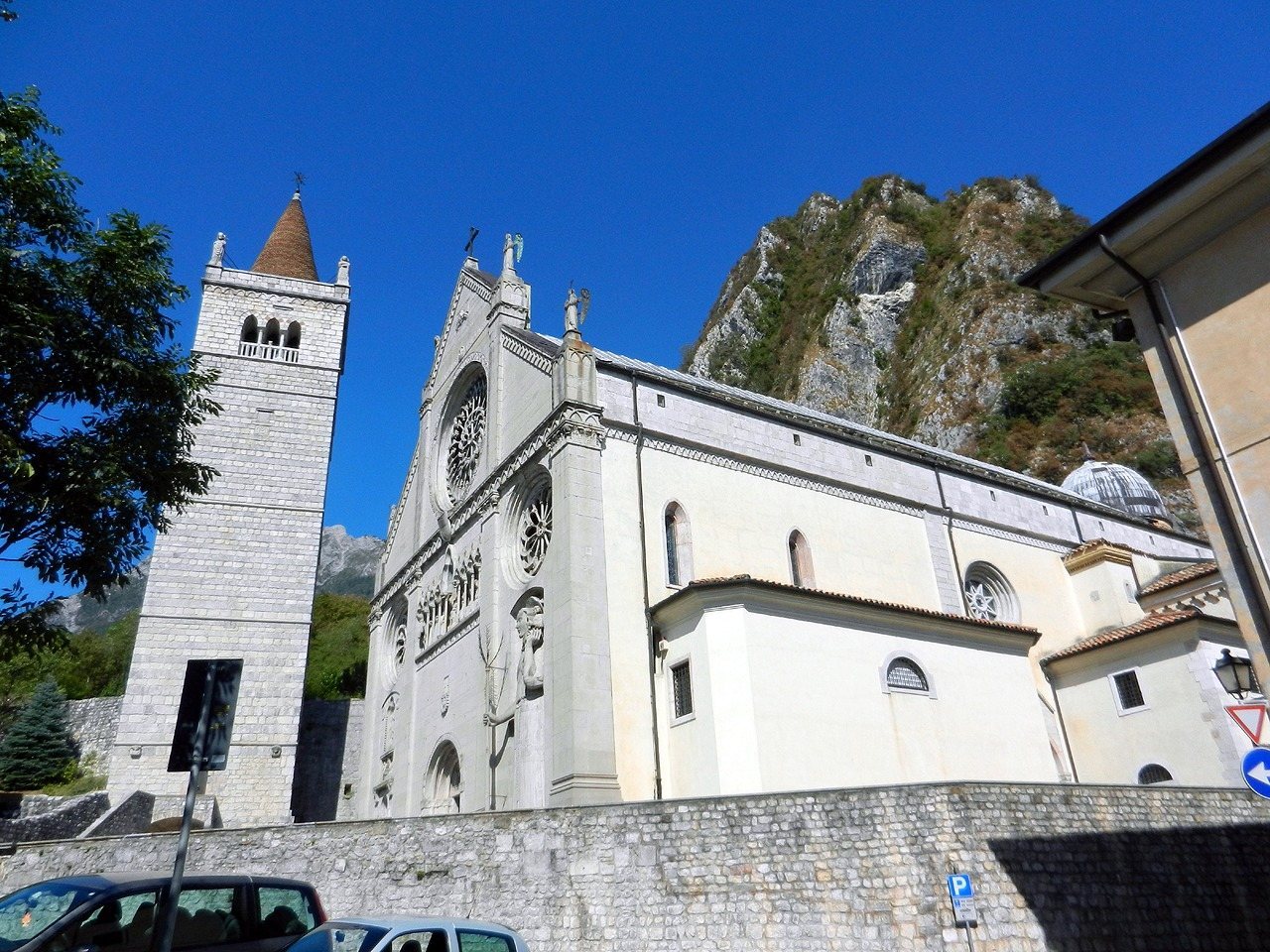
The cathedral combines Romanesque-Gothic architecture with a later altered façade. A substantial wall separates the church from Mount Glemine, helping protect it from landslides and forming part of the town’s defensive system. The bell tower stands to the left of the cathedral.
Exterior
Façade and entrances
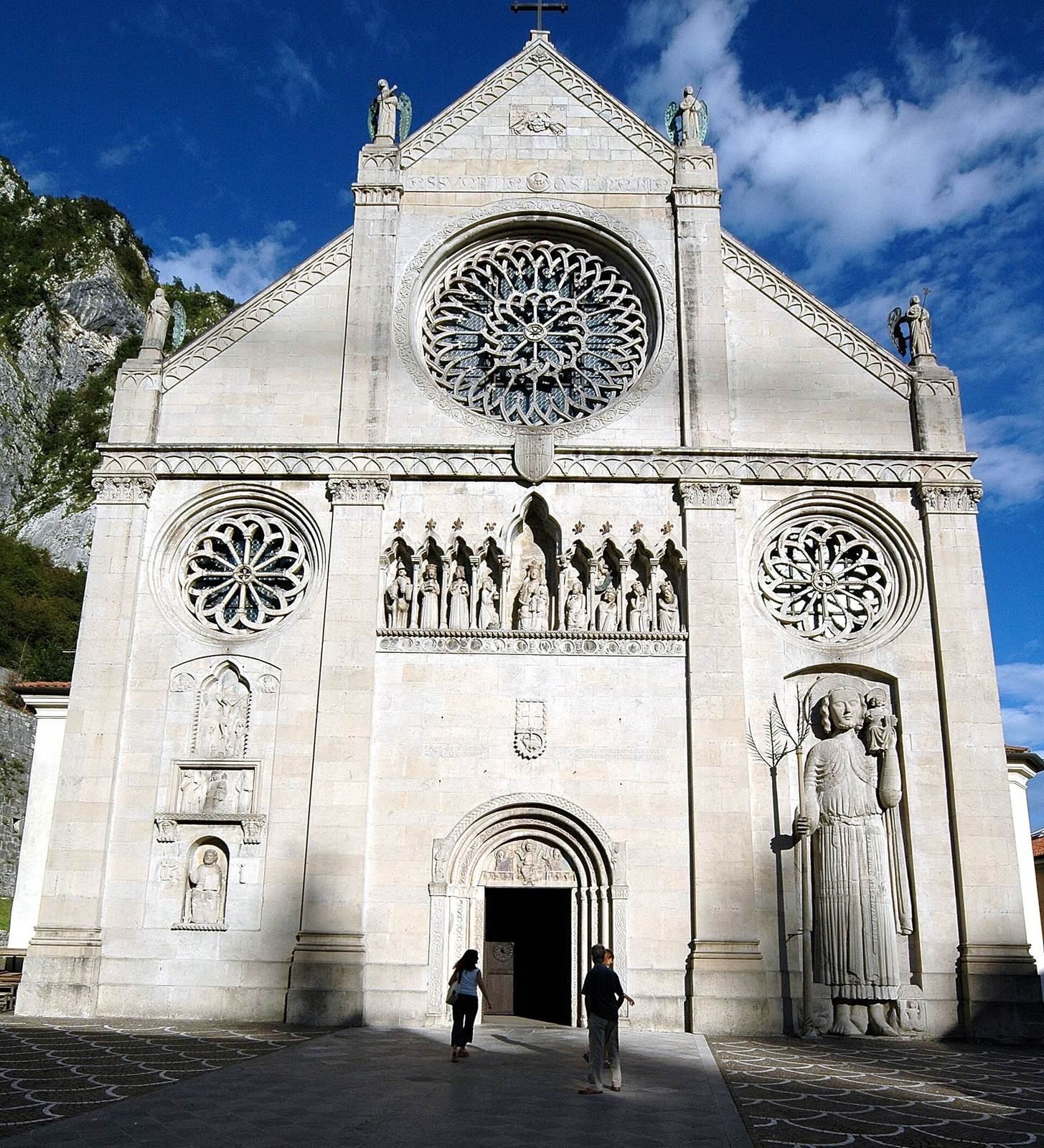
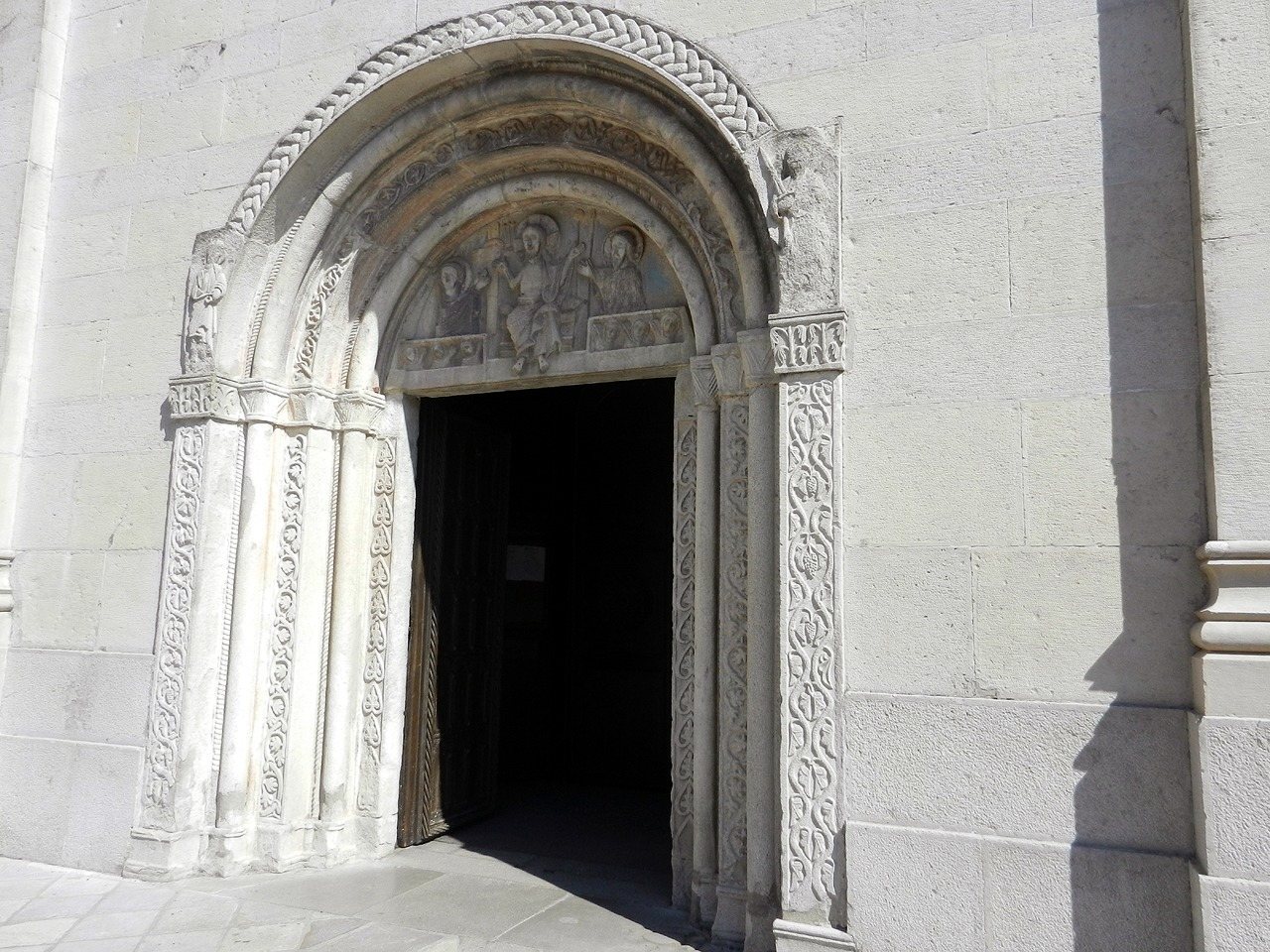
The façade has three rose windows. The central window was made in Venice between 1334 and 1336 by the sculptor Maestro Buzeta. An inscription is set into the masonry. A portal and several façade sculptures are attributed to Maestro Giovanni, while the Renaissance portal is attributed to Bernardino da Bissone.
Sculptural works
A statue of Saint Christopher, made in 1331–1332, stands seven metres high and is carved from six blocks of stone. The Epiphany gallery contains nine statues arranged as a continuous account of the Magi’s arrival, adoration and dream.
Bell tower
The tower is about 50 metres high and built of squared stone, with a terracotta spire. Its belfry has three openings divided into three sections and one divided into two. The 1423 bell, known as the “Dante bell,” is displayed inside the cathedral rather than in the belfry to preserve its historic character and sound.
Interior and structural features
Wooden altar panel
Venetian maker Andrea Moranzone created a wooden altar panel in 1391. It depicts 33 episodes from the Old and New Testaments and is in poor condition following fire damage.
Devotional images and painting
The cathedral contains a fifteenth-century image of Mary mourning the dead Christ, a devotional form of Austrian origin that was widespread in Friuli at the time. A fourteenth-century fresco, a painting made on wet plaster, is also among the cathedral’s works.
Pillar reinforcement
Local oral tradition attributes seismic-consolidation work to the Clocchiatti Tobia company. Metal chains and ties were reportedly inserted through holes in some pillars to improve stability without fully correcting their deformations. Slight irregularities and misalignments were left visible.