Dominican Church in Chernelytsia: A Renaissance Church in Ukraine
Site at a Glance
- Popularity
- Very Low
- Country
- Ukraine
- Primary era
- Early Modern
- Eras represented
- Early Modern
- Civilizations
- Polish–Lithuanian Commonwealth
- Site type
- Religious
- Remains
- Fortified Church
On this page11 sections
History
Seventeenth-century foundation
The Dominican church in Chernelytsia is a Renaissance Catholic church in Ukraine, built from 1661 to 1669 for Dominican monks. Prince Michał Jerzy Czartoryski and his second wife, Eufrozyna Stanisławska, financed its construction, with tithes gathered from Vilkhovets, Chortovets and Tyshkivtsi also supporting the work. Archbishop Tarnowski, a senior bishop, consecrated the foundation stone.
Members of the Dominican Order of Preachers, a Catholic religious order, began using the church in 1664. By 1690, Franciszek Dzieduszycki was responsible for the monastery and church. Russian troops looted the building in 1739 during the Russo-Turkish War of 1735–1739, a conflict between the Russian and Ottoman empires. The church was consecrated in 1772 in honor of Michael the Archangel, a prominent angelic figure in Jewish and Christian traditions.
Nineteenth-century religious use
Dominican monks used the church until around the turn of the nineteenth century. Official church inspections in 1708, 1820, 1828 and 1830 found it in poor condition and in need of repairs. In 1807, the vicar (a clergy representative) Wincenty Tomaszewski paid for an organ, and the building also housed a library. Archbishop Andrzej Alojzy Ankwicz consecrated the church in 1833 in honor of Saint Anthony of Padua, a thirteenth-century Franciscan friar and Catholic saint.
Postwar changes and modern status
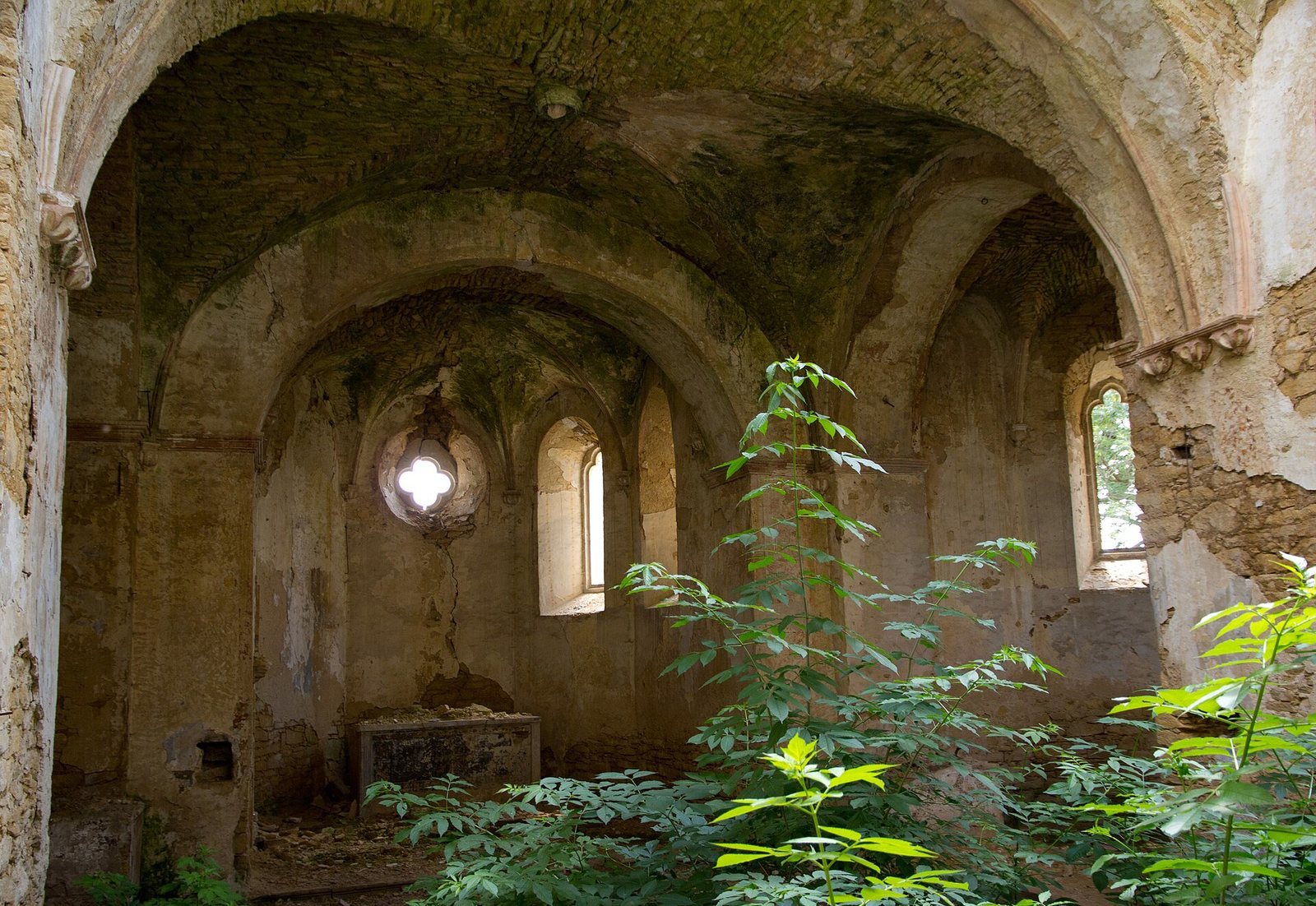
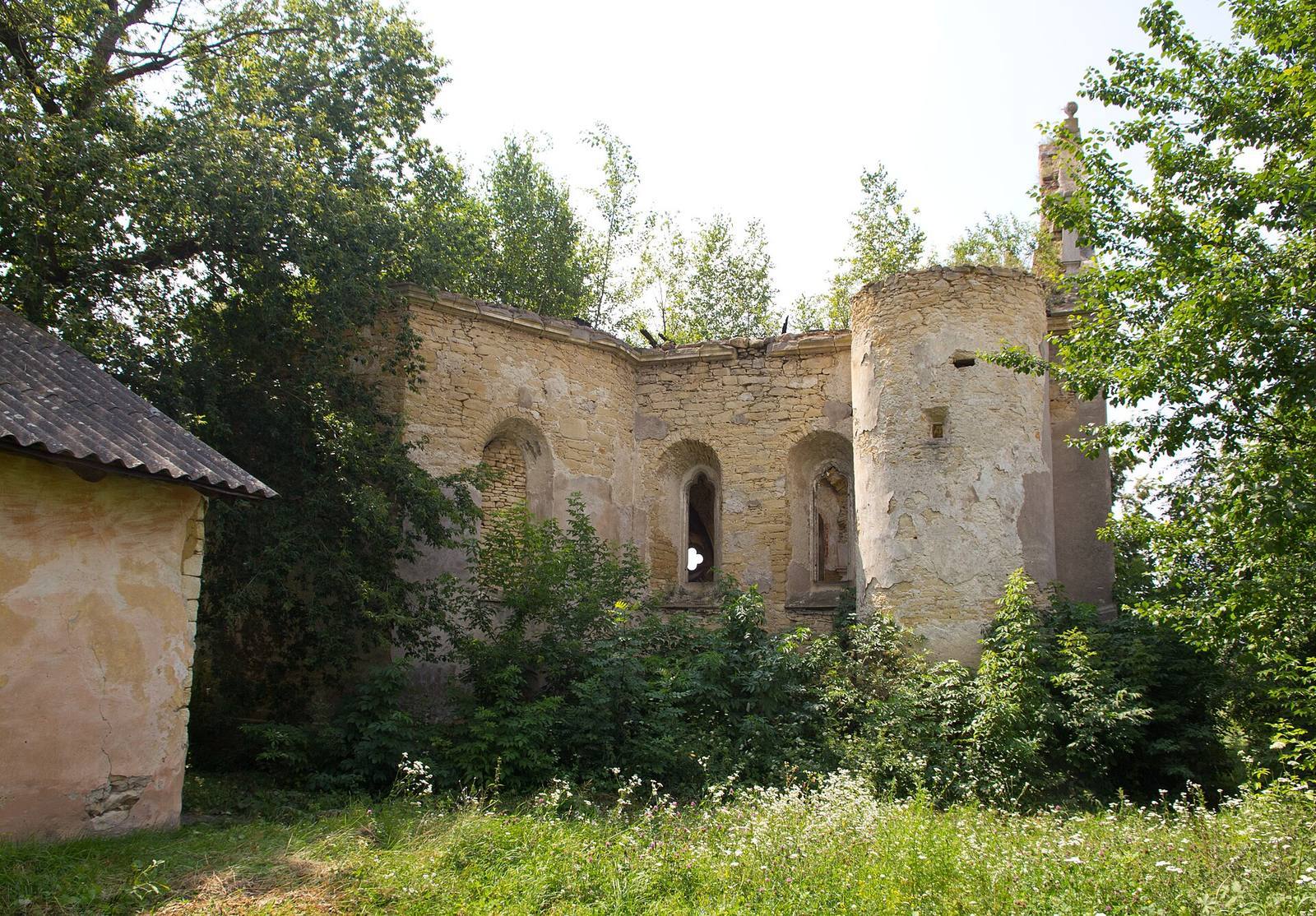
After the Second World War, some worshippers moved to Poland. Soviet authorities used the church as a warehouse from 1948 to 1980, and workers replaced its roof with wooden shingles in 1985. In August 2005, a local ten-year-old accidentally ignited timber, starting a fire that damaged the building. Ukraine recognizes the church as an architectural monument of national importance; it was also protected as an architectural monument in the Ukrainian SSR under number 1154.
Remains
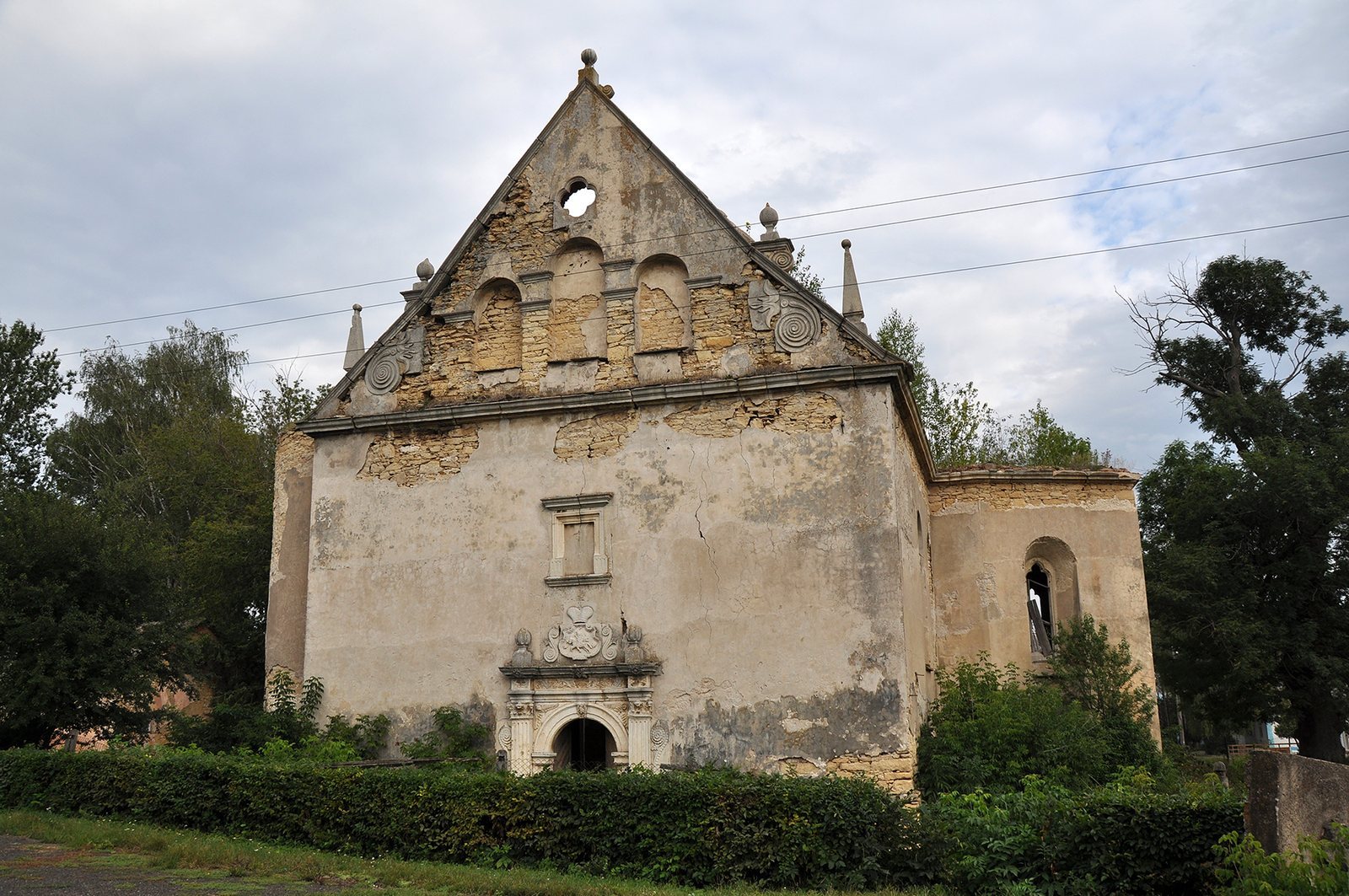
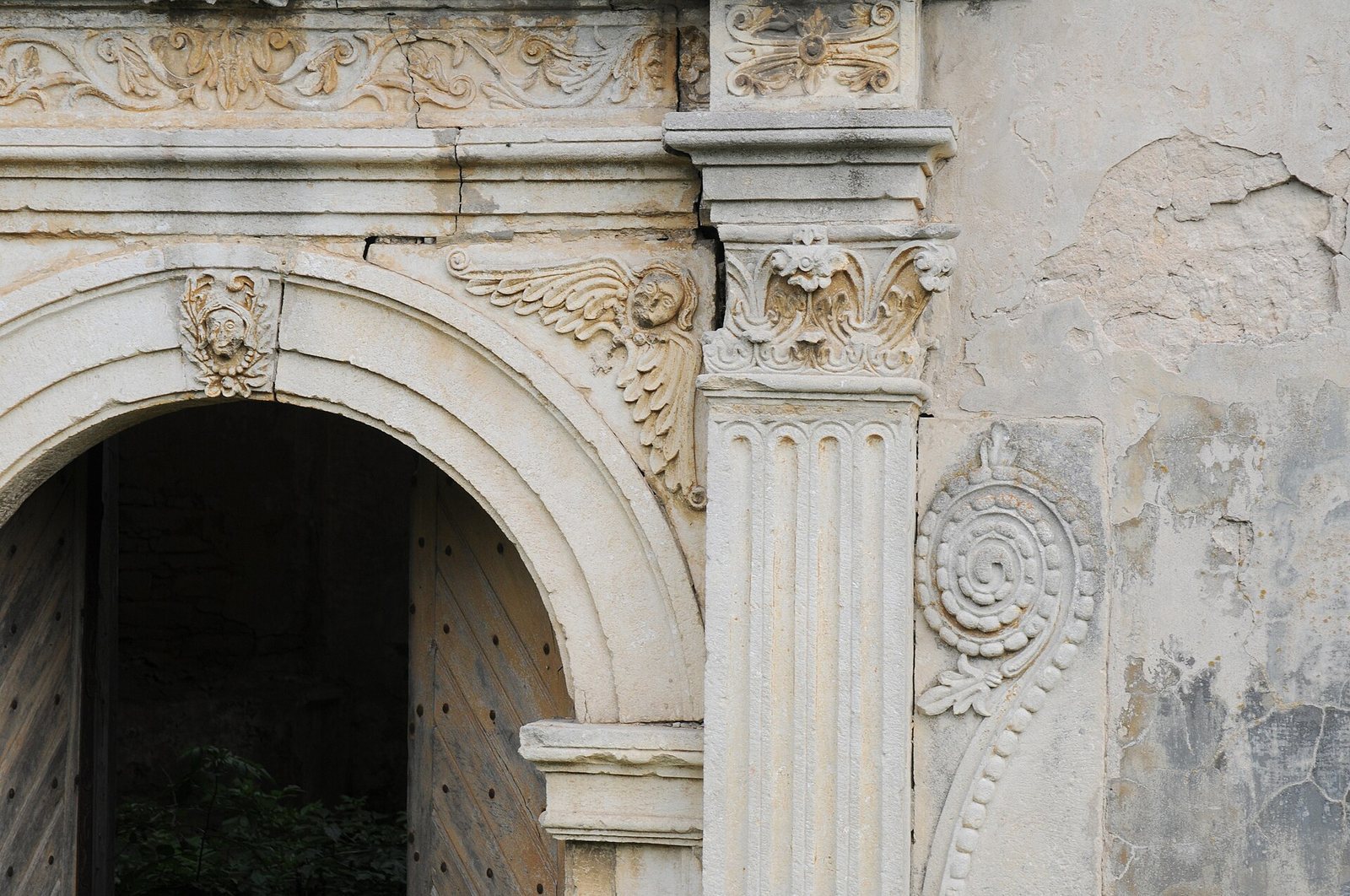
The church has a cross-shaped plan and a defensive character, with Renaissance design and white-limestone construction. Its architectural features include a tower, carved stonework, vaulted spaces and underground connections.
Church architecture and associated features
Exterior and entrance
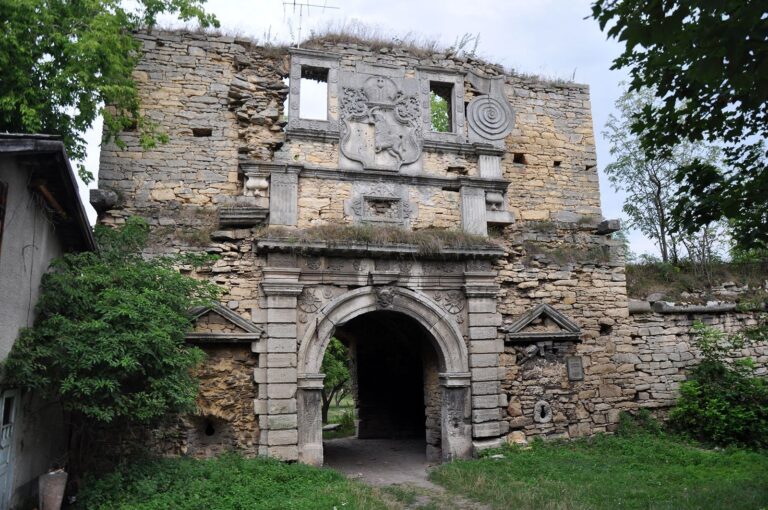
A tower at the northwest part of the church contains stairs leading to the choir loft. The façade has a triangular pediment, the raised gable above the front wall, decorated with spiral carvings and niches. Three roof ornaments and two obelisks complete the upper façade. A carved white-stone portal frames the entrance and bears the Czartoryski coat of arms.
Interior and furnishings
The main body, or nave, has a rib vault, a ceiling framed by projecting ribs. A doorway in the presbytery, the area around the altar, leads to the sacristy, a room for liturgical objects and vestments. Its white-stone portal is topped by the Pilawa coat of arms of Eufrozyna Stanisławska. The church had seven altars in 1772 and five in the early twentieth century, and an organ was among its furnishings. The 2005 fire destroyed the roof and wall paintings.
Crypts and passage
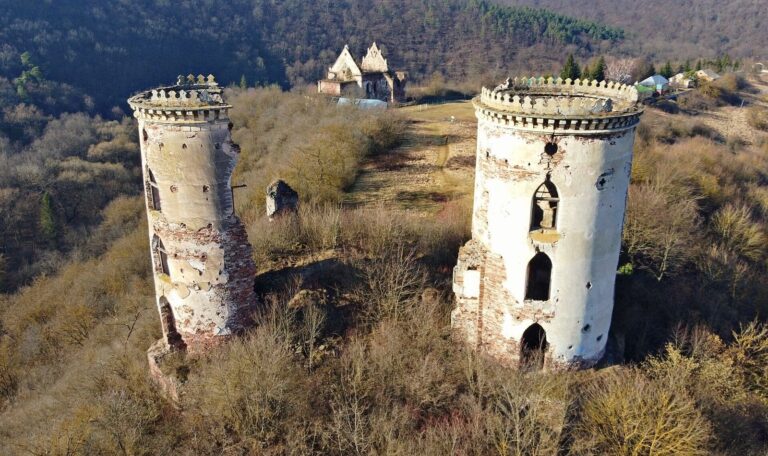
Crypts, underground chambers, were built beneath the church floor. A subterranean passage connected the church with nearby Chernelytsia Castle; the two buildings were constructed in the same style and period.
Former rectory
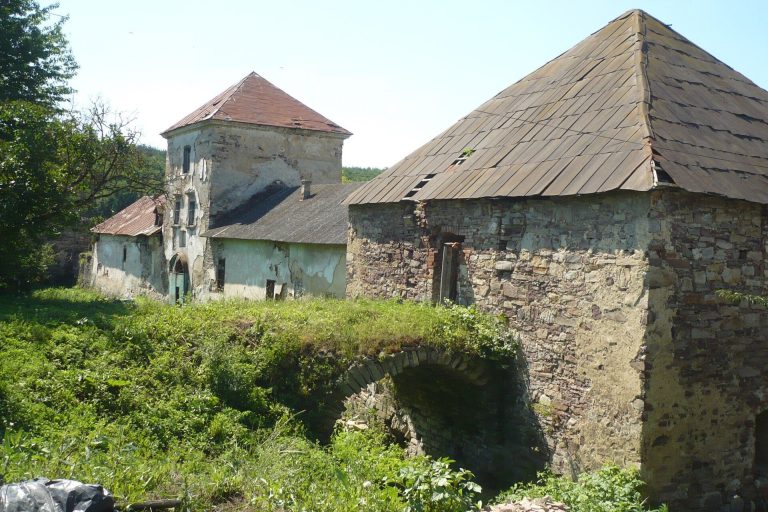
The former rectory survives beside the church.
Transferred church furnishings
After the Second World War, worshippers removed icons, figures and decorative elements from the church. The Stations of the Cross, images representing episodes from Jesus’s Passion, were transferred to the local Greek Catholic Church of the Nativity of the Blessed Virgin Mary. Greek Catholic churches are Eastern Catholic churches in communion with Rome, and this church dates to 1817.