Sanctuary of the Most Holy Crucifix of Mercy: A Baroque Church in Galatone
Site at a Glance
- Popularity
- Medium
- Country
- Italy
- Primary era
- Early Modern
- Eras represented
- Early Modern, Modern
- Civilizations
- Italian, Kingdom of Naples, Spanish
- Site type
- Religious
- Remains
- Sanctuary
On this page11 sections
History
The Sanctuary of the Most Holy Crucifix of Mercy is a Catholic sanctuary in Galatone, Italy, within the Diocese of Nardò-Gallipoli. Its Baroque design belongs to an elaborate European style that flourished from the late sixteenth through the eighteenth century. The church is Galatone’s principal monument of this period and one of the province of Lecce’s major examples of seventeenth-century architecture.
The earlier church and its replacement
A church built in 1623 housed a fourteenth-century Byzantine icon, a sacred image in the Eastern Christian tradition, depicting the Holy Crucifix of Mercy. People associated the image with miraculous events, and the church collapsed in February 1683. Craftsmen from Salento built its replacement between 1683 and 1694. Friar Nicolò da Lequile is credited with the architectural plan, while Giuseppe Zimbalo contributed to the decorative scheme.
Consecration and papal status
The new church was consecrated in 1711. In 1796, Pope Pius VI raised it to sanctuary status, establishing its standing as a papal sanctuary.
Remains
The building combines a tiered stone façade with a Latin-cross interior, in which a nave is crossed by a transept and joined to the presbytery, the area around the main altar.
Façade and exterior
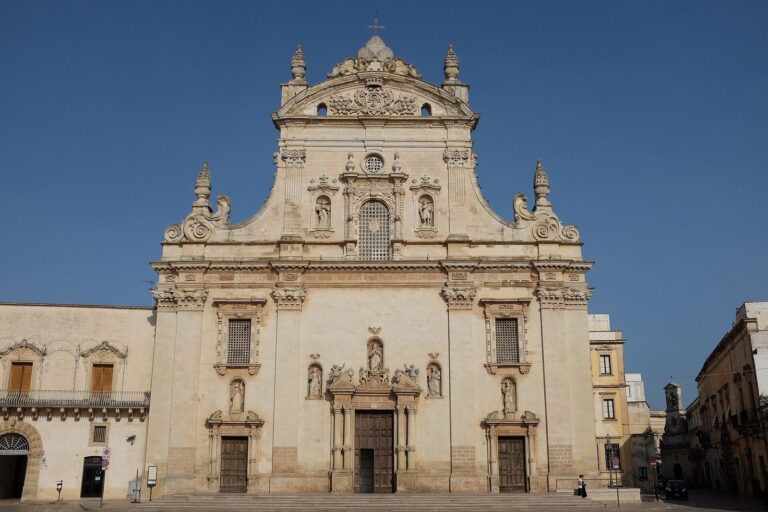
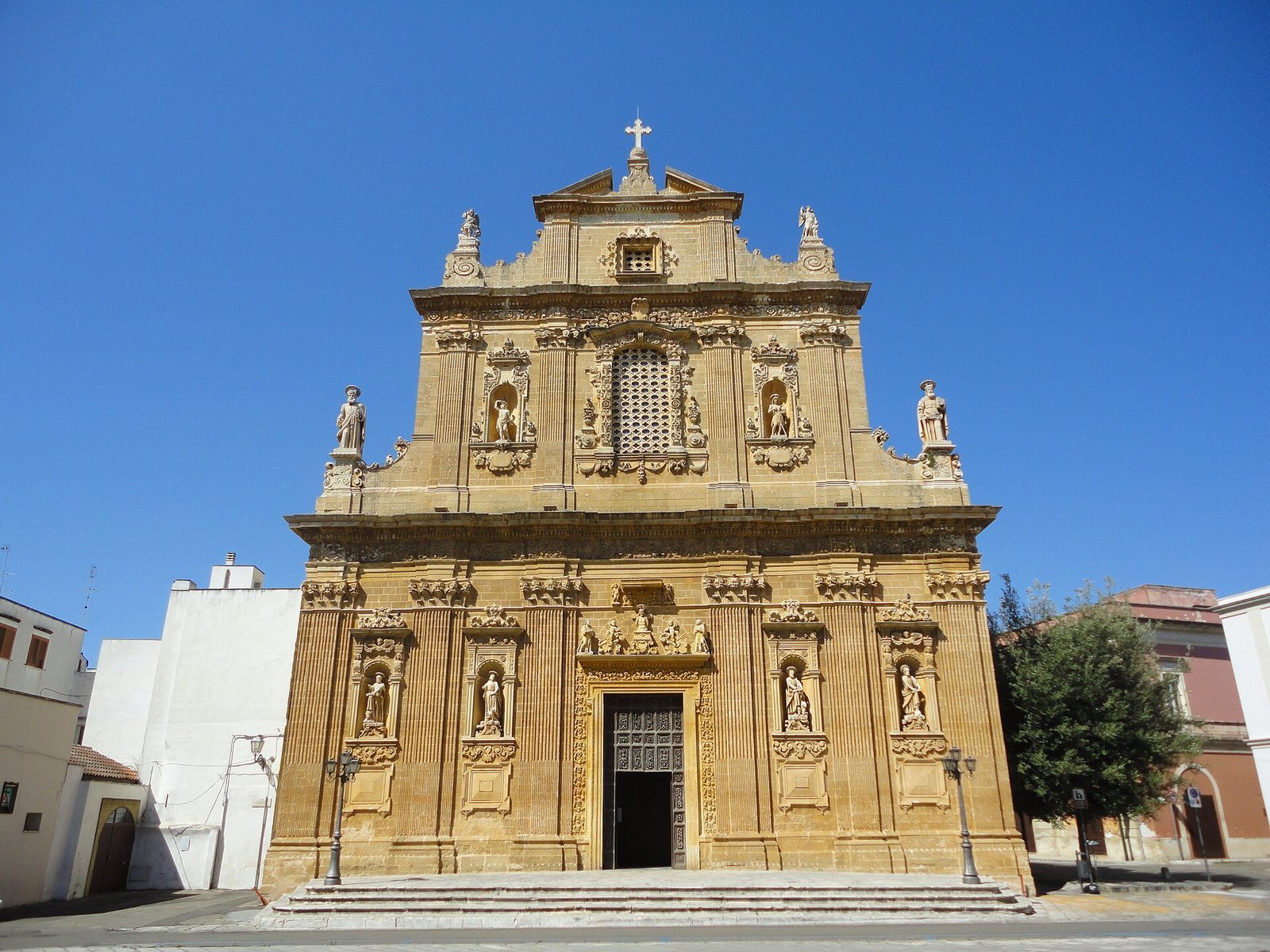
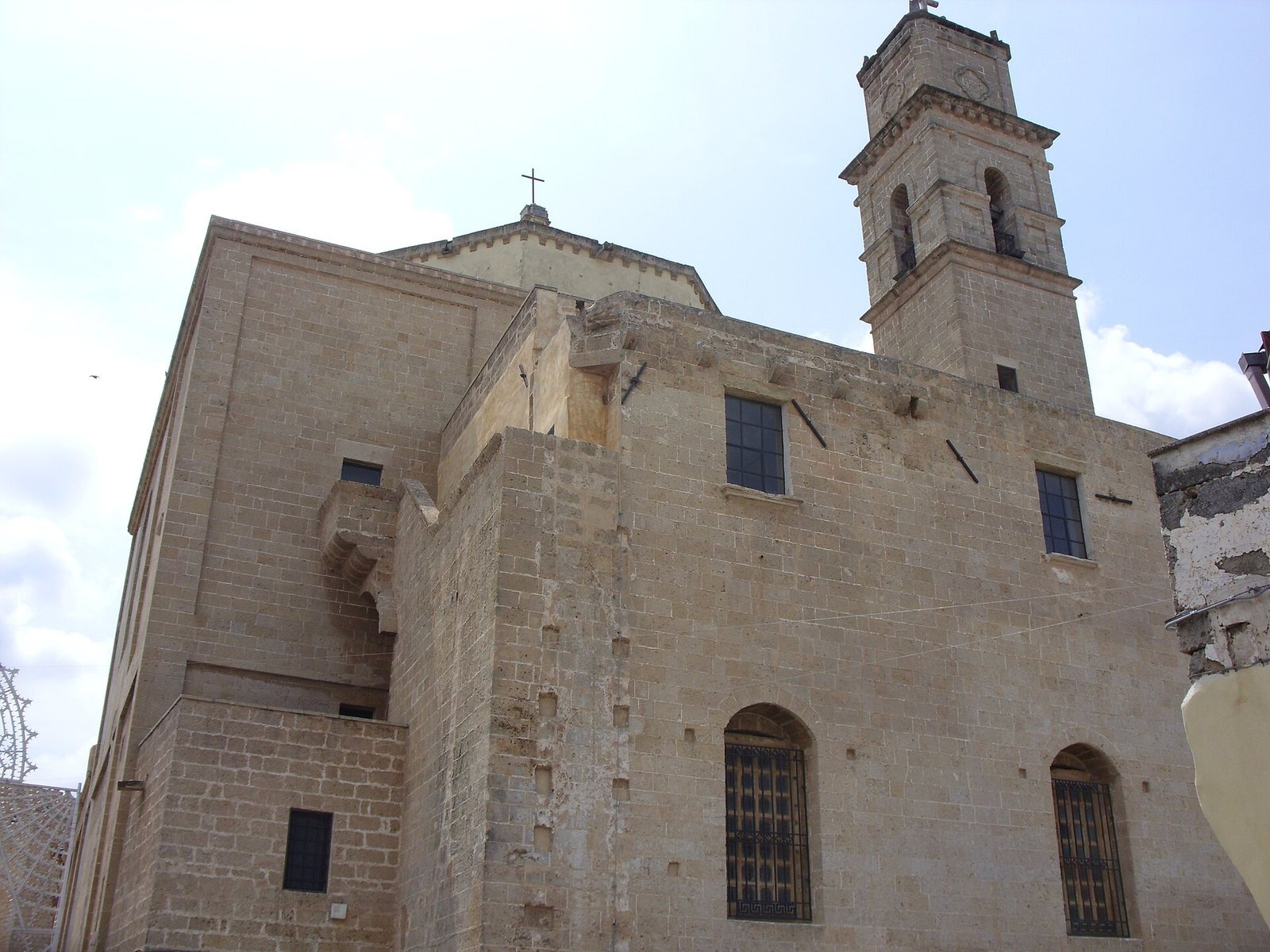
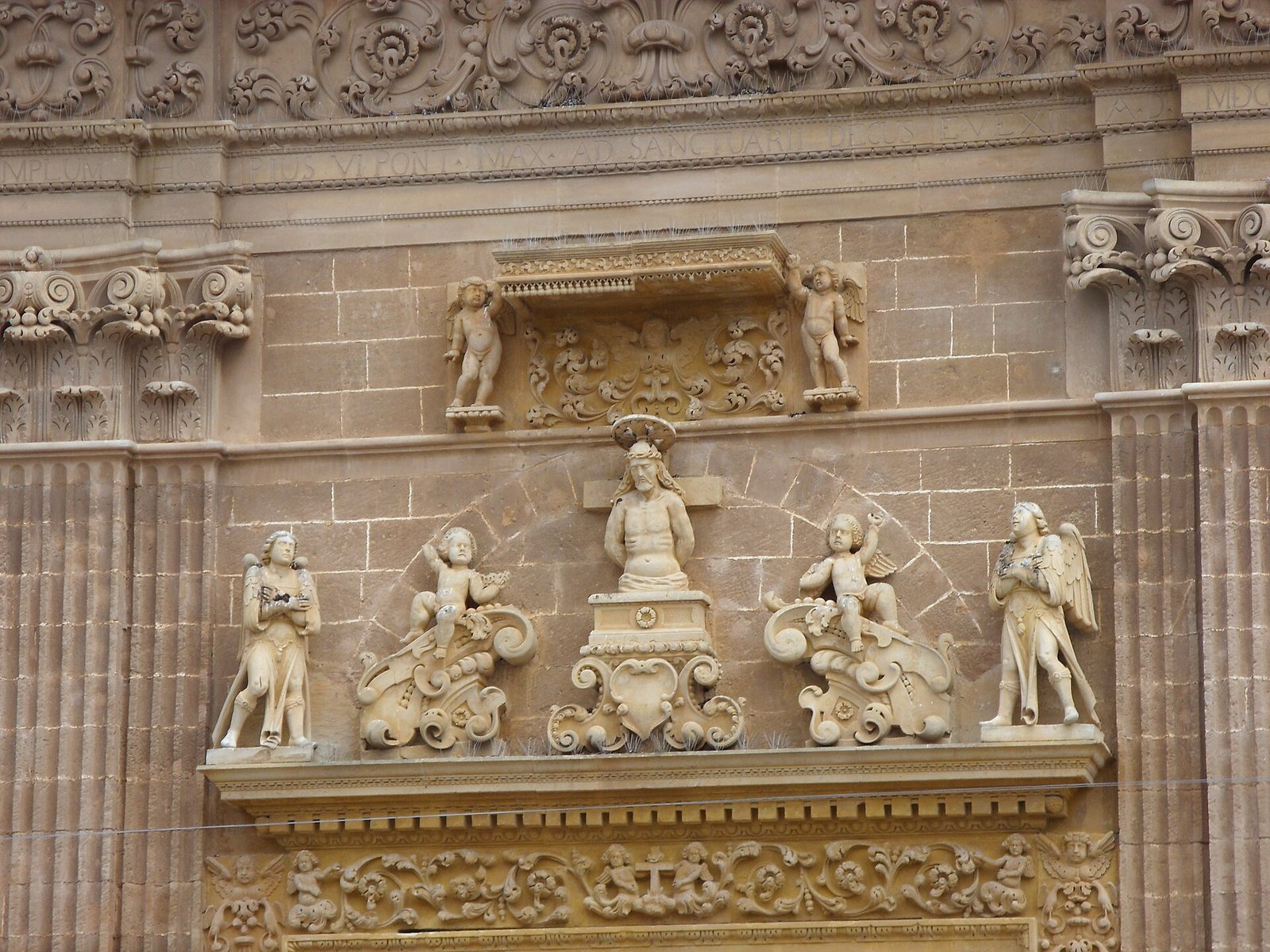
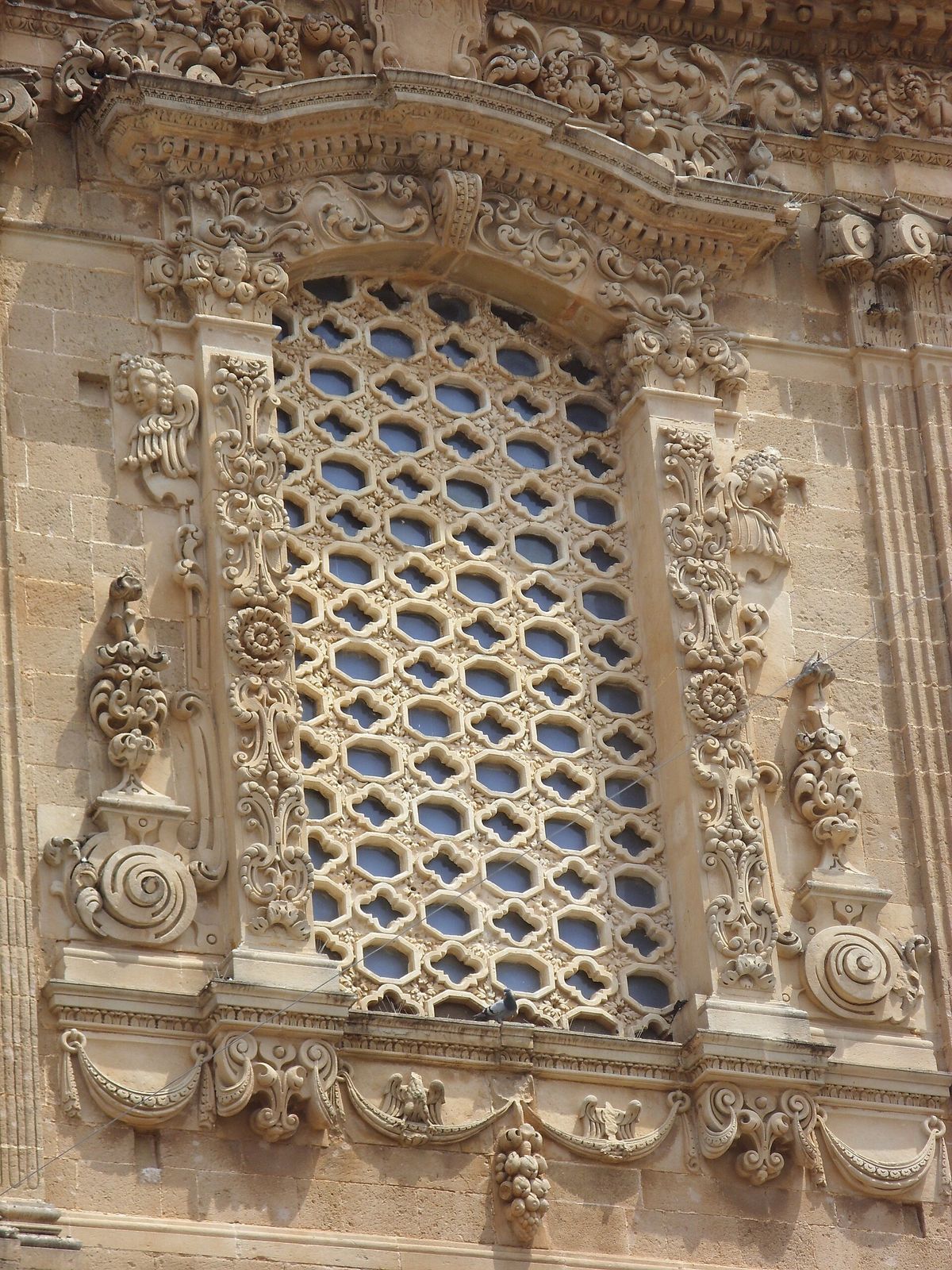
The three-tier façade is built of carparo, a local building stone, and Lecce stone, a local limestone. Its design draws on Jesuit architecture, associated with the Society of Jesus, a Catholic religious order. Above the entrance, a statue of the crucified Jesus is attended by four cherubim, or angelic beings; four side niches hold the Evangelists, traditionally identified as the authors of the Gospels. The tier above has a large grilled window, flanked by statues of John the Baptist and Saint Sebastian, with Saint Peter and Saint Paul at its outer ends. Statues of Saint Michael the Archangel and a guardian angel, understood in Christian belief as a protective angel, stand on the broken pediment. Aprile Petrachi of Melendugno made the wooden entrance door in 1696. The bell tower dates to 1702.
Interior
Nave and side chapels
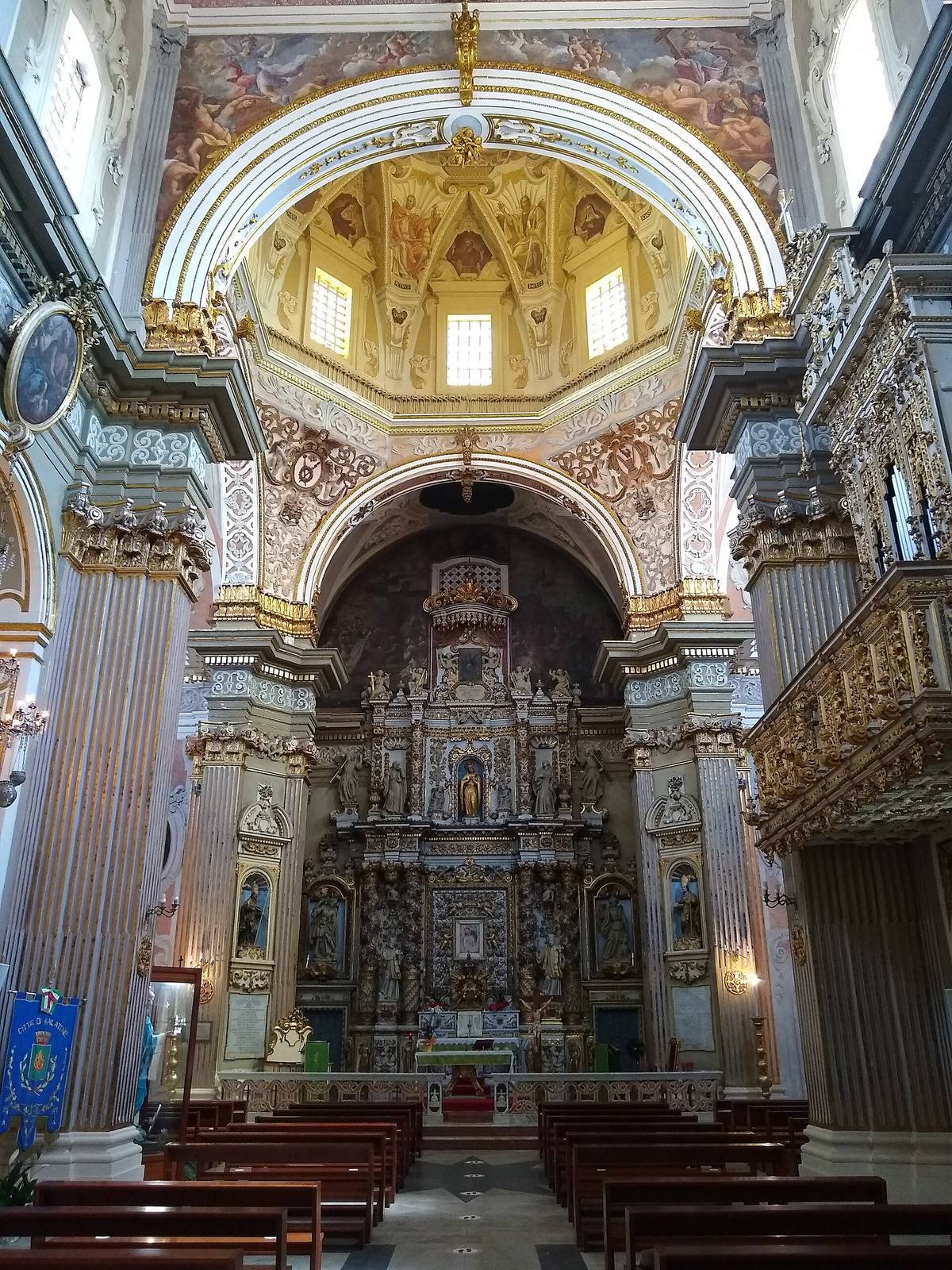
The nave is lined with side chapels whose altars are dedicated to Saint Anthony of Padua, Saint Blaise, Saint Peter, the Holy Family, Our Lady of Mount Carmel, and the Mother of Good Counsel. The last two are titles of Mary, while the Holy Family refers to Jesus, Mary, and Joseph.
Transept altars
The transept contains altars dedicated to Saint Francis of Paola and the Crucifix. The principal painting of Saint Francis shows him above a cloud, blessing Galatone below. A canvas associated with the Crucifix marks the place where the sacred icon originally stood.
Dome and pillars
An octagonal dome rises over the transept on four pillars. Its interior was frescoed in 1944 with the discovery of the Cross by Saint Helena, a Roman empress associated in Christian tradition with its finding. Niches in the pillars hold statues of Augustine, Jerome, Ambrose, and Gregory the Great, influential theologians known as the Latin Church Fathers. Pope Boniface VIII proclaimed them Doctors of the Church.
Main altar and icon
The main altar, made of Lecce stone, has twisted columns and bas-reliefs depicting the cardinal virtues of prudence, justice, temperance, and fortitude. The Byzantine icon stands at its center, flanked by statues of Saint Francis Xavier and Saint Francis de Sales.
Paintings and wooden fittings
Other interior paintings are attributed to Aniello Letizia, Megha, Amorosi, and additional artists. Petrachi also made the organ, choir gallery, and wooden coffered ceiling in 1696. The gallery is a raised space for the choir or organ, while the ceiling is divided into recessed panels.