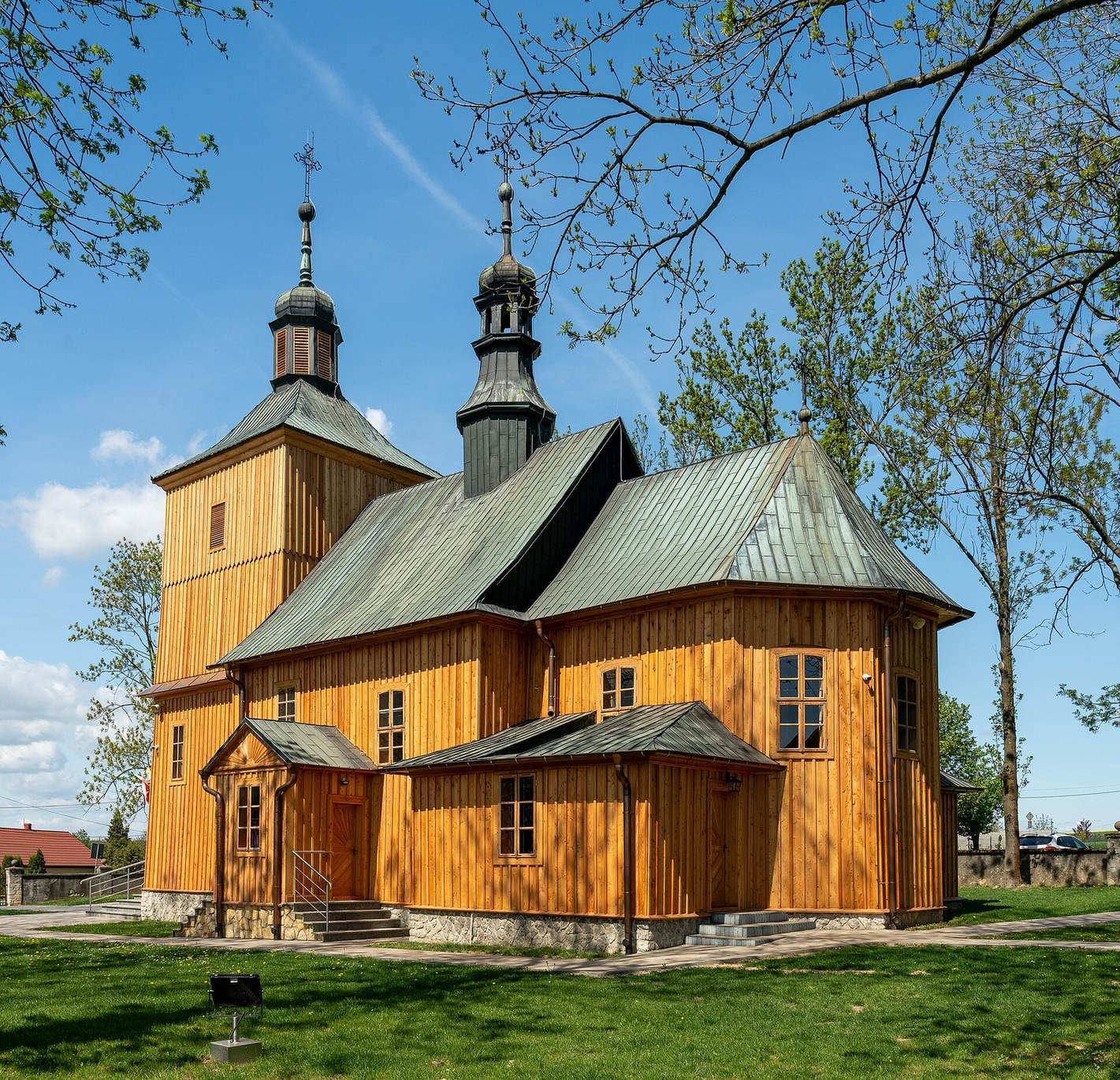
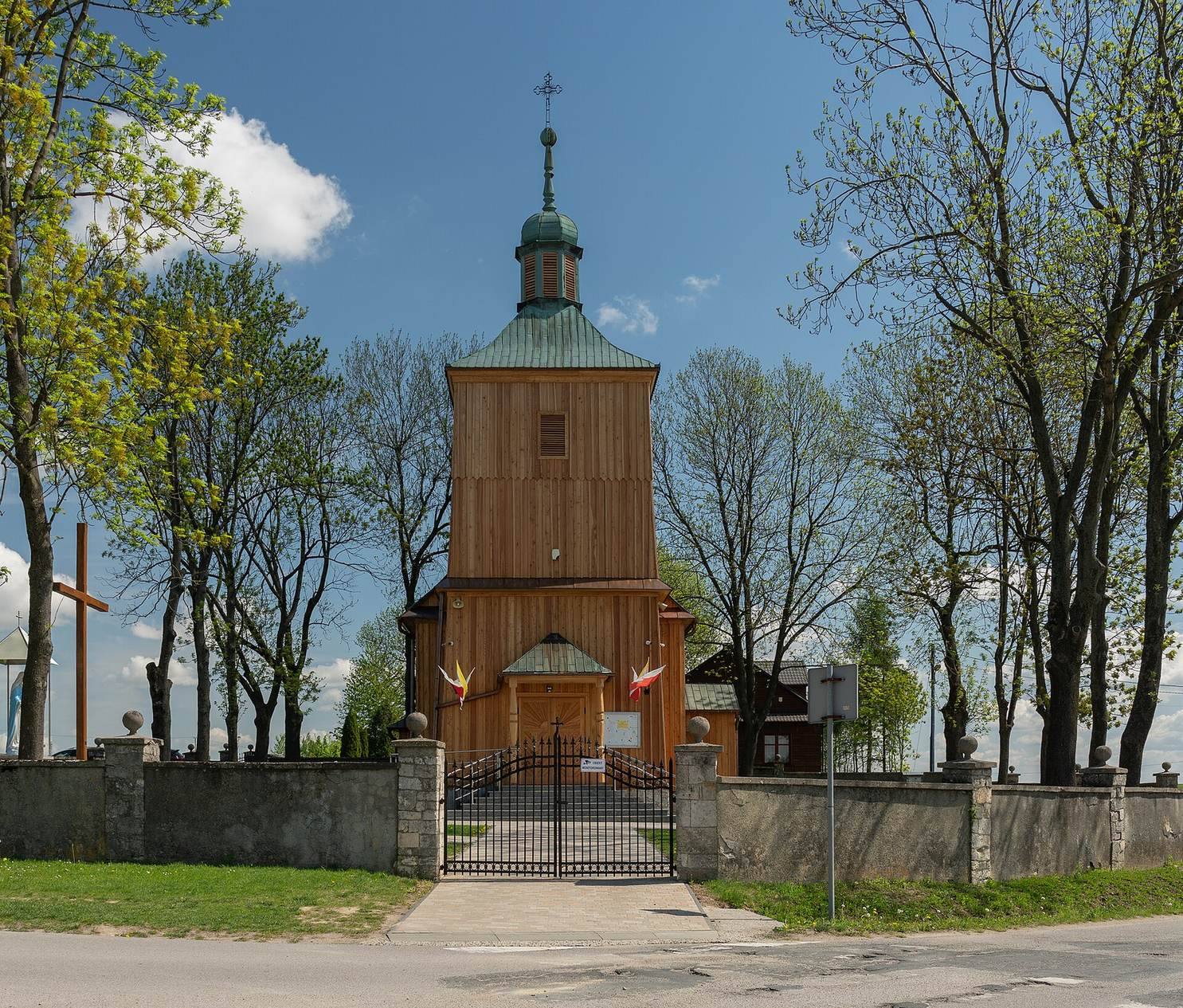
Our Lady and Saint Isidore Church in Mostek: A Timber Roman Catholic Parish Church
Site at a Glance
- Popularity
- Very Low
- Country
- Poland
- Primary era
- Early Modern
- Eras represented
- Early Modern, Modern
- Civilizations
- Polish–Lithuanian Commonwealth
- Site type
- Religious
- Remains
- Church
On this page8 sections
History
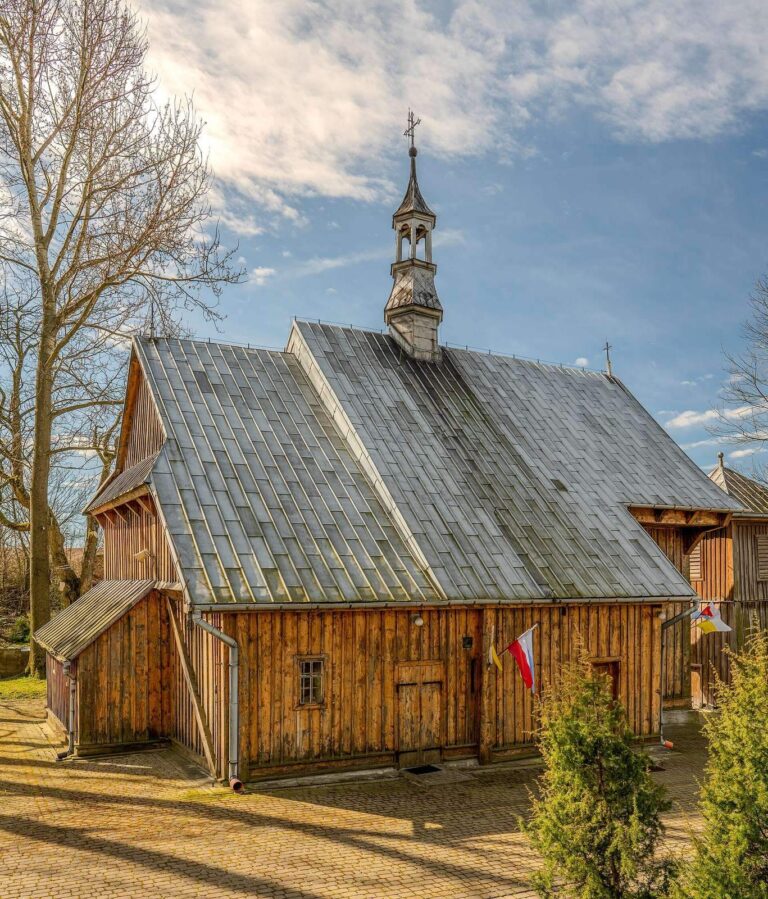
Our Lady and Saint Isidore Church in Mostek is a Roman Catholic parish church in Poland, dedicated to Our Lady of Częstochowa and associated with the parish of that name. Our Lady of Częstochowa is a title of the Virgin Mary linked to a revered Marian icon in Poland. The church began at Smardzowice in 1571, with construction funded by Jan Cianowski, then owner of Cianowice. It was later altered during the Baroque period, a European artistic and architectural style associated principally with the seventeenth and eighteenth centuries.
Baroque repairs and alterations
Extensive repairs took place between 1731 and 1748. During the Baroque period, the church also gained a bell turret, a tower on its west side, and roofed, open-sided galleries.
Move to Mostek
The church was relocated from Smardzowice to Mostek in 1938. Rebuilding was completed in 1951 and altered the building’s proportions.
Remains
Timber construction and plan
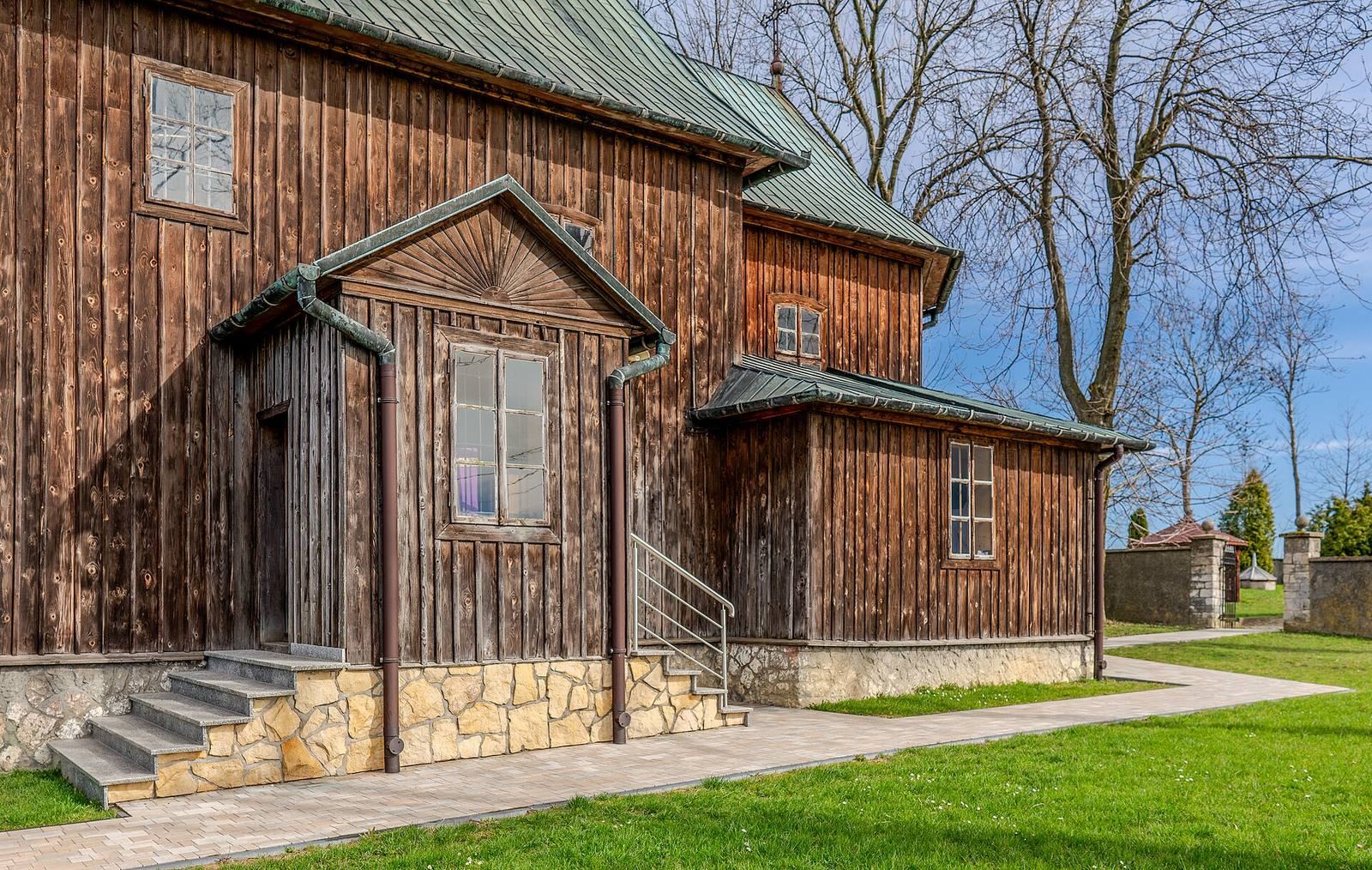
The present church is built of larch, with horizontal timbers joined at their corners. Upright posts support the tower. The main body is wider than the sanctuary end, which has three sides; separate roofs cover the two parts, and attached sacristy rooms serve for church-service preparations. The original church, built in 1571, had a three-nave plan, with a central hall and two side aisles. Its timber roof truss, a framework supporting the roof, was combined with boxed-in ceiling sections.
Interior and entrance features
Altars and furnishings
A 1727 inspection by Bishop Kunicki, a senior Christian cleric with oversight of a diocese, listed five altars. The main altar was dedicated to the Assumption of Mary, the Christian belief that Mary was taken body and soul into heaven at the end of her earthly life. The Epistle side, associated with readings from the Epistles, held altars to Saint Joseph, traditionally regarded as Mary’s husband and Jesus’s foster father, and Saint Anne, traditionally regarded as Mary’s mother. On the Gospel side, associated with readings from the Gospels, stood altars to Saint Margaret and the Mother of God, another title for Mary. The furnishings are late Baroque, dating to around 1740, with Gothic-Renaissance details drawing on medieval and Renaissance traditions.
Southern doorway
The southern doorway has an ogee-shaped lintel, whose profile is formed by opposing curves. It bears the Prus coat of arms, a heraldic emblem associated with Polish noble families.