Church of the Annunciation of the Most Holy Theotokos: An Orthodox Church in Stepanovskoye, Russia
Site at a Glance
- Popularity
- Very Low
- Country
- Russia
- Primary era
- Early Modern
- Eras represented
- Early Modern
- Civilizations
- Russian
- Site type
- Religious
- Remains
- Church
On this page7 sections
History
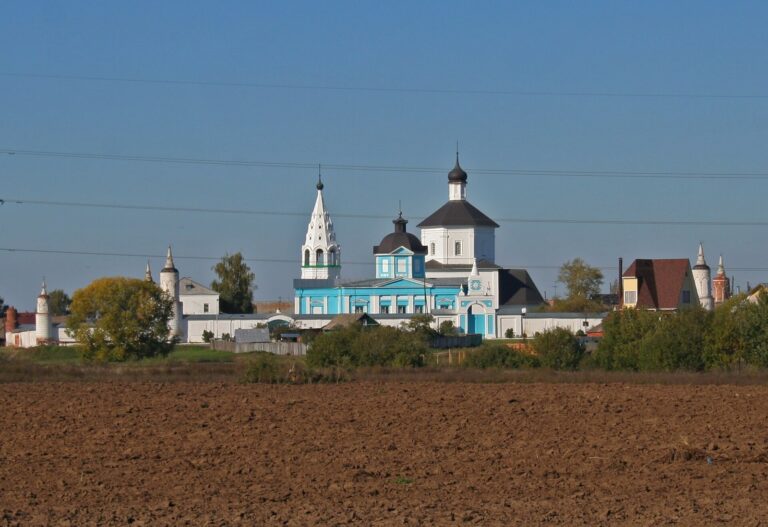
The Church of the Annunciation of the Most Holy Theotokos is an Orthodox church in Stepanovskoye, Russia. Its foundation is dated to 1535, while construction is placed between 1535 and 1565. Its architectural style is Moscow Baroque, a late seventeenth-century Russian style. The Annunciation refers to the Christian account of the angel Gabriel telling Mary she would bear Jesus; Theotokos, a title for Mary, means “God-bearer.” The church formed part of a two-church ensemble in the village.
Foundation and rebuilding
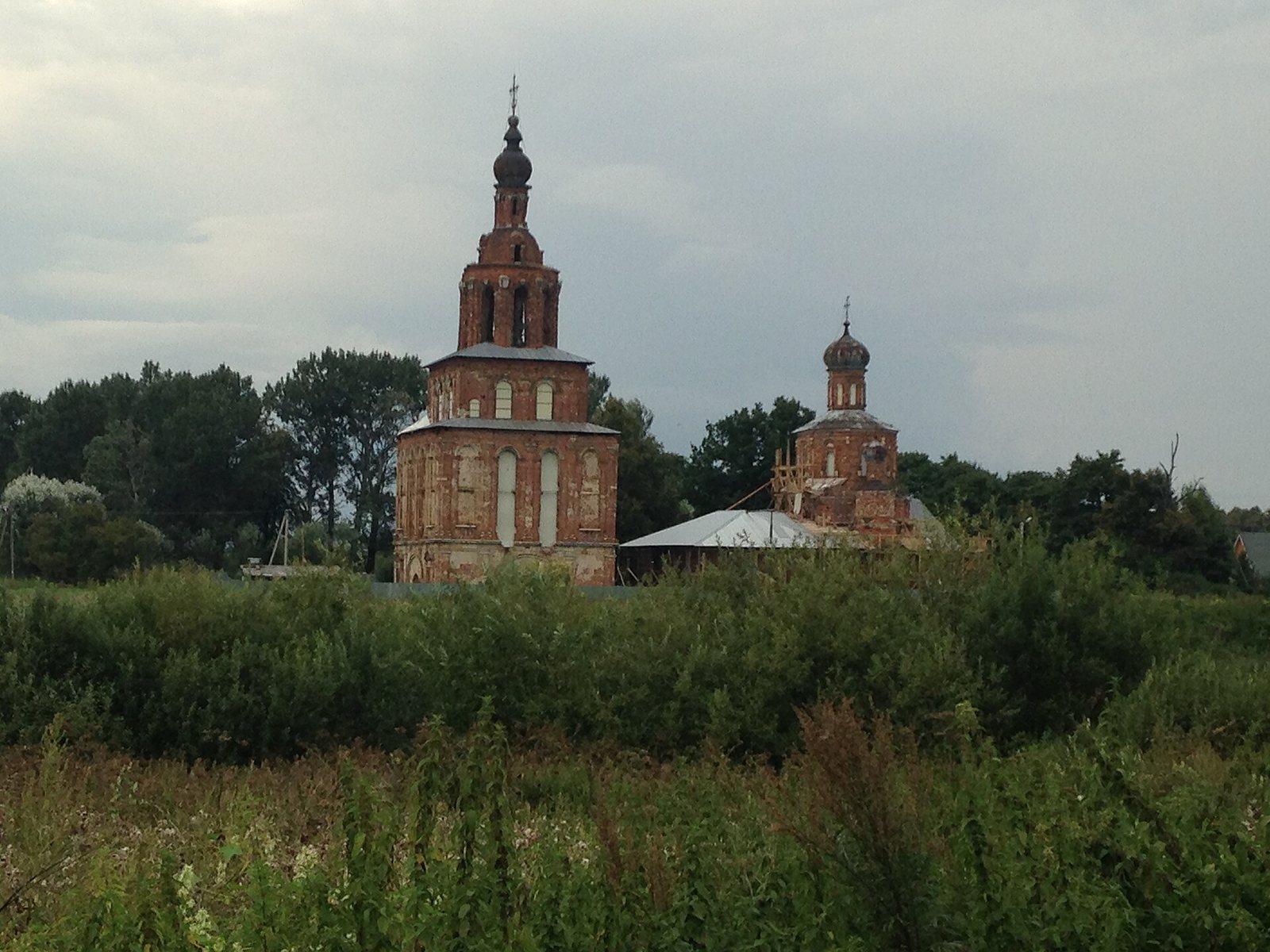
Ivan IV, known as Ivan the Terrible, granted the Stepanovskoye estate to the Russian nobleman Nikita Romanovich Zakharyin-Yuriev after the 1552 campaign against Kazan. The Annunciation church and the Church of St Isaac of Dalmatia made up the village’s two-church ensemble.
M. T. Likhachov, a senior court official, rebuilt the Annunciation church during the 1680s and 1690s. In the early eighteenth century, Prince M. P. Gagarin gave the church brocade priestly vestments bearing a dedicatory inscription.
Closure and abandonment
In spring 1922, valuables were confiscated from both churches in the complex. The Annunciation church closed in 1938, and its building was converted into a grocery store. After the Second World War, both churches were abandoned and gradually deteriorated.
Restoration and present status
A local Orthodox community was registered in the late 1990s, and the church was transferred to the faithful. In 2000, community members cleared the grounds and prepared a restoration project. Repairs and restoration have continued gradually. The church is a federally significant cultural heritage site in Russia.
Remains
Architecture and layout
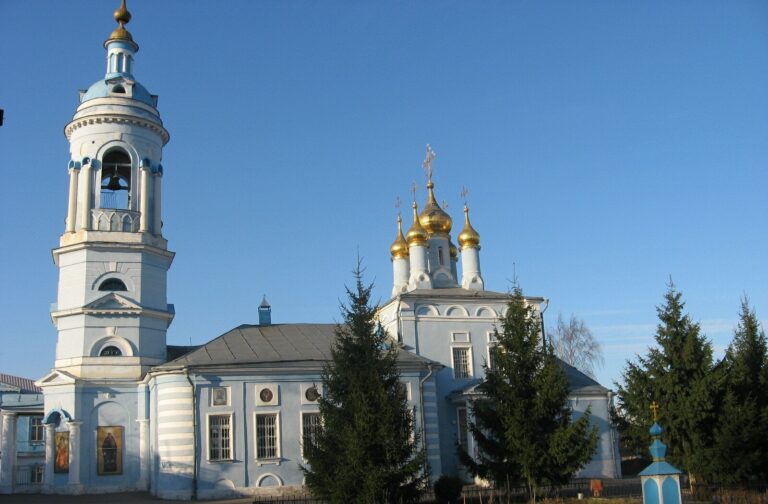
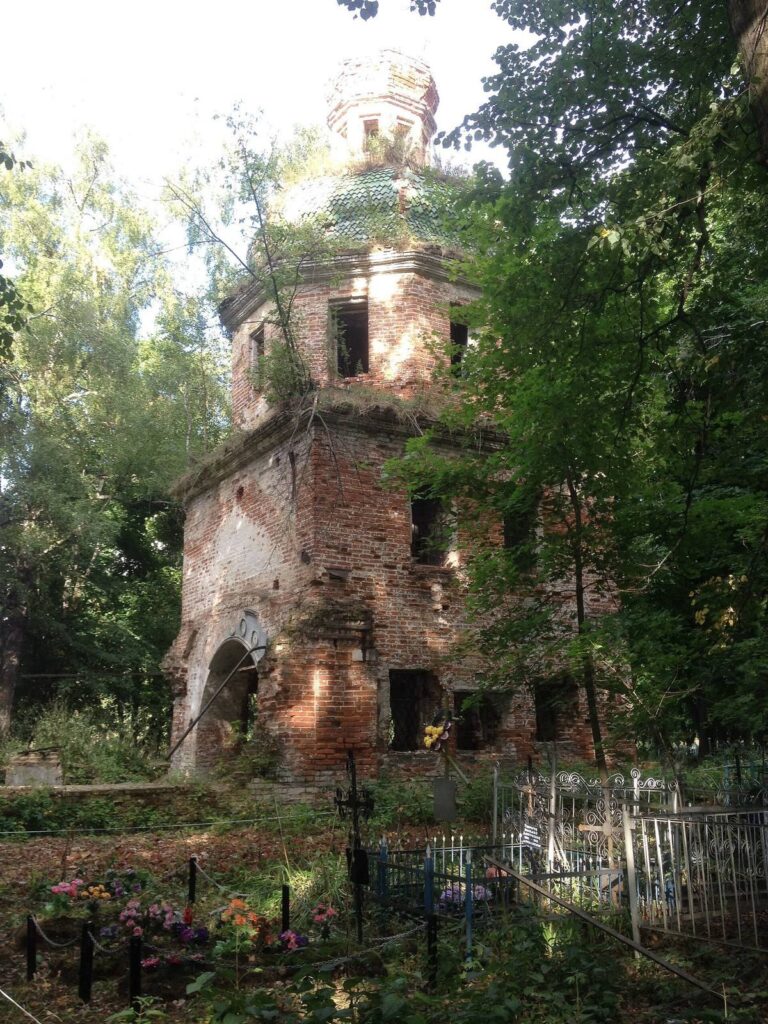
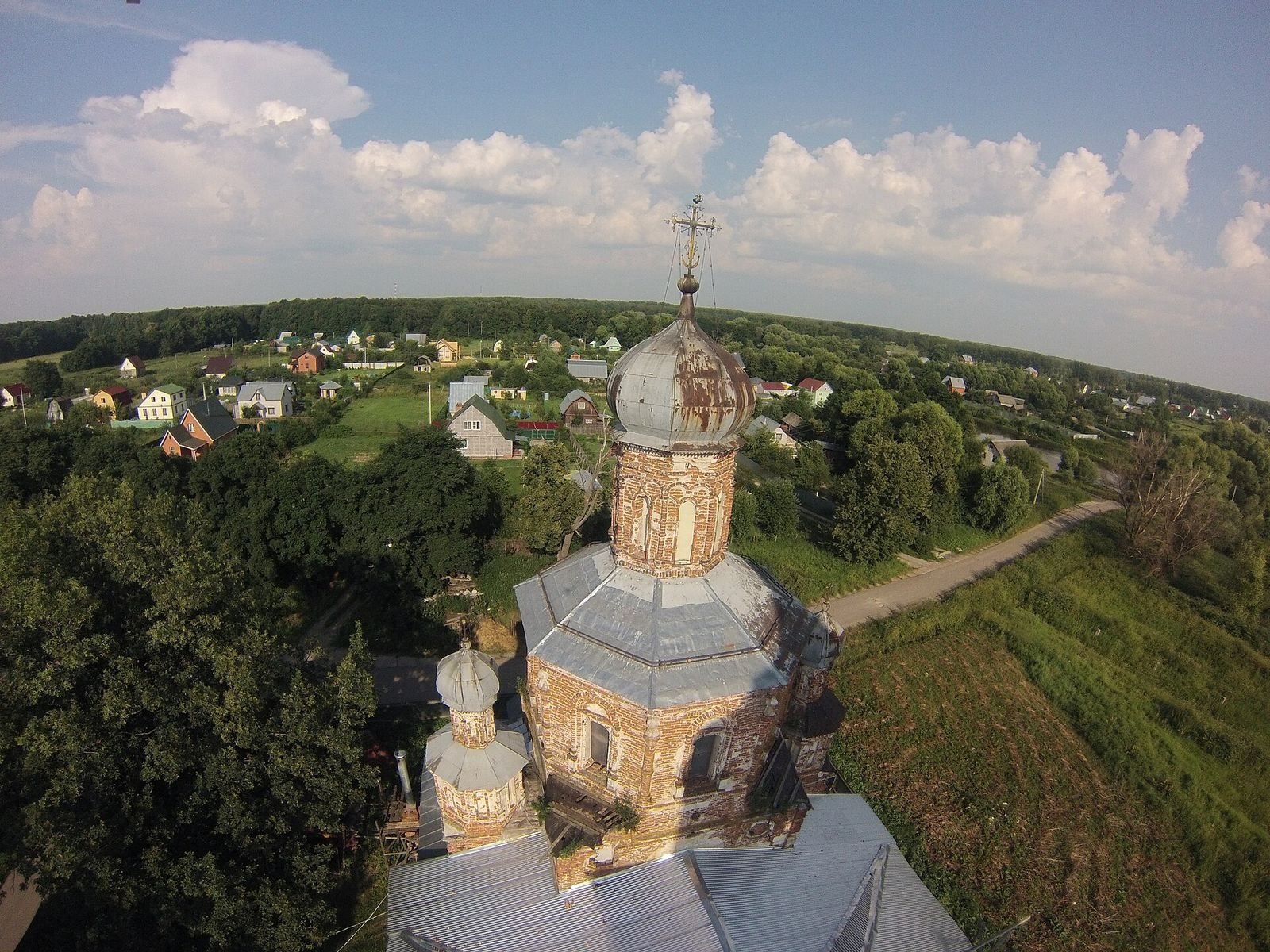
The church is a single-domed, pillarless building with one apse, the sanctuary end of a church. Its octagonal upper stage rises above a square lower stage. Two chapels, dedicated to St Nicholas and St George, are joined by a shared refectory, a communal hall. A repaired side chapel is sometimes used for services. The Church of St Isaac of Dalmatia is also part of the two-church complex.
Historic furnishings
The church held a round icon of John the Evangelist, traditionally attributed to Peter I, also known as Peter the Great. John is traditionally identified as the author of the Gospel of John. Other furnishings included a Byzantine-style icon of St Nicholas and a Greek panagia, an Orthodox devotional object associated with the Virgin Mary, containing a fragment of St Nicholas’s relics.