Cingoli Cathedral: A Roman Catholic Co-Cathedral in Italy
Site at a Glance
- Popularity
- Low
- Country
- Italy
- Primary era
- Early Modern
- Eras represented
- Early Modern, Modern
- Civilizations
- Italian, Papal States
- Site type
- Religious
- Remains
- Cathedral
On this page14 sections
History
Cingoli Cathedral is a Roman Catholic church in Cingoli, Italy, dedicated to the Assumption of Mary, the Catholic belief that she entered heaven in both body and soul. Construction of its present building began in 1619, and its structural work was completed in 1654.
Plans and construction
The cathedral replaced a church dedicated to the Holy Saviour, which stood on land belonging to the Simonetti family. Its last renovation, in 1535, gave it a Renaissance-style façade, reflecting renewed interest in classical art and learning. Cingoli’s principal church, Santa Maria Maggiore, had become too small as people migrated from the countryside and the population grew. On 19 March 1564, the town government chose the main square for a larger church to replace Holy Saviour. Other urgent demands delayed the project for more than half a century.
The first stone was laid on 7 July 1619 by Rutilio Matuzzo, the Bishop of Osimo’s representative. The design was entrusted to Ascanio Passeri of Pergola, and the earlier church was demolished to make way for the new building. In 1634, the dome and vaults collapsed, probably because poor-quality materials had been used. Work resumed in 1644.
Consecration and cathedral status
On 27 October 1654, the Bishop of Osimo’s representative consecrated the church, although the choir, altar decoration, and planned stone facing for the façade were unfinished. On 3 August 1659, the church was granted permanently to the canons of Santa Maria Maggiore, clergy belonging to its church chapter. They transferred altarpieces of Saint Charles, Saint Albertino, and the Virgin, as well as the old choir, the relic of Saint Candido, and other religious furnishings. Prominent families in Cingoli took responsibility for decorating chapels in return for patronage rights.
On 30 August 1693, Cardinal Opizzo Pallavicini, a senior Catholic cleric and Bishop of Osimo, formally consecrated the church to the Assumption of Mary. Pope Benedict XIII, who reigned from 1724 to 1730, elevated it to cathedral status on 20 August 1725, when the Diocese of Cingoli was re-established. In 1726, the remains of Bonfilius, an 11th-century monk and bishop of Foligno, were interred in the cathedral.
Later work and ecclesiastical role
After Francesco Saverio Maria Felice Castiglioni became Pope Pius VIII in 1829, work began on the façade. Pius VIII was a benefactor of the church, but his death on 30 November 1830 brought the project to a halt, leaving the façade incomplete. From 1937 to 1939, the cathedral chapter carried out further work inside the building. Since 1986, the church has been a co-cathedral, sharing cathedral status within the Diocese of Macerata-Tolentino-Recanati-Cingoli-Treia, an ecclesiastical district governed by a bishop.
Remains
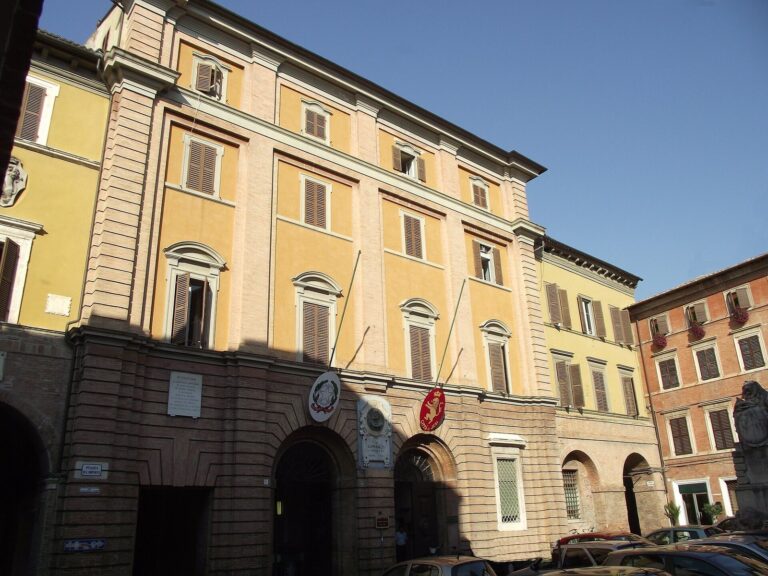
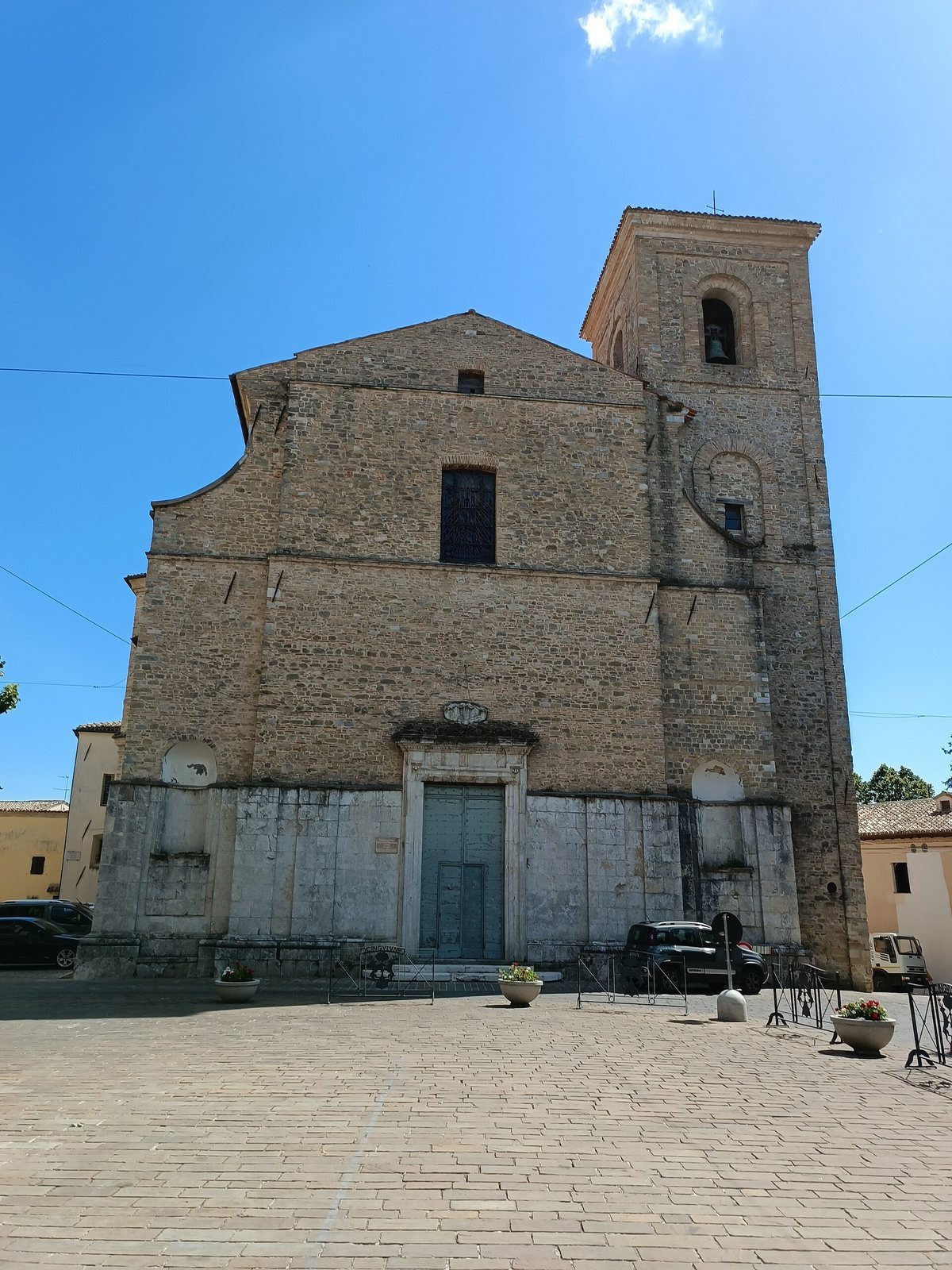
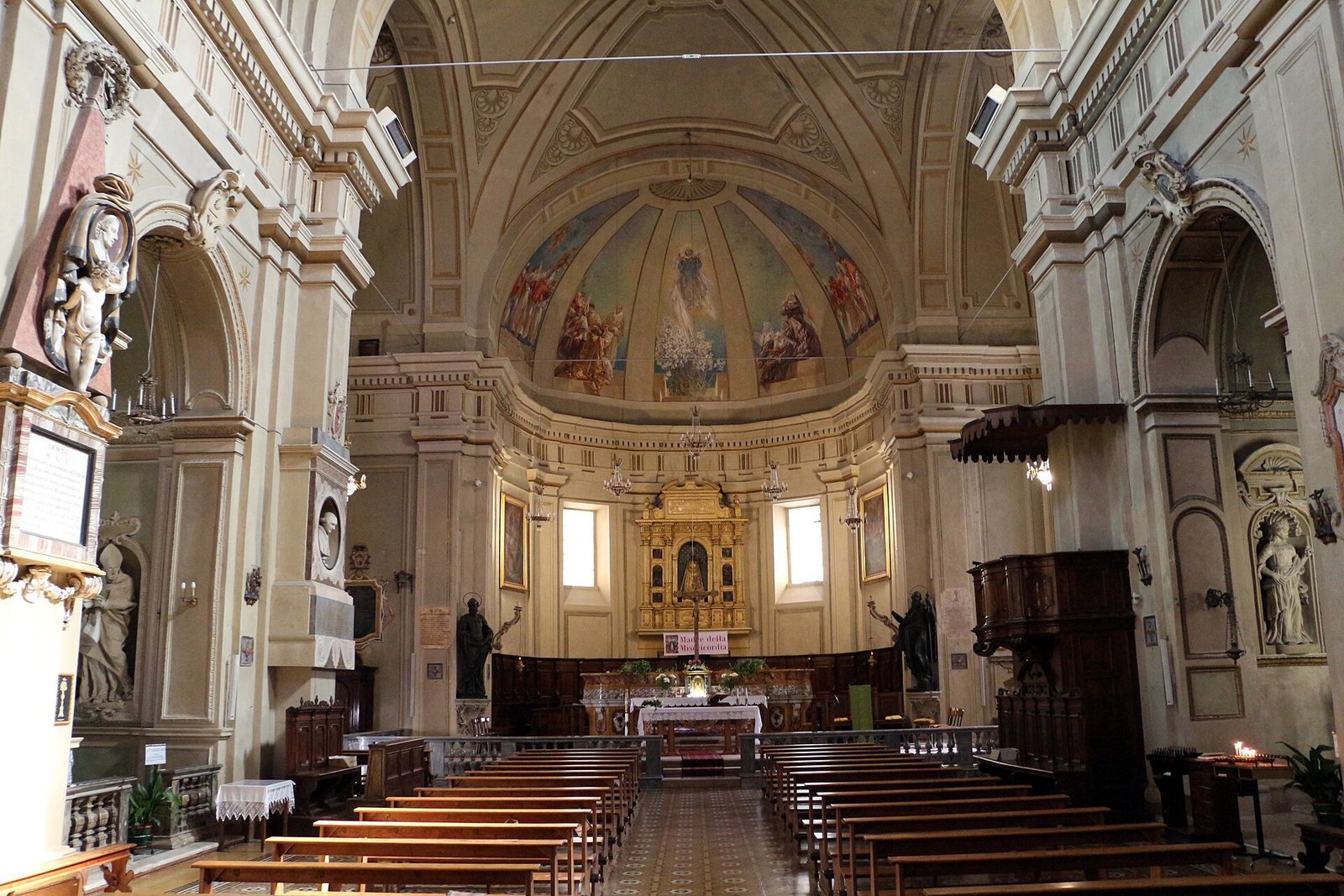
The cathedral stands on Cingoli’s central piazza, opposite the town hall. Its interior has a Latin-cross plan, with a nave crossed by transepts that end in apses, three chapels on each side, and a choir. The choir has three lobes. Outside, the substantial bell tower rises on the right, while the façade has a base of white stone and brickwork above.
The earlier church front
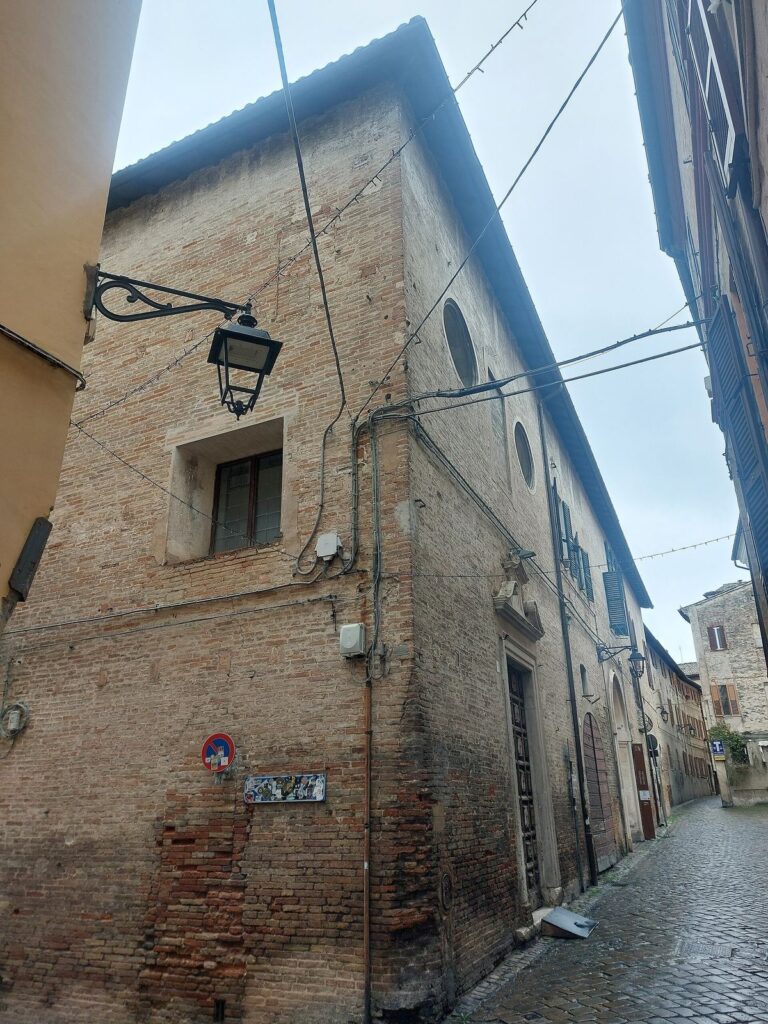
The west front of the former Holy Saviour church survives within the cathedral, incorporated into its north side. It is the remaining part of the building that preceded the cathedral.
Interior decoration and furnishings
Saint Cajetan Chapel
The second chapel on the right is dedicated to Saint Cajetan and the Raffelli family. Cajetan was an Italian priest and religious reformer who co-founded the Theatine order. The chapel contains a 1662 canvas by Pier Simone Fanelli showing Cajetan’s death, with the Virgin and Child, Saint Joseph, Saints Peter and Paul, and angels.
Flooring, windows, and vault decoration
The interior works included new flooring, stained-glass windows, and a balustrade around the sanctuary. Olivio Luchetti and Umberto Natalini painted monochrome decoration on the vaults.
Apse paintings
Donatello Stefanucci painted the apse with scenes of the Assumption of Mary and Cingoli’s patron saints, Esuperanzio and Sperandia. The paintings also include members of the cathedral confraternity, a religious association of lay people, wearing white and red garments, and Jesus preaching the Sermon on the Mount.
Paintings and memorials
An anonymous 16th-century canvas depicts Saint Albertino. The cathedral also contains a 19th-century cenotaph, a memorial that does not hold the person’s remains, made in scagliola, a decorative material used to imitate stone, especially marble. Ampelio Mazzanti made the cenotaph, and Pietro Tenerani sculpted a monument to Pope Pius VIII.
Zanino di Pietro’s polyptych
The sacristy, a room used for clergy and church furnishings, holds a two-tiered section of a polyptych, a painting made from several panels and often intended as an altarpiece. The work by Zanino di Pietro, a painter of French origin active in Venice and Bologna, came from nearby Valcarecce and dates to the end of the first decade of the 15th century. Its panels depict Saints Nicholas of Bari, Andrew, and Lucy. The central panel may be a trimmed version of Madonna Enthroned with Child, now in Ferrara’s national art gallery.
Bellinzoni polyptych
Another polyptych in the sacristy is attributed to Giovanni Antonio Bellinzoni of Pesaro. It shows the Madonna and Child enthroned with angels, Saint Catherine of Alexandria, Saint Peter, Saint Esuperanzio, Saint Bonfilius, the Crucifixion, and other saints. Its upper pointed sections depict the four Doctors of the Church, with a further Crucifixion at the center.
Pius VIII’s painting
The sacristy also holds the painting of the Virgin and Child enthroned among saints that Pius VIII gave to the cathedral. It is used in the annual procession for the feast of the Assumption.