St Bartholomew’s Church Complex in Łęki Górne, Poland
Site at a Glance
- Popularity
- Low
- Country
- Poland
- Primary era
- Medieval
- Eras represented
- Medieval, Early Modern
- Civilizations
- Kingdom of Poland, Polish–Lithuanian Commonwealth
- Site type
- Religious
- Remains
- Church
On this page9 sections
History
Construction and subsequent changes
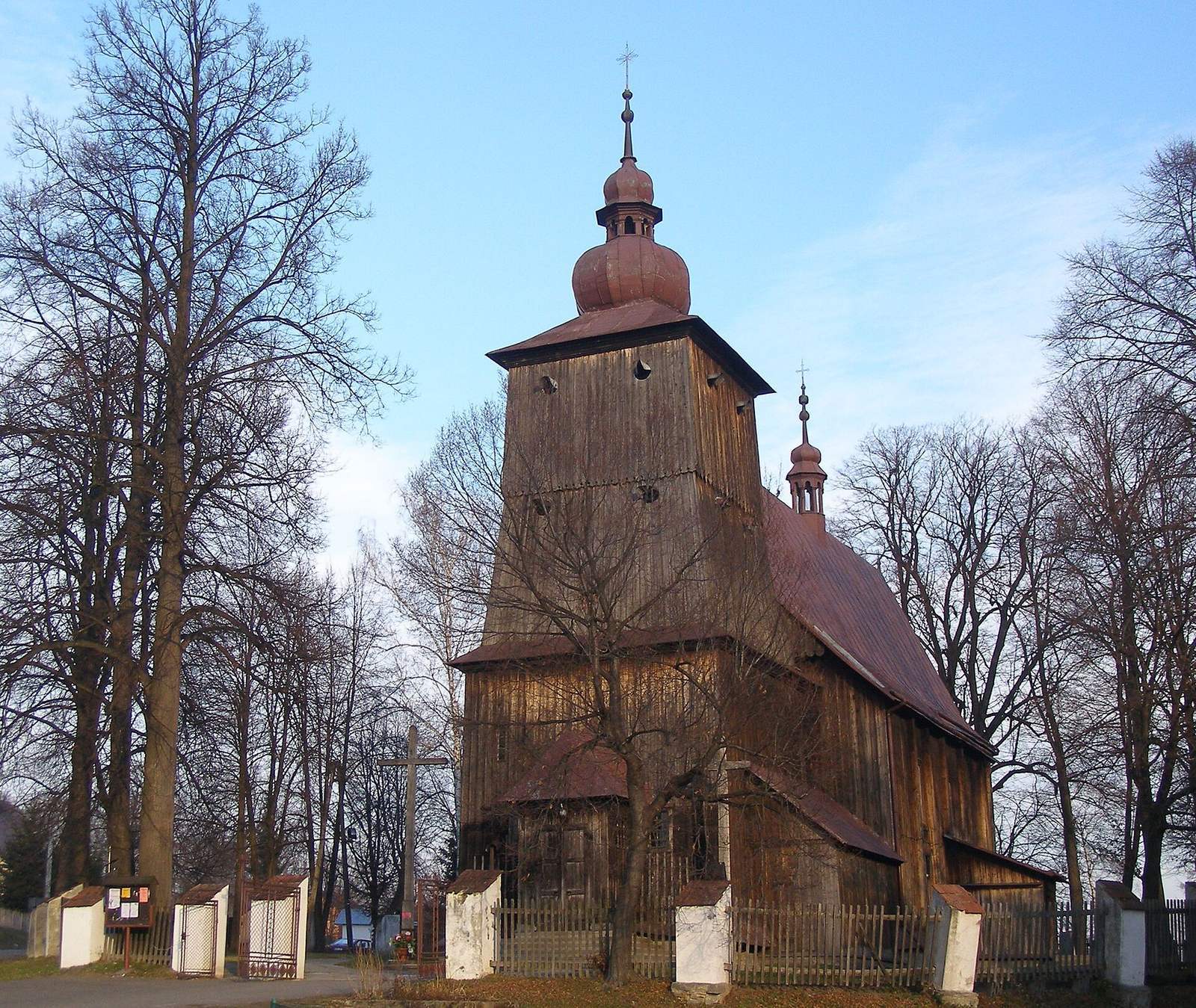
St Bartholomew’s Church Complex is a Roman Catholic church and churchyard in Łęki Górne, Poland. Its church was built in 1484 in the Gothic style, a medieval European architectural style. Dedicated to St Bartholomew the Apostle, one of the Twelve Apostles in Christian tradition, it is affiliated with the parish of the same dedication.
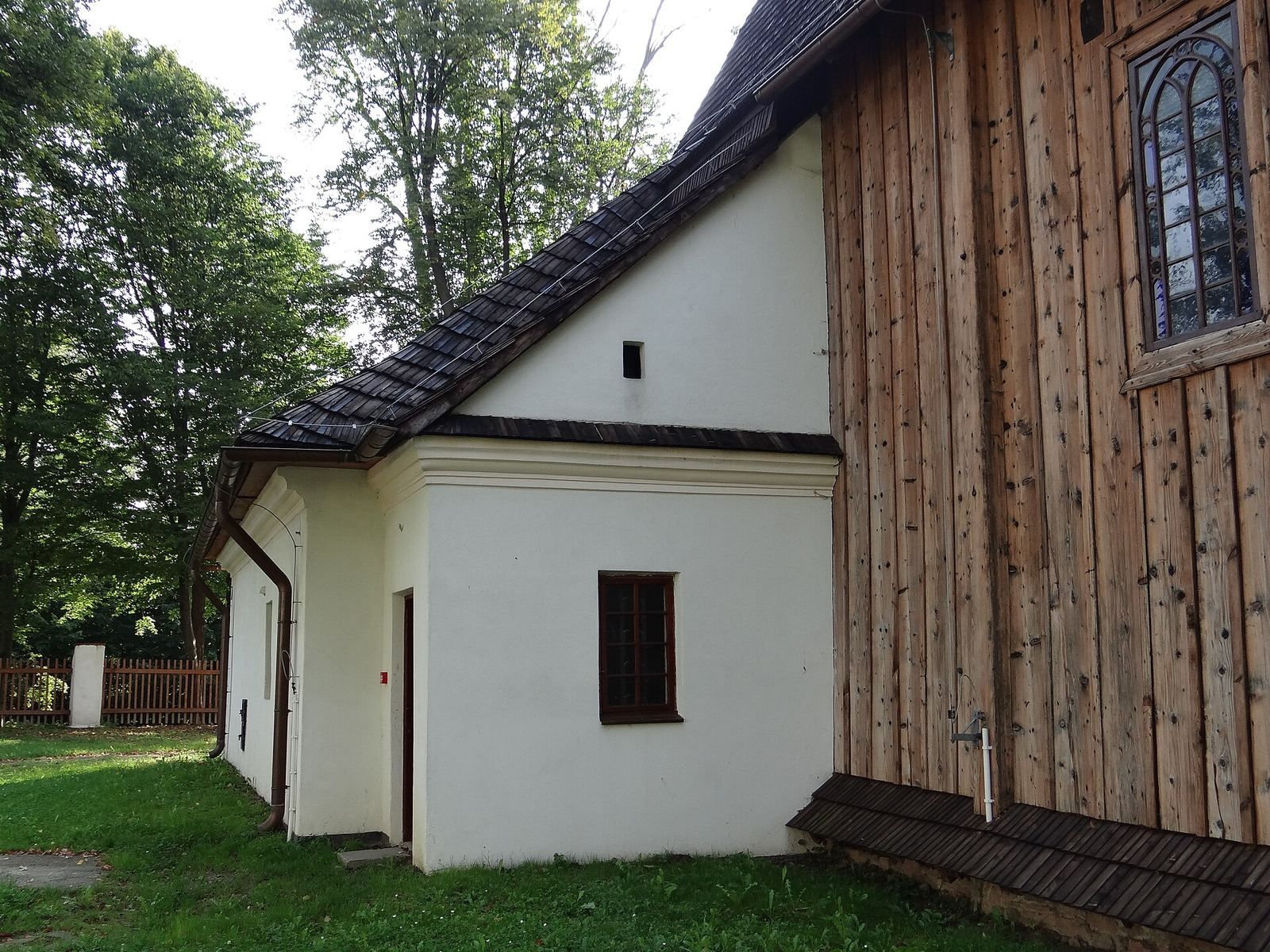
A masonry sacristy, a room used to prepare for services and store liturgical objects, was added in the seventeenth century. A wooden tower was erected in the second half of the eighteenth century.
Repairs were carried out after 1936, again in 1966, and during 2011–2014.
Remains
Church and grounds
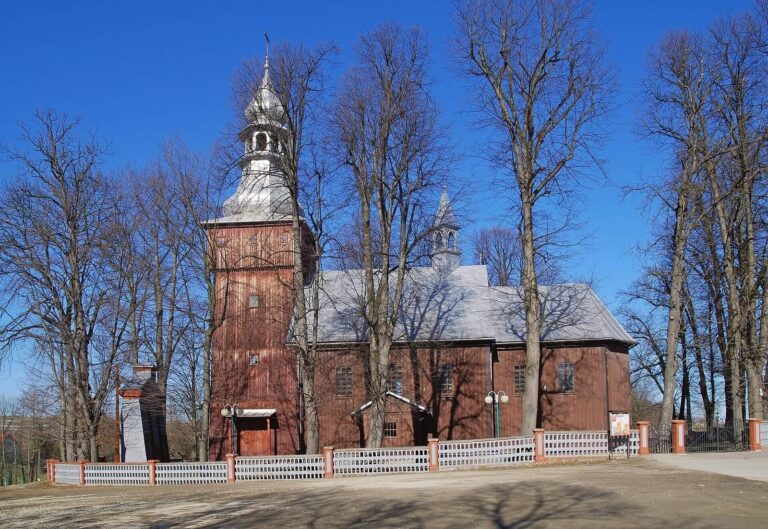
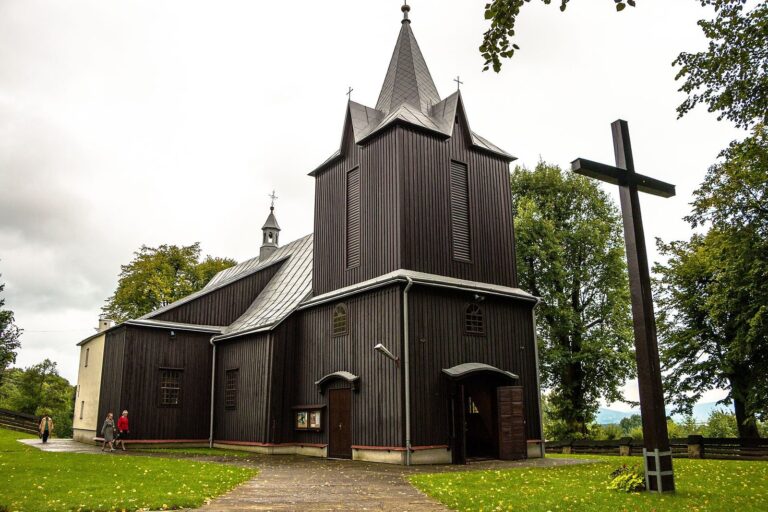
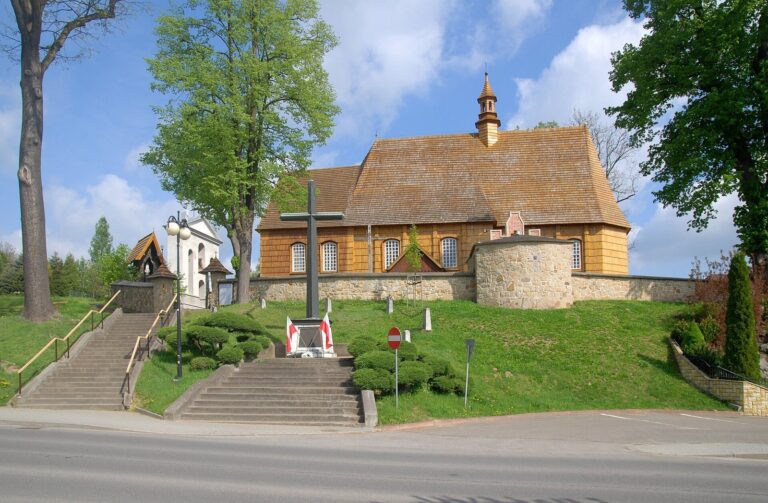
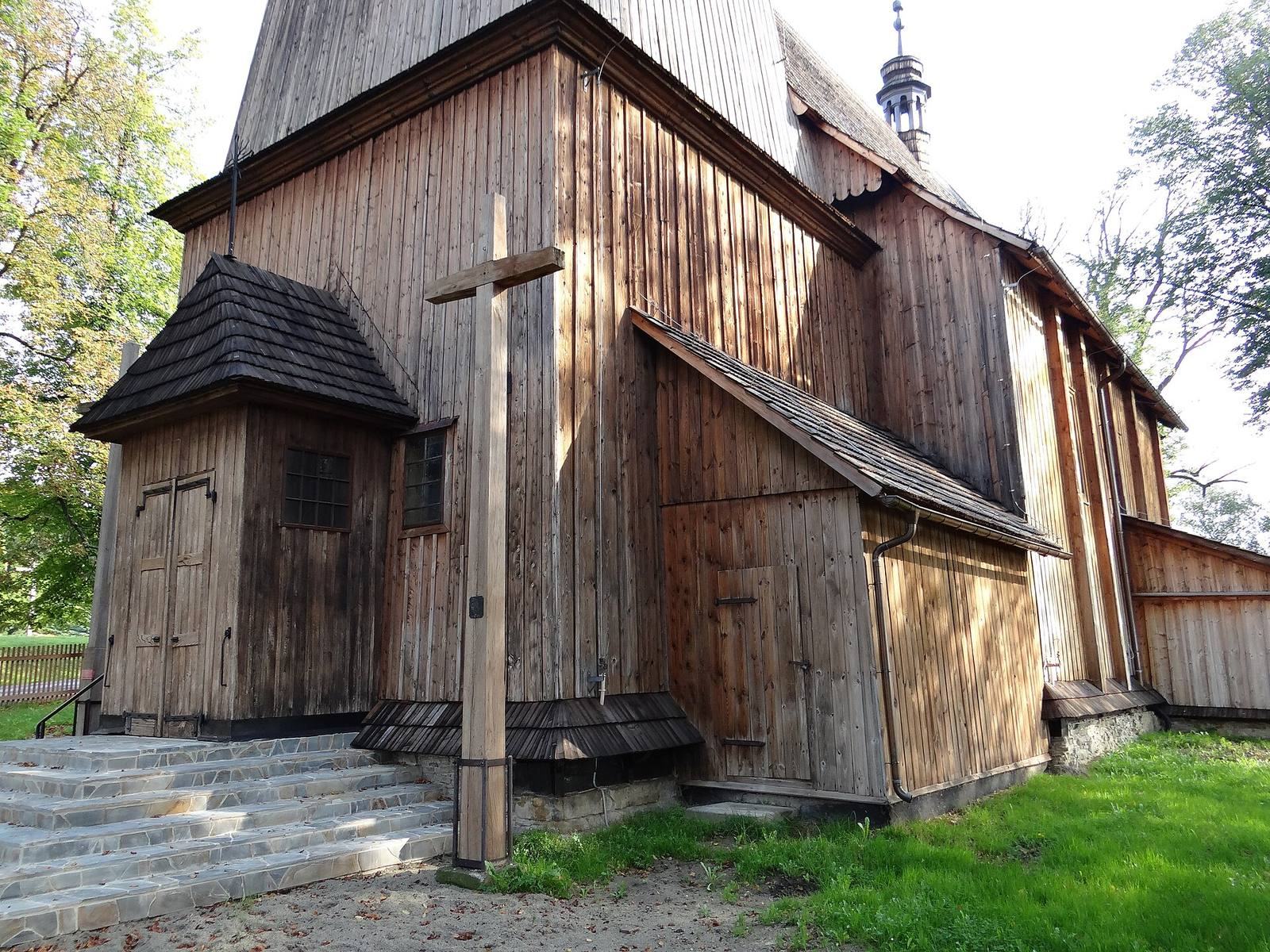
The complex includes a single-nave larch church and a churchyard cemetery. Its horizontal timbers are joined to form log-built walls, which rest on a plinth of concrete and stone. The chancel, the area around the altar, is as tall as the nave and ends in three angled sides. The gabled roof is covered in sheet metal and has a small Baroque bell turret, in an elaborate, dramatic style. Supporting members reinforce the walls. A masonry sacristy is also part of the complex.
Tower and bells
A tower built on upright structural posts stands at the front of the church. It has an upper bell stage, the part of the tower that houses the bells, and a Baroque cap. Three bells hang in the tower. The oldest was cast in 1544 by Tymoch Andrijew of Pskov. The other two, named St Bartholomew the Apostle and Our Lady of the Assumption, were made in 1923 at the Felczyński bell foundry in Przemyśl.
Interior
Altar and furnishings
The wooden high altar dates to the third quarter of the eighteenth century. It is Rococo, a lighter, ornate style, and is painted in several colors, gilded, and richly ornamented. The wooden baptismal font dates to the beginning of the seventeenth century and follows the late Renaissance, a later phase of the European Renaissance art and architectural tradition. The church also contains a Baroque pulpit and three sets of Mannerist pews from the beginning of the seventeenth century. Mannerism developed from the Renaissance.
Paintings and chancel arch crucifix
A Gothic painting of the Dormition, the Virgin Mary’s death, dates to the last quarter of the fifteenth century and was painted by Lazarus Gertner of Ulm. A Baroque painting of the Crucifixion of Christ dates to the second half of the seventeenth century. A seventeenth-century Baroque crucifix is placed in the chancel arch, which separates the chancel from the nave.
Organ
The Rococo organ dates to the second half of the nineteenth century.