Nymphaeum of Alexander Severus: A Roman Terminal Display Fountain
Site at a Glance
- Popularity
- Medium
- Country
- Italy
- Primary era
- Classical
- Eras represented
- Classical
- Civilizations
- Roman
- Site type
- Civic
- Remains
- Fountain
On this page9 sections
History
Imperial construction and water supply
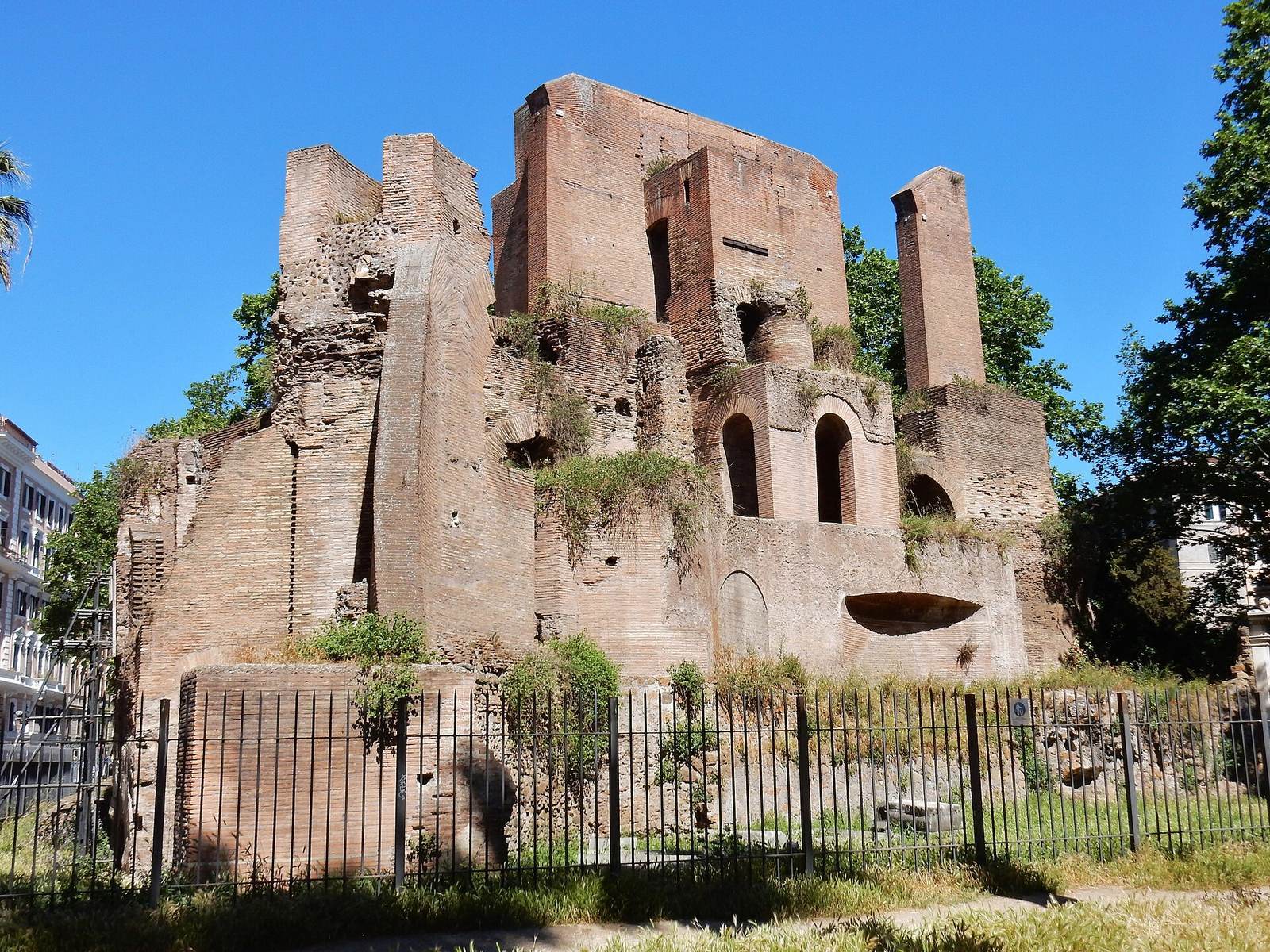
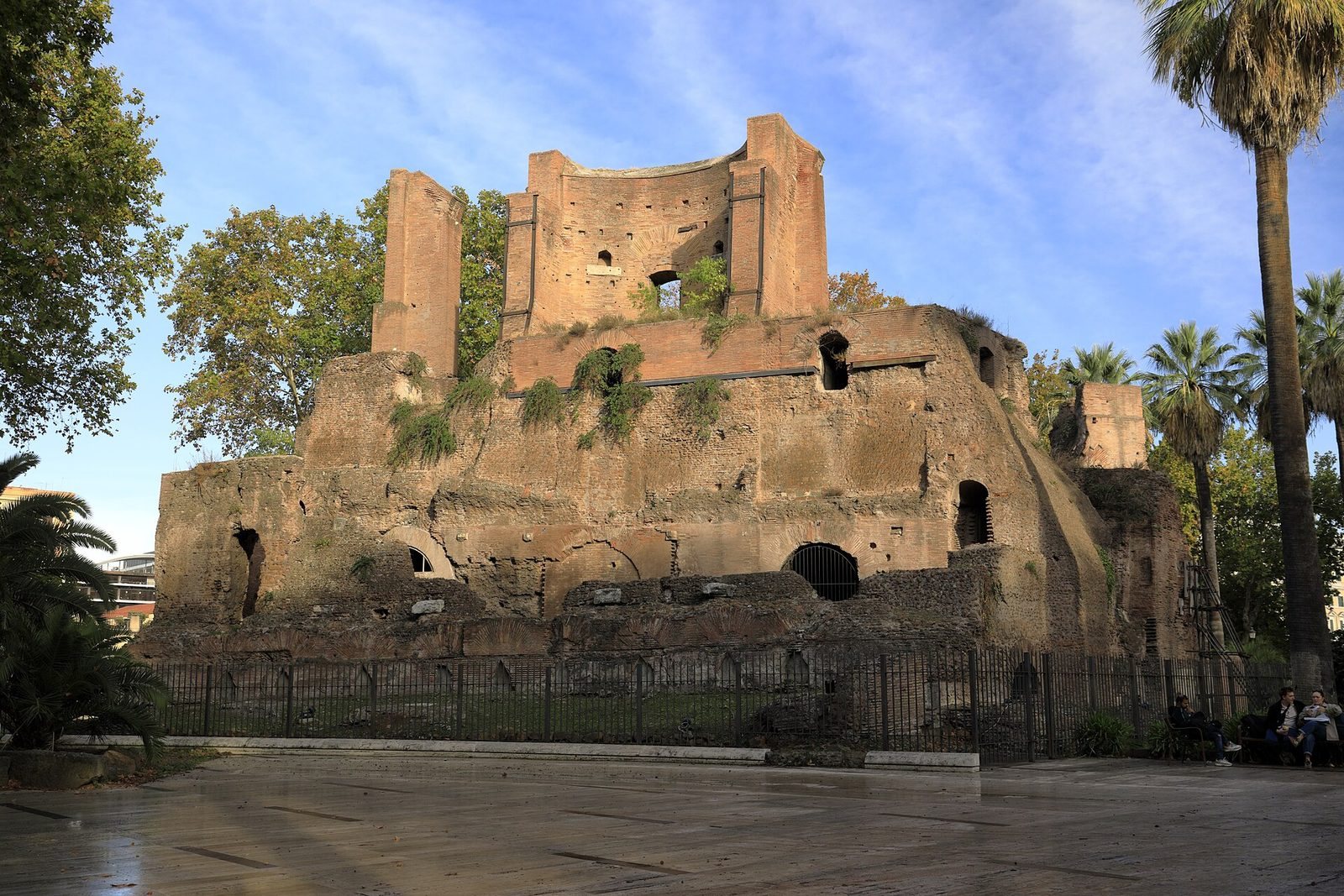
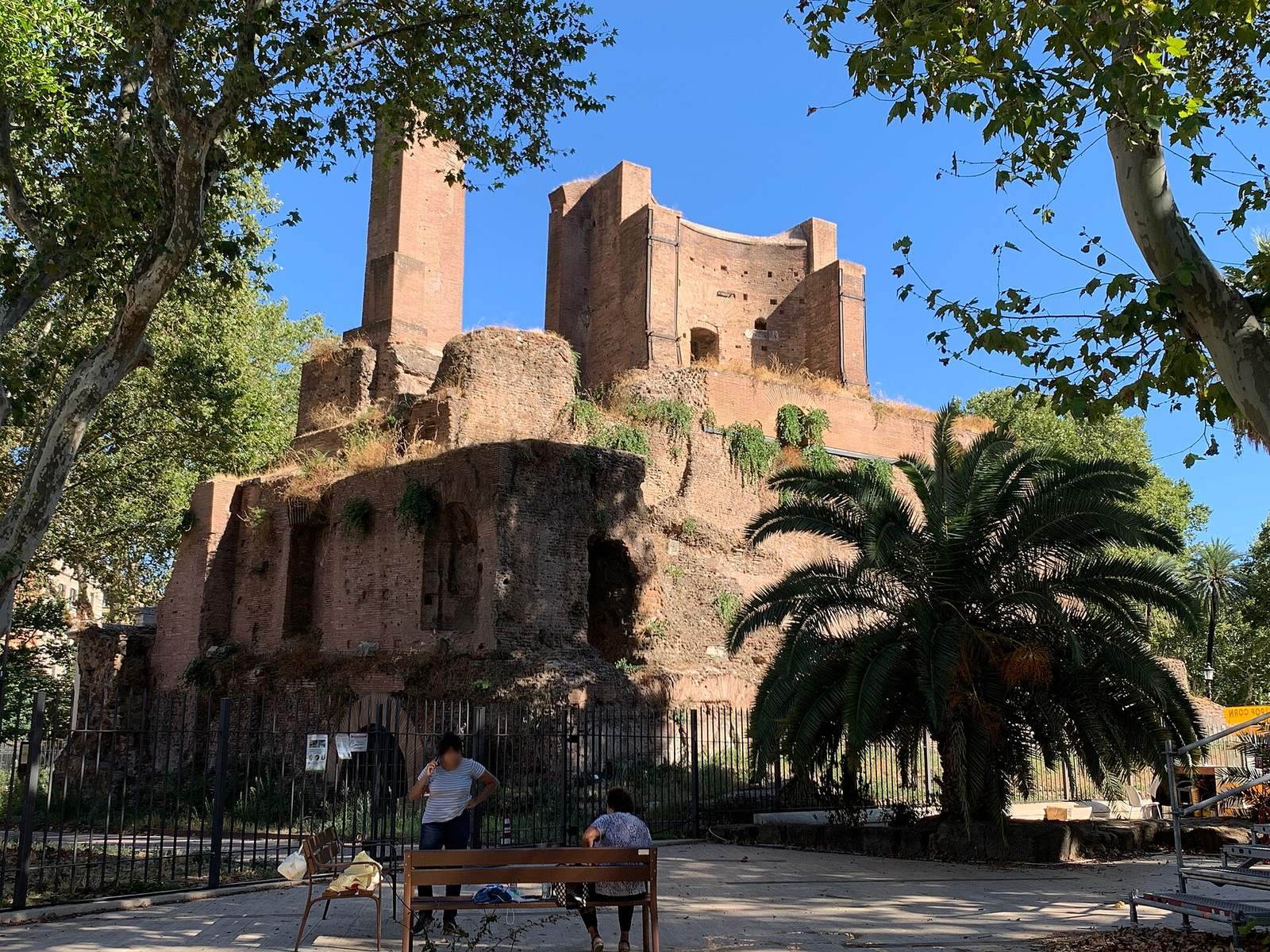
The Nymphaeum of Alexander Severus is a Roman monumental fountain at the northern corner of Piazza Vittorio Emanuele II in Rome, Italy. Built under Emperor Severus Alexander in the early third century, it served as a terminal display fountain, a monumental outlet at an aqueduct’s end that also distributed water. It supplied lower-lying parts of Rome, though its connection to the Aqua Julia or to a branch of the Aqua Claudia or Anio Novus remains uncertain. Construction is tentatively dated to around 226, the year shown on coins depicting the monument.
The fountain is the sole surviving example among Rome’s fifteen ancient terminal display fountains. It also preceded monumental fountains of the late Renaissance, a period of renewed interest in classical art and learning, and the Baroque, a later style known for dramatic effects.
The marble trophies later incorporated into the fountain were made earlier, probably during the reign of Domitian, emperor from AD 81 to 96. They may have been erected after his campaigns against the Chatti and Dacians in AD 89. Pope Sixtus V ordered their removal in 1590.
Medieval name and tradition
In the Middle Ages, the monument became known as the Trophies of Marius, and its construction was wrongly credited to the Roman general Gaius Marius. A medieval tradition claimed that Marius had built it with spoils from the Battle of Vercellae, Rome’s victory over the Cimbri in 101 BC. The trophies were also linked in that tradition to his victories over Jugurtha, king of Numidia, and the Cimbri and Teutones, peoples who fought Rome.
Study, excavation, and preservation
Artists and antiquarians including Étienne Dupérac, Giovanni Sallustio Peruzzi, and Pirro Ligorio proposed reconstructions from the sixteenth century onward. In 1761, Piranesi published a study with engravings showing the ruin’s condition. Antoine-Martin Garnaud later made watercolors of excavations carried out by the French Academy in 1821.
Excavations in the late nineteenth century accompanied work on the northern corner of Piazza Vittorio Emanuele II. Rodolfo Lanciani restored the monument from 1878 to 1885, after houses built against it from the seventeenth century were expropriated and demolished. An early plan placed the fountain at the center of the new square, but private development interests led to its preservation at the edge instead. It survived while other monuments in the area were demolished.
Remains
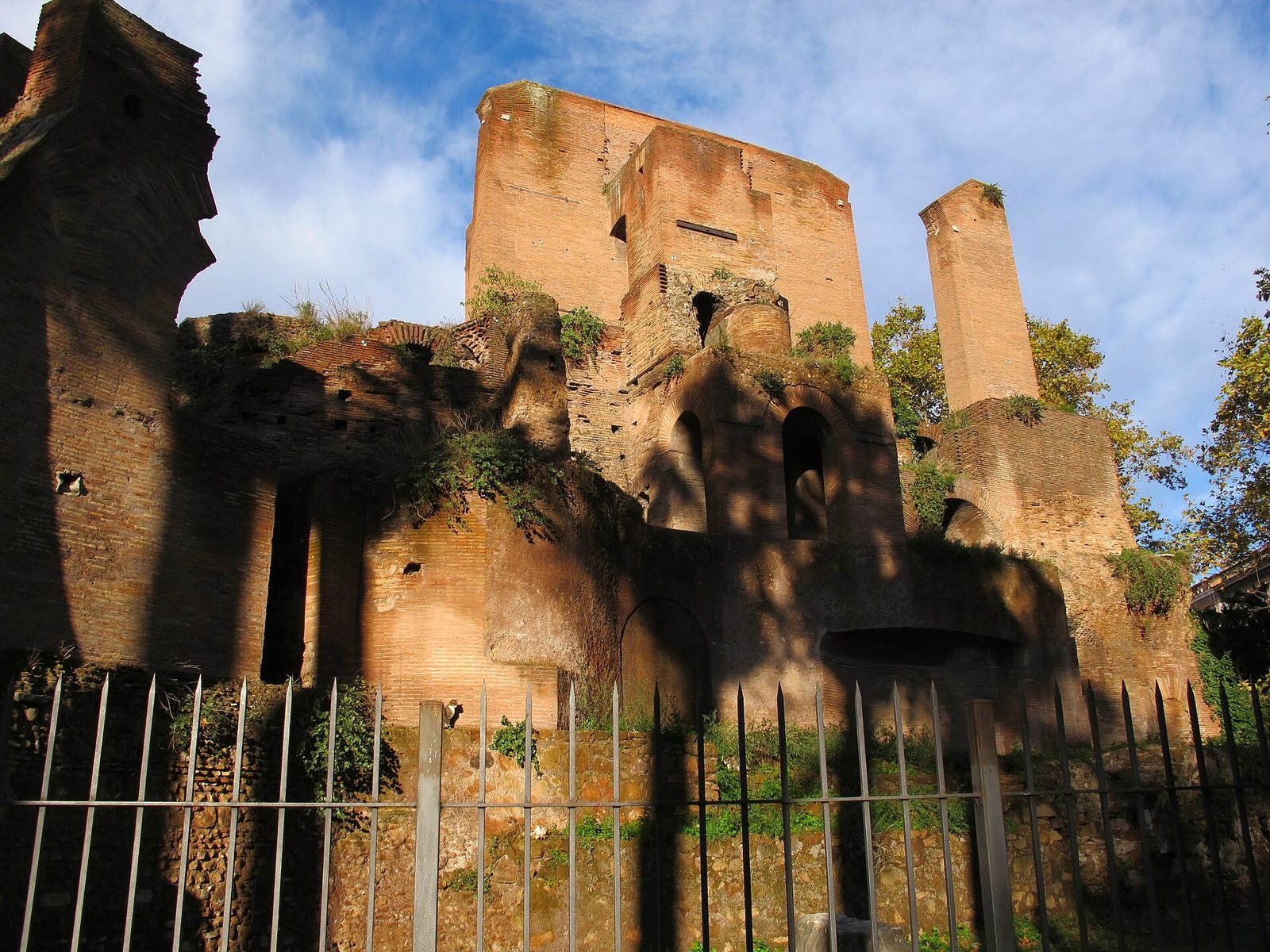
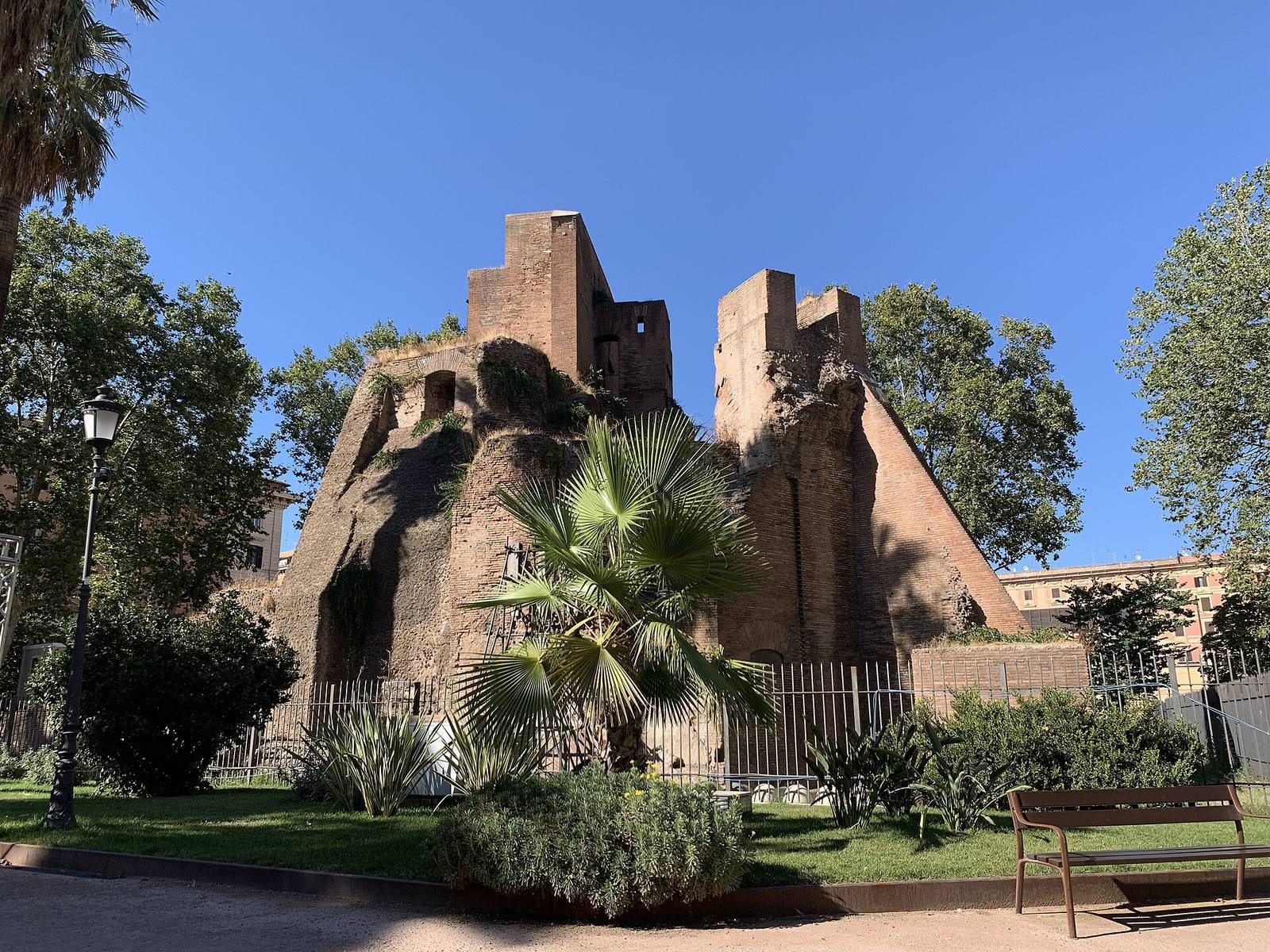
The remains preserve a three-level brick-faced concrete structure and evidence of its internal water system. The monument occupies high ground on the Esquiline and originally stood where the Via Labicana met either the Via Tiburtina or the Via Collatina. That position shaped its trapezoidal plan.
Structure and façade
The structure was about 20 metres high and 25 metres wide at its base, with a volume of roughly 4,000 cubic metres. Marble once covered the brick-faced concrete, and holes for the fixing clamps remain across the façade. The decorated lower storey had a rectangular plan. Above it, a large exedra, or recessed architectural space, was framed by two open arches. Cornices and Corinthian columns, a classical type with capitals decorated by acanthus leaves, formed part of the façade, which was crowned by an upper storey.
Water channels and basins
Water entered at the rear right of the upper level, about 9.85 metres above ground. It flowed around a massive semicircular feature, divided into two streams, then passed through five channels lined with waterproof mortar toward a basin in front of the fountain, which is now lost. Pipes within the walls carried water onward to a second basin, also mortar-lined and fitted with alternating rectangular and arched niches. A partly preserved basin on the lowest level collected water for distribution through the system. The façade’s display is also reconstructed with a large semicircular basin at the lower level.
Sculptural program
Coins and a medallion dated 226 depict the monument with statues. A pair of figures, possibly Severus Alexander and his mother Julia Mamaea, may have stood in the central upper niche, while military trophies occupied the flanking arches. A four-horse chariot stood at the center of the attic, with two statues identified as Victories, personifications of victory, holding trophies. On the lower level, a statue of Oceanus, the deity representing the world ocean, stood at the foot of a niche. The marble trophy sculptures from the fountain are now set on the balustrade above the ramp leading to the Capitoline Hill.
Earlier remains beneath the fountain
Restoration and test excavations in 1982 to 1988 exposed Augustan-period masonry beneath the existing structure. It was built with small pyramid-shaped stones arranged in a net-like facing and may belong to an earlier fountain.