Gardens of Maecenas: A Roman Estate on the Esquiline
Site at a Glance
- Popularity
- High
- Country
- Italy
- Primary era
- Classical
- Eras represented
- Classical, Modern
- Civilizations
- Italian, Roman
- Site type
- Domestic
- Remains
- Park
On this page16 sections
History
From Cemetery to Garden Estate
The Gardens of Maecenas were a luxury Roman estate on the Esquiline Hill in Rome, Italy, built by Gaius Maecenas between 42 and 35 BC. Maecenas, an adviser to Augustus, Rome’s first emperor, and a patron of poets and other artists, created the estate as elite garden-villas were spreading around the city. The Roman horti were luxury suburban estates, rather than simply gardens. Lucullus began this fashion in the first century BC with gardens on the Pincian Hill, and Sallust followed with extensive grounds between the Quirinal, Viminal, and Campus Martius. By the third century AD, such estates together covered about a tenth of Rome and formed a green belt around its centre.
Before the gardens were laid out, the eastern Esquiline beyond the Servian Wall was used as a cemetery, including open burial pits for the poor. The Esquiline Gate was also associated with executions, and bodies were left exposed there. Around 40 BC, Maecenas promoted reform of the public cemeteries; in 38 BC, the Senate prohibited open-air cremation within two miles of Rome. The garden project covered land beside the Servian embankment with six to eight metres of earth, transforming it into a prestigious residential estate. Horace praised the change from a place associated with death into healthier ground for living and walking. Maecenas also placed funerary markers in one corner of the gardens, retaining a reminder of the area’s earlier use.
Imperial Ownership and Literary Reputation
Augustus preferred to stay at the estate when ill. When Maecenas died in 8 BC, he left the property to Augustus, after which it became imperial property. Tiberius lived there after returning to Rome in AD 2. Later, Nero linked the estate to the Palatine through his Domus Transitoria, an imperial palace. A story associated with the Great Fire of Rome in AD 64 placed Nero watching the blaze from a garden tower known as Maecenas’s Tower. That tower may have been the high structure Horace had earlier likened to a pile among the clouds.
Maecenas’s literary circle helped give the estate a place in Roman poetry. Propertius wrote of its shaded oak, flowing water, and fertile ground, while Horace emphasized its elevated position above the city. Near the end of the Julio-Claudian dynasty, the first imperial ruling house, the philosopher and statesman Seneca the Younger criticized Maecenas’s legacy from a Stoic perspective. He presented the estate’s combination of art, nature, and water as a luxurious retreat that distracted its owner, and used it to challenge values he opposed.
Later Ownership and Rediscovery
By the middle of the second century AD, the Roman rhetorician Marcus Cornelius Fronto had bought the gardens. Nine lead water pipes bearing his name were found beside the Auditorium. A residence called the domus Frontoniana, mentioned in a twelfth-century guide to Rome, may also have referred to the estate.
Archaeologist Rodolfo Lanciani recorded discoveries made during Rome’s post-unification development in 1874. Excavations from 1876 to 1880 revealed further remains, although some nearby structures were poorly recorded before they were destroyed. Another group of buildings came to light during reconstruction work at the Politeama Brancaccio Theatre in 1914; these finds suggest that part of an original garden area can be reconstructed. In the nineteenth century, the room now called the Auditorium was mistaken for a public venue for literary or musical performances.
Remains
Estate Grounds and Layout
The walled estate occupied the Esquiline Hill on and beside the raised embankment of the Servian Wall, near the Gardens of Lamia and the former cemetery. Its approximate location is associated with the southwest corner of present-day Piazza Vittorio Emanuele II, and its grounds may have extended north of the Esquiline Gate and the old Via Tiburtina on both sides of the embankment. The design combined planted areas with buildings, terraces, and porticoes that connected different parts of the grounds. Among the earliest estates in Italy to imitate Persian garden design, it appears to have included libraries, pavilions, riding grounds, baths, an aviary, and spaces for cultural activities. The Aqua Marcia carried high-quality water past the property, and the Esquiline received eight of Rome’s eleven major aqueducts. Maecenas was reputed to have been the first Roman to build a hot-water swimming pool, possibly at these gardens.
The Auditorium
Structure and Water Features
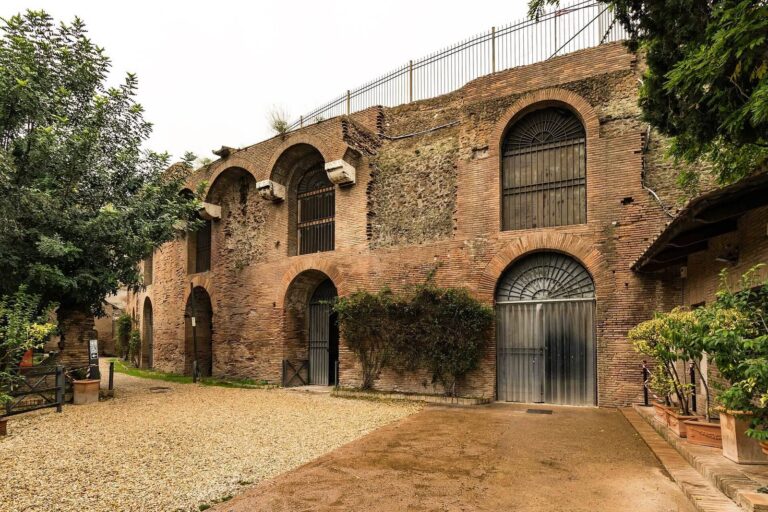
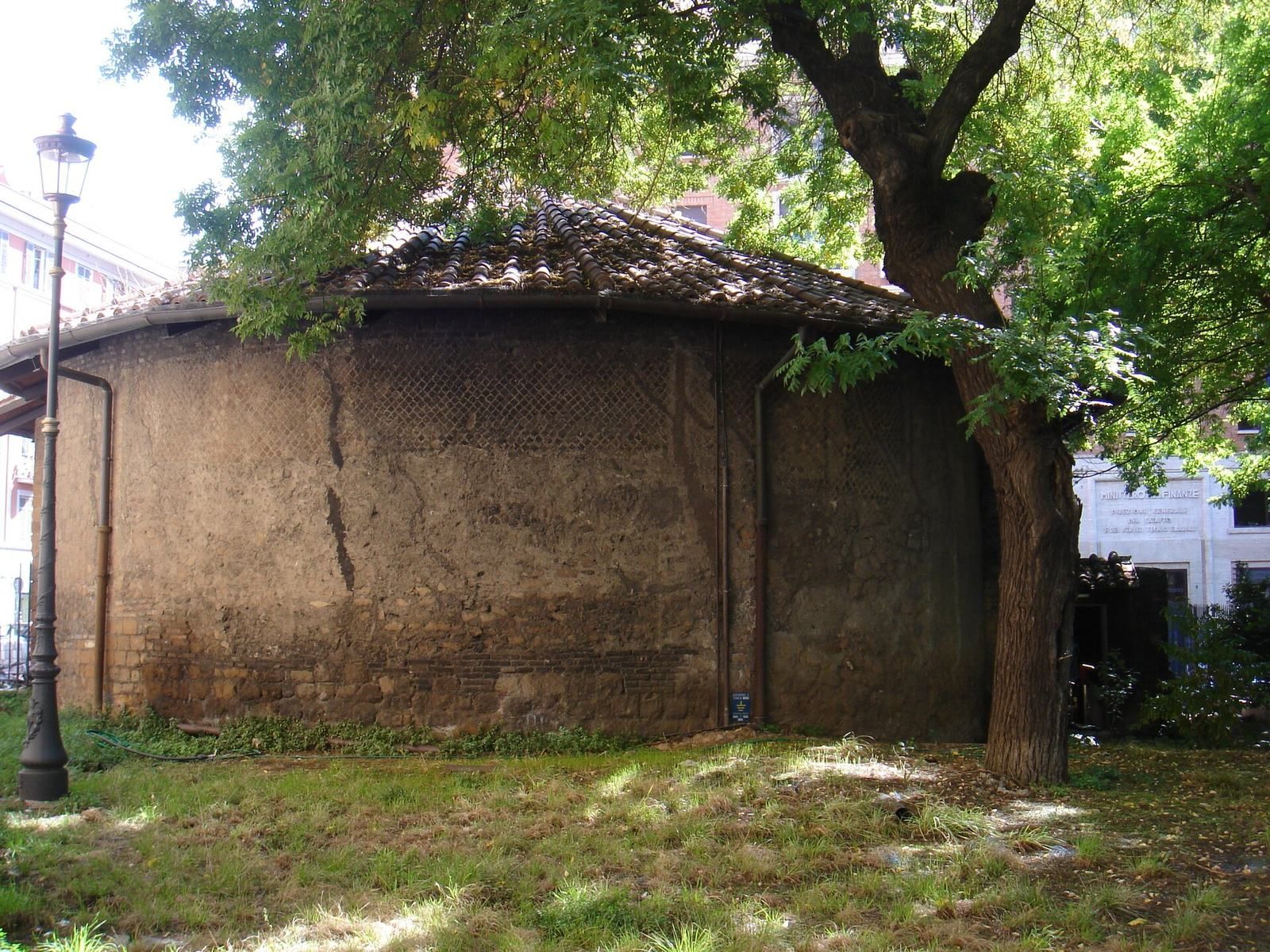
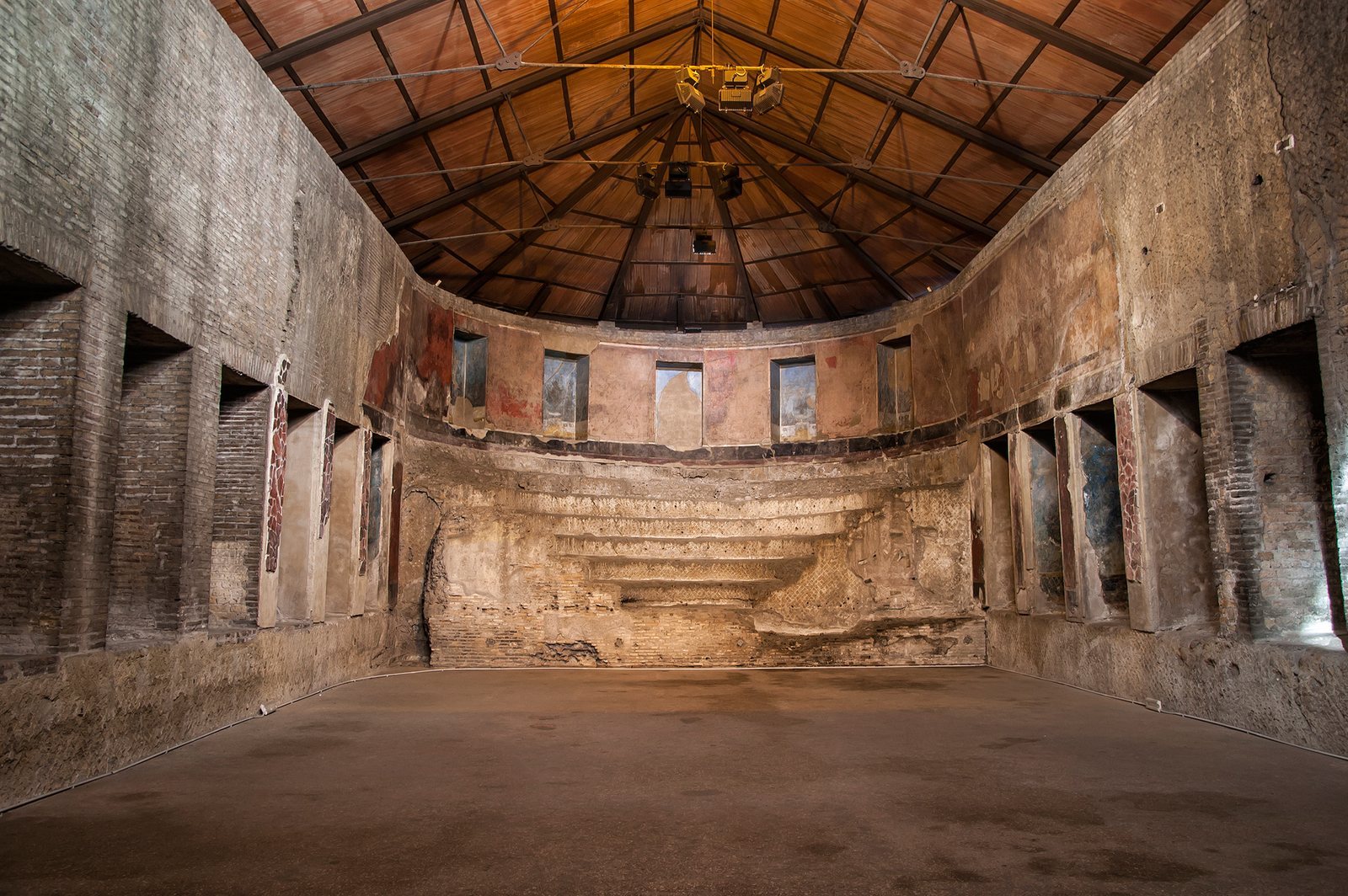
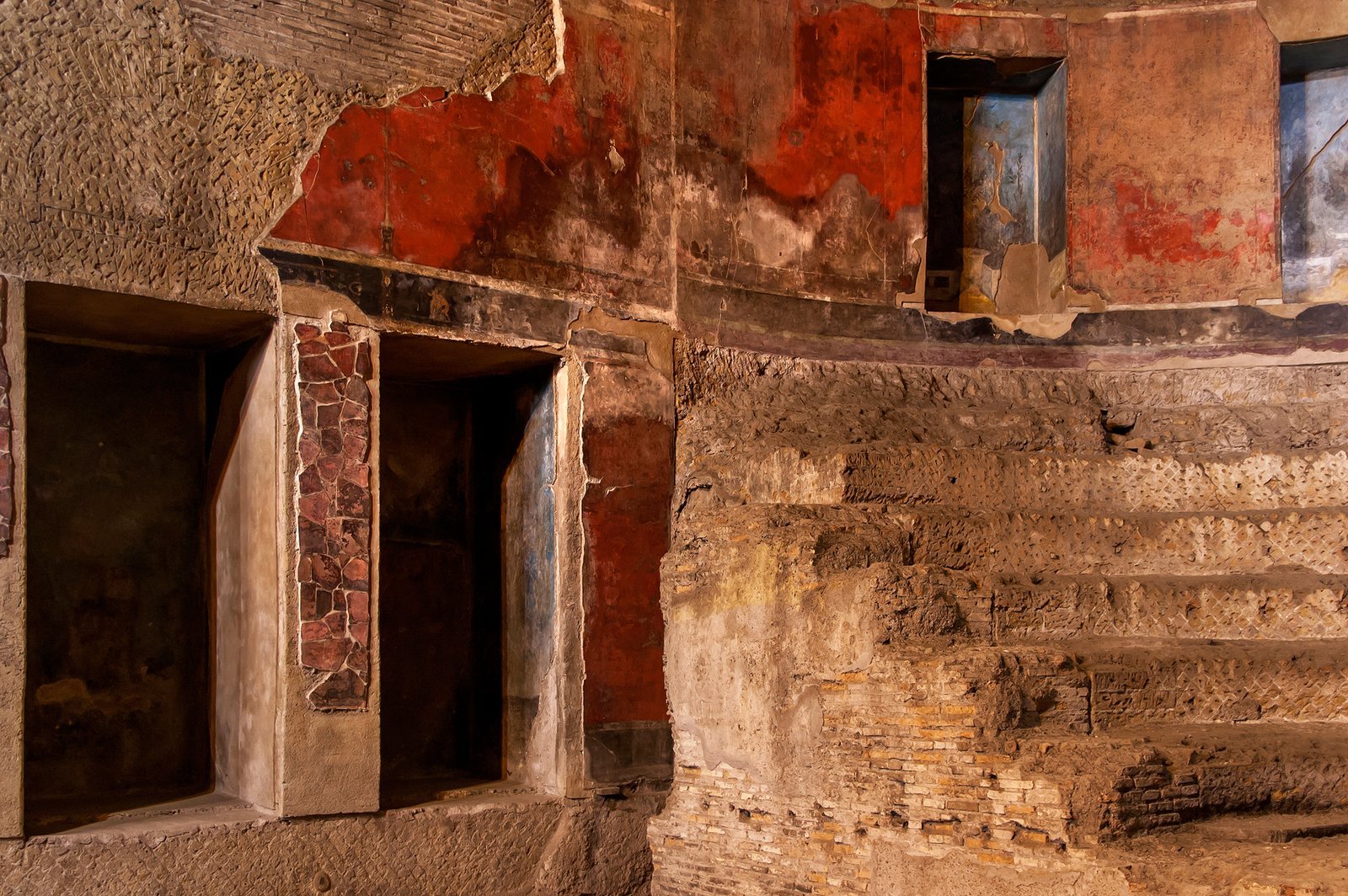
The surviving room known as the Auditorium was built into the Servian Wall and over its embankment. It measures 24.1 metres long by 10.6 metres wide and is partly underground. A ramp descends to a lower level, while a cold-water circulation system helped cool the interior. A channel ran through the long hall, leading to a semicircular end with seven large, marble-faced steps. Holes for pipes in the steps indicate a cascading fountain, and conduits may have carried visible streams through the room. The southeastern enclosing wall was added after excavation. In its ancient form, the room seems to have opened toward the city, with views across the surrounding neighbourhoods and toward the Alban Hills.
Painted Interior
Seventeen niches lined the walls: five around the curved end and six on each side. Their frescoes depicted naturalistic garden and landscape scenes. The paintings’ association with the Third Style, a delicate Roman wall-painting style, suggests that they may date to renovations under Tiberius. Other motifs evoke rites devoted to Dionysus, the Greek god of wine and ritual ecstasy, including processions with thyrsi, staffs associated with the god, and maenads, his female followers. An erotic poem by the Greek poet Callimachus was painted on an interior wall. It asks a male lover to forgive behavior prompted by desire and wine; Propertius later adapted the poem into Latin.
Possible Uses
The Auditorium was probably a private triclinium, or dining room, attached to residential quarters. It may also have hosted poetry recitations. In one possible arrangement, couches stood in the middle of the hall facing a performance at the far end, and the room’s use may have varied with the seasons.
Other Building Remains
Excavations revealed more than one building level. Higher brickwork may belong to thermal baths of the third century AD, while deeper walls built with opus reticulatum, a Roman technique using small stones in a net-like pattern, are attributed to Maecenas’s period. The buildings found in 1914 included both brick walls and walls made with this earlier technique.
Sculpture and Reused Works
Statues and Reliefs
Sculptures associated with the gardens include statues of Marsyas, the Muse Erato, a dog, and Demeter, as well as torsos of fauns and Venus. Other finds include a flower vase shaped like a wellhead and decorated with ivy and flowers, a broken altar, part of a group showing a hero with a draped woman, and seven portrait busts set on square pillars. The busts represent the Indian form of Bacchus, philosophers, and athletes. The Marsyas, made from veined pavonazzetto marble, is a Roman copy of a Greek original of the second century BC. The dog is described as Egyptian and made of green serpentine stone.
Reuse and Reassembled Pieces
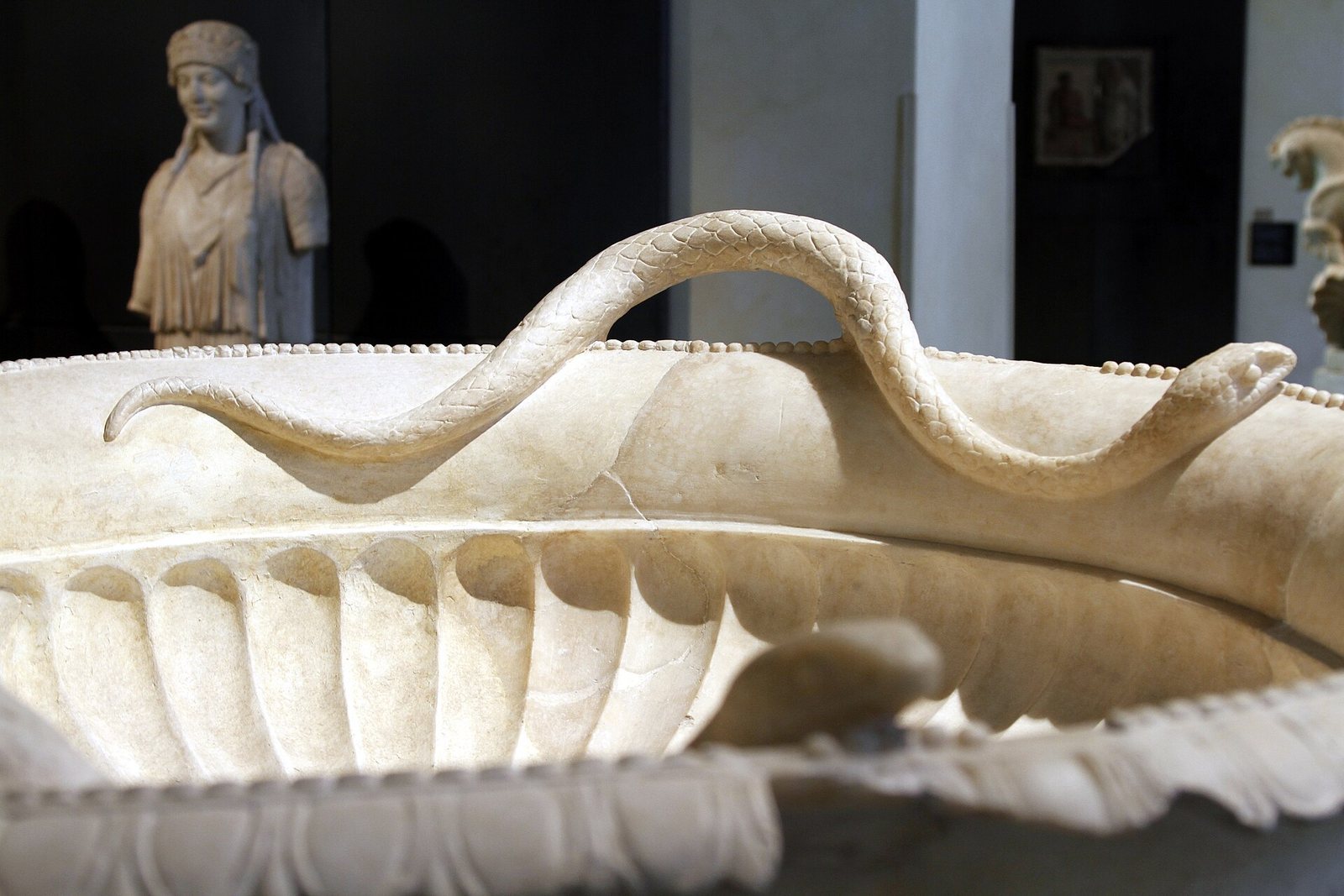
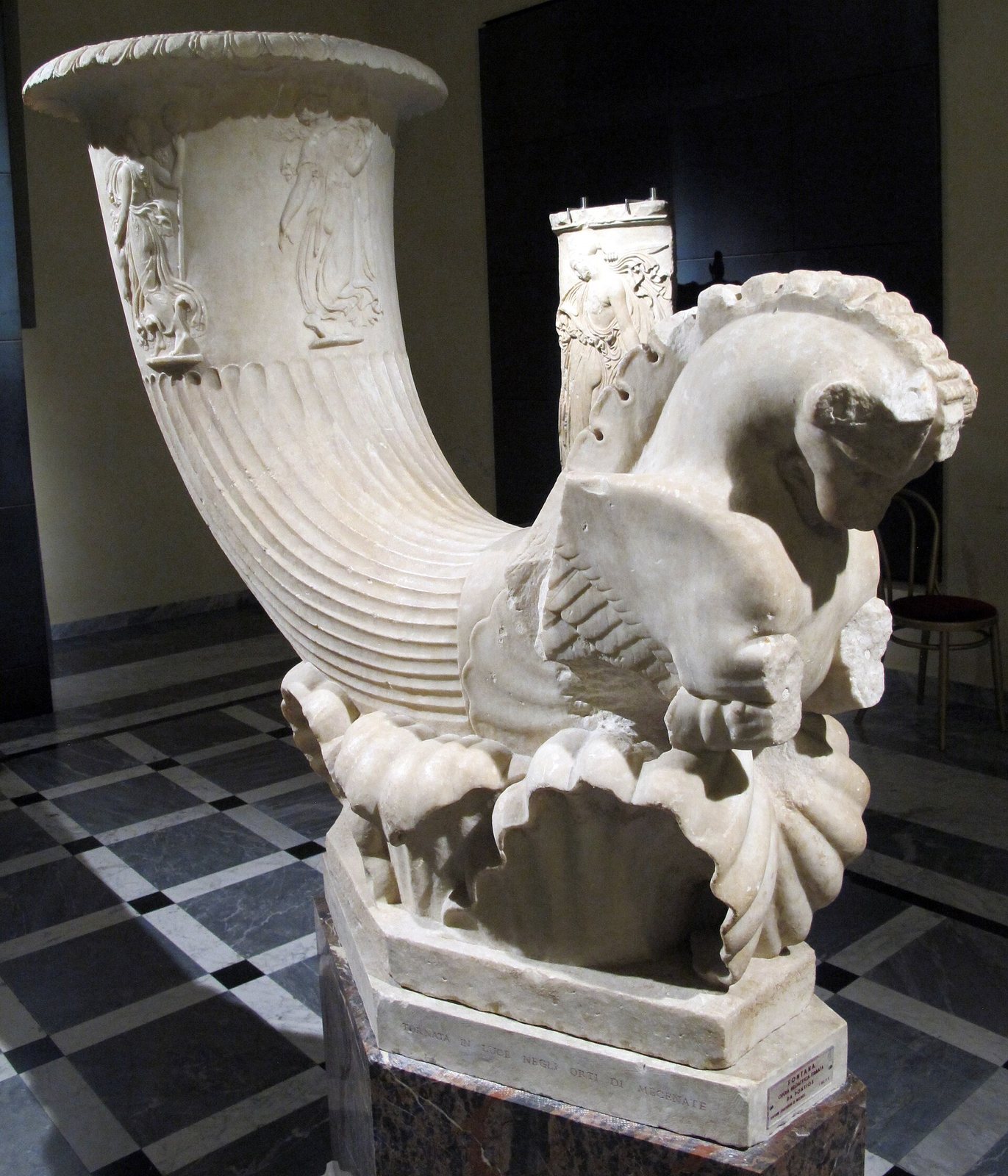
Many sculptures were broken apart and reused in walls during Late Antiquity or the early Middle Ages. The Charioteer of the Esquiline group, an early imperial work in the style of fifth-century BC Greek art, and the Marsyas were reassembled from fragments found in the same area. Other recovered works include a fountain shaped like a horn-shaped drinking vessel, signed by the Greek artist Pontios; a statue described as a dying Seneca; a relief of dancing maenads based on late fifth-century BC Greek models; and an Amazon’s head, found in 1874, copied from a fifth-century BC Greek model.
Works in Collections
The fountain vessel and the Amazon’s head are held in the Capitoline Museums, as is the Marsyas. A second-century BC bust of the Egyptian Apis bull, made of granodiorite, was found in 1886 and is now at Palazzo Altemps. Portrait busts attributed to members of Maecenas’s circle are displayed in Room VI of the Horti Maecenatis at Palazzo dei Conservatori.
Mosaics
The gardens also yielded numerous mosaics. Some used the fine technique called opus vermiculatum, in which small tesserae are arranged in flowing patterns. These mosaics were mounted on tiles and served as central panels in costly floors.