Monastery of Vrontesios: A Byzantine Monastery in Crete
Site at a Glance
- Popularity
- Medium
- Country
- Greece
- Primary era
- Medieval
- Eras represented
- Medieval
- Civilizations
- Venetian
- Site type
- Religious
- Remains
- Fortified Monastery
On this page12 sections
History
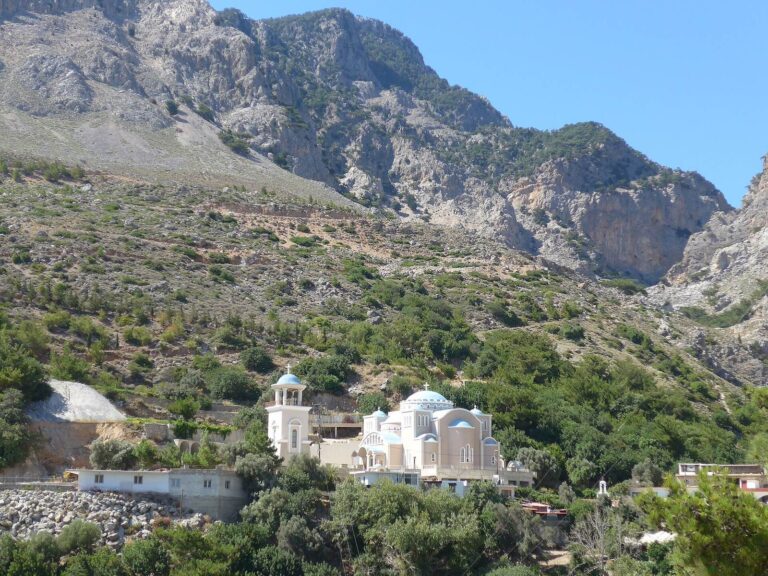
The Monastery of Vrontesios is a Byzantine-style Greek Orthodox monastery between Zaros and Vorizia on Crete, Greece. It dates to the fourteenth century, though its precise foundation year is unknown. At its height in the sixteenth and seventeenth centuries, it was a regional monastic, spiritual, and cultural center.
Foundation and growth
The monastery began as a dependency of nearby Varsamonerou Monastery. Its name has no certain explanation, but a common theory links it to the surname of its founder, Vrontisis. A document from 1323 lists four priests from Chandax, the medieval name for Heraklion, who bore that surname. This reference does not establish the monastery’s foundation date. Written mentions of the monastery appear from around 1400 onward, including a Venetian archival document dated 1474.
After 1500, as Varsamonerou declined, Vrontesios flourished. Varsamonerou was later described as an uninhabited dependency of Vrontesios.
Refuge and religious life
Following the Ottoman conquest of Crete in the seventeenth century, Arkadi Monastery was deserted and its monks took refuge at Vrontesios. Tradition also associates the monastery with Michael Damaskinos, a painter of the Cretan School, the painting tradition that developed on Crete, who is said to have served there as a monk.
Uprisings and later use
Its fortified position made Vrontesios a center for the nineteenth-century Cretan uprisings. In 1866, the Cretan revolutionary Michael Korakas used it as his headquarters, and the revolt in central and eastern Crete was proclaimed there. Ottoman retaliation that year included the killing of the monks and the burning of the monastery’s grain and 300 olive trees. The monastery was abandoned, and most of its heirlooms were destroyed. An Ottoman local authority from Zaros, known as an aga, later used it as a sheepfold.
During the German occupation of Crete from 1941 to 1944, the monastery sheltered resistance fighters. The demolition of its fortifications reduced its former prominence. Vrontesios remains a Greek Orthodox monastery associated with the Ecumenical Patriarchate of Constantinople, the historic senior patriarchate of Eastern Orthodox Christianity, and the Archdiocese of the Church of Crete, the island’s Orthodox ecclesiastical body. It is described as active, although census figures recorded three people in 2001 and no permanent residents in 2011.
Remains
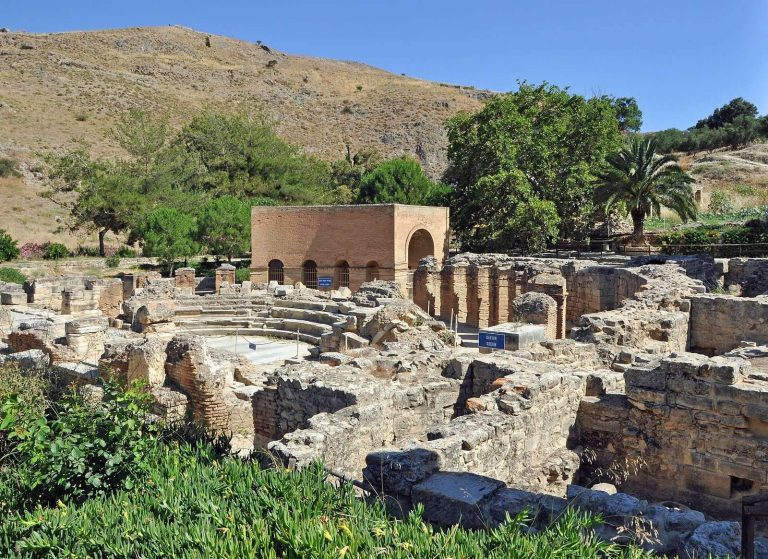
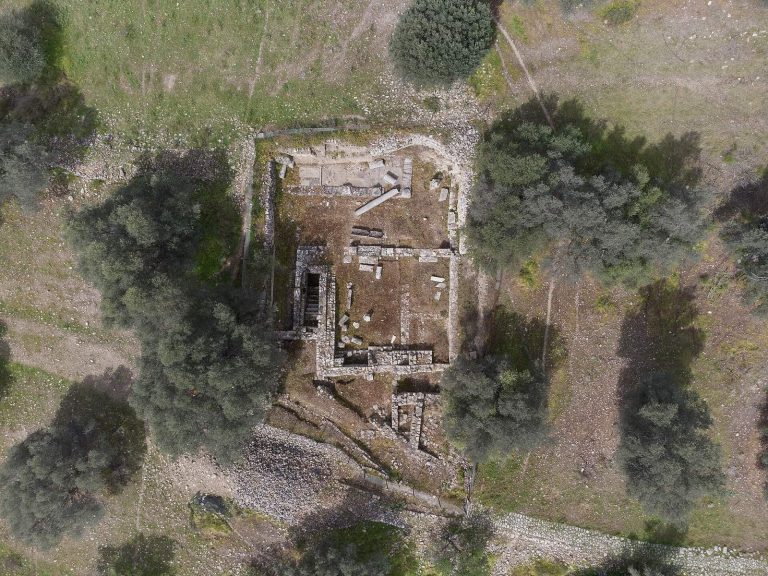
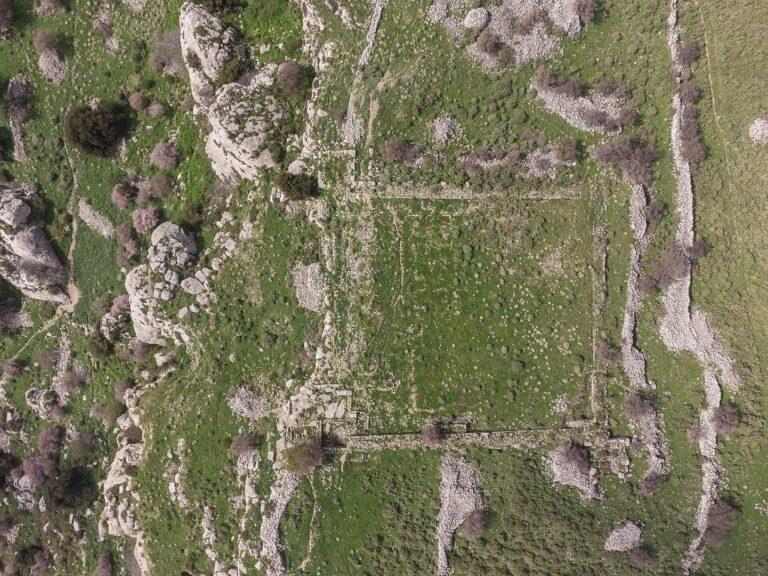
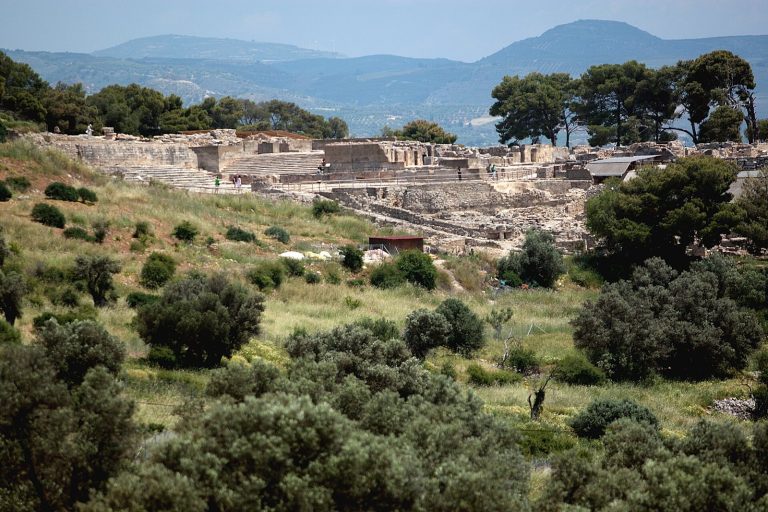
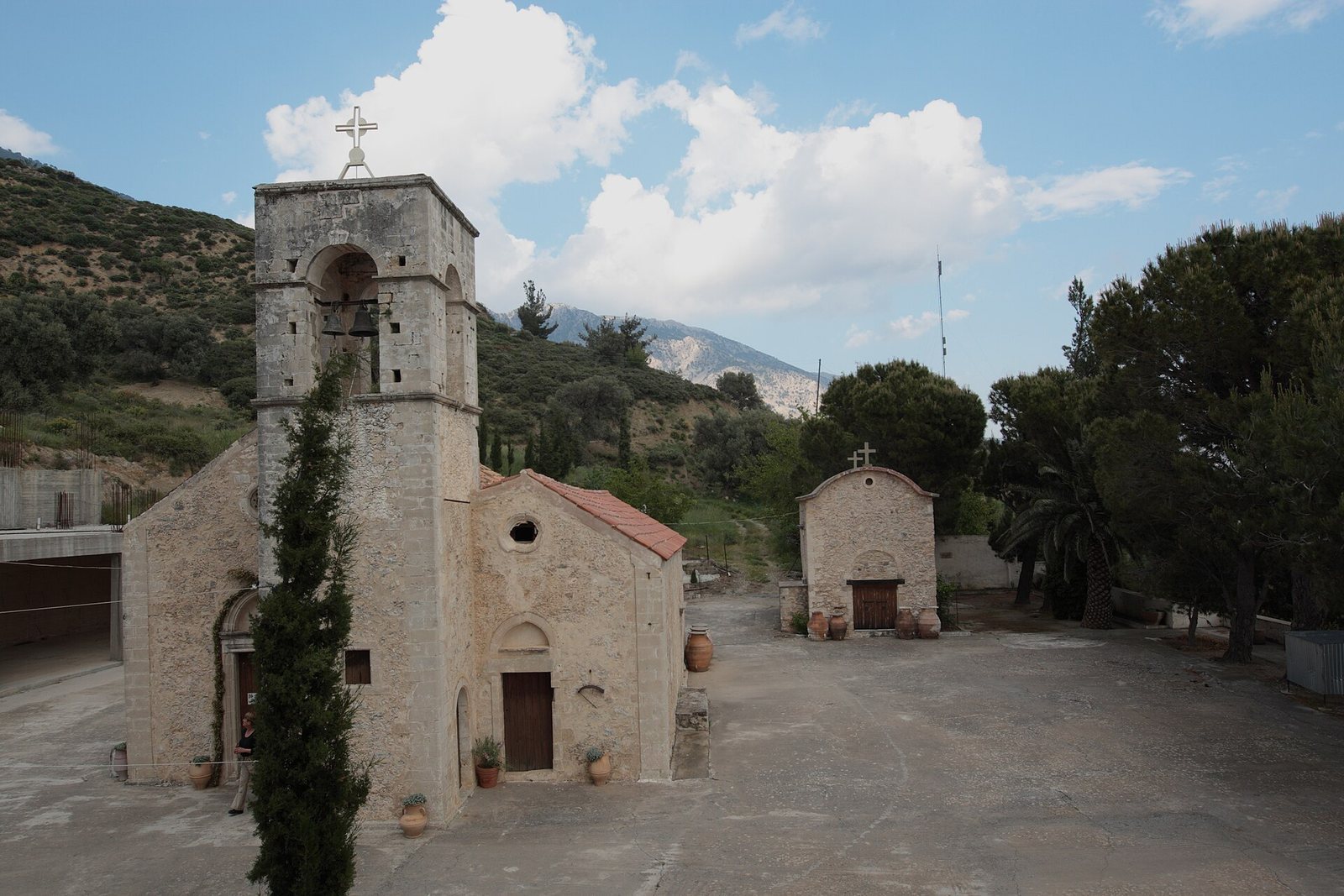
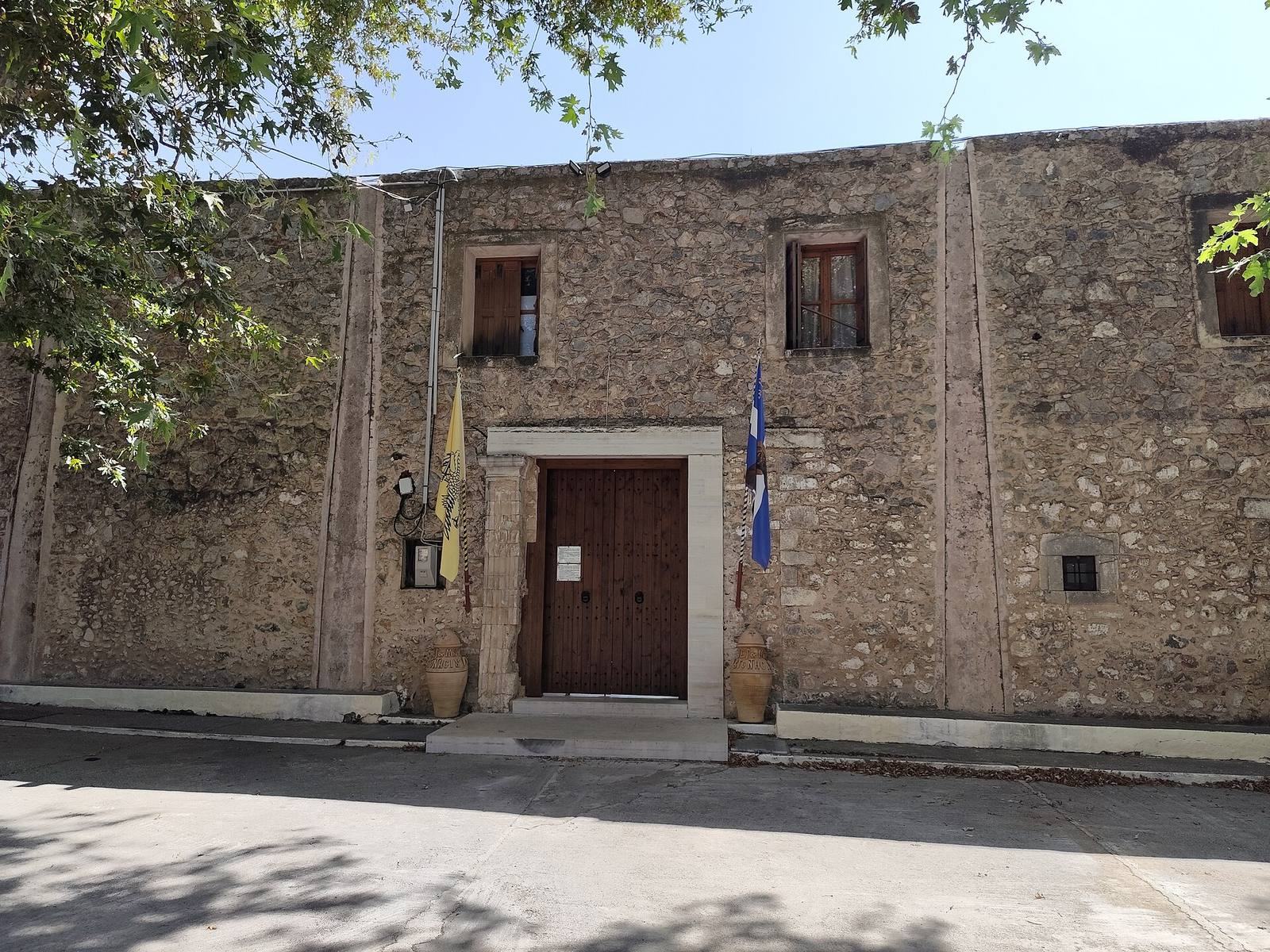
The monastery stands at about 550 metres above sea level on the southern slopes of Mount Ida, with views toward the Mesara Plain and the Asterousia Mountains. Thick walls once enclosed the complex, which is organized around a central courtyard. Only sections of the western wall remain. The two-naved church stands at the courtyard’s center, while the bell tower is outside it.
Church and courtyard structures
Two-naved church
The central church is dedicated to Saint Anthony the Great, an early Christian ascetic regarded as a founder of Christian monasticism, and to the Incredulity of the Apostle Thomas, the Gospel episode in which Thomas recognized the risen Jesus. Its wall paintings, called frescoes because they were made on wet plaster, date to the fourteenth century. A few survive in the southern nave.
Bell tower
An Italian-style bell tower stands outside the church. Its roof is formed by arches, and it is counted among the oldest bell towers in Crete.
Marble courtyard gate
The courtyard gate was made of marble and carried a relief of Christ holding the Gospel. The gate was destroyed in 1913.
Entrance and associated works
Marble fountain
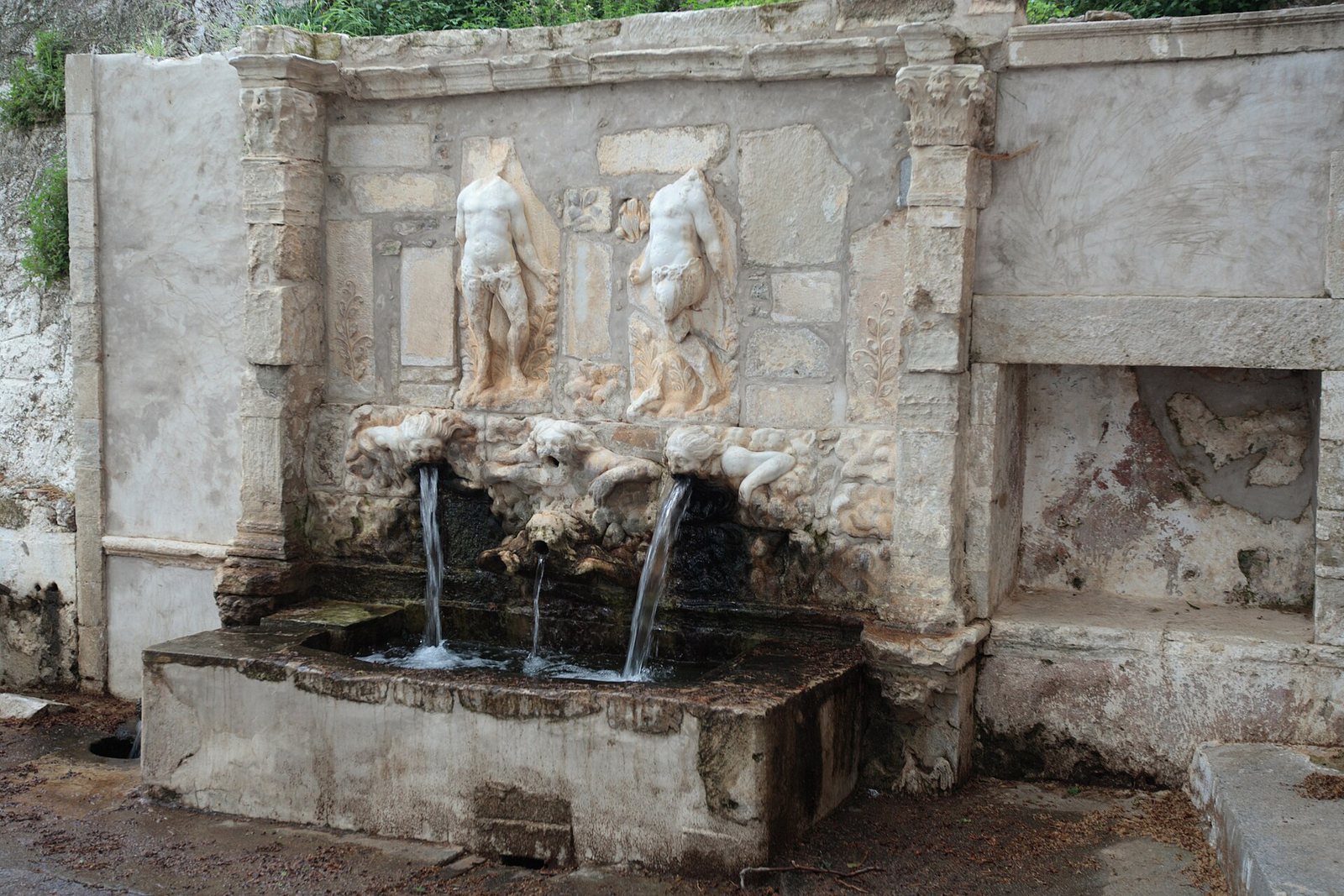
A fifteenth-century marble fountain stands at the exterior entrance. Its relief depicts Adam and Eve in Paradise, Christ Pantocrator, an image of Christ as ruler of all, and four figures representing the rivers of Eden. Water flows from the figures. Italian architect Giuseppe Gerola attributed the fountain to an artisan skilled in chisel work, a skill uncommon in Crete at the time.
Icons by Michael Damaskinos
Six icons by Michael Damaskinos that were once kept at the monastery are now displayed at the St Catherine of Sinai Museum in Heraklion.