Mary Magdalene Church in Gidle: A Wooden Roman Catholic Subsidiary Church
Site at a Glance
- Popularity
- Medium
- Country
- Poland
- Primary era
- Early Modern
- Eras represented
- Early Modern, Modern
- Civilizations
- Kingdom of Poland, Polish–Lithuanian Commonwealth, Russian
- Site type
- Religious
- Remains
- Church
On this page8 sections
History
Foundation and religious role
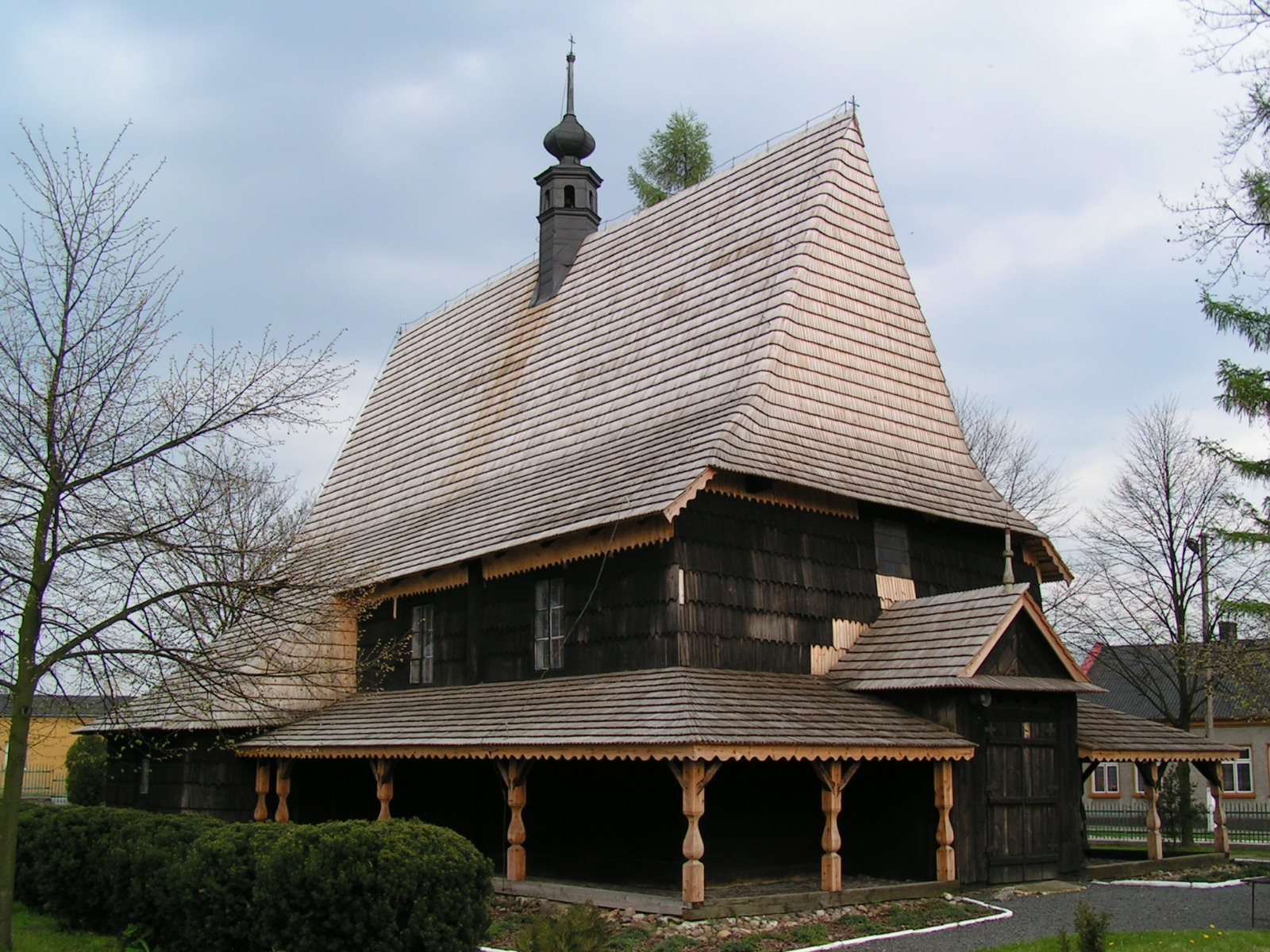
The Mary Magdalene Church in Gidle is a Roman Catholic subsidiary church in Poland, built at the turn of the fifteenth and sixteenth centuries in the Gothic style, a medieval European architectural tradition. It is the oldest wooden church in the area around Częstochowa.
Dedicated to Mary Magdalene, a New Testament follower of Jesus venerated as a Christian saint, the church belongs to the Parish of Our Lady of Sorrows in Gidle. Our Lady of Sorrows is a devotional title for Mary recalling her grief at Christ’s suffering and death. The parish is part of the Gidle deanery, a grouping of parishes, within the Archdiocese of Częstochowa, an ecclesiastical territory headed by an archbishop. The church’s liturgical commemoration is held on July 22.
Alterations and restoration
The church was remodeled in 1659. Work from 1765 to 1769 added a porch, and a sacristy was built in 1848. Later restorations took place in 1921 and from 1973 to 1977. The sycamore maple beside the church square has been protected as a natural monument, a legally recognized natural feature, since 1996.
Remains
Church building
Construction and layout
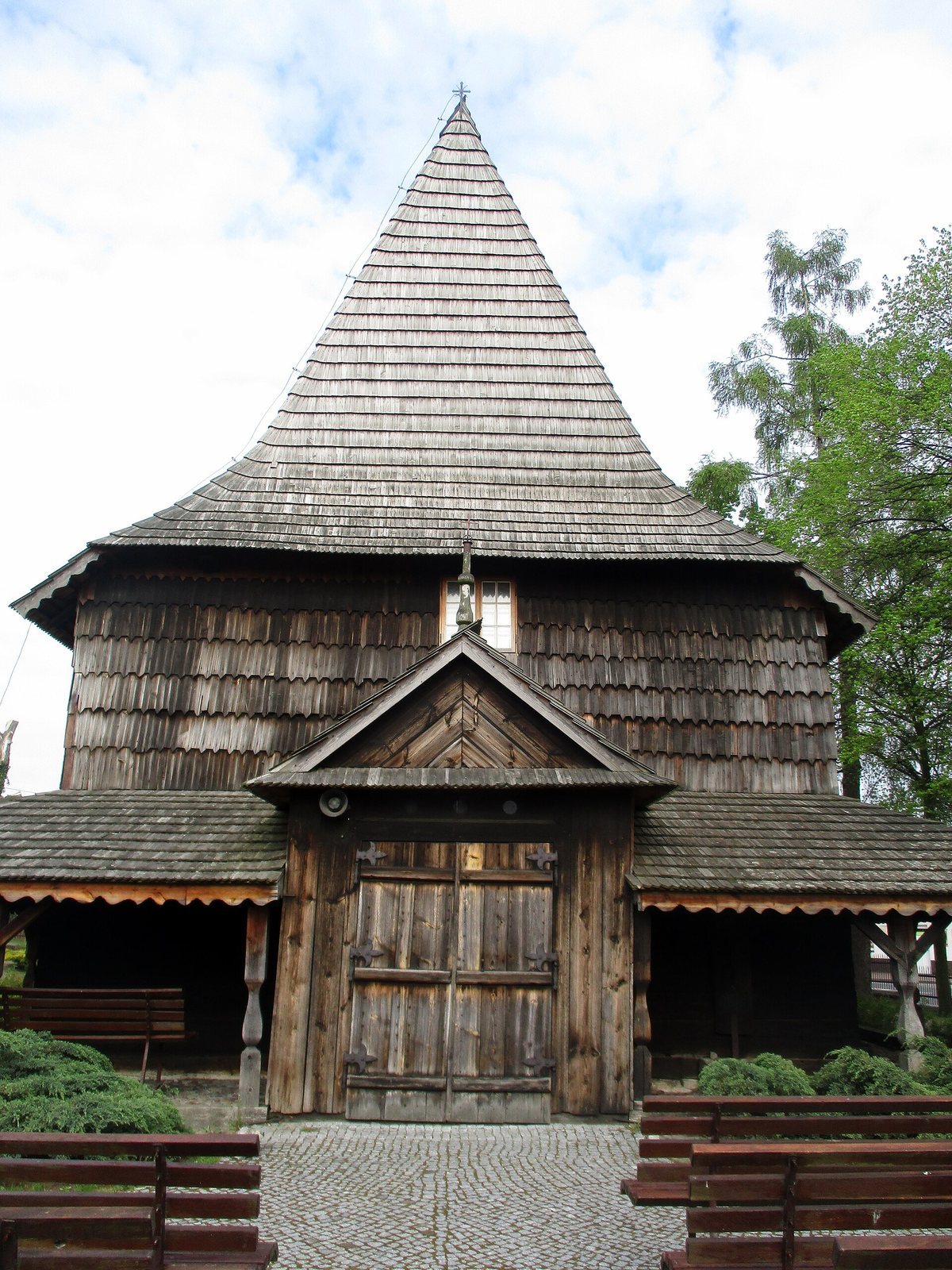
The single-nave church is built of larch using log construction, in which horizontal timbers join at the corners. Its walls have boarded cladding covered with shingles. The chancel, the part of the church containing the altar, is narrower than the nave and ends in a rectangle. A sacristy, a room for preparing services and keeping liturgical items, adjoins it; a porch stands at the front of the nave. Shingled open-sided walkways encircle the nave, their roofs carried by posts with diagonal braces. The steep roof has one ridge and supports a hexagonal bell turret, topped by a bulbous metal roof and a lantern.
Interior and altars
Inside, a flat ceiling has box-like sections along the sides of the nave. The music gallery, an elevated platform for singers or musicians, has a straight parapet. Three altars furnish the church. Jan Millman made the main altar from 1792 to 1796. The two side altars date to the mid-nineteenth century and use the Neoclassical style, which draws on ancient Greek and Roman forms and proportions.
Trees on the church square
A sycamore maple grows beside the church. Dated to 1780, it is described as one of Poland’s oldest sycamore maples; its trunk measures nearly 3.9 metres around, and it stands more than 24 metres tall. An oak also once grew nearby and remained after the Second World War. Its trunk measured more than 14 metres around just above ground. Pilgrims stripped and gnawed its bark because they believed it could relieve toothache, as was also believed of the miraculous lime tree at Cielętniki. The oak later died.