Church of the Assumption of Mary (Santa Maria Assunta): A Parish Church in Borbiago
Site at a Glance
- Popularity
- Low
- Country
- Italy
- Primary era
- Medieval
- Eras represented
- Medieval, Early Modern
- Civilizations
- Venetian
- Site type
- Religious
- Remains
- Church
On this page11 sections
History
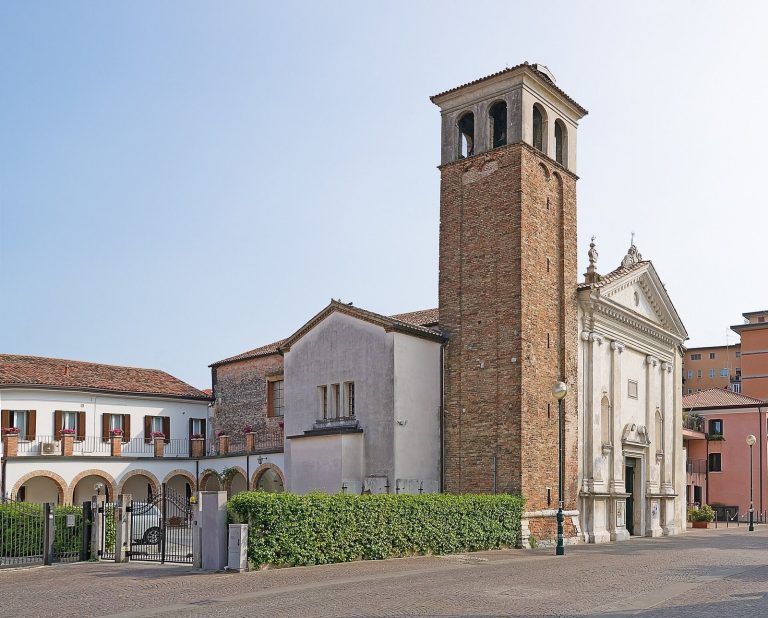
The Church of the Assumption of Mary (Santa Maria Assunta), dedicated to the Catholic belief that Mary was taken into heaven, is a Roman Catholic parish church in Borbiago, Mira, Italy. It was first recorded in 1152, when Pope Eugene III confirmed the Bishop of Treviso’s rights over the parish of St Theonistus of Borbiago, including its castle, port, estate, and related holdings.
Medieval parish and rebuilding
The parish later came under the jurisdiction of the Benedictine Abbey of Sant’Ilario. In 1260, the monks returned it and its chapels at Vetrego, Ballò, and Scaltenigo to the Diocese of Treviso, under which it remained until 1927.
Continuing conflicts in the Borbiago area made rebuilding necessary. On 25 March 1381, Antonio de Nasseri, bishop of Feltre and Belluno, consecrated the church again. Francesco the Elder da Carrara, lord of Padua and devoted to the Virgin Mary, contributed substantially to the work.
Religious orders and Marian devotion
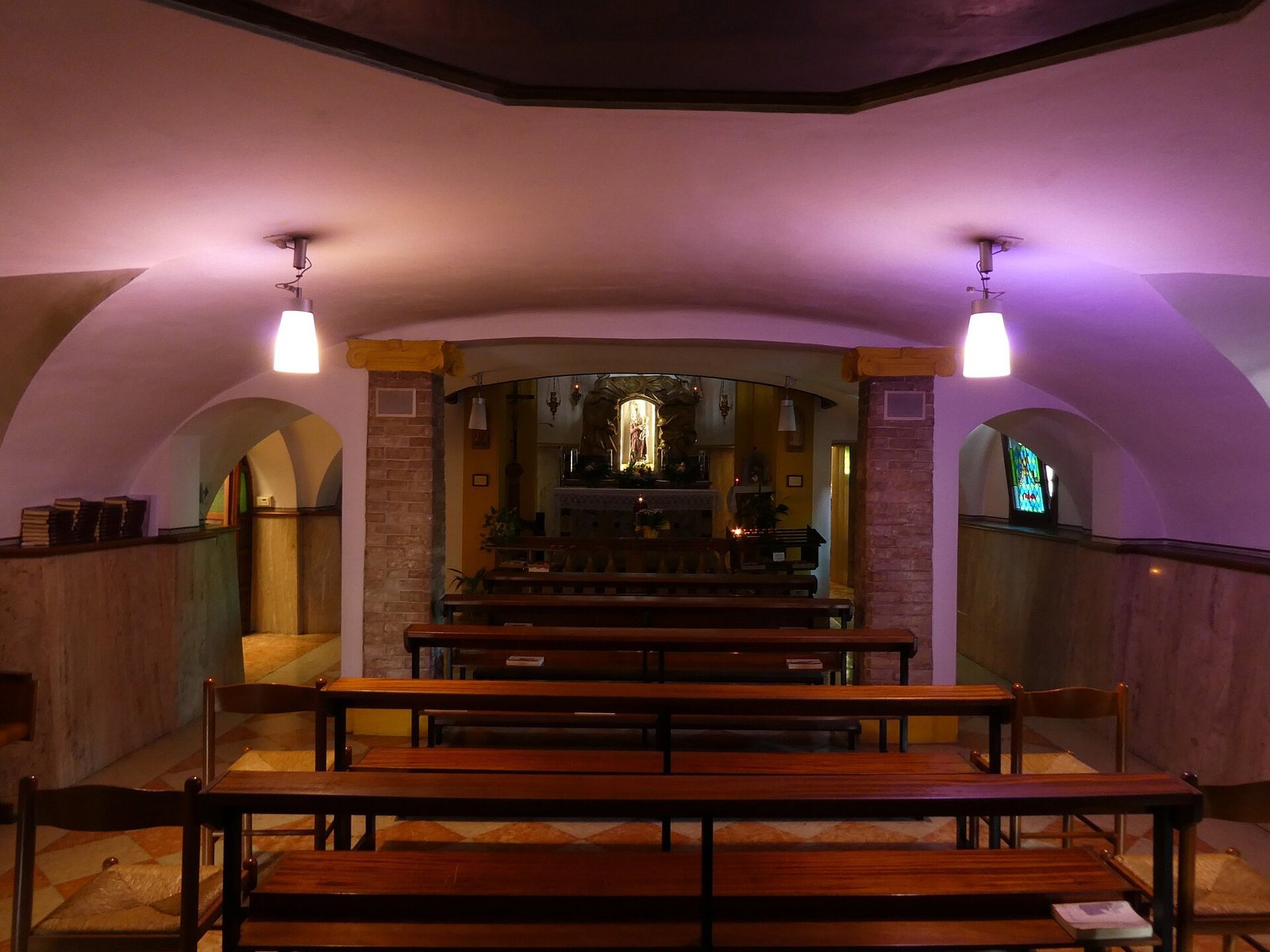
Benedictines administered the sanctuary and its attached convent until 1450, when the Carmelites took over. The crypt (a chamber below a church) is thought to have been built in the 1520s, and a Marian sanctuary was built in 1662. The Carmelites remained until the convent was suppressed in 1768.
A tradition about the Black Madonna tells of a deaf-mute girl who saw the Virgin outside the church, regained her speech, and summoned monks to a statue of Mary. In this story, the statue was marble and had a bronze bell on its head. The tradition places the event in the twelfth century, but the statue is attributed to the late fifteenth century. Church records have been interpreted to place the crypt’s construction in the 1520s; if that dating is correct, the event could not have occurred before the mid-sixteenth century. The details and chronology remain uncertain.
Later administration and modern restoration
A tornado damaged the church in 1970, leading to restoration. The parish is now within the Patriarchate of Venice, an ecclesiastical jurisdiction, and the Vicariate of Gambarare, a subdivision within that jurisdiction.
Remains
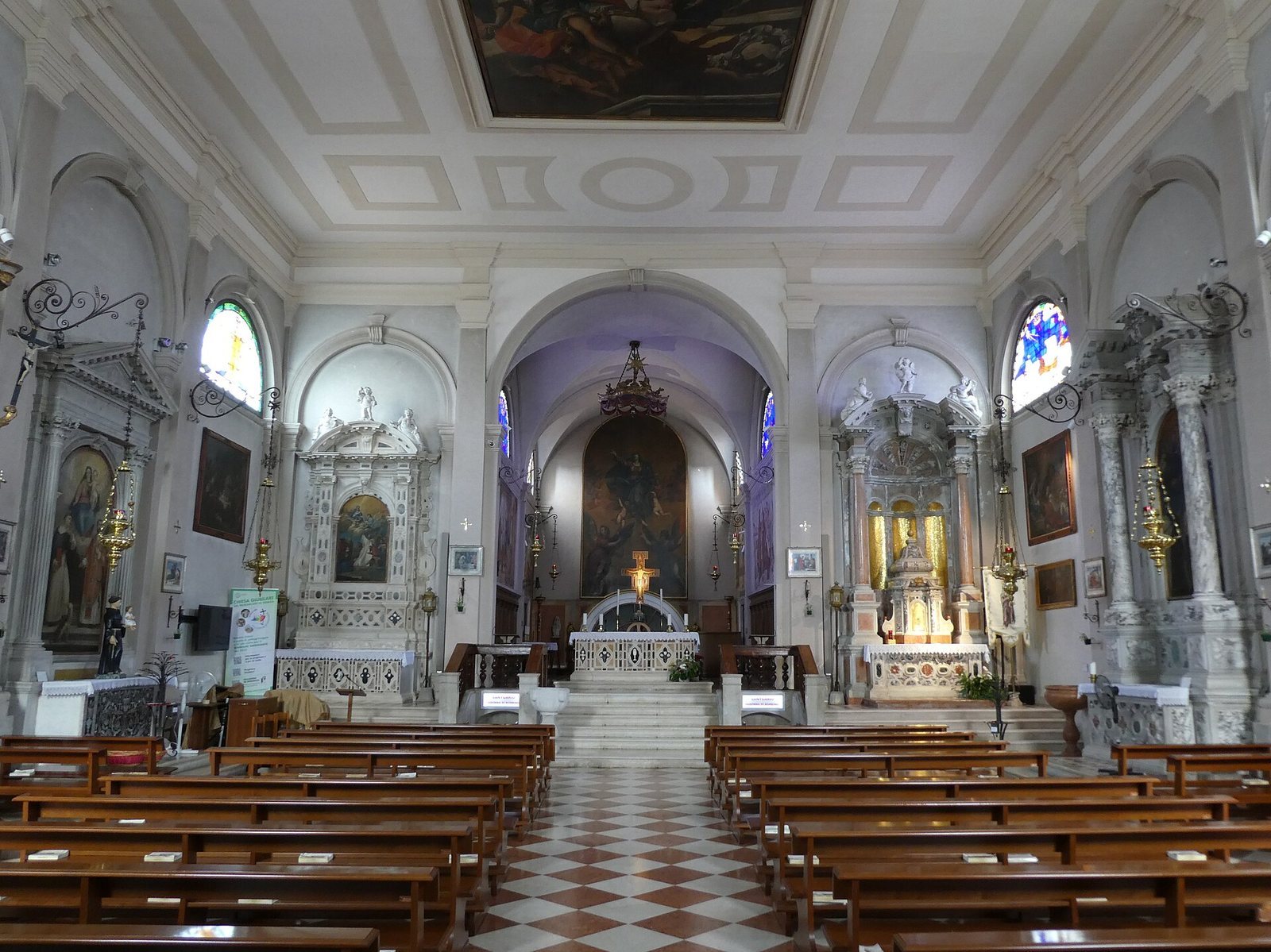
The church’s layout places a crypt below the presbytery (the area around the main altar), with devotional artworks inside and a separate shrine outdoors.
Crypt and Marian sculpture
A chapel in the crypt houses a Madonna and Child sculpture associated with the Black Madonna tradition. The figure is carved from soft stone and painted in several colors. It is attributed to the Renaissance sculptor Andrea Briosco and dated to the late fifteenth century.
Interior paintings
Ceiling painting
An oil painting on the ceiling, measuring 11.20 by 4.65 metres, shows the Virgin giving a scapular, a devotional garment associated with religious practice, to Saint Simon Stock, a Carmelite saint traditionally linked to it. Gaspare Diziani painted the work between 1728 and 1731.
Altar painting
A seventeenth-century painting above an altar depicts Jesus appearing to Saint Teresa of Ávila, a Spanish Carmelite nun and religious reformer. The work is attributed to the circle of the Venetian painter Palma the Younger.
Outdoor shrine
An outdoor devotional shrine marks the spot where the well associated with the miracle tradition once stood.
Façade
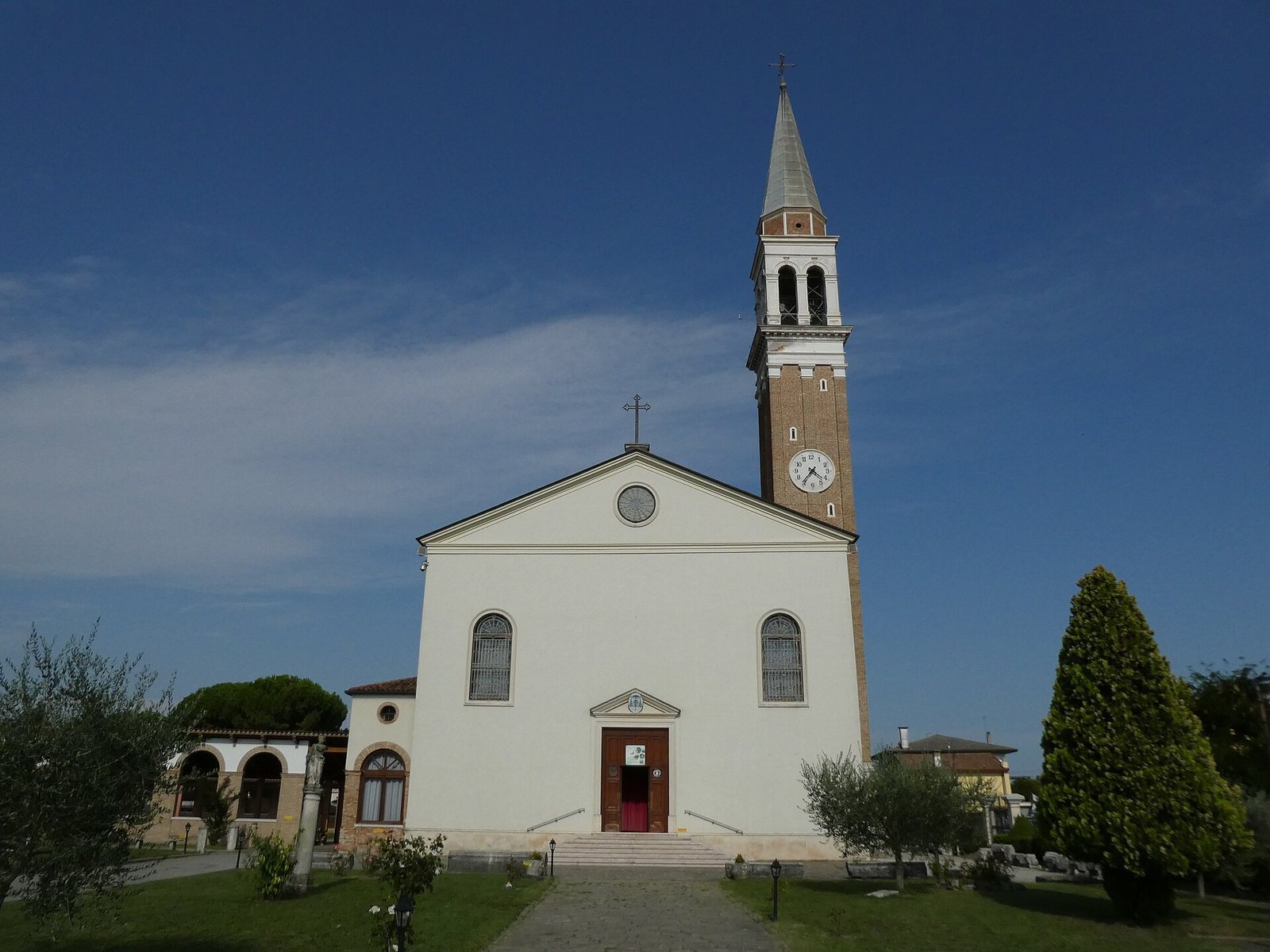
The church’s former façade was built of terracotta brick in 1940. After it was damaged by the 1970 tornado, it was demolished; the present façade dates to the subsequent restoration.