Church of the Deposition of the Robe: A Russian Orthodox Church Commemorating a Relic
Site at a Glance
- Popularity
- High
- Country
- Russia
- Primary era
- Early Modern
- Eras represented
- Early Modern, Modern
- Civilizations
- Russian
- Site type
- Religious
- Remains
- Church
On this page9 sections
History
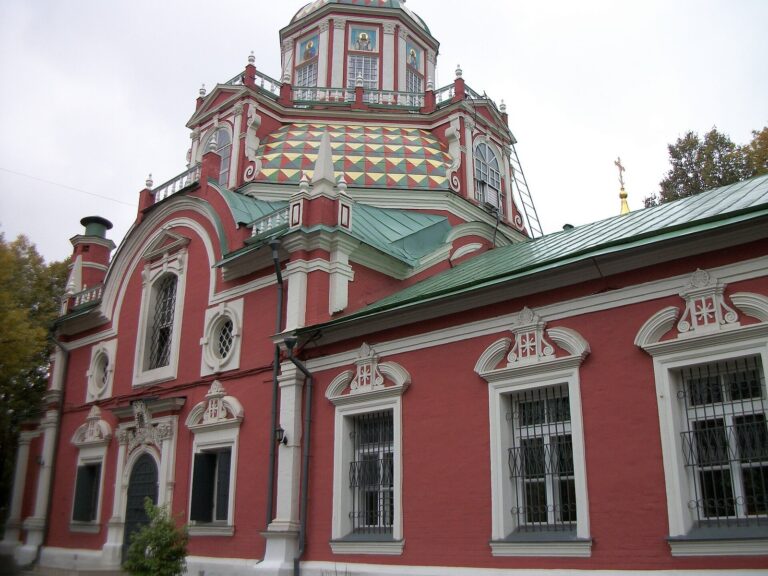
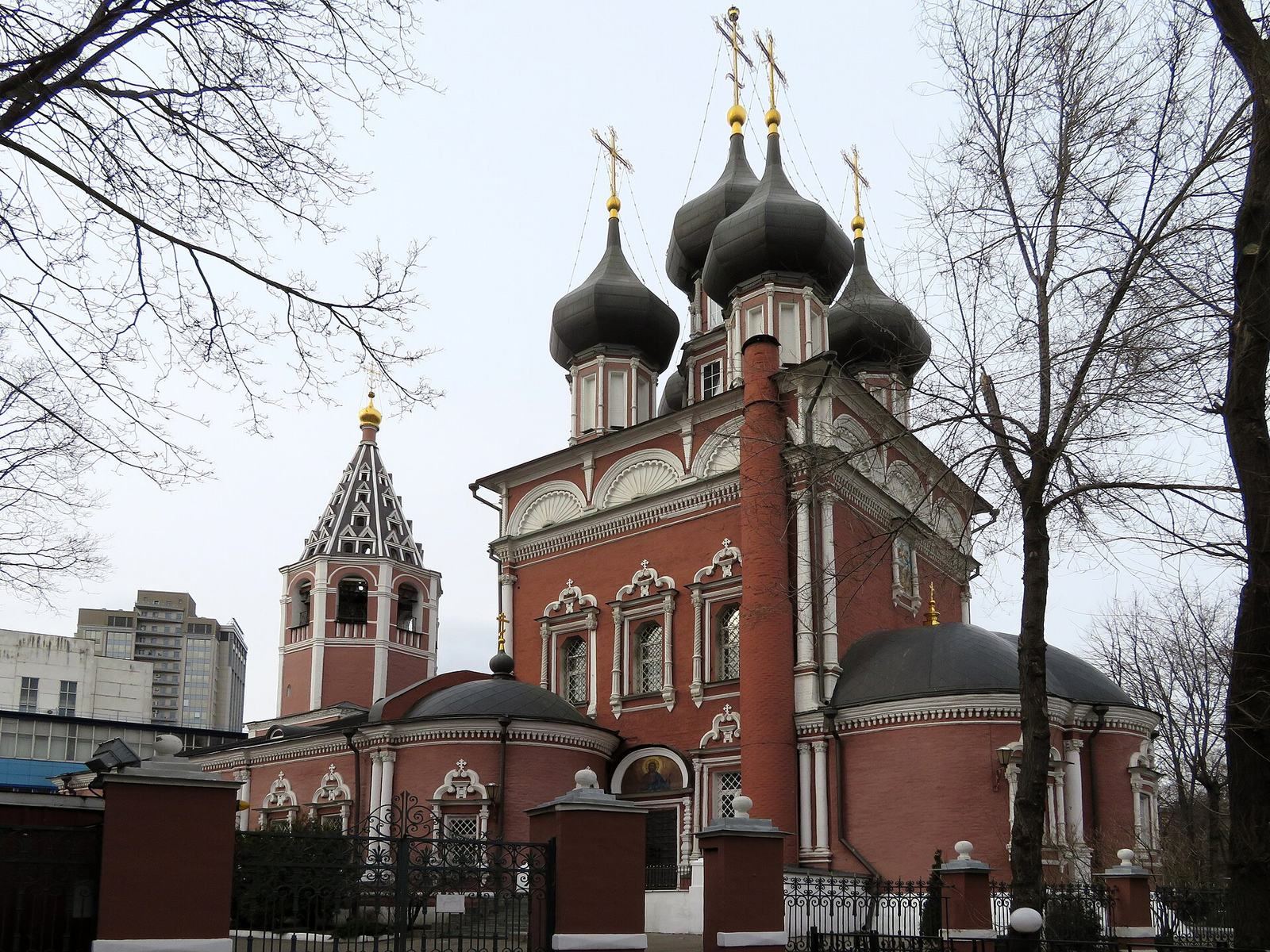
The Church of the Deposition of the Robe is a Russian Orthodox church in Russia, built in brick from 1701 to 1716 in the Moscow Baroque style. It commemorates the 1625 arrival in Moscow of a fragment of the robe associated with Christ’s journey to Golgotha.
The 1625 embassy and the church’s foundation
In 1625, Moscow clergy received an embassy from Shah Abbas I, ruler of Persia under the Safavid dynasty. The envoys presented Tsar Michael Fyodorovich, the first tsar of the Romanov dynasty, and Patriarch Philaret, head of the Russian Orthodox Church, with a relic associated with Christ’s robe. Abbas had seized the fragment in Georgia. It was placed on a special altar beneath a canopy in the Kremlin’s Dormition Cathedral.
A wooden church was later erected at the embassy’s reception site to commemorate the event. The stone building replaced it between 1701 and 1716. The church’s principal dedication recalls the robe’s placement in Moscow, and it remains the only church with this dedication. A feast for the event entered the Russian church calendar after 1625. Observed only by the Russian Orthodox Church, it falls on July 10/23.
Chapels and nineteenth-century renewal
A chapel dedicated to Great Martyr Catherine was built in 1701. By the mid-18th century, another chapel, dedicated to the Apostle James son of Alphaeus, had been established on the left side of the refectory, the hall adjoining the church’s main worship space. When the refectory was enlarged in the late 1880s, the James chapel was moved into a new extension.
Renovation and reconstruction were proposed in 1885, and permission followed in September 1886. Architect A. S. Kaminsky designed and supervised the work, which continued from 1886 to 1889. The side chapels were consecrated, or formally dedicated for worship, in September 1889. Bishop Nestor of Dmitrov presided over the church’s grand consecration in 1894. The upper part of the bell tower was rebuilt around that time.
Twentieth-century use and later history
The church remained open throughout its history, including during the Soviet period. Its rector in the 1930s was Alexander Khotovitsky, an Orthodox priest later venerated as a martyr. He was arrested and executed in 1937. From 1944 to 1960, the church served as the seat of Archbishop Macarius (Daev) of Mozhaisk. Archpriest Nikolai Golubtsov served among its clergy from 1949 to 1963.
In 1951, for the 250th anniversary of the stone church’s foundation, Patriarch Alexy I gave it an icon depicting the Placing of the Robe of the Lord in Moscow, transferred from the Kremlin’s Dormition Cathedral. In 1857, Kiriak Anastasiev Buba, a Greek from Nizhyn, had given the church a folding icon containing the frontal bone of James son of Alphaeus and relic fragments associated with 70 other saints; the icon was later stolen. Metropolitan Job served as honorary rector from 2011 until his death in 2020. The church is a federally significant cultural heritage site in Russia.
Remains
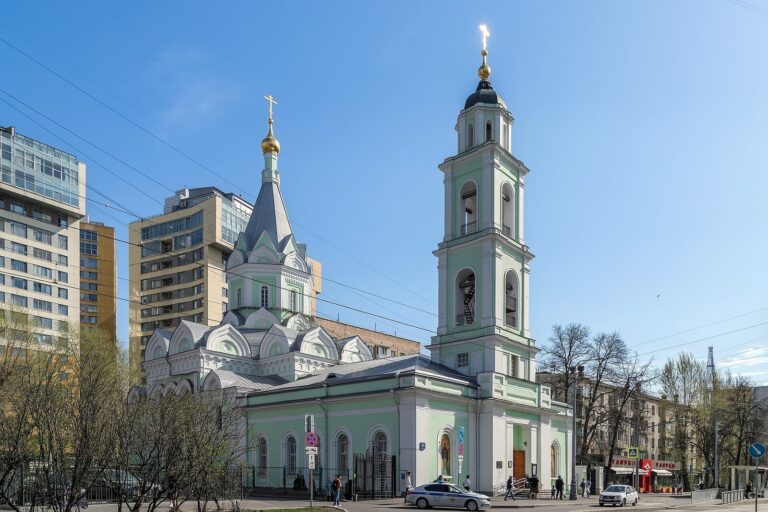
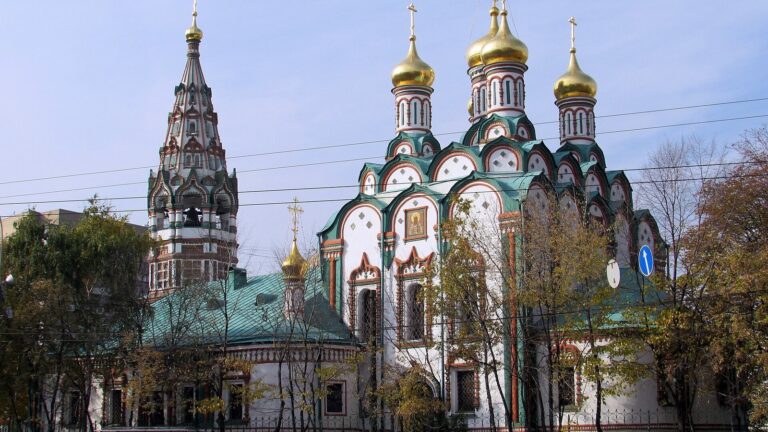
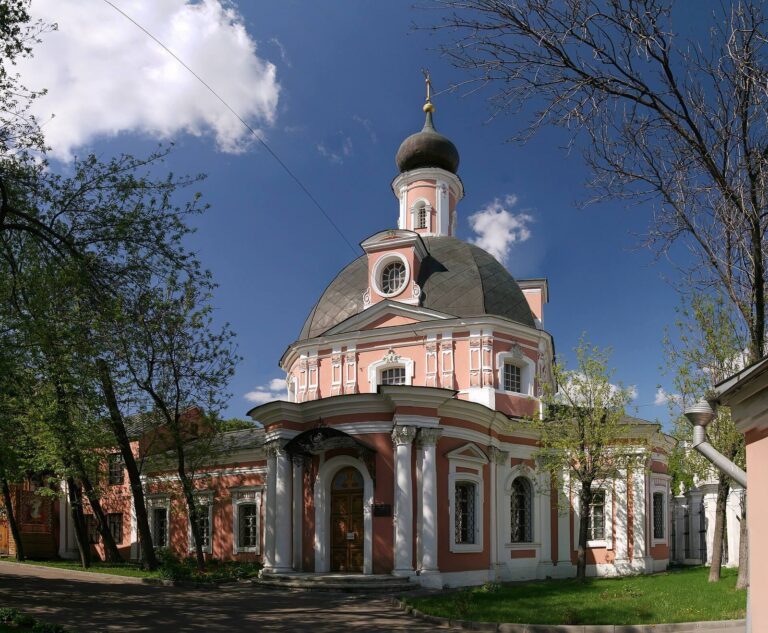
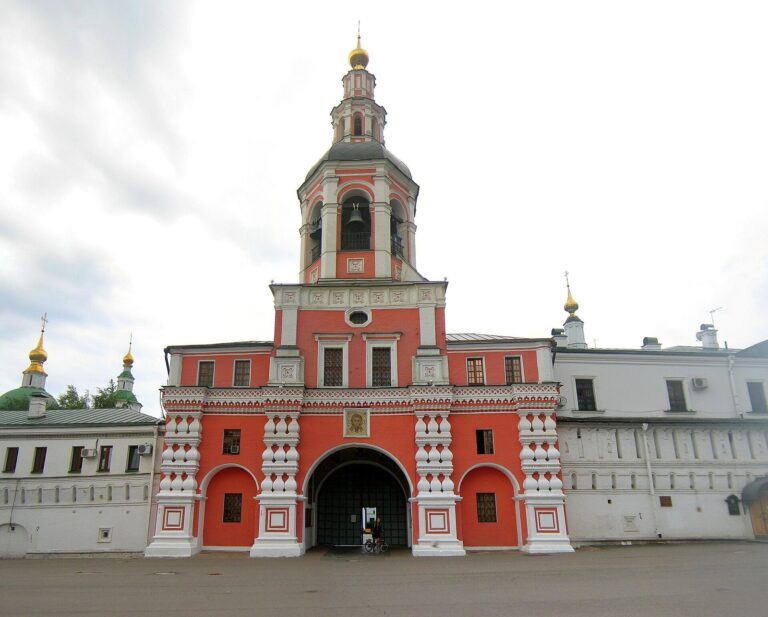
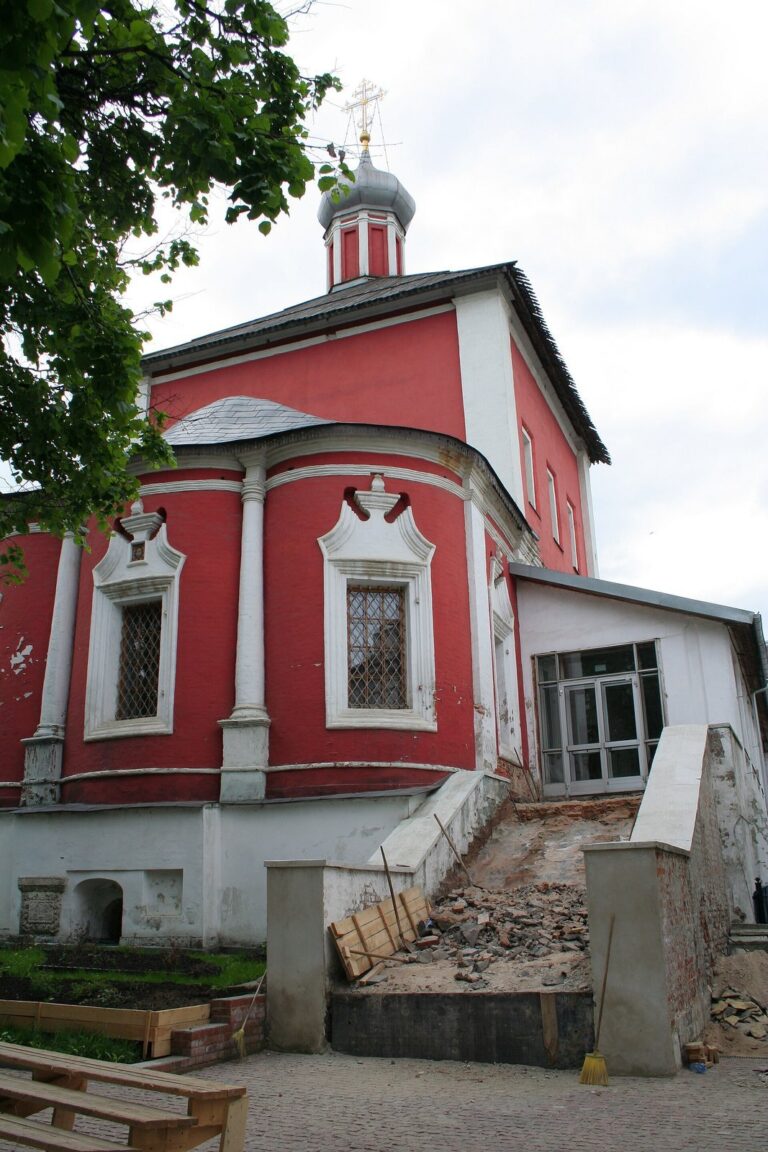
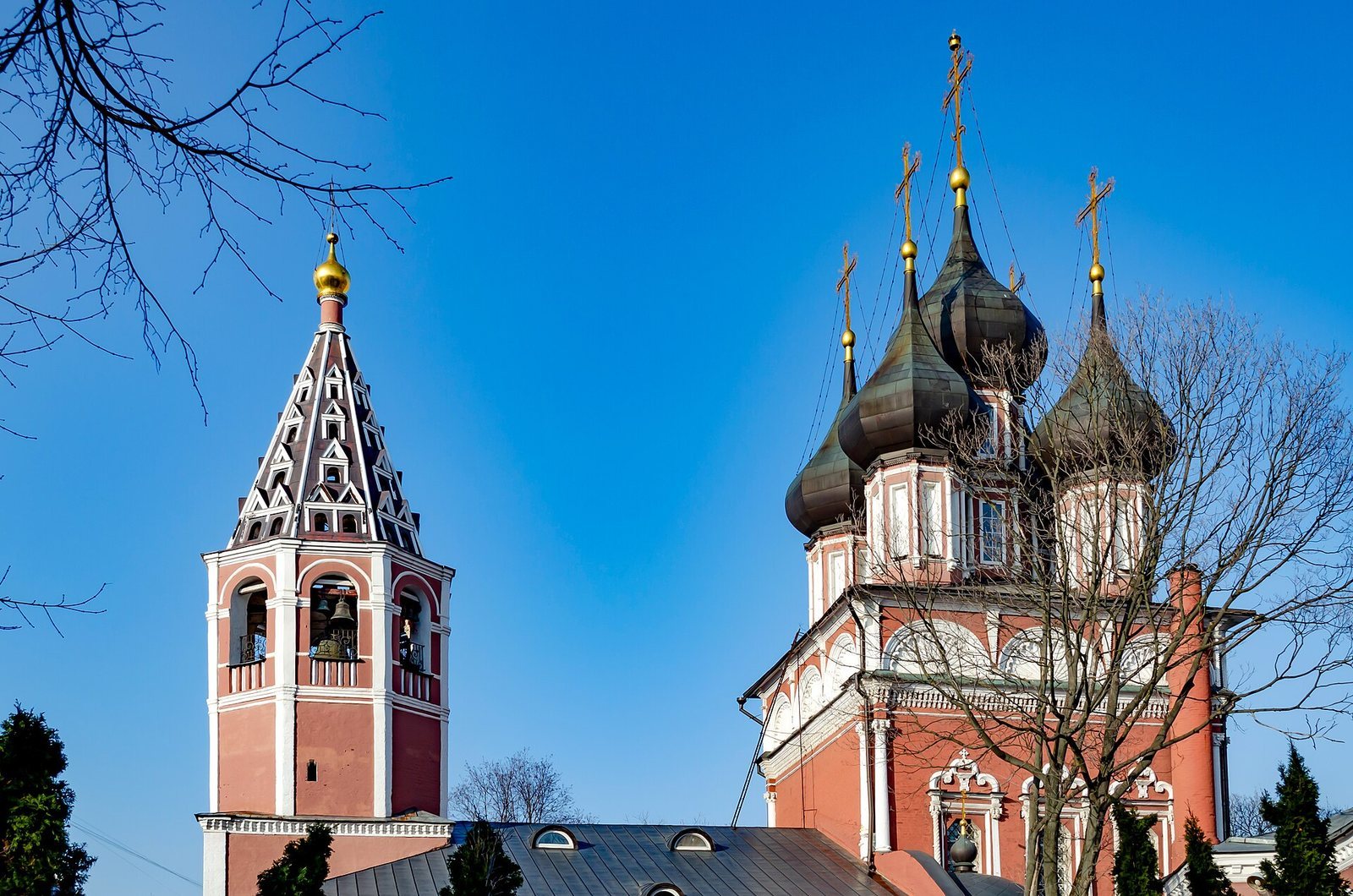
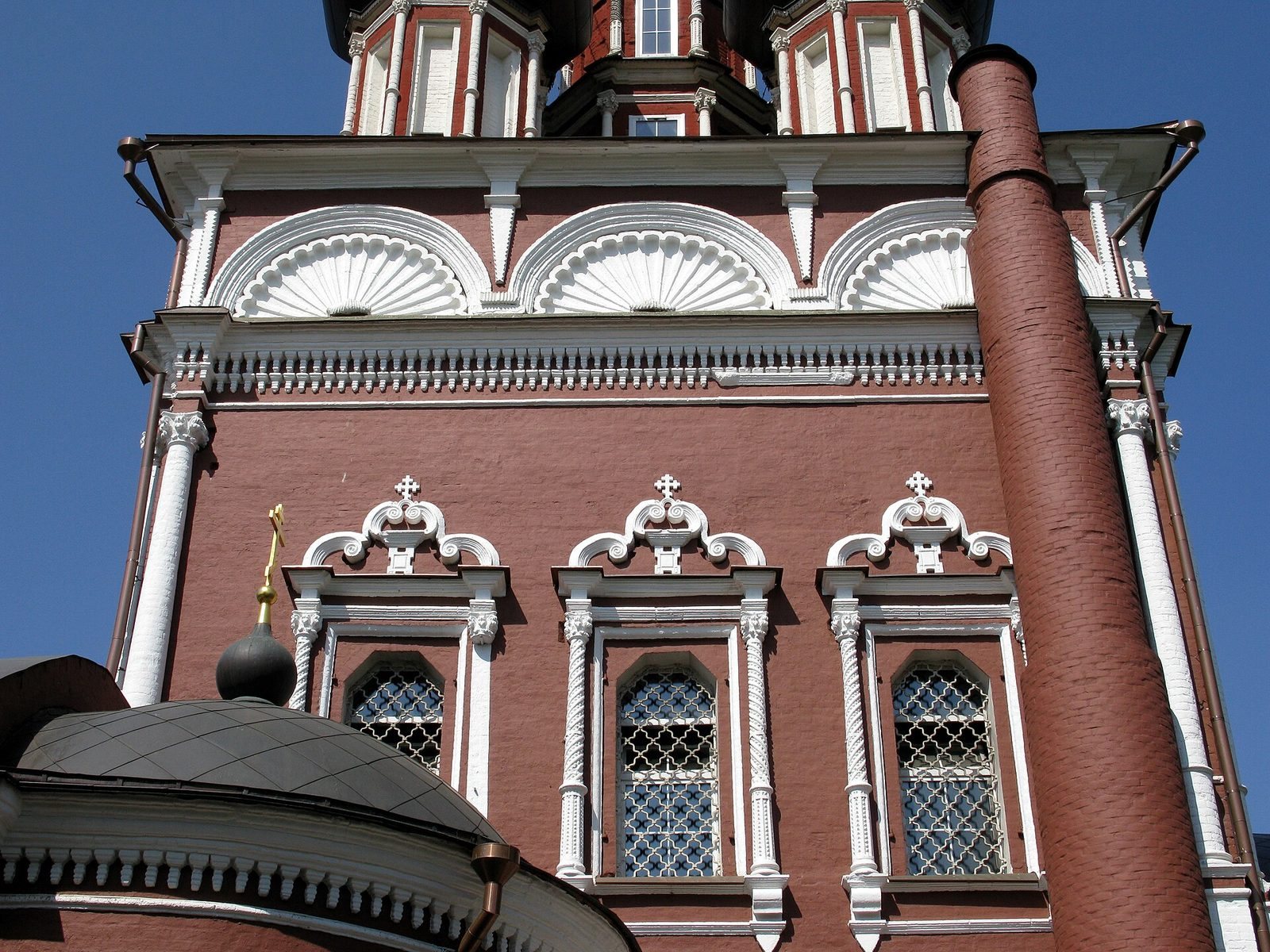
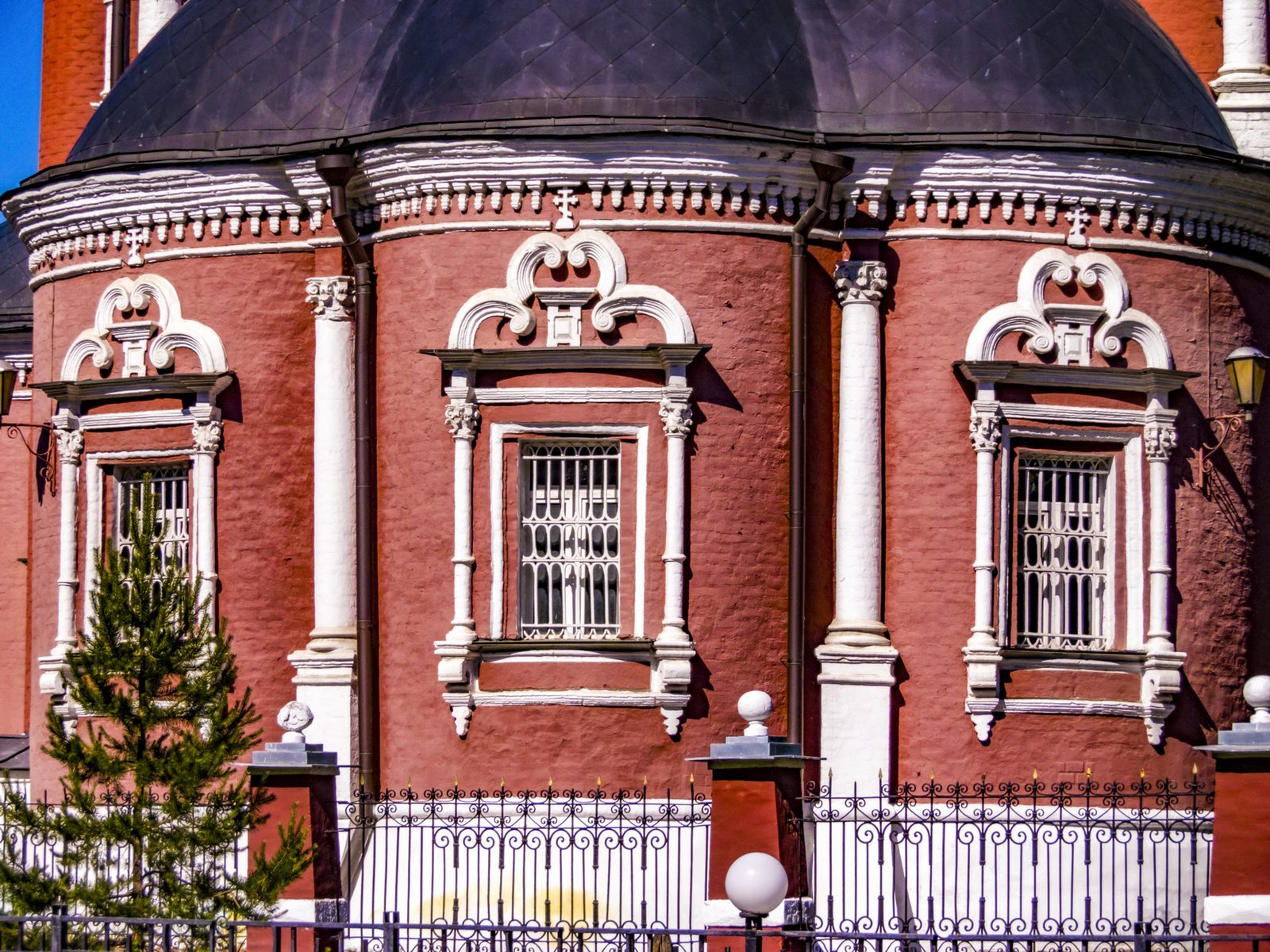
The brick church has a square main block topped by an attic and a composition of multiple domes. A refectory extends to the north, while service rooms adjoin the base of the bell tower. The church’s principal altar and two side chapels are dedicated to the Deposition of the Robe, James son of Alphaeus, and Great Martyr Catherine. Its exterior appearance has remained unchanged since the 1894 renovation.
Interior and religious images
Decoration and iconostasis
The interior retains Baroque stucco decoration from the mid-18th century. A Baroque iconostasis, a screen bearing icons that separates the sanctuary from the main worship space, stands within the church.
Icons and relics
A lectern icon depicting the Placing of the Robe of the Lord in Moscow incorporates a silver cross and a fragment of the Robe of Christ. Other associated icons depict the Mother of God under the title “Seeking the Lost,” Great Martyr Catherine, and Blessed Matrona of Moscow; the Matrona icon contains a relic fragment.
Obelisk
An obelisk survives at the place where the Persian embassy was received.