Necrópole da Pedreirinha: An Early Medieval Burial Site in Portugal
Site at a Glance
- Popularity
- Very Low
- Country
- Portugal
- Primary era
- Medieval
- Eras represented
- Medieval
- Civilizations
- Unclassified
- Site type
- Burial
- Remains
- Necropolis
On this page8 sections
History
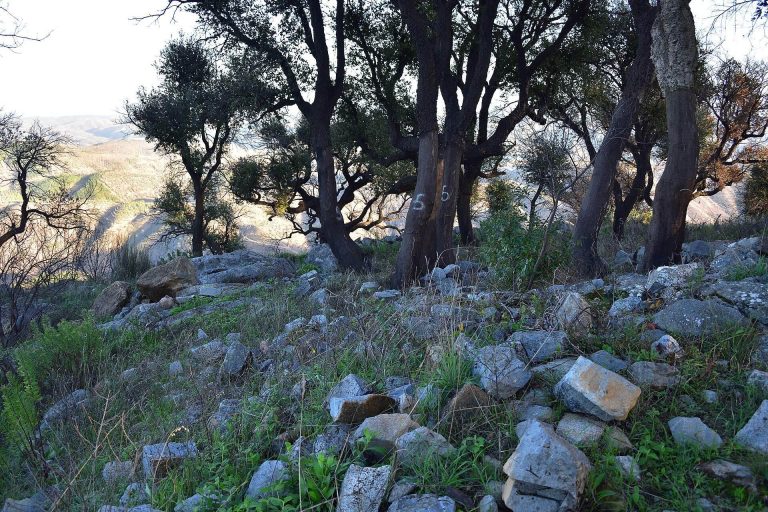
Necrópole da Pedreirinha is an Early Medieval burial site on Cerro da Pedreirinha in Vale Fuzeiros, within the municipality of Silves, Portugal. It was probably established and used during the Early Middle Ages, the centuries after Roman rule and before the later medieval period. The community that built it may have relied on fertile soils associated with Barranco da Baralha and on nearby mountains for food and timber.
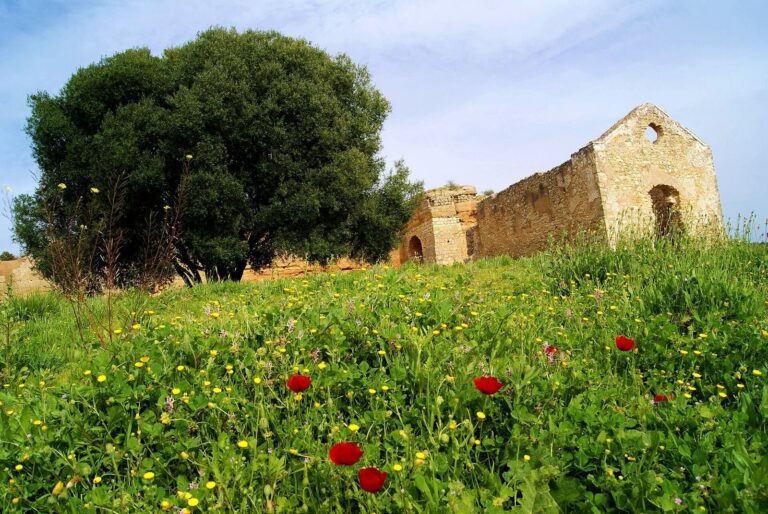
Human activity in the surrounding area began much earlier than the necropolis. Prehistoric objects, a possible burial mound from the Neolithic–Chalcolithic transition, and evidence of Roman-period occupation point to successive phases of activity in the vicinity. The necropolis is part of the Vilarinha Archaeological Circuit, which also includes the Vilarinha Menhir Alignment and the Carrasqueira and Forneca necropolises.
Twentieth-century references mistakenly described the site as a Roman ritual basin. A survey in 2005 identified the three graves in its central group. Silves Municipal Council opened a classification process in 2014; Portugal’s national cultural heritage authority approved municipal-level classification in 2015, and the municipality formalized the status of Site of Municipal Interest in 2016.
Remains
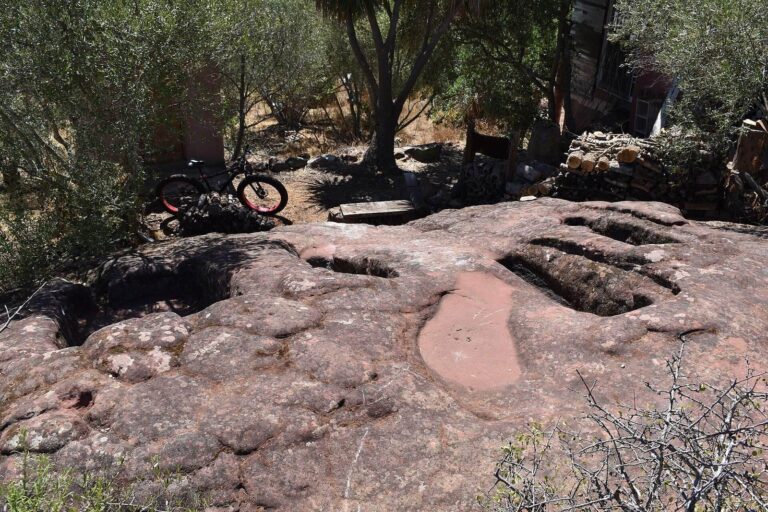
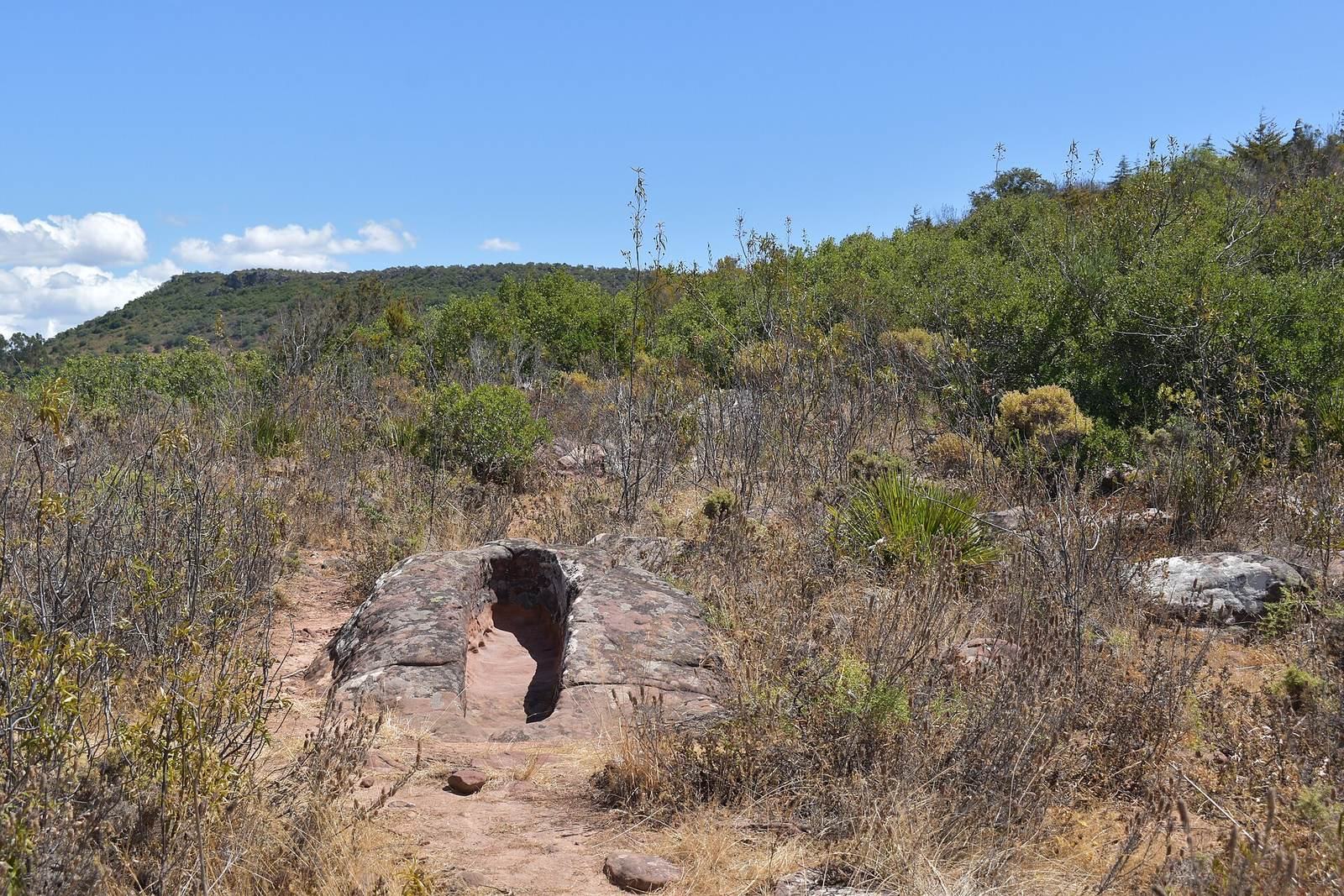
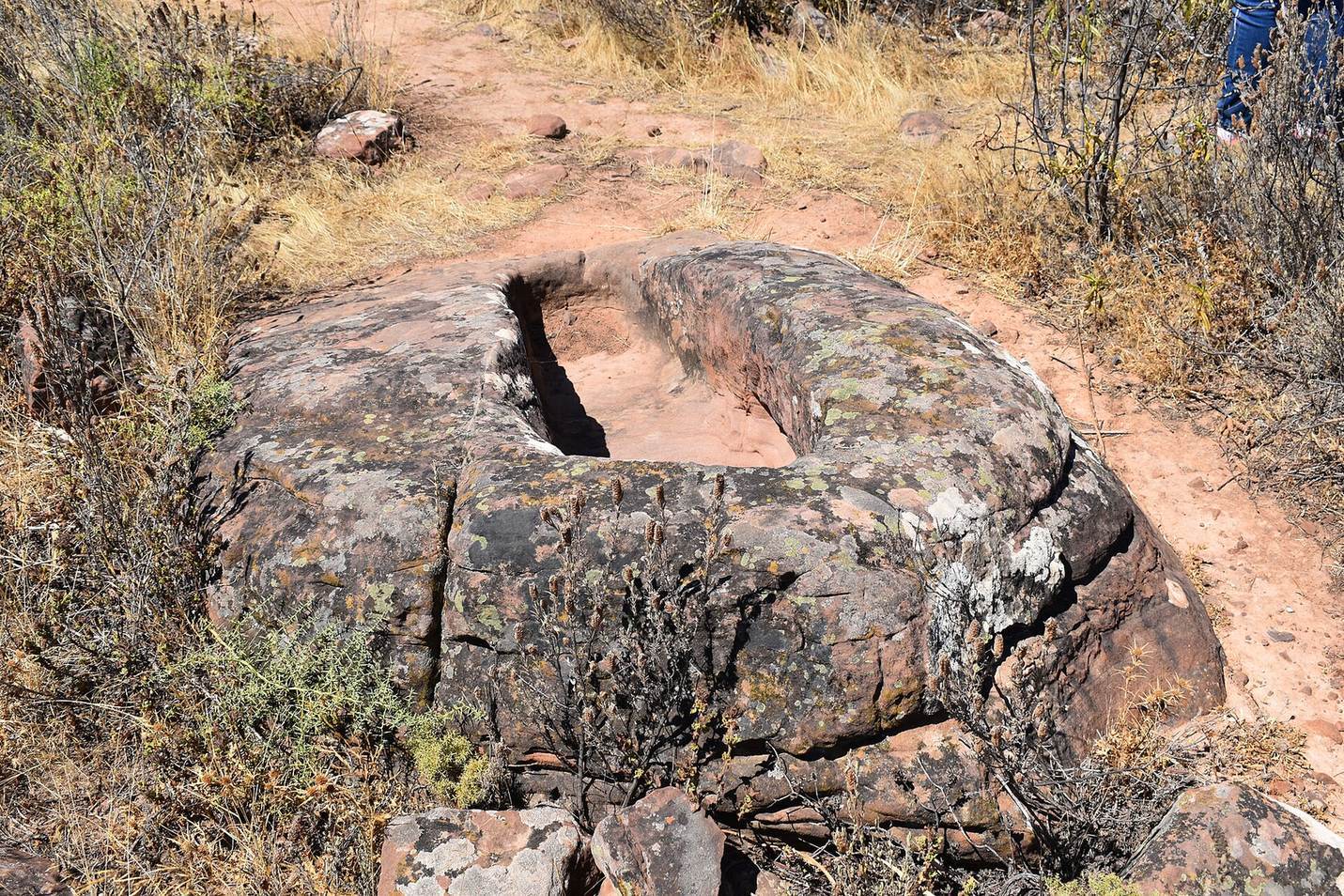
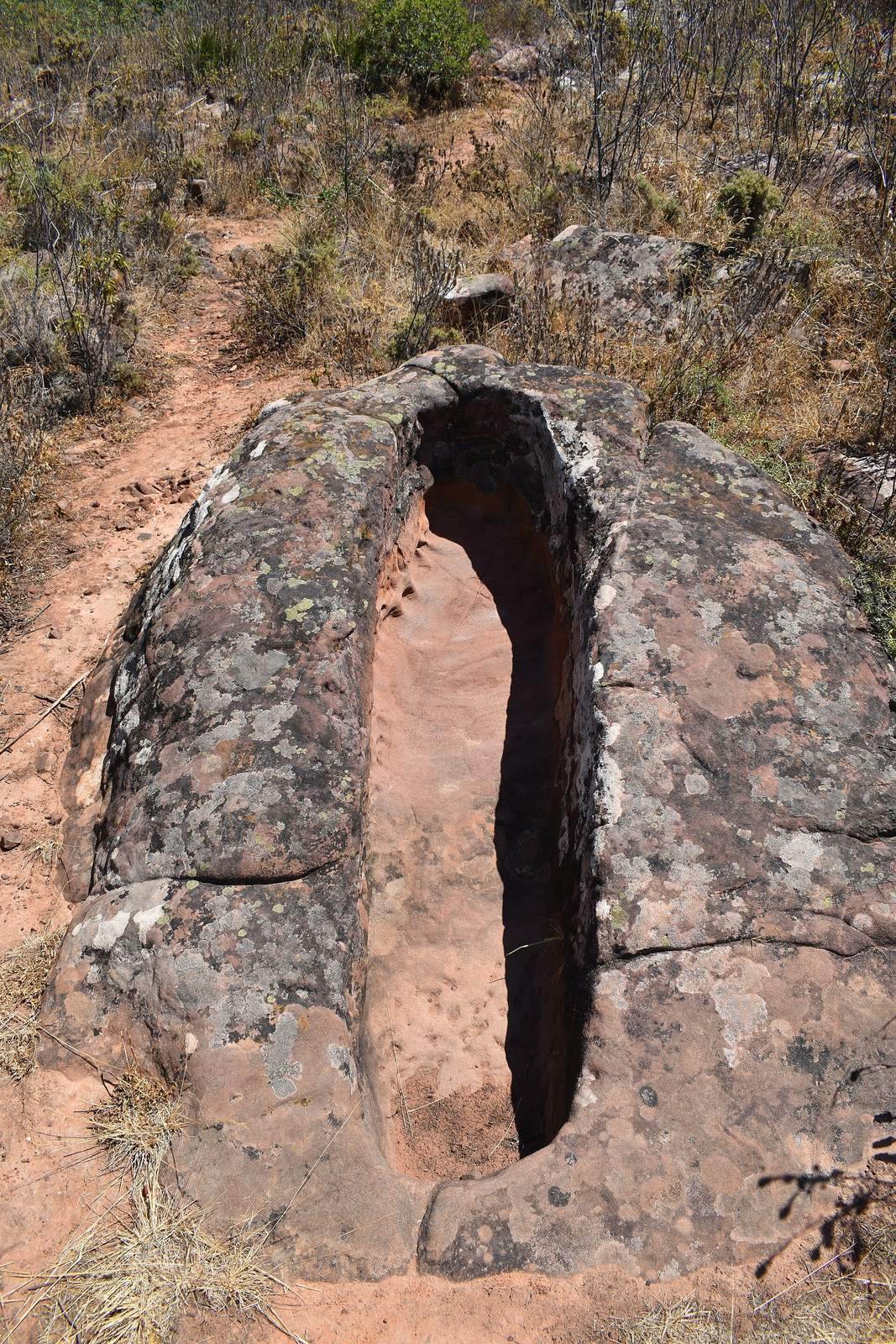
The necropolis occupies the summit of Cerro da Pedreirinha and comprises four graves cut into two outcrops of Silves sandstone, a rock formation dating to the Triassic geological period. Three graves form a closely spaced central group, while a fourth lies a short distance away at a lower level.
Graves
Central group
The three graves in the central group have rectangular or roughly trapezoidal outlines. Two were intended for adults and the third for a child.
Lower grave
Set apart from the central group, the fourth grave has an oval outline. Its middle is wider than its head and foot ends.
Archaeological evidence in the surrounding area
Prehistoric finds
Prehistoric objects from the vicinity include a quern bedstone, the fixed lower stone used for grinding grain, and a polished stone axe. A Mira-type axe was found farther away. Nearby remains also include a possible burial mound dating to the Neolithic–Chalcolithic transition, between the later Stone Age and early copper use.
Roman-period remains
Roman-period material from the area includes fragments of ordinary pottery, terra sigillata (Roman tableware often distinguished by a smooth, red-coated surface), and building ceramics. Several sandstone blocks may have belonged to a structure, and a large lime kiln also stands among the nearby remains.