Church of the Ascension of the Lord in Krzyżowice: A Historic Roman Catholic Church
Site at a Glance
- Popularity
- Very Low
- Country
- Poland
- Primary era
- Early Modern
- Eras represented
- Medieval, Early Modern, Modern
- Civilizations
- German, Holy Roman Empire, Kingdom of Prussia
- Site type
- Religious
- Remains
- Church
On this page12 sections
History
Foundation and religious change
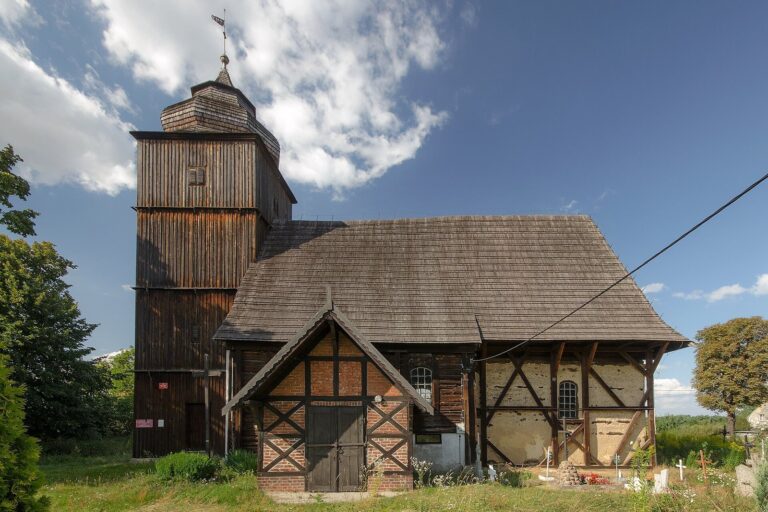
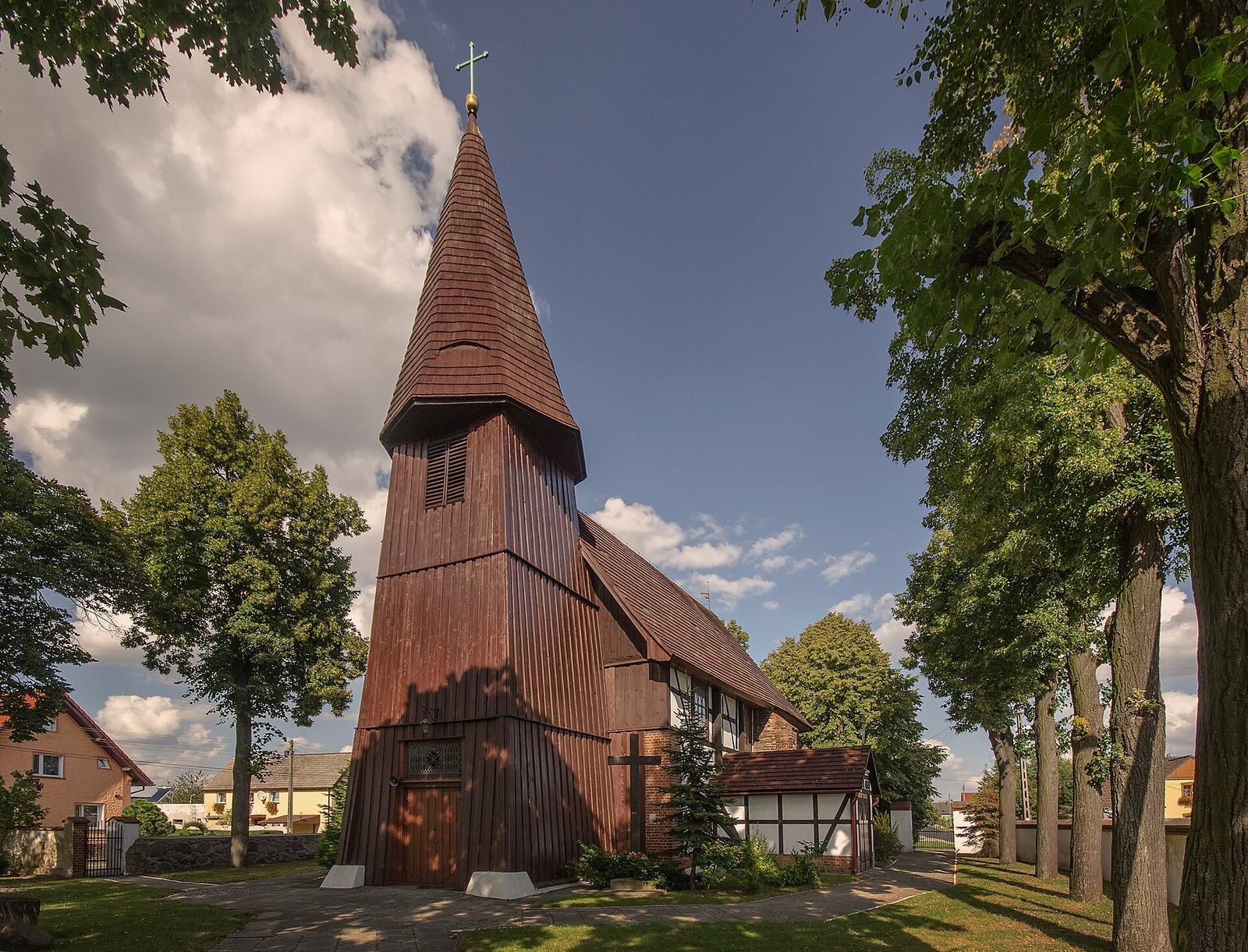
The Church of the Ascension of the Lord in Krzyżowice, Poland, is a Roman Catholic church erected in 1580, with an early-fifteenth-century Gothic chancel, a medieval European architectural style. The church served as a Protestant place of worship before Catholics took it over in 1945.
Interior changes and continuing use
Wooden galleries were installed inside the church in the seventeenth century. Repairs took place in 1830 and 2000. A painted decoration in the chancel came to light in 1963 and probably dates to around 1418–1428; it was cleaned in the 1980s.
The church serves as a filial church, meaning a secondary church served by a parish, of the Parish of the Sacred Heart of Jesus in Pogorzela. The parish belongs to the Brzeg South Deanery, an administrative grouping of parishes, within the Archdiocese of Wrocław, a major Catholic territorial jurisdiction.
Remains
Exterior structure and layout
Nave and chancel
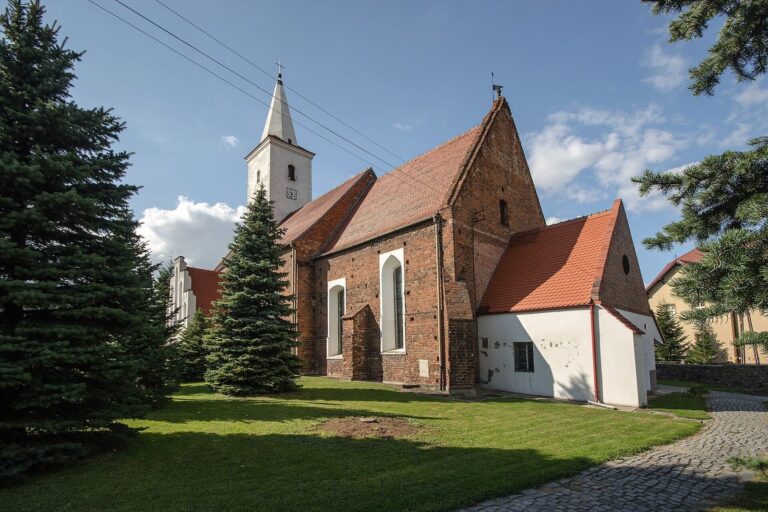
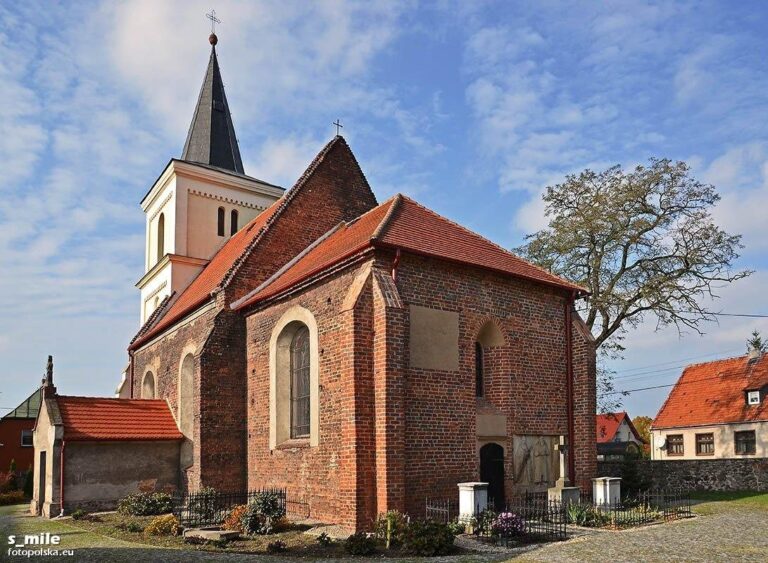
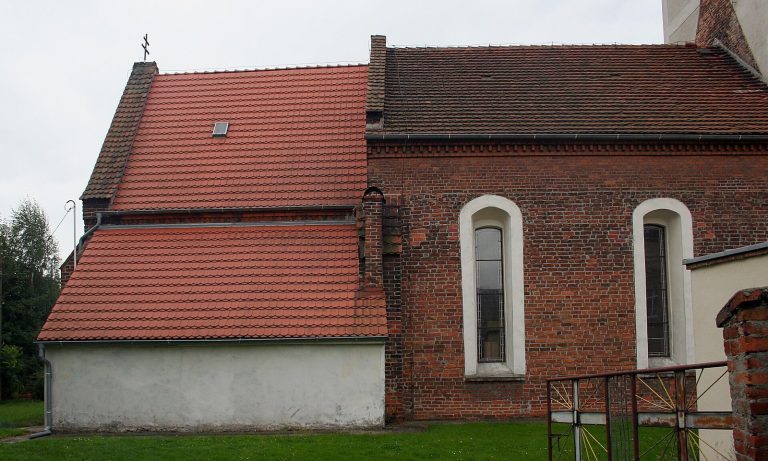
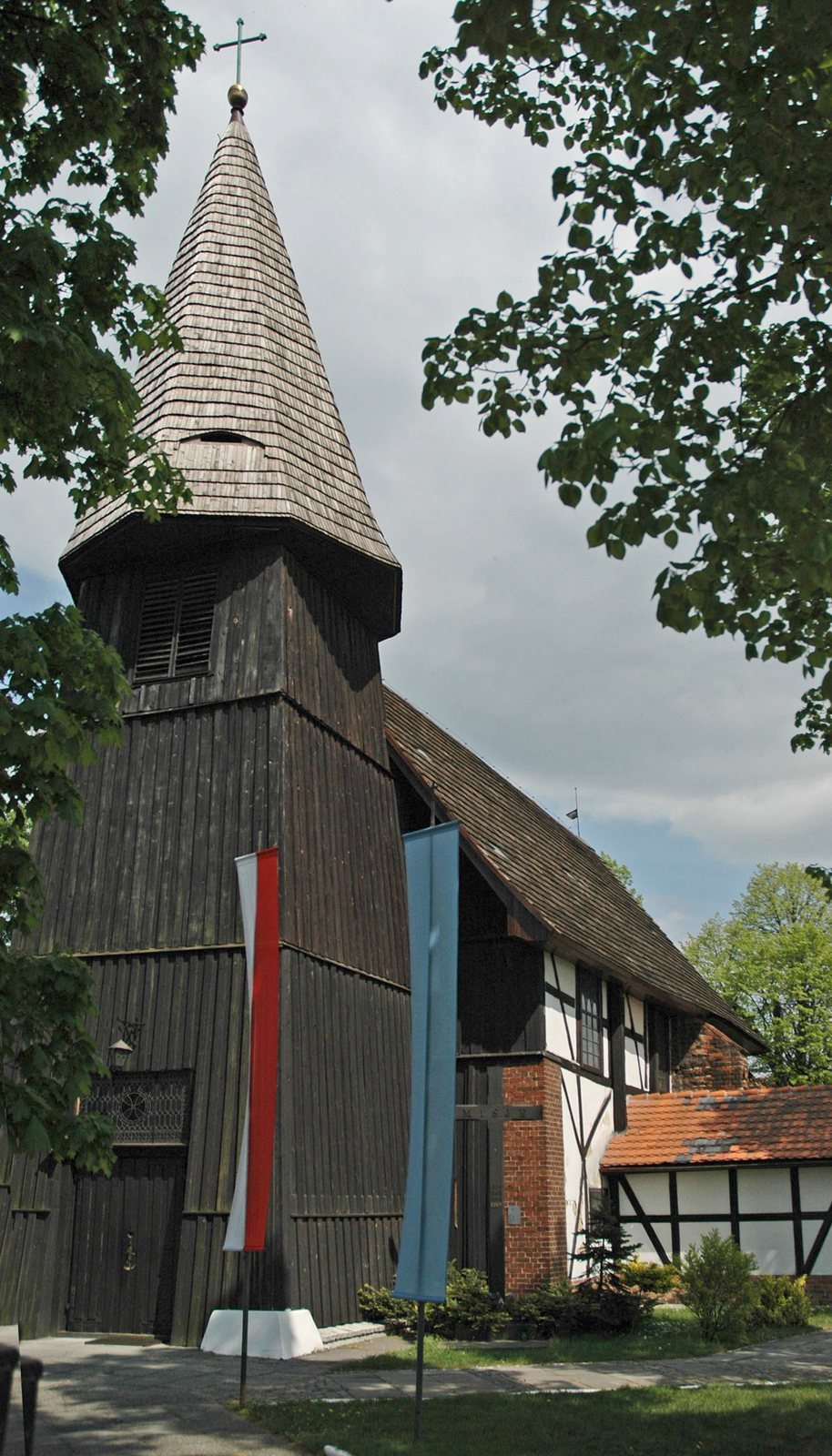
The church has a single nave built with half-timbering, a method in which a timber frame is filled with other materials. At its end, the brick Gothic chancel has a polygonal form and projecting buttresses for support. A sacristy, a room for clergy and church furnishings, stands beside the chancel, while a funeral chapel is located beside the nave.
Tower and roof
A wooden tower stands at the front of the church. Its post framework narrows toward the top and supports an octagonal, shingled roof cap shaped like a spire. The church has a single-ridge roof covered with shingles.
Interior and furnishings
Ceiling and galleries
The plastered interior has a flat wooden ceiling carried by posts. The music gallery, an elevated platform for music or singing, is also supported by posts and has a straight parapet. Wooden galleries form part of the interior.
Chancel paintings
The chancel’s painted figures and scenes imitate tapestries. They include the Adoration of the Magi, the Crucifixion, the Martyrdom of the Ten Thousand, Saint George, and the Face of Christ.
Altars and pulpit
The church has three altars. The main altar’s crowning includes early-seventeenth-century late Renaissance elements, from a period marked by renewed interest in classical forms. The pulpit dates to 1614 and combines a late Renaissance form with a Gothic base from around the fifteenth century.
Baptismal font and stained glass
A stone baptismal font dating to around 1500 has a bowl supported by an eighteenth-century late Baroque angel figure, from a later European art style. The stained glass was made in 1907 by the A. Seler firm.