Machaby Sanctuary: A Roman Catholic Pilgrimage Shrine in Italy
Site at a Glance
- Popularity
- Low
- Country
- Italy
- Primary era
- Early Modern
- Eras represented
- Early Modern, Modern
- Civilizations
- Duchy of Savoy, Holy Roman Empire, Kingdom of Sardinia
- Site type
- Religious
- Remains
- Sanctuary
On this page10 sections
History
The Machaby sanctuary is a Roman Catholic pilgrimage shrine near Machaby, about two kilometres southeast of Arnad in Italy. Dedicated to Our Lady of the Snows, a title for the Virgin Mary, it belongs to the Diocese of Aosta and is regarded as an important sanctuary in the Aosta Valley. A chapel stood at the site by 1503.
Chapel and sanctuary
The chapel recorded in 1503 was smaller than the present church. In 1687 it was rebuilt, retaining its earlier presbytery, the part of a church around the altar. Side aisles and a sacristy followed in 1689.
Local tradition tells that shepherds found a wooden statue of the Virgin in a bush near Machaby and took it to an oratory in the village above. When the statue was found again beside the bush the next day, people from Arnad chose that place for the sanctuary. Another version names farmers as its finders and places the event in the Middle Ages.
Pilgrimage and restoration
From the nineteenth century through the 1960s, celebrations of Our Lady of the Snows took place on the first Sunday in May, on 5 August, and on the Sunday nearest that August date. The feast is also associated with an annual celebration on 5 August. Pilgrims walked from distant places, including a large group from Biella that came each year. The May and August dates, together with a fertility stone associated with the sanctuary, have been linked to Beltane, a Celtic spring festival, and Lughnasa, a Celtic harvest festival. The sanctuary was restored in 2022.
Remains
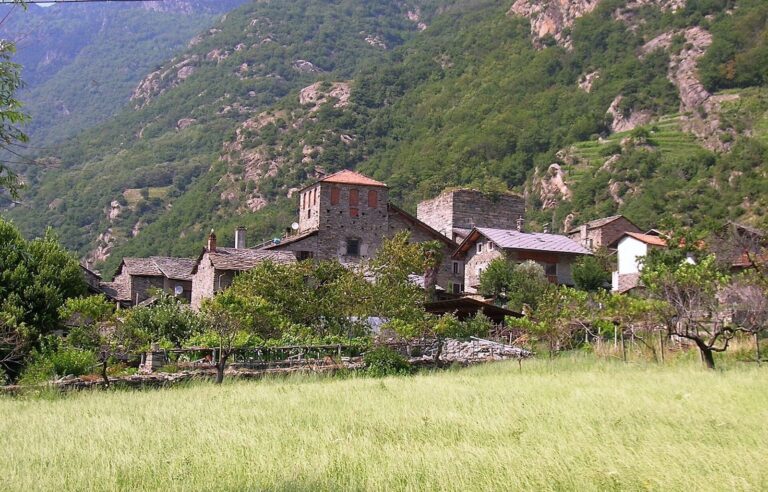
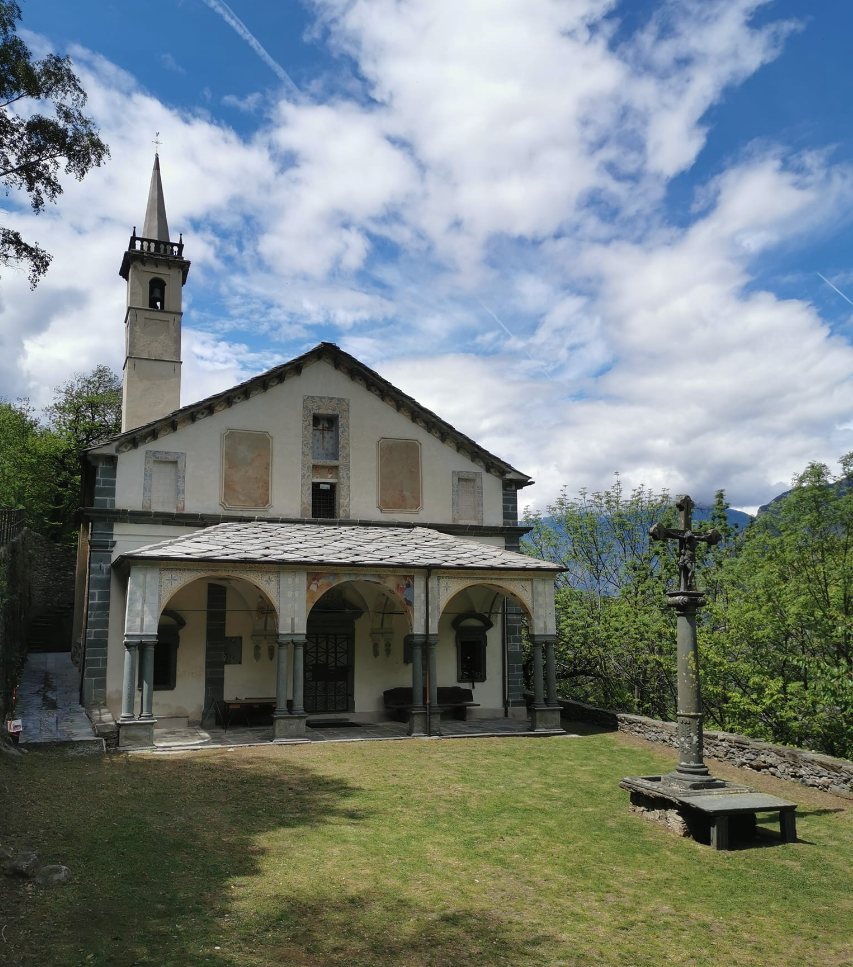
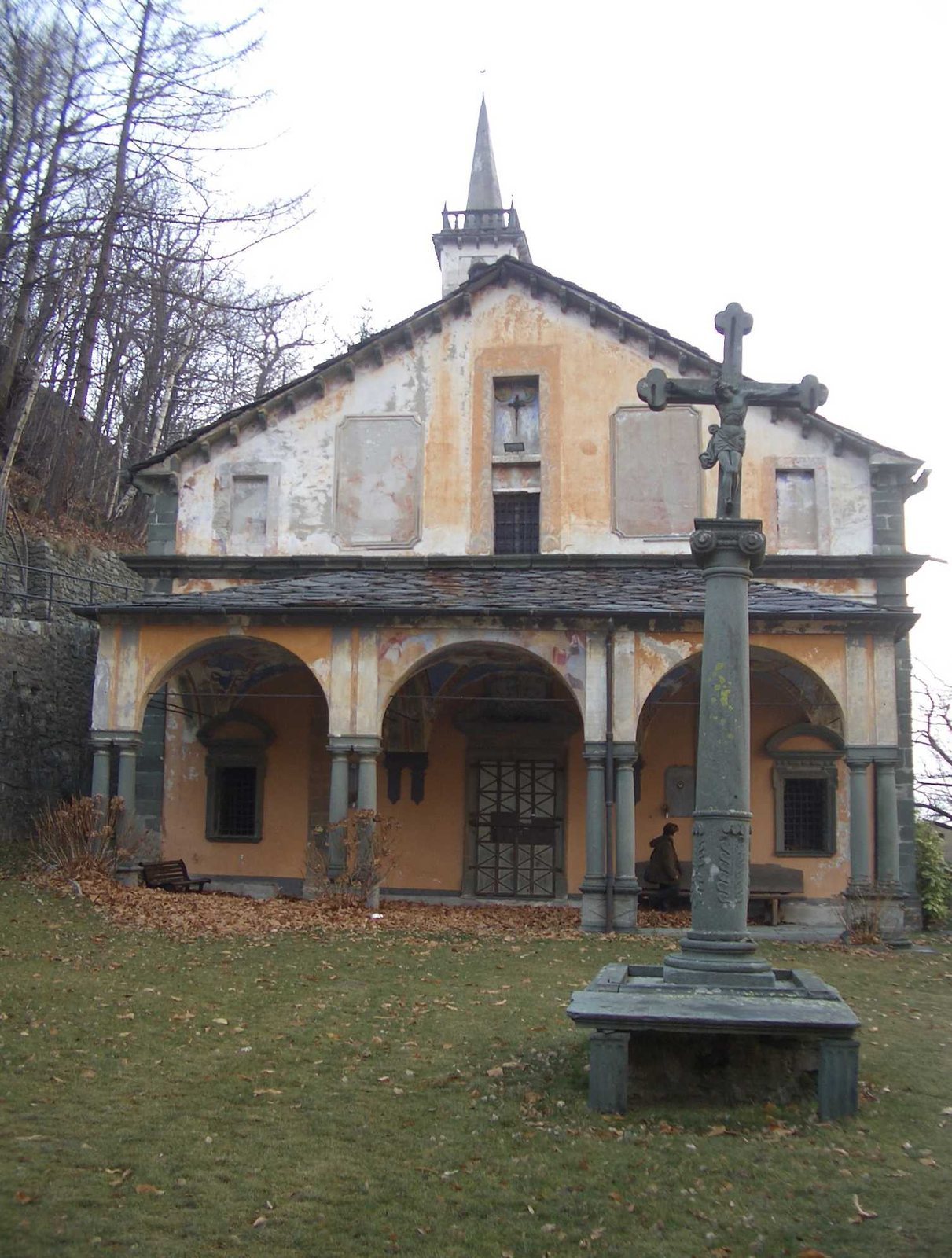
The sanctuary stands about 696 metres above sea level on a mountain spur, midway up a slope in a deep valley thick with chestnut trees. Its church, forecourt, nearby pilgrim buildings, and devotional features form the surviving site.
Church and interior
Church structure
The church has a portal dating to 1687, a bell tower from 1723, and a portico added in 1735. Inside are the presbytery, side aisles, and sacristy. The presbytery dome rises from an octagonal drum and carries frescoes by the Swiss painters Alessandro, Augusto, and Antonio Artari of Arogno.
Altars and offerings
Three altars stand in the church. The two side altars date to the eighteenth century, while the twisted columns beside the main altar are from the seventeenth century. A stone pulpit supported by small columns is probably also seventeenth-century. Numerous ex-voto offerings, given in fulfillment of or thanks for a vow, hang on the walls, particularly crutches. A small wooden statue of the Virgin that once occupied a niche in the main altar is now kept in Arnad’s parish church.
Devotional features and pilgrim buildings
Rosary niches and forecourt
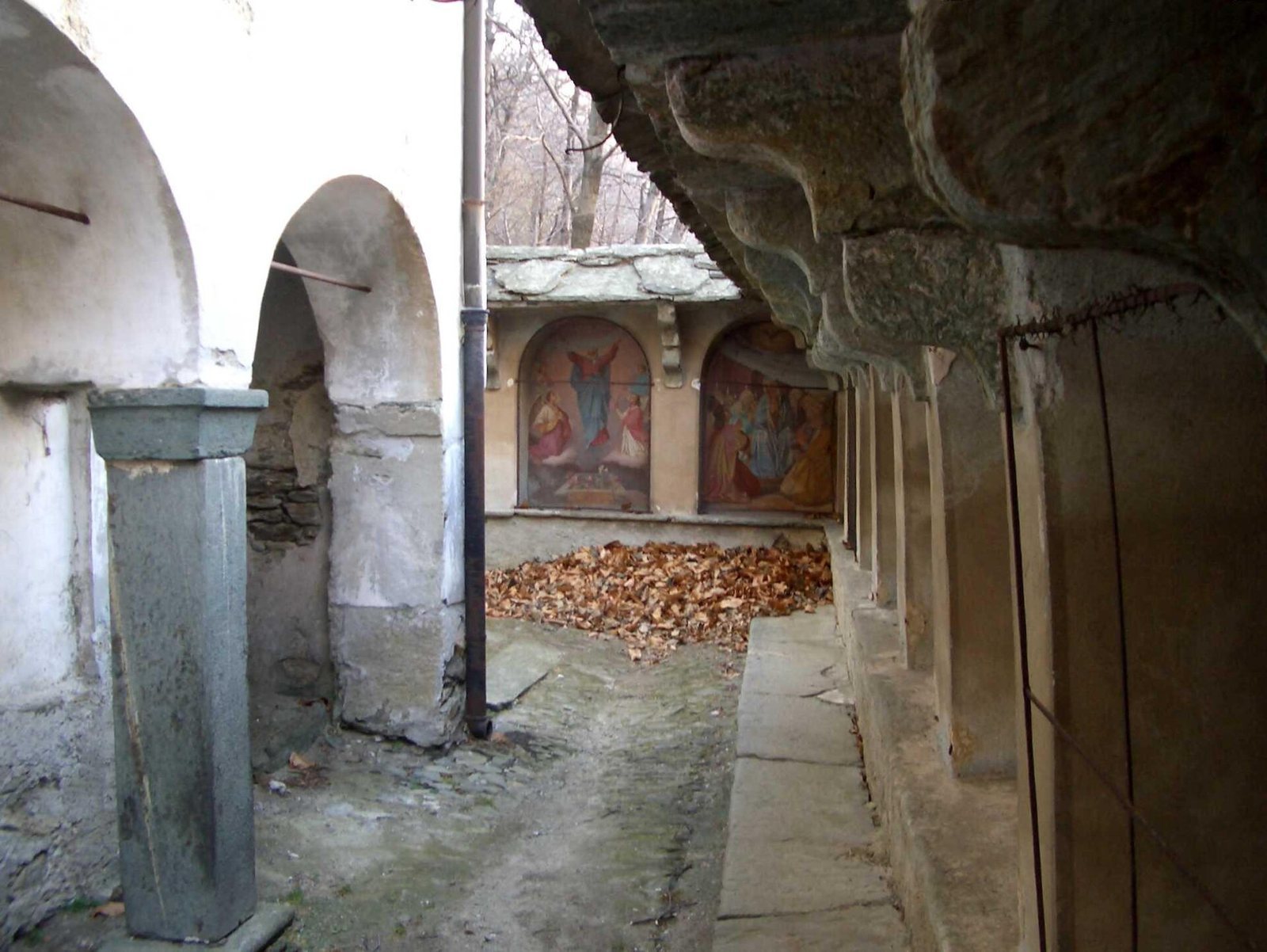
Niches decorated with frescoes around the sanctuary depict the Mysteries of the Rosary, episodes from the lives of Jesus and Mary contemplated in Catholic devotion. The forecourt has a stone cross and statues of Saint Jerome, an early Christian scholar and translator, and Saint Gratus, patron saint of the Aosta Valley. A stone crucifix is also identified at the sanctuary. Other stone statues may once have stood nearby, perhaps forming a damaged black-stone Calvary, a representation of Christ’s crucifixion with attendant figures. Together with the Rosary niches, these features suggest an early form of a Sacred Mount, a devotional complex of chapels and artworks depicting sacred subjects.
Path shrine and accommodation
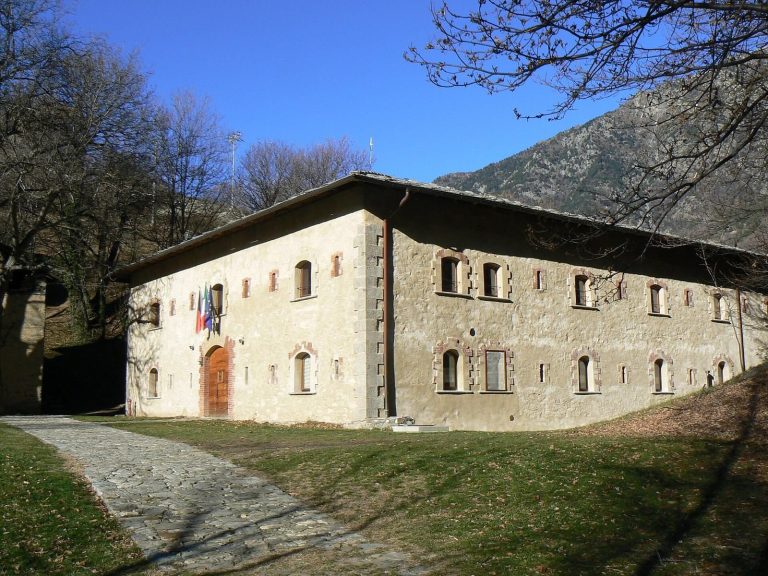
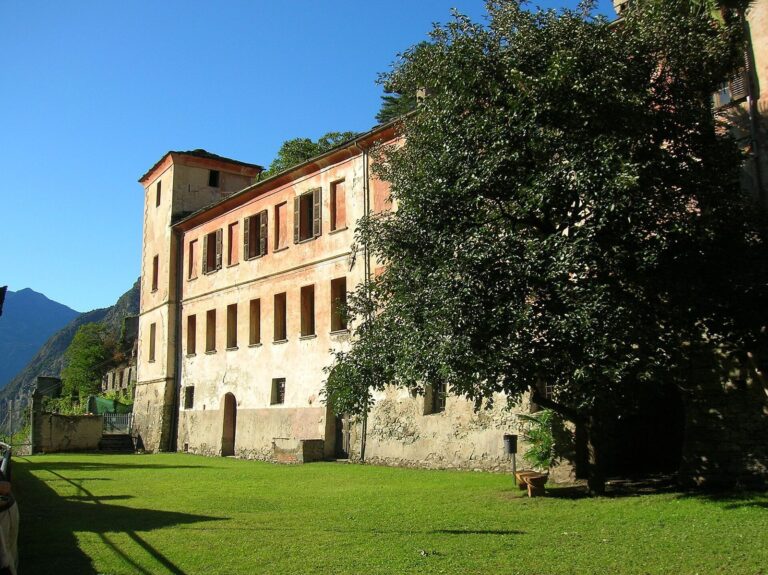
A votive shrine to the Virgin Mary and Saint Barbara stands along the path to the sanctuary. Saint Barbara was an early Christian martyr traditionally invoked for protection against sudden death. Two buildings beside the forecourt date to the nineteenth century and provided accommodation for pilgrims.