Ascension Monastery, Kazan: An Orthodox Monastery and Episcopal Residence
Site at a Glance
- Popularity
- Medium
- Country
- Russia
- Primary era
- Early Modern
- Eras represented
- Early Modern, Modern
- Civilizations
- Russian
- Site type
- Religious
- Remains
- Monastery
On this page16 sections
History
Ascension Monastery, historically known as the Kazan Resurrection New Jerusalem Men’s Monastery, is a Russian Orthodox complex in Kazan, Russia. Founded in 1665 by Metropolitan Lawrence II, a senior Orthodox bishop, it belonged to the Kazan diocese, the territory governed by an Orthodox bishop. It may initially have served as a country residence for the bishops, replacing a deteriorating residence in the Kazan Kremlin. Its principal church, built in stone in 1698, is a single-domed example of Russian Baroque, a style that developed in Russia in the late 17th and 18th centuries. The monastery’s long-standing role as an episcopal residence shaped its history even after monastic life returned.
Foundation and construction
The new foundation drew inspiration from Patriarch Nikon’s New Jerusalem monastery near Moscow, conceived as a symbolic representation of the Holy Land. A petition from 1665/66 by a supporter of the old rites, traditional Orthodox practices maintained after 17th-century church reforms, claimed that Lawrence was building a wooden New Jerusalem at Nikon’s direction. That accusation about Nikon’s instructions was not established fact.
Guriy, Kazan’s first bishop, was associated with the deteriorating residence in the Kremlin that the new site may have replaced. Metropolitan Markell oversaw the construction of the main stone church, and most of the other monastery buildings were erected under Metropolitan Tikhon, who governed the Kazan diocese from 1699 to 1724. Peter I, the Russian ruler also known as Peter the Great, prohibited stone construction outside St Petersburg in 1722, curtailing further building.
Episcopal refuge and suppression
Historian Ivan Pokrovsky linked the bishops’ country residence to the frequent fires that struck Kazan in the late 17th and 18th centuries. After the 1742 fire, Archbishop Luke Konashevich, a senior Orthodox bishop, described the New Jerusalem estate as the only place where the bishop and his staff could stay without leaving Kazan. In 1764, Catherine II, who ruled Russia from 1762 to 1796, suppressed the monastery as part of secularization, the transfer of church property to state control. Twenty-seven other monasteries in the Kazan diocese were suppressed at the same time.
Yemelyan Pugachev’s 1774 siege of Kazan took place during a major rebellion against imperial rule. Metropolitan Benjamin Putsek-Grigorovich was falsely accused of sympathizing with the uprising and imprisoned for several years before being exonerated. Catherine ordered that he be addressed as Metropolitan of Kazan and wear a white monastic head covering as a mark of honor. In 1781 she granted the suppressed monastery to him as a country residence. Money she provided for improvements went largely to repair seminary buildings burned during the rebellion.
Episcopal residence and closure
Although monastic life was effectively revived, the site remained mainly a bishops’ residence until 1917. A major restoration of all the monastery buildings took place in 1829 through the efforts of Archbishop Filaret, later Metropolitan of Kyiv. By the late 19th century, the restored episcopal residence in the Kremlin was again in use, and the monastery became the bishops’ summer home. When Kazan’s bishops served at the Kremlin’s Annunciation Cathedral, they stayed at the Transfiguration Monastery, also in the Kremlin.
By the end of the 19th century, the monastery’s holdings extended well beyond its country residence. They included woodland and farmland, other estates near Kazan, lakes and springs, a shop on Fish Row Street, a flour mill on the Kazanka River, and a three-story stone church compound in Moscow.
Closure and renewed worship
In the early 20th century, the monastery was home to Gabriel (Zyryanov), an Orthodox monk and spiritual elder who had served there as treasurer in 1883 before moving to the Seven Lakes Hermitage, an Orthodox monastic community near Kazan. The monastery closed soon after 1917, among the first in Kazan to shut, and its archive was burned in 1919. During the 1920s, its buildings and grounds passed to the Kazan Experimental Agricultural Station; part of the former estate later remained with the Niva research institute. In 1949, the Resurrection Cathedral was converted into housing for station employees.
Three buildings were transferred to the Russian Orthodox Church in spring 2012, and worship resumed in the complex. Restoration of the Resurrection Cathedral began in 2013. Its first Divine Liturgy, the Orthodox Church’s principal Eucharistic service, was held on April 16, 2018. Parishioners restored the dining hall that same year.
Remains
The monastery stands on a hill above Sredny Kaban Lake, about seven kilometres from Kazan’s center; the lake belonged to the monastery. The earliest buildings were timber, with stone structures added as the complex developed. Its layout brought together the cathedral, episcopal quarters and service buildings, with a formal garden to the east and a cemetery beside the cathedral.
Church buildings
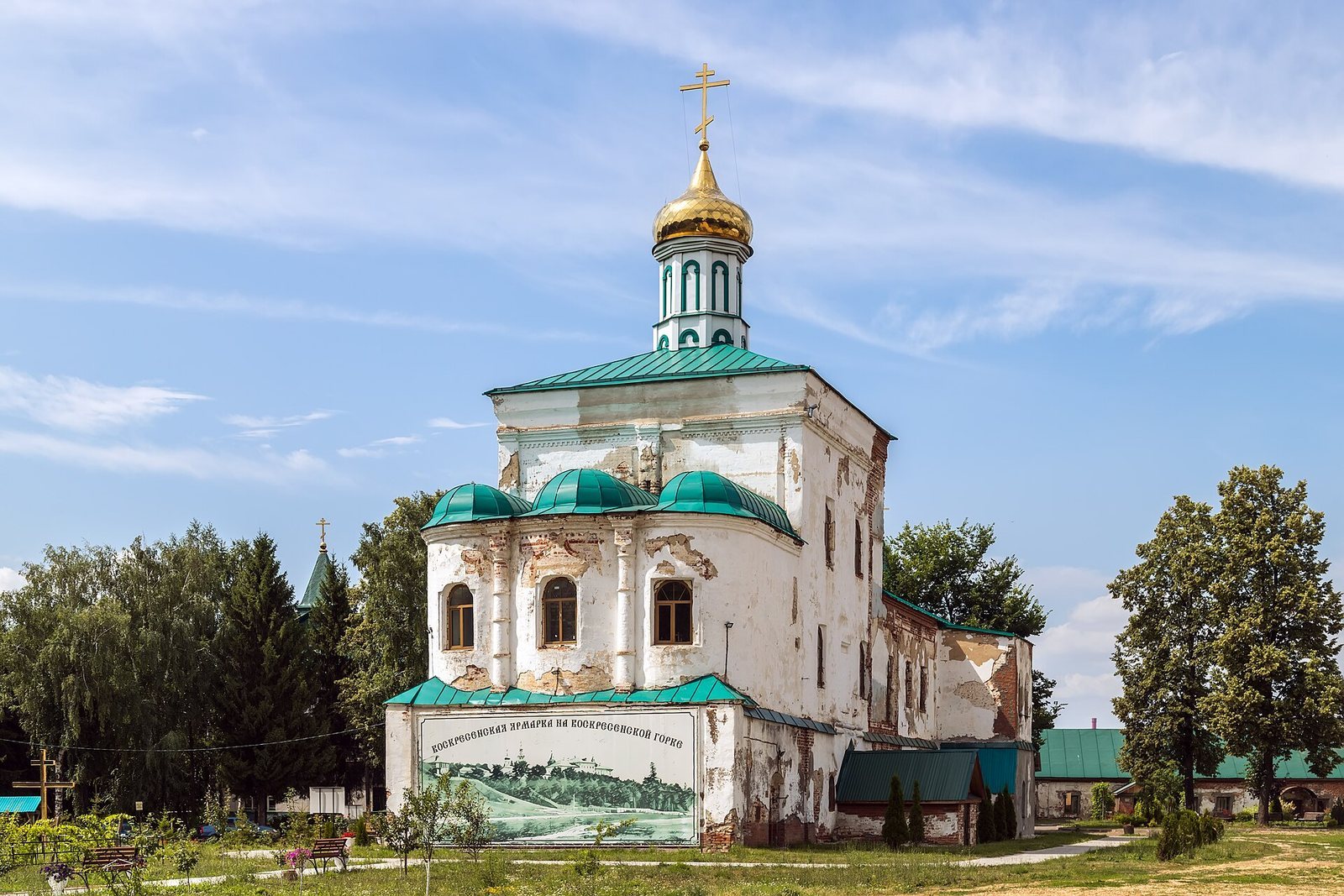
Resurrection Cathedral
The cathedral’s original design included a spacious refectory, or monastic dining hall, and open galleries reached by stairways. Decorated window surrounds and half-columns at the corners enriched its exterior. Its five-tier bell tower was compared with the Church of the Intercession at Fili in Moscow; the cathedral’s overall appearance was also compared with the main church of Kizichesky Monastery in Kazan. The bell tower was demolished. During the 1949 conversion to housing, the cathedral was raised, and its carved stone ornament, window surrounds and half-columns were removed. The projecting altar ends and interior vaulted ceilings survived, and a dome was installed during restoration.
A petition dated 1665/66 describes stone-pillared passages between the bishop’s quarters and the cathedral. It also mentions an upper room and attic above the kitchen, with a cross on the attic.
Gateway church
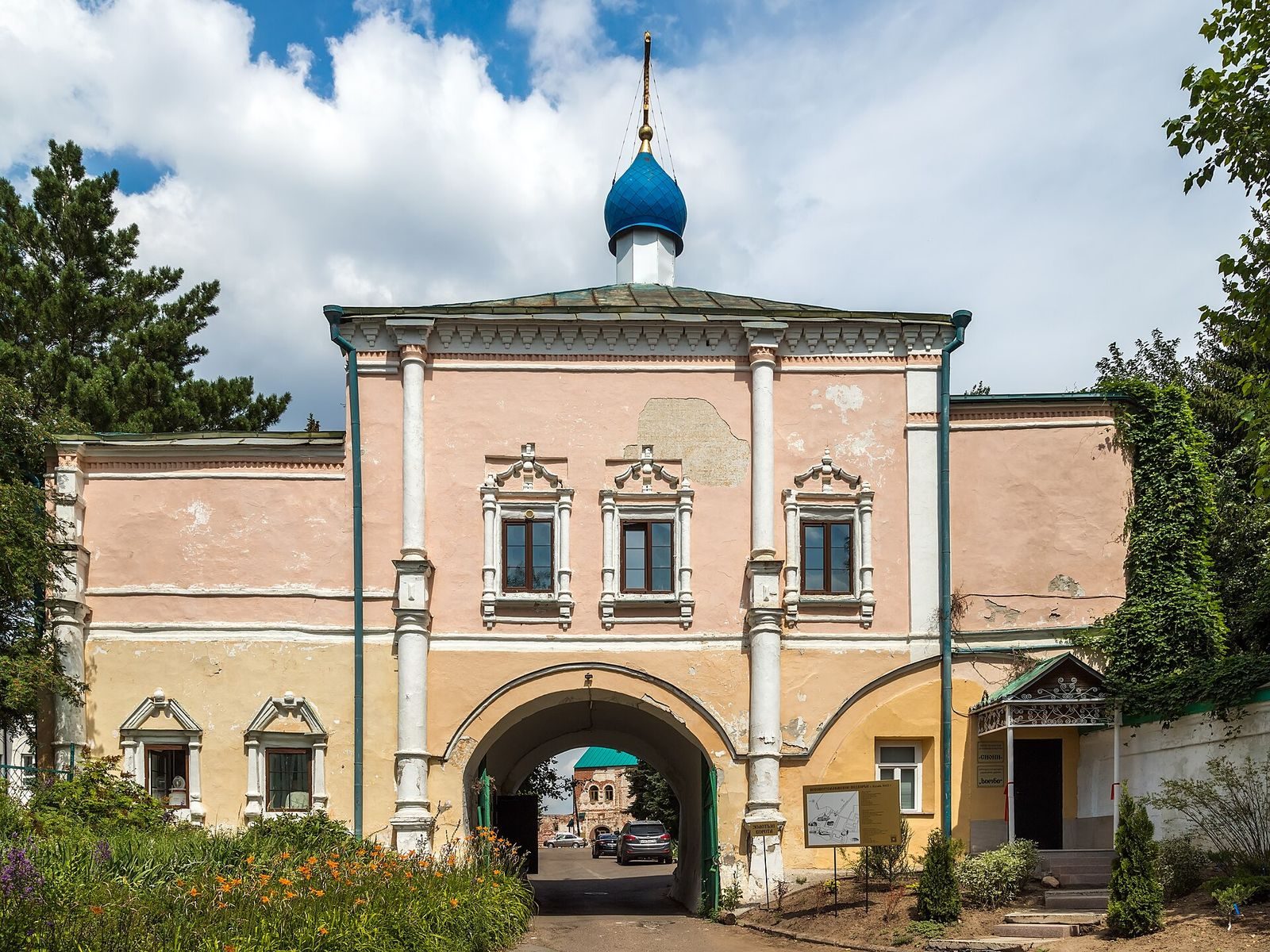
The gateway church was built in 1704 and dedicated to Saint Tikhon of Amathus, an early Christian bishop venerated as a saint. In 1905 its dedication changed to Saint Tikhon of Zadonsk, an 18th-century Russian bishop and theologian. It was later rededicated to the Iveron Icon, a revered Orthodox image of Mary, also called the Mother of God. The church received a new iconostasis, a screen of icons separating the sanctuary from the main worship area.
Bishop’s residence and service buildings
Bishop’s chambers
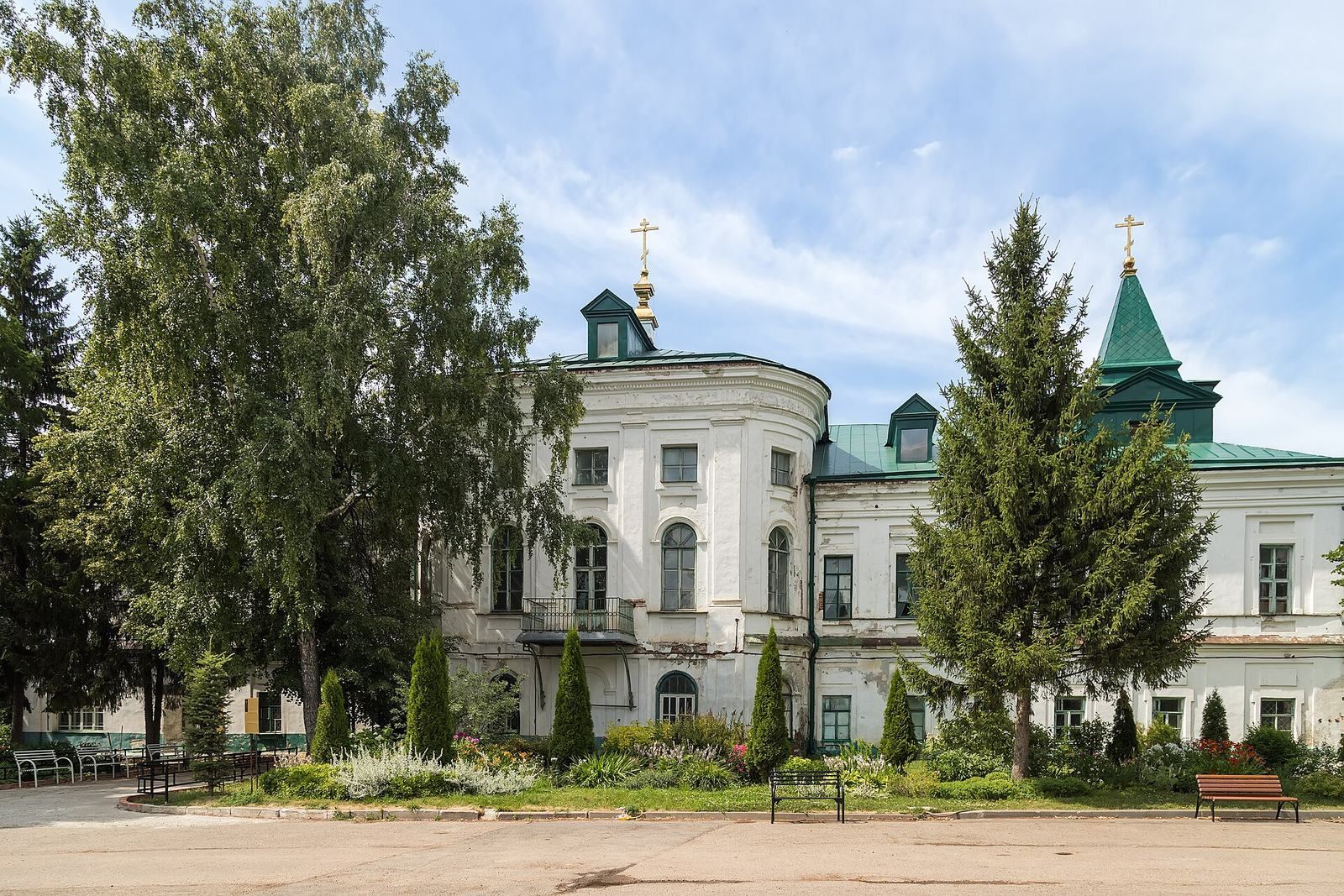
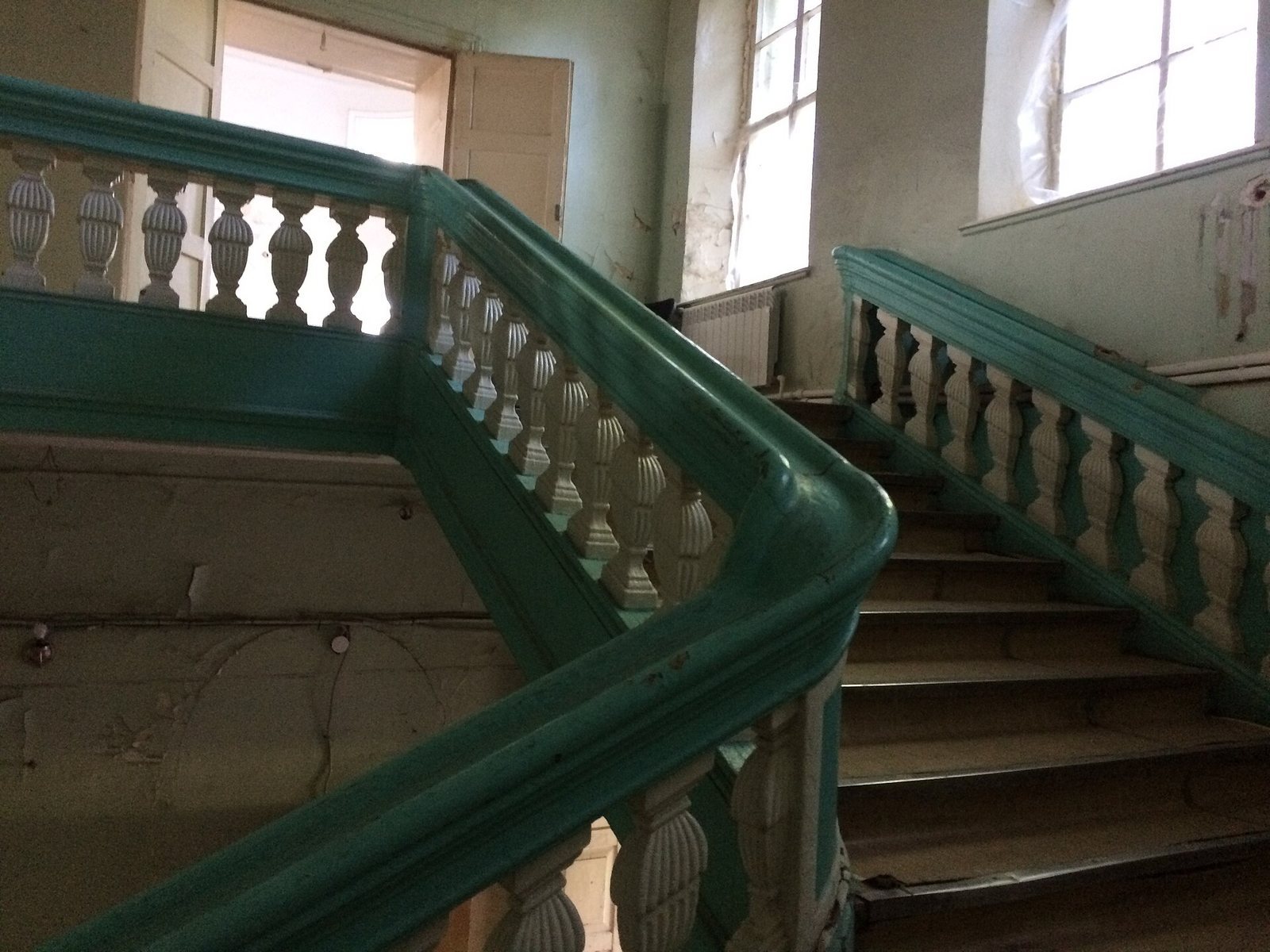
The bishop’s chambers were designed by Bartolomeo Rastrelli, an Italian-born architect who worked extensively in imperial Russia, with supervision by a local architect. The building’s central section projects from the facade and contained a house church, or private chapel, dedicated to the Ascension. Other rooms served as monks’ cells and storage. Original vaulting survives in first-floor rooms. In the south wing, a vaulted chamber has a ceiling supported by one central pier, a form associated with architecture before Peter I’s reforms. Art historian V. Fechner proposed that an older building had been incorporated into the residence.
Monastic and service buildings
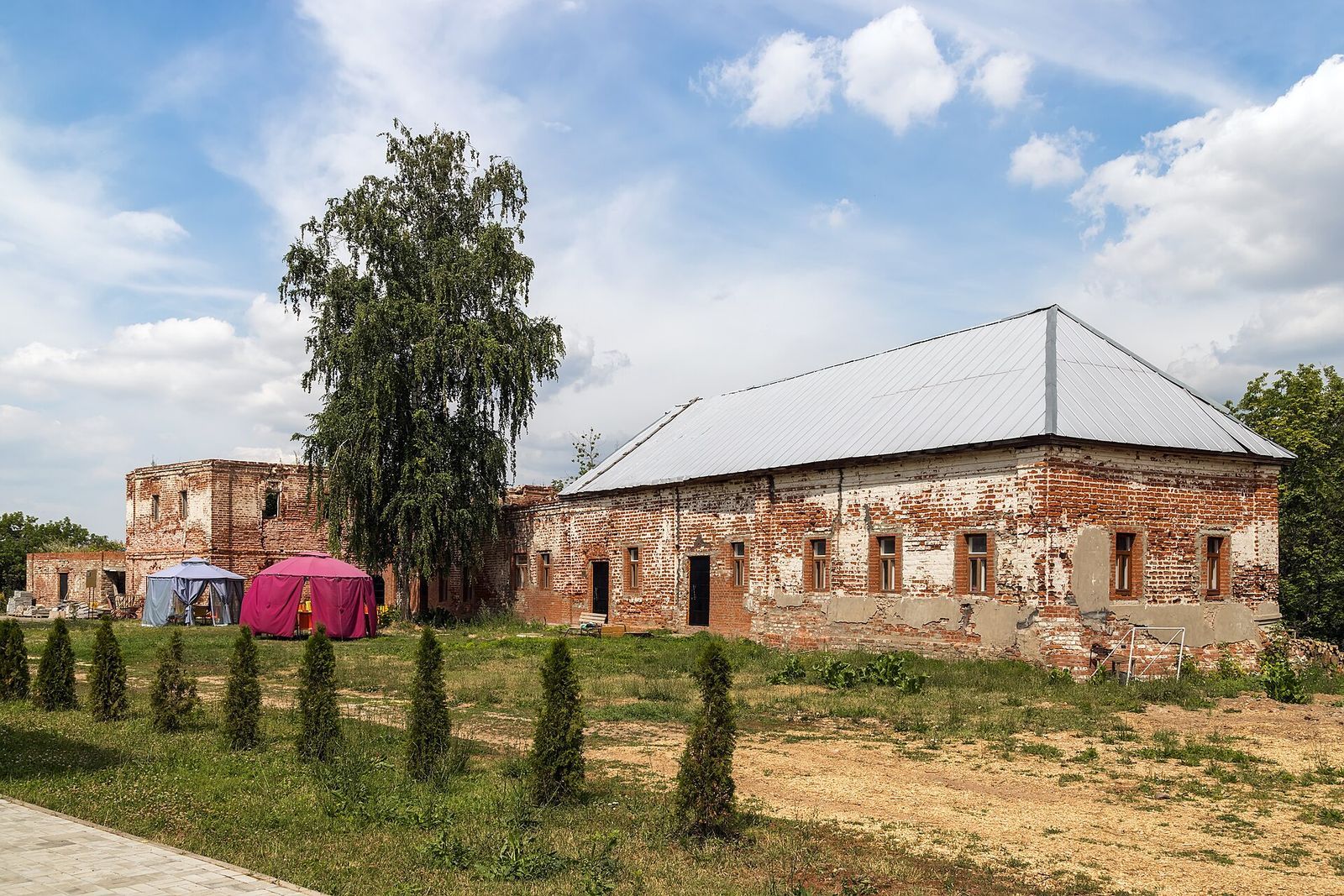
A stone outbuilding served as the kitchen and dining hall. A second building contained a parish school and service rooms, with a small, two-story block of monks’ cells attached. The 17th-century monks’ quarters survive as a roofless ruin.
Garden, cemetery and archaeological evidence
Formal garden
The formal garden occupied the eastern part of the monastery. Its avenues of lime trees, larches and blue spruces were arranged to form the initials of Jesus Christ. A Weymouth pine planted in 1767 stands 29 metres tall and measures three arm-spans in circumference. It is the oldest Weymouth pine in Tatarstan.
Cemetery
The cemetery beside the Resurrection Cathedral was used for the burial of notable townspeople and clergy. Its wooden chapel, dating to the mid-19th century, burned in 2009. A separate fire also broke out in the building housing the cathedral while the complex was on the Niva institute’s grounds.
Archaeological evidence
During the 19th century, remains of an ancient Bulgar or Tatar settlement were found near the monastery.