Arnad Lower Castle: A Vallaise Family Residence in Italy
Site at a Glance
- Popularity
- Low
- Country
- Italy
- Primary era
- Early Modern
- Eras represented
- Medieval, Early Modern, Modern
- Civilizations
- Duchy of Savoy, Holy Roman Empire, Italian
- Site type
- Domestic
- Remains
- Castle
On this page11 sections
History
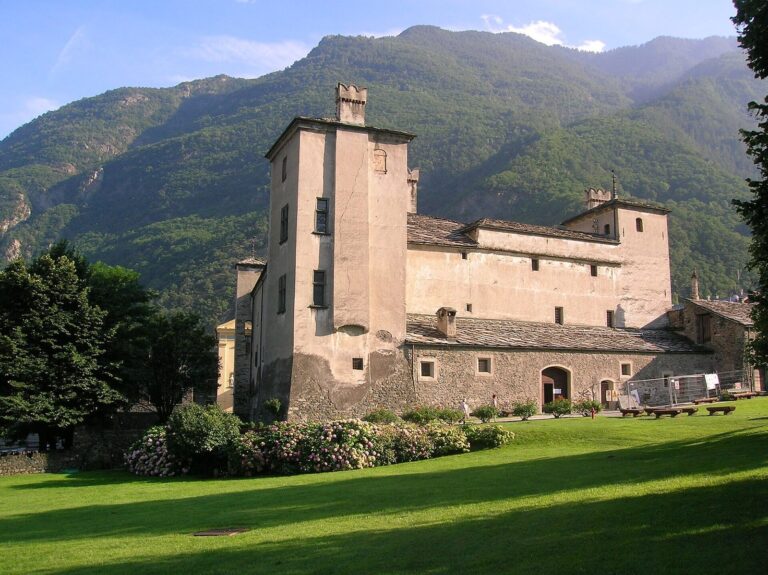
Arnad Lower Castle, also known as Château Vallaise, is a castle in Italy’s Aosta Valley. It is described as medieval in origin, but its early history remains uncertain because no records earlier than the seventeenth century are known. The Vallaise family built the castle in the seventeenth century beside the ruins of an earlier manor.
The Vallaise residence
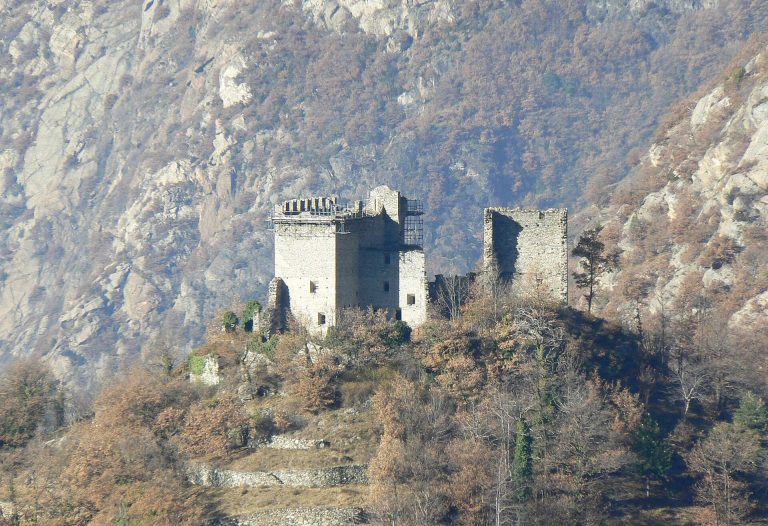
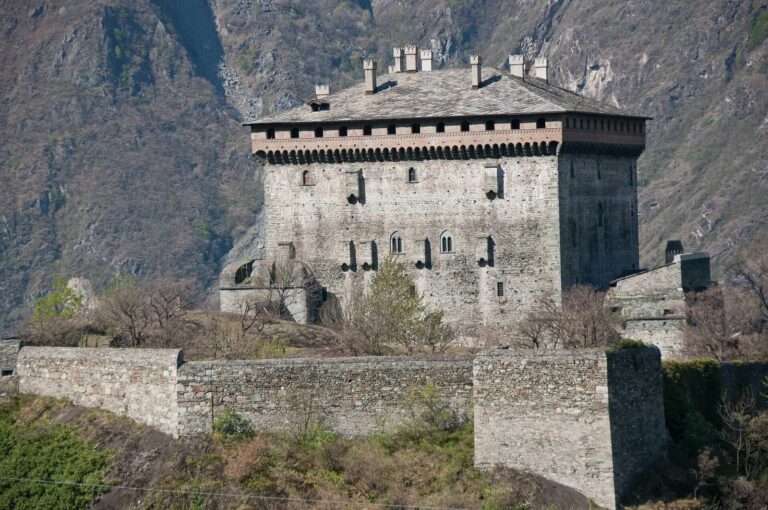
The Vallaise family already owned Arnad Upper Castle, a medieval castle in the same village. By the seventeenth century, that older stronghold was remote, ruined, and no longer useful for strategic purposes. The family’s new residence took the name Palais de la Costetta, associated with the fortified house of Costa. Its early complex comprised two distinct building blocks, occupied for a long period by the Vallaise-Romagnano and Vallaise-Montalto branches.
Between 1660 and 1670, Félix-Charles-François de Vallaise-Romagnano, who held the hereditary rank of baron, gave the residence its castle-like appearance. Alexandre de Vallaise later reshaped it as a country residence. He served as foreign minister under Victor Emmanuel I, king of Sardinia, the Savoy-ruled kingdom, and died in 1823.
Succession and later ownership
By the middle of the nineteenth century, the Vallaise family had declined and its male line had ended. The castle was sold in 1848 to Giacobini, a merchant from Turin, but Rosalie de Vallaise, Alexandre’s daughter and the family’s last heir, continued to live there until 1852. Ownership then passed through several hands before the De Bernardi family acquired the property in 1926.
In 2010, the regional administration acquired the castle from the De Bernardi family for restoration. The acquisition formed part of a program intended to return the Aosta Valley’s castles to the region’s residents and visitors.
Remains
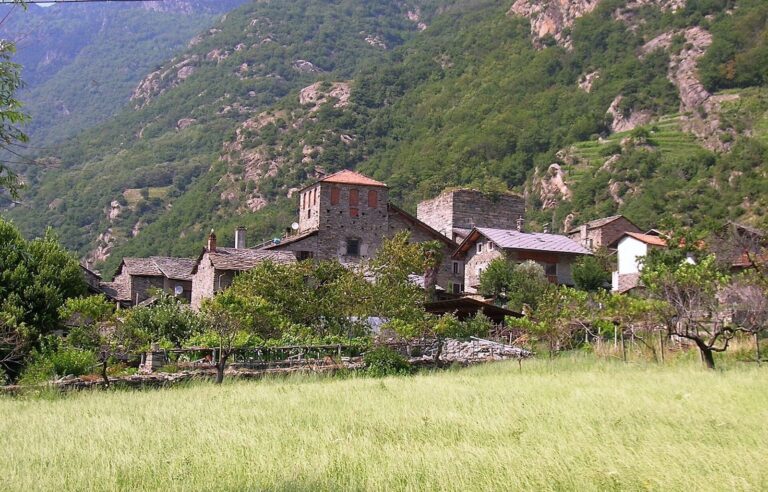
The castle stands partway up the hill also occupied by Arnad Upper Castle. Its complex consists of two distinguishable building blocks, with courtyards and terraces around them. A terraced park forms part of the surrounding grounds.
Castle buildings and decoration
Building blocks and terraces
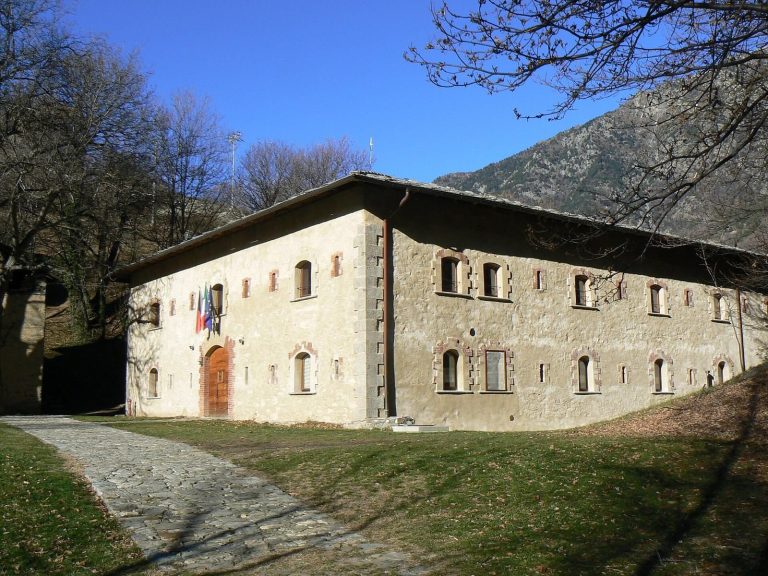
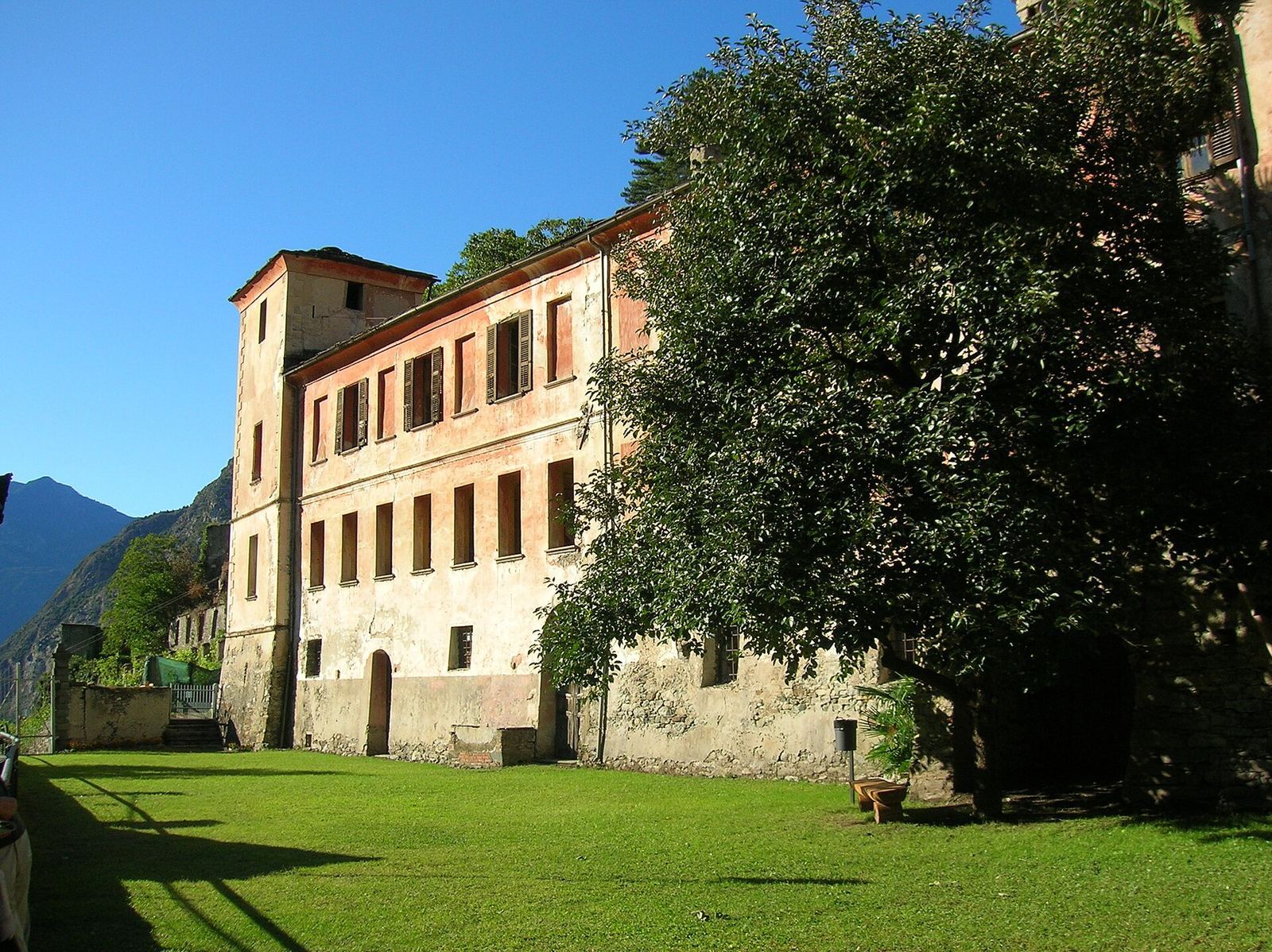
The Vallaise-built block rises three stories and is flanked by two quadrangular towers used for decoration. Terraces surround the castle and may mark the line of an earlier perimeter wall, although that interpretation is uncertain.
Courtyards and towers
A small courtyard contains a stone-column loggia, an open-sided gallery. The western courtyard has seven corner towers with crenellations, the alternating raised and lowered sections along a wall or tower top. A narrower courtyard on the eastern side served as a command area.
Painted interiors
The surviving frescoes are damaged and have been layered over time, reflecting changing tastes. Their style has been associated with provincial nobility in the Duchy of Savoy, a historic state ruled by the House of Savoy. Many other painted decorations are attributed to later work commissioned by Félix-Charles-François de Vallaise-Romagnano. In the principal salon, frescoes show views of the family’s fiefs, lands or rights held under feudal ties. A cycle in the first-floor gallery depicts heroines from different periods, beginning with the biblical figures Hagar and Tamar.
Chapels and grounds
Chapel of St Joseph
The Chapel of St Joseph beside the road to the castle was commissioned by Amedée de Vallaise-Côte in 1566. Traces of an original arched opening remain on its façade; the opening was replaced by a door topped with a Crucifixion fresco and flanked by two windows. Inside, a late Gothic ribbed cross vault, a ceiling reinforced by intersecting ribs, retains an older starry-sky decoration alongside later Art Nouveau ornament. The stone altar dates to 1670. It was once in the castle and was moved to the chapel in or after 1865, though the precise date is uncertain.
Park chapel
The terraced park overlooks the valley below and contains a second, smaller chapel. This hexagonal building is dedicated to St Joseph, St Anthony, and the Virgin Mary. Its altar is Baroque, a European artistic style, and made of polychrome marble.