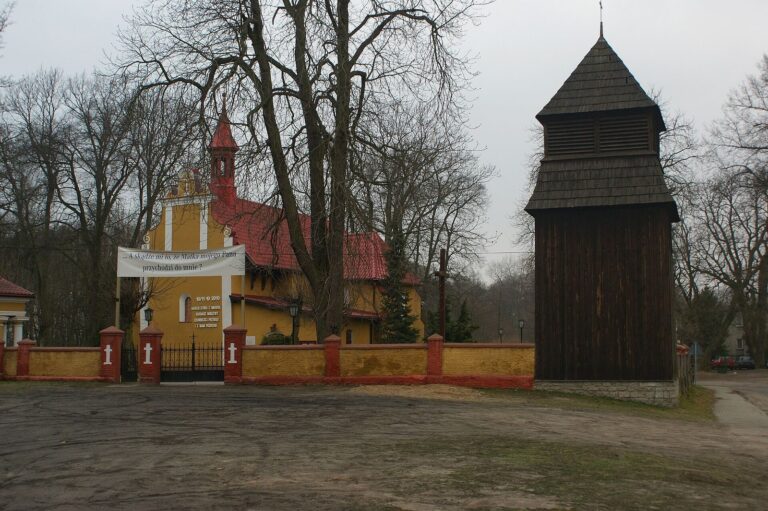
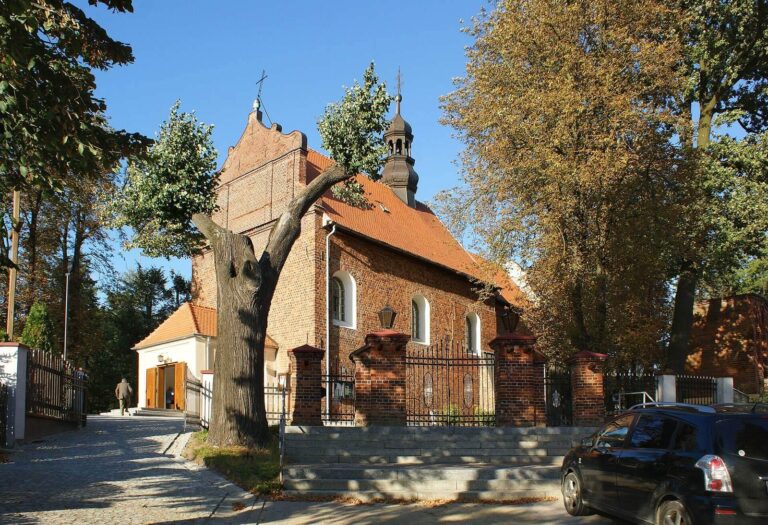
Immaculate Heart of Mary and Saint Nicholas Church in Grabów nad Prosną: A Roman Catholic Parish Church
Site at a Glance
- Popularity
- Very Low
- Country
- Poland
- Primary era
- Modern
- Eras represented
- Early Modern, Modern
- Civilizations
- Kingdom of Prussia, Polish–Lithuanian Commonwealth
- Site type
- Religious
- Remains
- Church
On this page9 sections
History
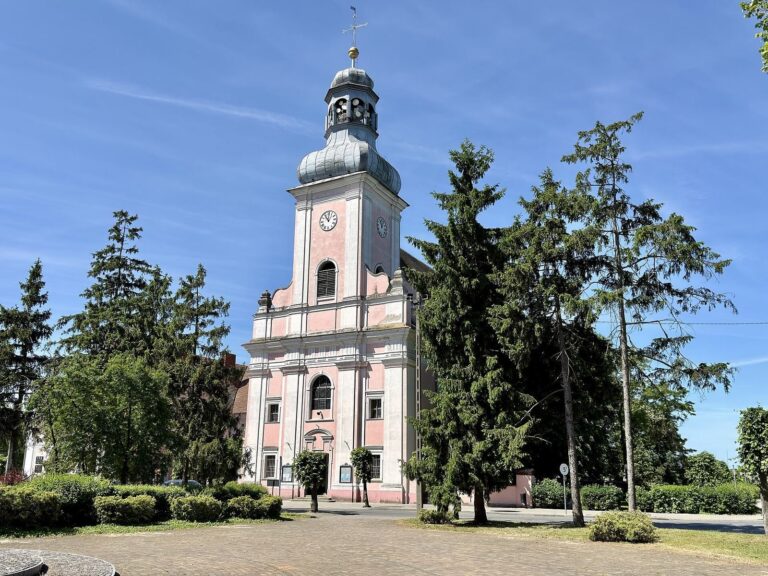
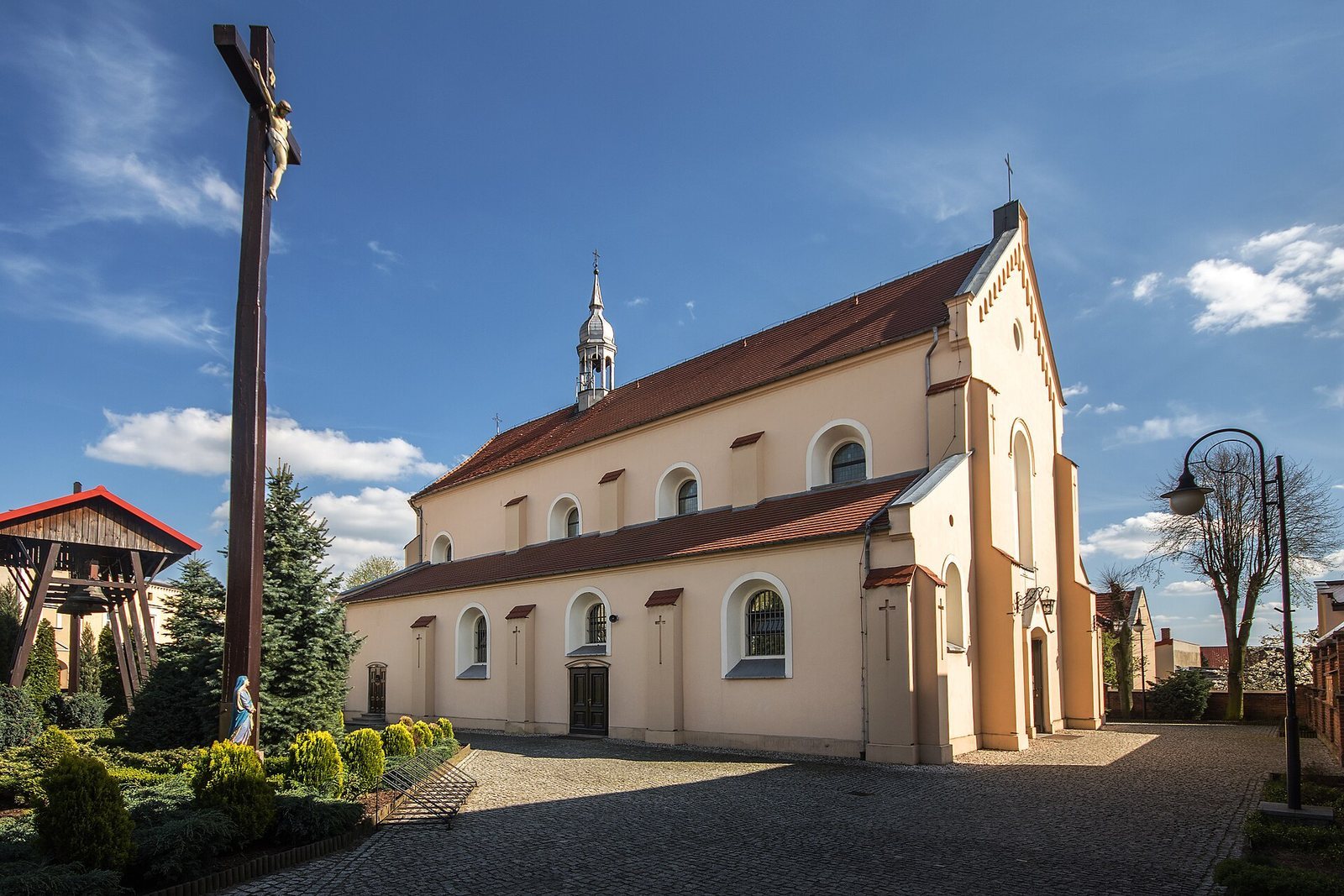
The Immaculate Heart of Mary and Saint Nicholas Church in Grabów nad Prosną, Poland, is a Roman Catholic parish church whose construction began in 1662 and was completed in 1684. Its present form has muted Baroque characteristics. The church is dedicated to the Immaculate Heart of Mary, a Catholic devotion focused on her inner life and virtues, and Saint Nicholas, an early Christian bishop traditionally identified with Myra. It belongs to the Grabów deanery, a local grouping of Catholic parishes, and stands on Grodzka Street.
Construction and nineteenth-century rebuilding
The church was consecrated in 1741. A fire destroyed it in 1830, and rebuilding was completed in 1870, giving the building its present form.
Wartime damage and postwar repair
Soviet army shelling partially damaged the church during the Second World War. Parishioners rebuilt it, and it was consecrated again in 1949.
Remains
Plan and structure
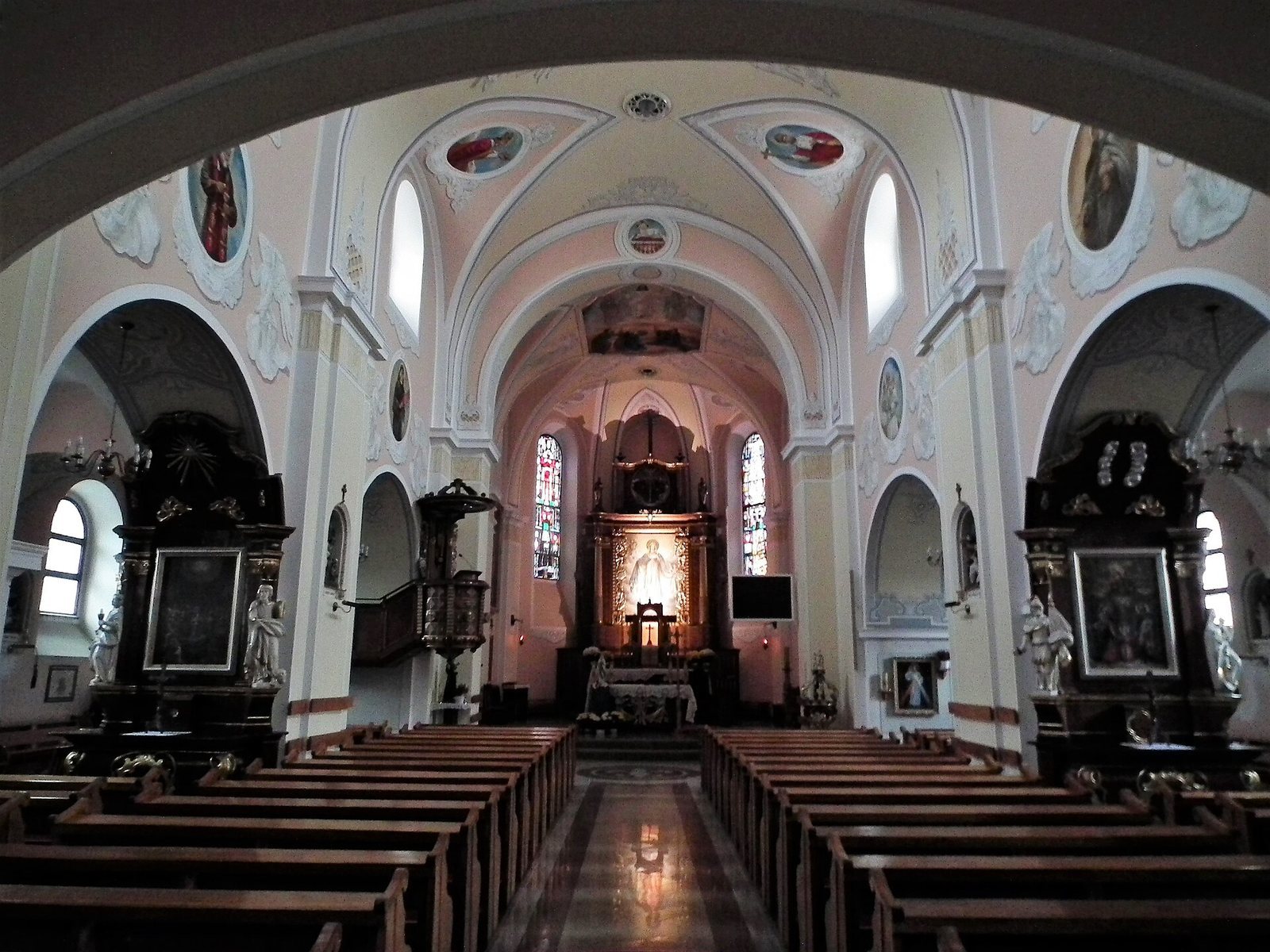
Built of brick and iron ore and covered with grooved roof tiles, the church has a three-aisled basilican plan, with a central nave flanked by side aisles. Its three-bay nave, divided into structural sections, has a continuous arched ceiling called a barrel vault, with curved sections known as lunettes. Semicircular arcades on piers separate the aisles from the nave; paired pilasters, shallow supports attached to a wall, mark the walls and piers. The two-bay chancel, the area around the altar, is lower than the nave and ends in a polygonal shape. A square chapel projects from the south side of a side aisle, while buttresses reinforce the exterior side walls.
Interior furnishings and decoration
Altars and devotional furnishings
The church contains Baroque altars dating to the turn of the eighteenth and nineteenth centuries. Other furnishings include a late-eighteenth-century baptismal font and confessionals, nineteenth-century paintings, a historic monstrance for displaying the consecrated host, ciboria for holding consecrated hosts, and additional liturgical objects.
Stained glass and painted decoration
Polish stained-glass artist Jan Piasecki made the church’s stained-glass windows in 1948–49. Postwar decoration also added multicolored painted designs, known as polychromy, and other elements with Baroque characteristics.
Organ
The organ has 13 stops, each controlling a set of pipes, two manuals, or hand-operated keyboards, and a pedal played with the feet.