San Salvatore al Monte: A Renaissance Franciscan Church in Florence
Site at a Glance
- Popularity
- High
- Country
- Italy
- Primary era
- Medieval
- Eras represented
- Medieval, Early Modern
- Civilizations
- Republic of Florence
- Site type
- Religious
- Remains
- Church
On this page15 sections
History
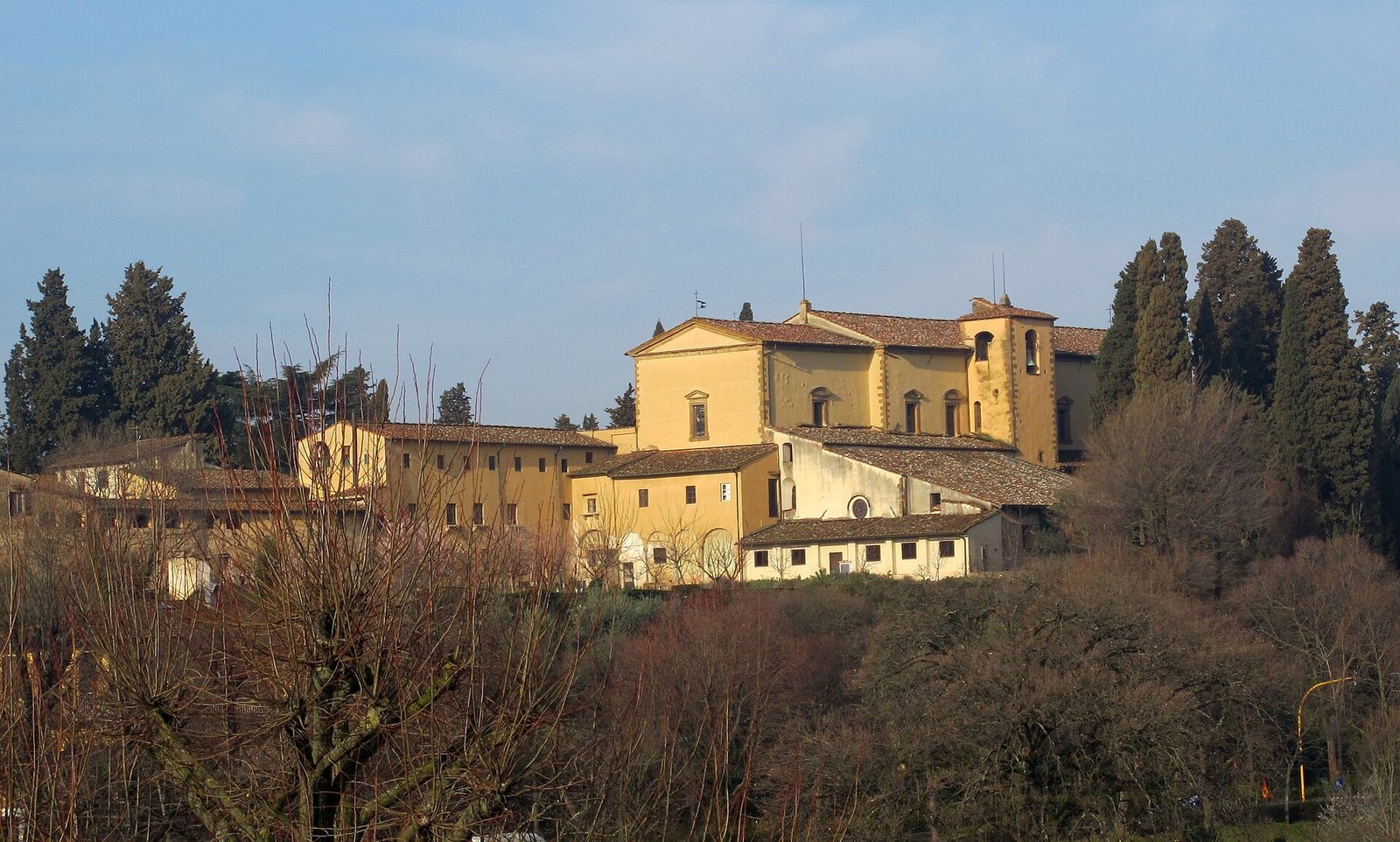
San Salvatore al Monte is a Roman Catholic church in Florence, Italy, built in the Renaissance, a European period of renewed interest in classical learning and the arts. Rebuilt in the late 15th century and consecrated in 1504, it is dedicated to Jesus the Savior. The church stands on Monte delle Croci, a hillside associated with the Way of the Cross.
From chapel to Renaissance church
A garden and Franciscan chapel occupied the site before the present church. The earlier chapel may have been dedicated to Saints Cosmas and Damian. In 1417, Luca di Jacopo del Toso, also known as della Tosa, gave the property to the friars. A sacristy was in place by 1442, when work on this first complex appears to have ended.
Planning for a new church involved Lorenzo de’ Medici from 1474. The merchant Castello Quaratesi first supported the rebuilding, and after his death the Arte di Calimala, a Florentine guild associated with wool and cloth finishing, took over. In 1487, the guild placed construction management in the hands of Simone del Pollaiolo, known as Cronaca; Giuliano da Sangallo also contributed. Simone is usually credited with the design, although Giuliano has also been proposed as its principal designer.
A bell from San Marco sounded to warn of the Dominican preacher Savonarola’s arrest on the night of 8 April 1498. Tanai di Francesco Nerli, who commissioned the Nerli Chapel, ordered the bell brought to San Salvatore in a procession and whipped along the way. It was then silenced permanently. The church suffered a structural collapse in 1500, probably because it stood on sloping ground. The rebuilding was completed by 1504, when the church was consecrated.
Franciscan life and damage
At the beginning of the 16th century, the convent became one of the earliest Franciscan houses to join the Observance, a reform calling for stricter adherence to the order’s rule and way of life. The convent’s foundation is associated with Giovanni da Stroncone, and Bernardino of Siena also lived at Monte alle Croci.
The siege of 1529 and other events during the 16th century caused serious damage to the church and convent. Repairs dealt with some of it, but the complex continued to deteriorate. By 1665, when the friars left for Ognissanti, the buildings were in advanced decay. They took many furnishings and decorations with them, including a relic of Francis of Assisi’s habit. Francis had worn the garment in 1224 when he received the stigmata, wounds resembling those of Christ’s crucifixion, at La Verna. The site then passed to Spanish Franciscan friars called the Scalzetti, or “barefoot ones.”
Roughly two centuries after the convent joined the Observance, it passed to the Riformella, a later Franciscan renewal movement. Its superior, Leonardo da Porto Maurizio, set out from San Salvatore to preach and encourage the Way of the Cross throughout Italy.
Later associations and use
Michelangelo was attached to the area and to the church, which he affectionately called “my beautiful country girl.” The Piazzale Michelangelo was built beside the complex in 1875.
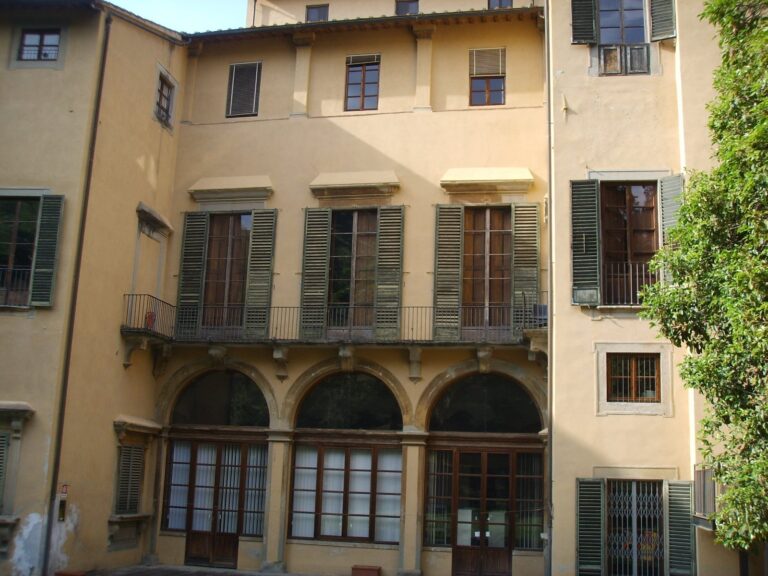
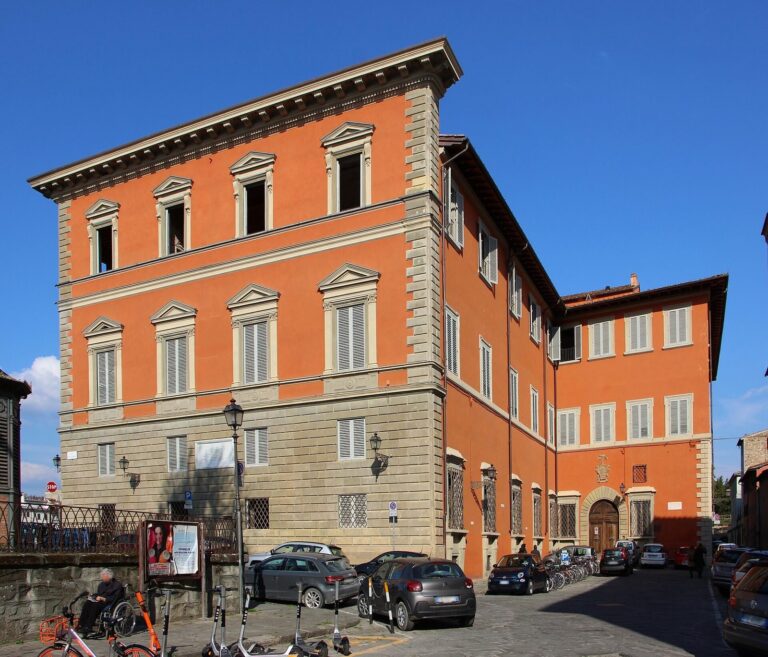
The bell brought from San Marco later spent part of the 20th century in the courtyard of the Museum of Florence as It Was. In the 2000s it returned to the Museum of San Marco. The church and its adjoining buildings have hosted religious associations, including the Company of the Ten Thousand Martyrs. The convent also houses the Franciscan Mission Center, which keeps in contact with friars serving abroad, and the Commissariat of the Holy Land, which supports friars caring for holy sites and organizes pilgrimages and projects for peace, development, and solidarity. In more recent times, the Tuscan Province of the Friars Minor has assigned a fraternity to San Salvatore, with a focus on evangelization, and has undertaken efforts to promote and restore the complex.
Remains
Church and furnishings
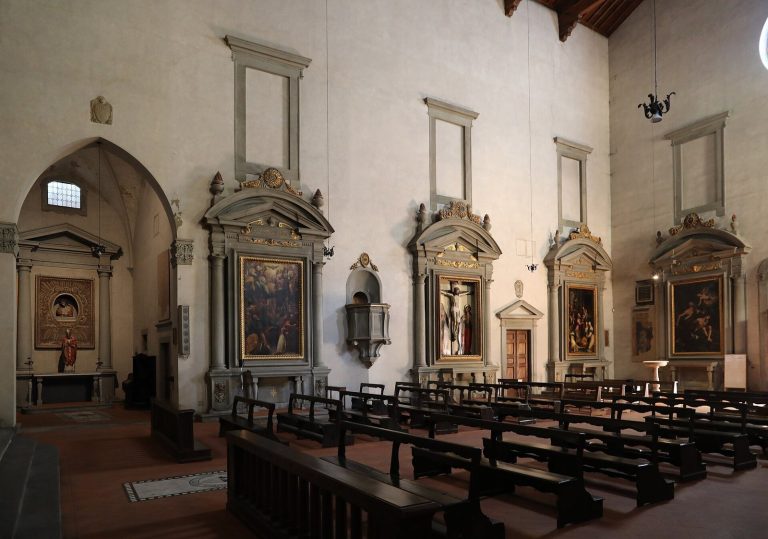
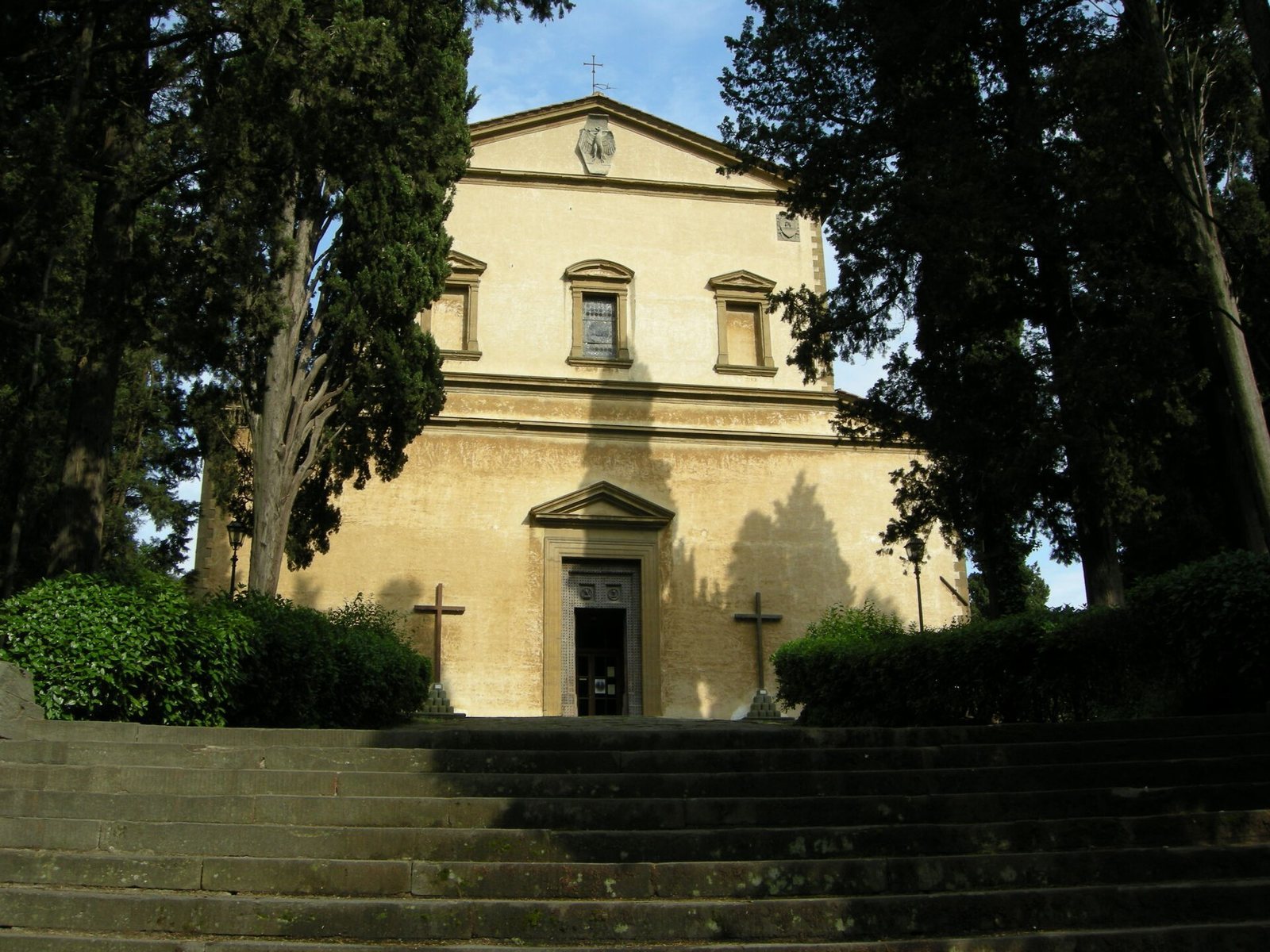
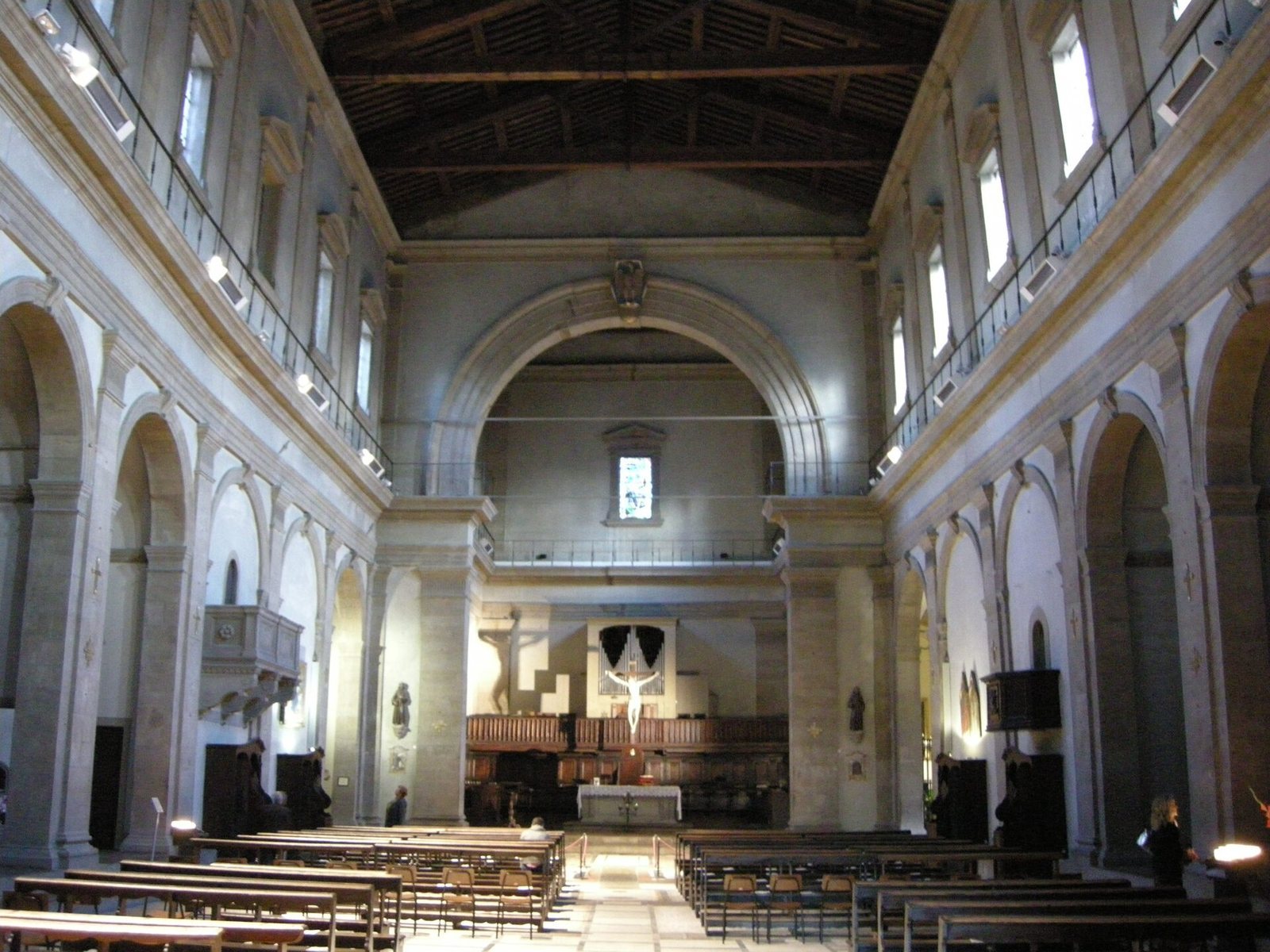
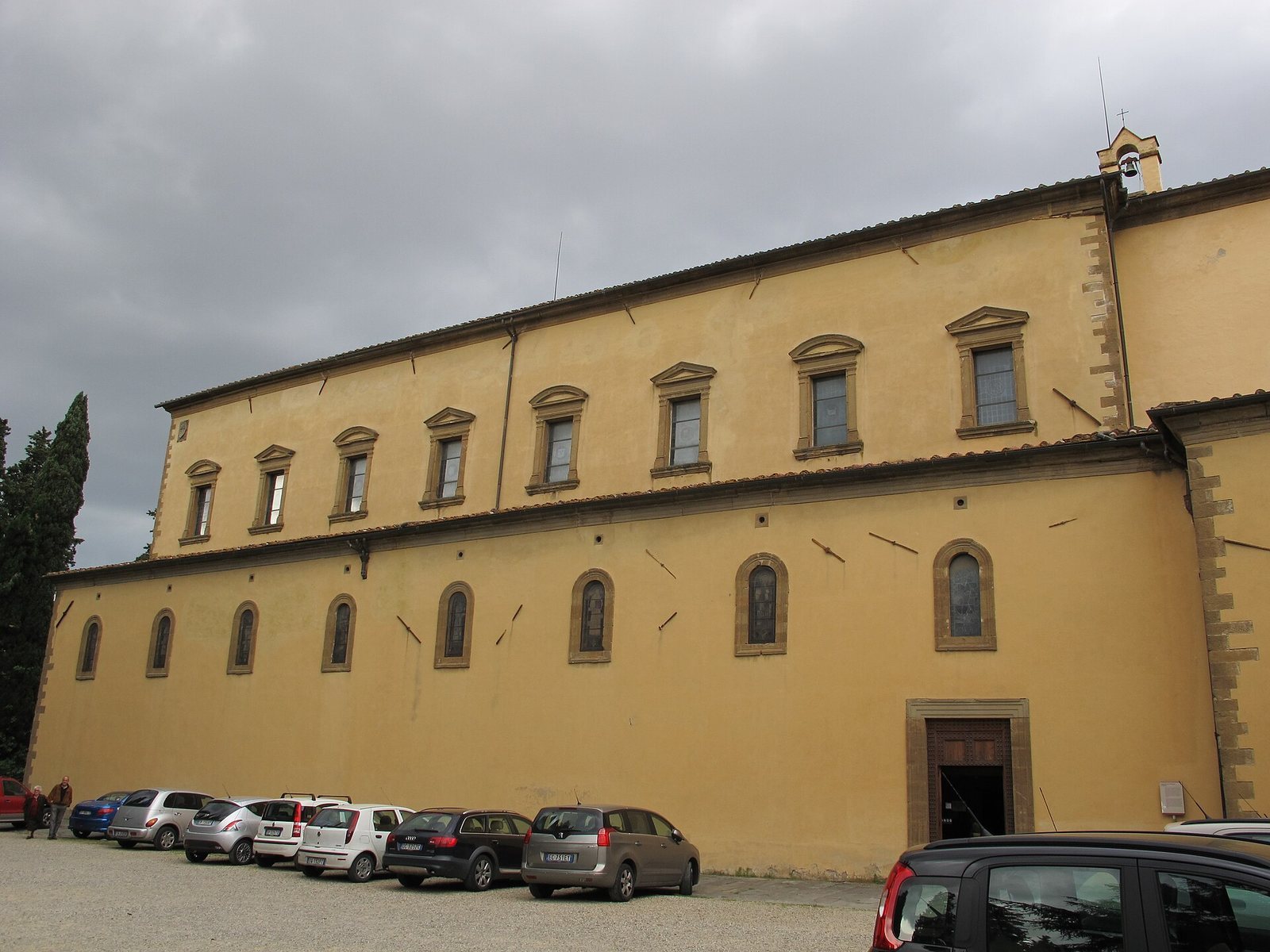
The church stands on Monte delle Croci, behind the Piazzale Michelangelo and just below the Basilica of San Miniato al Monte. The Renaissance building has a single nave, a flat-ended chancel chapel, and an exposed timber roof. Plaster and local Florentine sandstone form its principal material contrast.
Plan and exterior
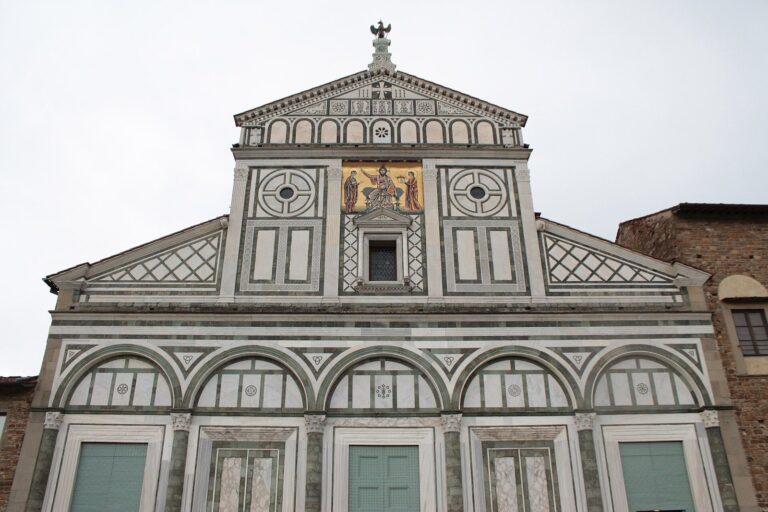
Five chapels open along each side of the nave, set between two tiers of Doric pilasters, shallow wall projections in a plain classical form. The simple façade has plastered surfaces, a portal, and windows topped by alternating triangular and semicircular pediments, shaped caps above the openings. The Calimala guild’s eagle emblem appears in the façade’s pediment, and cypress trees frame the front of the church.
Interior and floor
Inside, the contrast between plaster and sandstone brings out the architectural details. The present floor, which incorporates old funerary slabs, was largely reconstructed in 1849. The chapels contain works from different origins.
Nerli Chapel
On the right side of the clergy’s area around the altar is the Nerli Chapel, a Renaissance space with a barrel vault, a continuous arched ceiling. It contains a 16th-century panel showing the Madonna and Child enthroned with saints and angels, by an unidentified artist.
Choir paintings
The choir contains several 15th-century panels, probably made for the earlier church. They include Madonna and Child Enthroned with Saints and the Donor by Giovanni dal Ponte, The Virgin with Christ in the Pietà and Saints by Neri di Bicci, and Saints Cosmas and Damian, Francis, and Anthony by Rossello di Jacopo Franchi. Another panel, the Volto Santo (Holy Face), comes from the school of Fra Bartolomeo and is attributed to the unidentified artist known as the Master of Serumido.
Sculpture and memorial
A polychrome glazed-terracotta Deposition by Giovanni della Robbia stands in the second chapel on the left. An early-16th-century Deposition in tin-glazed earthenware forms a lunette, a curved panel above an opening, over the portal. The high altar holds a wooden crucifix attributed to a master in Andrea Ferrucci’s circle; a second crucifix in the large chapel is attributed to the schools of Baccio da Montelupo and Benedetto da Maiano. Both date to about 1496. A monument dated 1526 commemorates Marcello di Virgilio Adriani, who signed Savonarola’s death sentence.
Stained glass
Designs for the stained-glass windows are attributed to Perugino and date to the early 16th century. The glass also includes an image of God the Father.
Convent and hillside features
Cloister
The adjoining convent contains a 15th-century cloister, a covered walkway enclosing a courtyard. An inscription on its first arch reads, “O blessed solitude, you alone are blessedness.”
Hillside staircase
A staircase on the hillside, also called Dante’s Staircase, has crosses along its route marking stations of the Way of the Cross. The route is associated with the name Monte delle Croci.