Church of the Descent of the Holy Spirit in Ryazan: A Monastic Church
Site at a Glance
- Popularity
- Medium
- Country
- Russia
- Primary era
- Early Modern
- Eras represented
- Early Modern, Modern
- Civilizations
- Russian
- Site type
- Religious
- Remains
- Church
On this page10 sections
History
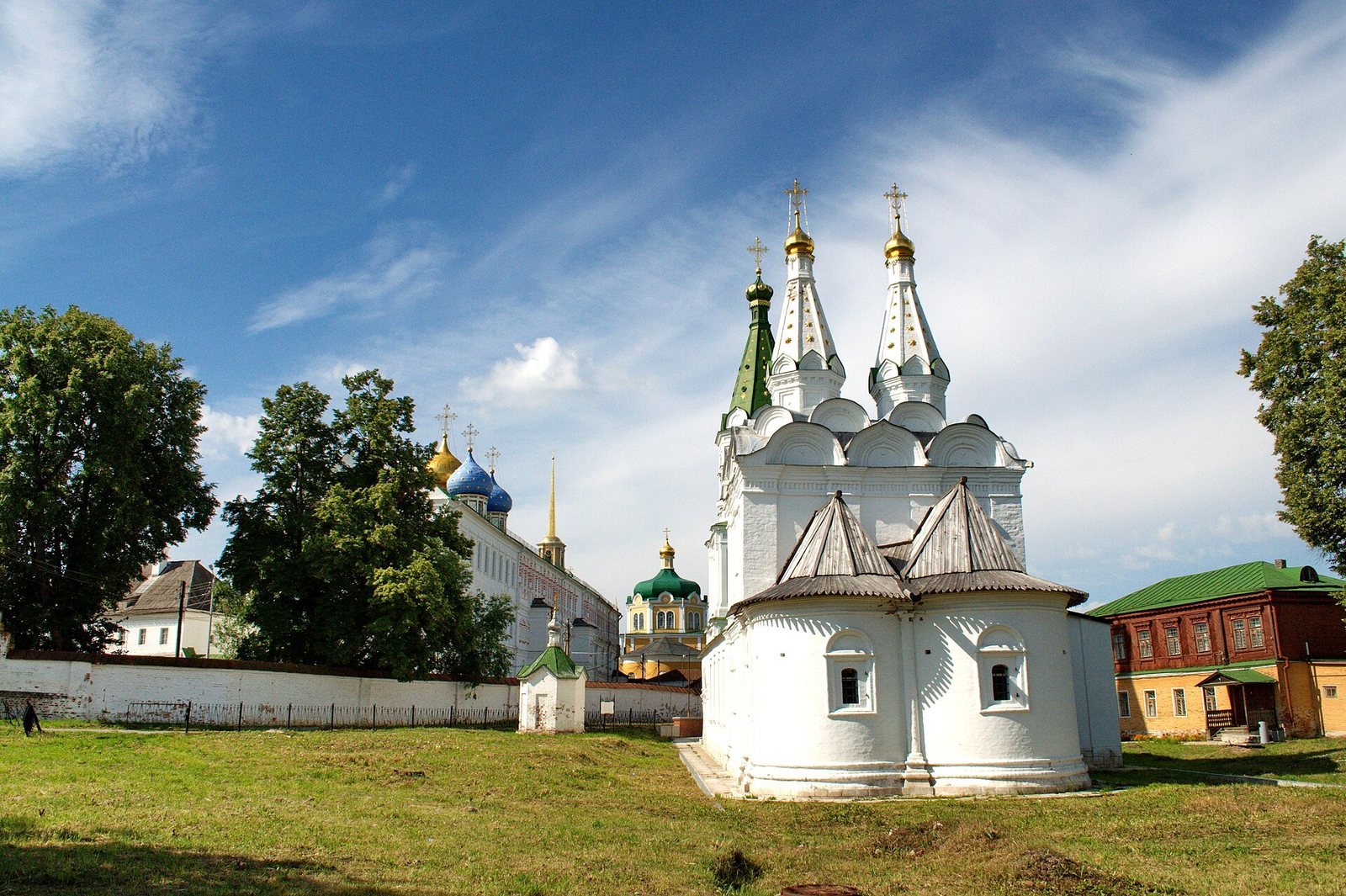
The Church of the Descent of the Holy Spirit in Ryazan, Russia, is an Orthodox church built in 1642 for a monastery for men. The church is dedicated to the Descent of the Holy Spirit, whom Christians understand as one of the three persons of the Trinity.
Monastery endowment and church construction
In 1505, Princess Agrippina granted villages and land to the monastery, then led by Abbot Makarii. The grant included arable fields, hay meadows, woodland used for beekeeping, and beaver grounds. Boyar Fyodor Ivanovich Sunbul, a high-ranking noble, carried out the land allocation. A fire destroyed the monastery in 1514, after which it was restored.
The stone church was designed by Vasily Kharitonovich Zubov and built under Archbishop Moses of Ryazan, a senior bishop, and Abbot Sebastian, the monastery’s head.
Changes in monastic status
By 1724, the monastery had a small community of monks and was attached to the Trinity Monastery. A school was proposed for its site, but a decree in 1727 left the monastery in its previous status. It retained its own estates until 1764 and was governed first by an abbot and later by an archimandrite, a senior rank in Orthodox monastic life.
A fire in 1783 destroyed the monastery again and partly damaged the stone church. The monastery was abolished in 1787, and its monks were transferred to a Trinity Monastery in Skopin. That institution later reopened as a Holy Spirit Monastery, closed in 1918, and was the subject of a 2017 decision by the Russian Orthodox Church’s Holy Synod, its governing body, to renew its activity.
Repair and later use
In 1798, Princess Alexandra Vladimirovna Kozlovskaya paid for repairs, using all her savings for the work. Her funds were insufficient to restore the bell tower destroyed by the fire.
The church closed in 1929, and the building became a club for water-transport workers. It now houses the research library of the Ryazan State Historical and Architectural Museum-Reserve. In November 2024, a decision was made to return the church to the Ryazan diocese, the Orthodox Church jurisdiction for the area. The church is a federal cultural heritage monument in Russia.
Remains
Church layout and architectural features
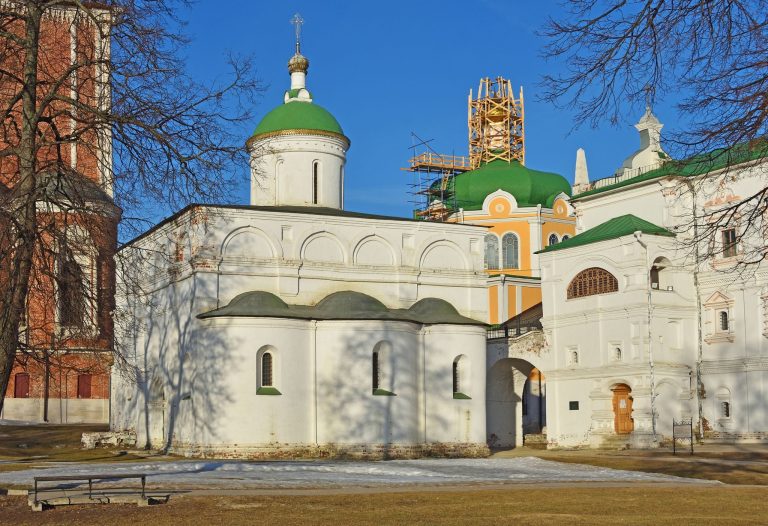
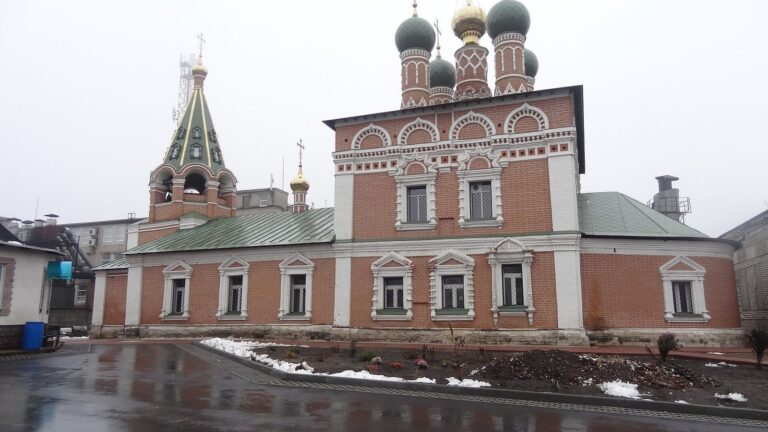
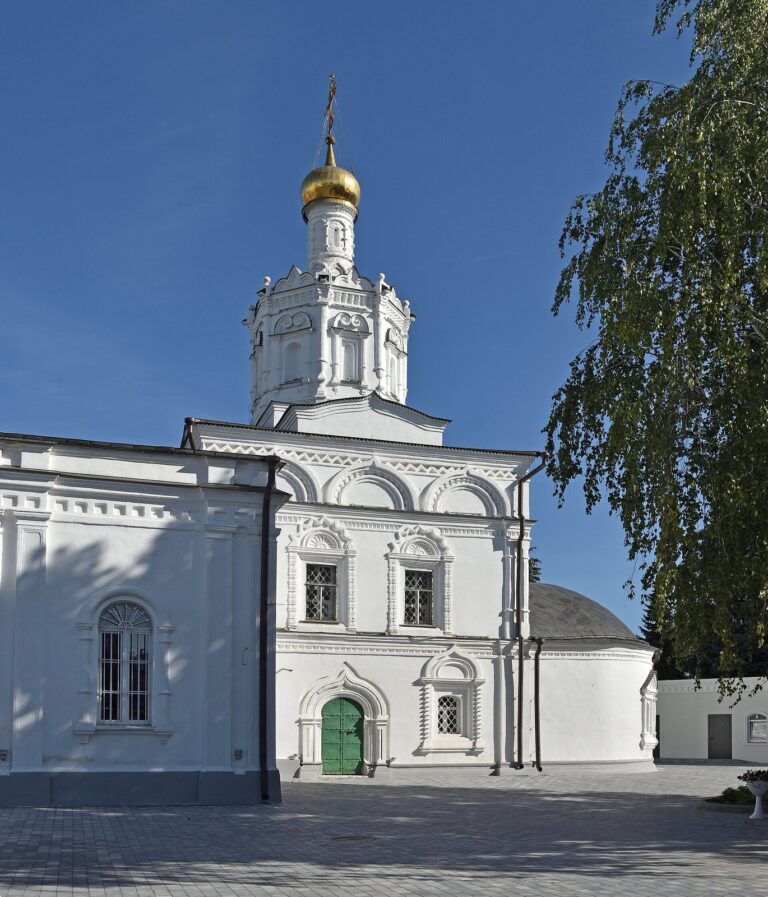
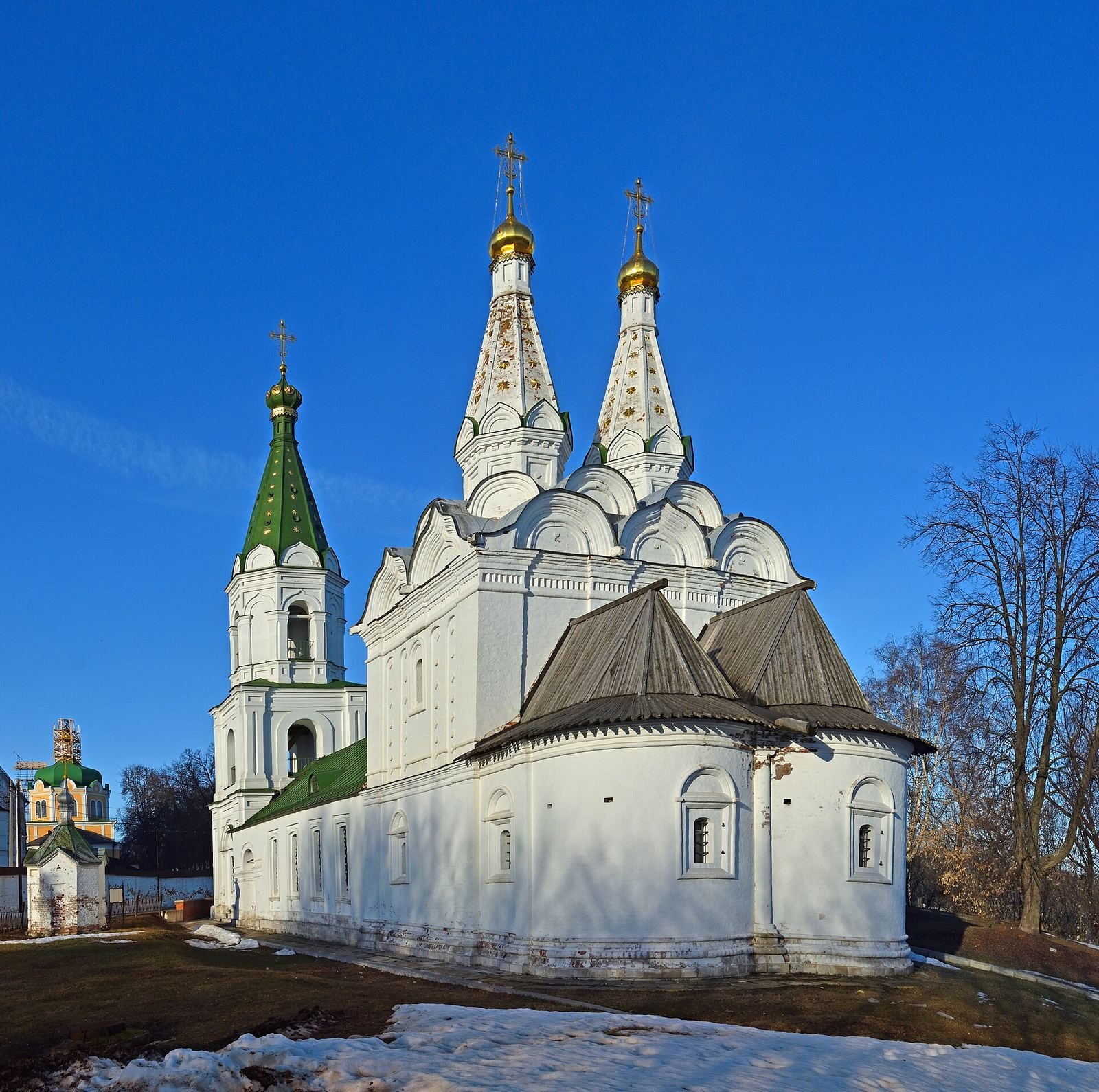
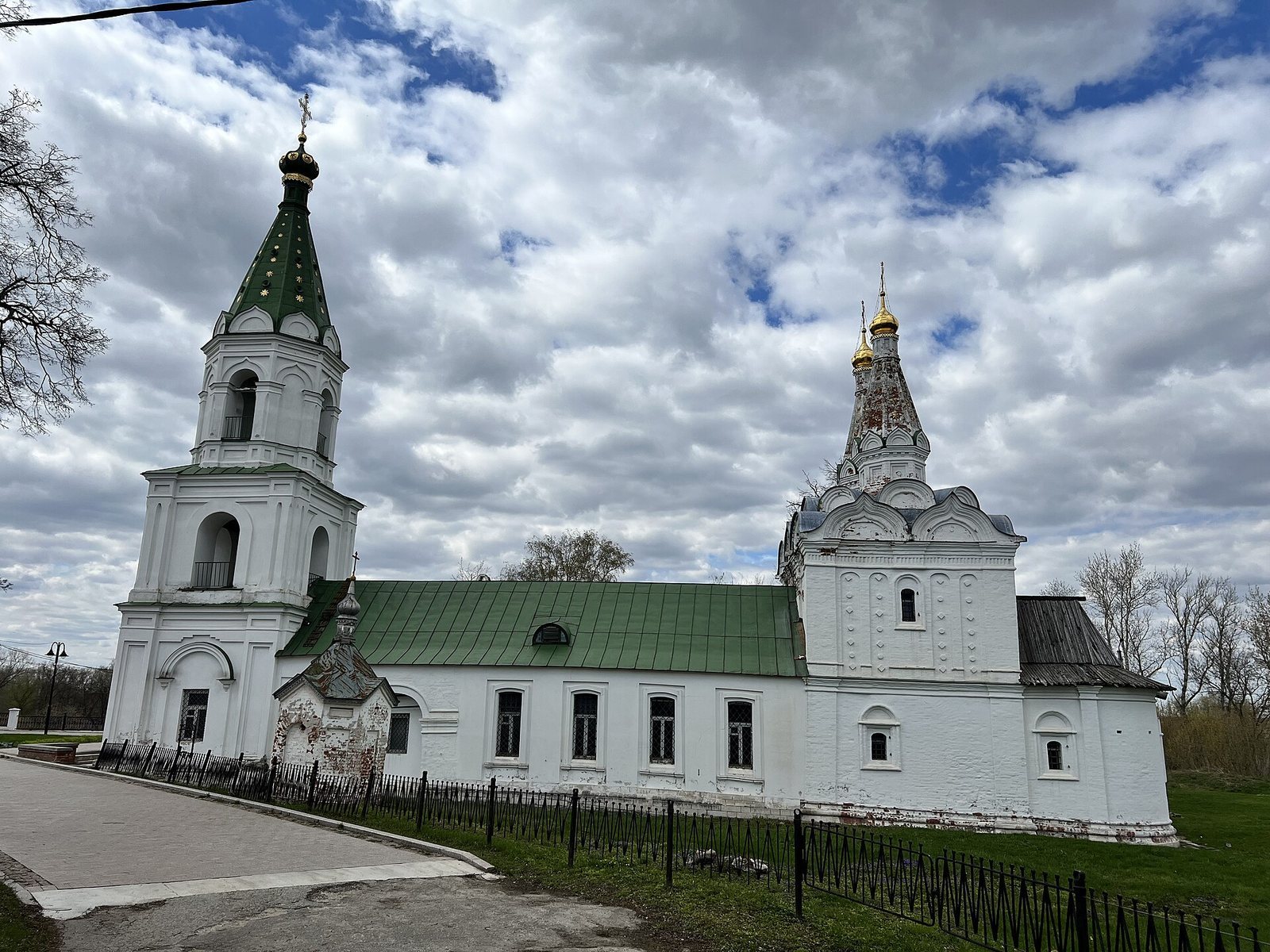
The church stands in the Ryazan Kremlin on Trubezhnaya Embankment. It is the only surviving building of the men’s Holy Spirit Monastery, which stood where the Lybid and Trubezh rivers meet. Built of stone, the church has a square main block, two projecting sanctuary sections, and later additions.
Main block and roofs
The square main block is crowned with decorative kokoshniks, gable-like forms used in Russian architecture, and two tent roofs that rise steeply to points.
Foundation inscription
Part of the foundation stone survives above the western entrance. Its inscription commemorates the church’s completion and names Archbishop Moses of Ryazan, Abbot Sebastian, and architect Vasily Kharitonovich Zubov.
Refectory and chapel
A communal dining hall was added in the late eighteenth century. The church also includes a chapel dedicated to Saint Alexandra the Martyr, a Christian who died for her faith.
Bell tower
In 1864, architect I. S. Stopychev built a three-tier bell tower with a tent roof in place of the dismantled earlier tower.