New Gate in Słupsk: A Medieval City Gate
Site at a Glance
- Popularity
- Low
- Country
- Poland
- Primary era
- Medieval
- Eras represented
- Medieval, Early Modern, Modern
- Civilizations
- Brandenburg-Prussia, Duchy of Pomerania, Holy Roman Empire, Kingdom of Prussia
- Site type
- Military
- Remains
- Gate
On this page9 sections
History
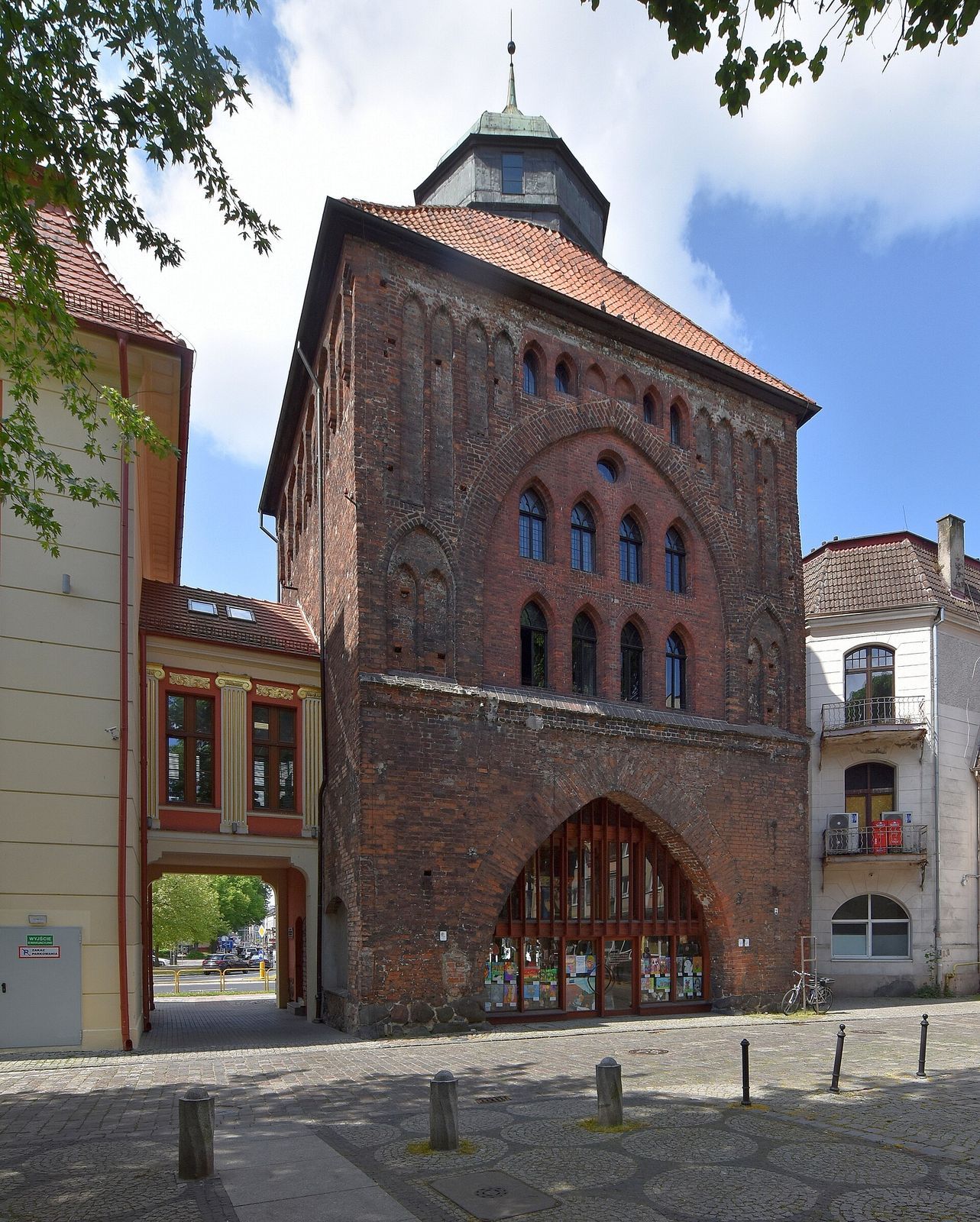
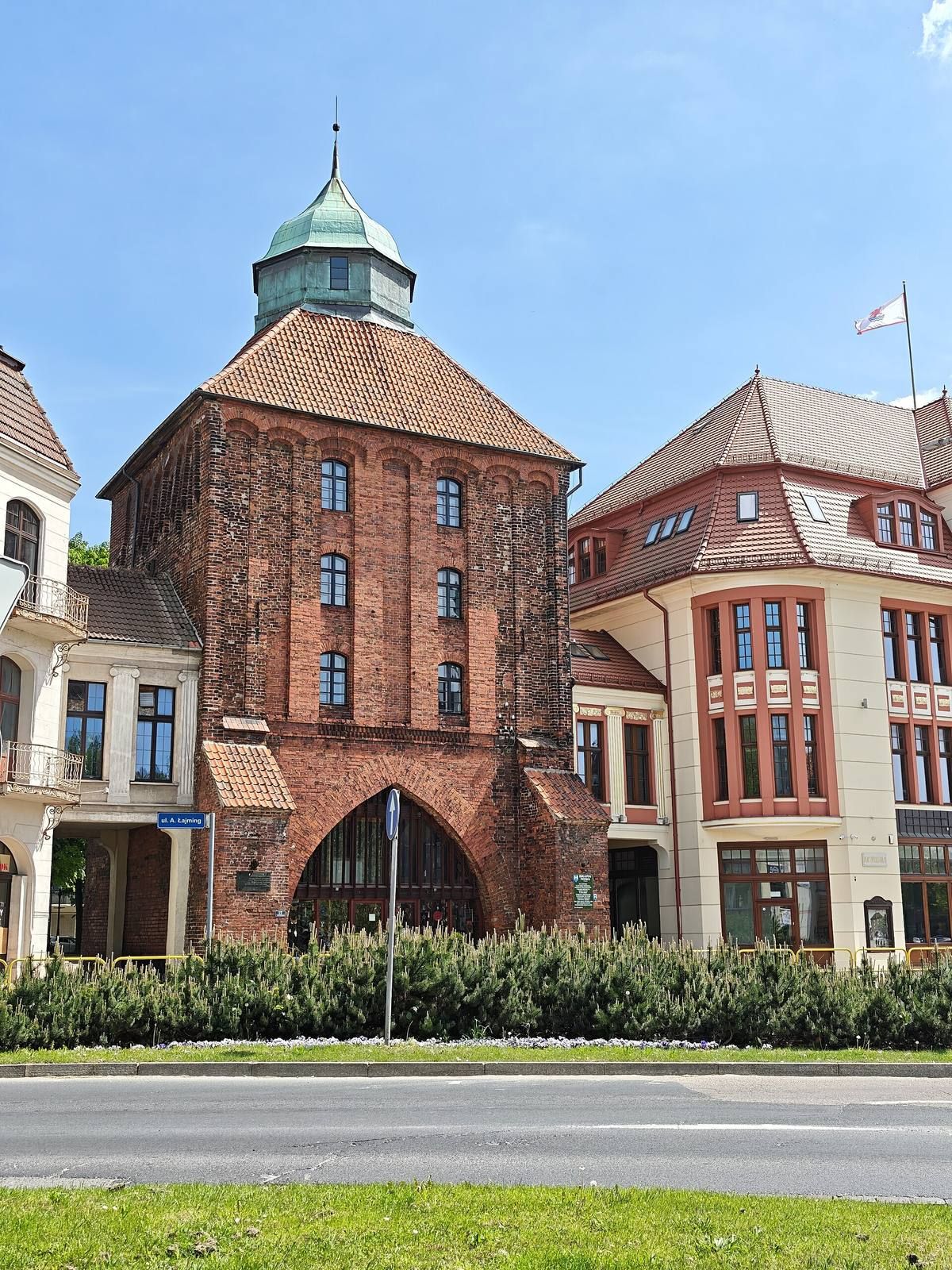
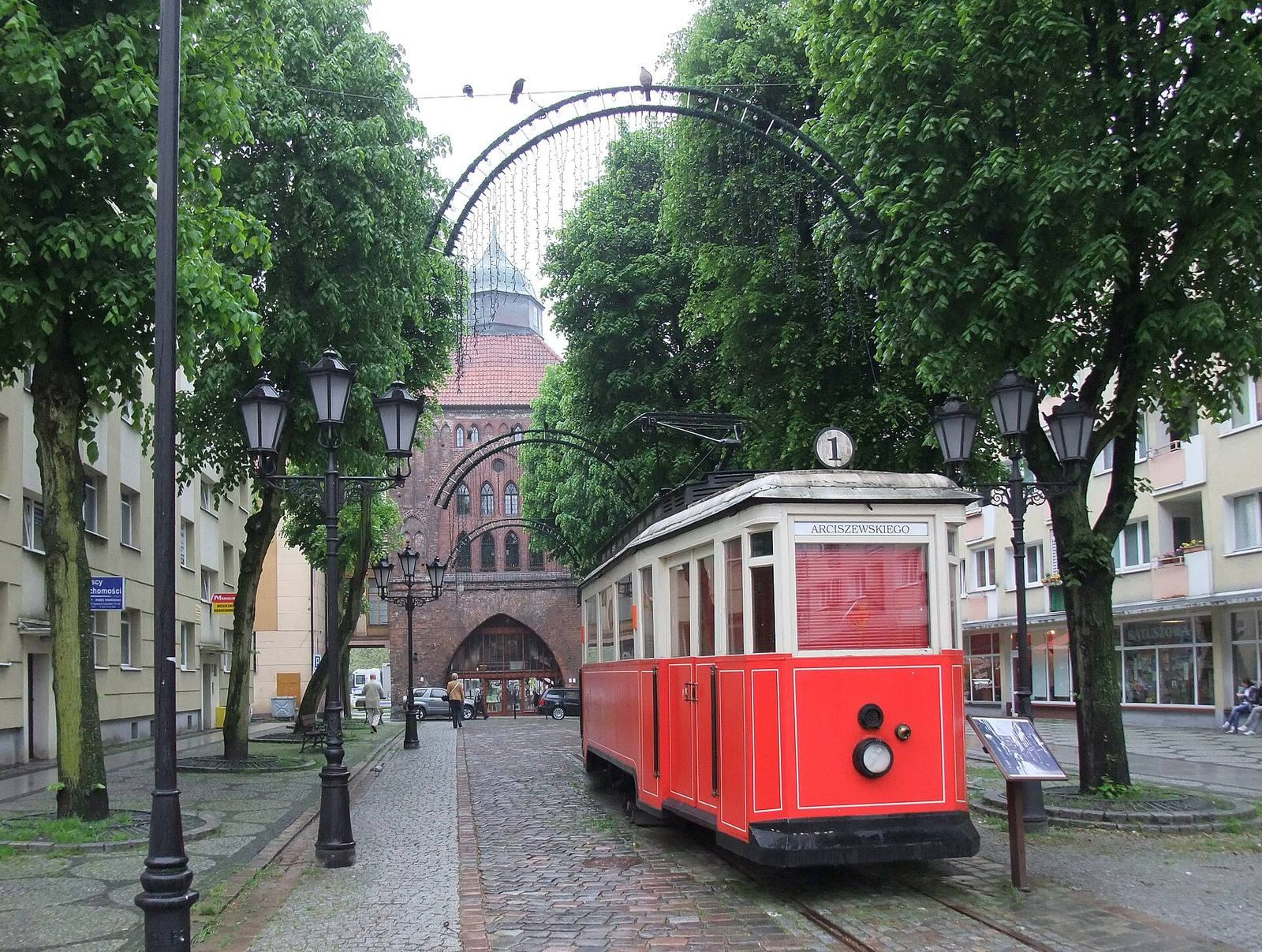
The New Gate in Słupsk is a medieval western city entrance in Poland. Its lower sections probably date to the first half of the 14th century, and it is built in Brick Gothic, a style that uses brick as a principal building material. The gate served routes leading west toward Sławno, Darłowo, and Szczecin. It is one of two surviving gates from the city’s four medieval entrances.
Medieval fortifications
A wooden palisade enclosed Słupsk by 1325. Stone-and-brick defenses, including the Młyńska Gate and Holsten Gate, followed soon afterward; the New Gate was built later. Its upper storeys were added after the lower sections. Between 1380 and 1385, the structure was raised to the level of its present crowning cornice, a projecting horizontal architectural ledge. A foregate, a defensive structure outside the main gate, was added in the mid-14th century.
Early modern alterations and uses
A fire in 1477 damaged the gate’s gables and roof. Around 1650 it received a Baroque roof, part of a European architectural style known for elaborate forms. In 1724, it was given a four-sided tent roof with a lantern. Further major alteration took place in 1738.
From 1724 to 1755, the gate housed a prison and forced-labour house. Inmates spun wool, and those held there included beggars, vagrants, and Roma. In 1836, the passage was widened and the western facade renovated. Military workshops occupied the building from the mid-19th century until about 1914.
Museum and later history
After restoration in 1924, the gate became a regional museum displaying collections assembled by Słupsk’s historical and local-studies association, which had been active in the city since 1906. The museum remained there until 1965, when its exhibition moved to the renovated Pomeranian Dukes’ Castle.
The gate survived the burning of Słupsk by Soviet forces in 1945, although only about a tenth of the museum collection remained. It is registered as an immovable monument under designation A-27, with entries dated 20 June 1952 and 21 May 1955. The building is now part of a shopping centre and contains an art gallery and a contemporary-art shop.
Remains
The New Gate stands at the western, southwestern edge of Słupsk’s Old Town, on the axis of Nowobramska Street. This substantial rectangular brick building measures 12.3 by 10.5 metres and stands 16.8 metres high. It is linked to a surviving fragment of the town’s brick wall. The lower masonry uses Wendish bond, a pattern for arranging bricks in a wall.
Facades and passage
Western facade
The western facade has seven panels across its upper section, two of them containing windows, with a horizontal frieze, or decorative band, above. A smooth horizontal strip divides the lower and upper parts, while buttresses reinforce the sides. The lower level contains a pointed-arch passage, glazed after the Second World War.
Eastern facade
Facing the Old Market, the eastern facade has windows and a row of narrow pointed-arch niches. Its upper pointed-arch opening was blocked around 1441.
Side facades
The side facades are ornamented with decorative friezes and rows of pointed-arch blind niches, shallow recesses that do not open into an interior space.