Khatun Hillfort: A Medieval Fortified Settlement in Russia
Site at a Glance
- Popularity
- Medium
- Country
- Russia
- Primary era
- Medieval
- Eras represented
- Medieval
- Civilizations
- Unclassified
- Site type
- Military
- Remains
- Fort
On this page7 sections
History
Khatun Hillfort is a medieval fortified settlement on elevated ground at the southern edge of Khatun village in Russia. Founded in the 12th century on an Iron Age settlement, it served as a stronghold of the Ryazan Principality, a medieval East Slavic state, against the princes of Vladimir-Suzdal. Khatun itself, or an earlier fortress on the site, may first have served as a southern outpost of the Novgorod Principality and later as a northern outpost of the Principality of Chernigov.
Medieval lordship
In the 14th century, Khatun belonged to the princes of Serpukhov. Ivan Kalita, also known as Ivan I of Moscow, did not include it among the lands he bequeathed to his younger son Andrei of Serpukhov. Ivan’s grandson Vladimir the Brave later held Khatun, and Vladimir’s third son, Yaroslav, received it as a village.
In 1448, Grand Prince Vasily II granted Khatun and other towns to Vasily Yaroslavich, Prince of Serpukhov, in return for military support in his contest for the grand-princely throne against Dmitry Shemyaka. Vasily Yaroslavich had also helped reconcile Shemyaka and Ivan Andreyevich, Prince of Mozhaisk, with Vasily II. In his 1462 will, Vasily II assigned Khatun to his third son, Yuri, together with Dmitrov, Mozhaisk, Serpukhov, villages, and the part of Moscow once held by Vladimir the Brave.
Changing frontier and ownership
By the 15th century, Khatun had lost strategic value as stone fortresses were built at Kashira, Serpukhov, and Zaraysk. The village remained locally important because it stood near Senkin Crossing, a ford, or shallow place to cross, on the Oka River. Its importance later waned as the state’s southern frontier moved into the Ukrainian steppes.
In 1496, Muhammad-Amin, a protégé of Ivan III who had fled the Kazan Khanate, a political territory ruled by a khan, received Serpukhov, Khatun, and Kashira for his support. He returned to Kazan in 1502. In 1516, the lands were assigned to Abdul-Latif, the khan’s brother, who died about a year later.
The battle of 1572
On 26 July 1572, Prince Mikhail Vorotynsky defeated the Crimean khan Devlet-Girey near Khatun. The Crimean Khanate was a political territory ruled by a khan. Vorotynsky’s 25,000 troops overcame an army of 60,000, and a mobile siege fortification, a movable defensive structure used by an army, was deployed there for the first time.
The hillfort is designated a cultural heritage property of federal significance in Russia.
Remains
Hilltop and defenses
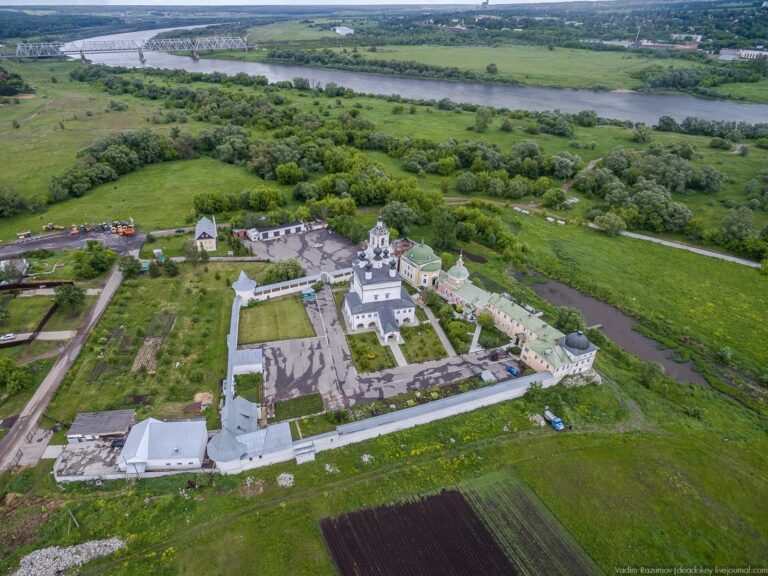
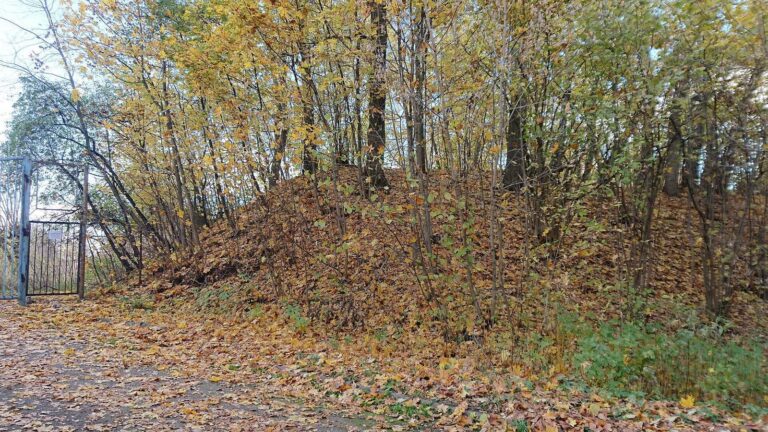
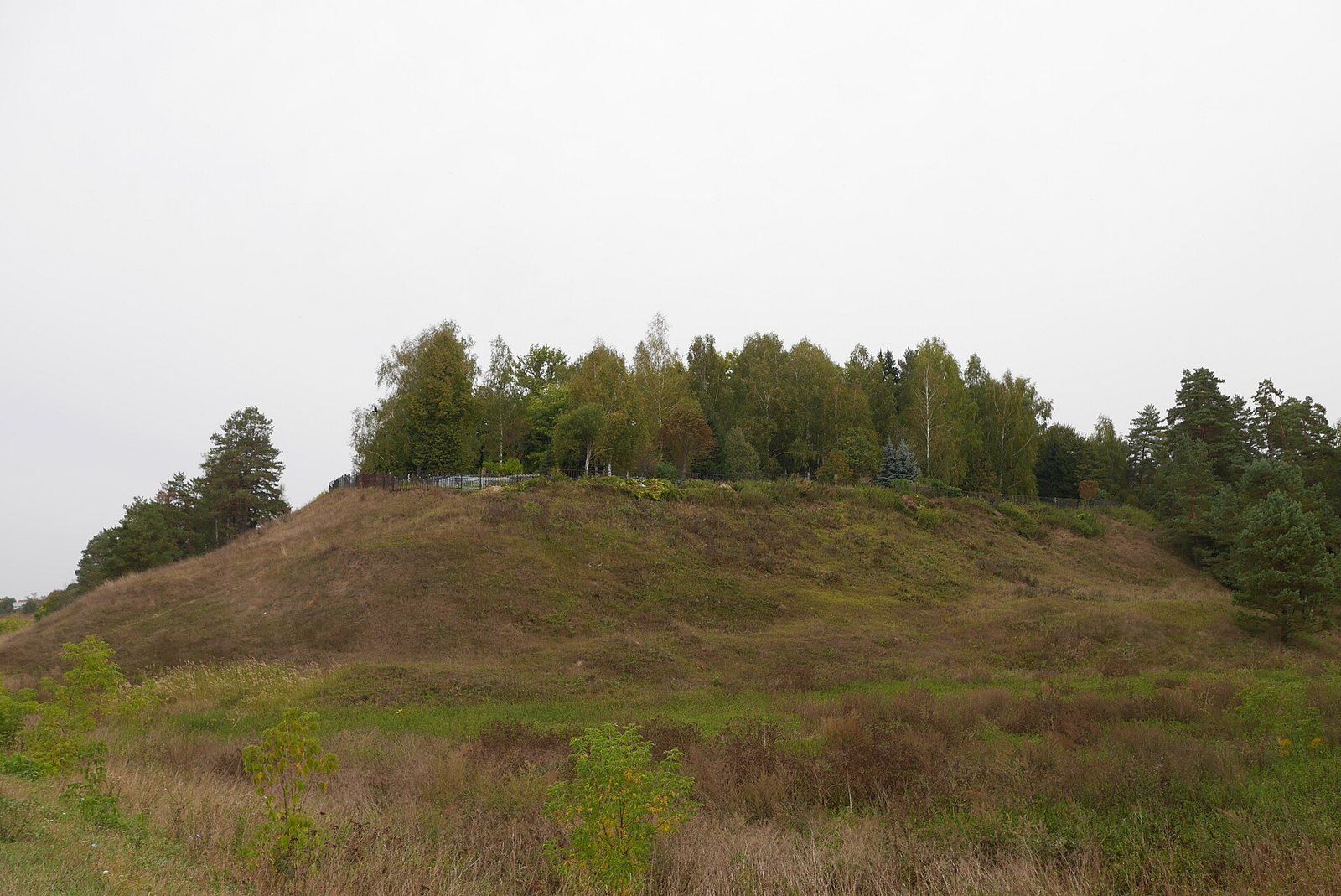
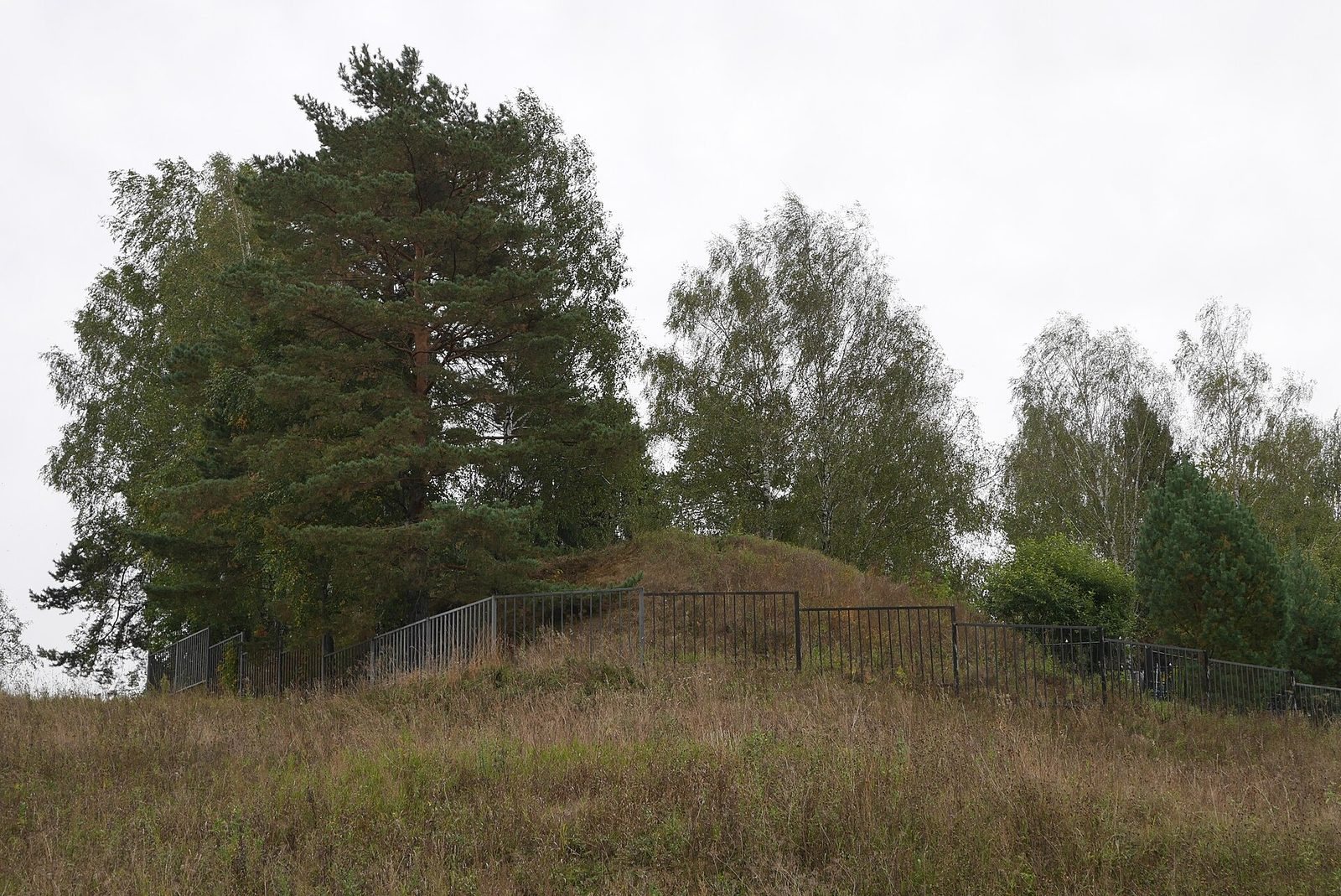
The hillfort occupies a flat, nearly square hilltop measuring about 200 by 200 metres within a bend of the Lopasnya River. The Lopasnya’s deep, steep bank forms a natural defense on the west, while the steep bank of the Zapolonka River curves around the hill to the east and south. Artificial defenses ran along the north side and a short section of the northeast, extending about 250 metres in total. On the field-facing side, a ditch about 6 metres wide and 3 metres deep lay before a wooden barrier of upright stakes; the ditch remains visible. The sole entrance was on the north. A rural cemetery occupies part of the hillfort.
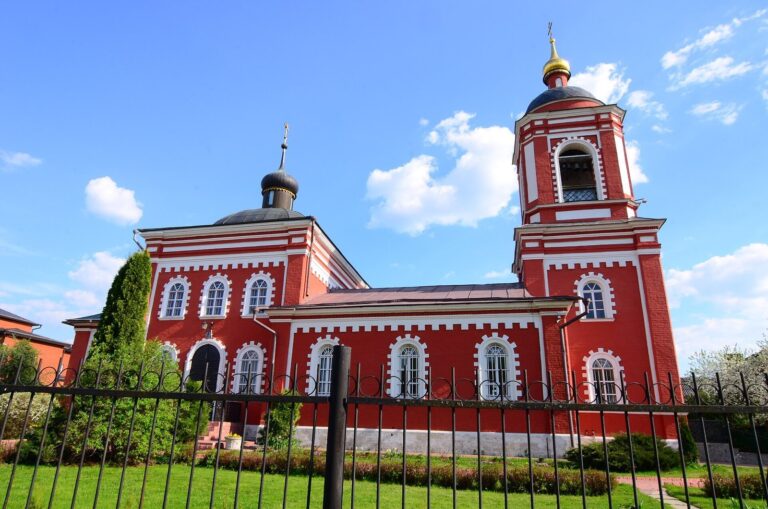
Ascension Church
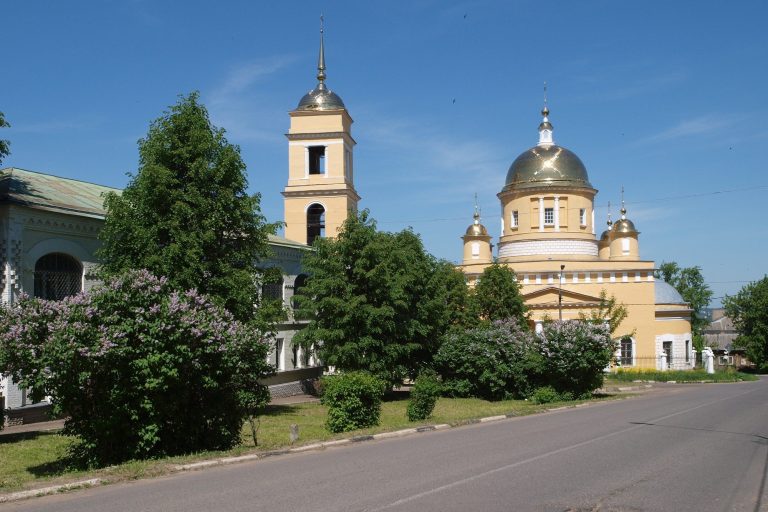
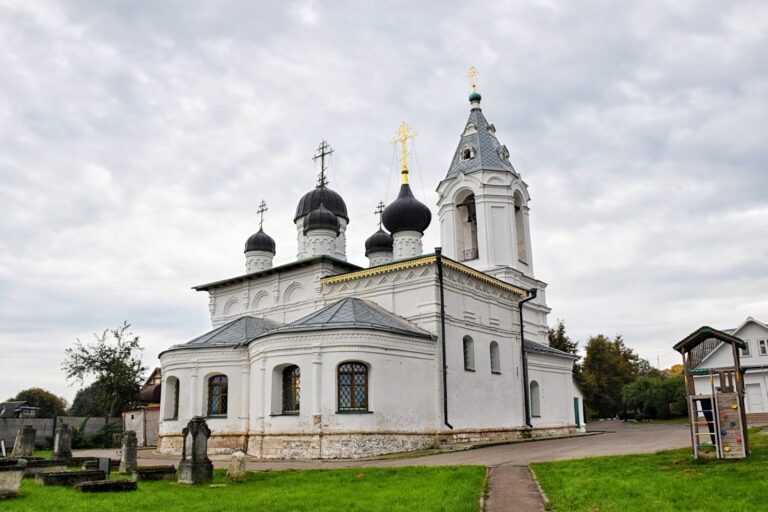
Count Alexei Orlov had an estate at Khatun in the late 18th century. The Ascension Church, dated to 1785, is the estate’s sole surviving remnant.