Kursi: A Byzantine Monastery and Christian Pilgrimage Center in Israel
Site at a Glance
- Popularity
- High
- Country
- Israel
- Primary era
- Medieval
- Eras represented
- Classical, Medieval
- Civilizations
- Byzantine
- Site type
- Religious
- Remains
- Fortified Monastery
On this page15 sections
History
Kursi is an archaeological site on the eastern shore of the Sea of Galilee in Israel, where Christians built a monastery and church in the fifth century during the Byzantine period. The complex became a major pilgrimage center associated with a story from the life of Jesus.
The miracle tradition and place-name
Christian tradition identifies Kursi with the place where Jesus drove demons from one or two men into a herd of pigs, which ran into the lake. The Gospel accounts differ: Matthew describes two men, while Mark and Luke describe one. Manuscripts give different names for the place, including Gerasa, Gadara, and Gergesa. Origen, a third-century Christian scholar, favored Gergesa, arguing that Gerasa and Gadara did not fit the lakeside setting. The identification of Kursi with Gergesa remains disputed, particularly in relation to Gadara.
Kursi has also been linked with Korshi, a place mentioned four times in the Talmud, a foundational collection of Jewish teachings and discussion, in connection with idolatry.
Monastery, pilgrimage, and changing rule
The monastery served both a community of monks and visiting pilgrims. A marble inscription and the remains of a public building that may have been a synagogue point to Jewish or Judeo-Christian residents at Kursi around 500.
In 614, invading Sasanian forces, from a Persian empire, damaged the church and other buildings. The church was later rebuilt, though part of the settlement remained in ruins. The region passed under Muslim rule between 638 and 641, and the church continued in use until an earthquake in 749 destroyed it. In the ninth century, Arab settlers used some of the ruins for homes and storage. By then, Kursi had ceased to be a Christian pilgrimage site.
Conflict, excavation, and restoration
A Syrian village and military outpost occupied the area until the Six-Day War, the 1967 Arab-Israeli war. The outpost sometimes fired on Israeli fishermen and naval vessels on the Sea of Galilee. Israeli operations targeted it in 1955 and 1962. During the 1962 operation, gunfire halted a planned action by Shayetet 13, an Israeli Navy special-operations unit, and its members withdrew without casualties.
Road construction exposed the ruins in 1970, and archaeologist Mendel Nun recognized them. Major excavations followed from 1971 to 1974, led by Dan Urman and Vassilios Tzaferis for the Israel Antiquities Authority. Further work south of the monastery uncovered a small chapel in 1980. After excavation, the church, enclosure walls, and olive press were reconstructed, and Kursi became a national park that year. A lakeshore excavation in 2015 revealed a large public building of uncertain function, while a coin from the period of Muslim rule was recovered at Kursi in 2024.
Remains
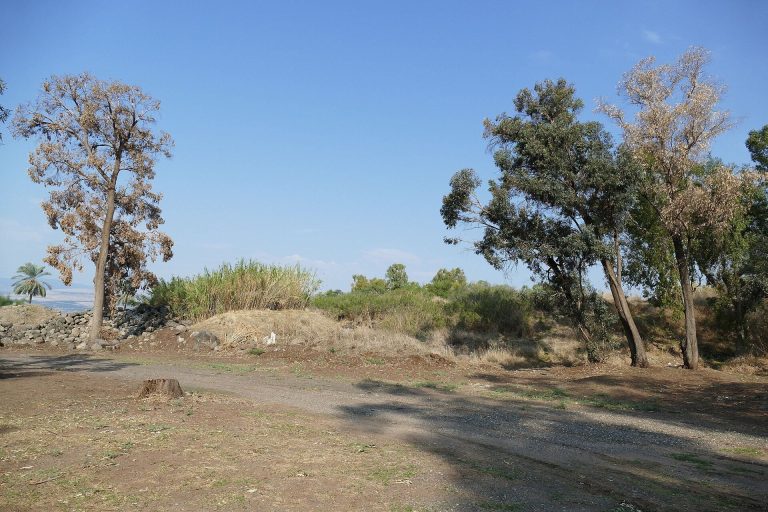
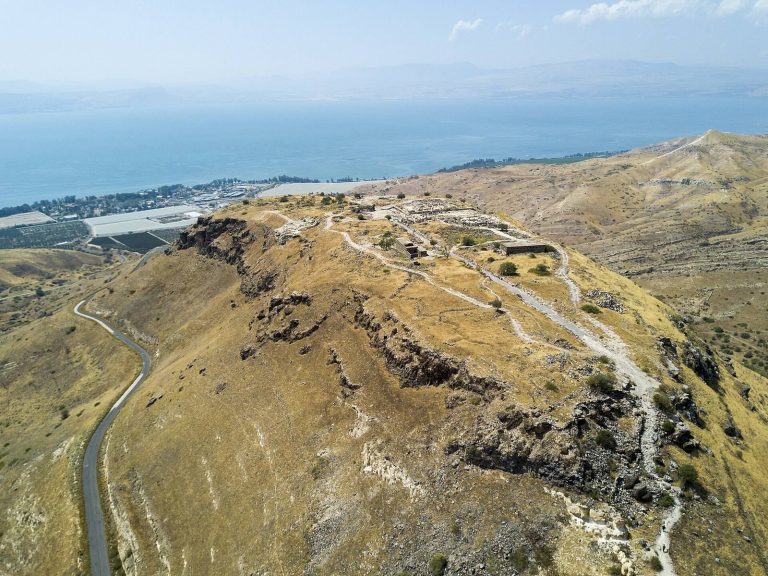
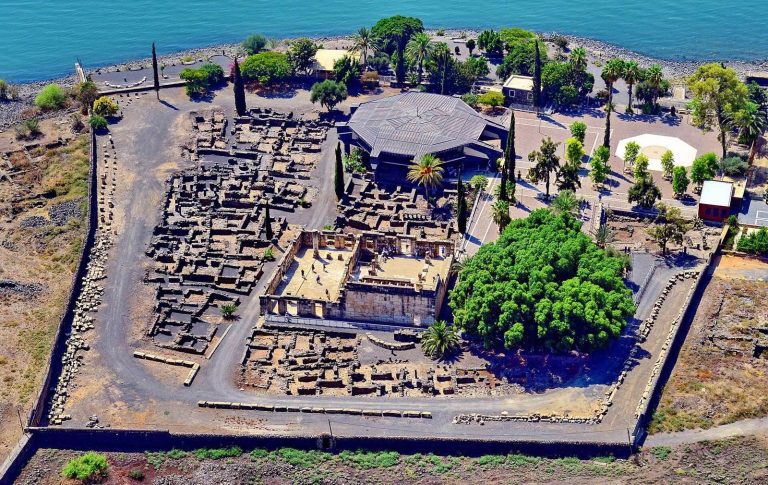
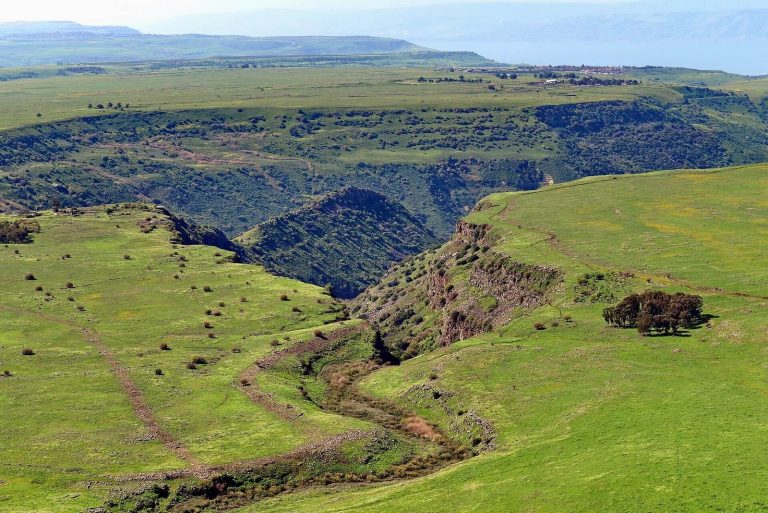
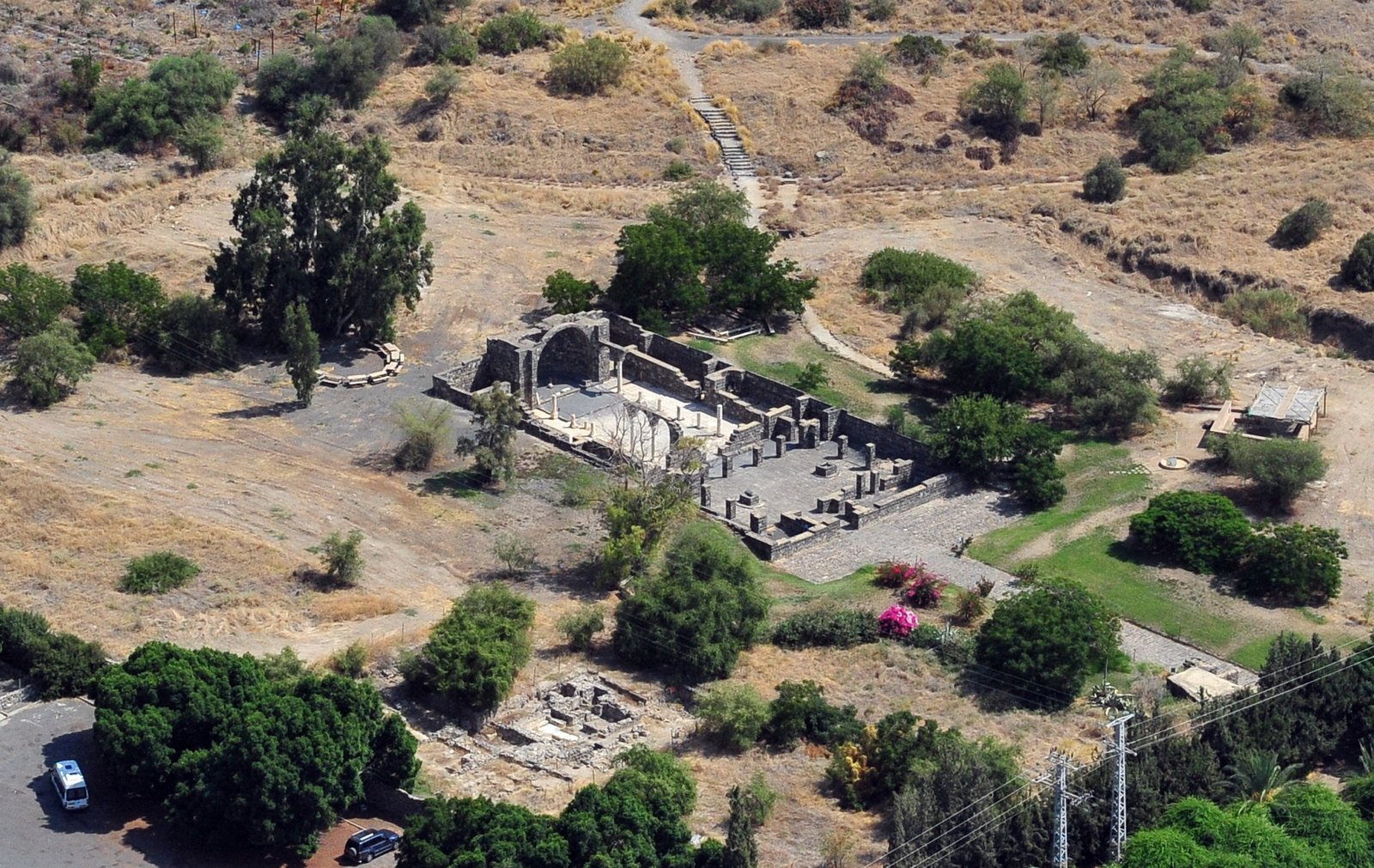
The site lies beside Nahal Samakh, a wadi descending from the Golan Heights. At its center, a monastery and settlement occupied a rectangular enclosure of stone walls, about 145 by 123 metres. The complex is the largest Byzantine monastic complex found in Israel.
Enclosure and water supply
A watchtower guarded the entrance facing the lake. From the enclosure, a paved road led toward a harbor where boats could berth; ancient anchors have been found along the lakeshore. The church stood near the center of the walled complex. Its atrium was built largely over a large cistern, whose two wellheads remain visible.
Church and monastery buildings
The church
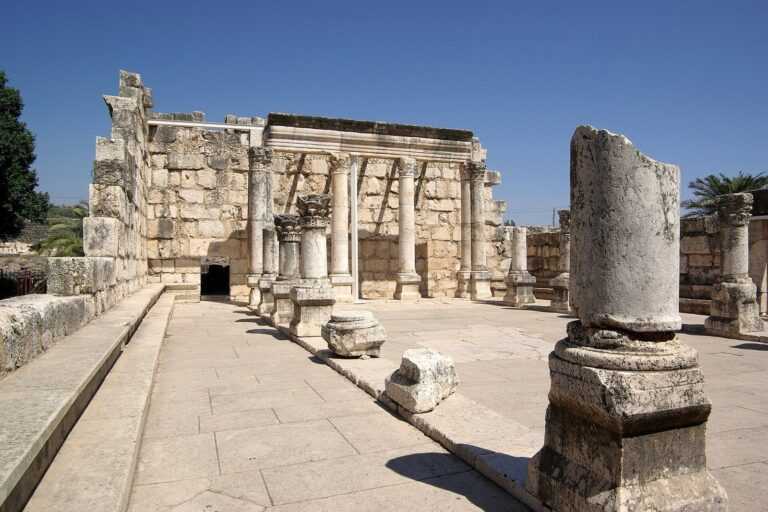
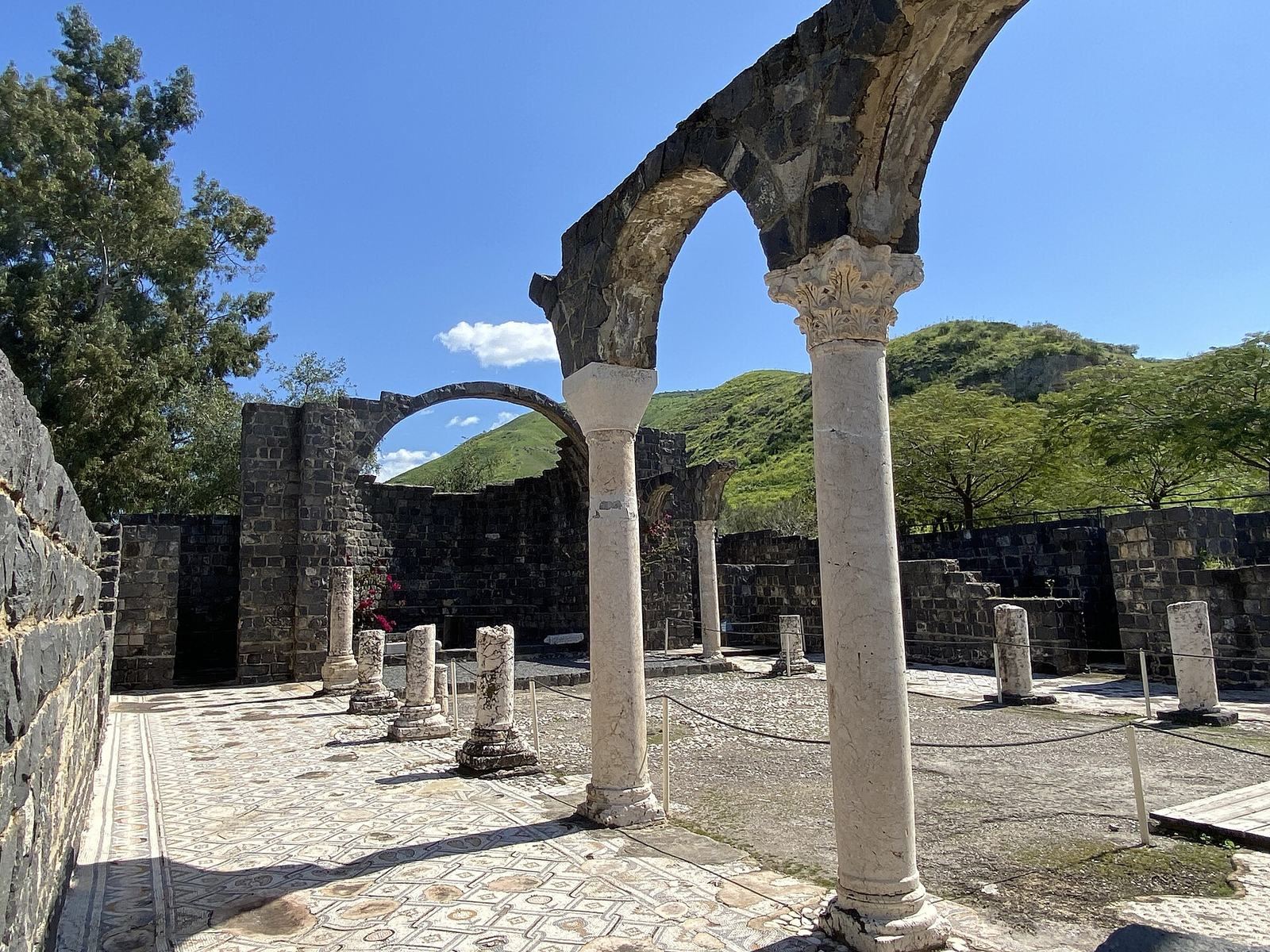
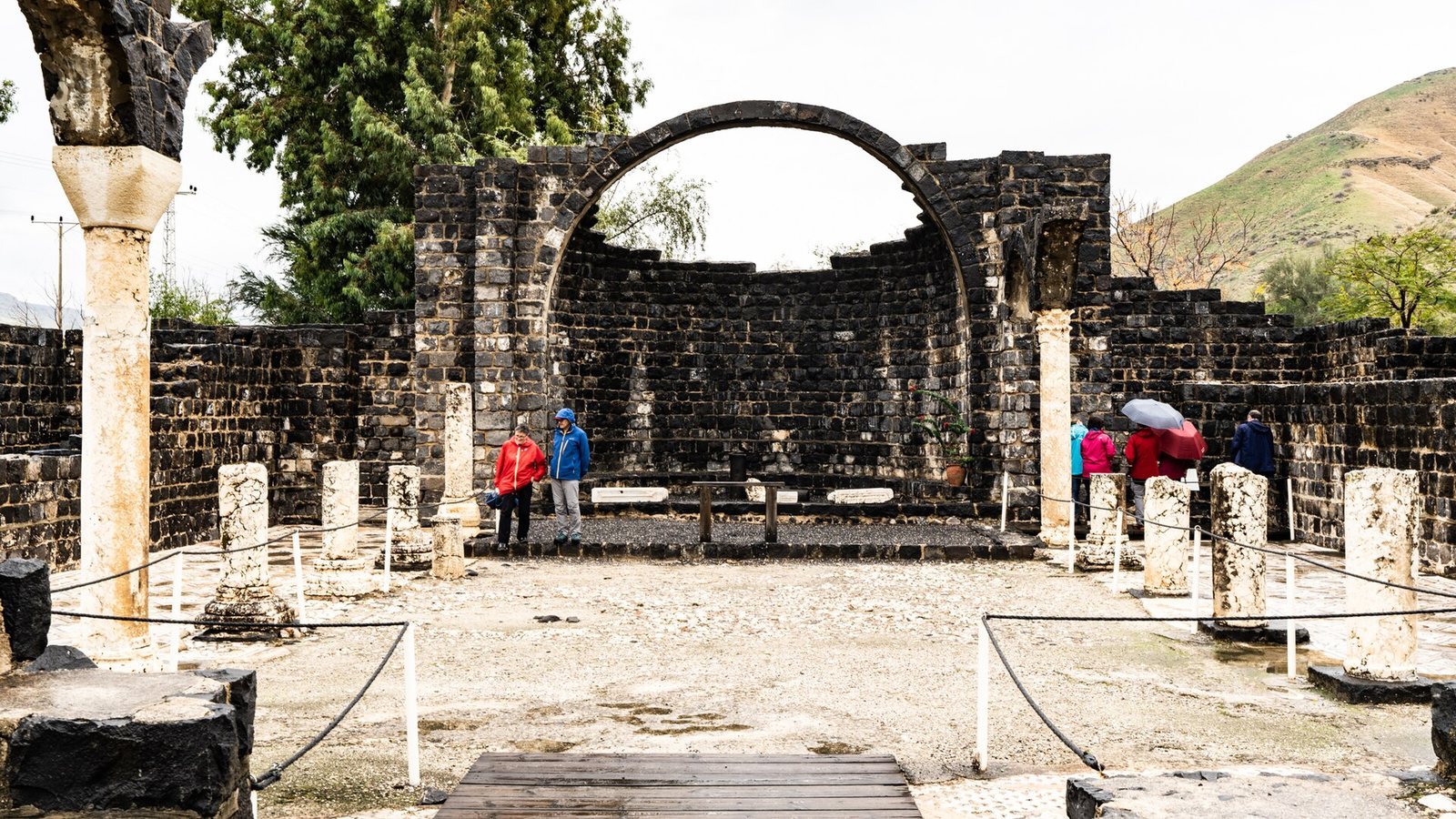
The church measured about 24 by 45 metres. A forecourt led to an atrium and then into the long, hall-shaped church, with chapels and other rooms on both sides. Two rows of eight columns divided the interior into a central nave and two side aisles. The columns had Corinthian-style capitals with leaf patterns and supported stone arches, some of whose remains have been reconstructed. At the rounded sanctuary end, or apse, a raised platform stood within a line of small marble columns that probably formed a screen.
Mosaic pavements
Mosaics decorated the church and neighboring rooms. Much of the central nave’s pavement was destroyed, while substantial stretches of the side-aisle floors remain in place. Their 296 diamond-shaped panels depict birds, fish, baskets, fruit, leaves, and flowers. Birds include geese, doves, and cormorants; plants and foods include figs, pomegranates, hawthorn, grapes, citrons, dates, apples, cherries, jujubes, peaches, and round and ajur melons. The panels also show mature luffa gourds associated with bathing sponges, bottle gourds used as food or containers, and gourd-family seeds arranged on a taro leaf. The bottle-gourd design is unique in Israel. The small pieces forming the mosaics range from white and black through grey, red, brown, yellow, mustard, orange, and pink. The aisle paving has about 90 to 100 pieces per square decimetre. An inscription dates the church mosaics to 585/6. Some images were defaced, though the reason is uncertain.
Baptistery
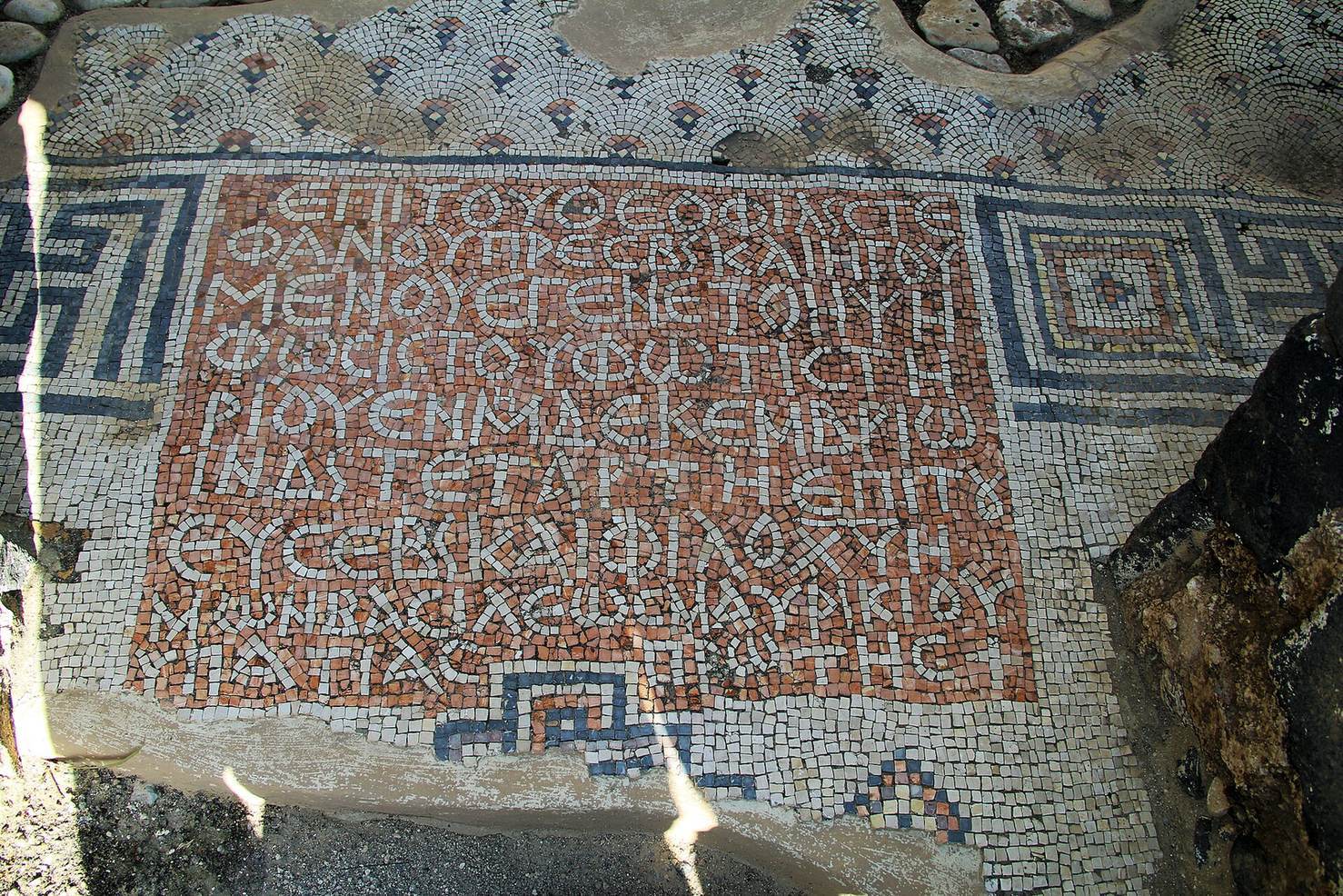
A baptistery, a space for Christian baptism, occupied a chapel beside the apse on the church’s south side. It contained a small baptismal font and a mosaic floor with a dedicatory inscription. The inscription places the mosaic’s creation in December, during the fourth year of an indiction, a recurring 15-year dating cycle, under Byzantine emperor Maurice, placing it in the late sixth century. It names Stephanos as both priest and head of the church.
Burial crypt
A crypt, or burial chamber, lay beside the church on its south side. Stairs at the southern end of the entrance hall led down to it. Excavations revealed the remains of about thirty male skeletons, who may have been monks.
Workrooms and accommodation
Rooms on the north side of the complex included an olive press, probably used to provide sacred oil for pilgrims. The enclosure also contained residential quarters for monks and an inn for pilgrims. Household utensils were found in the residential area.
Bathhouse
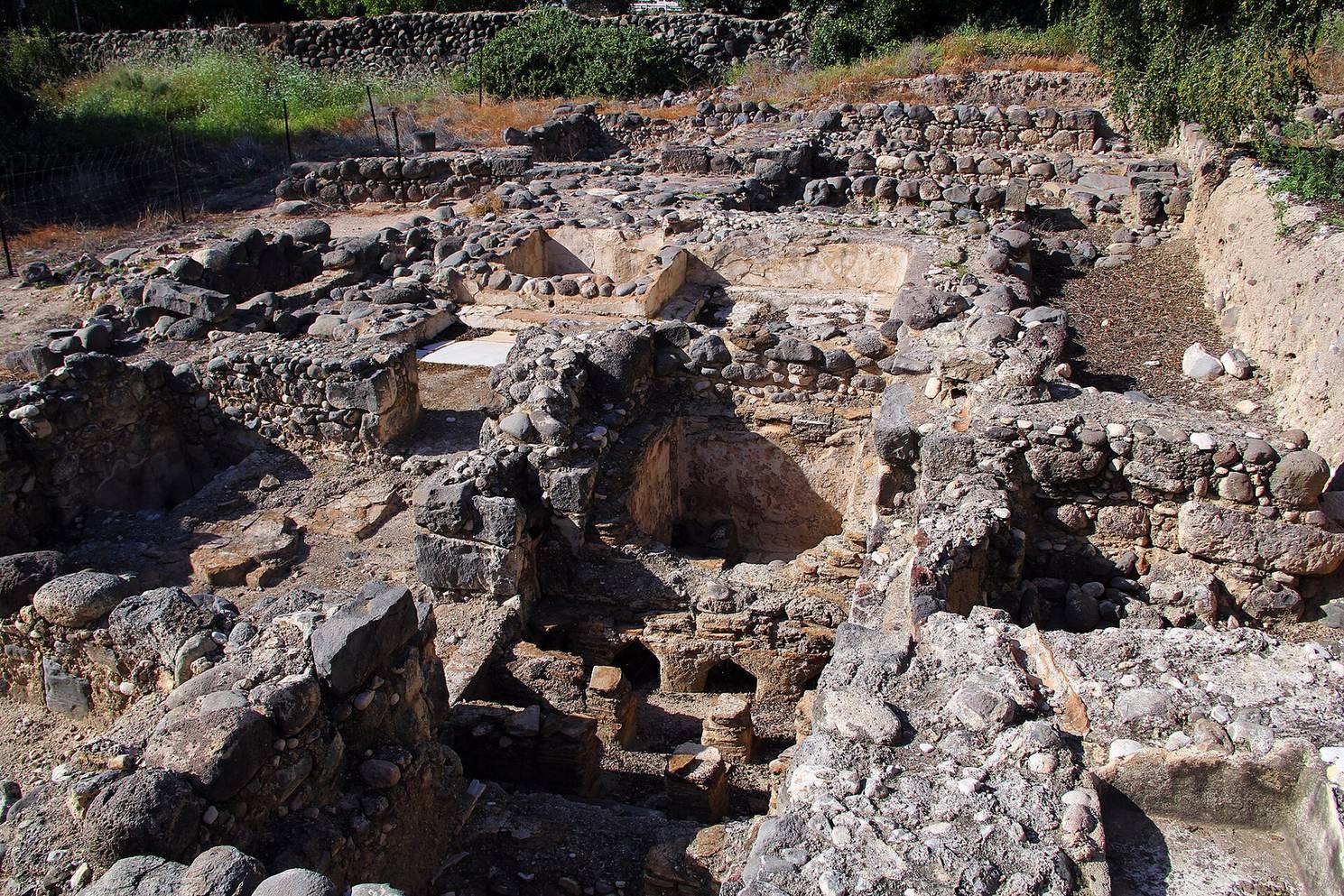
A large bathhouse stood north of the entrance and northwest of the church. Its remains include pools, water pipes, drainage channels, and two rooms with underfloor heating. The building has also been identified as a caldarium, a heated room in a bathhouse. A marble-lined bath was found during later work at the site.
Hill chapel and rock
On the hill south of the monastery, a small Byzantine chapel incorporated a cave. It had an apse, columns, and three successive mosaic floors. Opposite the chapel stands a boulder about seven metres high, supported by retaining walls; remains may indicate that a tower was built around it. Christian tradition associates the rock with the miracle and the cave with the dwelling of the possessed man.
Lakeshore building and inscription
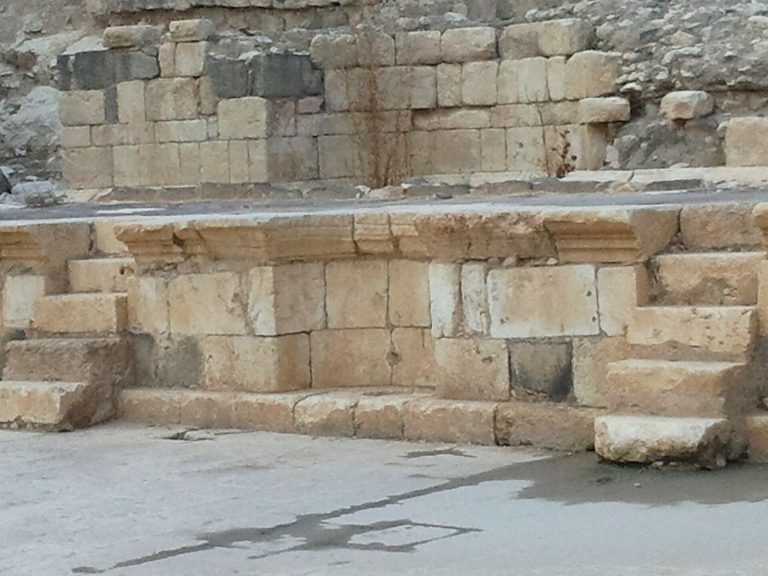
A large public building on the shore opposite the monastery may have been a synagogue, a Jewish place of worship and community gathering. A broken marble slab found inside it is estimated to have measured about 120 by 60 centimetres. It had been set into the floor and bordered by simple opus sectile, a decorative surface made from fitted pieces of stone or marble. The inscription includes the deciphered words amen and marmaria. The latter may refer to the veneration of Mary, Jesus’s mother in Christian tradition. Another interpretation reads the inscription as an eight-line record of a donation by one or more people from Tiberias toward a building that included marble. Christian artifacts recovered at Kursi are displayed at the Golan Archaeological Museum.