St Vladimir’s Church, Moscow: From Palace Church to Parish Church
Site at a Glance
- Popularity
- Medium
- Country
- Russia
- Primary era
- Early Modern
- Eras represented
- Early Modern, Modern
- Civilizations
- Russian
- Site type
- Religious
- Remains
- Church
On this page9 sections
History
St Vladimir’s Church is a historic church in Moscow, Russia. It began as a wooden palace church at the summer residence of Grand Prince Vasily I in the early 15th century. A charter of 1423 provides its earliest recorded mention, and the church served the ruling family until the Romanov dynasty came to power in the 17th century.
Vasily III’s stone church
In 1514, Grand Prince Vasily III ordered eleven stone churches to be built in Moscow to mark the capture of Smolensk. The church of St Vladimir was designed by Aleviz Fryazin, also known as Aloisio da Milano, an architect associated with church building in early-16th-century Moscow. It was consecrated in 1516.
Parish use and rebuilding
In the early 17th century, the great-princely estate moved to Rubtsovo-Pokrovskoye, and its former palace churches began serving parish communities. A churchyard grew beside St Vladimir’s. The nearby Ivanovsky Monastery, a women’s Orthodox community founded in the late 15th century, gave the hill its name, Ivanovskaya Hill.
The first stone church was dismantled in 1660. The present church was substantially rebuilt from 1677 to 1689, with the work financed by a patron’s family.
Fires, closure, and return to worship
Fire damaged the church more than once. The Trinity fire struck in May 1737, and another fire damaged the building in 1812 during the French invasion of Russia. State councillor Mikhail Volsky, a rank in the Russian imperial civil service, paid for its reconstruction after the 1812 fire.
The church closed in 1933. Dismantling began in 1937, and its interior furnishings were destroyed, but Moscow’s monument-protection authorities prevented the demolition from being completed. The building was then transferred to the State Public Historical Library for use as storage for reserve collections. A fire in 1980 destroyed books and surviving wall paintings; restoration work followed in the 1980s and 1990s.
The church was transferred to the Russian Orthodox Church in 1990. The first liturgy after a long interruption took place in 1991, and services resumed in the chapel of Boris and Gleb in 1998. The church belongs to the Moscow Diocese and Epiphany Deanery. Its activities include a Sunday school, Orthodox gymnasium, kindergarten, church-singing school, carpentry training workshop, charitable brotherhood, and publishing house. Russia recognizes the building as a cultural heritage monument of federal significance.
Remains
Setting and plan
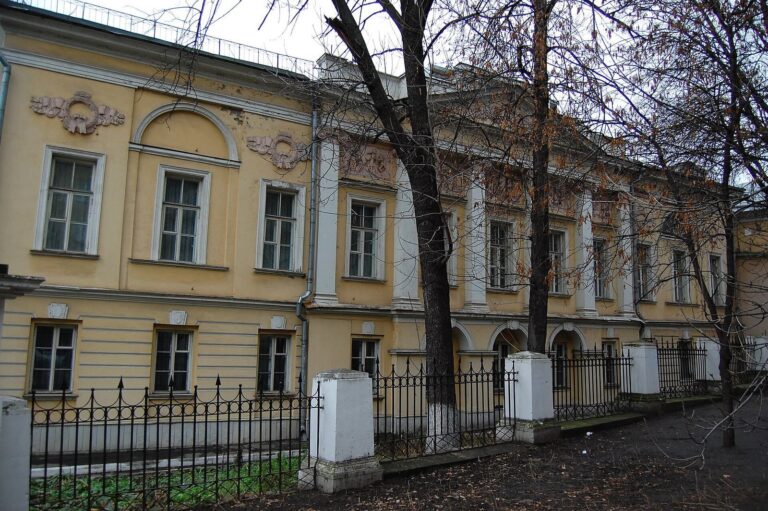
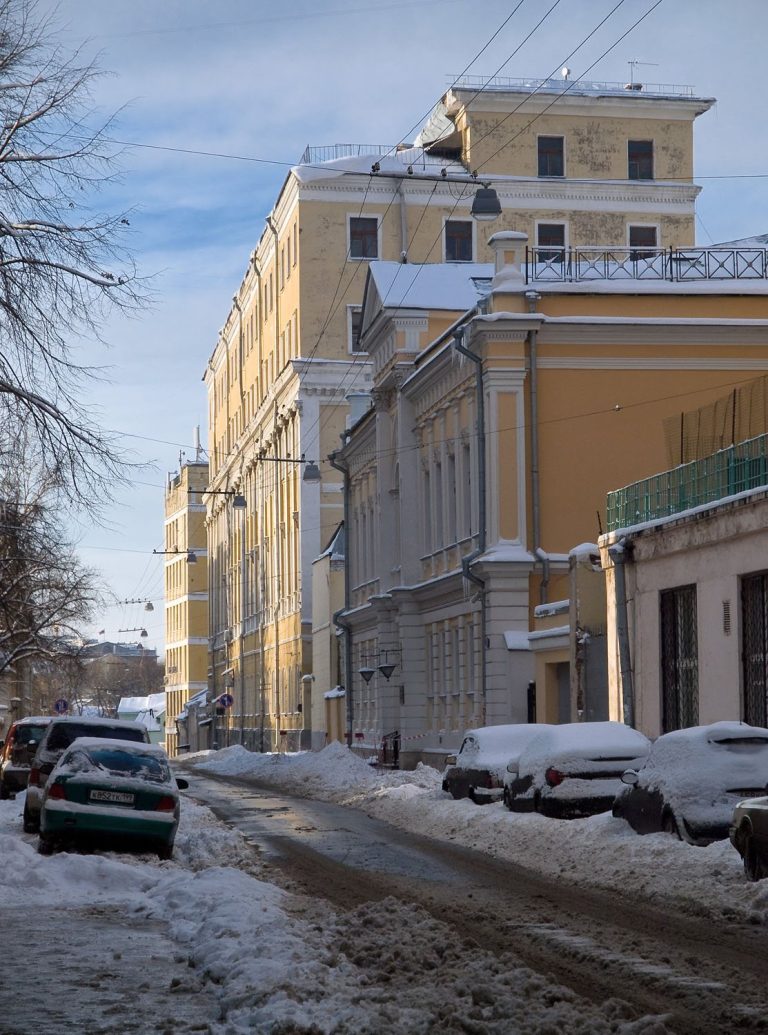
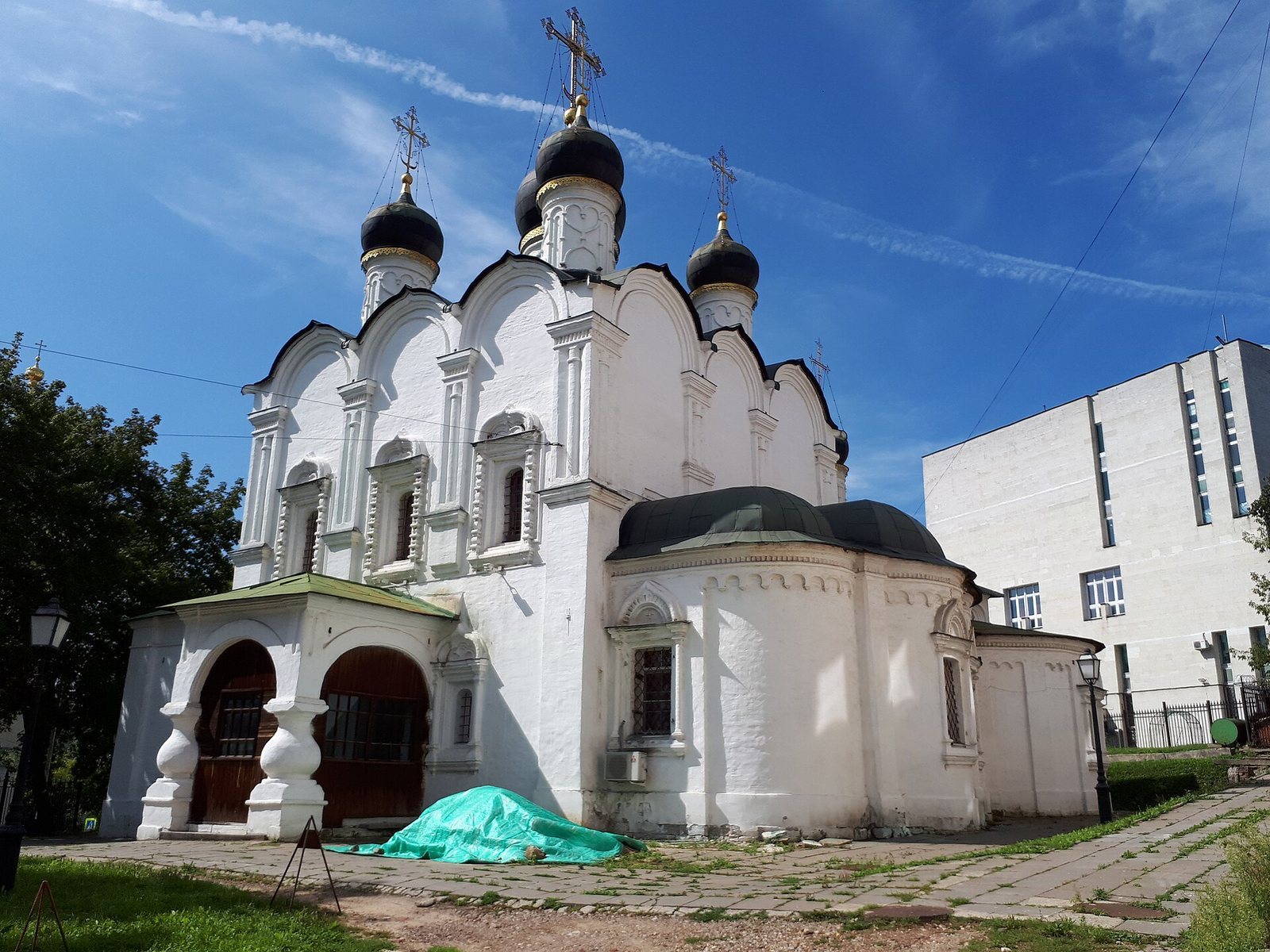
The church stands in Moscow’s Basmanny District, in the historic area known as Old Gardens, near the Ivanovsky Convent and close to the meeting of the Yauza and Moskva rivers. The district’s central hill and the Rachka stream, which once crossed the area on its way to the Moskva, formed part of the historic landscape; the stream was enclosed in a conduit in the 18th century. The church was built over earlier foundations as a deliberately archaizing, five-domed structure.
Surviving early fabric and interior
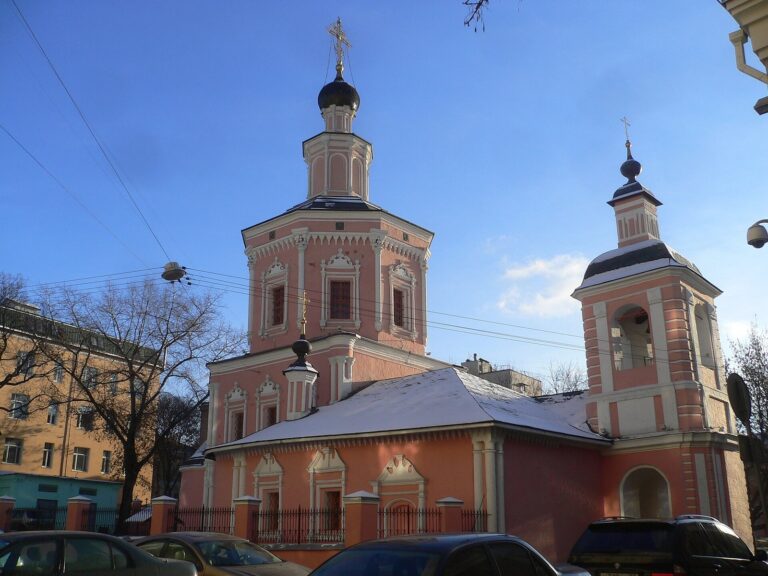
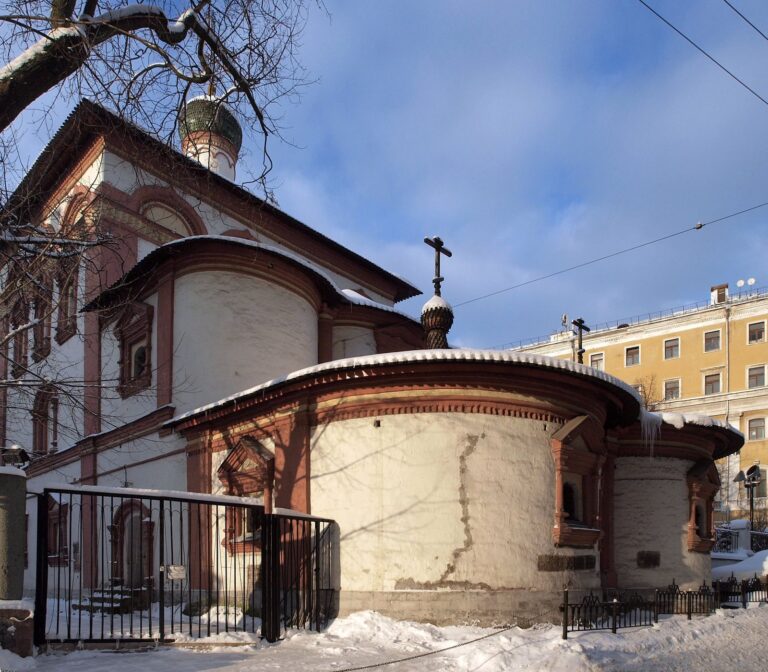
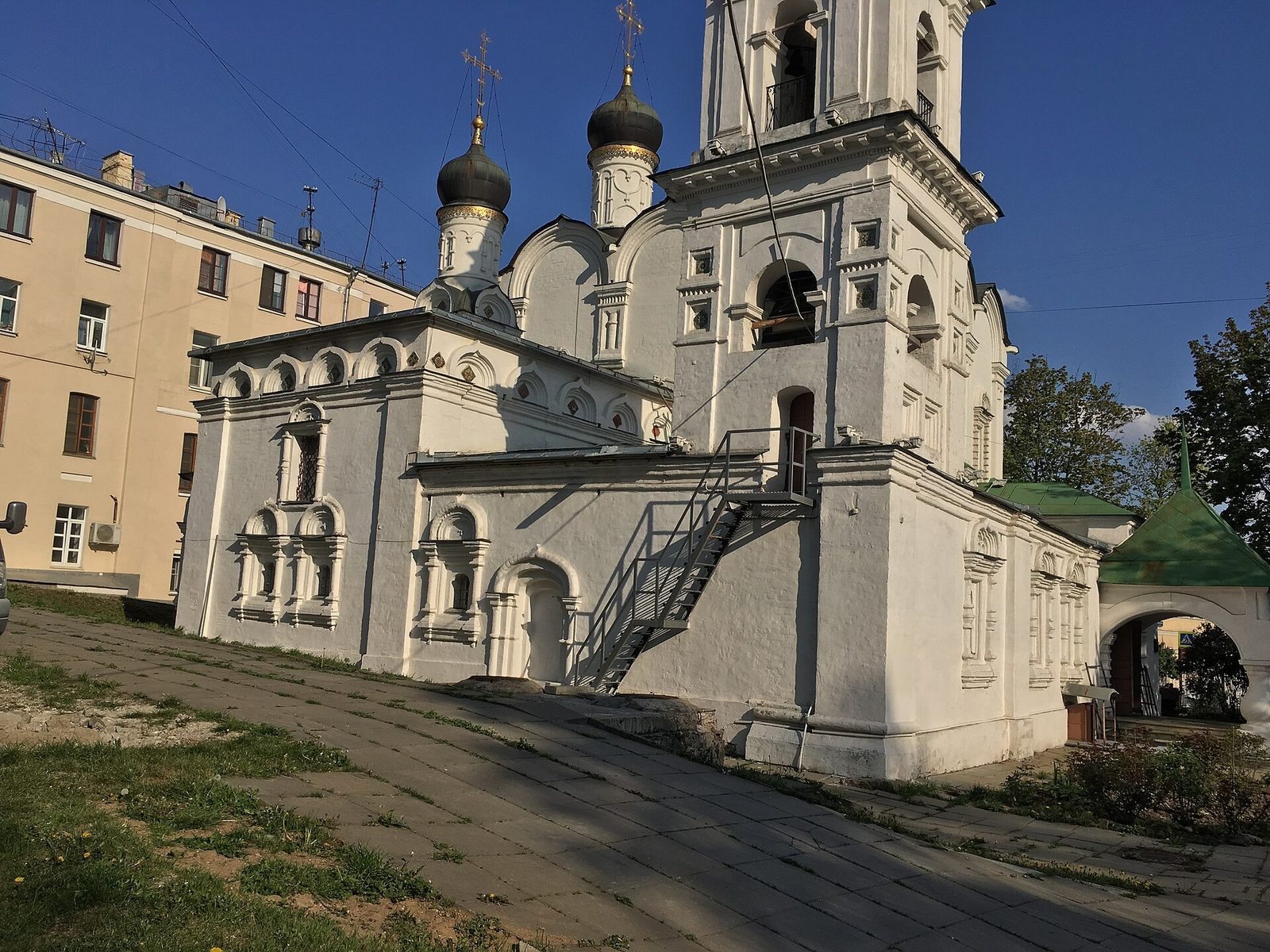
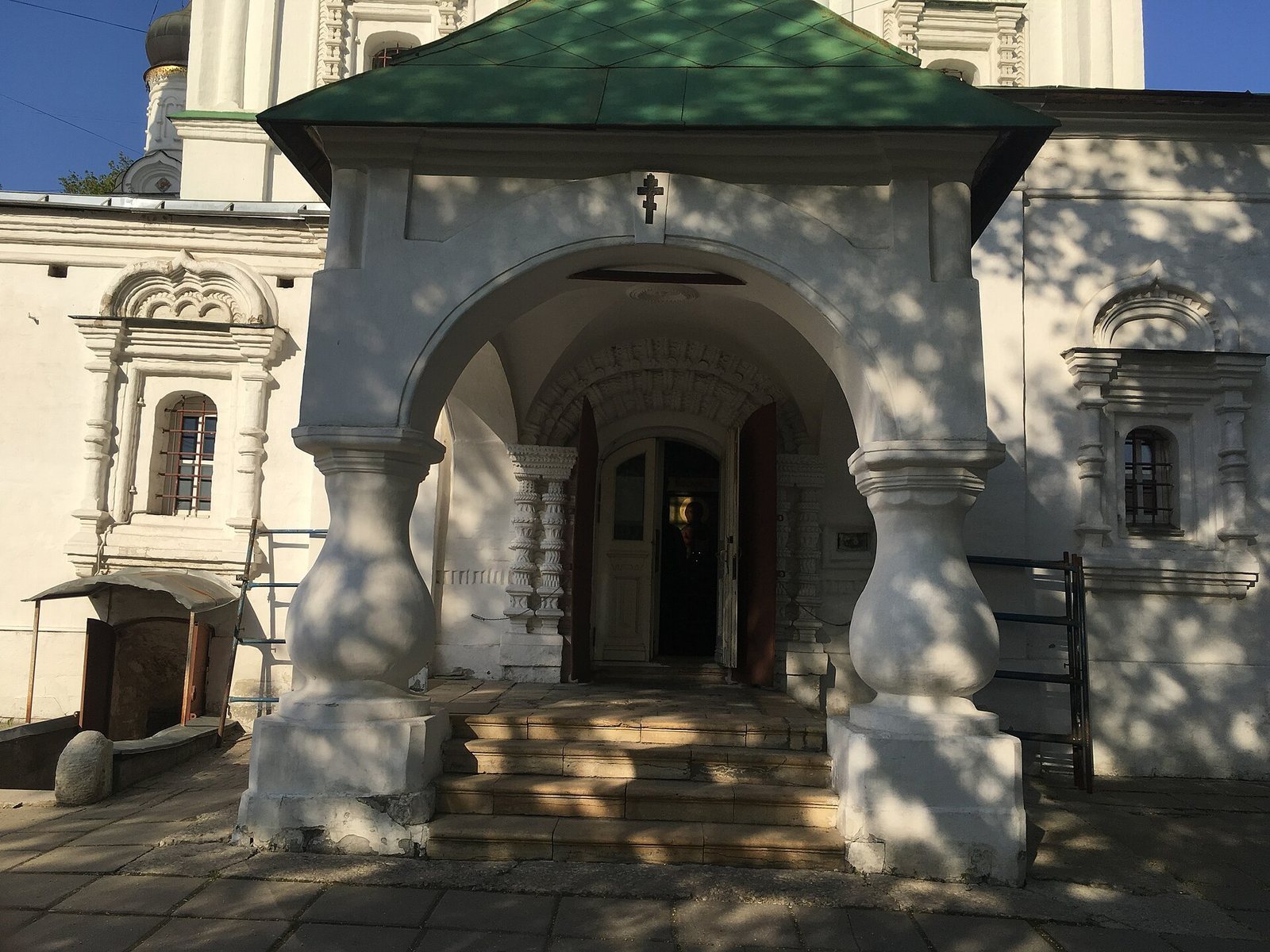
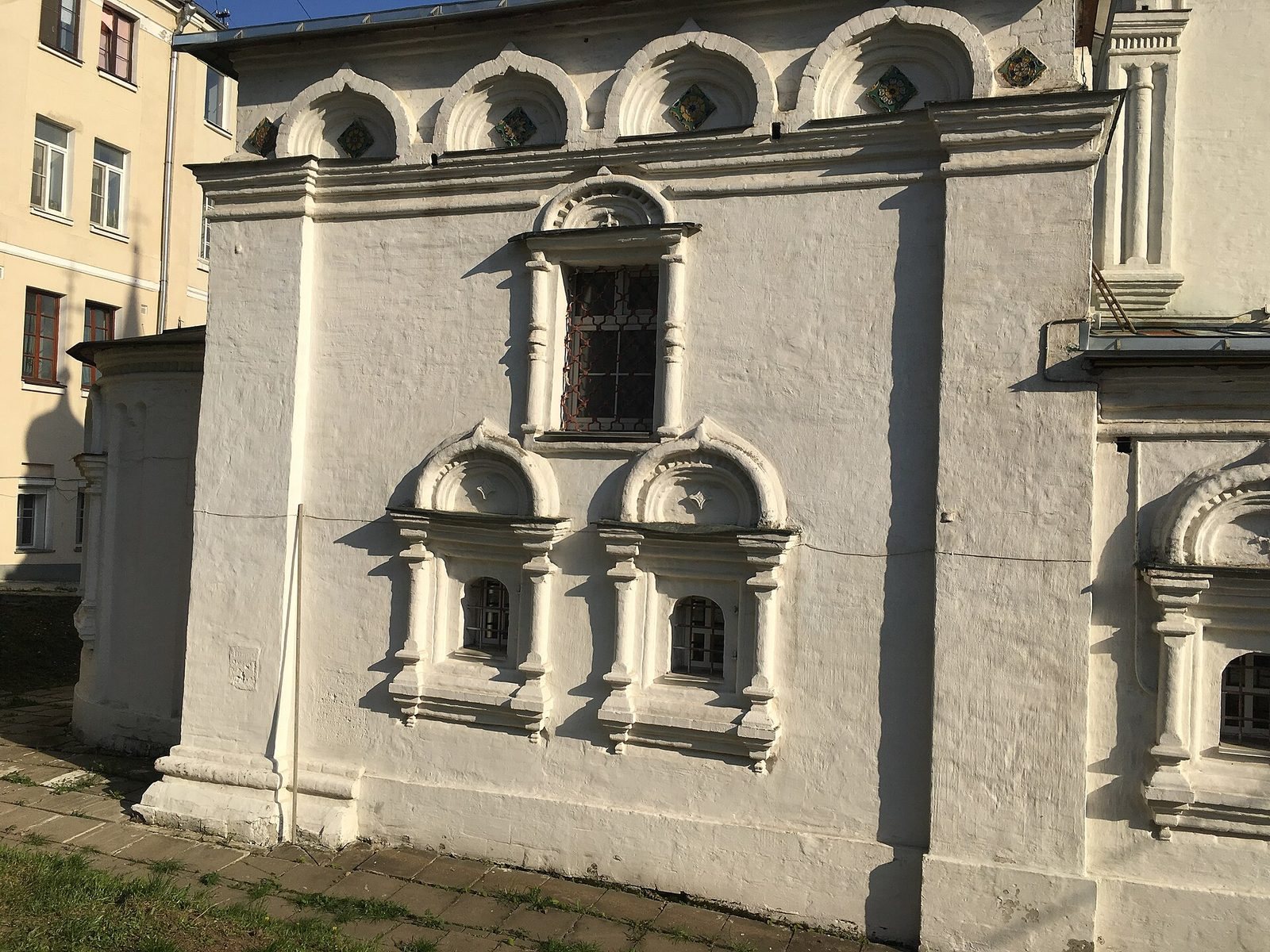
Parts of the stone church built between 1514 and 1516 survive in the lower portion and southern wing of the present building. The south porch also belongs to that earlier church. The present church has one nave and one iconostasis, an icon screen separating the sanctuary from the congregation, with a main altar and two side chapels. Its bell tower forms part of the building.
Roof and bell tower
In the late 19th century, the church’s kokoshniks (raised decorative roof elements) were removed and a plain hipped roof was installed. The five domes were taken down during the dismantling work of 1937. Restoration in the 1980s and 1990s reinstated the kokoshniks and the main church’s zakomara roof covering, a curved gable-like end shaped to follow the vault beneath it. The bell tower was added above the refectory, the hall attached to the church, at the end of the 18th century and was altered during Catherine II’s reign. A cross was placed on it during a partial repair in the 1980s, while the building was still in secular use.
Altars and shrines
The main altar is dedicated to St Vladimir, the ruler of Kyiv associated with the Christianization of Rus and venerated as a saint. The side chapels honor Boris and Gleb, early Rus princes venerated as martyrs, and the Christian martyrs Cyricus and Julitta. The church also has an icon of the Mother of God the Healer, a title for Mary, an icon of St Nicholas of Myra, and an icon of Grand Duchess Elizabeth Feodorovna, an Orthodox nun and martyr, accompanied by relics.