Loukou Monastery: An Orthodox Monastic Center in Greece
Site at a Glance
- Popularity
- Medium
- Country
- Greece
- Primary era
- Early Modern
- Eras represented
- Early Modern
- Civilizations
- Ottoman
- Site type
- Religious
- Remains
- Monastery
On this page10 sections
History
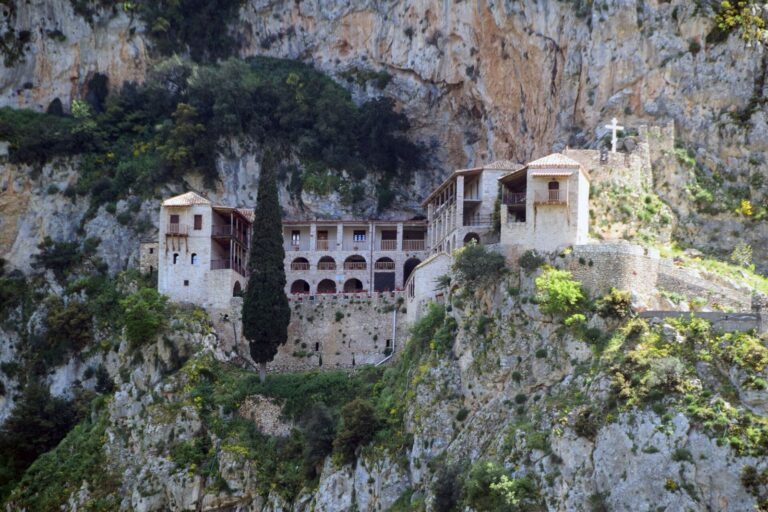
Loukou Monastery is an Orthodox monastery dedicated to the Transfiguration of Christ, beside the Tanos River in Greece, west of Astros and about two kilometres from Kato Doliana. Its foundation is traditionally dated to 1117 and is also placed in the 12th century, although the precise date is uncertain. It became a leading monastery in Kynouria and one of Arcadia’s major monastic centers.
Foundation and ecclesiastical standing
A patriarchal seal issued during the tenure of Patriarch Dionysius II, between 1546 and 1555, describes the monastery as a patriarchal stavropegion from its foundation. A stavropegion was a monastery placed directly under the patriarch’s authority rather than the ordinary local diocesan hierarchy.
The origin of the name Loukou is uncertain. Proposals connect it to the Latin lucus, meaning “sacred grove,” to drainage channels used on cultivated land, or to Lucus Feroniae, a name associated with Herodes Atticus’s villa. Other suggestions link the name to wolves, Juno Lucina, Saint Luke, or Saint Lucia.
Venetian rule and eighteenth-century activity
During Venetian rule in the Peloponnese, from 1687 to 1715, Capuchin monks, a branch of the Franciscan order, occupied the monastery. When they departed, they took plaques commemorating the church’s founders. Before the Greek Revolution, the monastery held considerable property. In 1765, it helped establish a school in Agios Ioannis, at one of its dependent properties.
Revolution and later changes
During the Greek Revolution, the struggle for independence from Ottoman rule, the monastery supported the insurgents, particularly at the camp of Vervena. Its abbot fought in several battles. In 1826, on the eve of the monastery’s feast, Ibrahim Pasha, an Egyptian military commander active in the war, burned the monastery, although the main church survived. The monastery was dissolved in 1834 because it did not have the required number of male monks, then re-established in 1837. Excavations took place at the site around this time.
The monastery became a nunnery in the mid-1940s and is affiliated with the Holy Metropolis of Mantineia and Kynouria. Its main church celebrates the Transfiguration on August 6. Three dependent churches belong to the monastery: the Church of the Ascension in Astros, the Church of St Demetrius in Agios Ioannis, and the Church of the Transfiguration of the Savior on Mount Zavitsa. The Church of the Ascension was built on the site of an earlier church dedicated to St John the Baptist.
Remains
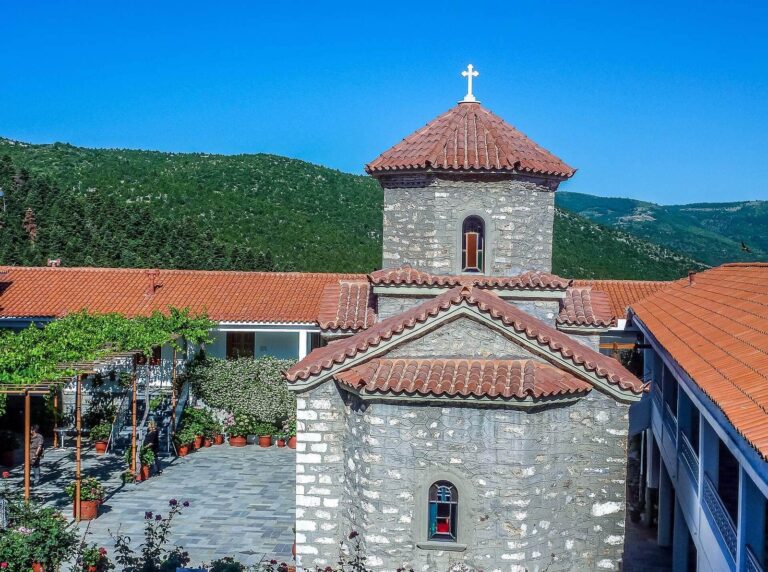
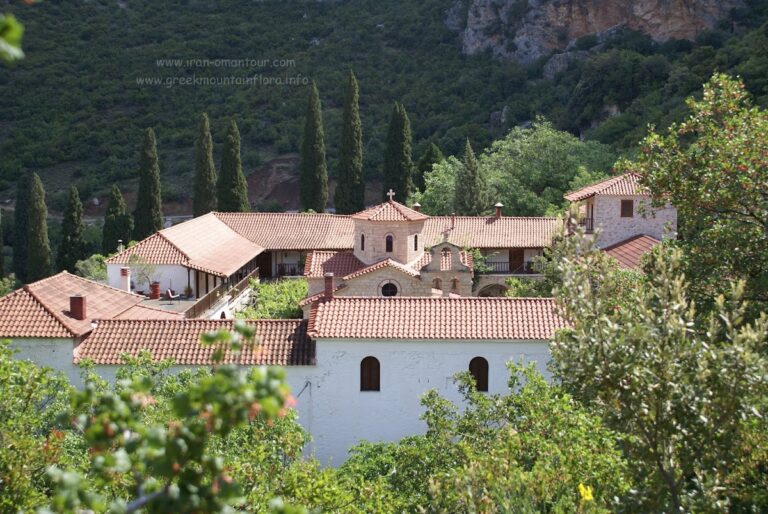
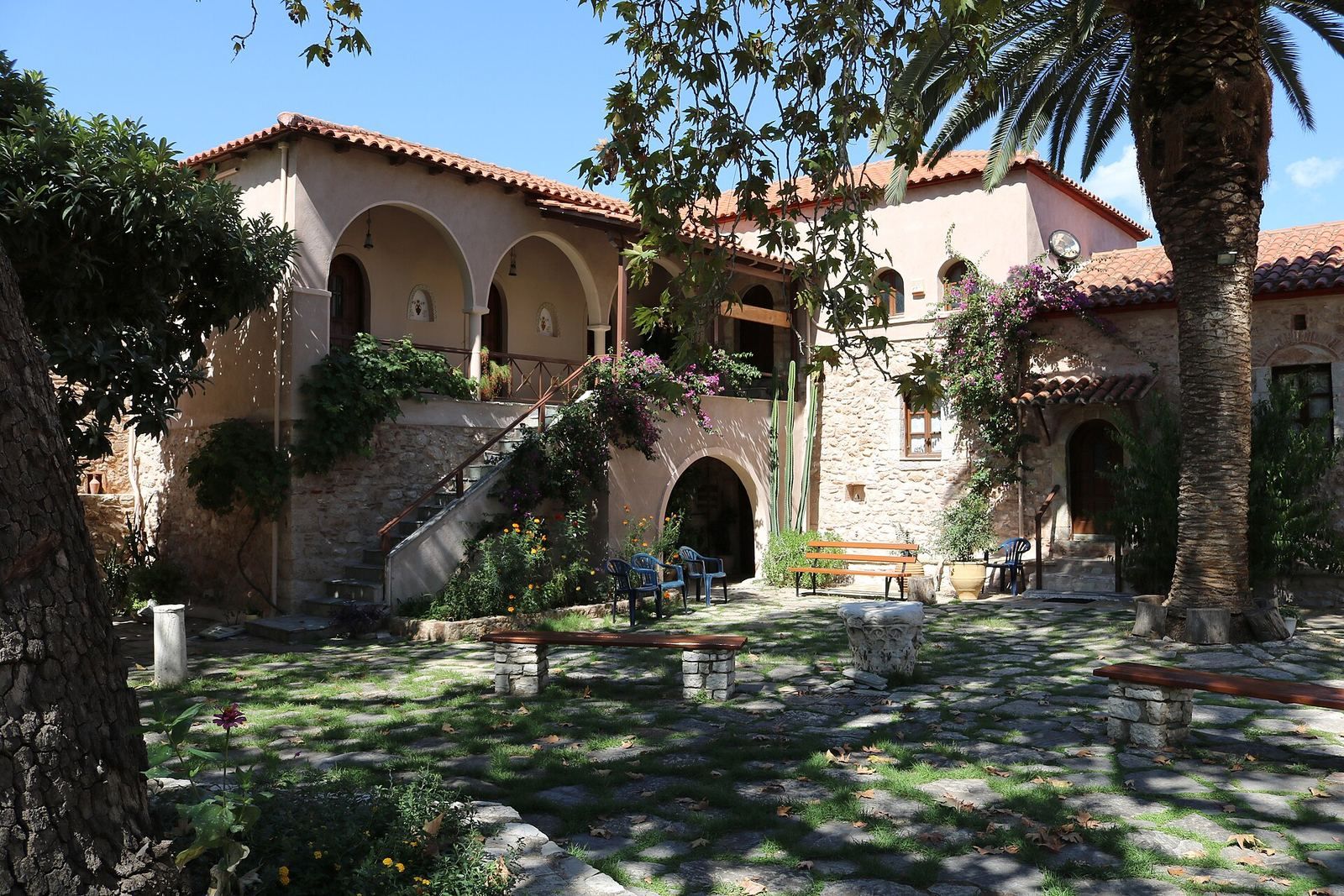
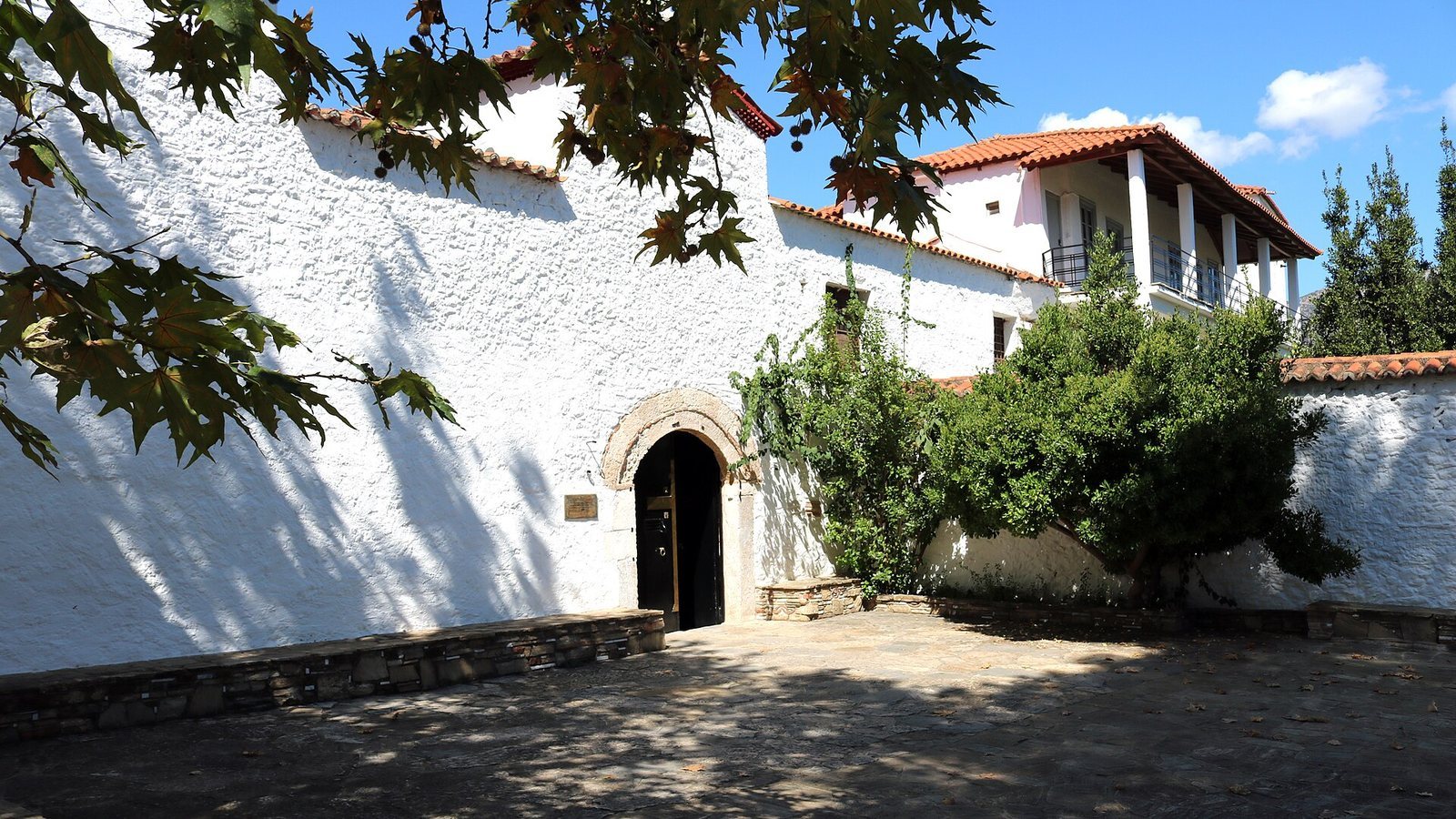
The monastery forms a rectangular, fully renovated complex beside the Tanos River, with buildings on all four sides of its main church. An old monastery tower also stands within the complex.
The main church
Plan and exterior
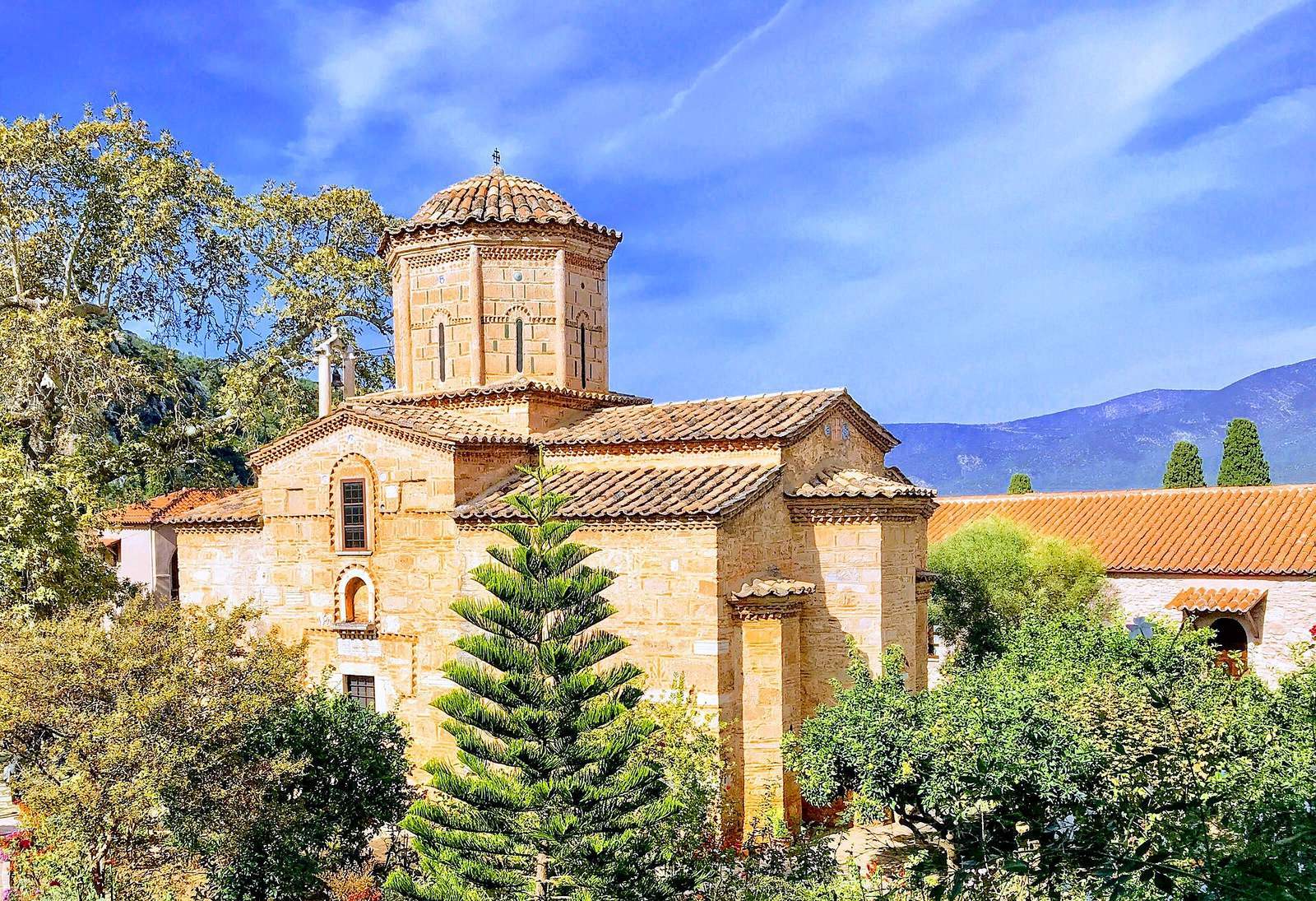
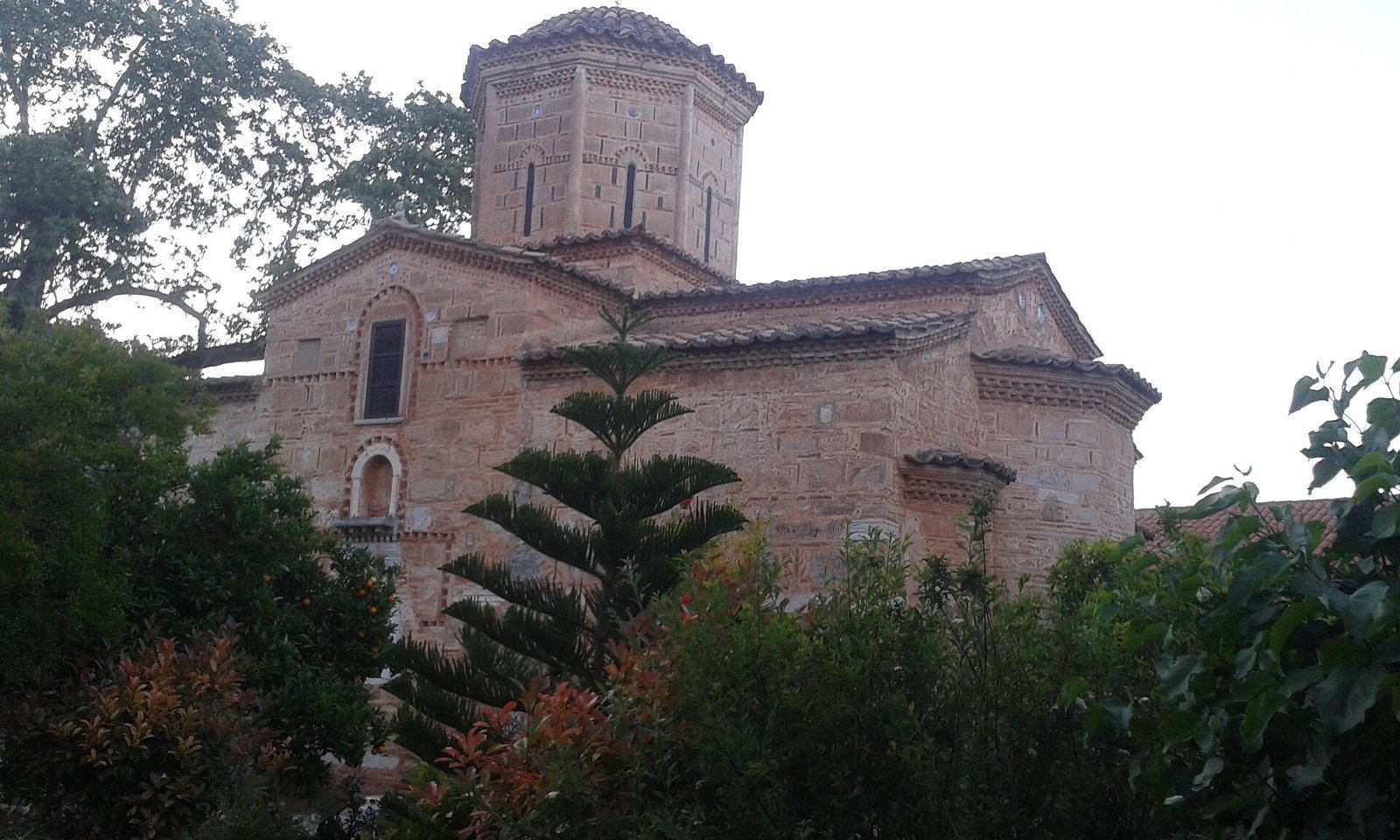
The main church, or katholikon (the principal church of an Orthodox monastery), is a domed building with a cross-shaped interior plan. It measures about 11.7 by 9.1 metres. Four interior columns support its unusually high, octagonal dome. Its entrance hall was lost in the destruction of 1826. The walls are brick, and diagonal brick courses decorate the projecting roof edges, windows, and angled sanctuary ends. Ceramic plates are set into the gables and into the circular wall beneath the dome.
Interior and furnishings
Frescoes painted in 1649 cover parts of the church interior. They include a scene representing the Akathist Hymn, a Byzantine Christian hymn associated especially with the Virgin Mary. The paintings are generally well preserved, though Ibrahim Pasha’s forces scratched and damaged some of them. The church also contains a richly carved wooden iconostasis, the screen of icons separating the sanctuary from the main worship space, and a 17th-century icon of the Transfiguration. A floor mosaic forms part of its furnishings, and ancient mosaic flooring has also been found at the monastery.
Reused ancient building fragments
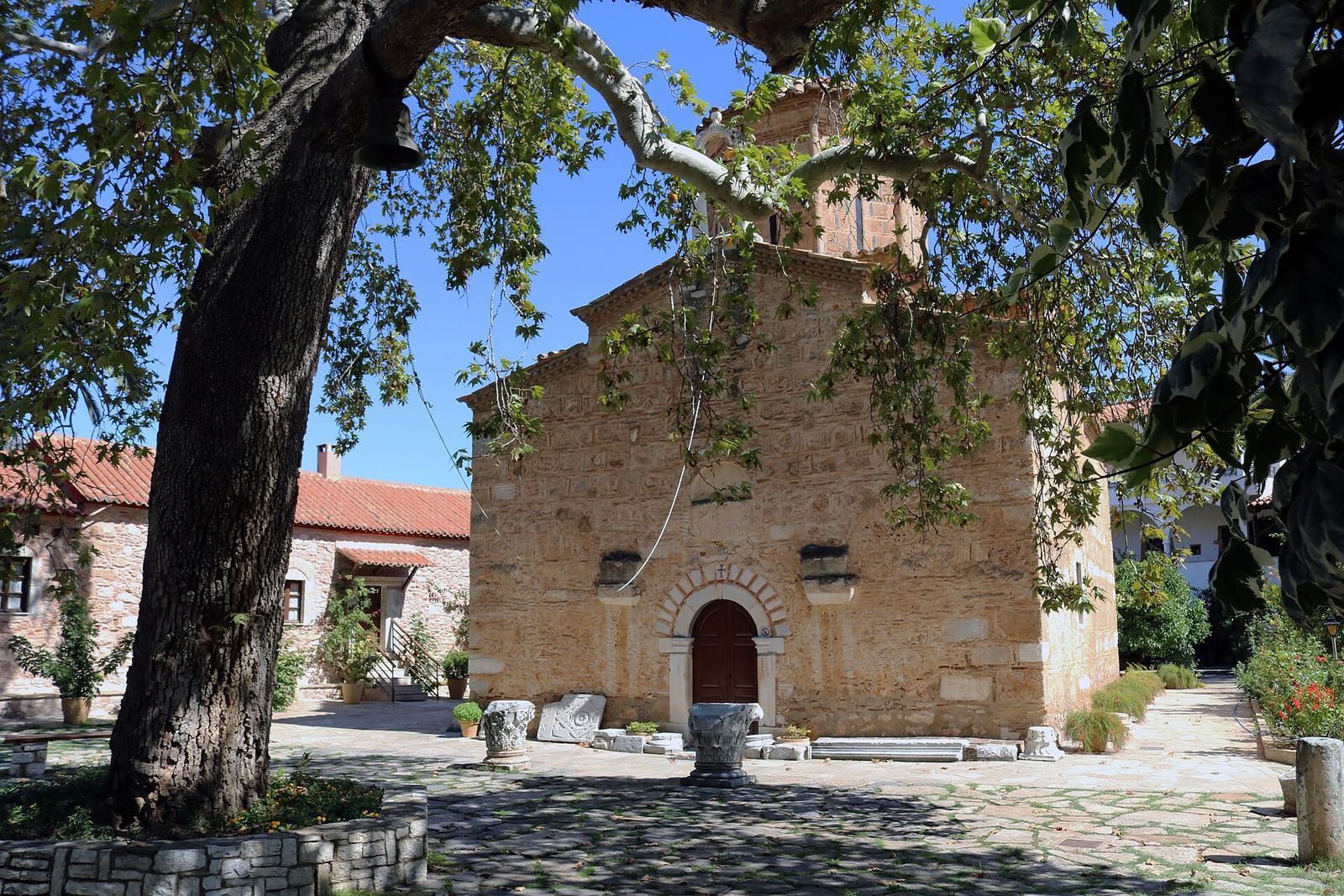
Ancient architectural fragments have been incorporated into the monastery buildings. Capitals and lintels are set into the church walls, including pieces from Herodes Atticus’s nearby villa in the church’s south wall. The courtyard displays capitals and reliefs found at the monastery, among them Ionic and Corinthian capitals and parts of columns. Other fragments from the villa are built into the monastery’s buildings.
Ancient remains and collections
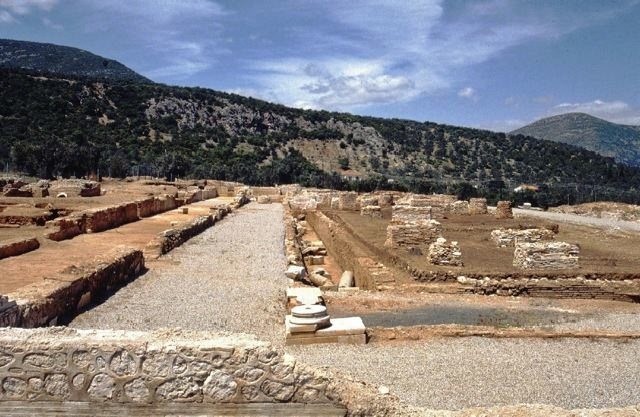
The surrounding area contains remains associated with ancient Thyreatis settlements. These include the uncovered ruins of Herodes Atticus’s villa, built beside the monastery site in the 2nd century AD, and the remains of a Roman aqueduct near the monastery. Herodes Atticus was a Greek intellectual and prominent public figure of the Roman period.
The monastery library holds old manuscripts, while its treasured objects include crosses, other relics, numerous documents, and a relic of the True Cross, which Christians believe was the cross on which Jesus was crucified. The monastery’s codex was written by the abbot Joseph, brother of the abbot who fought in the Greek Revolution.