Petroglyphs of the Yelangash Valley: Rock Art in Russia’s Altai
Site at a Glance
- Popularity
- Medium
- Country
- Russia
- Primary era
- Bronze Age
- Eras represented
- Bronze Age, Iron Age, Classical, Medieval
- Civilizations
- Scythian
- Site type
- Civic
- Remains
- Rock Art
On this page7 sections
History
The Petroglyphs of the Yelangash Valley are rock engravings along the upper Yelangash River in Russia’s Kosh-Agach District, in the Altai Republic. Carved from the first millennium BCE to the seventh century CE, they span the Bronze Age and later historical period and preserve evidence of pre-Scythian, Scythian, and Turkic phases.
Phases of carving
The Scythian phase is associated with the Pazyryk culture, an Iron Age culture of the Altai connected with the wider Scythian world of the Eurasian steppe. The later Turkic phase is linked to Turkic-speaking peoples. Together, these phases represent successive periods of rock carving across the valley.
Discovery, research, and interpretation
Engineer M. A. Brechtchinski discovered the carvings in 1881 while working in the region on the Chuya road. Research in the Altai intensified in the late 1960s under A. P. Okladnikov, a Soviet archaeologist and historian who then directed an institute within the Siberian Branch of the Russian Academy of Sciences. From 1969 to 1985, researchers copied more than 30,000 images; about half of those copies remain unpublished.
There is no settled explanation for the concentration of carvings. One interpretation identifies the valley as an ancient sanctuary used by Altai inhabitants. Another proposes that it lay on a route between Mongolia and Siberia, with a resting place for people and caravan animals after they crossed the South Chuya passes. Russia designated the site a cultural heritage property of federal significance in 1995.
Remains
Setting and carved surfaces
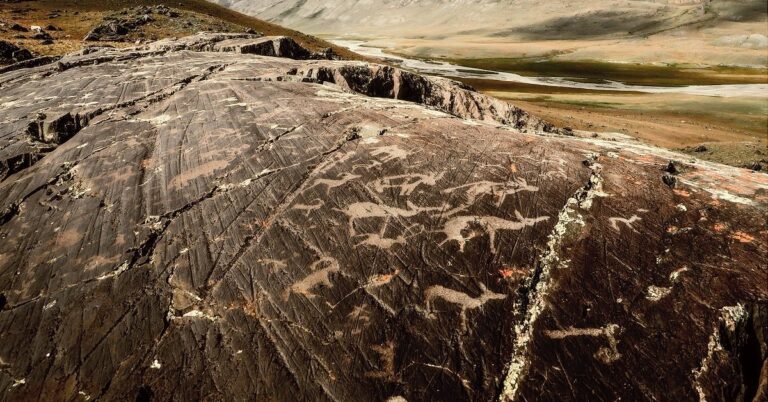
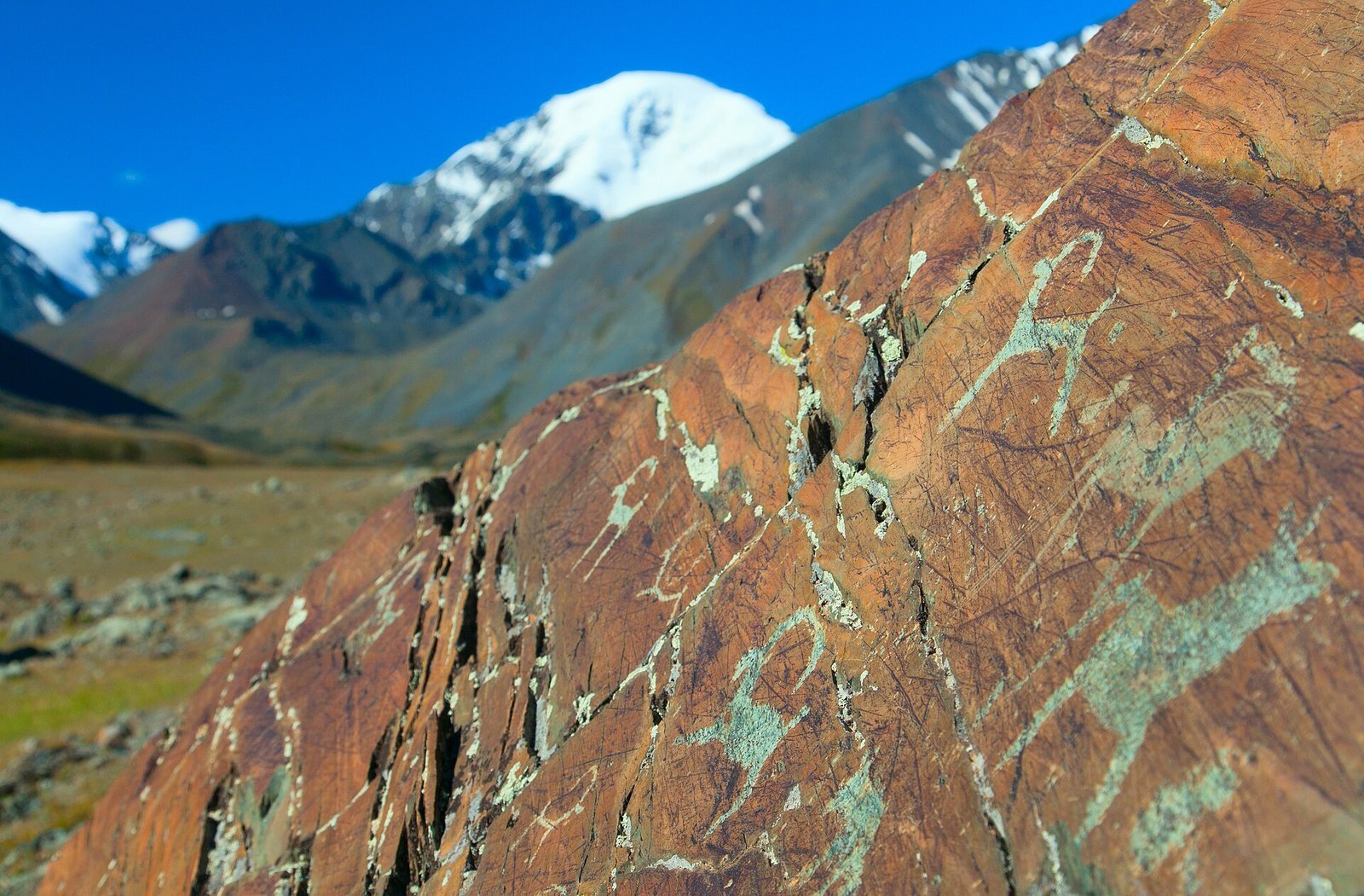
The engravings extend along both banks of the Yelangash River for about 18 kilometres, across a belt up to 1.5 kilometres wide. They appear on separate boulders and exposed bedrock shaped by a glacier during the Pleistocene, a geological epoch in which the glacier was present. The carvings are concentrated on rounded, level, smoothed rock surfaces marked by pronounced glacial grooves.
Figures and scenes
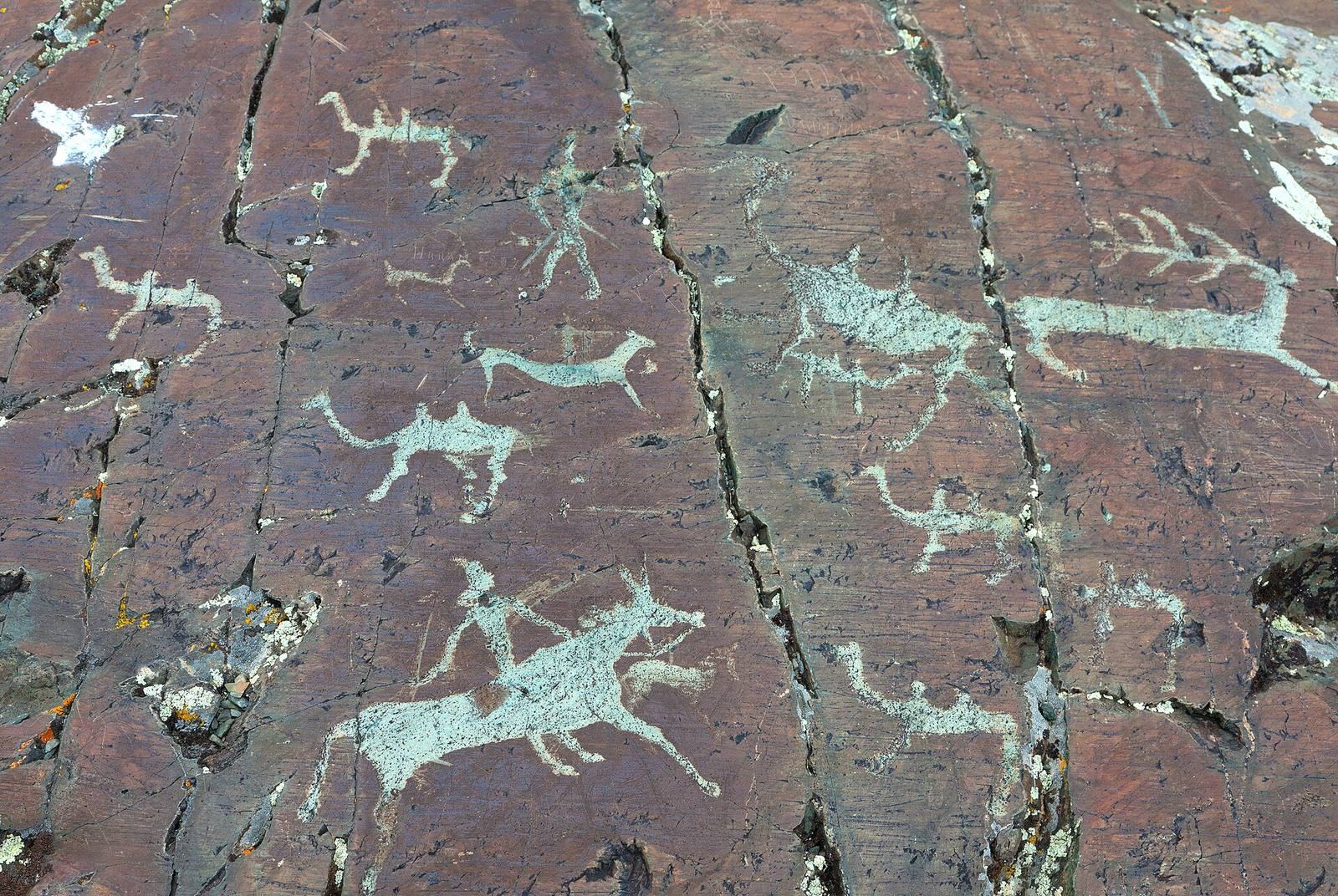
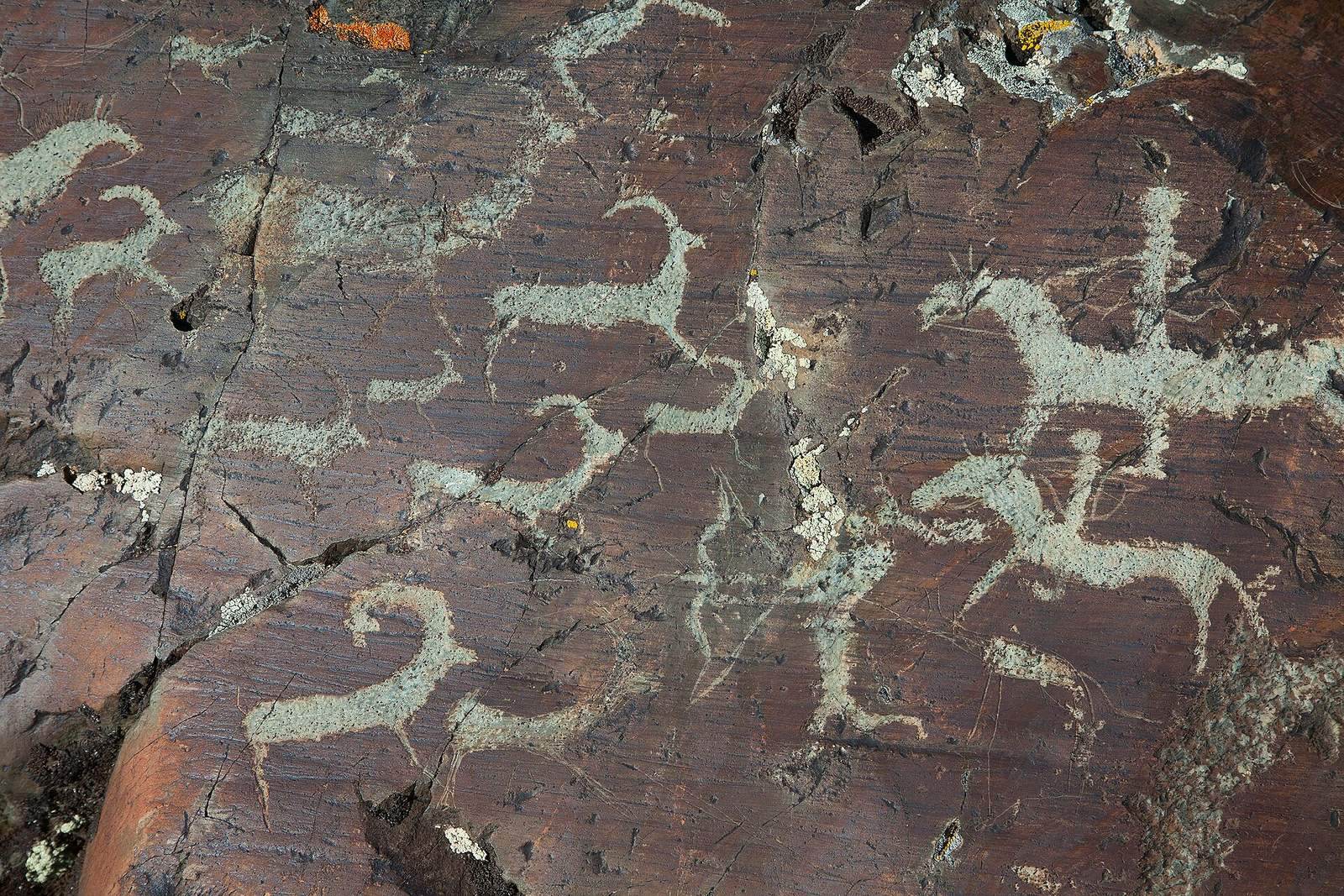
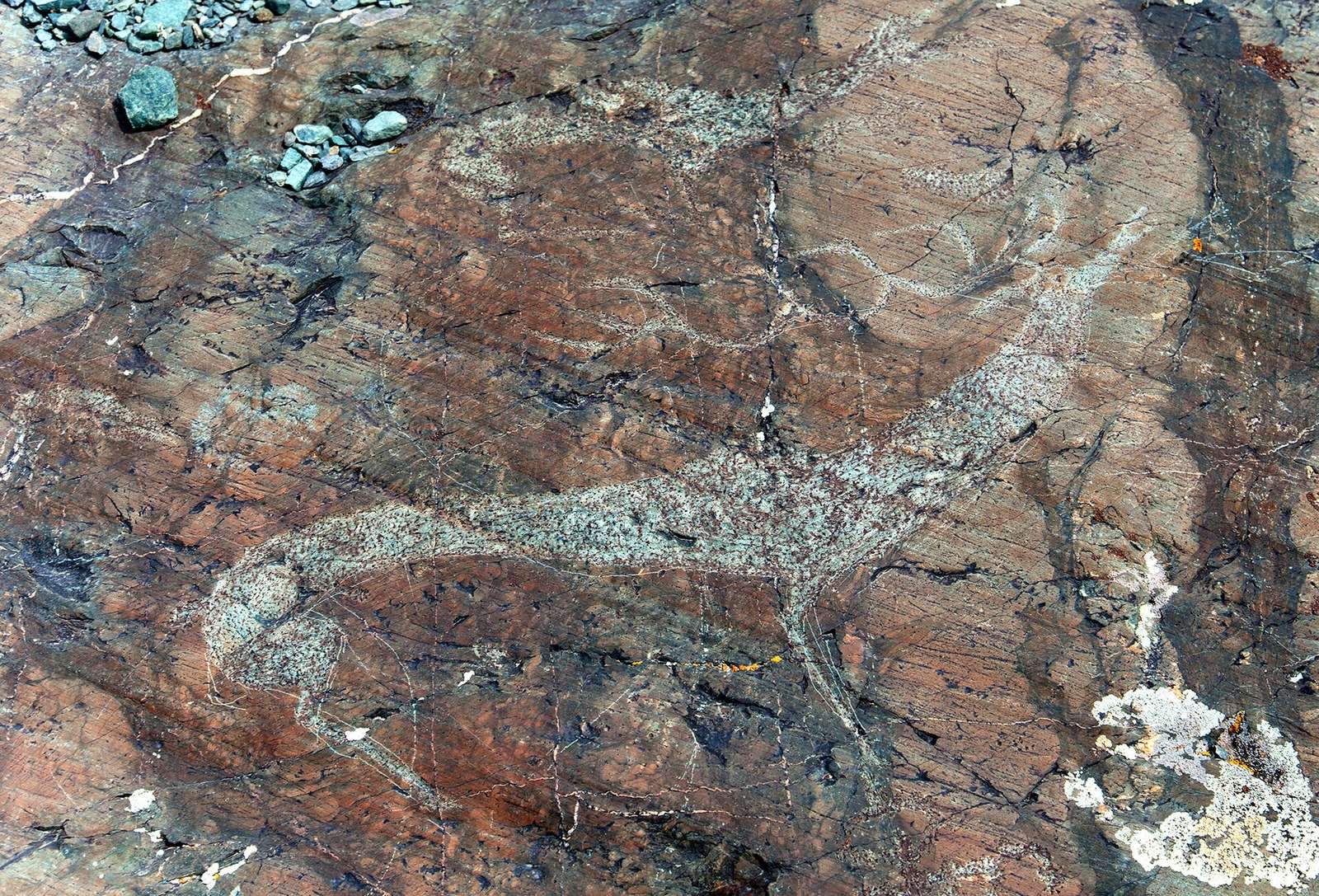
The images include hunting scenes and wild and domestic animals, among them goats, rams, moose, deer, maral deer, bulls, yaks, horses, camels, and snow leopards. Riders, archers, warriors, and pack animals also appear, alongside fantastical creatures.
Chariots and vehicles
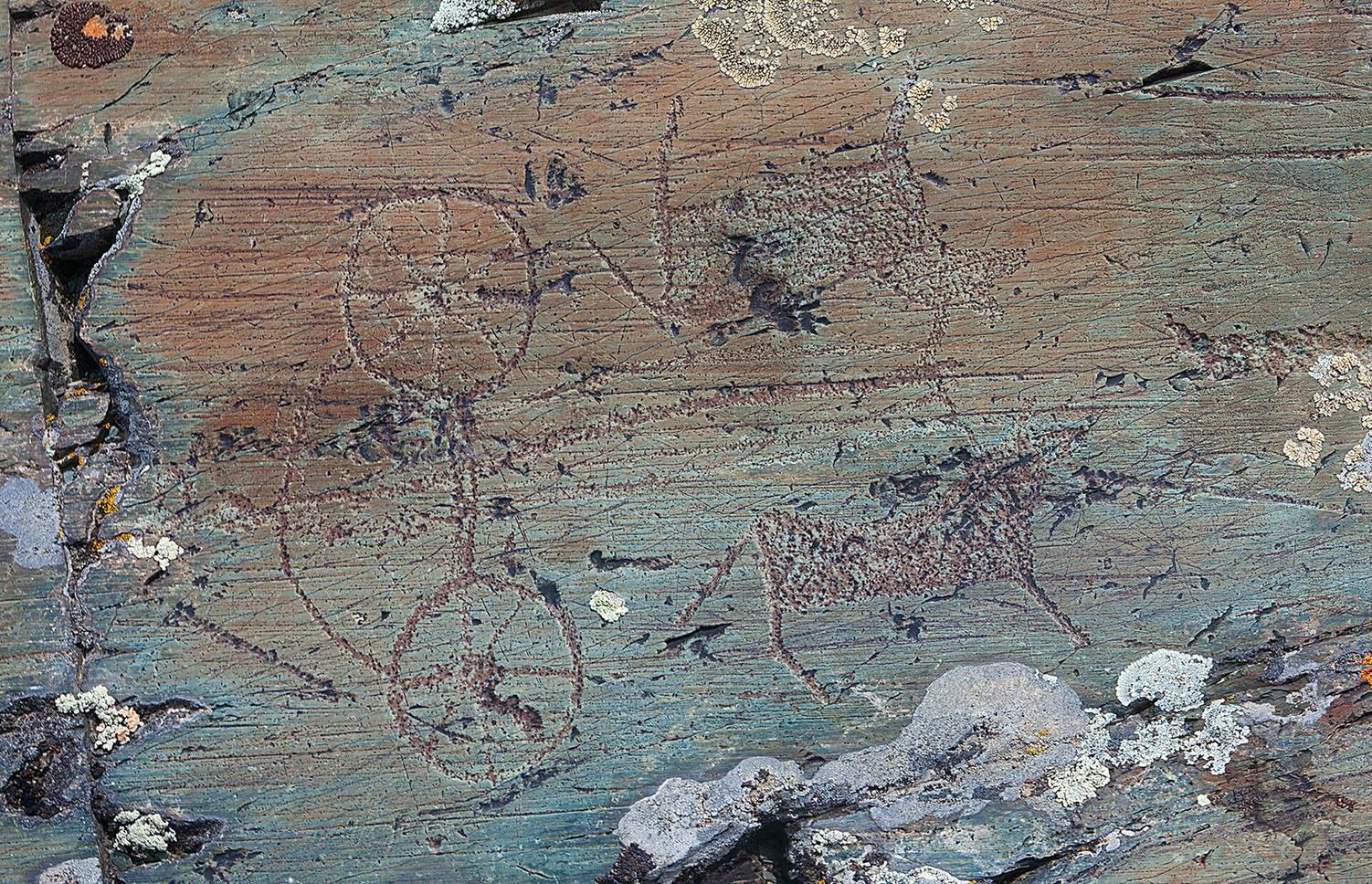
More than 80 engravings show chariots and other vehicles. The chariots use a flattened form of depiction associated with Bronze Age rock art in the mountain-steppe region of Eurasia. These images have been attributed to the Karasuk culture, a Bronze Age culture of southern Siberia that preceded the Scythian period.