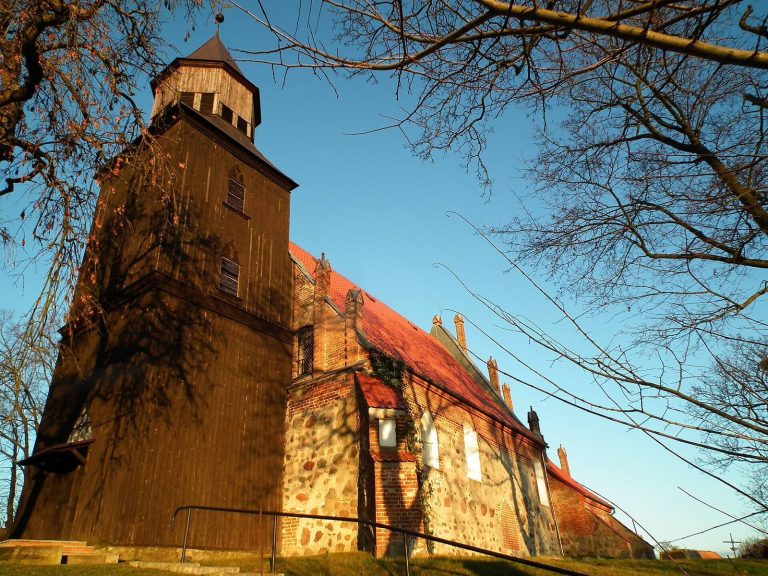
Saint George and Providence of God Church in Tychnowy: A Roman Catholic Parish Church
Site at a Glance
- Popularity
- Very Low
- Country
- Poland
- Primary era
- Medieval
- Eras represented
- Medieval, Early Modern, Modern
- Civilizations
- Kingdom of Prussia, Polish–Lithuanian Commonwealth, Teutonic Order
- Site type
- Religious
- Remains
- Church
On this page10 sections
History
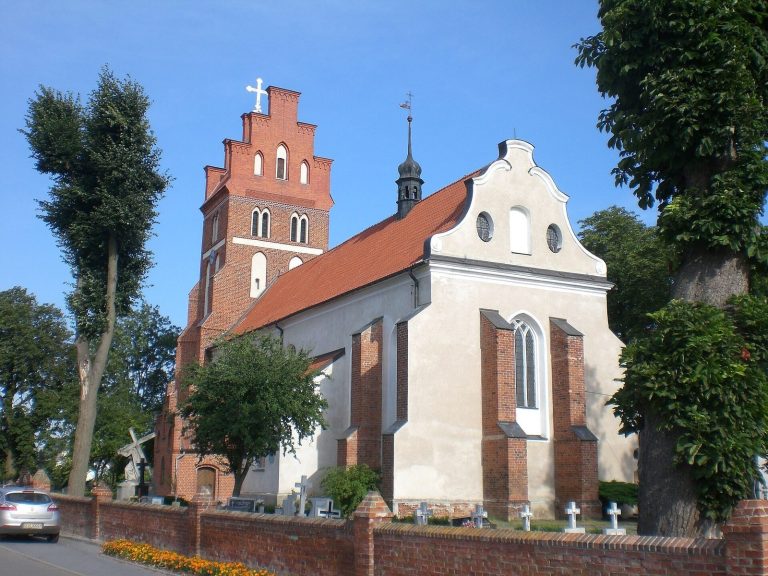
The Saint George and Providence of God Church in Tychnowy, Poland, is a Roman Catholic parish church in the Gothic style, a medieval European architectural tradition. Completed in the 14th century, it is the oldest church in Lower Powiśle. It belongs to the Diocese of Elbląg, a church district overseen by a bishop, and is dedicated to Saint George; the parish is named for Saint George and Divine Providence.
Early development
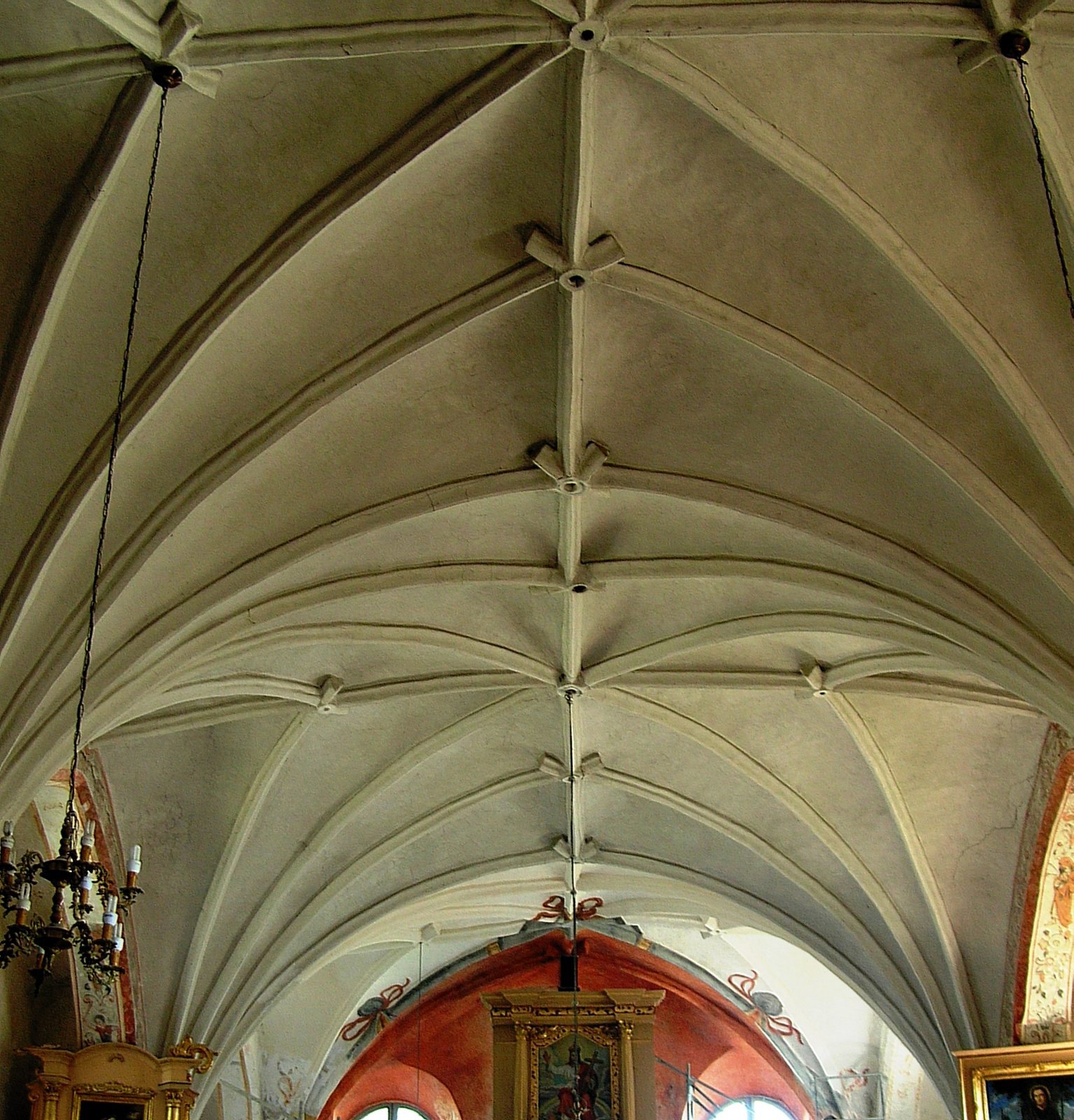
Around 1600, the church’s interior was remodeled and its star vault, a ribbed ceiling whose ribs form a star pattern, was added. Stanisław Konarski, castellan of Gdańsk, a high-ranking territorial official, and voivode of Pomerania, a senior provincial official, is identified as the church’s founder.
Parish life and nineteenth-century changes
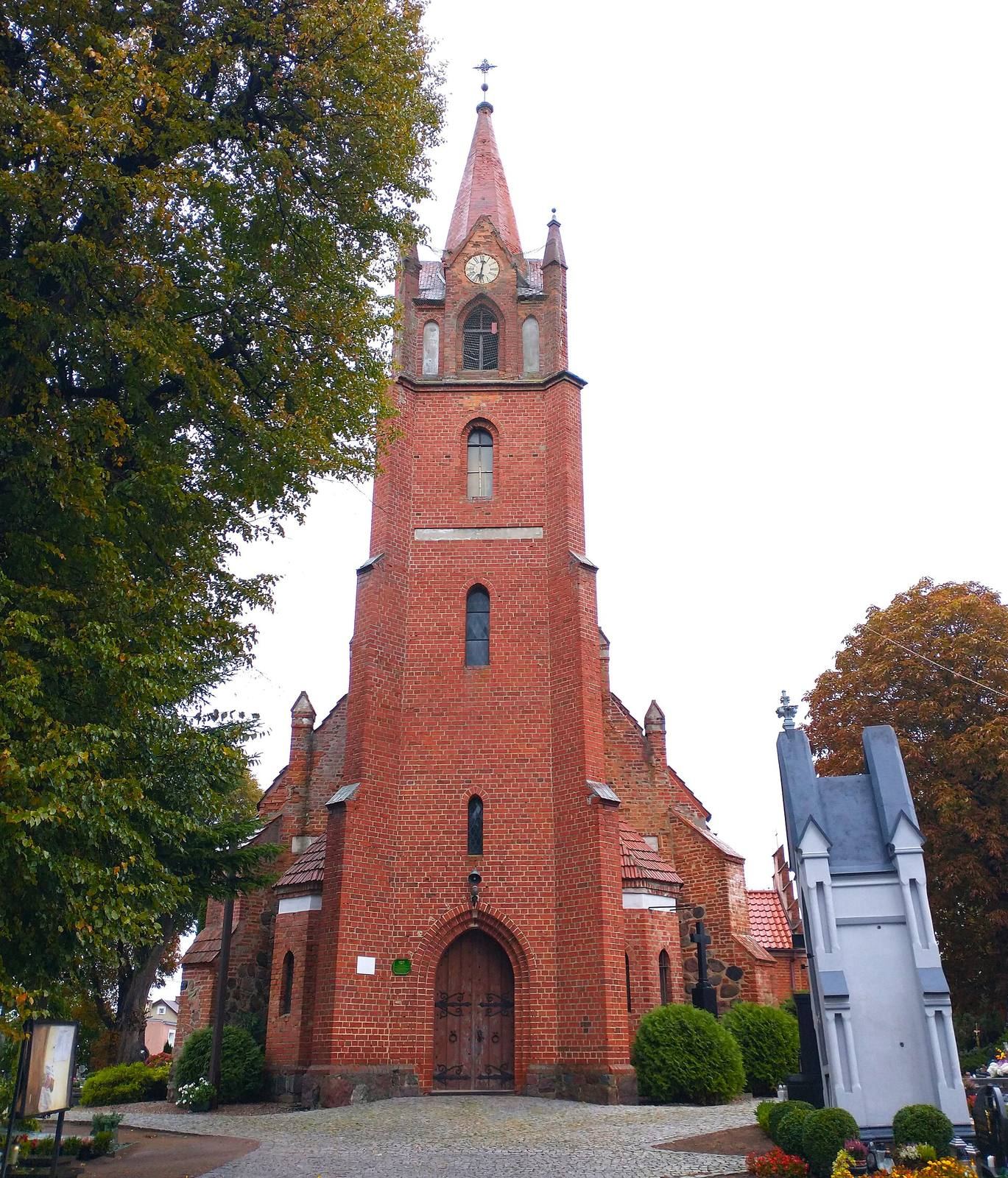
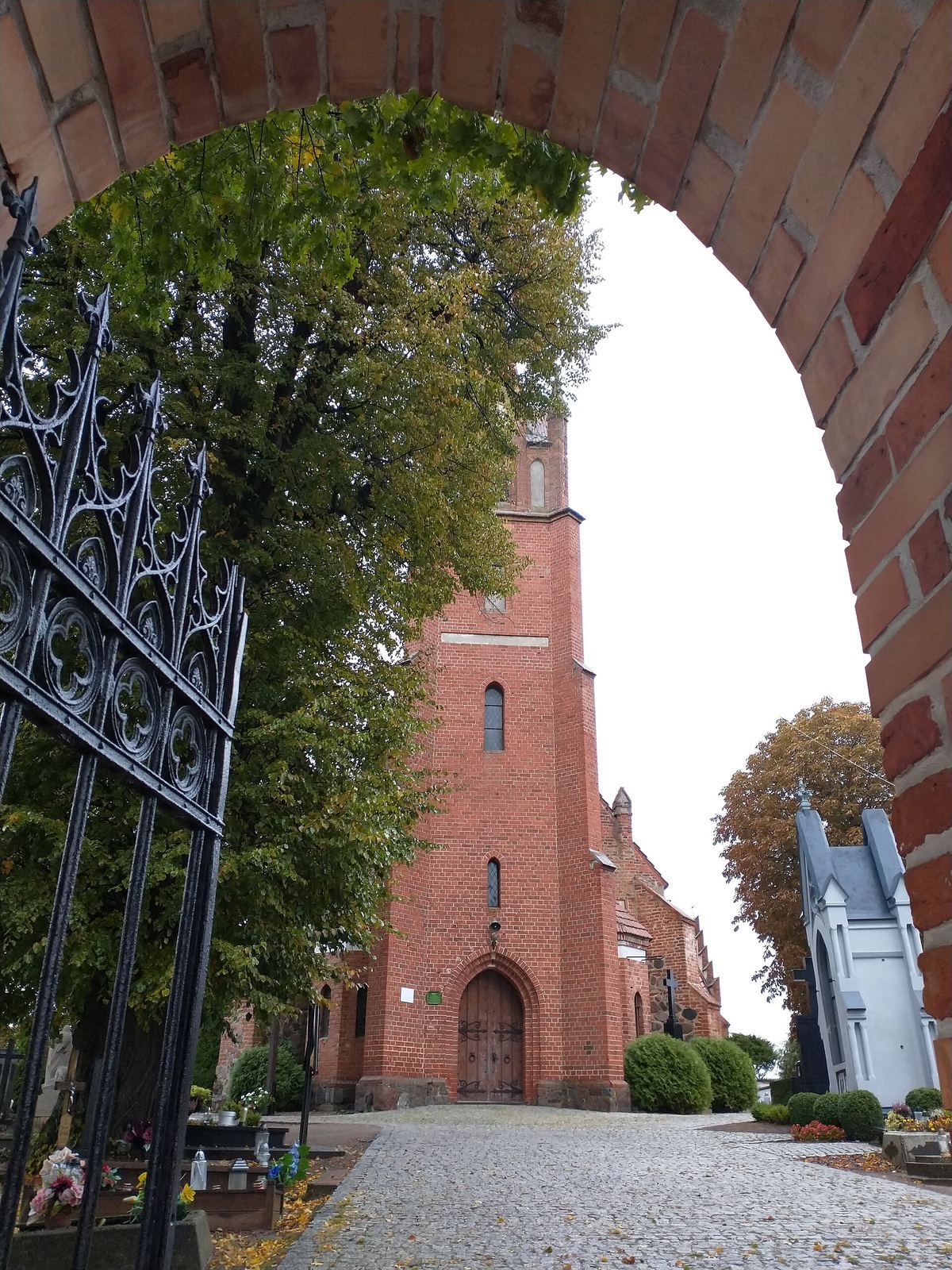
A tower and porch were added in 1869. The church also became an important center of Polish identity in the region, with services conducted in Polish. Piotr Baranowski served as parish priest for 64 years. He taught Polish and established a hospital for the poor, a library, and a Polish reading room at the church. These activities drew negative reactions from Prussian authorities.
Remains
Church structure
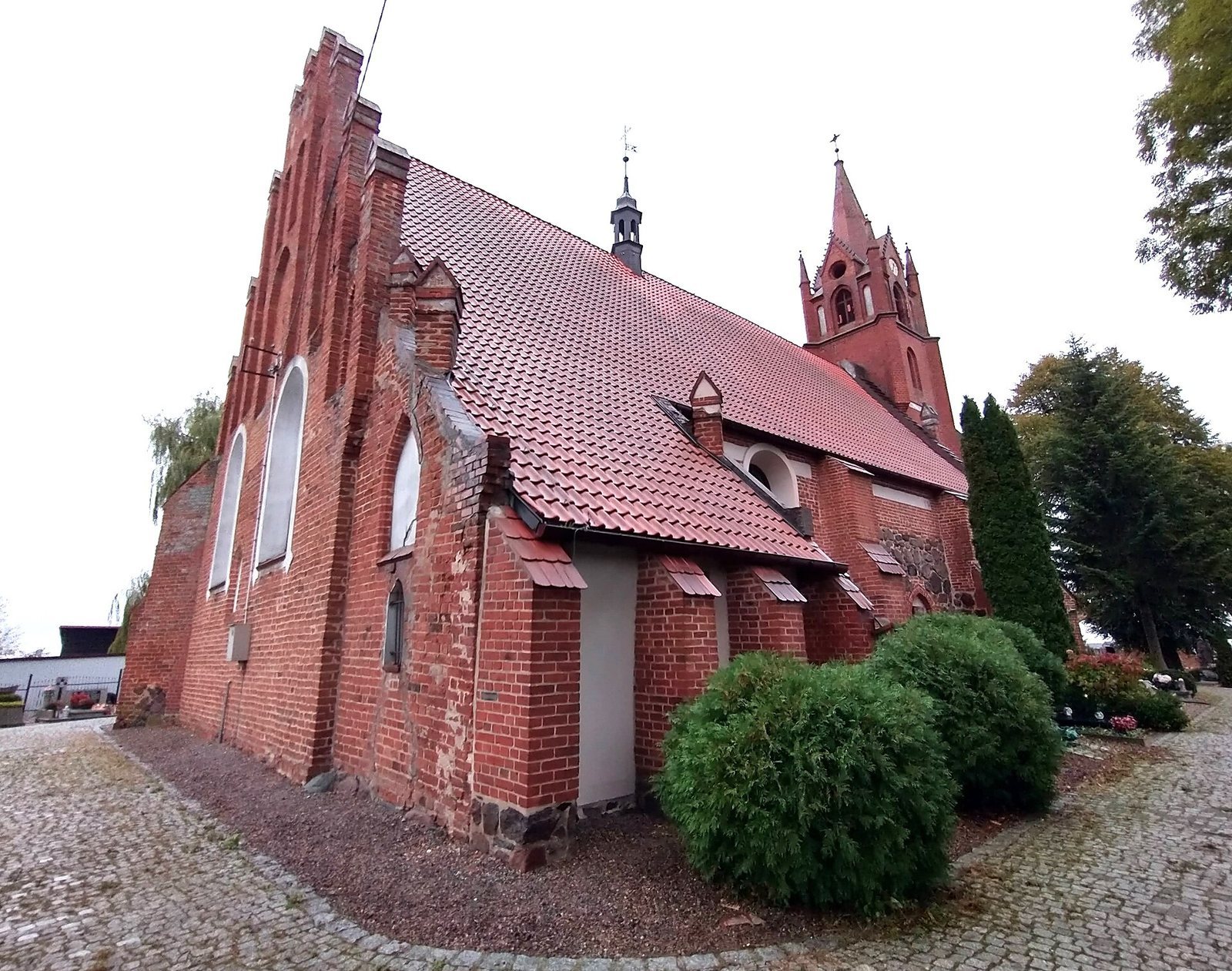
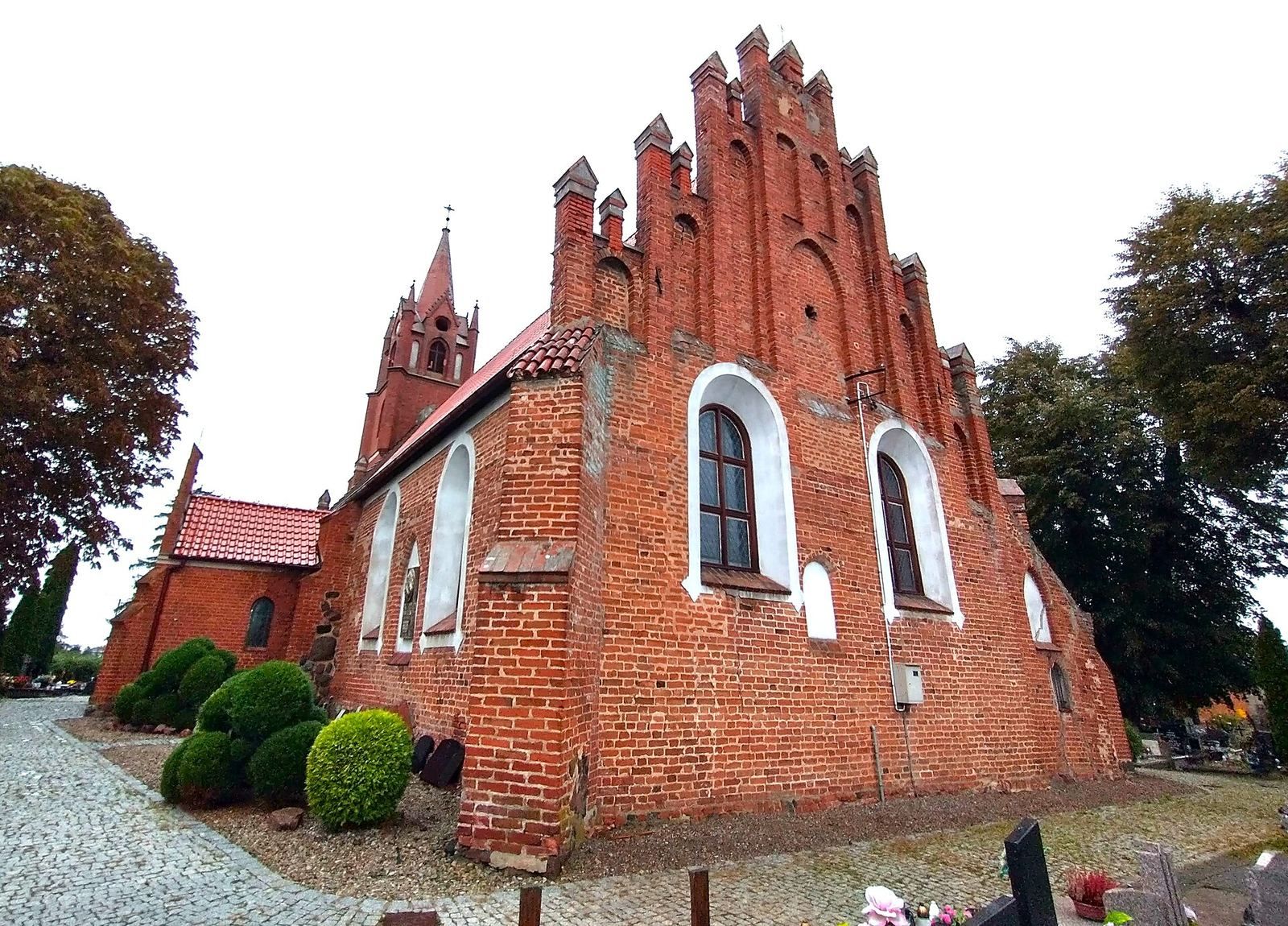
The brick church has a rectangular plan and a Gothic design. It has one tower, and a porch was added in 1869. The eastern gable rises in stepped form and is ornamented with pinnacles, small upright decorations, and blind panels, recessed areas without openings. A plaque set into the exterior commemorates Pope John Paul II’s pilgrimage through Warmia, Masuria, and Powiśle on 6 June 1991.
Interior furnishings
Vault and altars
The star vault rests on stone supports. Carved cartouches, framed ornamental panels, on the supports bear Polish noble coats of arms. The vault was probably made by an artist associated with the circle of Gdańsk architect Bartłomiej Piper. Three altars stand in the church. The 18th-century main altar has curtain-style decoration and an image of Our Lady of the Rosary, a Catholic title for Mary associated with the Rosary. The two side altars date to 1840 and 1853.
Pulpit and music gallery
The 18th-century pulpit has richly painted decoration. The music gallery, also dating to the 18th century, rests on two painted columns. Seven paintings inspired by music decorate its railing. The church’s confessionals are likewise from the 18th century.
Other furnishings
Other furnishings include a granite baptismal font from the 14th century, a candlestick dated 1584, and a 17th-century box fitted with metal.
Cemetery
A cemetery surrounds the church. Its features include a gate, a small shrine, historic gravestones, and tall vegetation. The gate and shrine are in the Neo-Gothic style, a later revival of Gothic forms, and date to the second half of the 19th century.