San Martino a Mensola: A Roman Catholic Church in Florence
Site at a Glance
- Popularity
- Medium
- Country
- Italy
- Primary era
- Medieval
- Eras represented
- Medieval, Modern
- Civilizations
- Carolingian, Italian, Republic of Florence
- Site type
- Religious
- Remains
- Church
On this page12 sections
History
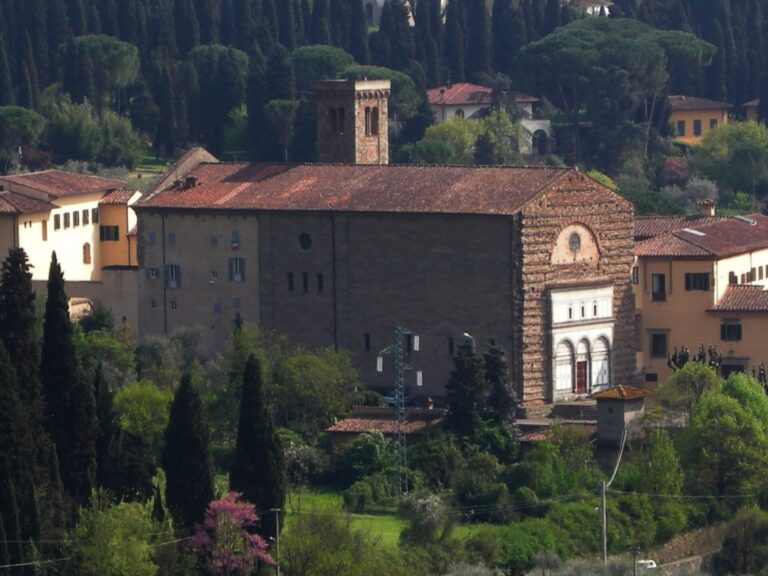
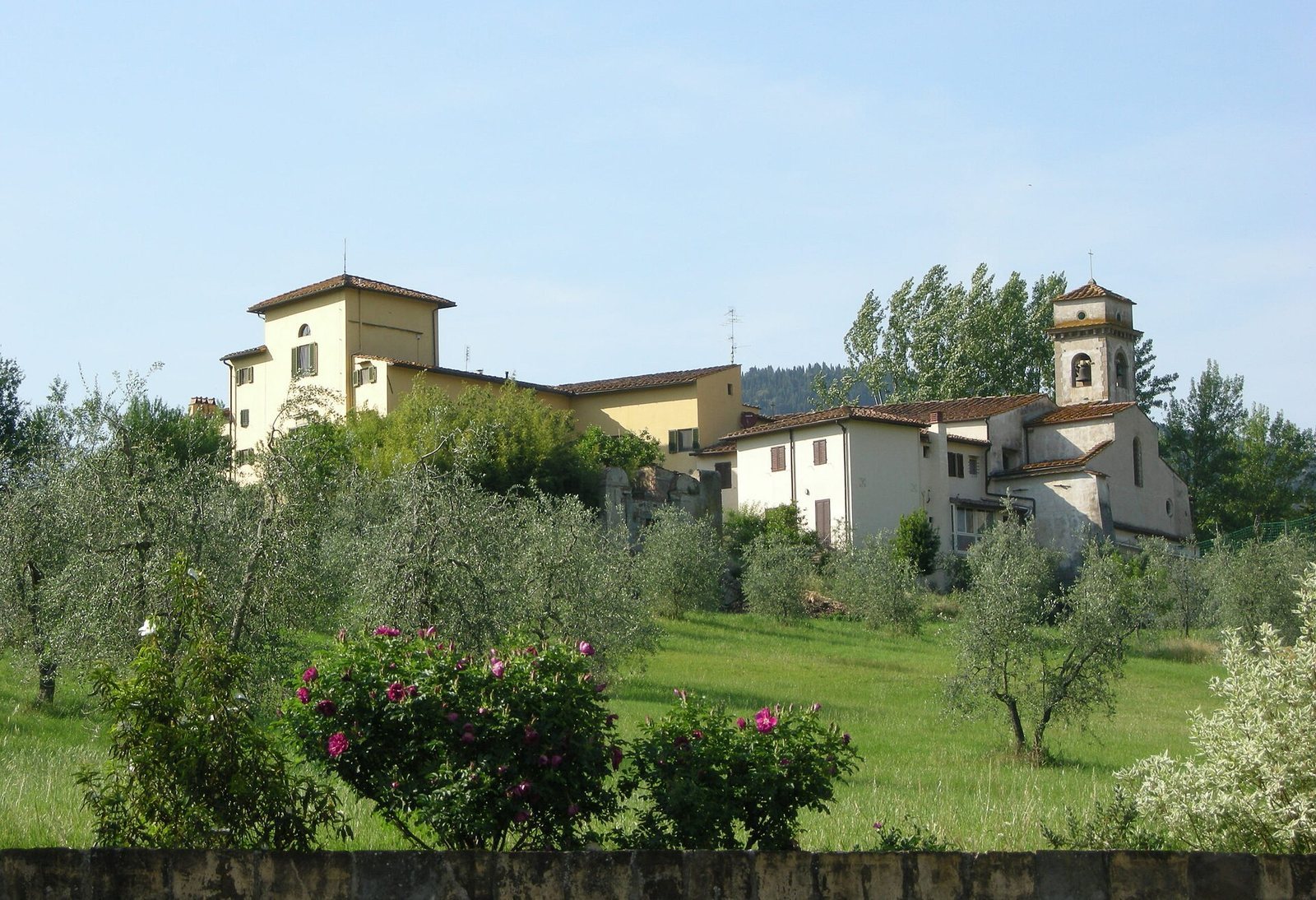
San Martino a Mensola is a Roman Catholic church dedicated to Saint Martin of Tours, in northeastern Florence, Italy, near the boundary with Fiesole. The present church dates to the fourteenth century and stands over an earlier church. Its history reaches back to an oratory dedicated to Saint Martin, rebuilt in 816 by Saint Andrew of Scotland, an early medieval Christian saint.
Medieval church and Renaissance renovation
From the eleventh century, monks of Badia Fiorentina, a historic Florentine abbey, held the church’s patronage, meaning they supported and oversaw it. Between 1451 and 1472, they carried out a major renovation in forms associated with Filippo Brunelleschi and the early Renaissance. The design may have been by Giusto d’Antonio. Later patrons from the Zati, Gherardi, and Betti families added works of art to the church.
Diocesan transfer and restoration
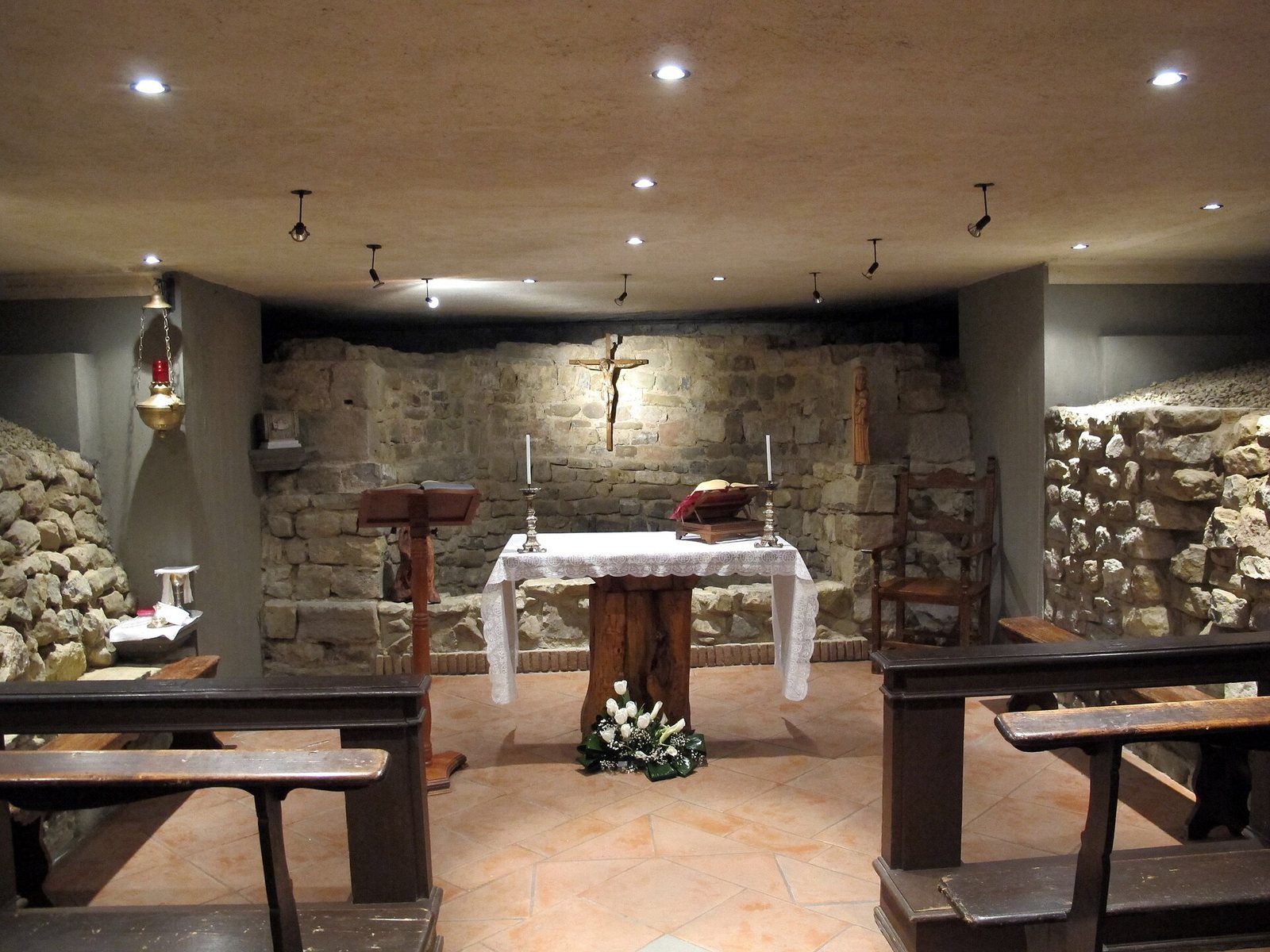
On 11 May 1784, Pope Pius VI issued a formal papal document transferring the church from the Archdiocese of Florence to the Diocese of Fiesole, a bishop’s territorial jurisdiction. In 1995, architect Massimo Ricci led a comprehensive consolidation and restoration. The work reshaped the interior and altars and uncovered and restored the ninth-century church beneath the present building, identified with the crypt.
Remains
Church structure
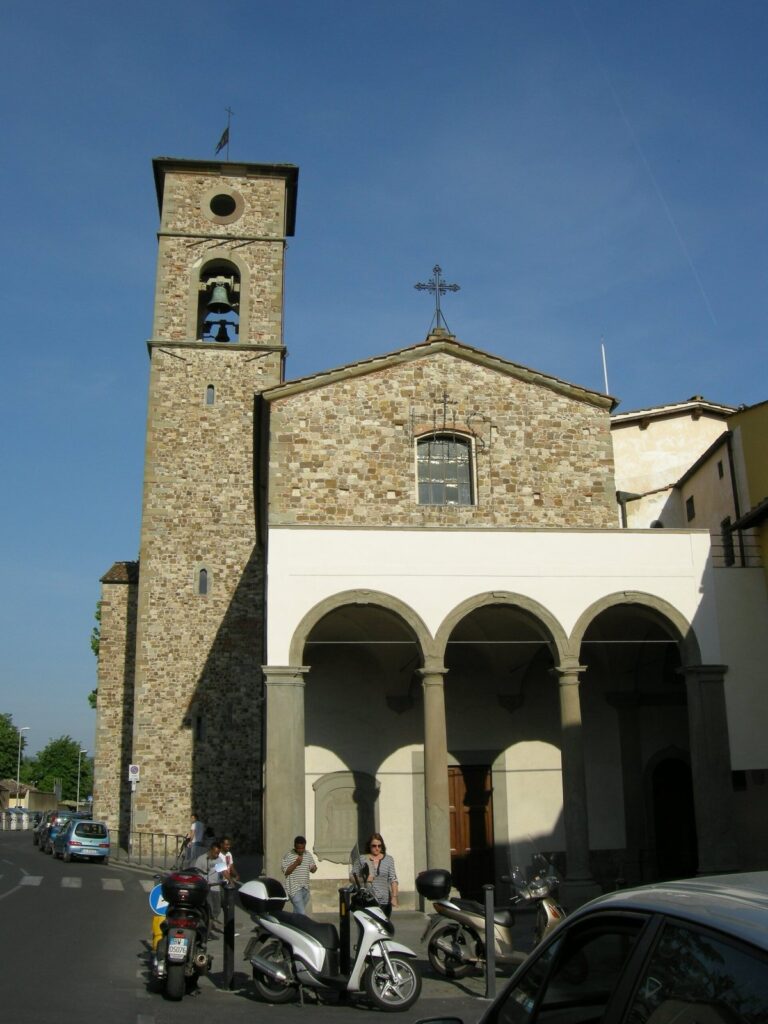
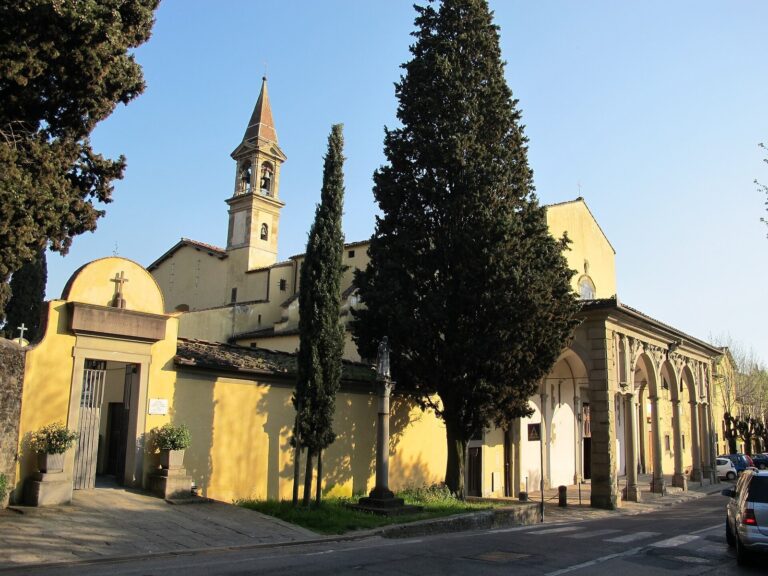
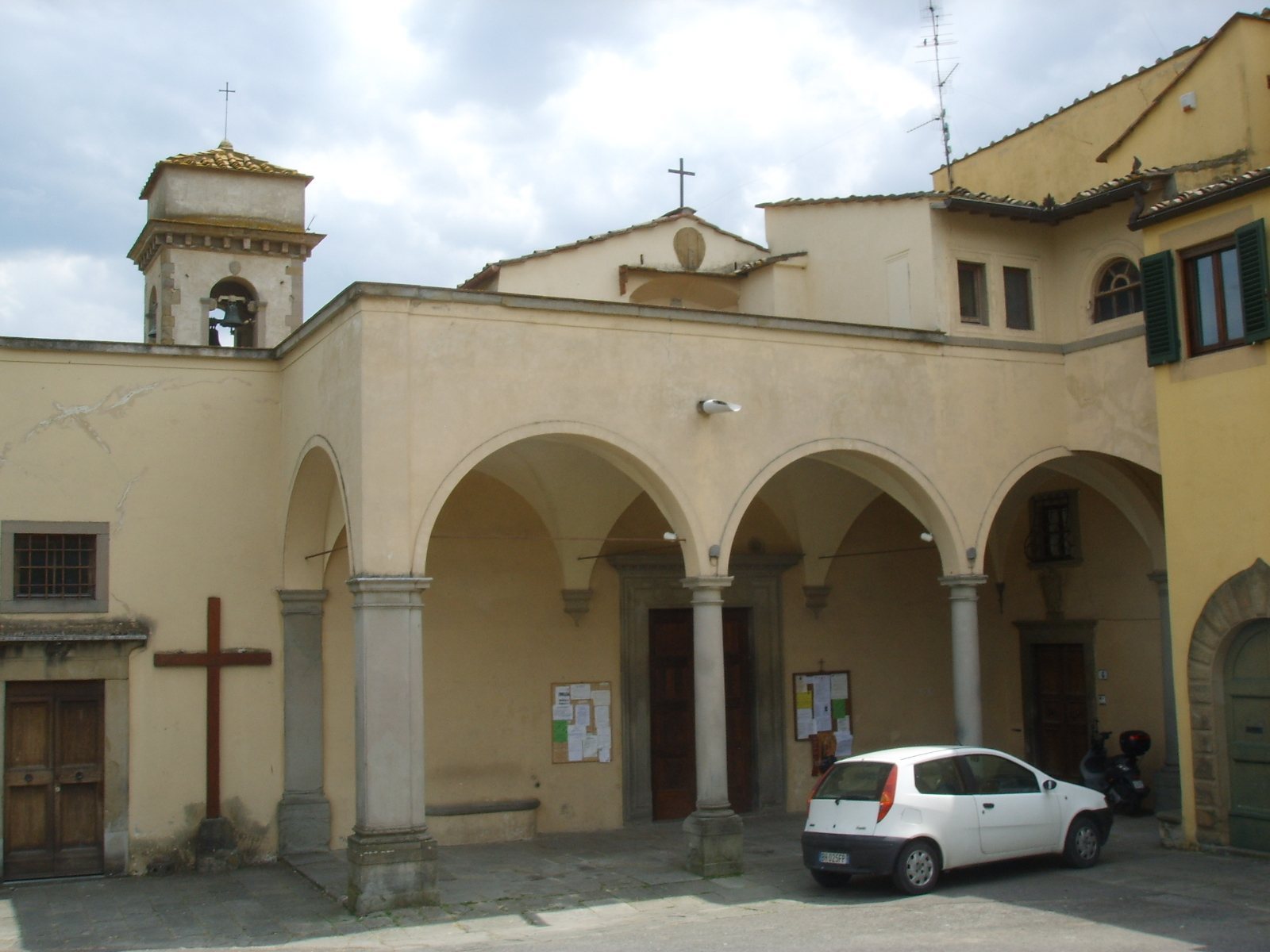
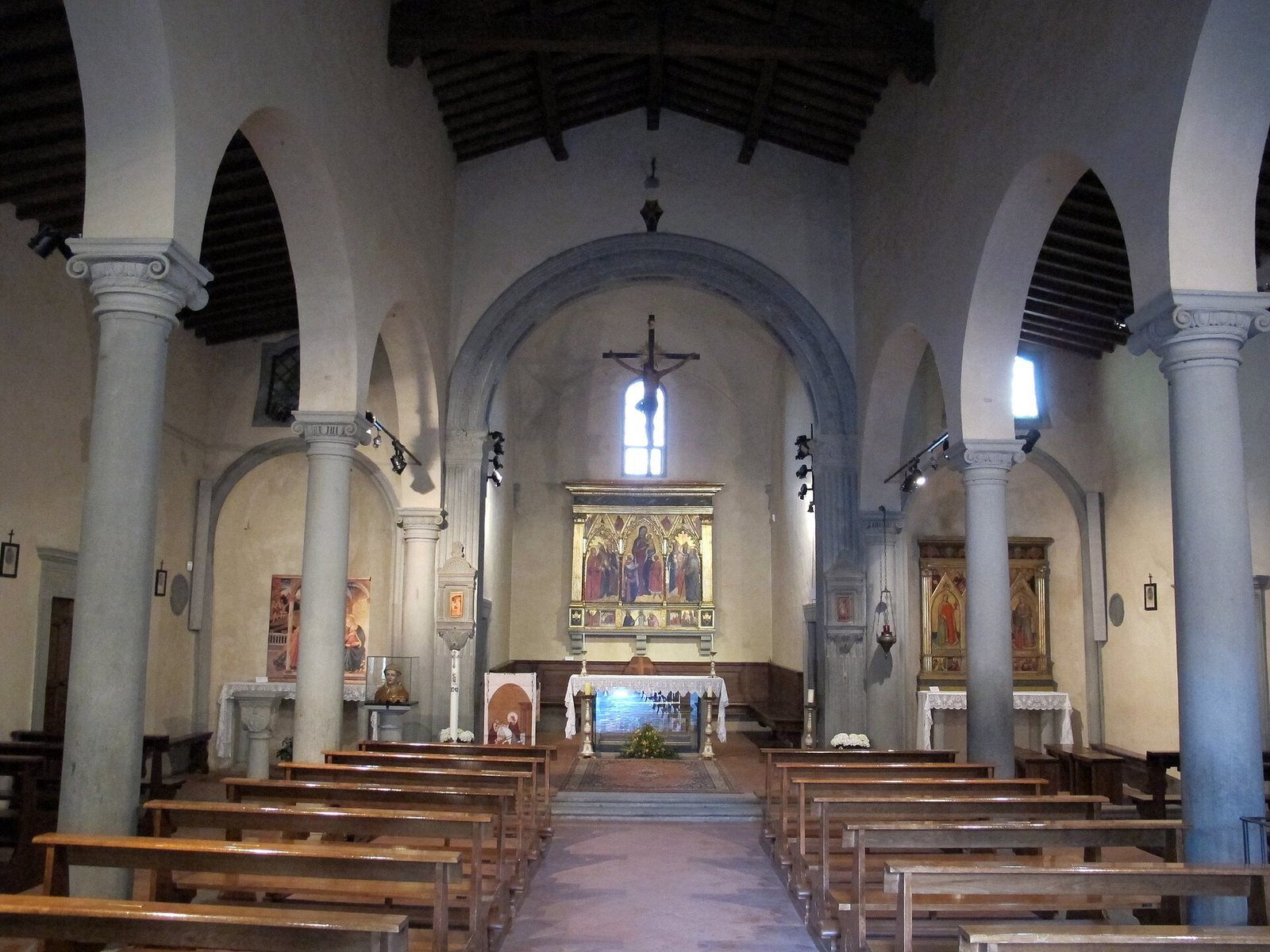
The present church is built over the remains of the earlier church. In front of its façade, a covered portico is divided into three sections beneath cross vaults, ceilings formed by intersecting barrel-shaped vaults. Three round arches rest on Tuscan columns, a classical column type. Inside, two rows of arches on Ionic columns, another classical form, divide the church into three naves, its principal lengthwise spaces. The naves have exposed-beam ceilings. The central nave ends in a four-sided apse, the area at the end of a church, covered by a sail vault that curves over the space.
Altars and paintings
Altars near the entrance
Two side altars stand near the entrance. The right-hand altar has a painting attributed to Cosimo Rosselli, while the left holds Madonna and Child with Saints by Neri di Bicci.
Tomb beneath the high altar
The tomb beneath the high altar was commissioned in 1389 by Leonardo di Jacopo di Buonafede for Saint Andrew of Scotland. Painted panels on its front show episodes from the saint’s life. Their painter is unidentified and is considered close to Agnolo Gaddi.
Presbytery polyptych
A polyptych, a painting made of several panels, stands on the presbytery’s rear wall. The work, Madonna and Child with Saints, was painted in 1391 by the Master of San Martino a Mensola, an artist whose identity is uncertain and who has tentatively been identified as Francesco di Michele. Four figures added when the work was reframed, Abraham, David, Noah, and Moses, are by Cosimo Rosselli.
Altars at the ends of the naves
At the far end of the right nave, an altar holds Taddeo Gaddi’s Madonna and Child with Two Female Saints, dated 1350. The altar at the end of the left nave holds an Annunciation attributed to Zanobi Machiavelli.
Crypt
The crypt lies beneath the present church and is identified with the ninth-century church. Near its altar is a reliquary bust of Saint Andrew of Scotland, a bust-shaped container for sacred relics. It dates from the same period as the tomb beneath the high altar and bears the Buonafede family coat of arms.
Pipe organ
A pipe organ stands on the choir loft above the entrance. Completed in 1803, it is Pietro Agati’s only newly built instrument. Its original tonal characteristics remain intact. The organ has eight stops, which control sets of pipes, one keyboard, and a lectern-style pedalboard.