Green Gate: A Dutch-Flemish Mannerist City Gate in Gdańsk
Site at a Glance
- Popularity
- High
- Country
- Poland
- Primary era
- Early Modern
- Eras represented
- Early Modern
- Civilizations
- Kingdom of Poland
- Site type
- Military
- Remains
- Gate
On this page4 sections
History
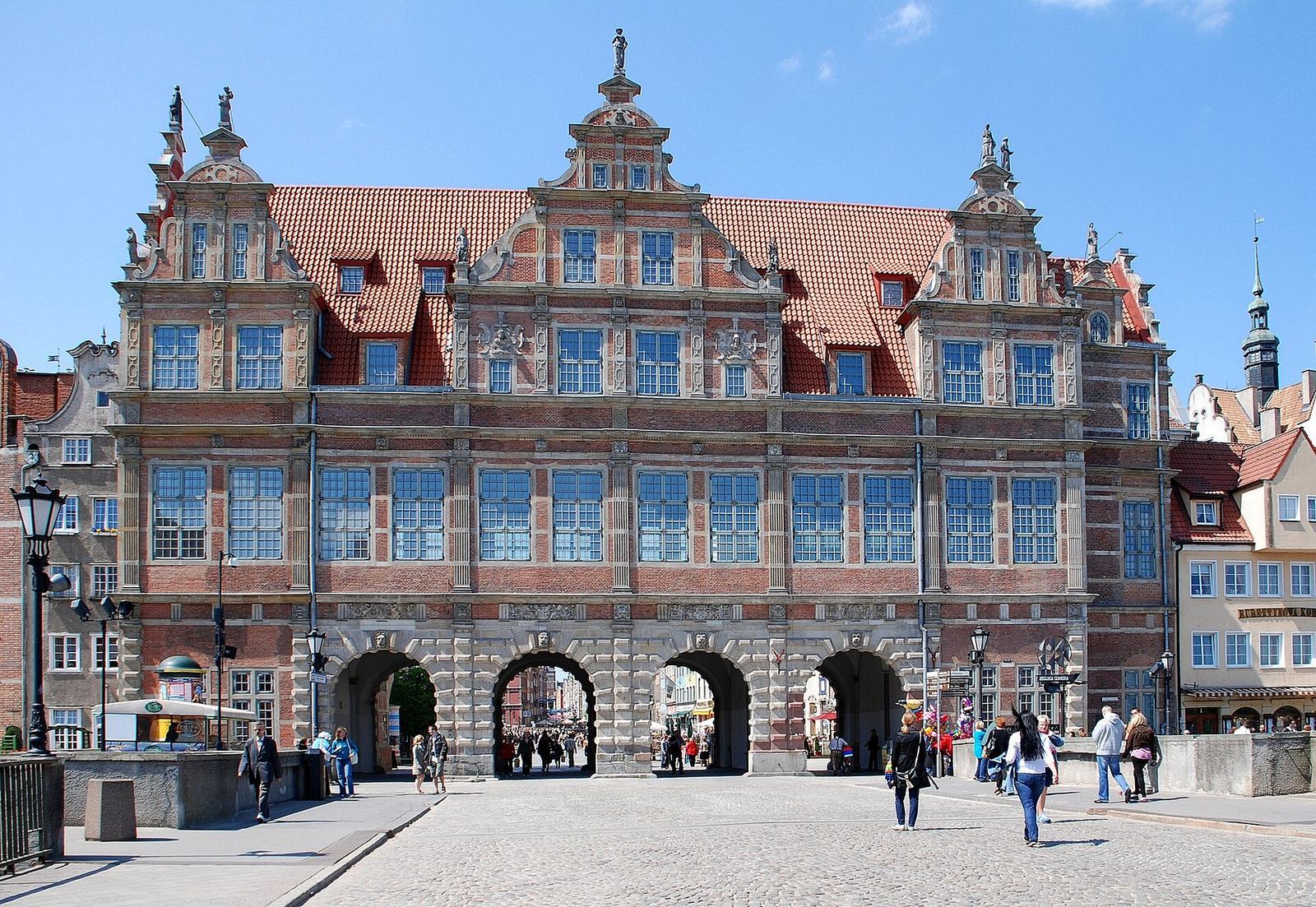
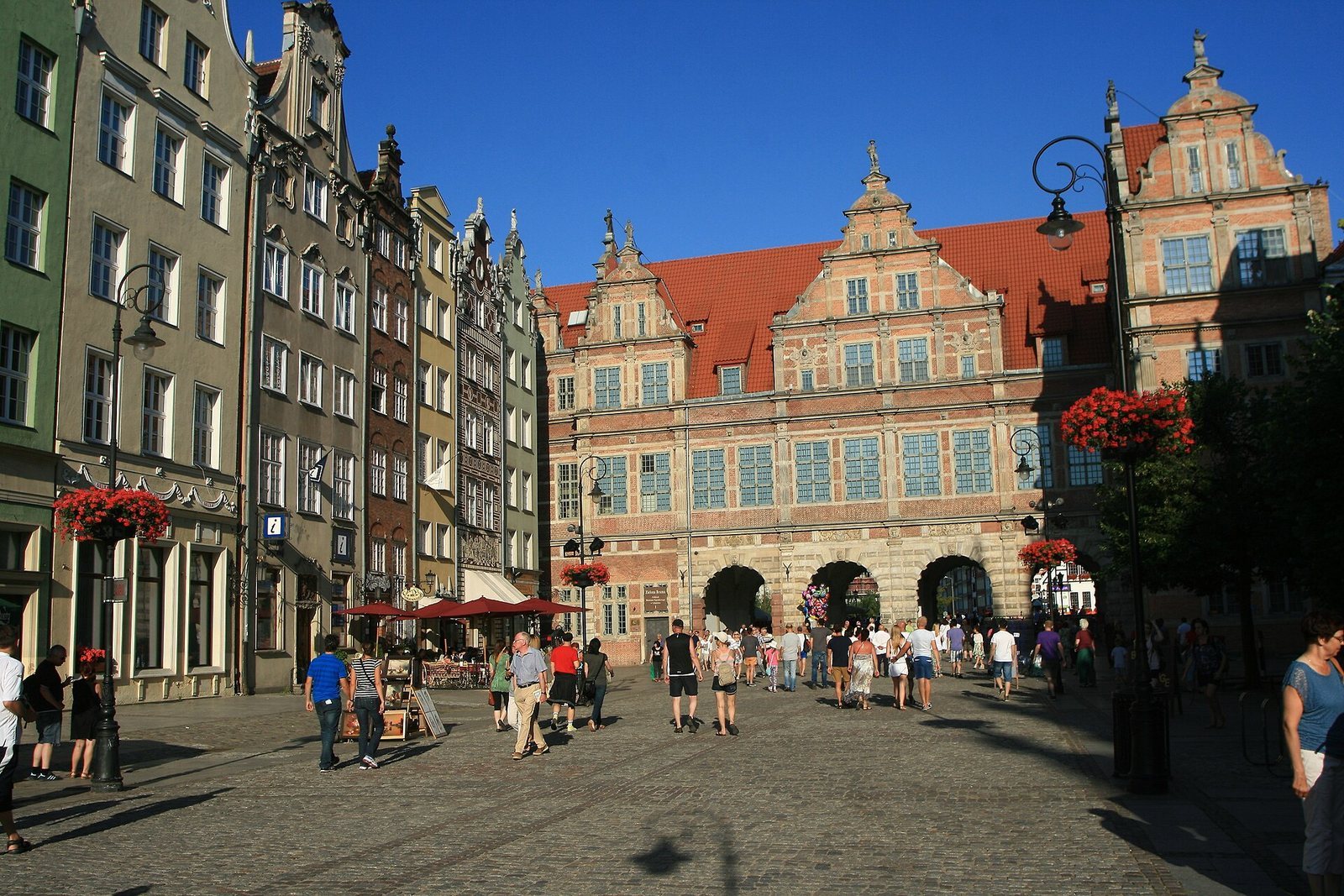
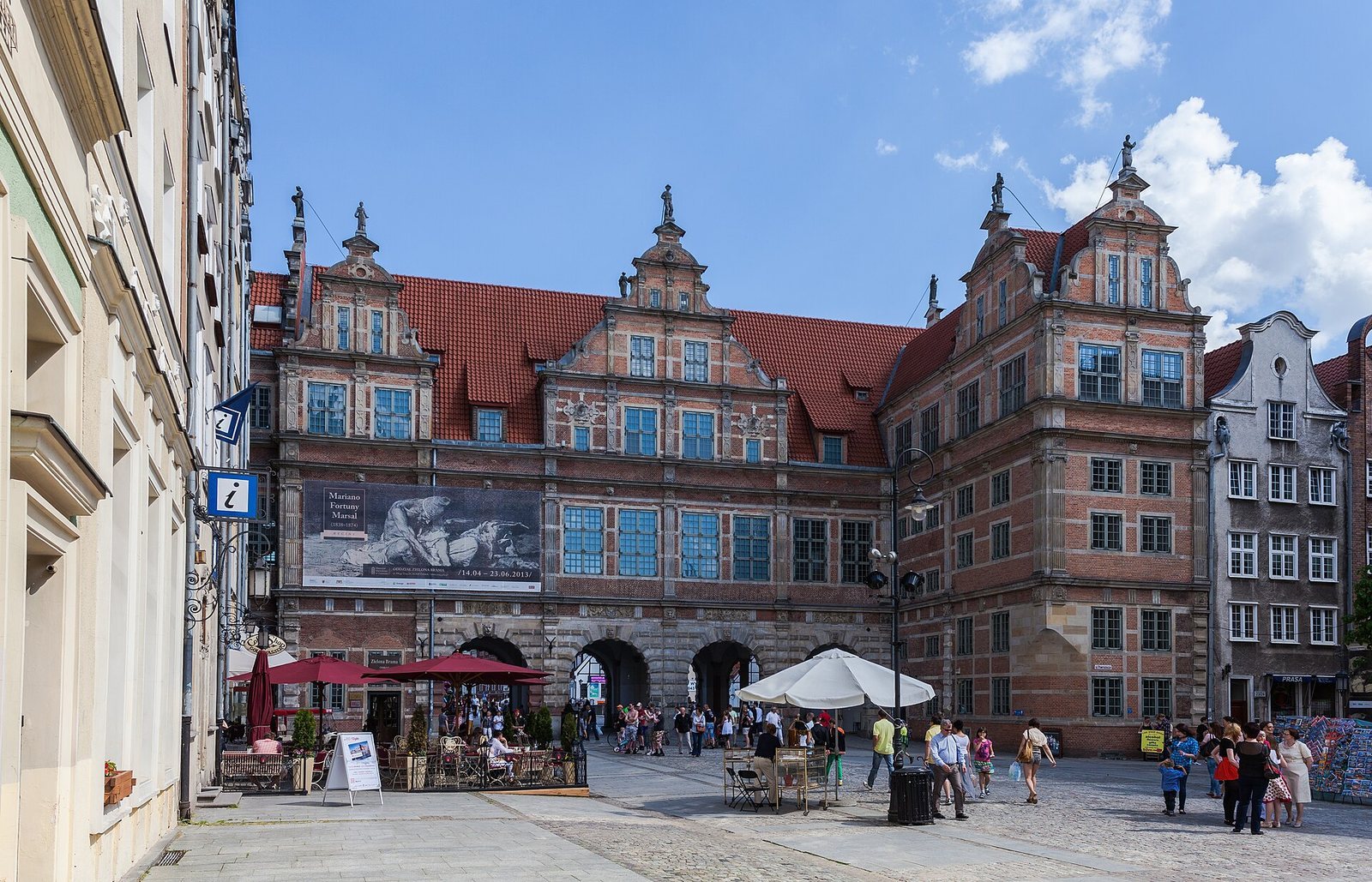
The Green Gate is a 16th-century city gate in Gdańsk, Poland, built between 1564 and 1568 in Dutch-Flemish Mannerist style. It was intended as a residence for Poland’s monarchs in the city, though no Polish king stayed there.
Early gate and royal residence
The Green Gate is mentioned as early as 1357, when it was known as the Cog Gate, and is probably Gdańsk’s oldest water gate. Its later rebuilding established the city’s first example of Dutch-Flemish mannerism, a late Renaissance style associated with the Netherlands and Flanders.
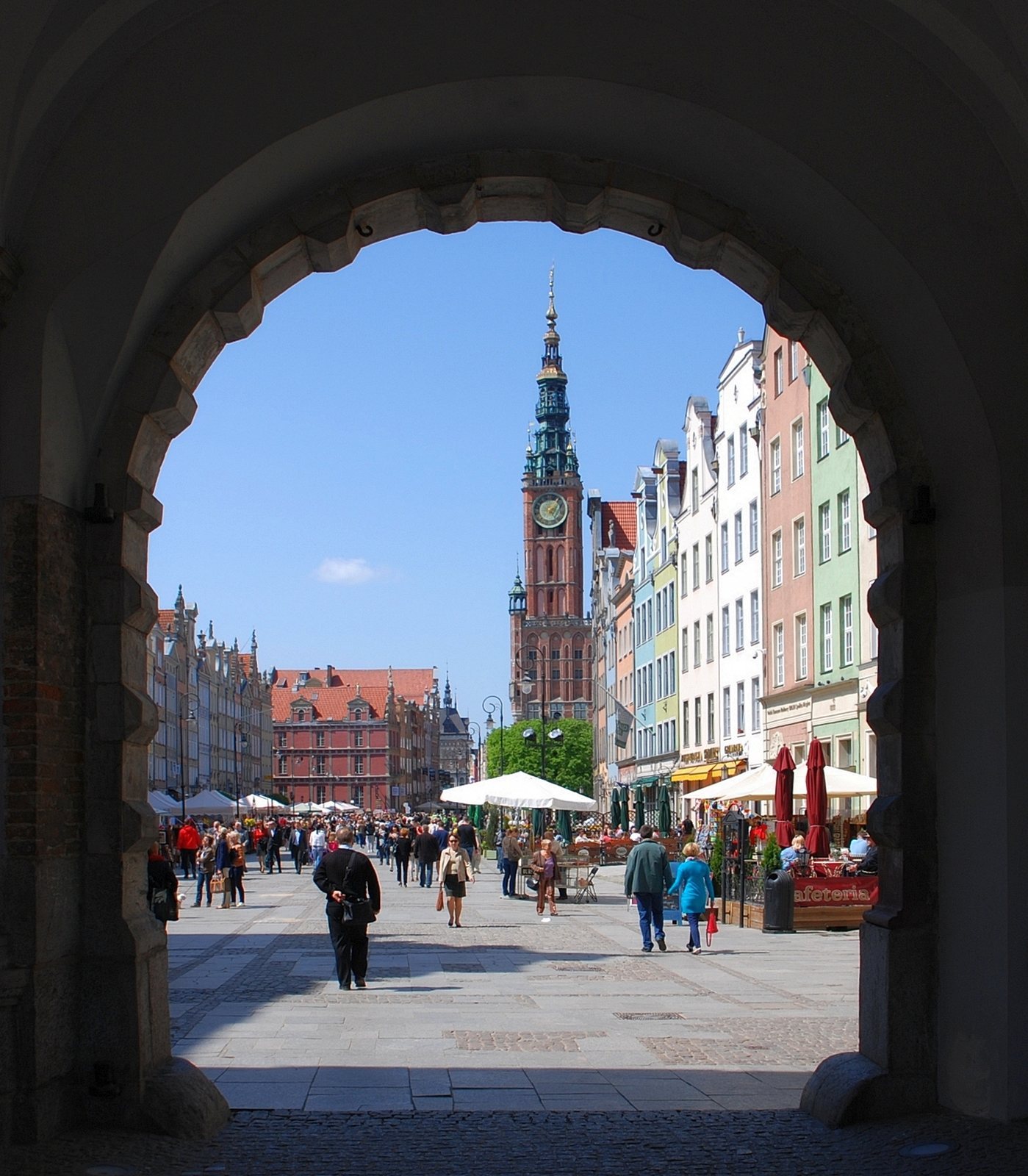
Together with the Golden Gate and Highland Gate, it formed part of the Royal Route along Long Street and Long Market. The route continued by way of Green Bridge, Stag Gate, Long Gardens and Żuławska Gate toward Elbląg and Königsberg. In February 1646, Marie Louise Gonzaga stopped at the gate while passing through Gdańsk. She later became queen of Poland, first as the wife of Władysław IV and then of John II Casimir.
Institutional uses and modern status
The gate later housed the Natural Sciences Society, a learned organization devoted to studying nature, before the society moved to Naturalists’ House. From 1880 to 1939, the West Prussian Provincial Museum occupied the building.
From 1999 to 2015, one room served as an office for former Polish president and Solidarity leader Lech Wałęsa. The office then moved to the European Solidarity Centre, a Gdańsk institution focused on the movement and its history. The gate now accommodates an exhibition branch of the National Museum in Gdańsk and the Gdańsk Gallery of Photography, as well as temporary exhibitions and events. It was registered as a monument in 1967 and included in the 1994 Historic Monument of Poland designation for “Gdańsk – city within the 17th-century fortifications.” This national designation recognizes sites of exceptional cultural importance.
Remains
The Green Gate forms part of Gdańsk’s city fortifications between Long Market and the Motława River. Its design was inspired by Antwerp City Hall and reflects Flemish architectural influence. Construction used unusually small bricks by Gdańsk standards, brought from Amsterdam in ships’ holds as ballast and known as Dutch bricks.