Church of the Assumption in Kamieniec Ząbkowicki: A Cistercian Parish Church
Site at a Glance
- Popularity
- Low
- Country
- Poland
- Primary era
- Medieval
- Eras represented
- Medieval, Early Modern
- Civilizations
- Habsburg, Holy Roman Empire, Kingdom of Bohemia
- Site type
- Religious
- Remains
- Church
On this page11 sections
History
The Church of the Assumption in Kamieniec Ząbkowicki is a Roman Catholic parish church in Poland, built by Cistercians in the fourteenth century. It stands within a former Cistercian abbey. The dedication honors the Assumption of the Blessed Virgin Mary, the Christian belief that Mary was taken into heaven, and St James the Greater, one of the apostles. The church serves the parish of the same dedication in the Kamieniec Ząbkowicki deanery of the Diocese of Świdnica.
Cistercian construction
The Cistercians, a Catholic monastic order that developed from the Benedictine tradition, built the church on the site of an earlier Augustinian church. Its presbytery, the area around the main altar, and transept, the crosswise arm of the church, date to the first half of the fourteenth century. The nave, or main body, was built in the second half. Master Johannes also participated in the work as a master responsible for the building project.
Baroque alterations and heritage status
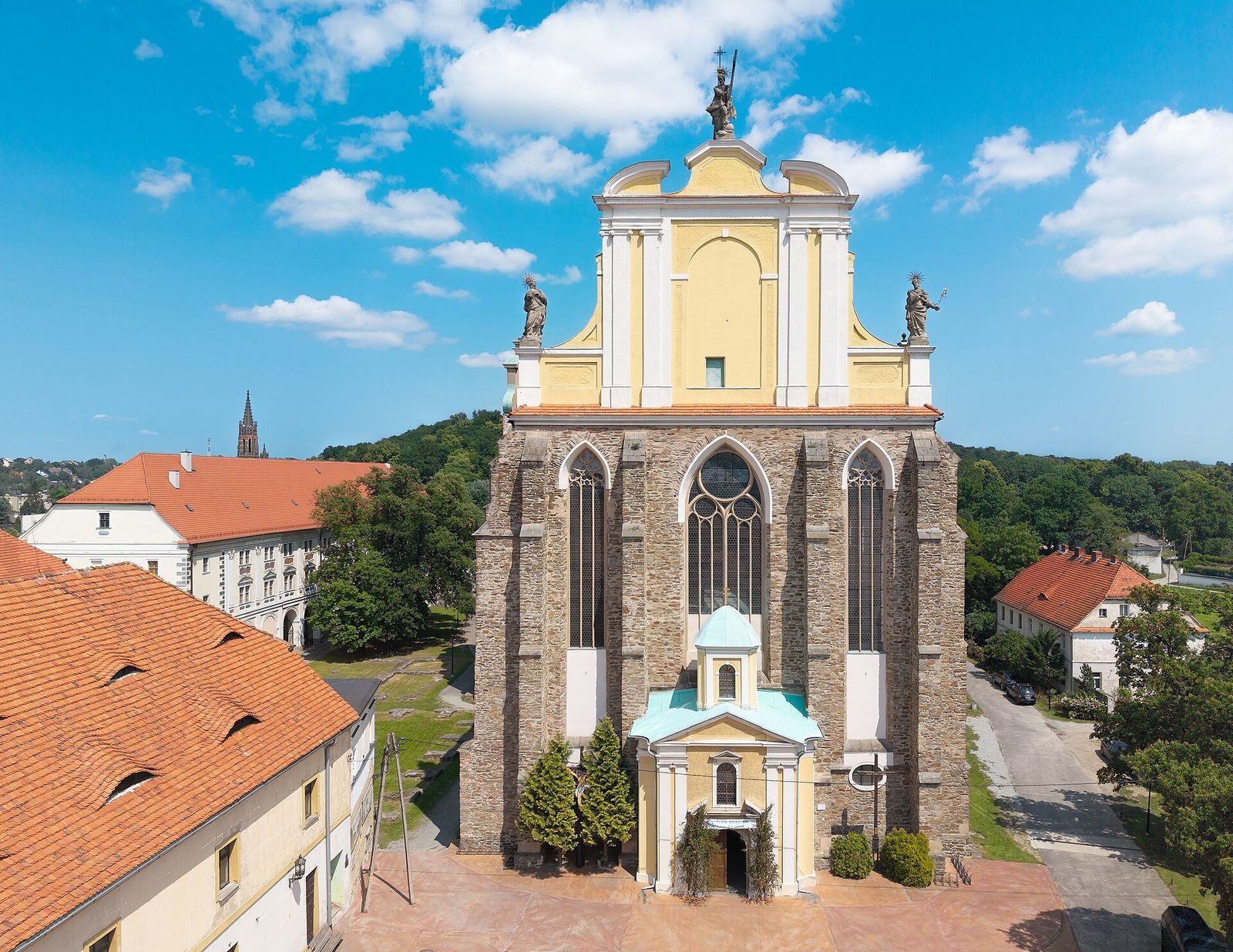
Around 1700, the church underwent partial Baroque alteration. The work added a new gable and porch at the west end, as well as chapels at the east end and on the north and south sides.
The wider monastery complex dates from the fourteenth to the nineteenth centuries. It entered Poland’s register of monuments on 2 January 1950 and is also included in the Historic Monument designation for the Kamieniec Ząbkowicki Architectural-Landscape Complex, a high-level national heritage status.
Remains
Plan and exterior
Building plan and additions
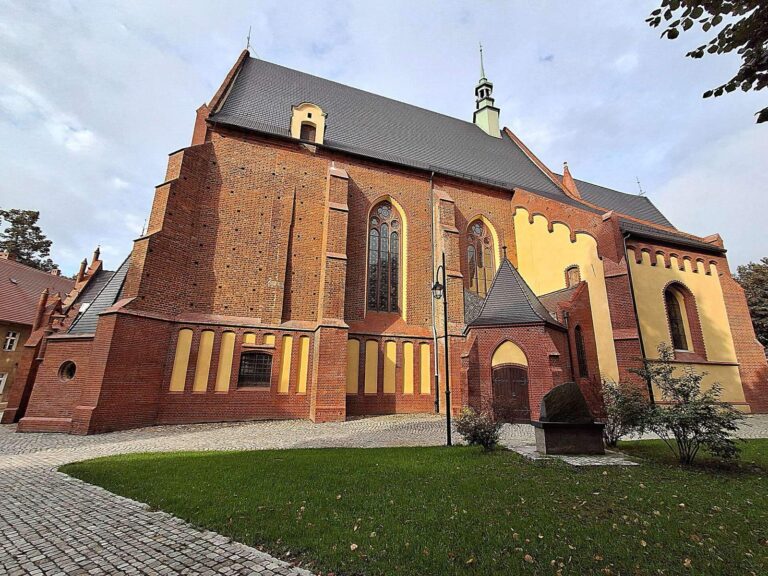
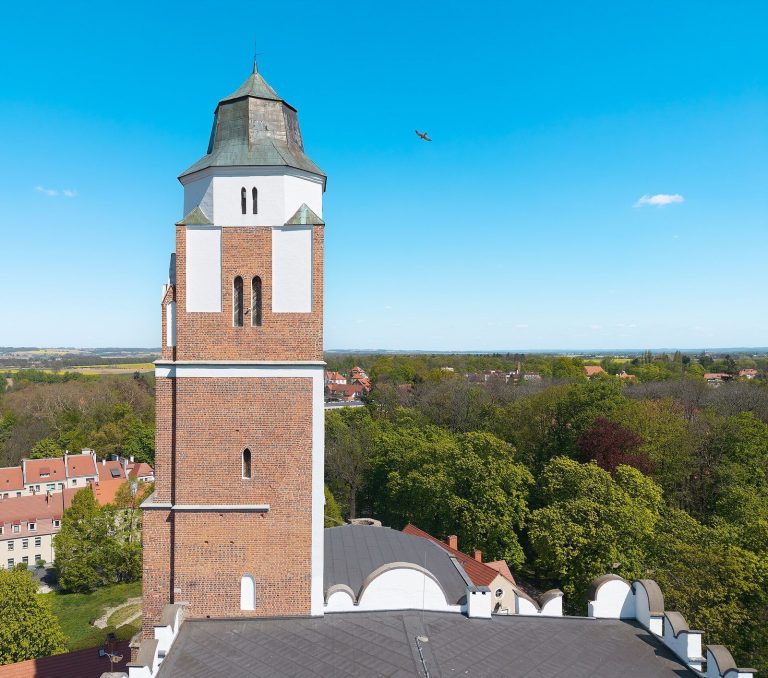
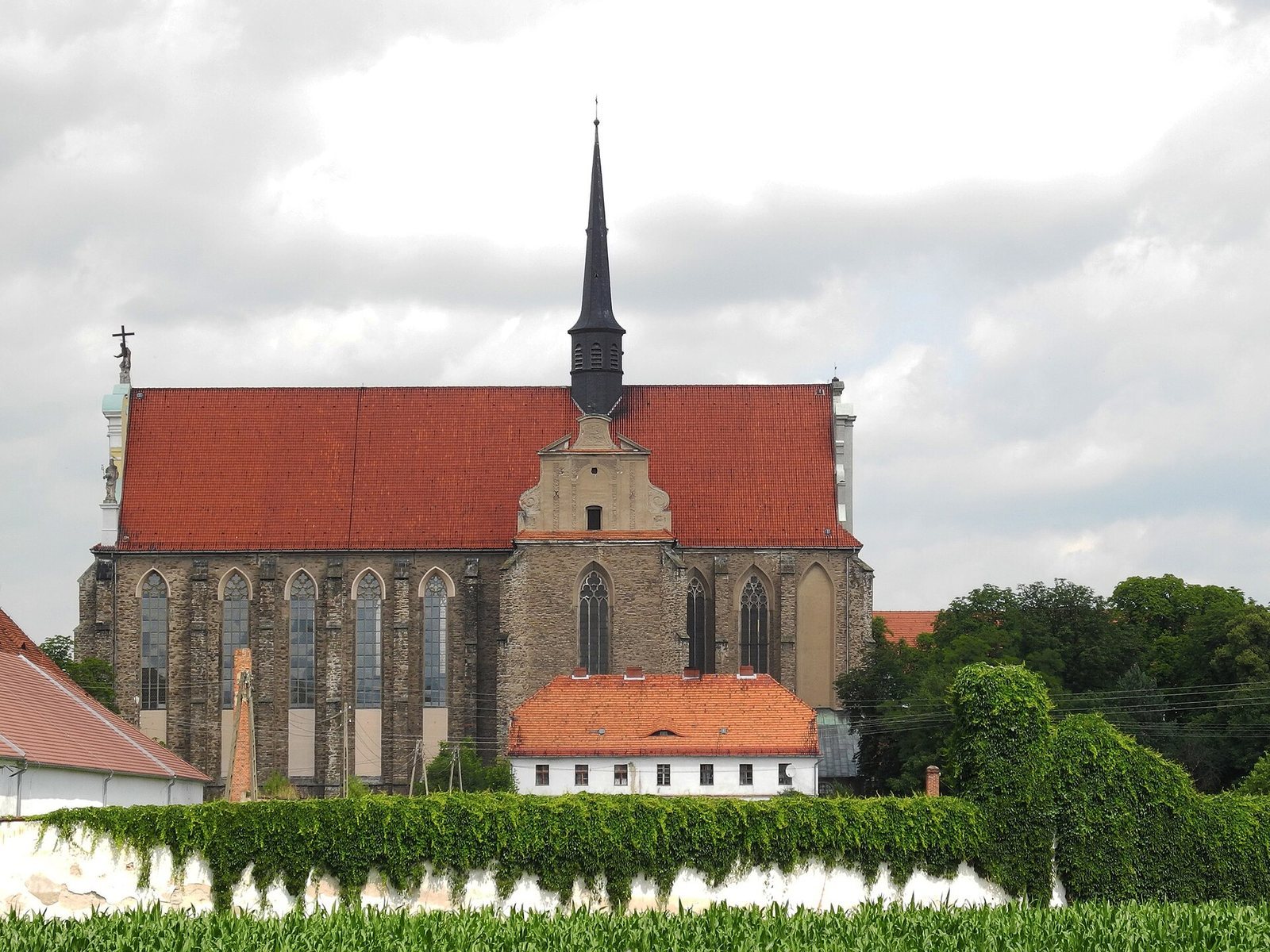
Built of brick and sandstone, the church has a Latin-cross plan and a hall layout, with the side aisles at about the same height as the central space. Its six-section main body has three aisles and meets a transept, the crosswise part intersecting the nave. Beyond it, the three-section presbytery, the area around the main altar, has three aisles and a straight east end. Three Baroque chapels are attached at its eastern end, with two more on the north and south sides. A porch stands against the west end of the nave, topped by a small tower with a dome.
Façades and entrances
The west façade is Gothic up to the cornice, with large pointed windows divided by ornamental stone tracery. Above it, the Baroque gable contains a large blind, semicircular-headed window and sculptures of Christ carrying a cross, the Virgin Mary, and St Joseph, carved by Antoni Jörg. Similar gables crown the presbytery’s east wall and the transept’s north and south elevations. Stepped buttresses strengthen the exterior walls, which also have pointed windows with tracery. Gable roofs cover the church, and a pointed Gothic portal opens in the south arm of the transept.
Interior and furnishings
Supports and vaults
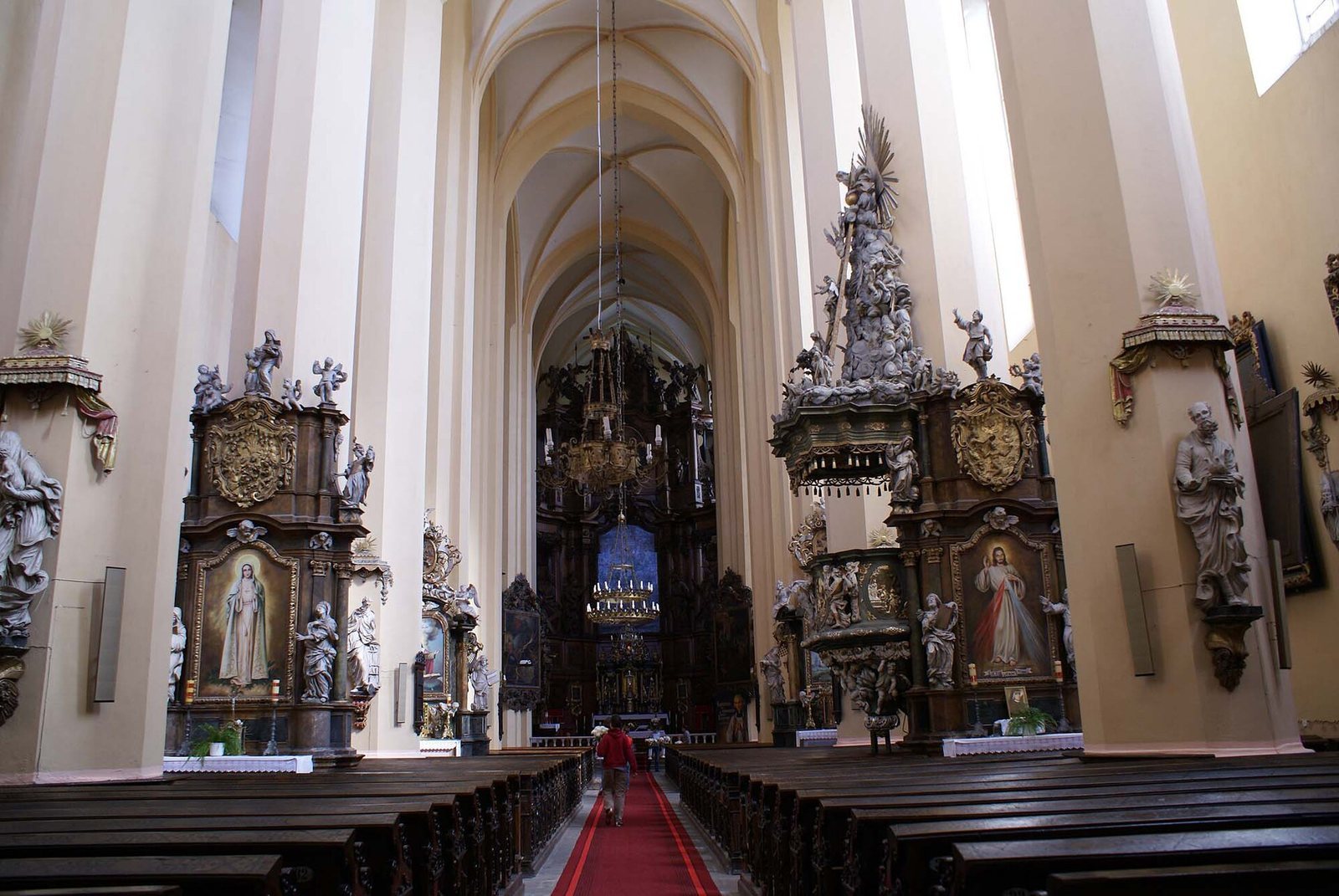
Slender eight-sided supports carry ribbed vaults, ceilings strengthened by projecting ribs, dating to around 1400.
Altars and carved decoration
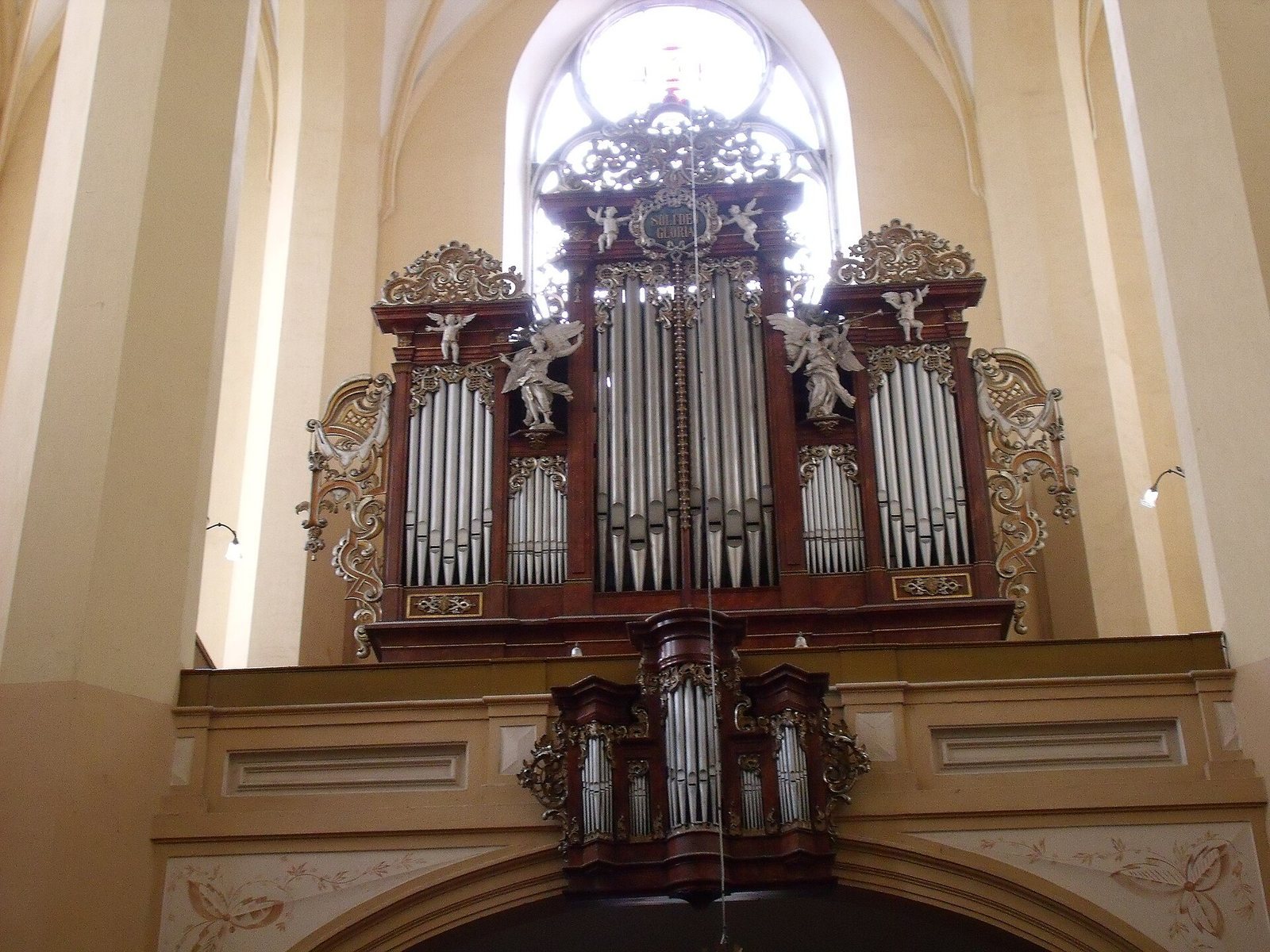
Most of the Baroque furnishings were made between 1701 and 1712. Caspar Georg Kőniger created the high altar in 1704; it contains Michael Willmann’s painting of the Assumption, dated 1705. Other altars honor St Bernard and Our Lady of Sorrows in the south arm of the transept, and St Benedict in its north arm. Jan Krzysztof Liszka was among the painters who made the altarpieces. Sculptures of the Fourteen Holy Helpers, a group of saints traditionally venerated as intercessors, date to 1709–1711 and are attributed to Tomaso Weisfeldt. Antoni Jörg carved the pulpit in 1708. Angels support it, and an elaborately carved canopy rises above it.
Paintings and seating
Paintings of the Stations of the Cross by the Cistercian painter Walery Mauroner hang on the side-aisle walls. Parts of the Baroque choir stalls survive in the south aisle. The benches, made around 1700, were crafted by Carl, a carpenter from Ząbkowice.