Chiesa Madre: A Baroque Church of the Assumption in Belmonte Calabro
Site at a Glance
- Popularity
- Very Low
- Country
- Italy
- Primary era
- Early Modern
- Eras represented
- Early Modern, Modern
- Civilizations
- Italian, Kingdom of Naples, Kingdom of the Two Sicilies, Spanish
- Site type
- Religious
- Remains
- Church
On this page12 sections
History
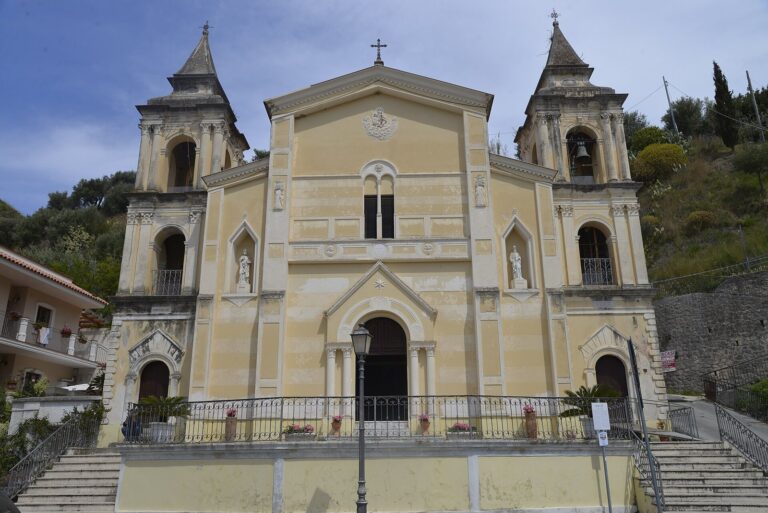
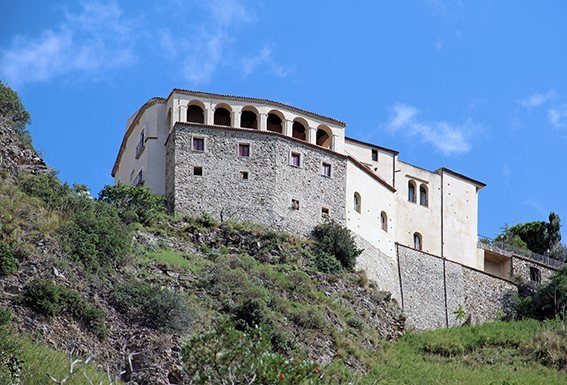
Chiesa Madre, formally named the Collegiate Church of the Assumption of Mary into Heaven, is a Baroque Roman Catholic church in Belmonte Calabro, Italy. It probably began in 1586 and now serves as the town’s only parish church, within the Archdiocese of Cosenza-Bisignano.
Foundation and eighteenth-century development
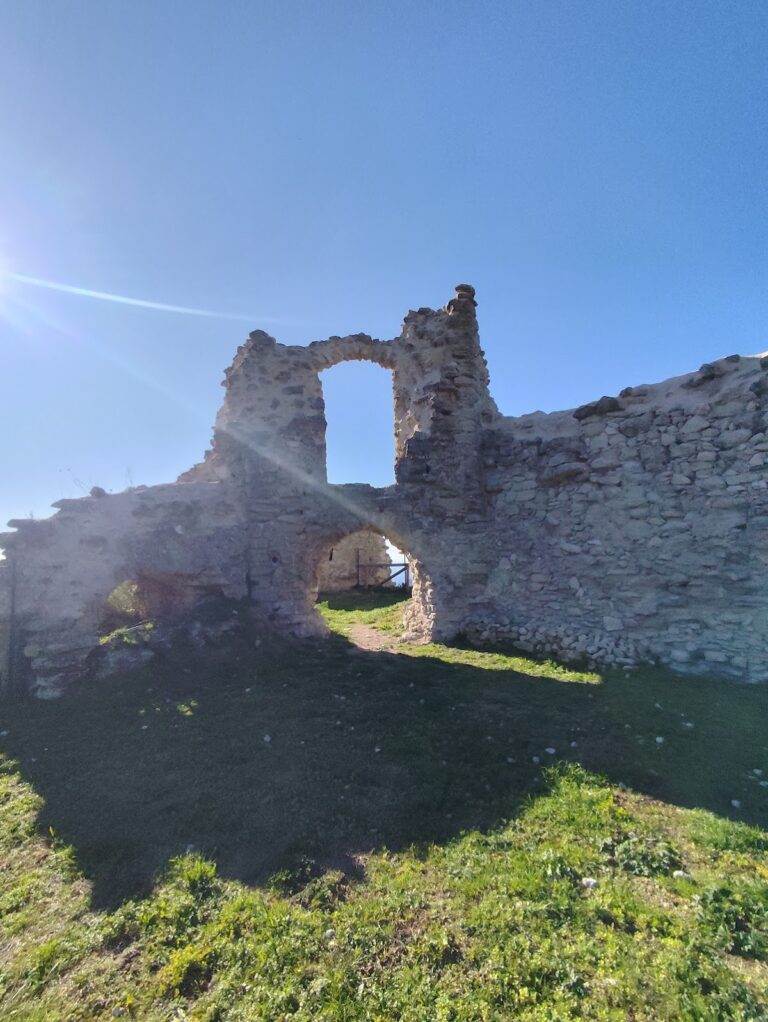
Belmonte’s earlier parish church was the small Church of Purgatory in Piazza Senatore Del Giudice. The settlement probably developed around its original castle, built in 1270–1271 by Drogone of Beaumont on the order of Charles I of Anjou. Charles, a French-born prince, became king of Sicily in 1266; the Angevin dynasty was the House of Anjou.
Because the older church could not accommodate the town’s size and standing, a new one was probably started on the former municipal-office site near the castle. Carlo Ravaschieri initiated the project and was buried in the church after his early death in 1603. From about 1620, a confraternity, or lay religious association, devoted to the Blessed Sacrament, the Eucharist, used the church. Its charitable work included providing an annual marriage dowry to a poor young woman judged to be of good character. The confraternity also managed Ravaschieri’s charitable lending institution, called a monte di pietà.
In 1737, Belmonte’s mayor, Daniele Bossio, arranged for the pulpit to be restored. The parish became an archpriesthood in 1753, meaning it was headed by an archpriest. In 1759, Bishop Felice Paù of Tropea announced plans to make it a collegiate church, served by a chapter of twenty canons. The proposal lacked both royal and papal approval and was never implemented. Restoration work by the Gesummaria brothers, who specialized in decorative plaster, in 1761 largely shaped the church’s present appearance.
Nineteenth- and twentieth-century changes
In 1856, Bonaventura Barone donated the main altar and its rail, and had the corresponding fittings at the Blessed Sacrament side altar renewed. The church’s tall bell tower fell in the 1905 earthquake. It was rebuilt at a lower height.
Remains
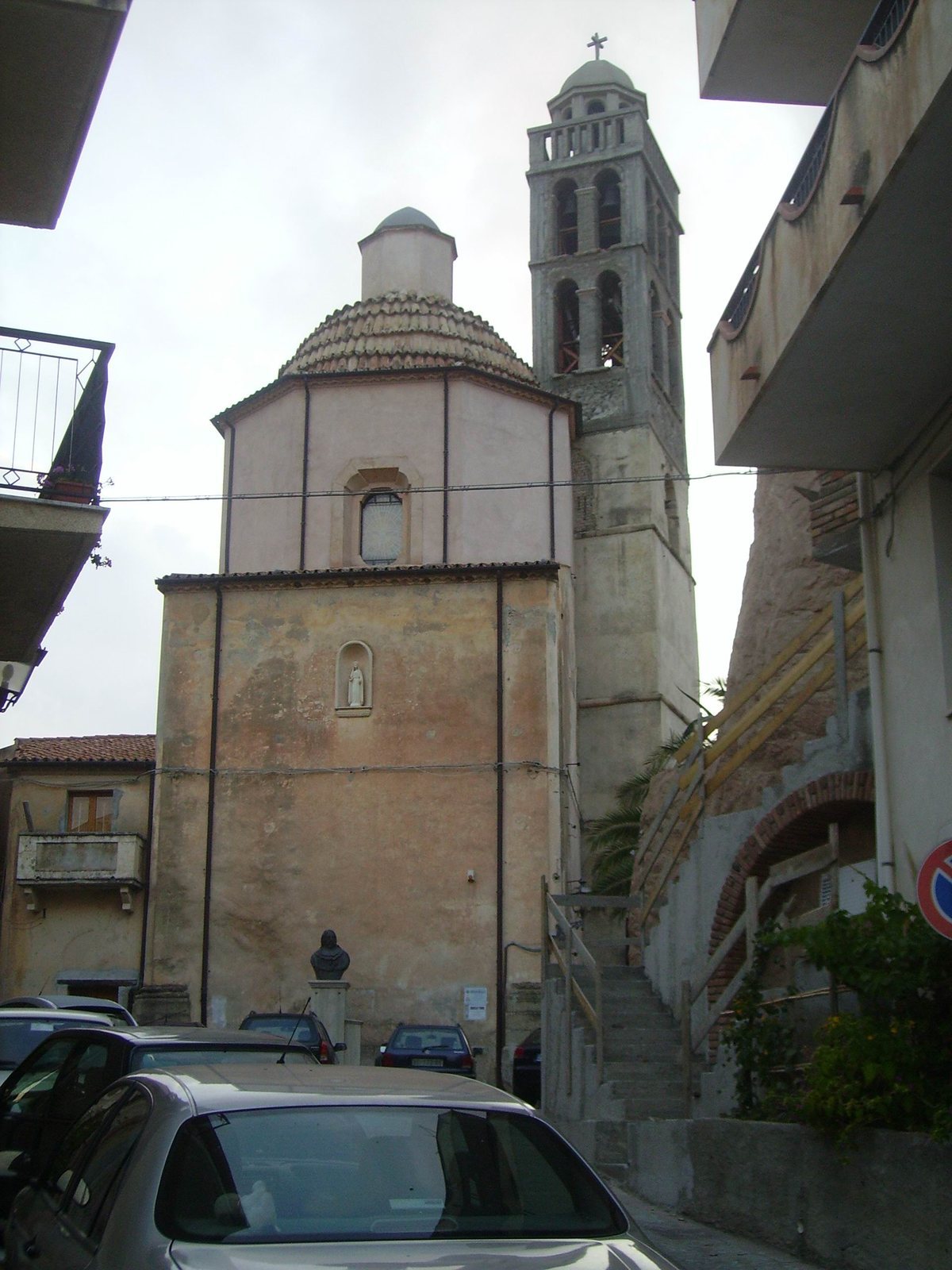
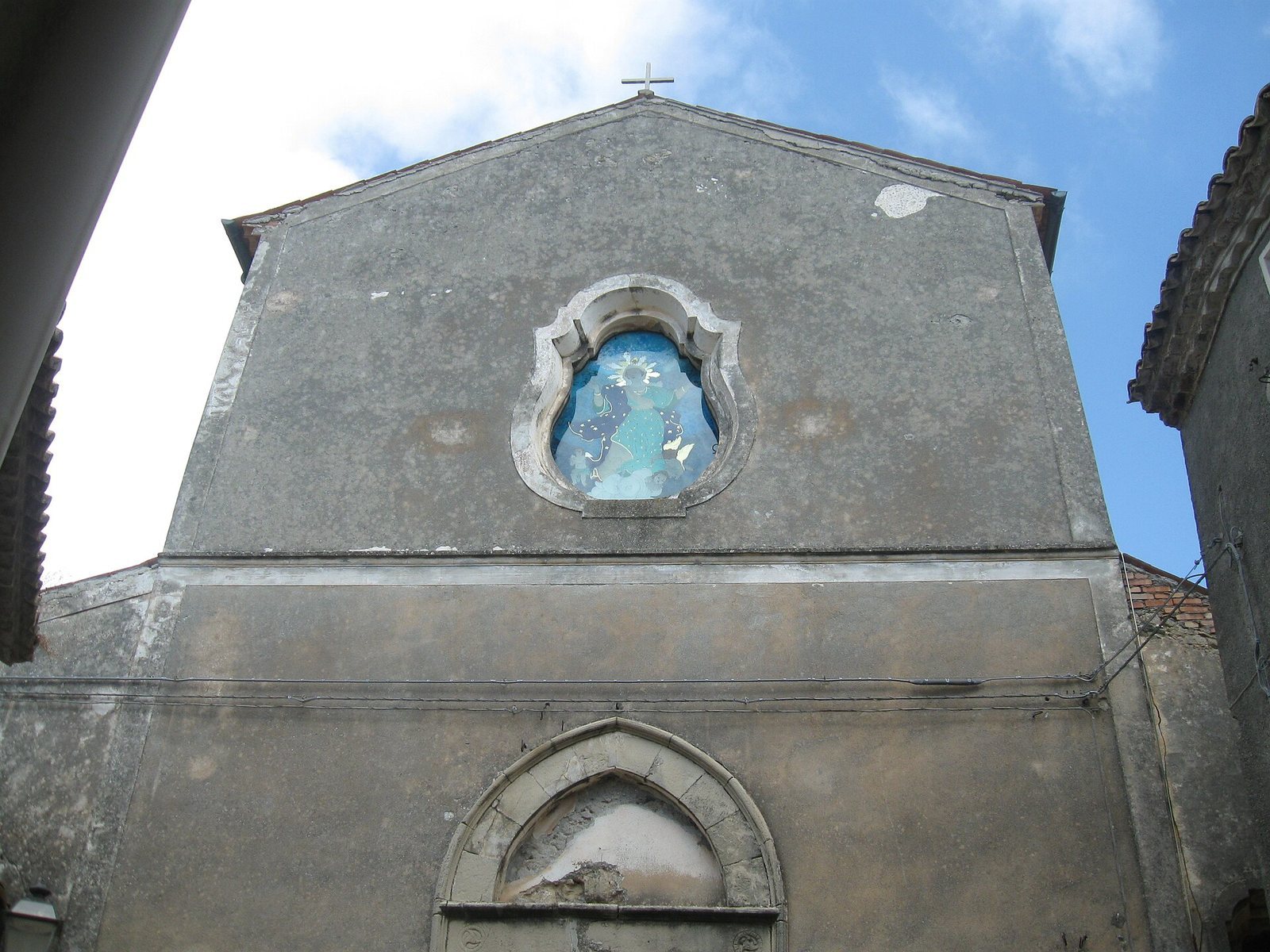
The church has a Baroque design. Its apse, the projecting end of the building, is on Piazza Galeazzo di Tarsia, while the main portal and upper façade face Largo Duomo. Inside, the principal features include the altars, pulpit, painted nave ceiling, and burial pits beneath the floor.
Exterior
Portal and façade
The main portal dates to the late sixteenth century. It is made of tuff, a rock formed from consolidated volcanic material, and has a pointed arch. A three-legged emblem appears on either side of the entrance.
Bell tower
The tower was rebuilt after the 1905 earthquake at a lower height than its predecessor.
Interior features
Altars and paintings
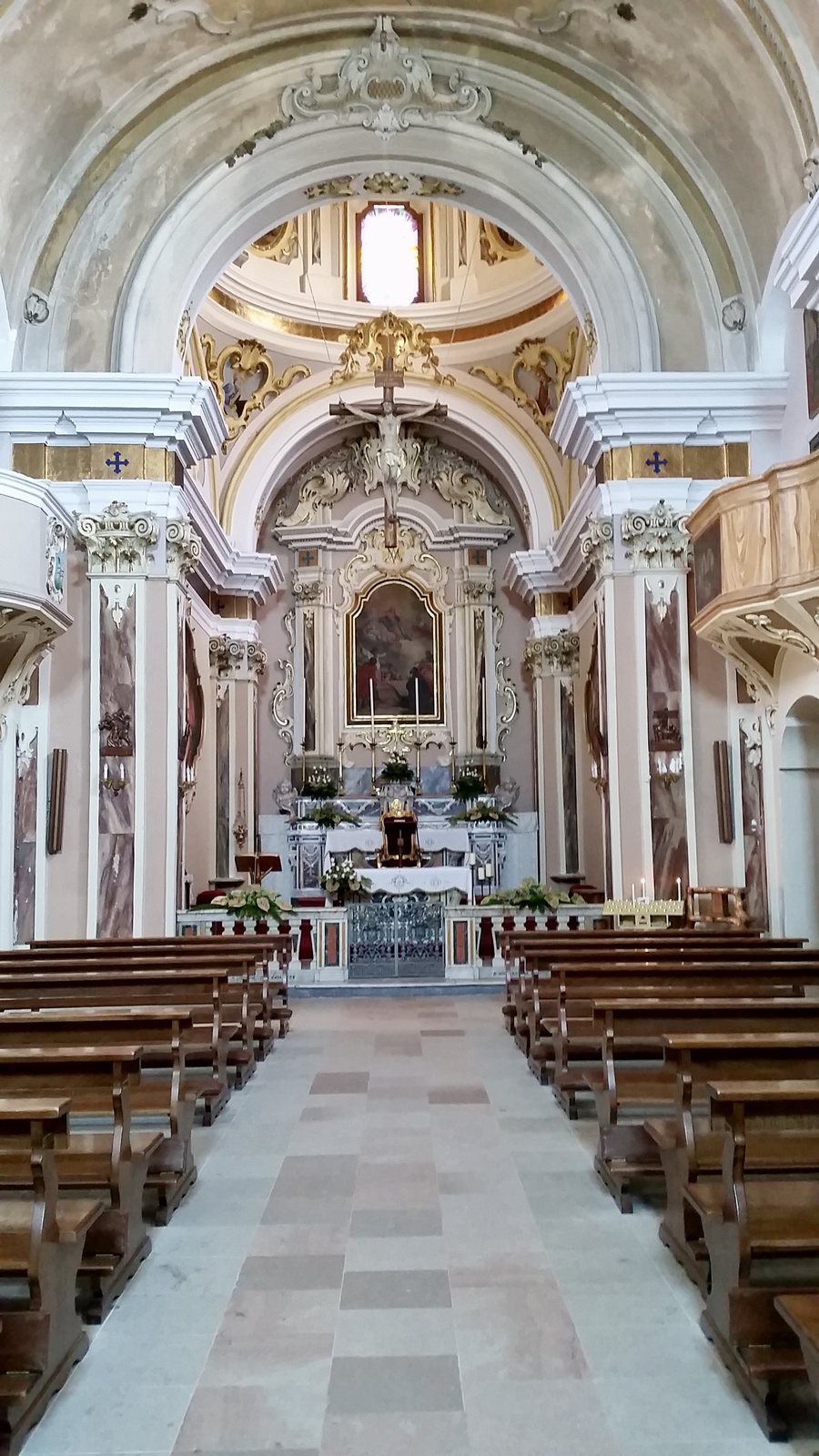
The main altar and its rail are made of polychrome marble. A wrought-iron gate in the rail bears the Barone family coat of arms. Above the altar is a painting of the Assumption of the Virgin Mary into Heaven by Francesco Basile of Borgia, dated 1794–1795. The Chapel of the Blessed Sacrament contains a side altar and rail. Its oil painting of the Last Supper was made by Nicola Domenico Menzele of Trani in 1777.
Pulpit
The pulpit stands to the right of the presbytery, the area around the altar reserved for clergy, and rests on a small added column. Its front displays an oil-painted version of Belmonte’s coat of arms, a palm between two towers above three small hills.
Nave ceiling
Paintings by Saverio Presta from 1950 decorate the ceiling of the nave, the church’s main body. Three oval panels depict Saint Bonaventure, a thirteenth-century Franciscan theologian, blessing Belmonte; Pope Pius XII, who led the Roman Catholic Church from 1939 to 1958, blessing the five continents; and Saint Francis of Paola, a fifteenth-century religious founder, healing Giacomo di Tarsia, Baron of Belmonte. The Four Evangelists appear at the base of the dome in paintings attributed to Presta.
Burial pits
About fifty burial pits cut into the rock lie beneath the nave floor. They are approximately four metres deep and were used for interments.