San Nicolò da Tolentino: A Baroque Church and Former Augustinian Convent in Palermo
Site at a Glance
- Popularity
- Medium
- Country
- Italy
- Primary era
- Early Modern
- Eras represented
- Early Modern, Modern
- Civilizations
- Italian, Kingdom of Sicily, Spanish
- Site type
- Religious
- Remains
- Church
On this page14 sections
History
San Nicolò da Tolentino is a Roman Catholic church in Palermo, Italy, built in Baroque style in the early seventeenth century. Construction is dated to 1603–1609, on ground associated with Jewish worship before the establishment of a Christian monastery. The church formed part of a religious complex that included an Augustinian convent.
Jewish worship and the monastery
By 1094, a place of worship stood near the Kemonia River, in an area that had been Palermo’s Jewish quarter during Arab rule. It may first have been a mosque, later converted for Jewish worship as the Great Synagogue. An inscription in the church describes an earlier sequence for the site, from sea and marsh to orchard, a small religious building, synagogue, and chapel.
In 1492, Ferdinand II of Aragon ordered the expulsion of Jews from Sicily. That year, the former synagogue grounds were sold to the Di Salvo family under the supervision of the viceroy. In 1507, Clarissan nun Lucrezia di Leo founded the small monastery of Santa Maria del Popolo with the approval of Palermo’s Archbishop Giovanni Paternò. The monastery attracted few donations and had a small community.
A papal brief briefly transferred the monastery to the Conventual Franciscans in 1535, though the attribution of this action to Pope Gregory XIV is uncertain. In 1579, Archbishop Cesare Marullo ordered the remaining nuns to move to Santa Maria di Monte Oliveto. The Collegio dei Notai, a professional body of notaries, was established at the church in 1582 and took responsibility for building a new church. In 1596, the notaries sought the monastery and its associated buildings. The resident community moved to Santa Maria della Sanità, and the Discalced Augustinians, a reform branch of the Augustinian order with a traditional barefoot or sandal-wearing observance, took over. A small chapel dedicated to Santa Maria del Popolo was then present.
The church, convent, and devotional communities
The church’s construction is dated to 1603–1609. In 1609, Cardinal Giannettino Doria promoted its rebuilding under the direction of Antonio Muttone. Frequent earthquakes prolonged the work and caused damage that led to further rebuilding in the seventeenth and eighteenth centuries. Archbishop Doria e del Carretto consecrated the church in 1609; Cardinal Pietro Gravina consecrated it again in 1824.
The adjacent convent was founded in 1608 by the Congregation of Discalced Augustinians of the Kingdom of Naples and passed to the Order of Discalced Augustinians in 1611. In 1650 it was described as having 54 lodgings, a cloister, a student residence, a library, and guest quarters. Its income came from land, rents, and alms given in money and goods.
The Confraternity of Our Lady of Sorrows of La Soledad began in 1590 at the old church of San Demetrio, inspired by a confraternity in Seville. It promoted devotion to Mary in mourning for Christ’s suffering and death and observed her liturgical feasts. After moving among several churches during the eighteenth century, it settled at San Nicolò da Tolentino and became part of Palermo’s Holy Week rites.
Other devotional groups were connected with the church and its oratories. The Congregation of the Cross and Passion of Christ, also called the Saturday congregation and dedicated to the Conversion of Sinners, was founded in 1626. It met on Saturdays at the nearby church of Santa Maria della Grazia dei Notai, attached to the convent, and moved in the nineteenth century to the Saturday Oratory at Casa Professa. The Company of Saint Nicholas of Tolentino, associated with the Oratory of San Nicolò, came from the church of Sant’Agata dei Carèri. At the Oratory of the Notaries, members of the Company of Saint Jerome prayed for the souls of the dying. On 29 October 1614, Don Vincenzo Di Maria and nine Palermo residents formed a devotional association under the protection of Our Lady of the Dying. Her image moved to its permanent home at Santa Maria degli Agonizzanti in 1630.
Later changes and continuing use
Laws enacted in 1866 suppressed religious congregations and confiscated their property. The convent rooms were used temporarily by a notarial chamber and archive, a direct-tax commission, the Society for Acclimatization and Agriculture in Sicily, a homeopathic academy, and a workers’ mutual-aid society. They now house Palermo’s Municipal Historical Archive, while the convent library’s collection went to the Municipal Library at Casa Professa.
In 1874, after the parish church of San Giovanni dei Tartari was demolished, its parish title and many of its artworks were transferred to San Nicolò da Tolentino. Architect Giuseppe Damiani Almeyda designed a renovation of the cloister in the twentieth century. The church remains part of the Archdiocese of Palermo and follows the Roman Rite. Its celebration of Saint Rita on 22 May includes a rose rite.
Remains
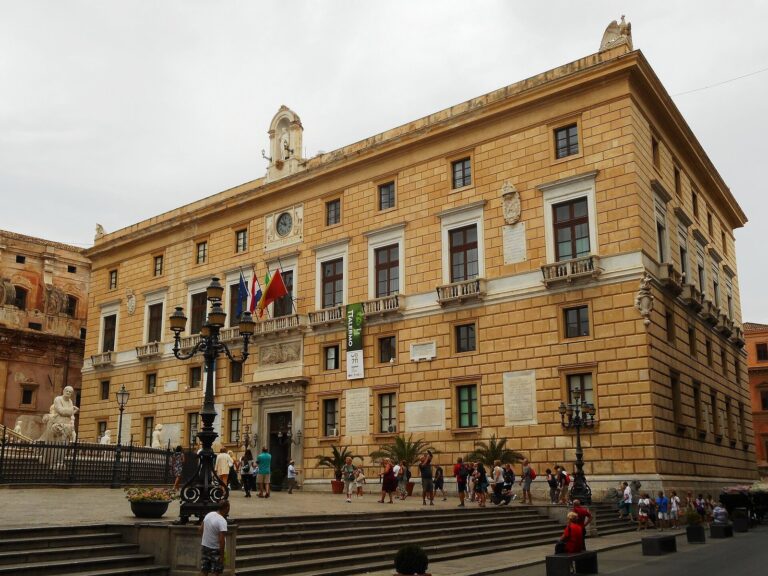
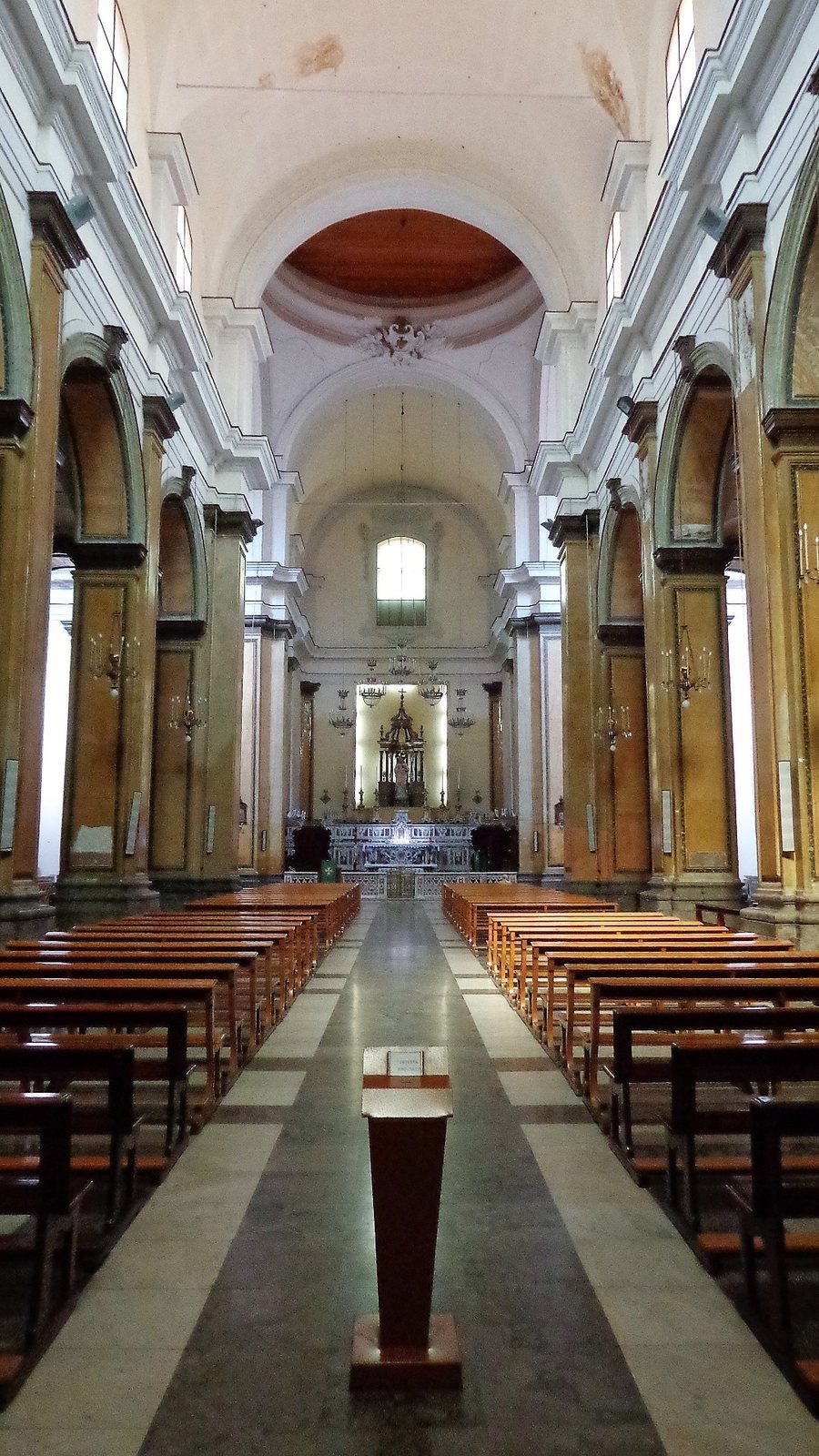
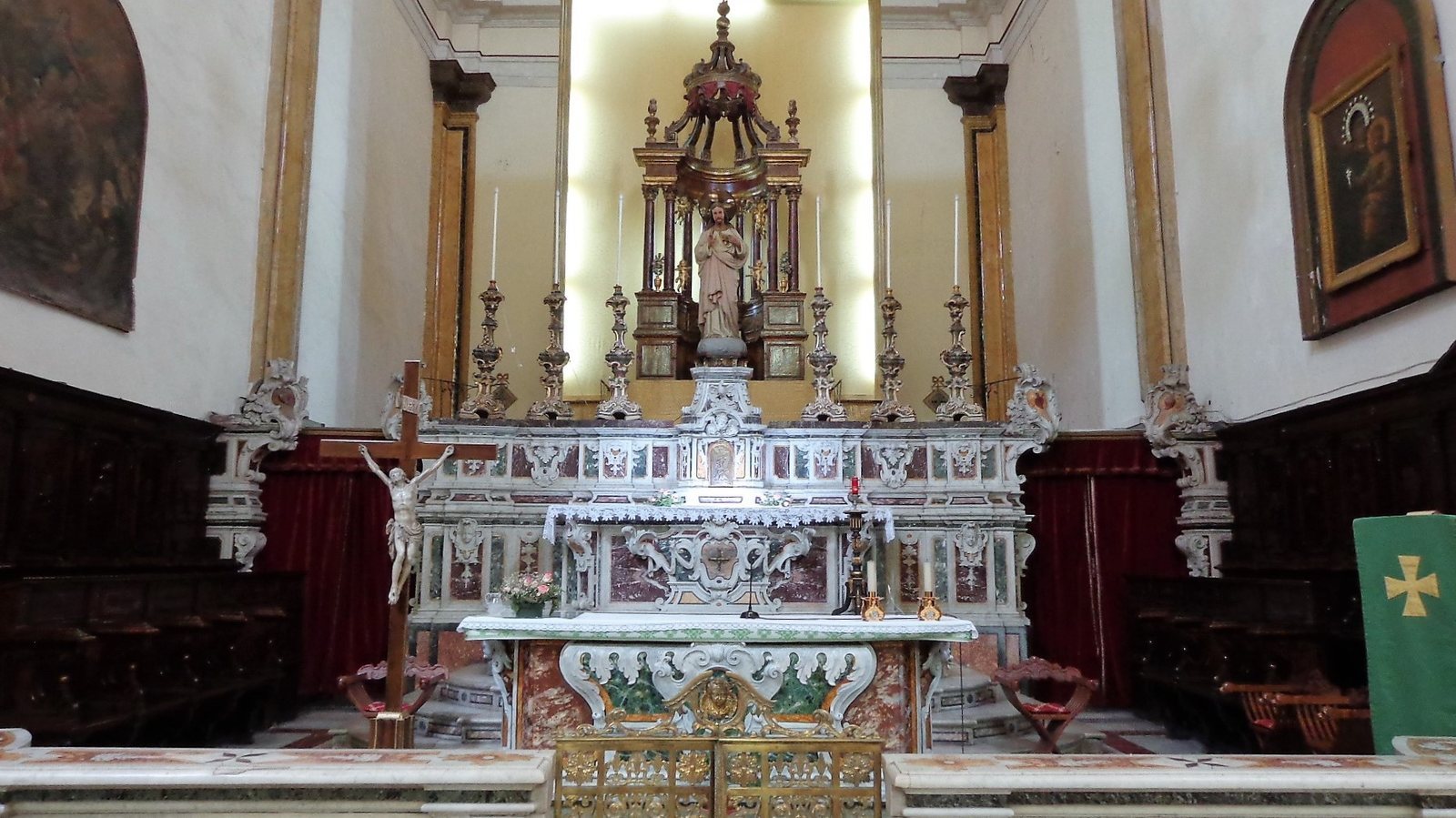
The church and former convent form a complex on Via Maqueda, between Via dei Calderai and Via Giardinaccio in Palermo’s Kalsa/Tribunali district. The church is a three-aisled basilica, with a central nave flanked by lower side aisles, a transept or crosswise arm, a dome, a large rectangular chapel, and a recessed apse at the sanctuary end. Deep chapels open from the side aisles.
Exterior and convent courtyard
Façade
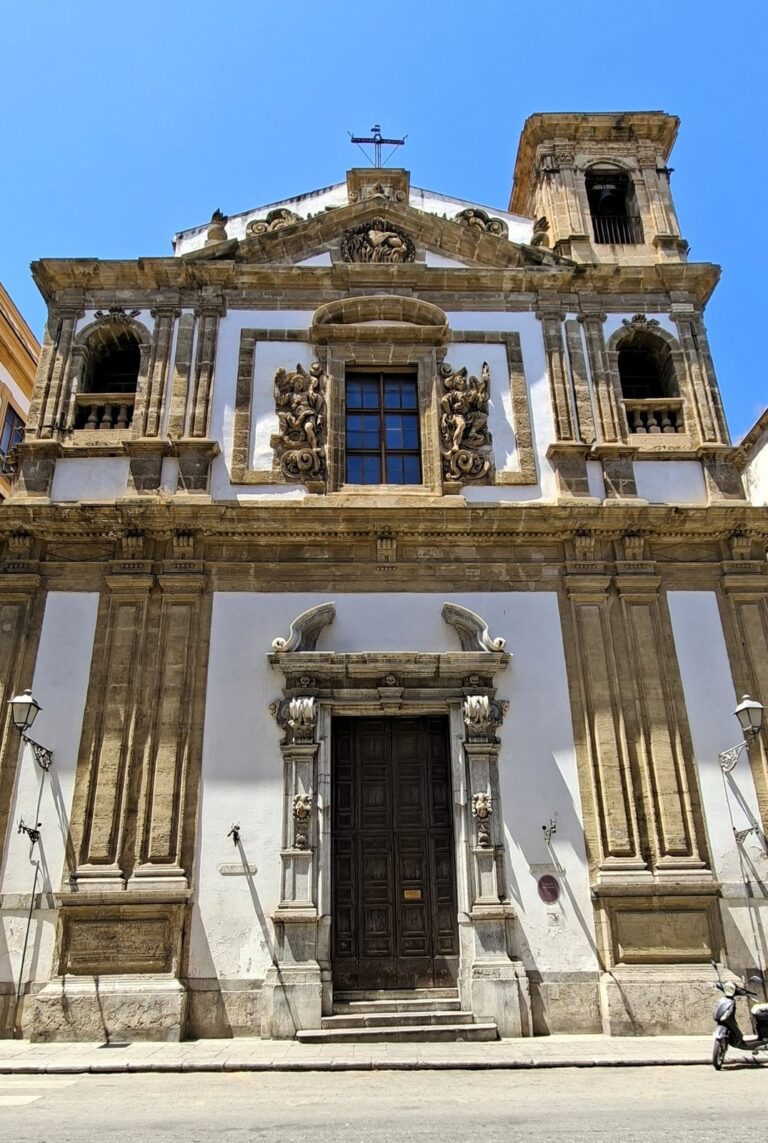
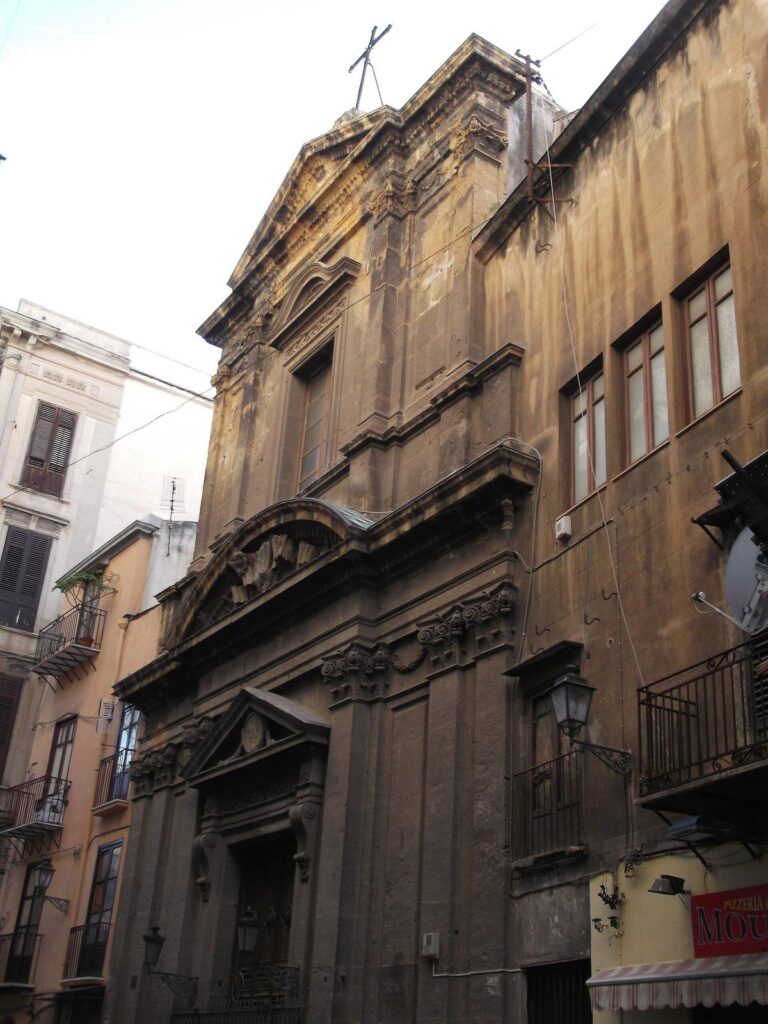
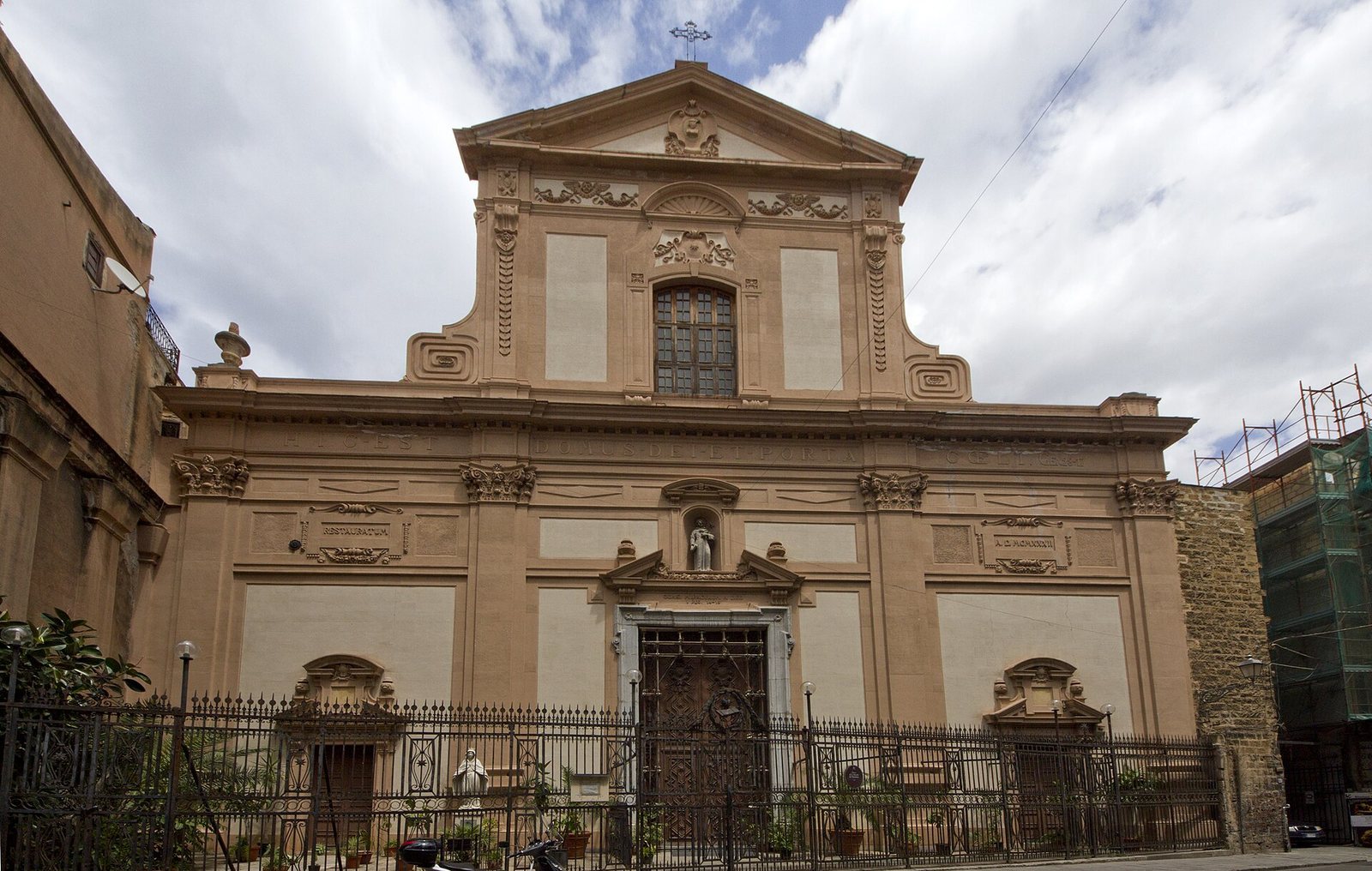
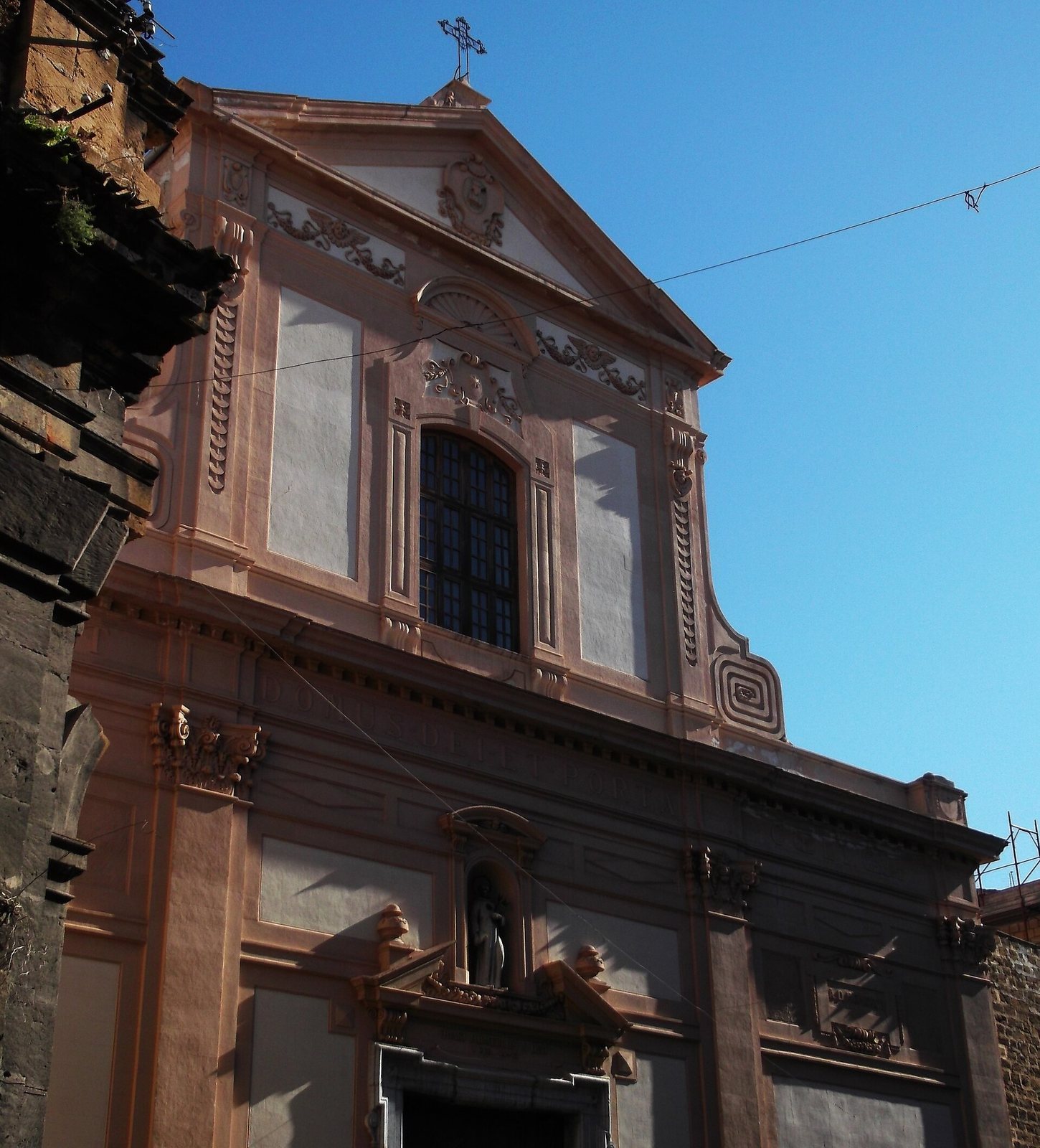
The two-level façade dates to the second half of the seventeenth century and was altered around 1922. Four pilasters, shallow wall projections resembling columns, divide its face beneath a restrained entablature, the horizontal structure above them. A niche over the main entrance holds a statue of Saint Nicholas of Tolentino installed in 1687.
Convent courtyard
The convent courtyard lies on the south side of the complex, with its longer axis running east to west. A single portico, a roofed walkway supported by columns, survives along the eastern side.
Interior and chapels
Nave and baptismal furnishings
Substantial pillars separate the nave from the lower side aisles. In the first section of the right aisle is a baptismal font with a basin dated to 1494, alongside two marble aedicules, small framed shrines, for the oil used in baptismal rites. These furnishings came from the demolished parish church of San Giovanni dei Tartari. A statue of Saint John the Baptist from that church stands in a right-aisle chapel. An inscription is set into a column on the right side of the nave.
Right aisle chapels
The other chapels along the right aisle are dedicated to Saint Rita, Our Lady of the Girdle, and the Most Holy Crucifix. The chapel of Our Lady of the Girdle contains a sculptural group of the Virgin and Child with Saint Monica.
Left aisle chapels
The left aisle has five chapels. Its second chapel contains a statue of Saint Joseph and the monumental tomb of Marquis Michele Busacca Galliori, made in 1729 by architect Ferdinando Lombardo. A painting of the Immaculate Conception attributed to Pietro Novelli is in the fourth chapel. A 1636 painting of Saint Casimir crowned by the Virgin Mary, once located in that chapel, is now held at Palermo’s Regional Gallery at Palazzo Abatellis. The fifth chapel, sponsored by the Confraternity of Our Lady of Sorrows of La Soledad, contains a statue of Our Lady of Sorrows, a sculptural group of the Crowning with Thorns, a crucifix, and an urn holding the dead Christ.
Transept chapels
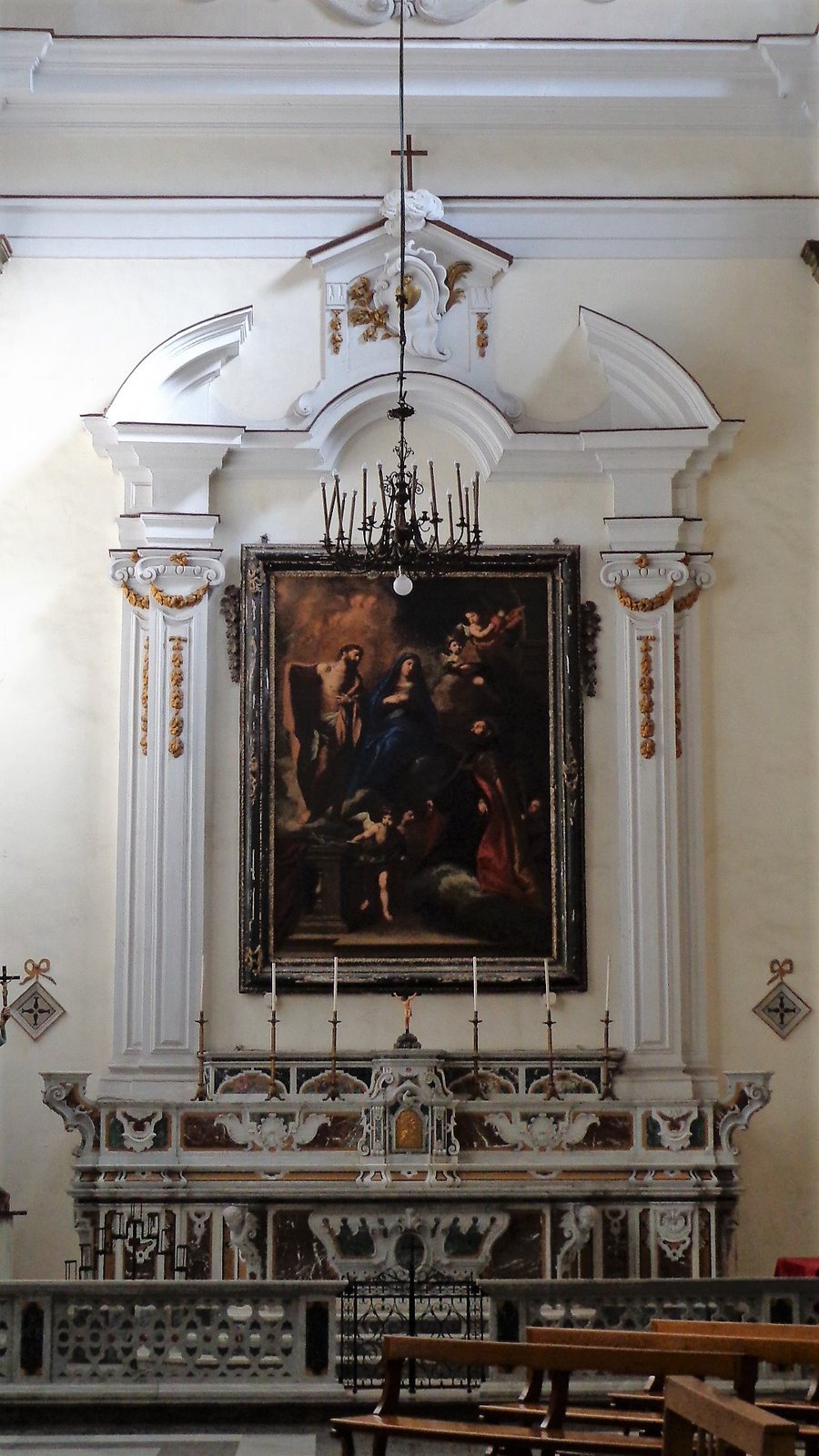
The right arm of the transept contains the Chapel of Saint Augustine, with a 1636 painting by Pietro Novelli showing the Virgin Mary and Jesus Christ appearing to Augustine. The Chapel of Saint Nicholas of Tolentino occupies the left arm and contains a 1636 Novelli painting of the saint adoring Jesus Christ.
Other works and burial
The church also contains Pietro Novelli’s painting of the Annunciation, sculptures in the manner of Giacomo Gaggini, and stucco decoration associated with the school of Giacomo Serpotta. One chapel contains the burial of a Spanish archbishop from the Fajardo family, an Augustinian prelate who was captured by Muslims while travelling to Sicily, ransomed, and died in 1694.