Asclepeion of Kos: An Ancient Greek Healing Sanctuary
Site at a Glance
- Popularity
- Very High
- Country
- Greece
- Primary era
- Classical
- Eras represented
- Classical, Medieval
- Civilizations
- Ancient Greek, Byzantine, Roman
- Site type
- Religious
- Remains
- Sanctuary
On this page18 sections
History
The Asclepeion of Kos is an ancient Greek sanctuary devoted to healing on a hillside inland from Kos town in Greece. Its development as a sanctuary began in the third century BCE, after worship of Asclepius, the Greek deity of medicine and healing, had taken root on Kos. It became a major religious and civic center on the island and a prominent healing sanctuary of the ancient world.
Early worship and Hellenistic development
Activity at the site reaches back to the Mycenaean and Geometric periods. An earlier sanctuary was dedicated to Apollo Kyparissios, an epithet referring to cypresses. Asclepius’s cult arrived on Kos in the fourth century BCE. A local foundation tradition connects the sanctuary’s establishment around the middle of that century with the arrival of a sacred snake from Epidaurus, an important center of Asclepius worship.
Construction of the Asclepeion itself began in the third century BCE. Its first small temple to Asclepius was built early in that century, after the lifetime of Hippocrates. The sanctuary’s association with Hippocratic medicine is strong, but the later date of its construction makes claims that Hippocrates founded or taught at the institution difficult to reconcile. A colonnaded area has also been proposed as a medical school, though that identification remains uncertain.
During the Hellenistic period, the era following Alexander the Great’s conquests, the sanctuary grew through new terraces and larger buildings. In the second century BCE, Eumenes II, a Hellenistic king of Pergamon, supported or protected the complex. The earlier temple of Asclepius was replaced by a larger one, and a temple to Apollo was added during the period.
Healing joined religious observance with medical care. Patients slept in purpose-built buildings in the hope that Asclepius would visit them in dreams; priests interpreted the dreams and recommended treatment. Practices also included diagnosis and therapies, psychological support, hypnosis, exercise, and bathing. Priests were believed to descend from Asclepius. Medicine was probably developed and taught at the sanctuary in the Hippocratic tradition, although the precise form of its medical institution is uncertain.
Every five years, the sanctuary held the Asklepieia, festivals honoring Asclepius that included musical and athletic contests. Participants came from different Greek cities, and a truce was proclaimed for the event.
Roman use and late antiquity
Under Roman rule, the sanctuary continued to develop and received partial exemption from taxes. Some of its artistic treasures were removed to other places. The complex remained in use into the sixth century CE. Earthquakes in 469 and 554 damaged the site, and the later earthquake is associated with its destruction. An attack from Anatolia is another possible cause of damage.
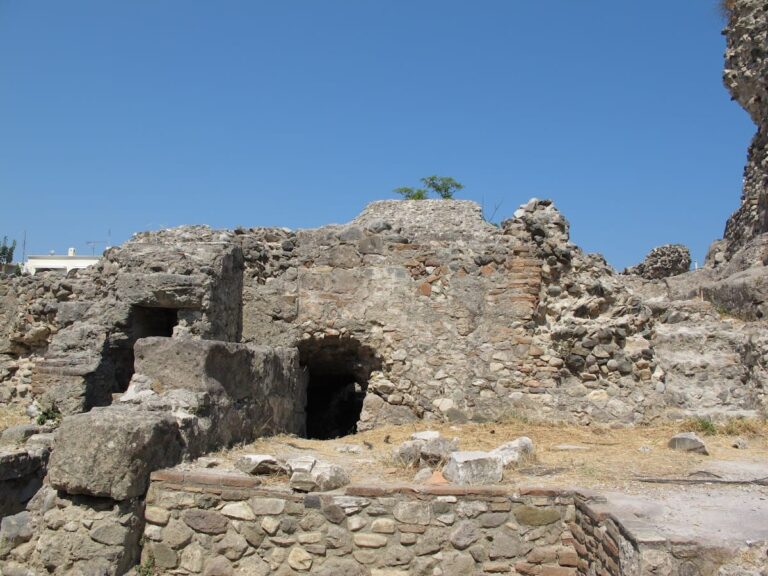
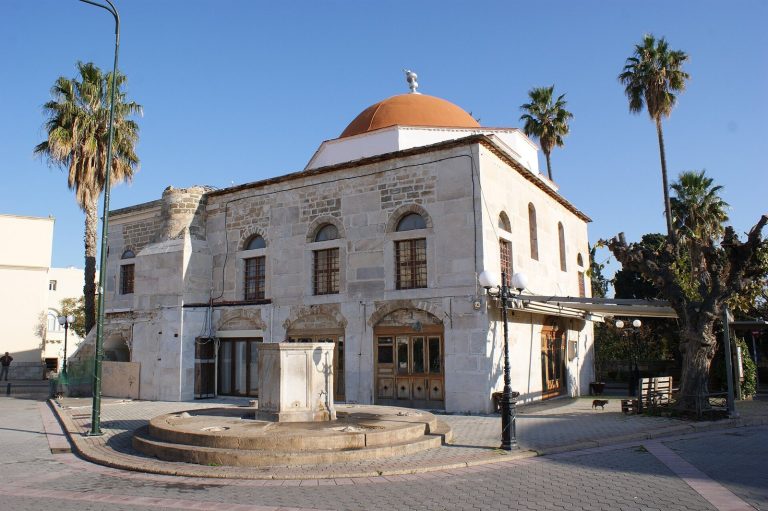
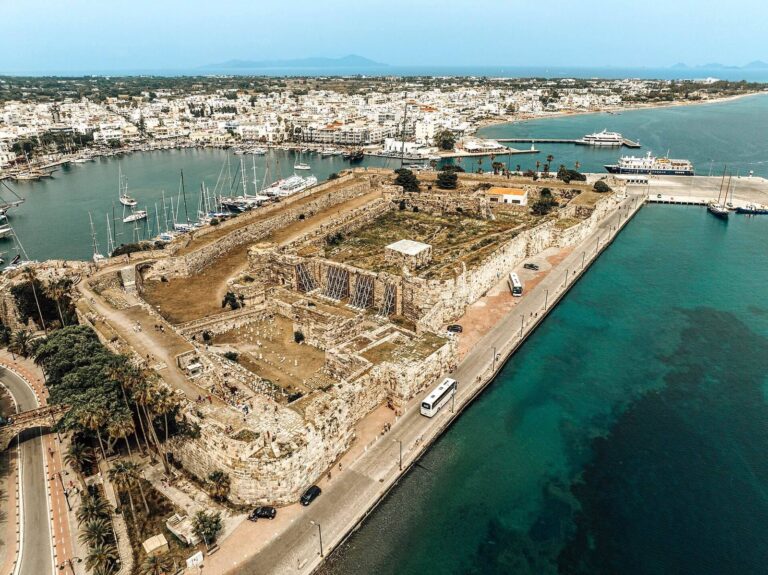
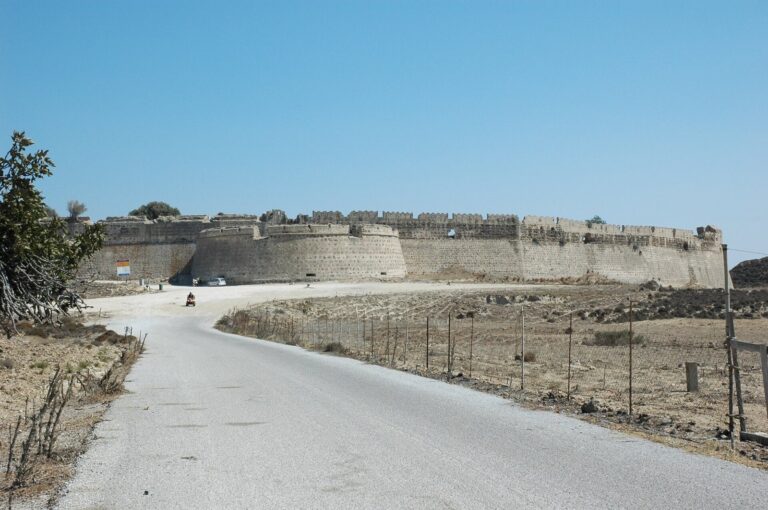
During the early Christian period, a church dedicated to Panayia tis Tarsou was built over the upper temple of Asclepius. In the Byzantine period, the medieval era of the Eastern Roman Empire, the church was subordinate to the Monastery of Patmos. From the fifteenth century onward, stones from the sanctuary were reused in Nerantzia Castle, Kos’s fortifications, and city mosques. Hospitaller knights used building material from the site in the fortifications, and the Ottomans also took stone for mosques in the city.
Rediscovery and excavation
Searches for the sanctuary began in 1896. W. R. Paton identified its presumed location around 1901–1902, and Rudolf Herzog and local researcher Iakovos Zaráftis were among the first to excavate there. Zaráftis led systematic excavations from 1904 to 1933. Italian archaeologists, including Luciano Laurenzi and Luigi Morricone, later carried out further excavation and restoration, rebuilding sections of the terrace retaining walls and columns.
Remains
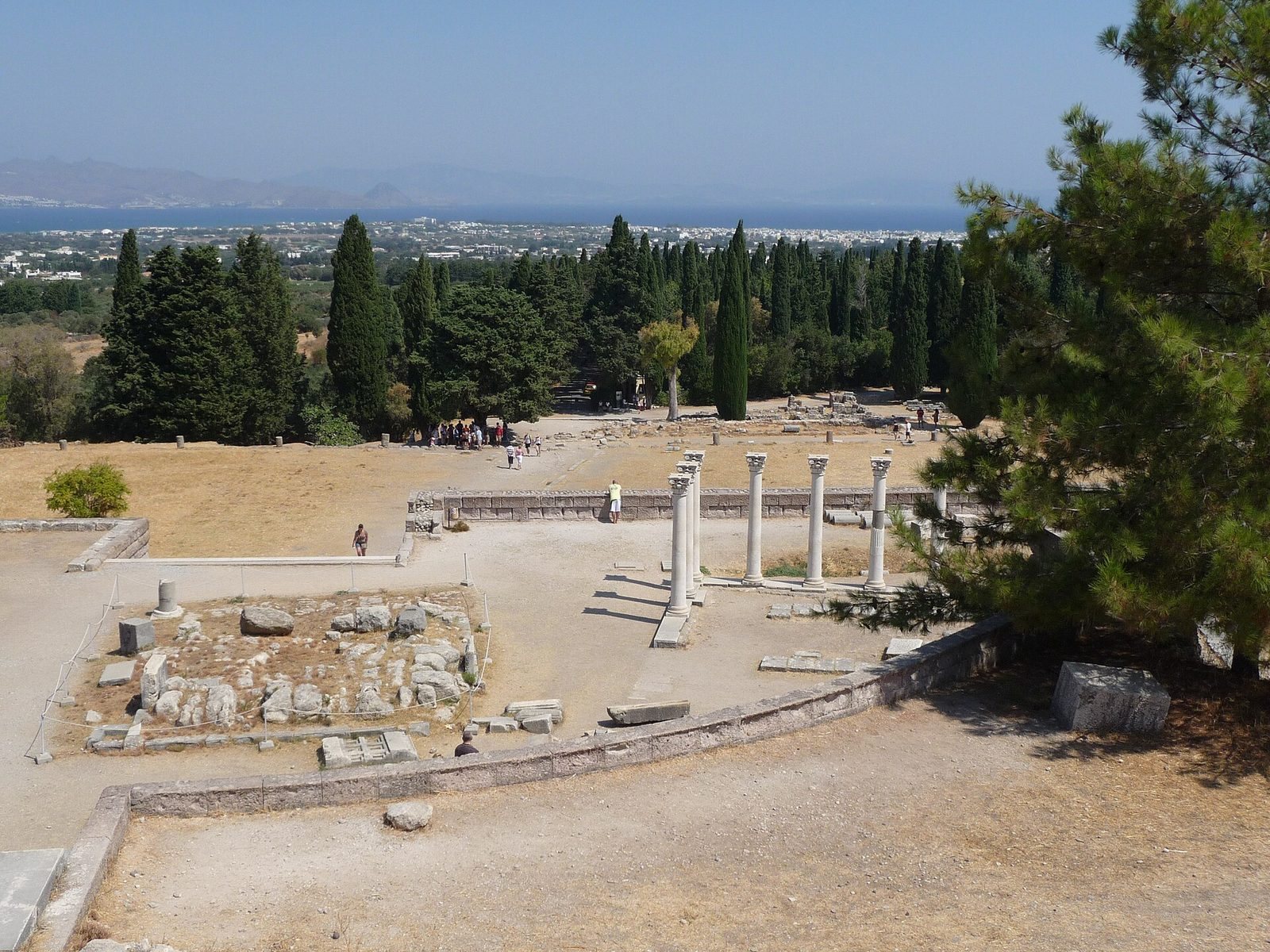
The sanctuary occupies a hillside near Platani, about three to four kilometres from Kos town, with views toward the town and the sea. Its buildings are arranged on three main terraces supported by retaining walls and linked by broad stairways. The middle level is sometimes counted as two terraces, producing a total of four. The stairways and terrace lines are not perfectly aligned, and the complex turns slightly south as it rises. A paved road once connected the sanctuary with the city. A sacred grove, including cypresses, surrounded the site.
Entrance and first terrace
Bath buildings
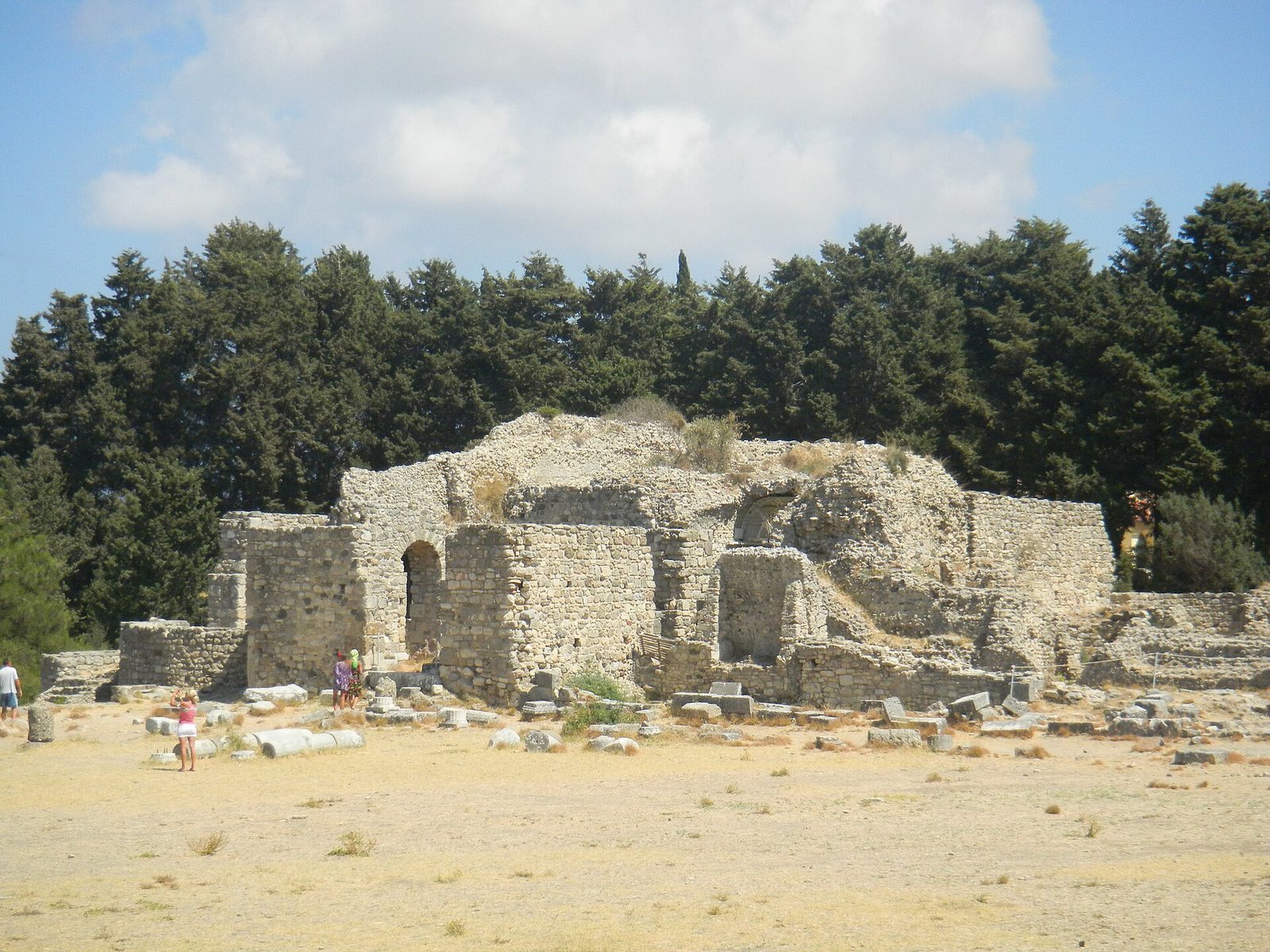
Beside the present entrance stands a small Roman-period bath building used for purification. Stairs from it lead to the first main terrace. A larger bath complex occupies the terrace’s eastern edge. Built in the third century CE, it has three rooms and was made of small stones bonded with lime. Wall paintings and mosaics were found in the building.
Entrance colonnades
A columned entrance once led onto the first terrace, where roofed colonnades bordered the north, east, and west sides. Their identification as a medical school has been proposed but remains uncertain. A Roman latrine stood along the terrace’s western edge.
Retaining wall and water supply
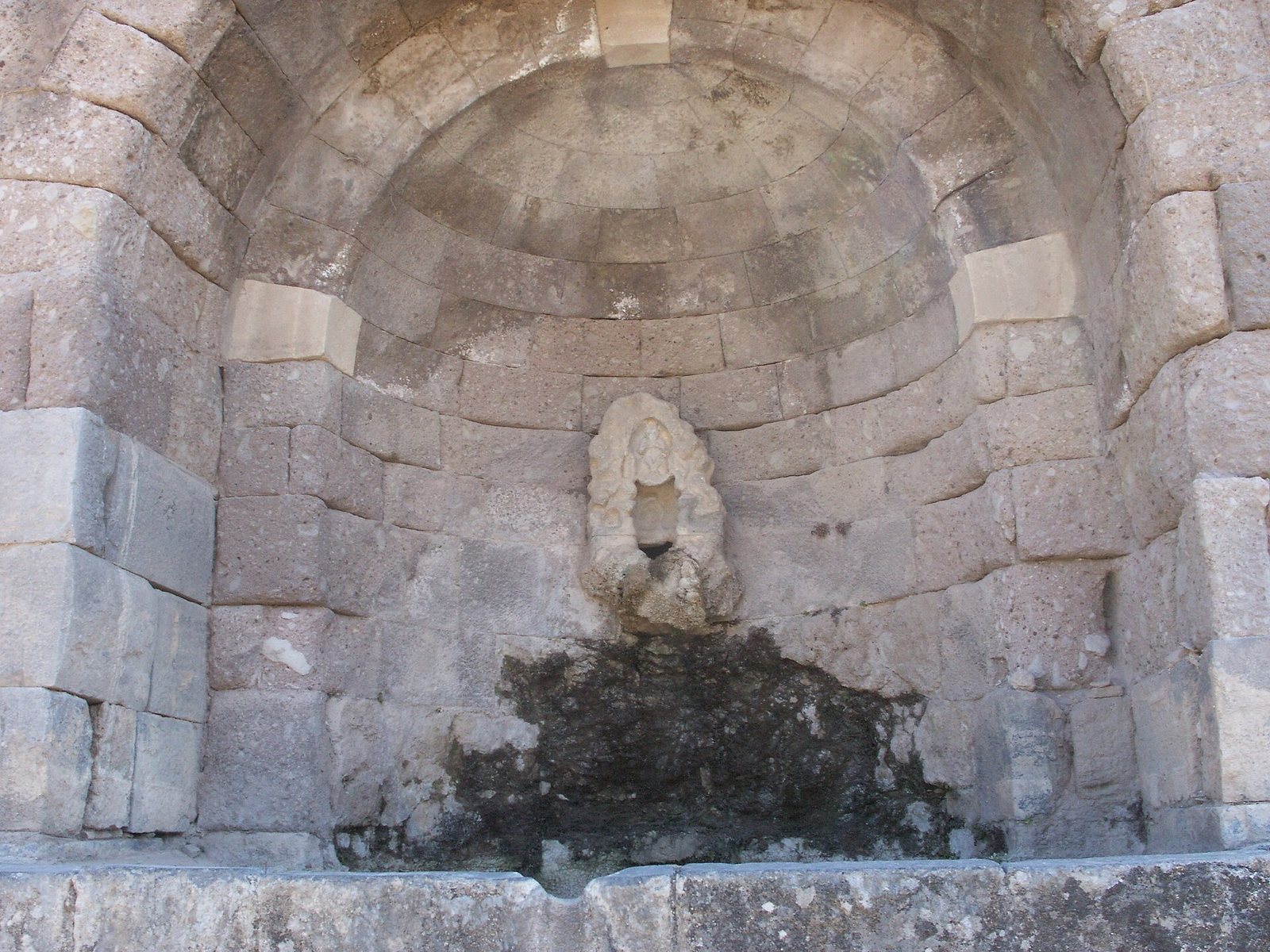
Along the terrace’s southern side, the tall retaining wall of the next level contains statue niches and a spring-fed well. Its water, containing sulfur and iron, came from the Kokkinónero and Voúrinna springs south of the site. A stairway passes through the middle of the wall to the higher terrace.
Middle terraces
Altar to Asclepius
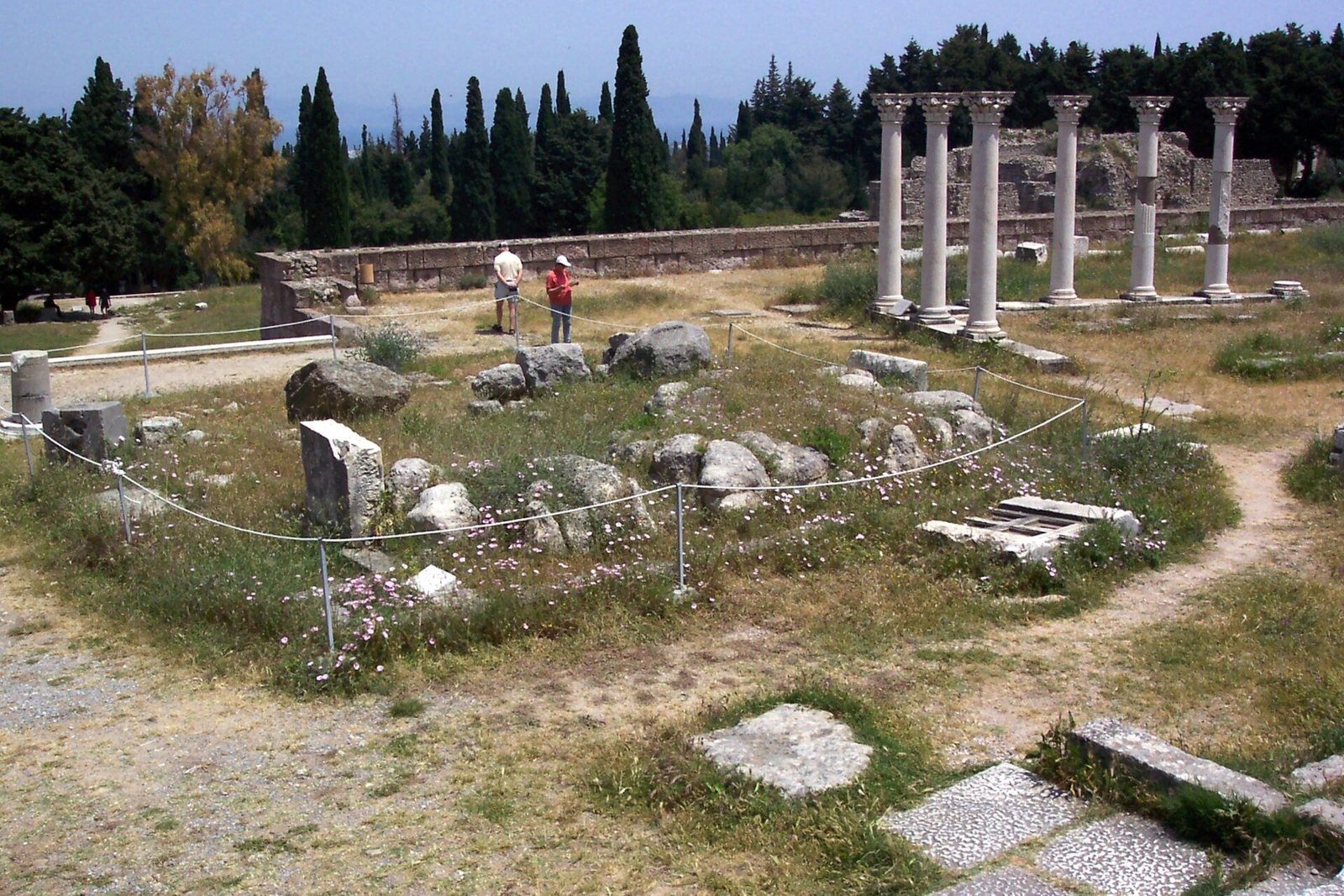
The second terrace contains the oldest known structure in this area, an altar to Asclepius. Built in the fourth century BCE, it was rebuilt in the second century BCE following the model of the Altar of Zeus at Pergamon. Its foundations survive.
Early temple of Asclepius
North of the altar, on the right when seen from the stairs, stood the earliest small temple to Asclepius. Built in the early third century BCE in the Ionic order, a classical style distinguished by its column forms, it later served as the sanctuary’s treasury. The painter Apelles decorated it with works that included Aphrodite Anadyomene, showing Aphrodite rising from the sea. The painting was taken to Rome during the reign of Augustus, the first Roman emperor. A nearby building may have been used by priests.
Raised platform and eastern buildings
Behind the altar on its left, viewed from the stairs, a raised platform with statue niches may have served as a meeting place for priests or doctors. East of the altar stood a temple to Apollo, built in the second century CE in the Corinthian order, a classical column style with distinctive capitals. Seven of its columns have been restored. Farther east is a building called the Lesche, which may have served as an assembly hall or a place to keep snakes.
Water channels and museum
Several basins on the middle terrace received water through channels from springs containing iron and sulfur; the water was used in treatment. A small museum occupies the eastern part of the archaeological area and contains inscriptions found at the site. Excavations also recovered medical instruments and vessels, now held in an Archaeological Museum.
Upper terrace
Temple of Asclepius
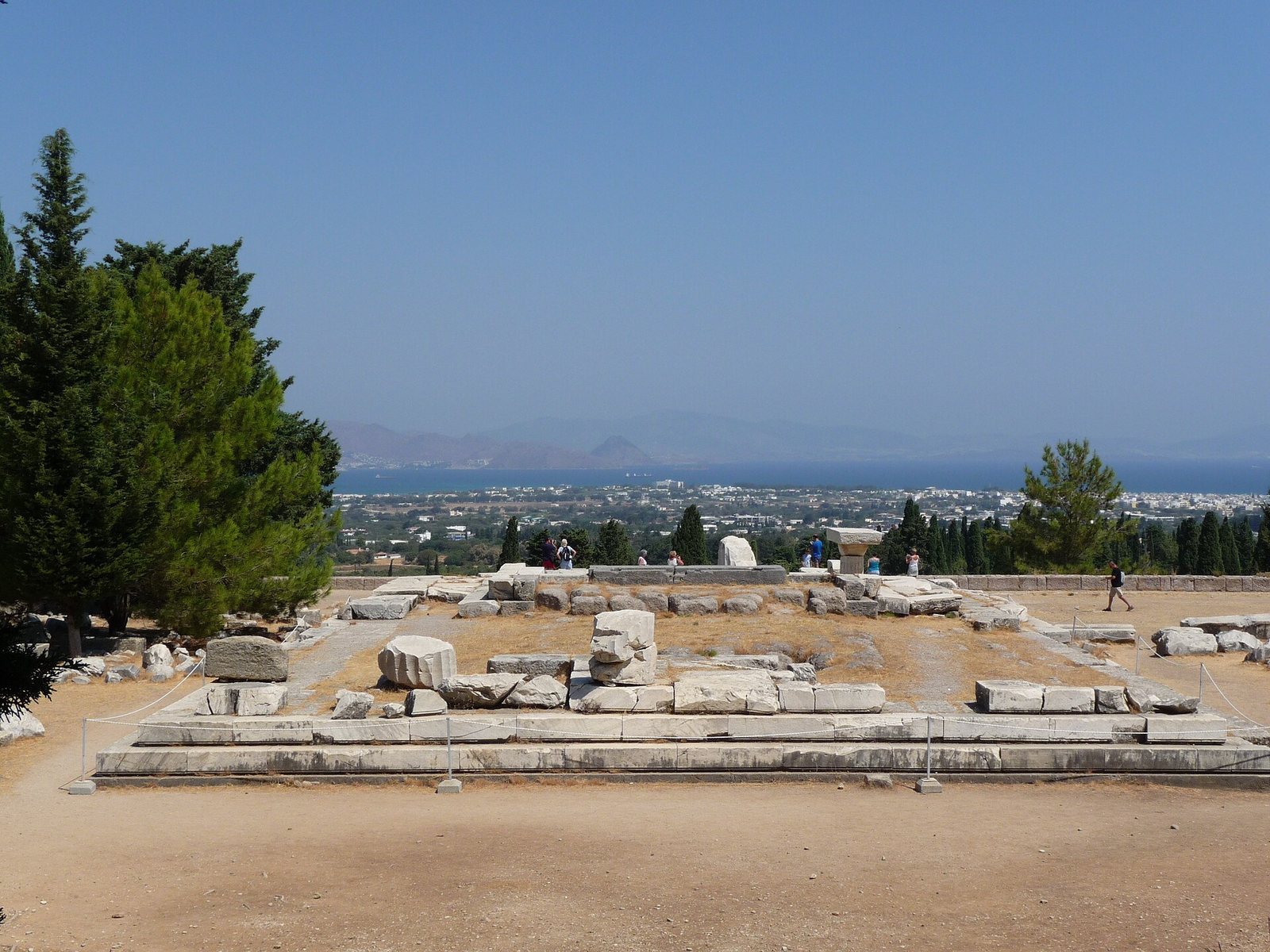
The upper terrace was laid out in the second century BCE. At its center stood the large temple of Asclepius, modeled on the temple at Epidaurus. It followed the Doric order, a classical column style, and measured about 33.28 by 18.79 metres. The temple had eleven columns along each long side and six along each short side; its surviving remains are mainly foundations.
Church remains
Remains of Panayia tis Tarsou church are located at the upper temple site. A surviving column served as the church’s altar.
Patient and pilgrim buildings
Buildings for patients and pilgrims stood south, east, and west of the upper temple. Their Doric colonnades fronted rooms used for healing and lodging. An aqueduct also lies on this terrace. Stairs on its southern side lead toward the sacred cypress grove.