Aglaureion: An Athenian Sanctuary of Aglauros
Site at a Glance
- Popularity
- Medium
- Country
- Greece
- Primary era
- Classical
- Eras represented
- Iron Age, Classical
- Civilizations
- Ancient Greek
- Site type
- Religious
- Remains
- Sanctuary
On this page9 sections
History
The Aglaureion was a small Athenian sanctuary dedicated to Aglauros on the eastern slope of the Acropolis in Athens, Greece. It is associated with the Archaic and Hellenistic eras, before and after the Classical period respectively, and with Athenian religious and civic traditions. An inscription from around 250 BCE provides direct evidence of the sanctuary’s priesthood and rites.
Myth and civic traditions
Aglauros was a daughter of Cecrops, the legendary first king of Attica. According to tradition, she willingly leapt from the Acropolis after an oracle foretold that her death would save the city from a prolonged siege. Athenians held an annual festival in her honor, the Aglauria, although its date and ceremonies are unknown. The festival may have coincided with the oath-taking of ephebes, young citizens undertaking military training and civic preparation.
The sanctuary may also have been connected with the Arrhephoria, a festival involving ritual service by young girls, alongside the sanctuaries of Aphrodite and Eros. Athenian civic tradition associated the Aglaureion with the oath sworn by ephebes. In it, they pledged to defend their homeland and obey its laws.
Ancient accounts and the Hellenistic decree
Polyainos recounts that Peisistratus, an Athenian ruler, distracted citizens while his followers carried their weapons from the sanctuary of Castor and Pollux into the Aglaureion. The maneuver was intended to disarm the citizens.
Herodotus reports that Persian forces climbed the Acropolis near the sanctuary when they captured and destroyed the citadel in 480 BCE. Around 250 BCE, a decree honored Timokrite, daughter of Polynikos of Aphidnai, and recorded her appointment as priestess of Aglauros. It directed that the inscribed stone slab be set up in the sanctuary. The decree also mentions sacrifices at initiation rites and an all-night vigil.
Identifying the sanctuary
Until the 1980s, many scholars placed the sanctuary on the Acropolis’ northern slope, often identifying it with a cave spring. The discovery of an inscribed stele on the eastern slope in 1980 shifted the proposed location eastward. Greek archaeologist Georgios Dontas argued that the stele had remained where it was originally erected, supporting the eastern identification.
This proposed location also prompted renewed consideration of whether the Anakeion, a sanctuary of Castor and Pollux, the archaic agora, or central civic and commercial space, and the Prytaneion, a civic center, lay east of the Acropolis.
Remains
Cave and cult enclosure
Natural cave and setting
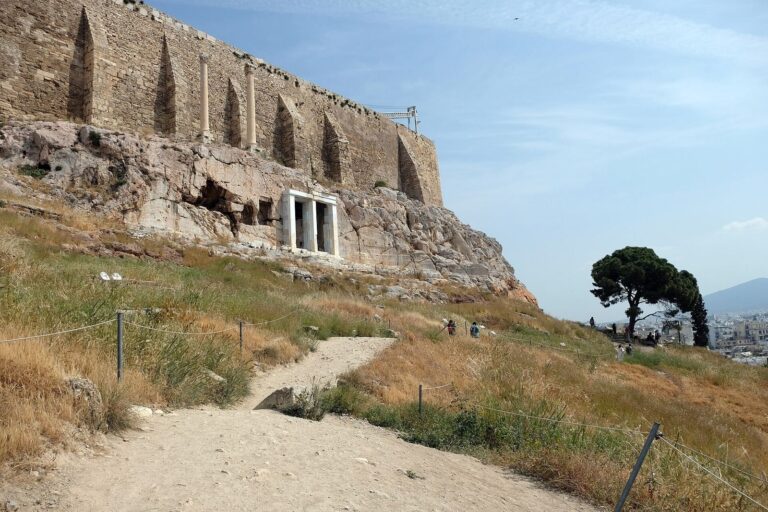
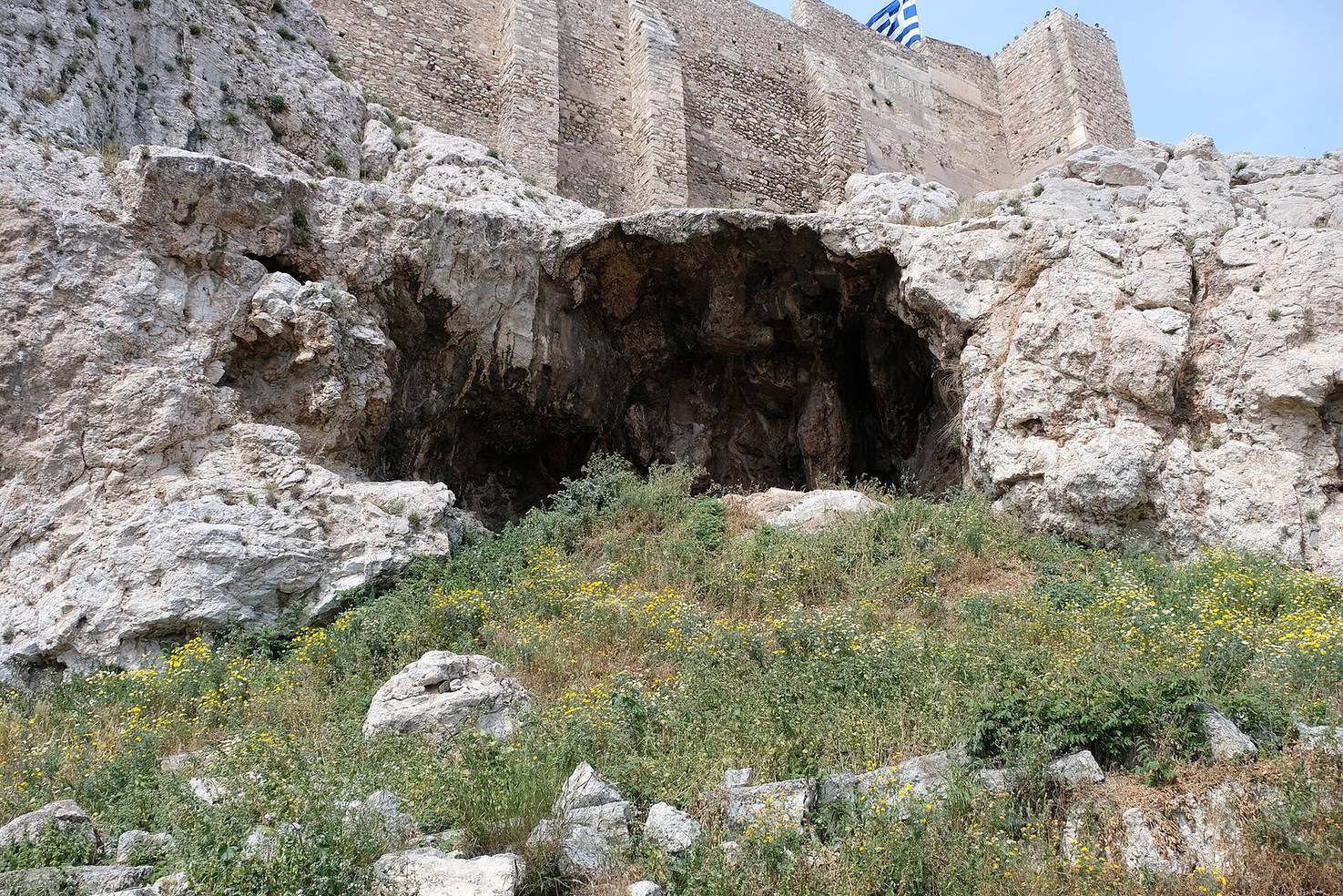
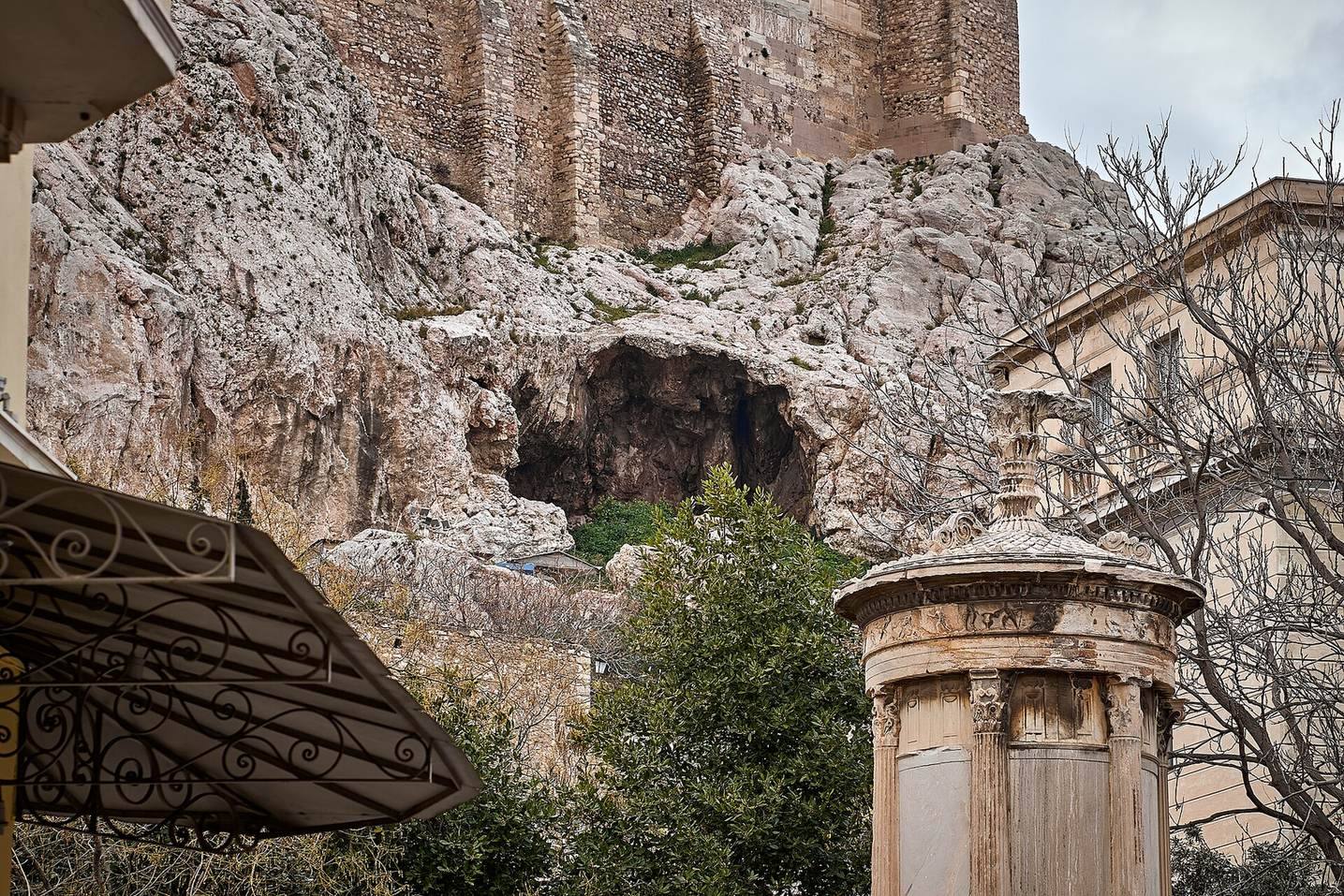
The sanctuary occupied a natural cave and a cult enclosure on the Acropolis’ eastern slope, beside the Peripatos, the route beneath the Acropolis. The cave entrance is about 14 metres wide, and the cavity extends approximately 22 metres from east to west. Pausanias, a Greek writer of the second century CE, placed the sanctuary above the shrine of Castor and Pollux and near the Prytaneion.
Altar and enclosure
Excavations took place inside the cave in 1936. Ancient layers in and around it are poorly preserved. The excavated area includes foundations of an altar, steps leading to it, and the emplacement of the inscribed stele.
Inscribed stele
The stele was found intact and still attached to its base, on the eastern slope a considerable distance below the eastern cave. It is now held by the Acropolis Museum.