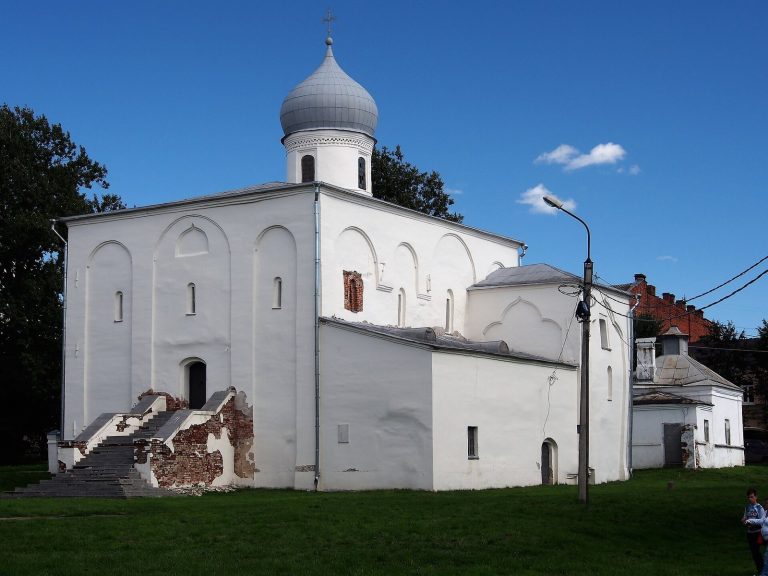
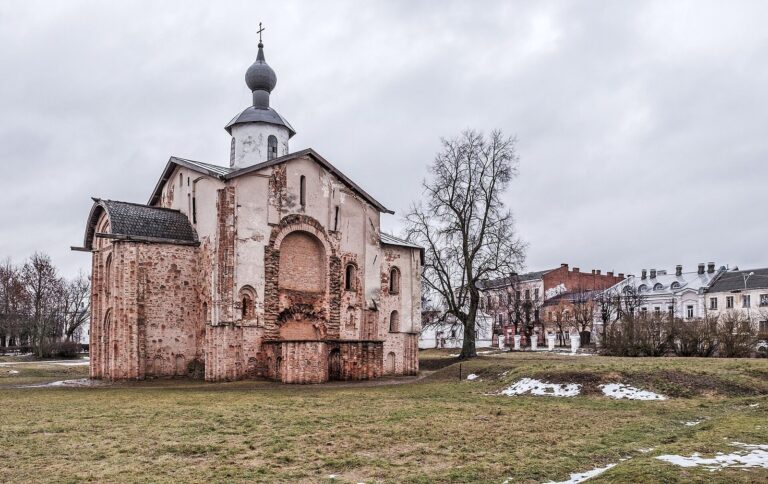
Church of the Apostle Philip and Saint Nicholas: A Novgorod Orthodox Church
Site at a Glance
- Popularity
- Medium
- Country
- Russia
- Primary era
- Medieval
- Eras represented
- Medieval, Early Modern, Modern
- Civilizations
- Novgorod Republic, Russian
- Site type
- Religious
- Remains
- Church
On this page15 sections
History
Medieval foundation and parishes
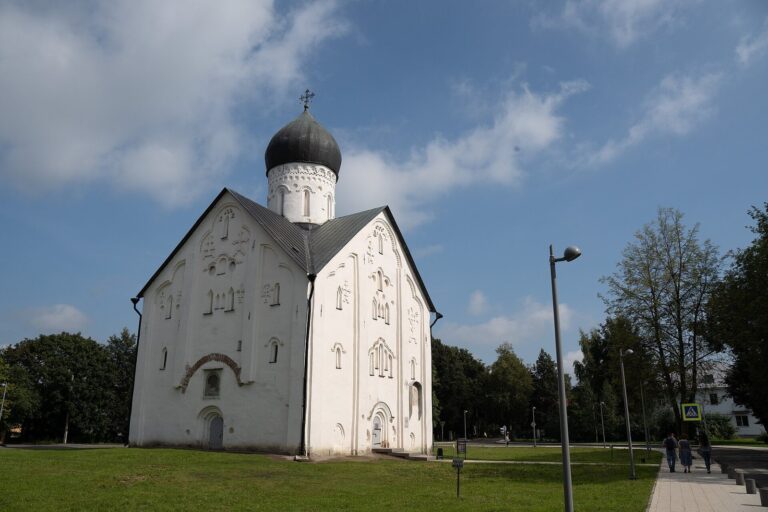
The Church of the Apostle Philip and Saint Nicholas is a Russian Orthodox church in Novgorod, Russia. Its stone Church of the Apostle Philip was built in 1383–1384, and the complex is associated with Novgorodian architecture. A wooden church had stood on the site by 1194. The stone building was commissioned by Novgorod posadniks, senior civic officials, Rodislav Danilovich, Ustin, and Philip.
In 1527–1528, merchants from Novgorod and Moscow built two churches on the site. They served separate parishes: one for Novgorod boyars, members of the landed and political elite, and one for people living in the surrounding area. The parishes joined in 1608.
Changes to the Nicholas church
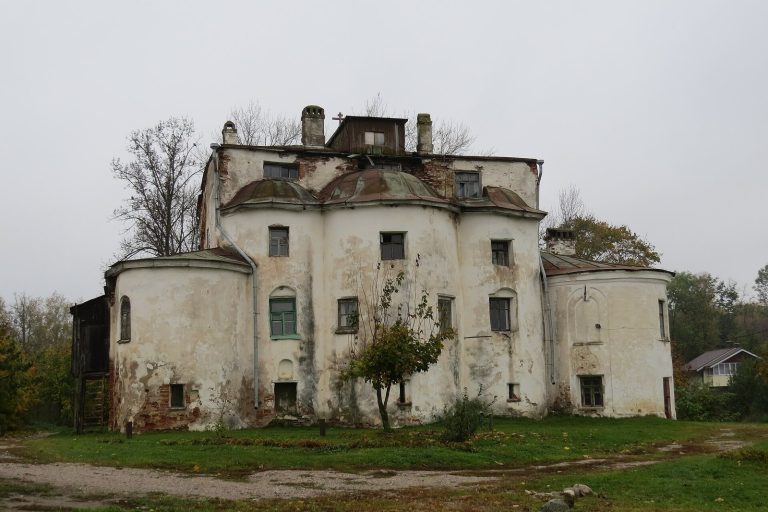
The Church of Nicholas the Wonderworker was enlarged to three stories in 1659–1660. In the eighteenth century it was reduced to two stories and converted into a chapel. Most of the building was dismantled at the end of the nineteenth century.
Parish life and restoration in the Soviet period
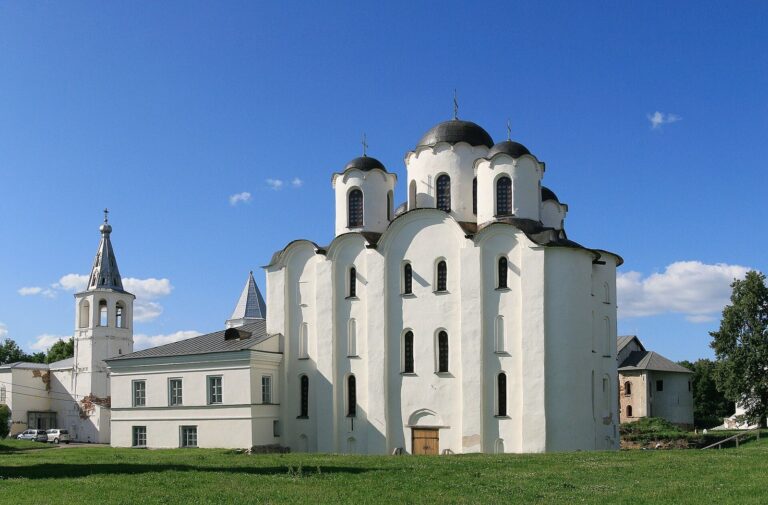
During the Khrushchev-era Soviet campaign to restrict religious institutions and worship, the Nikolo-Dvorishchensky Cathedral was taken over as a museum in 1962. Its parish moved to the Church of the Apostle Philip, which was reconsecrated on September 28 that year. It remained Novgorod’s only active church until 1989. Archbishop Lev (Tserpitsky) later recalled that congregations on major feast days were so large that the church walls seemed to weep.
After the Novgorod Diocese joined the Leningrad Diocese, Metropolitan Nikodim (Rotov), a senior Orthodox bishop, regularly came to lead services, sometimes accompanied by foreign delegations. Local officials in the then-closed city strongly opposed these visits, and repeated efforts were needed to obtain permission through Moscow.
A chapel beneath the church was consecrated in 1968 in honor of All Saints of Novgorod, the collective of saints venerated in the Orthodox tradition associated with the city. Surveys and study in 1969–1970 led to a restoration plan, but an order barring expansion of the active church delayed construction for nearly a decade. After the Soviet Union signed the 1975 Helsinki Accords, an agreement on European security and cooperation that also addressed human rights, work began in 1977 and continued through 1978.
The church remains an active parish of the Russian Orthodox Church in the Novgorod Diocese, a territory administered by a bishop, and the Novgorod deanery, a subdivision of a diocese. It is designated a cultural heritage monument of federal significance in Russia.
Remains
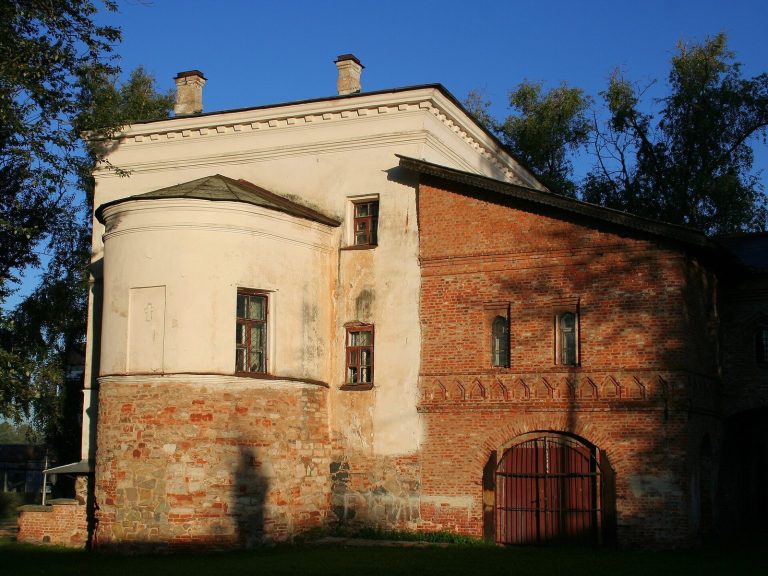
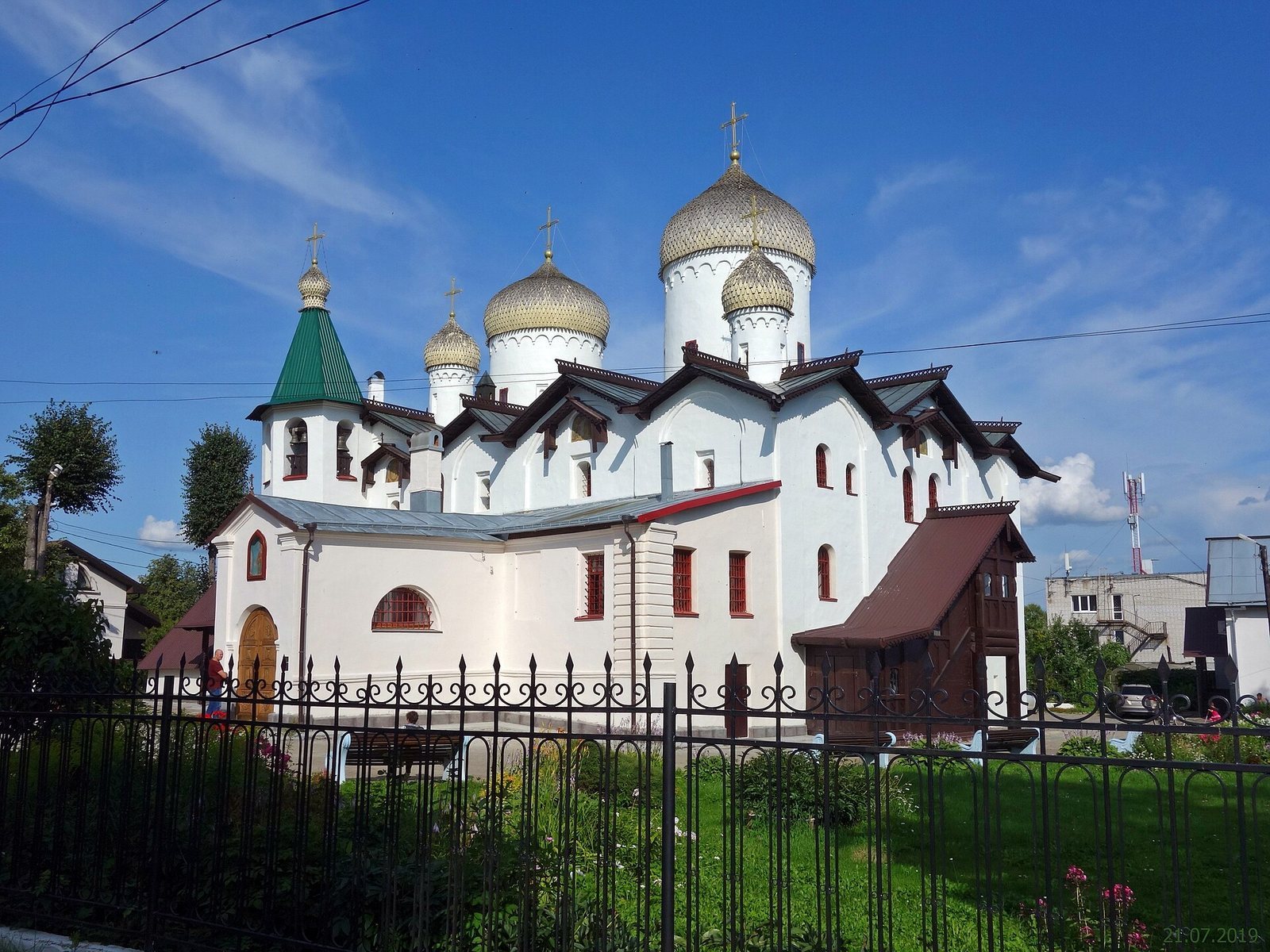
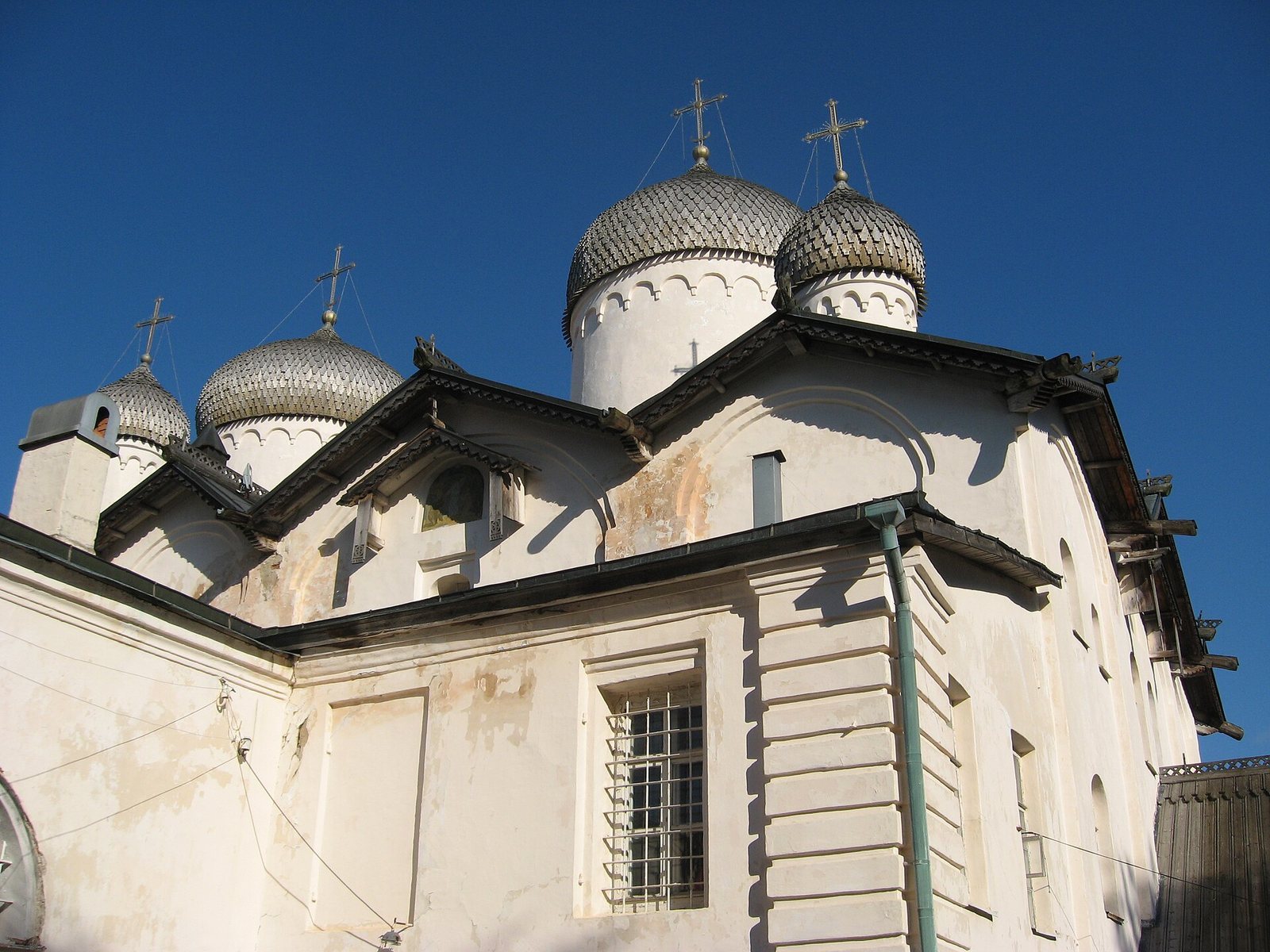
The complex consists of the Church of the Apostle Philip and the adjoining Church of Nicholas the Wonderworker, which stands directly to its north. Both buildings share a foundation, and a bell tower stands to the west. The restored complex follows forms associated with sixteenth-century Novgorod and is identified with Novgorodian architecture.
Church buildings and exterior features
Church of the Apostle Philip
The Philip church forms the main part of the complex. Its early stone building had a small chapel on its north side, and the churches established in the sixteenth century were two stories high. The restoration returned the monument to forms associated with that century.
Church of Nicholas the Wonderworker
The dismantled Nicholas church survives in parts. Its western wall remains, along with traces on the adjoining wall of the Philip church and surviving foundations.
Western porch and bell towers
The western porch and a bell tower were retained during the later restoration; the retained tower is described as dating to the eighteenth century. A bell tower with a tent-shaped top had been added in the seventeenth century.
Interior furnishings
Main church
The main church has a three-tier iconostasis, an icon-bearing screen separating the sanctuary from the worship space. Moscow icon painters painted it in 1969 in an Old Russian style, using horizontal beams to support its tiers.
Chapel beneath the church
The lower chapel has an iconostasis painted by Archbishop Sergius (Golubtsov), who was also an icon painter.
Church enclosure and nearby house
Vasily Peredolsky’s burial place
Novgorod local historian Vasily Peredolsky, who died in 1907, is buried within the church enclosure.
Peredolsky’s house
Peredolsky’s wooden house once stood opposite the church. It was dismantled in 1994 and recreated in brick with wooden cladding in the 2000s for use as a diocesan spiritual-education center.