Pastyrske Hill Fort: A Scythian and Early Medieval Settlement in Ukraine
Site at a Glance
- Popularity
- Medium
- Country
- Ukraine
- Primary era
- Medieval
- Eras represented
- Iron Age, Medieval
- Civilizations
- Scythian
- Site type
- City
On this page8 sections
History
Pastyrske Hill Fort is an archaeological settlement about 3 km west of Pastyrske village, in the hamlet of Svynolupivka, Ukraine, on both banks of the Sukhyi Tashlyk River. Its archaeological record includes Scythian-period occupation and an early medieval settlement that emerged in the second half or toward the end of the seventh century AD. The later community became a major trading and craft center associated with the Penkovka culture, an archaeological classification based on material remains, and may also have been a political center.
Scythian-period settlement
The site’s Scythian-period layers date from the seventh to the third centuries BC. Between the sixth and fourth centuries BC, its inhabitants traded with Greek cities along the northern Black Sea coast, particularly Olbia, an ancient Greek city in that region.
The early medieval community
Pastyrske’s early medieval settlement developed in the second half or near the end of the seventh century. It was a multiethnic community that included migrants from the lower Danube and eastern Slavs associated with the Luka-Raikovets culture, another archaeological classification based on material remains. The settlement’s material culture has few pronounced Slavic characteristics and shows strong parallels with finds from the lower Danube, the Black Sea region, and the North Caucasus.
The inhabitants are understood to have descended from Slavs who had settled in the lower Danube and northeastern Balkans during the sixth and seventh centuries. After the Bulgars arrived in the Balkans around 679 to 680, some Slavs left the region. Their movement is associated with the settlement of Pastyrske and may provide a historical background for Nestor’s account of a Danubian ancestral homeland for the Slavs. Nestor was a medieval chronicler traditionally associated with the Primary Chronicle, a major account of early East Slavic history.
Pastyrske’s economic and social development exceeded that of the contemporary settlement at Kyiv at the turn of the seventh and eighth centuries. In this interpretation, Kyiv was not then a tribal center, and the same assessment has been applied to its later Volyntsevo-period settlement. After Pastyrske’s destruction, Bititsa hillfort became a comparable political and economic center in the Middle Dnieper, among settlements associated with the Penkovka culture.
Destruction and later investigation
The settlement appears to have been destroyed in the first half of the eighth century, possibly during an attack by the Khazars, a steppe people whose political power extended across parts of early medieval eastern Europe. Its inhabitants perished in raids by steppe nomads. The destruction of Pastyrske, together with the advance into the forest-steppe as far as the Kyiv region of nomadic groups associated with the Pereshchepina culture, is linked to the Kyiv Hoard, discovered in 1892.
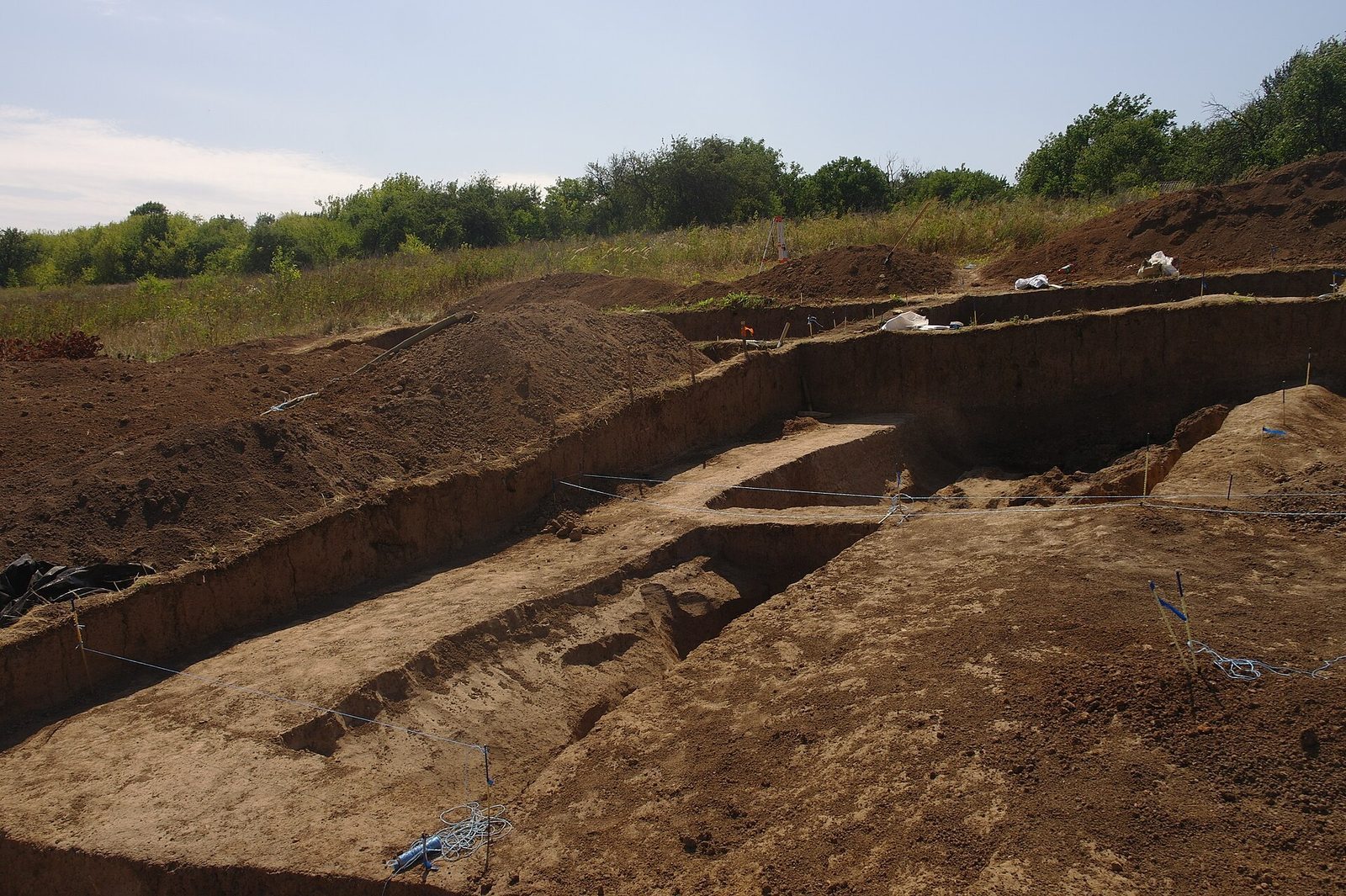
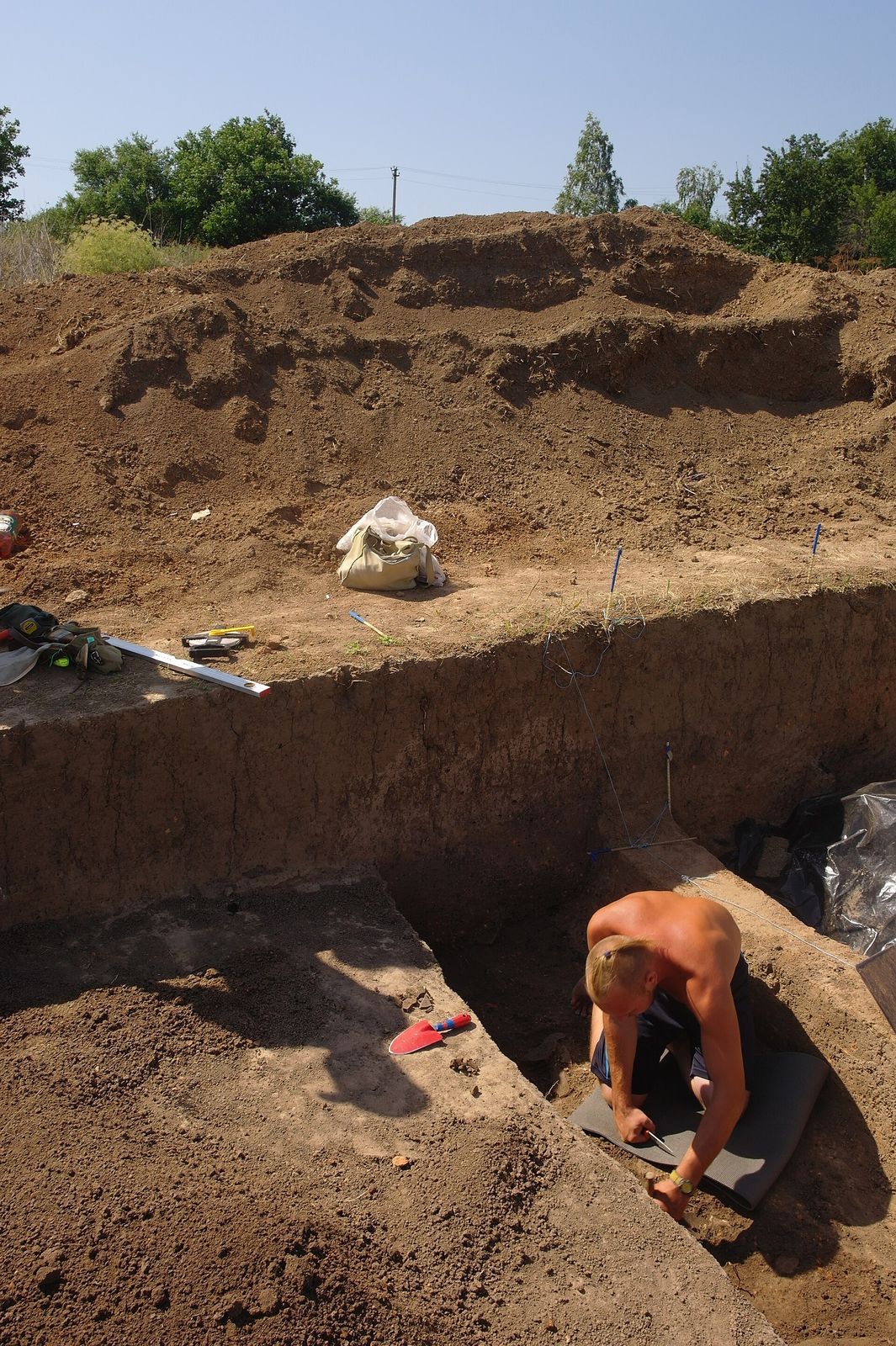
Excavations began in 1898 under the archaeologist Vikentiy Khvoyka and continued in the 1930s, 1940s, and 1990s. Later work involved Serhii Korshenko, Iryna Fabritsius, Mykhailo Braichevskyi, and Oleh Prykhodniuk; excavation work was also documented in 2017. The hillfort is protected in Ukraine as a cultural-heritage monument of national significance.
Remains
Layout and fortifications
The site covers about 25 hectares beside the Sukhyi Tashlyk River, a tributary of the Tyasmin. Its narrower left-bank sector covers about 5 hectares, while the right-bank sector covers about 15. Earthworks of ditches and ramparts were built in two earlier phases, in the seventh to sixth centuries BC and again in the fourth to third centuries BC. During the early medieval settlement, occupation was concentrated mainly on the left bank. Inhabitants reused the older earthworks without renewing them.
Dwellings and storage
Excavations uncovered 50 quadrangular dwellings partly sunk below ground, each measuring 10 to 20 square metres, along with above-ground houses, other domestic structures, and pits. Three long buildings were also excavated. One contained a large quantity of charred millet, barley, lentils, peas, hemp, rye, wheat, and oats.
Workshops and material finds
Iron-smelting workshops and a forge with a complete set of craft tools formed part of the settlement’s working areas. A communal grain store and specialized jewelry-making tools provide further evidence of its crafts and food storage. Finds include sickles, scythes, other tools, and wheel-made pottery. High-quality pots were shaped on a potter’s wheel and given burnished, decorated surfaces. Imported Greek pottery was also found at the site.
Bronze and silver ornaments include hundreds of fibulae, arm bracelets, and temple pendants, with some jewelry concentrated in hoards. Pastyrske-type earrings are also known from Hryhorivka and Zelenky and from the Kharyiv hoard.