Sanctuary of Zeus Olympios at Ancient Dion: A Hellenistic Cult Center
Site at a Glance
- Popularity
- Very Low
- Country
- Greece
- Primary era
- Classical
- Eras represented
- Classical
- Civilizations
- Kingdom of Macedon
- Site type
- Religious
- Remains
- Sanctuary
On this page8 sections
History
Cult at Dion
The Sanctuary of Zeus Olympios at Ancient Dion in Greece began as a sacred grove and developed into a built sanctuary in the fourth century BCE, during the Hellenistic period that followed Alexander’s conquests and spread Greek influence across a wide region. Zeus, the chief deity of ancient Greek religion, was worshipped at Dion as the city’s patron. The name Dion derives from a form of Zeus’s name, while the title Olympios associates the god with Mount Olympus. Dion also had a distinct temple to Zeus Hypsistos, meaning “Most High.”
Royal dedications and civic records
The sanctuary received royal gifts and statues of Macedonian kings. After the Battle of the Granicus in 334 BCE, Alexander III dedicated statues of 25 commanders who had died in the battle. A bronze group of mounted figures, made by the sculptor Lysippos and given to Alexander after the battle, was taken to Rome in 148 BCE by Quintus Caecilius Metellus Macedonicus, after Macedonia became a Roman province.
Inscriptions help identify the sanctuary’s dedication to Zeus Olympios. Two direct that they be set up there: a decree of Philip V concerning the boundary between Pherae and Demetrias in Thessaly, and a resolution of Dion from the late fourth century BCE. Other texts preserve alliance treaties, royal orders, decisions by Dion’s civic government, and records of royal gifts. They include a treaty between Philip V and the Lysimachids, the dynasty of Lysimachus, and the opening of a treaty between King Perseus and the Boeotian League, a federation of cities in Boeotia. Together, these inscriptions provide evidence about the Macedonian kingdom and Dion’s civic administration.
Destruction and rebuilding
In 219 BCE, forces of the Aetolian League, a federation of communities in Aetolia, burned and destroyed the sanctuary during the Social War, a conflict involving the Aetolian League and other Greek powers. The sanctuary was later rebuilt with material taken from its ruins.
Remains
Layout and architectural remains
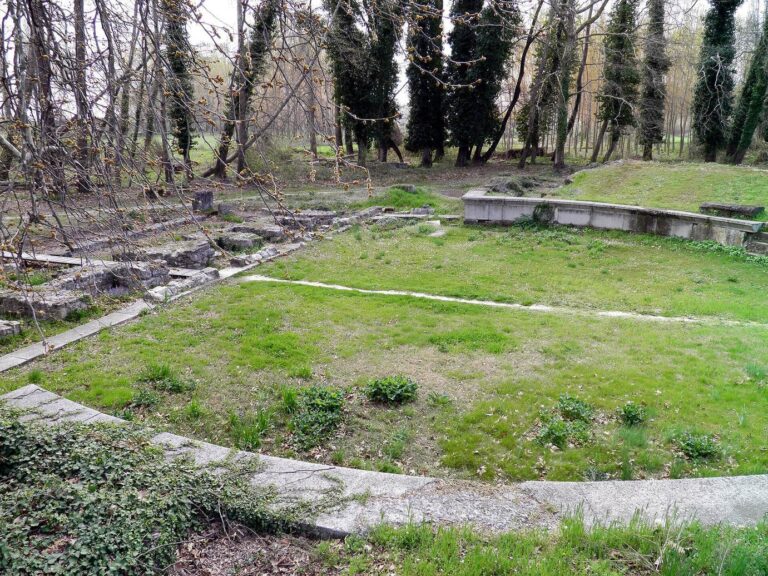
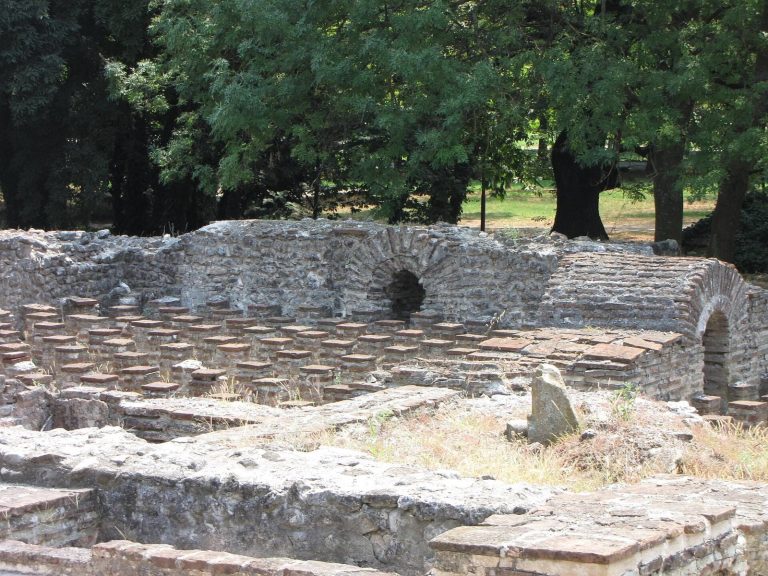
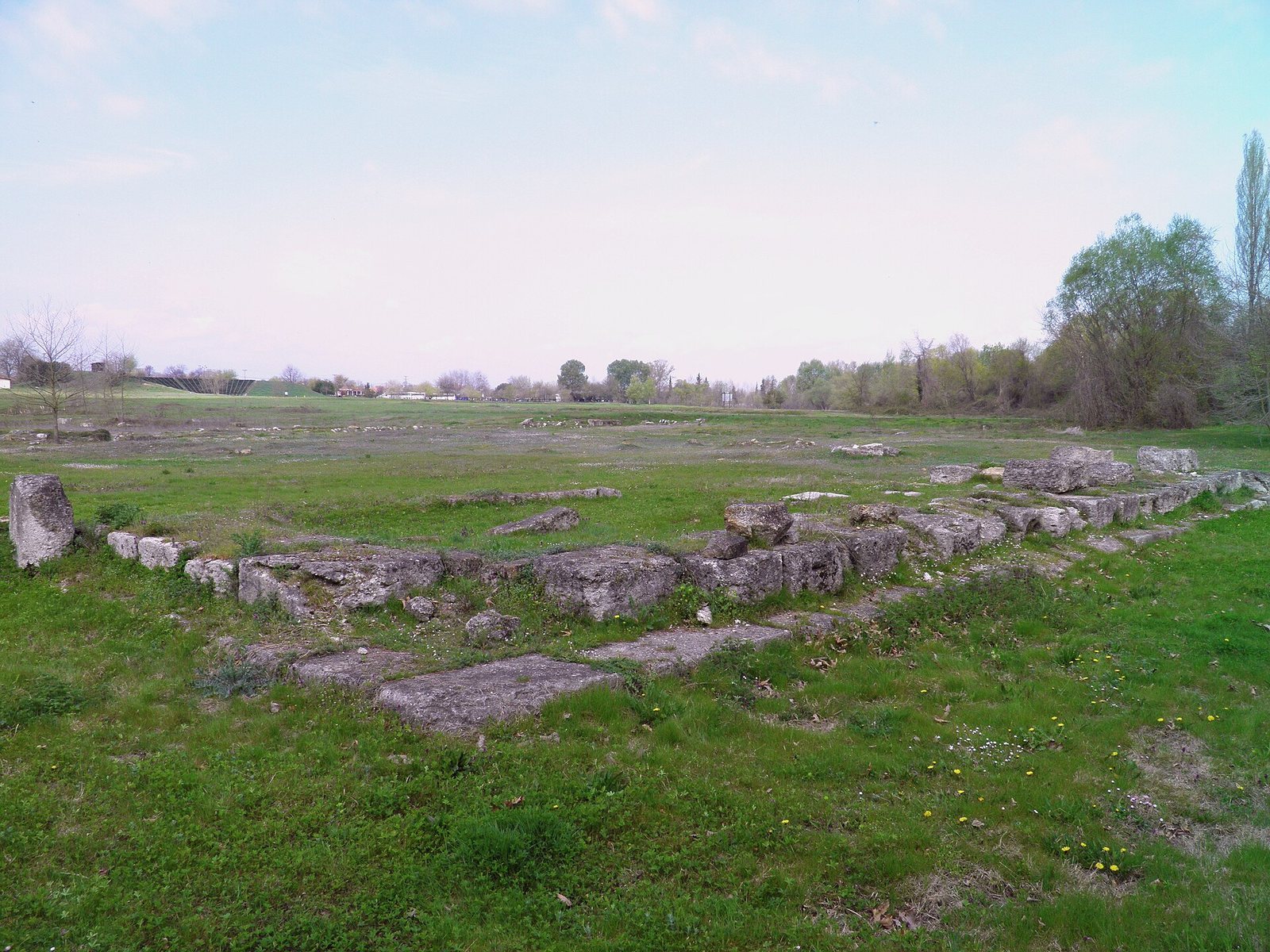
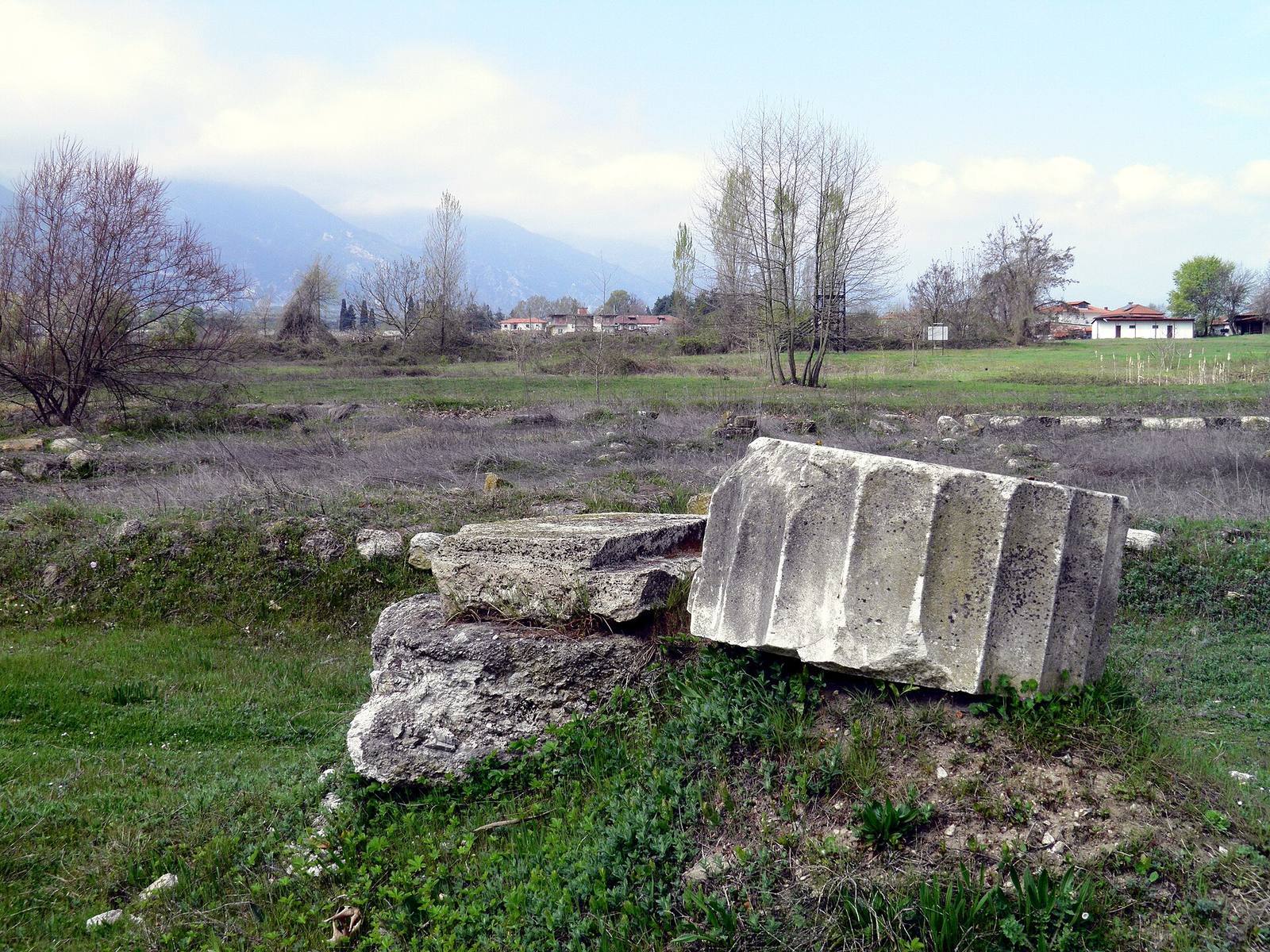
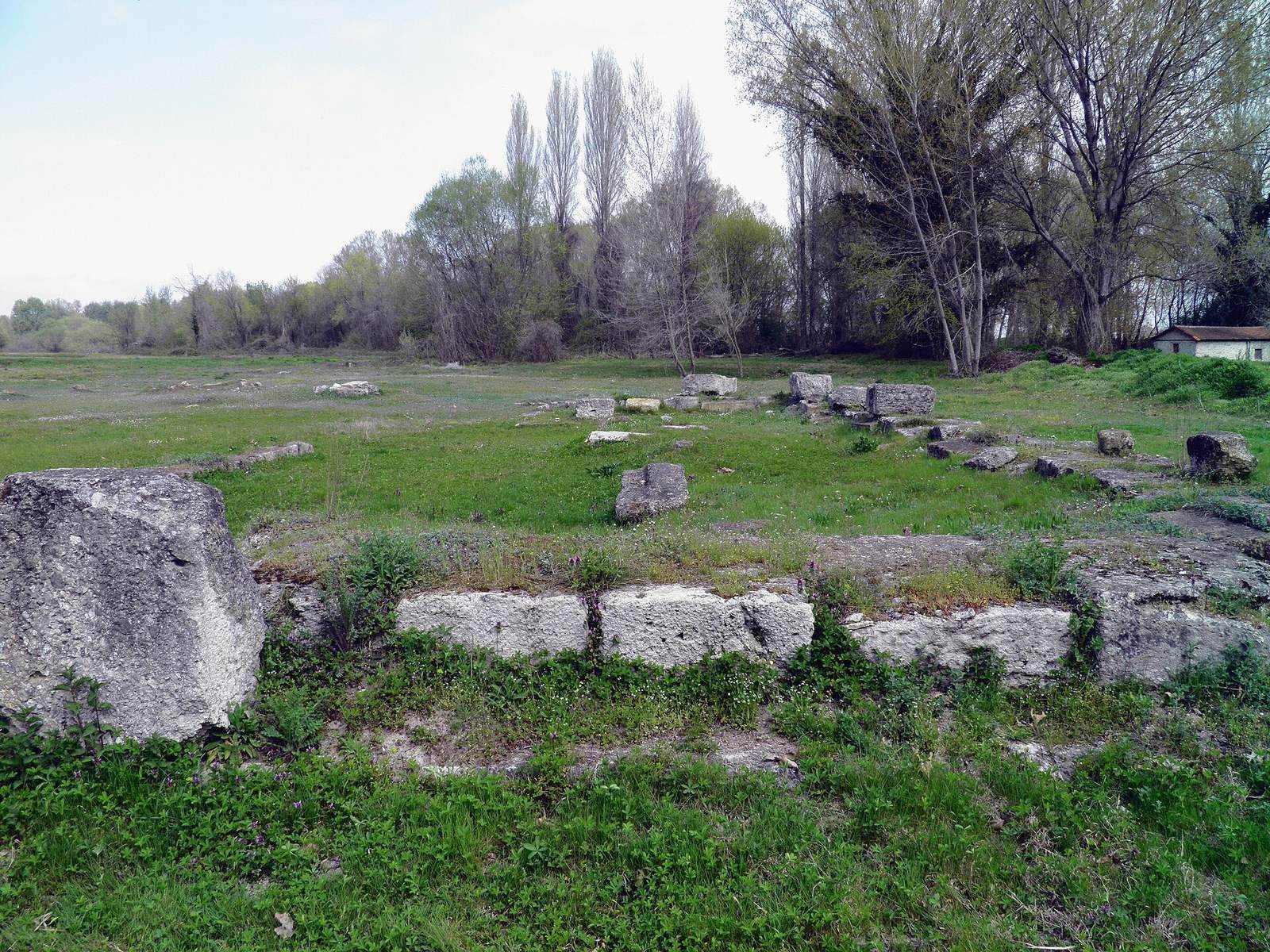
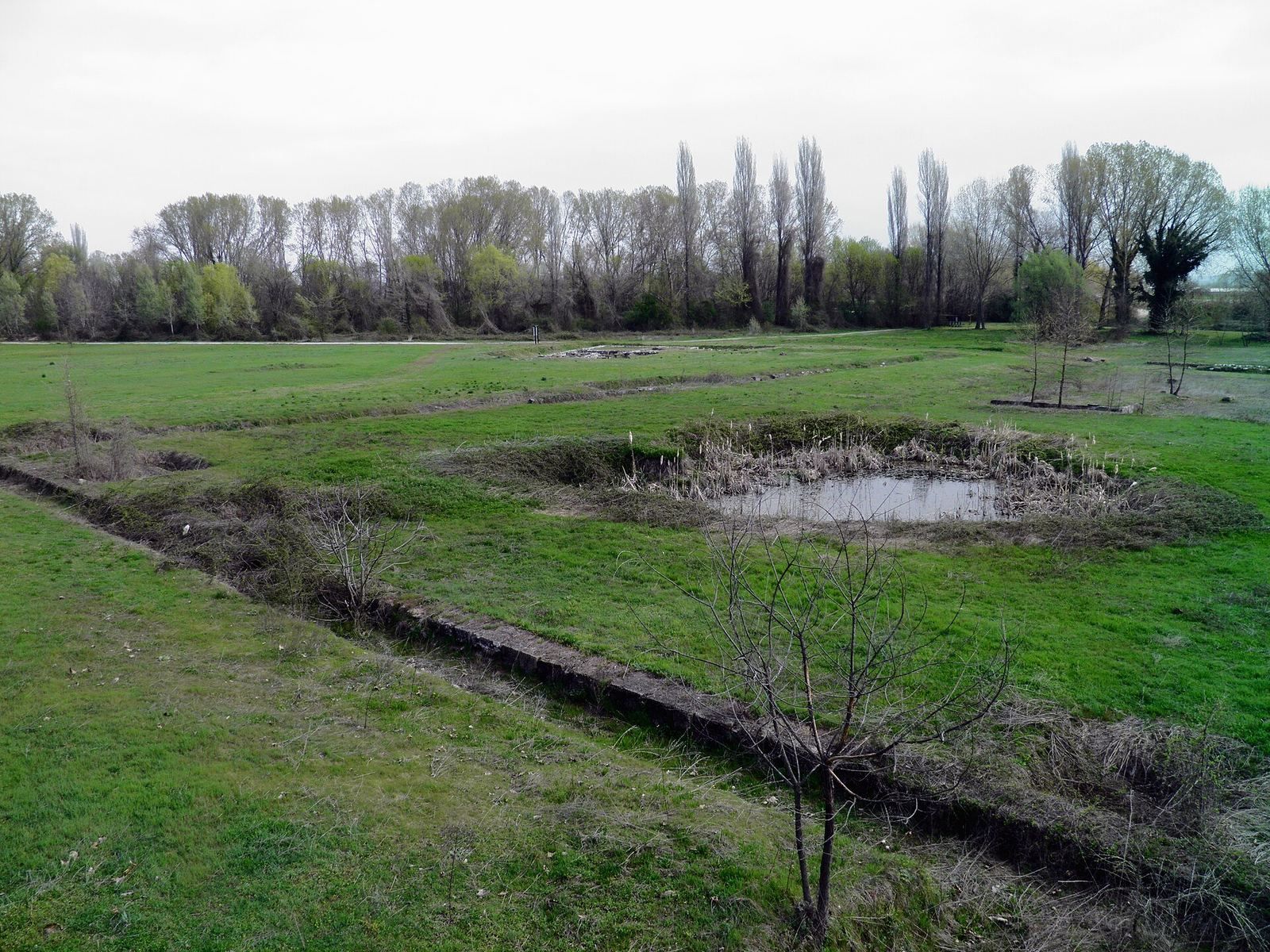
The sanctuary stood south of Dion’s city walls, between the Hellenistic Theater to the west and the Roman Theater to the south. Its main area was roughly square, with sides about 100 metres long. Along the eastern side, a colonnade and a central propylon, or monumental entrance structure, divided this area from the large altar. A wall more than 100 metres long is thought to have enclosed the sanctuary. The buildings belong to different Hellenistic periods, and surviving column bases indicate a monumental structure in the Doric style, one of the principal architectural orders of ancient Greek architecture.
Altar and sacrificial installation
The monumental altar was about 22 metres long and served for a hecatomb, a sacrifice of 100 cattle central to the local cult of Zeus. Bronze rings were used to tether the animals. In front of the altar, three rows of 11 stone slabs also bore rings.
Inscriptions and statue bases
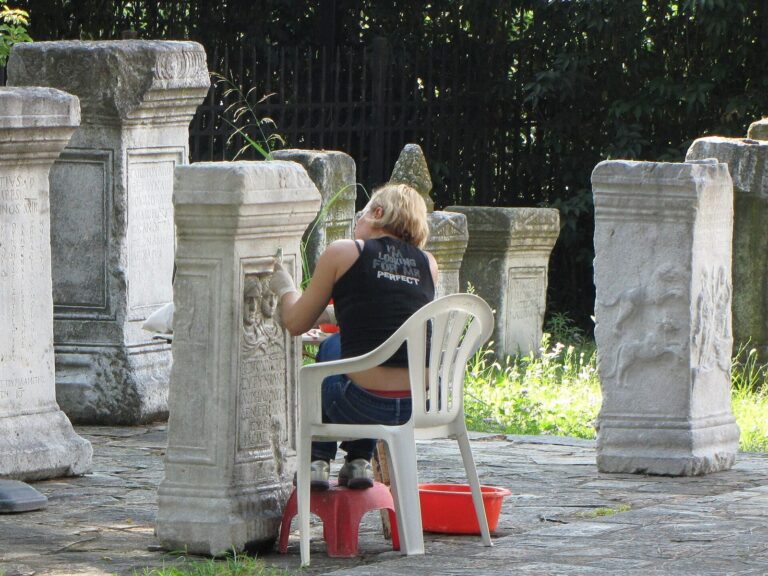
Stone stelae, upright slabs bearing inscriptions, were found in the sanctuary. The surviving remains of statues specifically identified from the site include a marble pedestal for a statue of Cassander and part of the pedestal for a statue of Perseus.