Basilica di San Prospero: A Renaissance Church in Reggio Emilia
Site at a Glance
- Popularity
- Medium
- Country
- Italy
- Primary era
- Early Modern
- Eras represented
- Medieval, Early Modern, Modern
- Civilizations
- Holy Roman Empire, Italian
- Site type
- Religious
- Remains
- Basilica
On this page22 sections
History
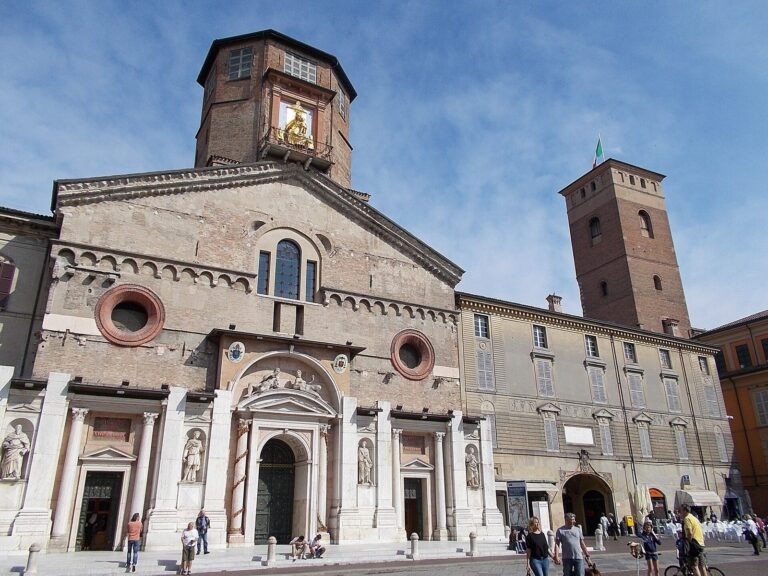
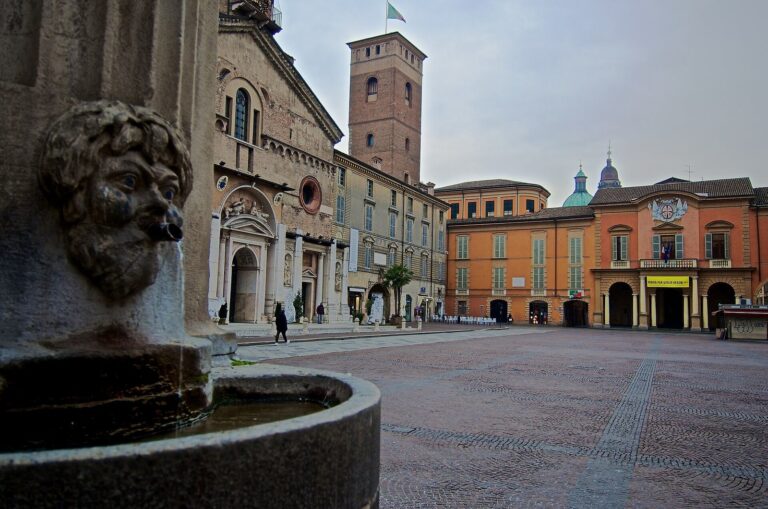
The Basilica di San Prospero is a Roman Catholic church in Piazza San Prospero, Reggio Emilia, Italy. Built under Bishop Teuzone and consecrated by Pope Gregory V in 997, it has a principally Renaissance character and a Baroque façade. The basilica became the resting place of the city’s patron saint, whose cult links it to the history of Reggio Emilia.
Foundation and devotion to Saint Prospero
The church, also known as San Prospero di Castello, stood within the city walls near the ancient Roman fortified settlement of Regium. It was distinct from an earlier church dedicated to the same saint at a monastery outside the walls. Bishop Teuzone had the church built during his episcopate, which began before 980 and continued beyond December 1029. Gregory V, pope from 996 to 999, consecrated it in 997.
The monastery outside the walls had been founded in 703. It was demolished in the sixteenth century as part of a defensive clearance of buildings along a stretch of city wall about 600 metres long. Saint Prospero’s relics were transferred from the monastery to the basilica and placed beneath its high altar. Prospero, a fifth-century bishop of Reggio, is also associated with a local tradition about Attila, the fifth-century ruler of the Huns. According to the story, Prospero prayed for divine help and a providential fog hid the city from the Huns. He is the patron saint of Reggio.
Rebuilding and later changes
After falling into ruin, the church was demolished in 1514. The municipality commissioned its reconstruction from Luca Corti and Matteo Fiorentino. In 1523, as work neared completion, the foundations of the main chapel gave way. The church was completed in 1527, and its side chapels were finished in 1543, when it was reconsecrated.
The tower had been demolished in 1487 and was rebuilt between 1536 and 1570. The reconstruction left the façade unfinished; it was completed between 1748 and 1753. The basilica is part of the Roman Catholic Diocese of Reggio Emilia-Guastalla.
In 1640, Duke Francesco I d’Este removed Correggio’s original La Notte from the Pratonieri Chapel for his private collection. The removal prompted local unrest and was regarded as sacrilegious. In 1745, Duke Francesco III d’Este sold the painting to the Elector of Saxony, one of the princes entitled to elect the Holy Roman Emperor. The original is now in the Gemäldegalerie, an art museum in Dresden.
Remains
The basilica has a cross-shaped plan, with a central nave, the main interior space, flanked by two side aisles. Its cross arms form the transept, and the area around the high altar is the presbytery. The central nave is decorated in a Neoclassical style, while the building’s overall character is principally Renaissance, with a Baroque façade.
Exterior and forecourt
Façade
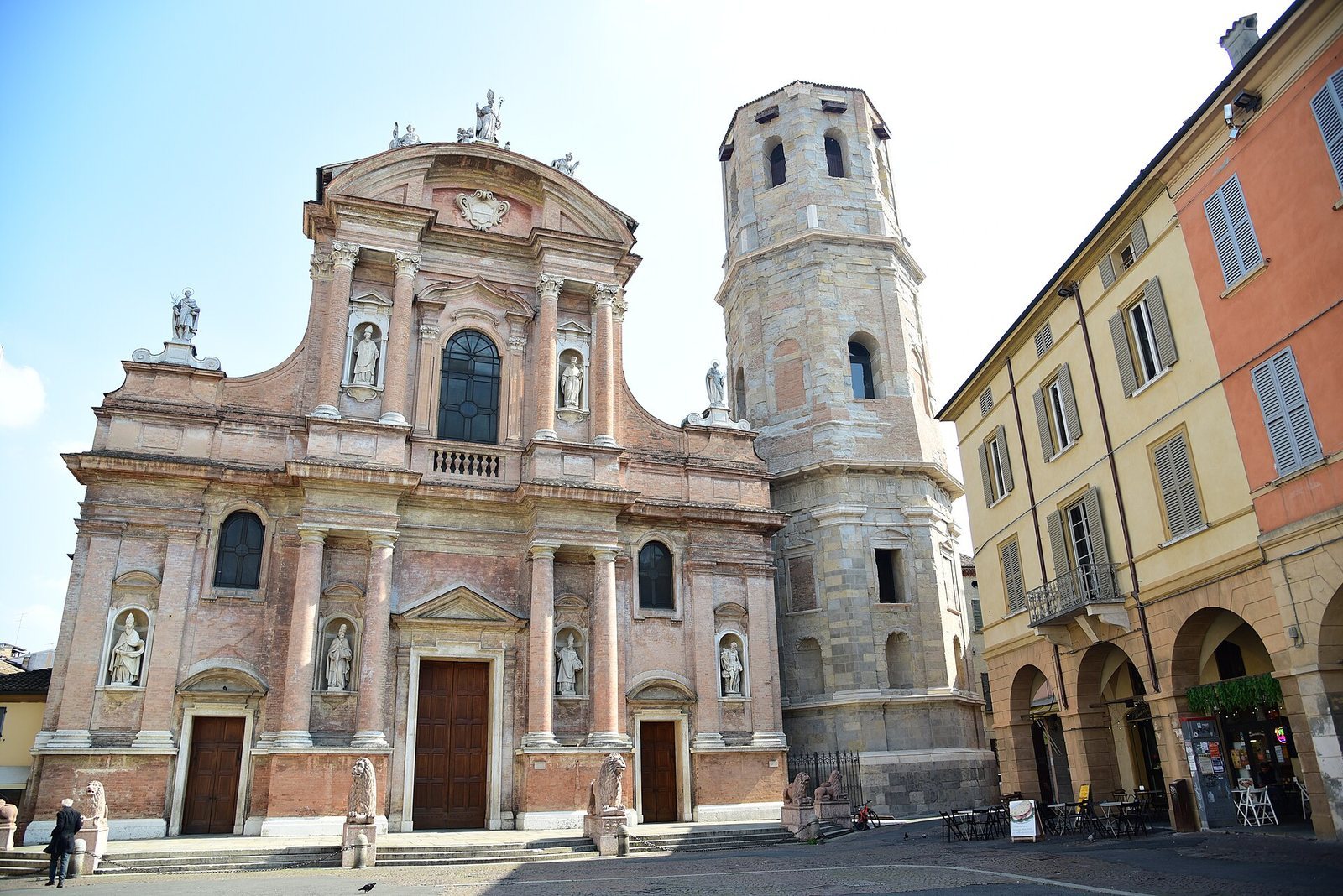
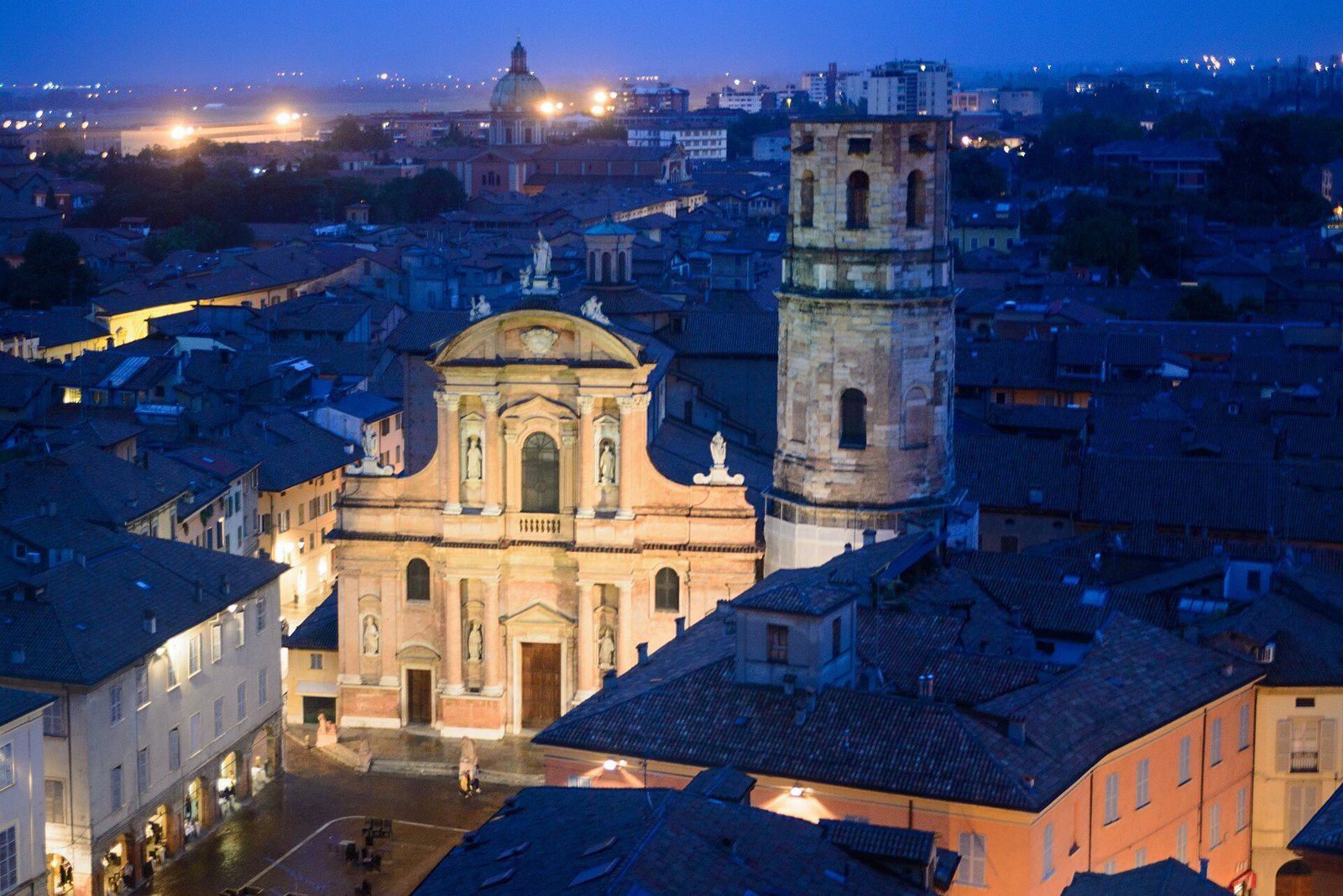
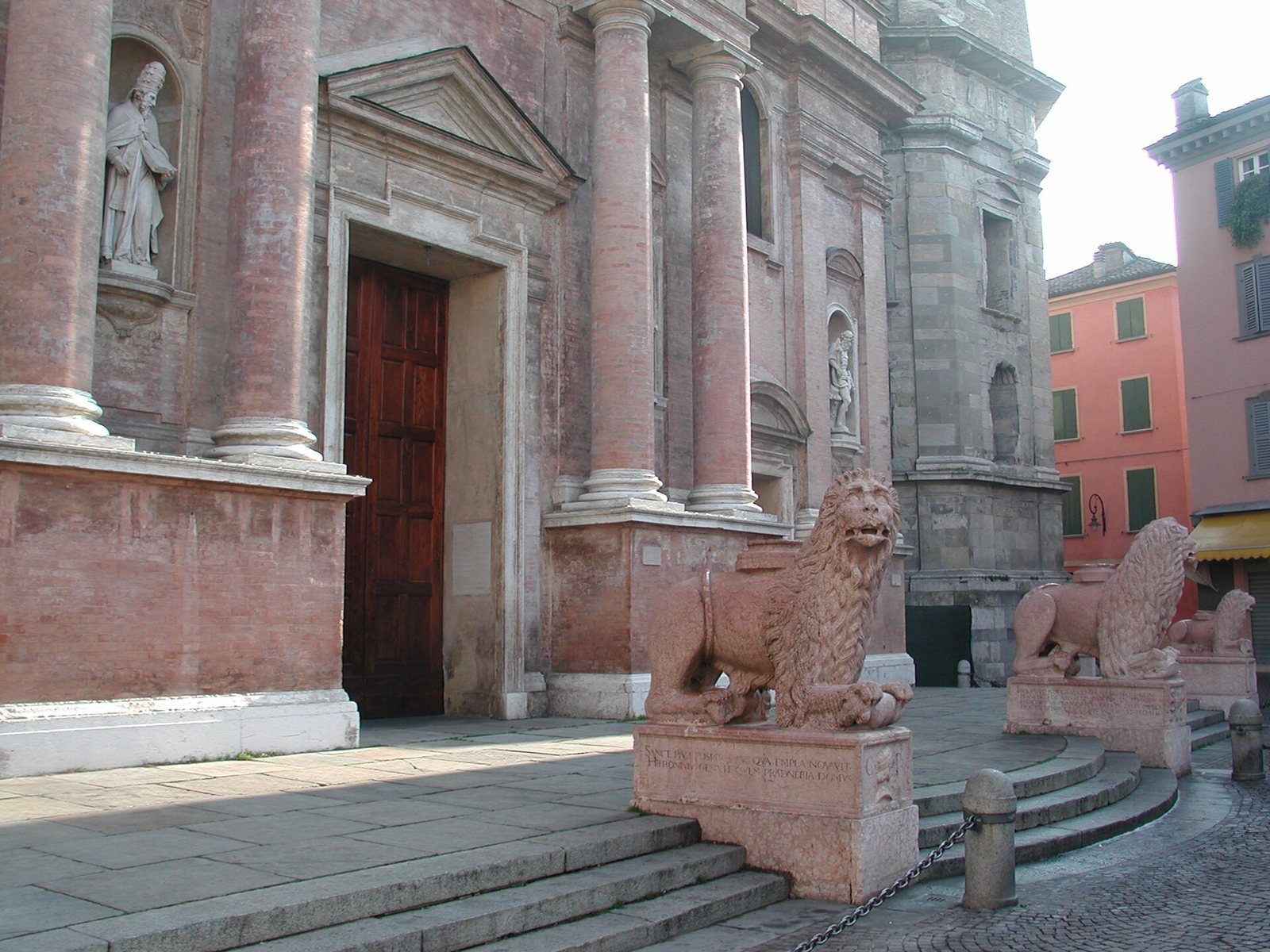
Designed by Giovan Battista Cattani, the mid-eighteenth-century façade carries eleven statues representing saints and Doctors of the Church. Its Baroque design forms the front of the basilica, whose main architectural character is Renaissance.
Marble lions
Six lions carved from red Verona marble stand at the edge of the forecourt. Dated 1503, they were intended to support six columns for three entrance porches in front of the church’s three doors, but the sculptures were never completed. Their authorship is traditionally assigned to Gaspare Bigi, although they may be earlier, perhaps Romanesque, works reused during the sixteenth-century rebuilding. Bigi may have carved only the bases. One base bears the profile of Girolamo Pratonieri, a nobleman from Reggio.
Bell tower
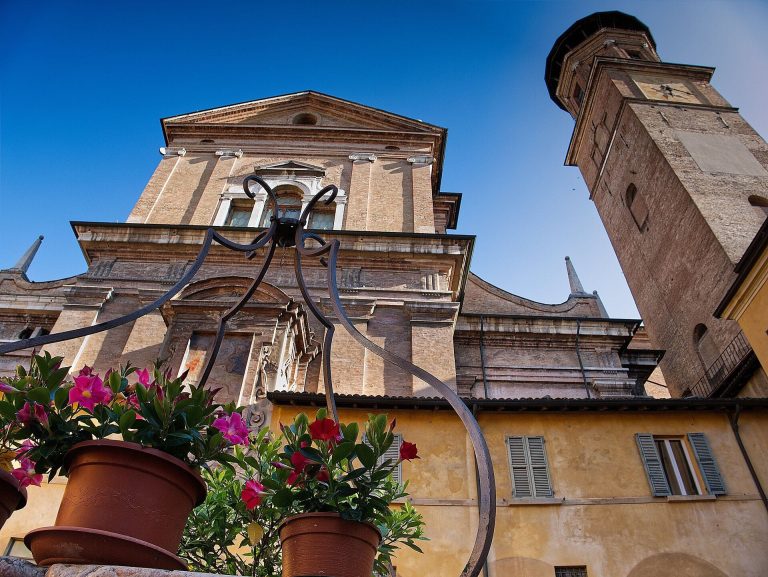
To the right of the façade stands an incomplete, octagonal bell tower. Cristoforo Ricci designed it, and Giulio Romano later revised the design.
Nave and side chapels
Central nave
A wooden pulpit in the central nave is decorated with inlaid figures of saints. Paolo and Prospero Sampolo made it in 1571.
Right aisle and Pratonieri Chapel
The third altar in the right aisle holds Michelangelo Anselmi’s Baptism of Christ, while Nicolò Patarazzi’s Charity of Saint Homobonus is at the fourth. The fifth altar is in the Pratonieri Chapel, which contains Jean Boulanger’s copy of Correggio’s La Notte, also known as the Nativity. The original painting dates to 1522. Alessandro Tiarini’s Holy Family is at the sixth altar.
Left aisle
The second altar in the left aisle contains Francesco Stringa’s Madonna and Saints; the vault above it bears Pietro Desani’s Stories of Saints Crispin and Crispinian. Orazio Talami’s Cathedra of Saint Peter is at the third altar. At the fifth is a Madonna and Child with Saint Apollonia, tentatively attributed to Denis Calvaert. The sixth altar has a panel of Saint Paul by Bernardino Zacchetti, with a lower panel showing the saint’s fall.
Transepts and presbytery
Right transept
A copy by Jean Boulanger of Annibale Carracci’s Madonna and Saint Matthew hangs on the right wall of the right transept. The original is also in the Gemäldegalerie in Dresden. Below the copy is Lodovico Parisetti’s tomb, made by Prospero Sogari in 1555. The transept altar holds a marble Madonna and Child, possibly by Sogari. Three statues of female saints, attributed to Nicola Sampolo, are in the first chapel to the right of the presbytery.
Left transept
In the left transept, Prospero Sogari’s Christ Carrying the Cross is positioned above the baptismal font. The wall holds the tomb of Ruffino Gabbioneta, who governed the city under Pope Leo X. Bartolomeo Spani signed the monument, which was commissioned in 1520 and dated 1527.
High altar and painted decoration
Saint Prospero’s body rests in the presbytery’s central altar. The vault and apse carry a late-sixteenth-century fresco cycle, largely painted by Camillo Procaccini. In the vault, triangular panels dated 1597–1598 show Saints Prospero and Venerius among Choirs of Angels. An oval Eternal Father, flanked by the Creation of Eve and an Apocalyptic Scene, dates to 1585–1587. Prudence, Charity, Humility, and Temperance appear high beside the windows.
The apse contains a Last Judgment above a Deposition, both dated 1585–1587 and conceived as extensive compositions inspired by Michelangelo. Bernardino Campi painted the Resurrection of the Son of the Widow of Nain and the Fall of Jezebel in 1589.
Choir
The wooden choir, made in 1545, is carved and inlaid by Cristoforo da Venezia, also called De Venetiis, and his son Giuseppe. The lower stalls may include inlaid work from an earlier choir made by Cristoforo and Lorenzo da Lendinara between 1457 and 1461.
Dome and pillars
The dome’s wall-painted tempera decoration, Saint Prospero in Glory among Angels, and the decoration of the pillars date to an 1885 intervention by Giulio Ferrari and his assistants.
Treasury, sacristy, and Roman remains
Treasury chapel
The treasury is kept in a dedicated chapel, whose frescoes were painted in 1701 by Marcantonio Franceschini with assistance from Luigi Quaini. Its objects include a silver bust of Saint Prospero made by Nicola Sampolo in 1623 and a processional cross by Gianandrea Spani, made in 1540.
Sacristy
The sacristy contains several paintings, including an Assumption of the Virgin and works by Tommaso Laureti and Ludovico Carracci.
Archaeological finds
Excavations among the remains of Regium, the Roman city that preceded Reggio Emilia, have uncovered a Roman mosaic and other objects.