San Jacopo sopr’Arno: A Romanesque Church in Florence
Site at a Glance
- Popularity
- Medium
- Country
- Italy
- Primary era
- Early Modern
- Eras represented
- Medieval, Early Modern
- Civilizations
- Grand Duchy of Tuscany, Holy Roman Empire, Republic of Florence
- Site type
- Religious
- Remains
- Church
On this page12 sections
History
San Jacopo sopr’Arno is a Romanesque church, built in a medieval style characterized by rounded arches, in Borgo San Jacopo, in Florence’s Oltrarno district, Italy. Its origins probably date to the 10th or 11th century, and the church gave its name to the settlement that grew around it.
Medieval church and civic life
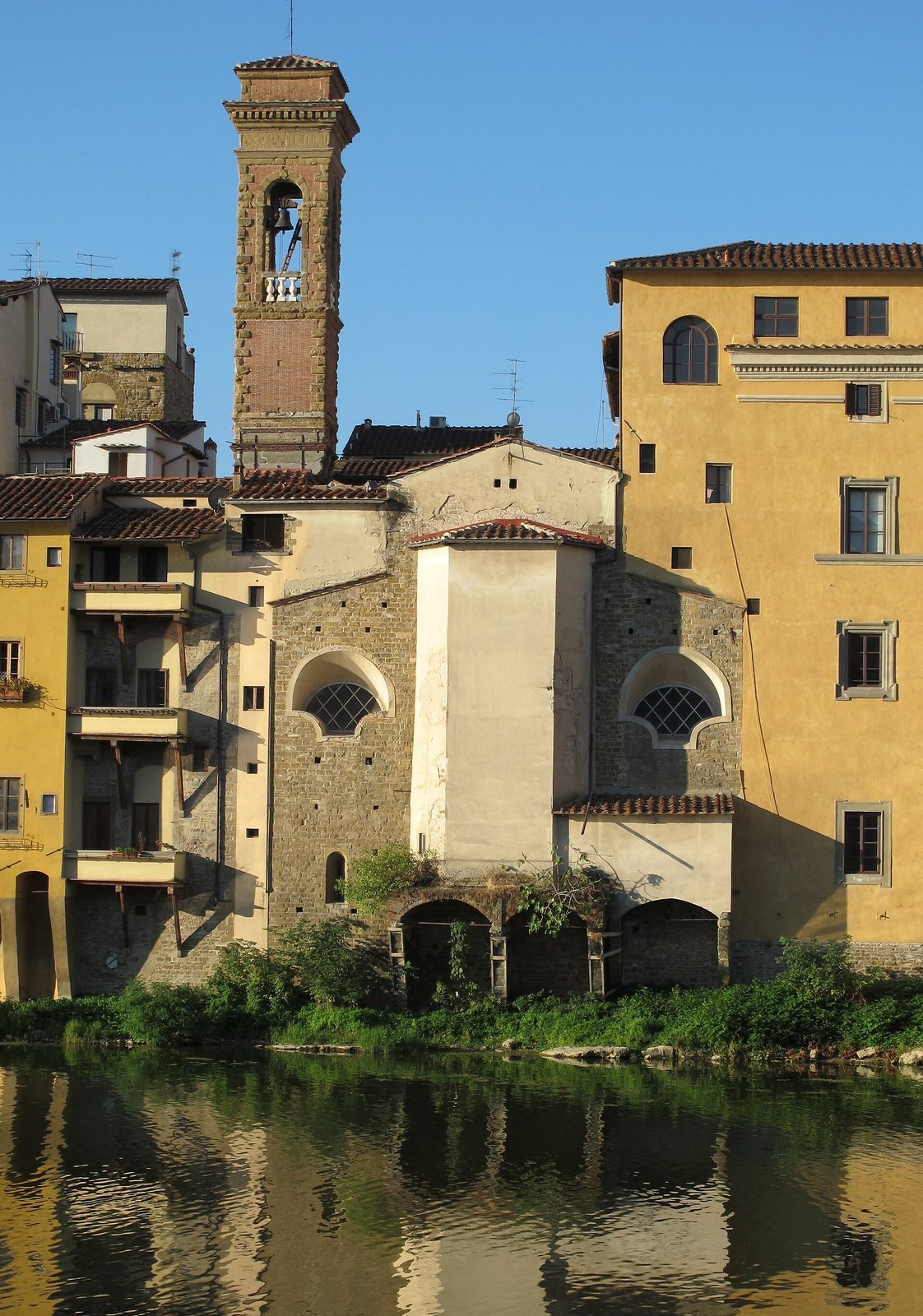
The church was already in existence in 1078, when Florence’s second circuit of walls enclosed it within the city. From at least 1250, its prior paid for the Palio dei Navicelli, a boat race held on the Arno each July 25, the feast of Saint James the Greater, one of Jesus’ apostles. Competitors propelled their boats with poles between Ponte Vecchio and the Santa Rosa weir. The race began on the riverbank below the church’s projecting sanctuary end.
In 1293, Florentine nobles gathered at San Jacopo to resist Giano della Bella’s Ordinances of Justice, reforms that curtailed noble influence in the city government. The church also became the burial place of painter Gherardo Starnina, who died in the early 15th century and was the first teacher of sculptor Lorenzo Ghiberti.
A tradition recorded by Giorgio Vasari links the Ridolfi Chapel, built around 1418, to Filippo Brunelleschi. In this account, Brunelleschi tested on a small scale a way of building without temporary centering, the supports used while an arch or dome is constructed, before applying the method to the dome of Santa Maria del Fiore. The chapel was later lost during the church’s early-18th-century refitting.
Religious communities and refitting
Observant Franciscans, a branch of the Order of Friars Minor, took possession of the church in 1542. In 1575 it passed to the regular canons of San Salvatore a Scopeto, known as the Scopetini. These clergy lived under a shared religious rule, and their own church and convent had been destroyed in 1529. In 1580, Romanesque elements from the former church of San Donato in Scopeto were reassembled at San Jacopo under Bernardino Radi.
In 1703, Cosimo III ordered the Scopetini to hand over the church and convent to the Fathers of the Mission, also called Vincentians, a Catholic missionary congregation founded by Vincent de Paul. The community had come from Rome and settled at the nearby Palazzo della Missione. It restored the church and convent in 1709 and commissioned the refitting that shaped the interior’s 18th-century appearance.
The confraternity
The Compagnia di San Jacopo del Nicchio originated in the 14th century and came under the spiritual protection of the Vallombrosans, a Catholic monastic order from Tuscany. Along with the confraternities of San Girolamo, San Paolo, and Sant’Antonio Abate, it belonged to Florence’s penitential groups known as buche. Their members prayed at night and practiced flagellation and other forms of discipline; they were called battuti, or flagellants, and wore white or black habits. The confraternity continued as the Buca di San Jacopo e Santa Felicita. Pietro Leopoldo spared it in 1785, when only nine confraternities were allowed to remain, and it is still active.
Damage and continued use
Explosions on August 4, 1944, destroyed the fresco decoration on the central nave’s vault. The Arno flood of 1966 also damaged the church. Repairs that followed restored some historic architectural features and exposed Romanesque columns incorporated into the later interior.
On May 14, 2006, the Diocese of Florence granted the church to the Orthodox Archdiocese of Italy and Malta. It is now used by an Orthodox community that includes Greek-rite worshippers and faithful of various Balkan and eastern nationalities.
Remains
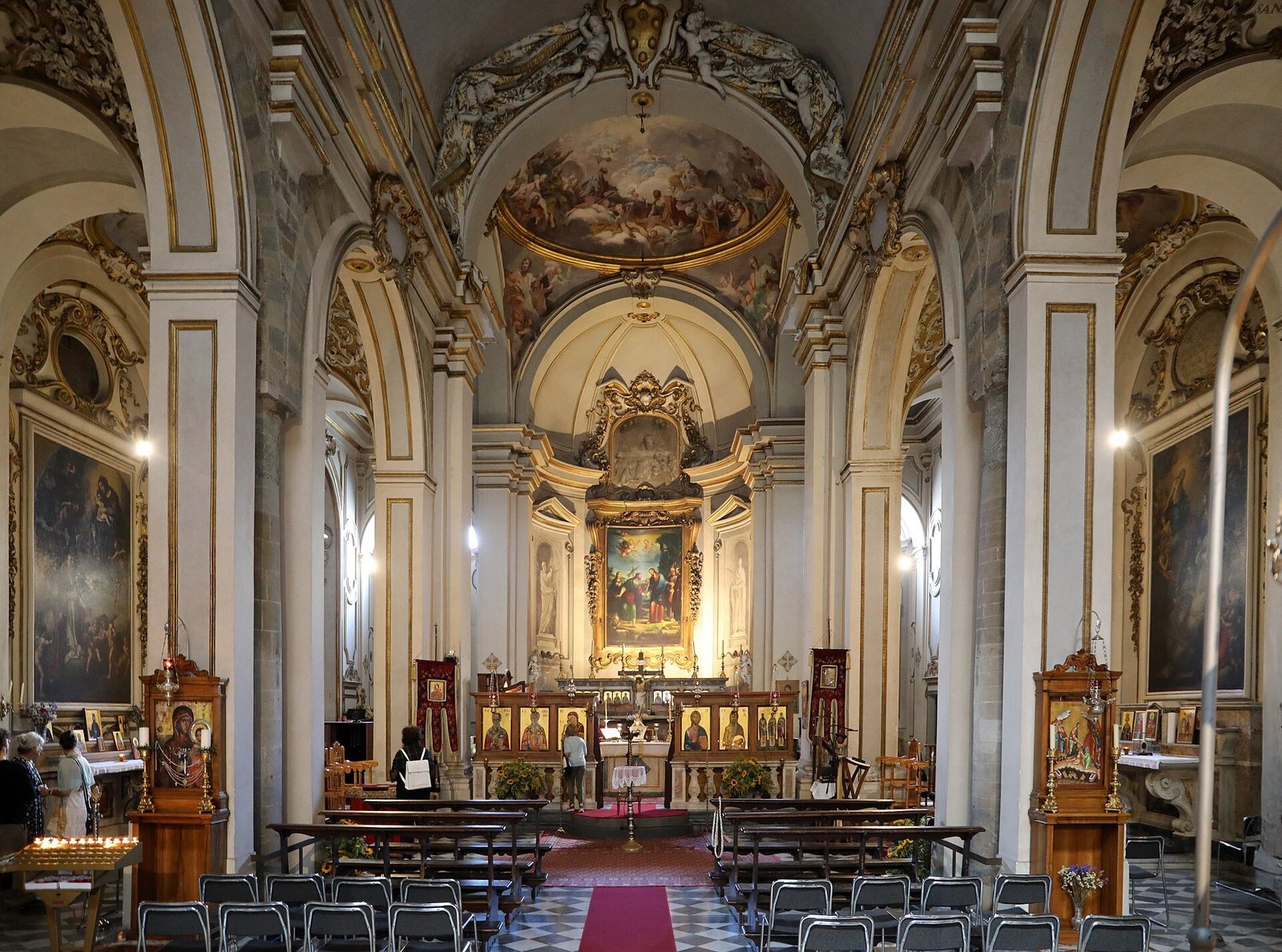
The church retains its Romanesque three-aisled plan: a central nave flanked by two long side spaces called aisles. Its interior, however, has an 18th-century appearance, and Romanesque columns are visible within the piers of the later, more ornate Baroque interior.
Exterior and river frontage
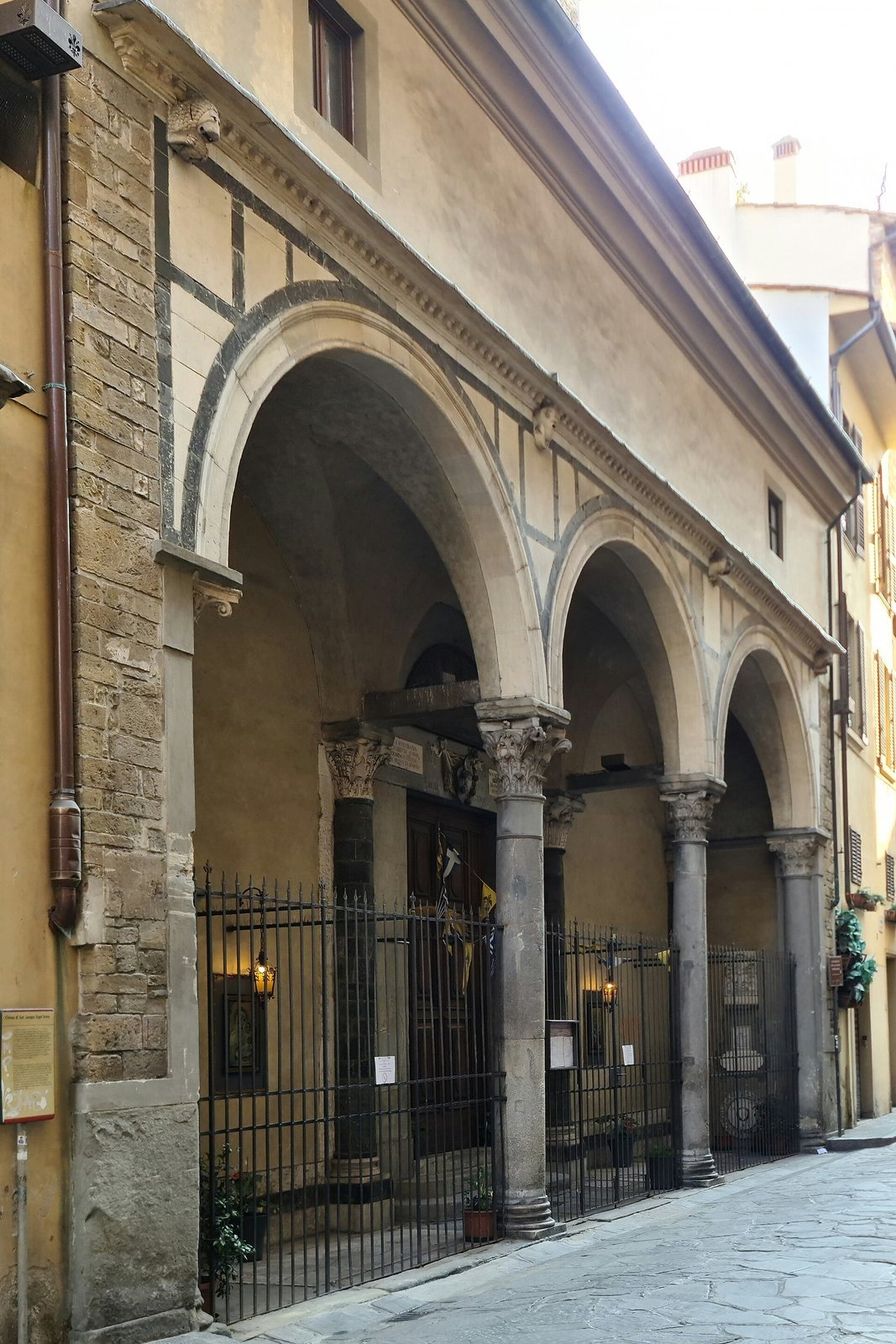
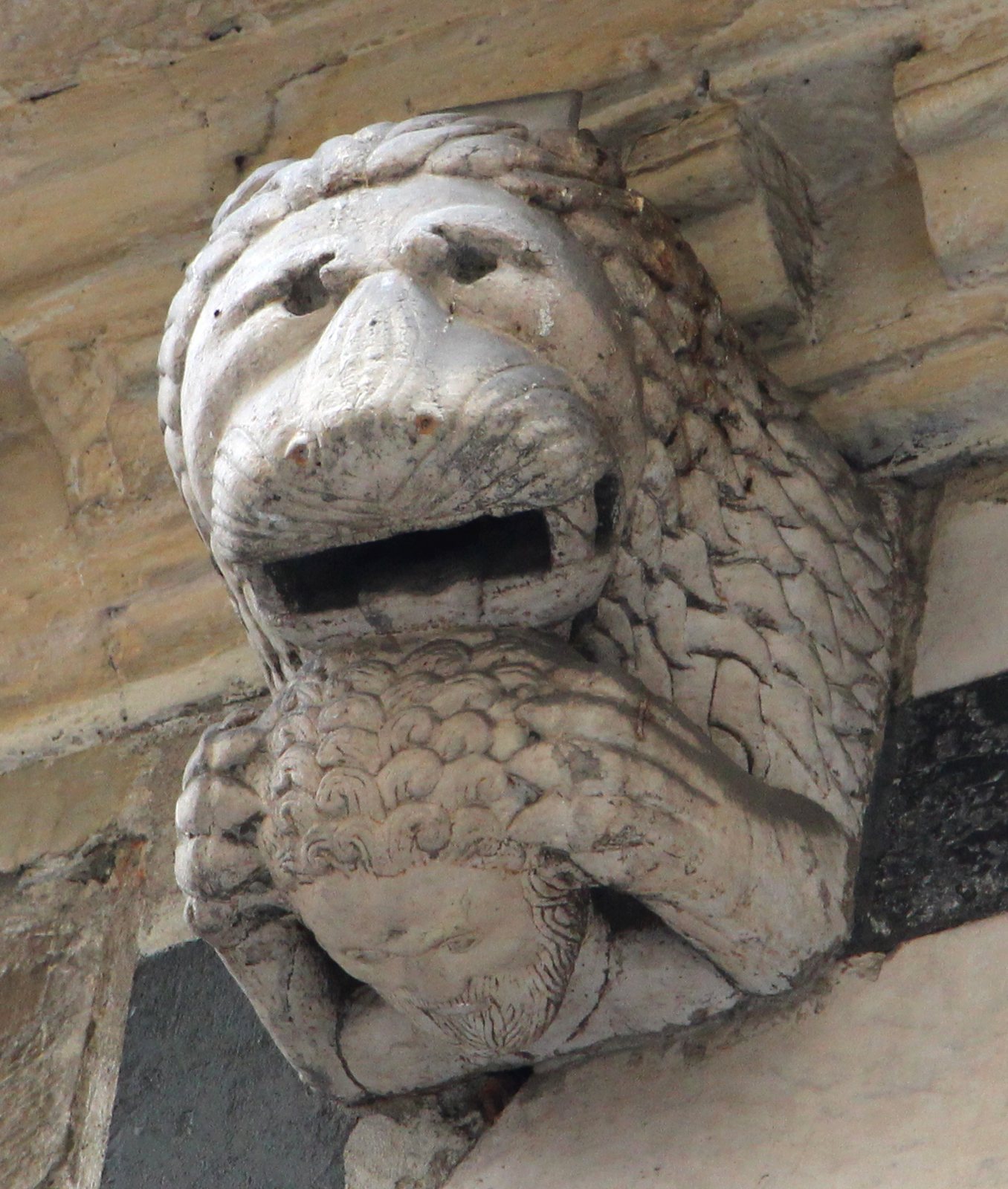
A three-arched Romanesque portico, dating to the 12th or 13th century, dominates the façade. Its arches have geometric white-and-green inlay, and the stonework above them includes two lions holding men, a bull’s head, and a human head. Two plaques commemorate financial support for the church from Pietro de’ Medici and Francesco I de’ Medici. Above the portal, a semicircular recess called a lunette contains Jacopo Coppi’s 1580 panel painting of Christ between Saints James and Donatus. At the river-facing end, the polygonal apse, the projecting sanctuary end of the church, extends over the Arno on projecting supports called corbels. It has two splayed windows that widen toward one side and are shaped like shells, an emblem of Saint James associated with pilgrims to Santiago de Compostela. The bell tower was designed by Gherardo Silvani in 1660. A chapel belonging to the confraternity adjoins the church and opens onto Borgo San Jacopo.
Nave and interior decoration
The central nave’s vault no longer retains its fresco decoration, while well-preserved frescoes and paintings survive in the side aisles. On the interior face of the entrance wall, called the counter-façade, Niccolò Lapi’s allegorical paintings Religion and Faith flank the main portal.
High altar and side chapels
High altar and dome
The high altar holds Pier Dandini’s painting The Calling of Saint James. Matteo Bonechi’s frescoes of the Madonna in Glory and angels decorate the dome above.
Right-hand chapels
The first chapel on the right belongs to the Bartolomei family. Its altar painting by Sebastiano Galeotti depicts the Immaculate Conception with saints, and its vault bears Niccolò Lapi’s 1721 fresco God the Father among Angels. The Verdi family’s second chapel has a 1709 vault fresco by Lapi showing Moses and the Brazen Serpent; its altar holds a 15th-century crucifix that replaced a Crucifixion by Francesco Conti. In the third chapel, Antonio Puglieschi’s altar painting shows Saint Vincent de Paul appealing to Jesus through Mary, while Ottaviano Dandini’s The Glory of Saint Joseph is above it. The fourth chapel contains Conti’s Holy Trinity, painted between 1707 and 1709.
Left-hand chapels
The first chapel on the left belongs to the Montauti family. Its vault fresco by Matteo Bonechi shows angels playing music, and Giovanni Casini’s Martyrdom of Saint Lucy is on the altar. The Ridolfi family’s second chapel has a fresco by Ranieri del Pace and Ignazio Hugford’s Annunciation on the altar. In the Torrigiani family’s third chapel, Jacopo Vignali’s painting of the Virgin appearing to Saint Liborius, made for Raffaello Torrigiani before the refitting, occupies the altar; Giuseppe Moriani’s fresco of Saint Liborius dates to about 1709. The fourth chapel contains Agostino Veracini’s 1709 painting The Death of Saint Francis of Assisi, his first public work in Florence. The fifth chapel, belonging to the Orsini and Vinci families and formerly known as the Di Grazia Chapel, has Giovan Maria Ciocchi’s The Temptations of Saint Anthony Abbot on its altar.