Santi Gregorio e Siro: A Roman Catholic Parish Church in Italy
Site at a Glance
- Popularity
- Medium
- Country
- Italy
- Primary era
- Early Modern
- Eras represented
- Medieval, Early Modern, Modern
- Civilizations
- Italian, Papal States
- Site type
- Religious
- Remains
- Church
On this page14 sections
History
Santi Gregorio e Siro is a Roman Catholic parish church in Italy dedicated to Gregory the Great, pope from 590 to 604, and Siro of Pavia, an early Christian bishop traditionally regarded as Pavia’s first. The church belongs to the Archdiocese of Bologna and began as the Church of San Gregorio. It acquired its present name after the nearby parish church of San Siro was demolished.
Foundation and consecration
The church was built on land expropriated from the Ghisilieri family after its members were expelled from Bologna in 1445. The Canons Regular of San Giorgio in Alga, a religious community associated with an island in the Venetian lagoon, commissioned the building. Its foundation stone was laid on June 20, 1533, and it was consecrated between January 25 and February 1, 1579.
Religious orders and restoration
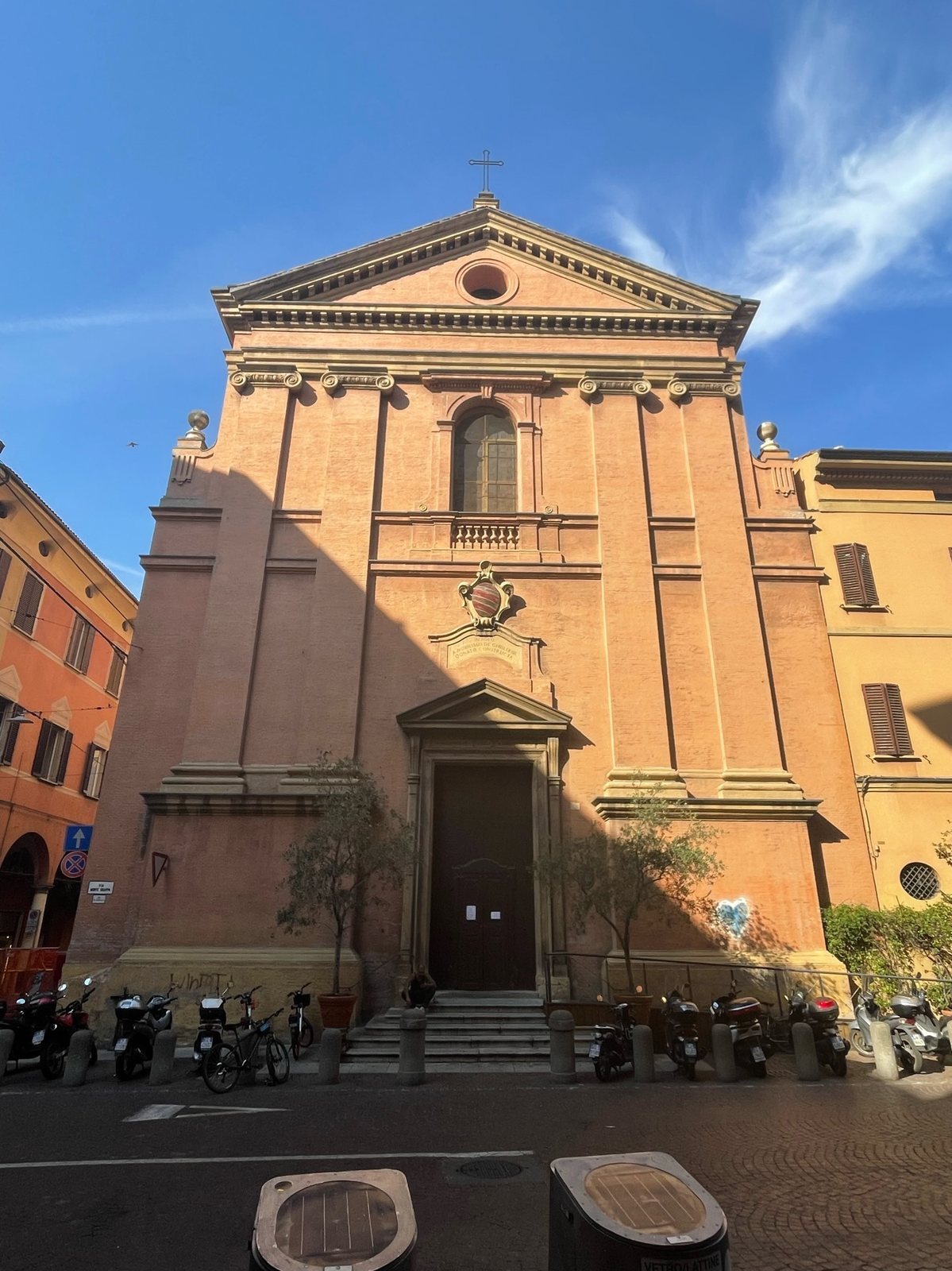
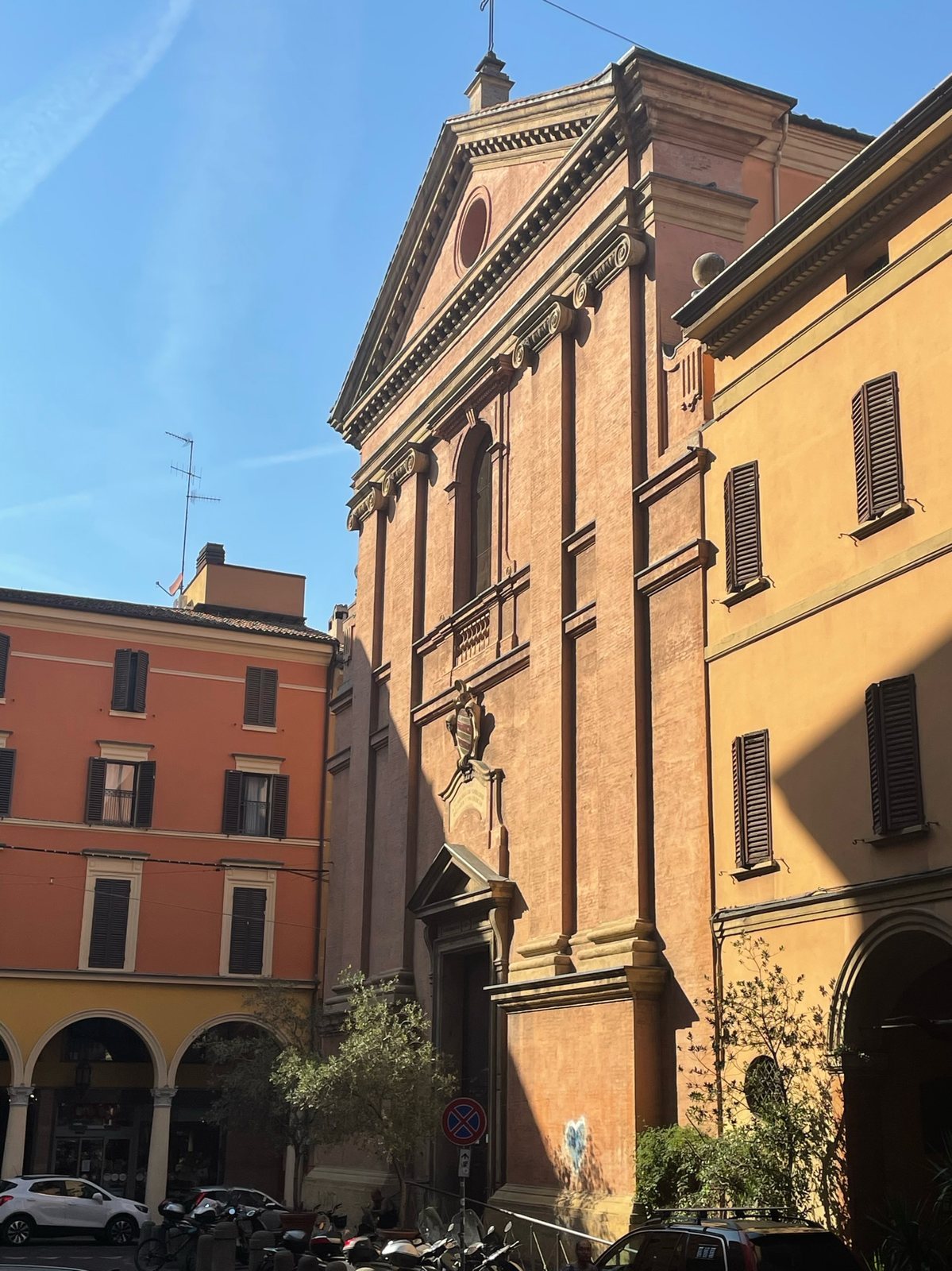
After the Canons Regular were suppressed on December 6, 1668, the Clerics Regular Ministers of the Sick acquired the church and adjoining convent in 1670. This Catholic order made the complex its Bolognese center for caring for the sick. An earthquake in 1779 severely damaged the church’s vault and façade. Restoration after the earthquake gave the building the neoclassical forms it has today.
Parish church
The French government suppressed the Clerics Regular Ministers of the Sick, and the convent was confiscated and sold to private owners on December 11, 1798. The church continued to serve worshippers and became a parish entrusted to secular clergy. Further decoration was undertaken for the Decennial Eucharistic celebrations of 1868 and 1878, Catholic observances held every ten years and centered on the Eucharist.
Remains
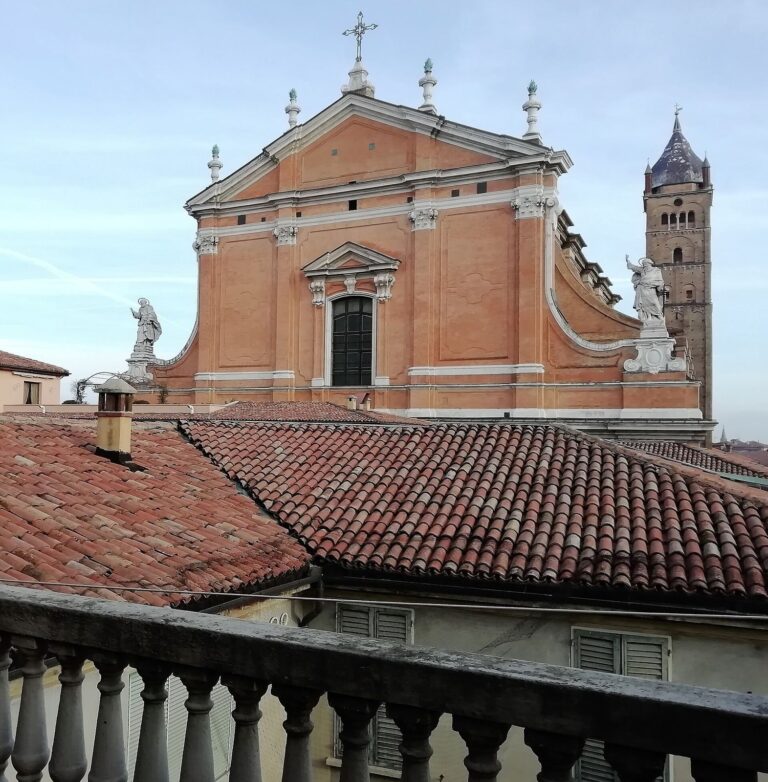
The church combines Renaissance origins with neoclassical forms. Its comparatively simple exterior contrasts with an interior richly furnished with paintings and decoration. The building includes a bell tower incorporating an older family tower, while its altarpieces, ceiling paintings, organs, bells, and tomb reflect successive periods of use.
Exterior and tower
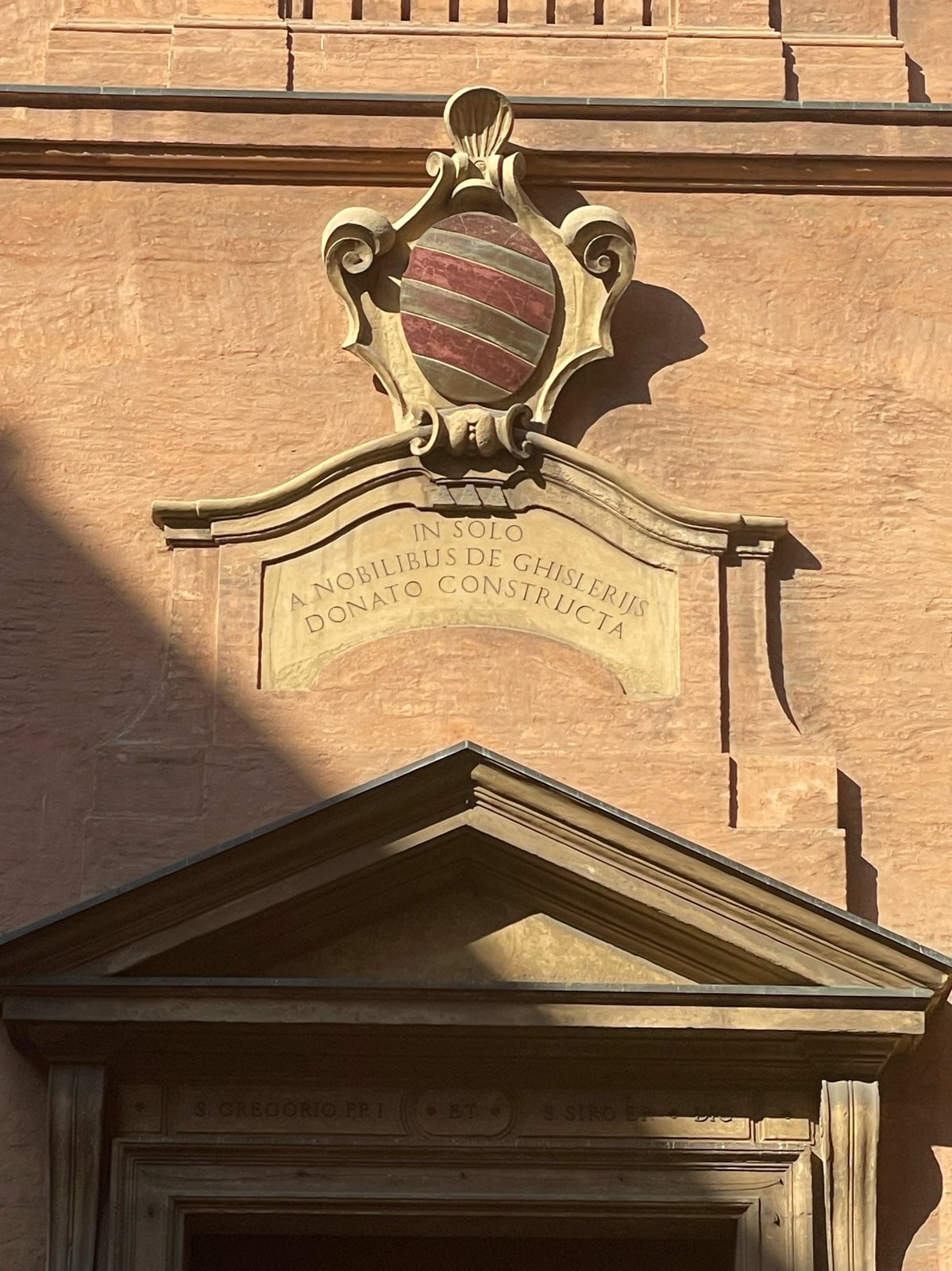
The façade displays the Ghisilieri family’s coat of arms, with red and gold stripes. The bell tower incorporates a family tower dating to the thirteenth century, adapted for its present use in the sixteenth century.
Interior decoration and paintings
Main chapel
Alessandro Guardassoni, Luigi Samoggia, and Luigi Masetti contributed to the decoration of the main chapel, vault, frieze, and pilasters. Guardassoni painted figures and scenes from Gregory the Great’s life on the vault; Samoggia supplied ornamental work, and Masetti painted the Twelve Apostles. The chapel also contains Denys Calvaert’s 1581 painting of Saint Gregory displaying the bleeding Eucharist to a heretic, known as The Miracle of the Corporal of Saint Gregory.
Altarpieces
Two altarpieces are by members of the Carracci family, an influential group of Bolognese painters. Annibale Carracci painted The Baptism of Christ in 1583–1585. Ludovico Carracci’s Saint Michael the Archangel and Saint George, dated 1600–1601, depicts Saint George with the dragon, the Archangel Michael, and the devil.
Other paintings
Interior works include Ludovico Carracci’s Eternal Father and Camillo Procaccini’s Assumption of the Virgin (1582–1583). Lucio Massari’s Madonna in Glory with Saints Andrew, Lorenzo Giustiniani, and Anthony Abbot dates to 1630–1633. Other paintings are Giovanni Luigi Valesio’s Martyrdom of Saint Sebastian and Saint Fabian, Felice Torelli’s Ecstasy of Saint Camillus, Jacopo Alessandro Calvi’s Martyrdom of Saint Lawrence, also titled Saint Lawrence and the Sacred Heart of Jesus (1780–1795), and Gregorio Guglielmi’s Glory of Saint Camillus de Lellis. Further works include Paris Porroni’s Saint John of Nepomuk, oval paintings of Saint Emidius by Giovanni Andrea Claudio Portoni, and Carlo Antonio Rambaldi’s Transit of Saint Joseph. The altar decoration uses marble described as “Formaginni di Sanremo.”
Organs and bells
Pipe organs
Two pipe organs with physical connections between their keys and the mechanisms that admit air to the pipes stand on choir lofts beside the altar area. Giovanni Battista Sormani built the right-hand organ in 1621. It has been restored and altered repeatedly, including numerous nineteenth-century interventions by Alessio Verati. Carlo Traeri built the left-hand organ in 1673, and it has remained intact.
Bell peal
The bell chamber contains five bells. The largest, cast by Donato Bastanzetti of Arezzo in 1954, sounds F-sharp 3, measures 104.8 cm across, and weighs about 700 kg. Giuseppe Brighenti cast three bells in 1898: one sounding A 3, 87.3 cm across and weighing 431 kg; one sounding B 3, 78.2 cm across and weighing 309 kg; and one sounding C-sharp 4, 69 cm across and weighing 218 kg. The smallest bell sounds E 4, measures about 55 cm, weighs about 130 kg, and was cast in 2010 by Peter and Johannes Grassmayr of Innsbruck.
The bells hang on wooden yokes in a wooden frame and are rung entirely by hand. On important parish occasions they are played in the “double” style. The four largest can be arranged as a minor-key group, while the four smallest form a major-key group. The original bell used for the major-key group, cast in 1954, was given to the parish of Mapanda in Tanzania in 2010 and replaced by the Grassmayr bell. Archdiocese of Bologna missionaries work in Mapanda.
Burial
The church contains the burial of Marcello Malpighi, an Italian physicist and biologist.