Shikhin: A Jewish Village in Lower Galilee
Site at a Glance
- Popularity
- Low
- Country
- Israel
- Primary era
- Classical
- Eras represented
- Classical
- Civilizations
- Unclassified
- Site type
- City
On this page10 sections
History
Hasmonean Rule and the Ptolemaic Invasion
Shikhin was a major Jewish village in Lower Galilee, in present-day Israel. Josephus calls it Asochis, counts it among Galilee’s earliest Jewish settlements, and dates its establishment to the Hasmonean period, the era of a Jewish ruling dynasty in the second and first centuries BCE.
After the Hasmonean leader Antigonus I conquered Galilee, Alexander Jannaeus rose to power and attempted to capture Acre. Ptolemy IX Lathyros, a king of Cyprus from the Ptolemaic dynasty, the Greek ruling house of Egypt, invaded Lower Galilee in 103 BCE. He seized Shikhin in 102 BCE in a surprise attack on its Jewish inhabitants during the Sabbath. Sepphoris had time to prepare and repelled his attempt to take the city.
Roman-Era Village and Rabbinic Traditions
During the Great Revolt, the Jewish uprising against Roman rule in the first century CE, Josephus stayed at Shikhin after learning that a delegation from Jerusalem planned to remove him as commander of Galilee. The village’s inhabitants opposed the delegation.
Shikhin was also associated with the priestly courses, rotating groups of priests assigned to service in the Jerusalem Temple. A poem by Eleazar ha-Kallir links a priestly division to the village after these groups moved from Judea to Galilee following the Bar Kokhba revolt, a Jewish uprising against Rome in the second century.
Pottery made from local clay was an important part of Shikhin’s economy, with oil-lamp production especially prominent. Rabbinic texts describe potters working black clay and praise the durability of pottery from Shikhin and nearby Kefar Hanania. Another tradition about Joseph ben Simai recounts that he would not let men from a locality associated with Sepphoris extinguish a fire in his courtyard on the Sabbath, when putting out fires was prohibited.
Rabbinic accounts describe Nehemiah of Shikhin as an acquaintance of Rabbi Akiva and as a figure who lived after the Bar Kokhba revolt, in the time of Judah bar Ilai. They also say that he hosted refugees from Jerusalem and preached. Other stories tell of a man inheriting three mustard stalks, one of which yielded nine kav, an ancient measure of volume, of mustard, while its stems could roof a potter’s booth. The village’s poor are mentioned alongside those of Kefar Hanania in a discussion of Sabbath travel limits. A further story says that a blind man immersed himself in the Well of Miriam, a legendary source of miraculous water, and was healed.
Abandonment and Archaeological Investigation
The Jerusalem Talmud says that the tax ledgers of Shikhin, Cabul, and Migdal of the Dyers were so heavy that wagons carried them to Jerusalem, and reports that all three towns were destroyed. It attributes Shikhin’s destruction to sorcery. The village was abandoned in the fourth century CE. Possible causes include the earthquake of 363 or the revolt of Gallus in 351, whose center was nearby at Sepphoris.
A University of South Florida team working at Sepphoris surveyed Shikhin in 1988, followed by a Samford University team in May 2011. Joint Israeli-American excavations began in 2012 under archaeologists James F. Strange, Mordechai Aviam, and David Fiensy. In 2013, Aviam identified Shikhin as one of the two earliest Galilean settlement names attested from the Second Temple period, the era ending with the Temple’s destruction by Rome in 70 CE. Excavation was expected to help investigate the still-unresolved origins of the Galileans, including whether they descended from First Temple-period communities, migrated from Judea, or adopted Judaism.
Remains
Settlement Layout
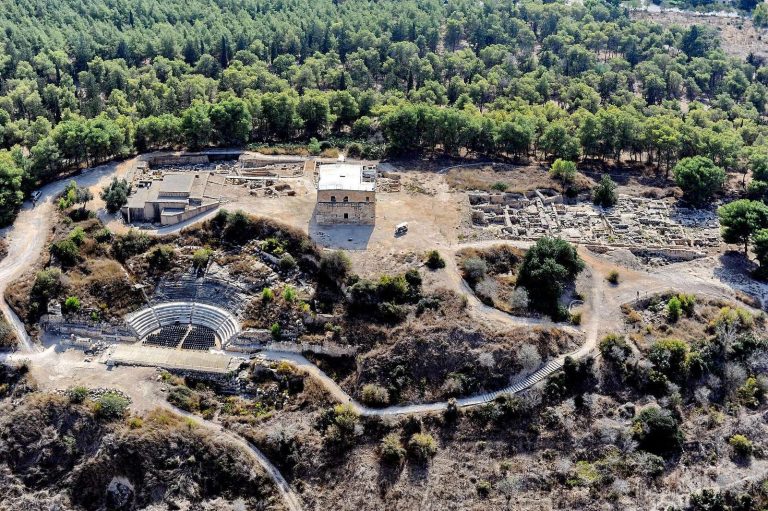
The village extended for slightly more than a kilometre across three low hilltops arranged generally north to south. The site stands at an elevation of 188 metres in central Galilee, between Sepphoris and Highway 77, west of Hoshaya and near Moshav Tzippori, about eight kilometres northwest of Nazareth. It lies within Zippori National Park. The nearby Plain of Asochis is identified with the Beit Netofa Valley, north of Sepphoris and south of Kfar Manda.
Synagogue and Houses
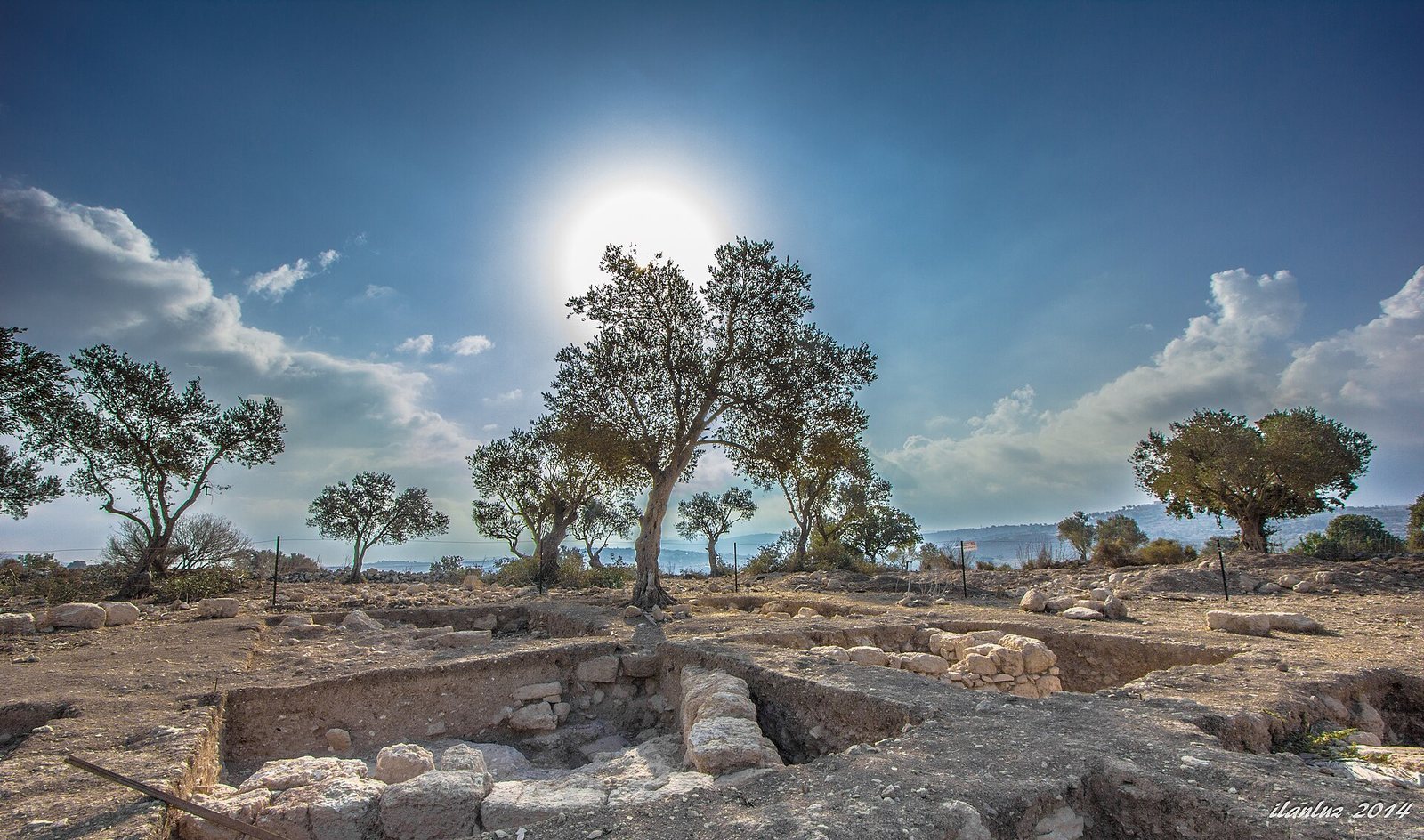
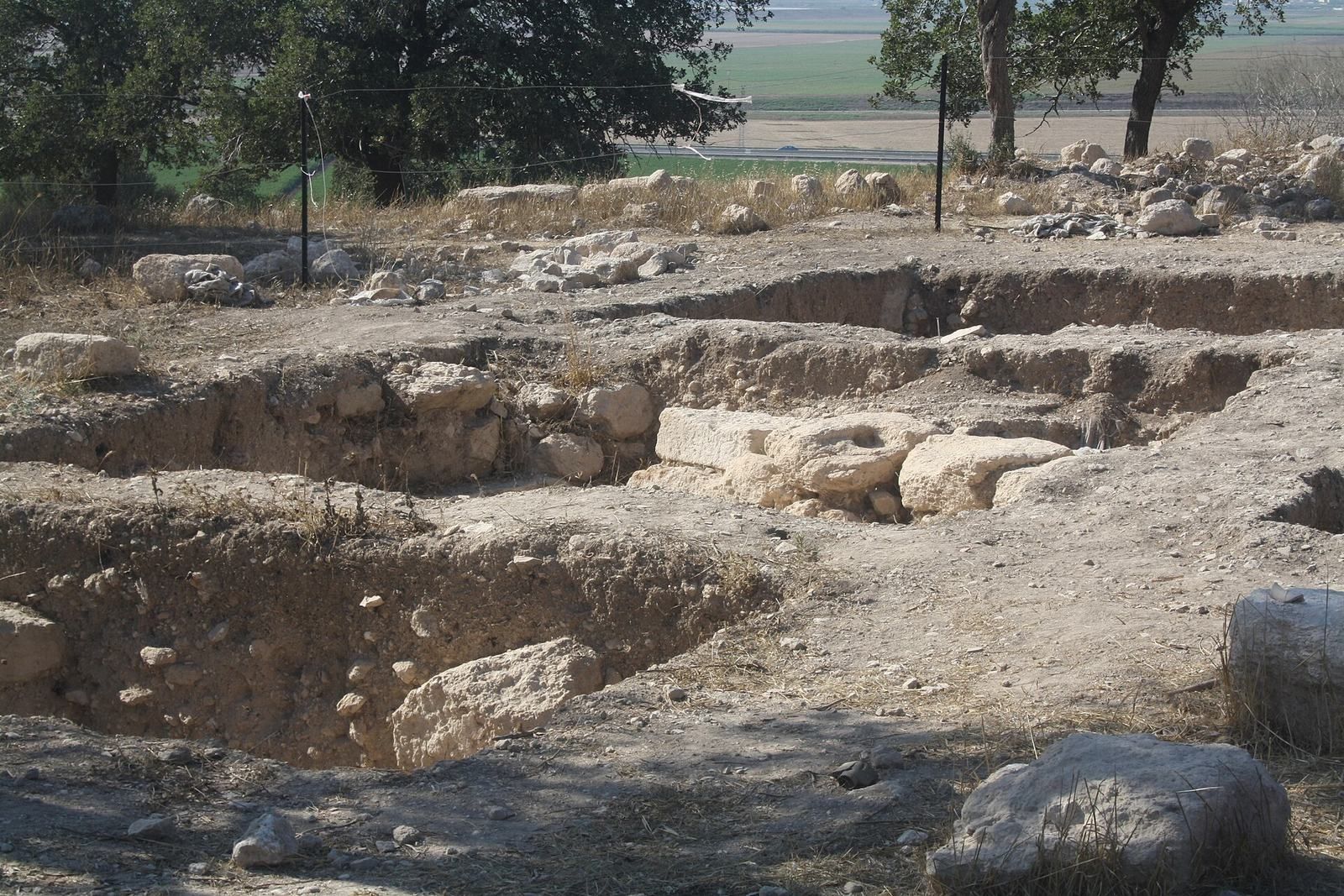
Excavations uncovered remains of houses and a synagogue. Finds associated with the synagogue include a column from a corner and large stone doors.
Pottery Production
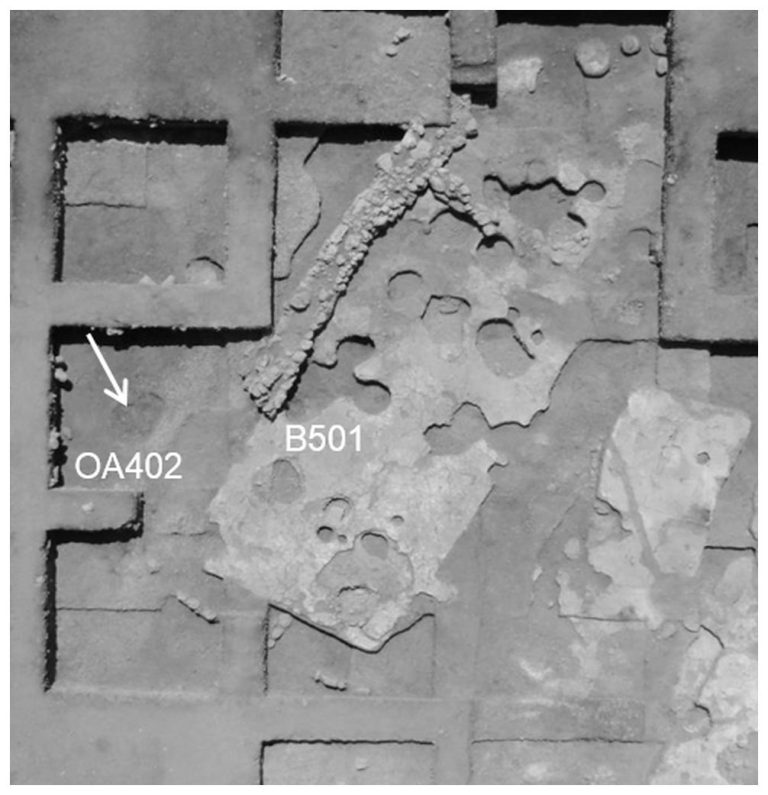
Archaeological evidence points to extensive ceramic production at Shikhin. The pottery included jars, flasks, and kraters (large vessels for mixing liquids). Seven molds for making oil lamps were recovered, the largest number found at a single village in Israel. The village’s pottery was made from high-quality local clay.
Jebel Qat and Burial Features
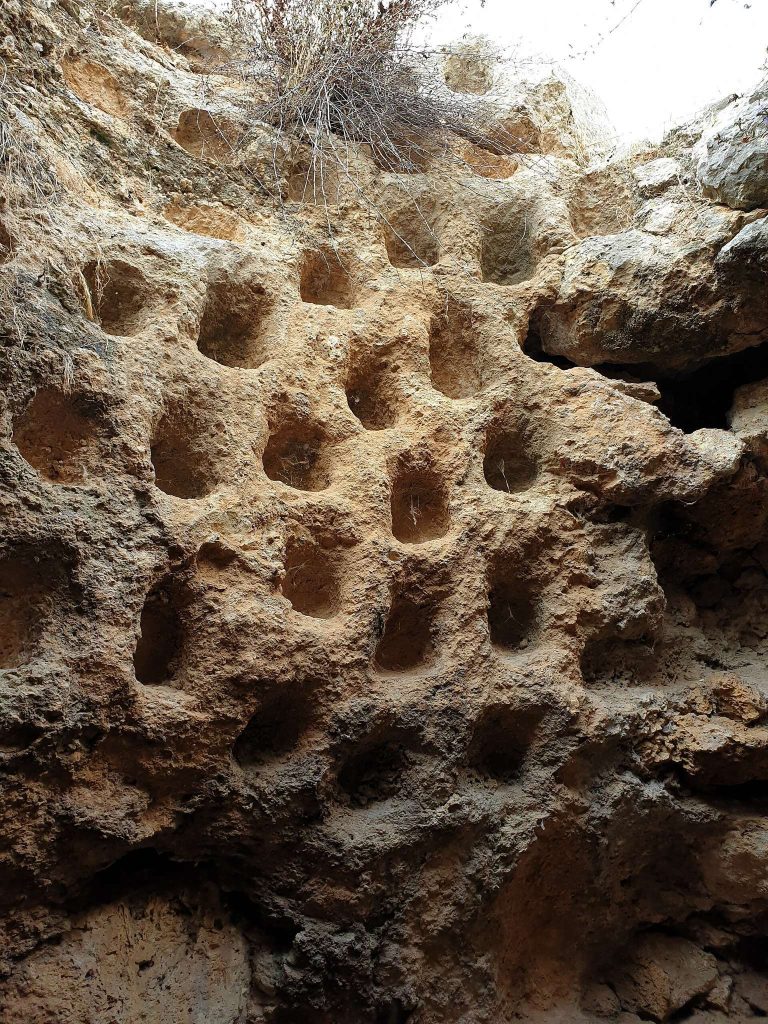
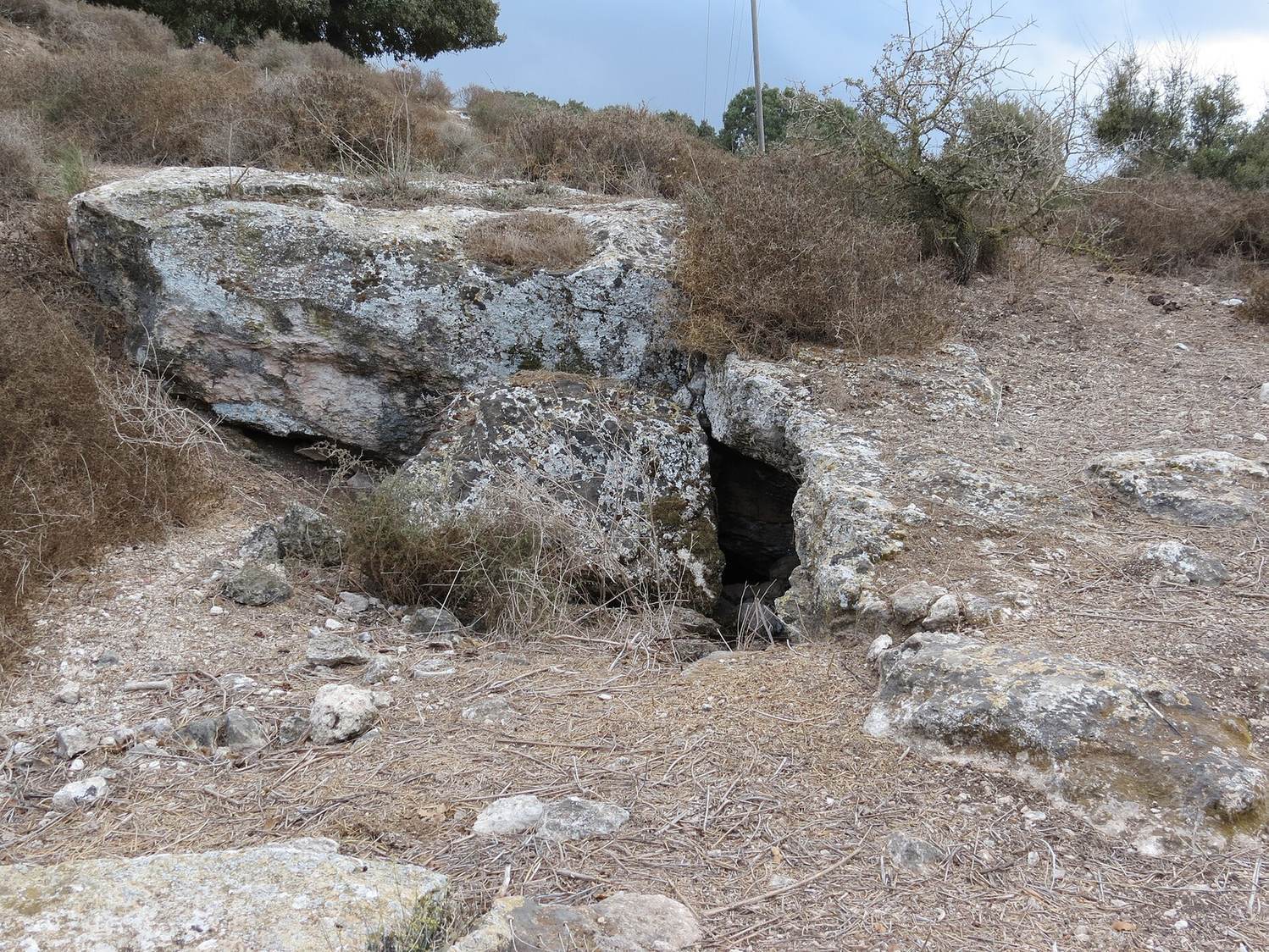
Jebel Qat lies east of the village. Evidence there includes a cave used as a hiding place, quarrying, and activity associated with olive or wine production. Tombs were found around the village. Three largely undecorated stone coffins, bearing non-figurative relief, were located on neighboring Jebel Qat near one of the tombs.
Reuse of Building Stone
When Shikhin was abandoned, buildings were dismantled and their stones reused elsewhere.