Staraya Ladoga Dormition Monastery: A Russian Orthodox Convent
Site at a Glance
- Popularity
- High
- Country
- Russia
- Primary era
- Medieval
- Eras represented
- Medieval, Modern
- Civilizations
- Novgorod Republic, Russian
- Site type
- Religious
- Remains
- Monastery
On this page11 sections
History
Foundation and medieval holdings
The Staraya Ladoga Dormition Monastery, named for the Eastern Christian commemoration of the Virgin Mary’s death, is a Russian Orthodox women’s monastery in Staraya Ladoga, Russia. Its accepted foundation date is 1156, when Ladoga belonged to the Novgorod Republic, a medieval polity centred on Novgorod. One tradition holds that the monastery began as a men’s community. It is recorded by the fifteenth century.
Staraya Ladoga occupied a key position on the Varangian-to-Greek route, a major trade corridor between the Baltic region and Constantinople. The route connected this northern region with Byzantine influence in church architecture and fresco painting. The Byzantine Empire was the eastern continuation of the Roman Empire, centred on Constantinople. By the fifteenth century, the monastery owned villages in two Novgorod administrative districts.
War, destruction, and rebuilding
Swedish forces destroyed the monastery between 1611 and 1617 during the Ingrian War, an early seventeenth-century conflict between Sweden and Russia. In 1617, the stone Cathedral of the Dormition was rebuilt and consecrated. The community may have become a women’s convent at this time, under Akilina, a senior nun.
Also in 1617, Tsar Mikhail Fyodorovich, the first Romanov tsar, granted the monastery use of fisheries, farmland, and other properties from two dissolved monasteries, without dues and in perpetuity. It retained these lands until a decree confiscated monastic estates. A fire in 1702 destroyed the monastery apart from its stone church. Evdokia Lopukhina, Peter I’s first wife, arrived from Suzdal in 1718. A nun known as Elena, she remained at the monastery until Peter’s death in 1725. Broad restoration followed roughly a quarter-century after the fire.
Monastic life and nineteenth-century expansion
Evdokia Hannibal, the first wife of Abram Hannibal, lived at the monastery from 1754 until her death. During the reign of Nicholas I, relatives of the Decembrists, participants in an 1825 revolt against imperial rule, also lived there. A new phase of stone construction began in 1823 and continued for several decades. Benefactors included art patron Alexei Romanovich Tomilov, whose estate bordered the monastery to the north, Count Dmitry Nikolaevich Sheremetev, and Empress Maria Alexandrovna.
The monastery supported a girls’ primary school. At the turn of the twentieth century, its resident community numbered more than 200.
Modern revival
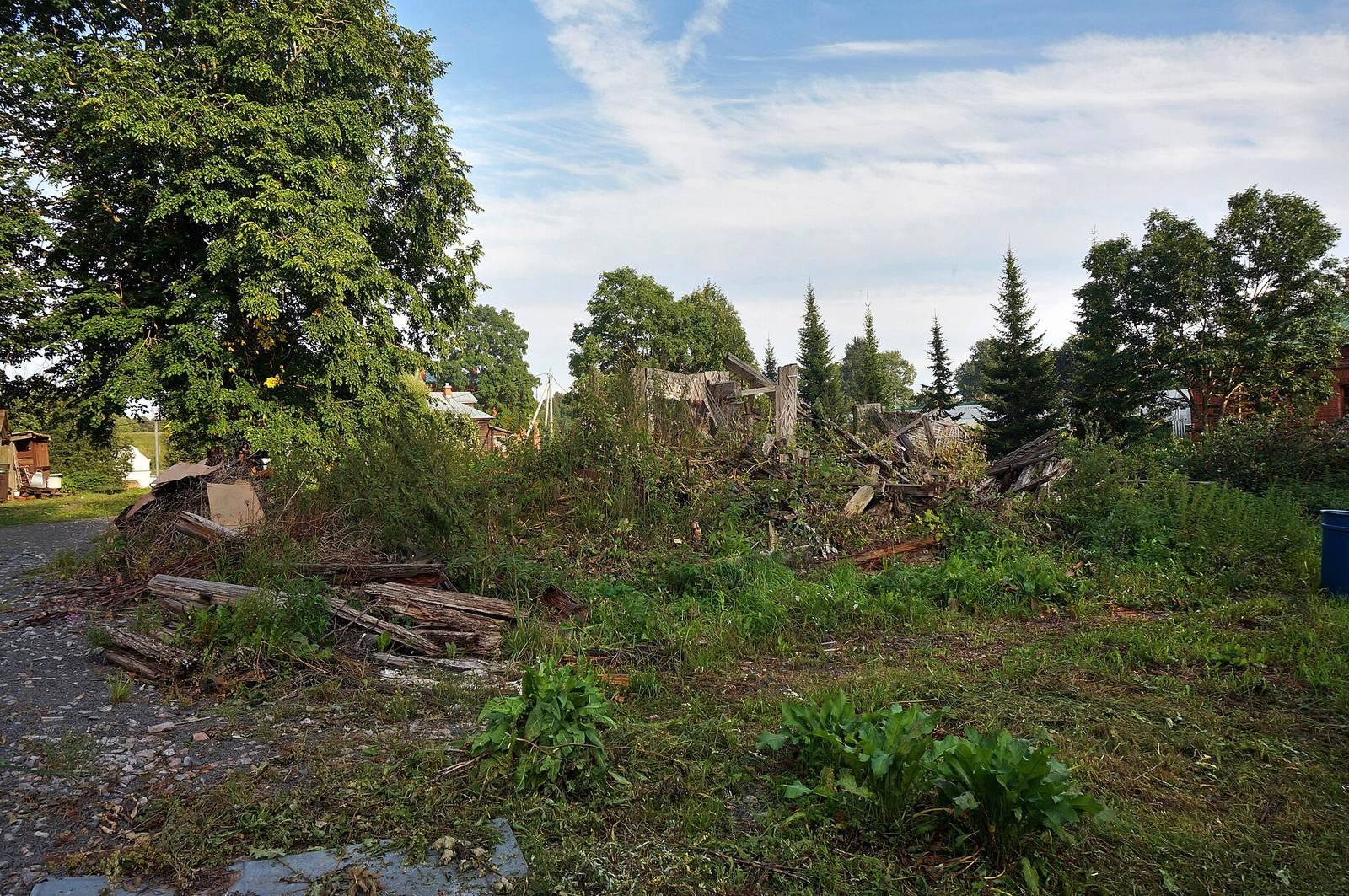
In 2004, the monastery buildings, then in poor condition, were transferred to the St Petersburg diocese. Patriarch Alexy II decided the following year to revive the monastery. Restoration plans covered monastic living quarters, service buildings, landscaping, and site grading; the kitchen, dining hall, and superior’s building underwent major repairs. The monastery is protected as a cultural heritage site of federal significance in Russia.
Remains
Cathedral and frescoes
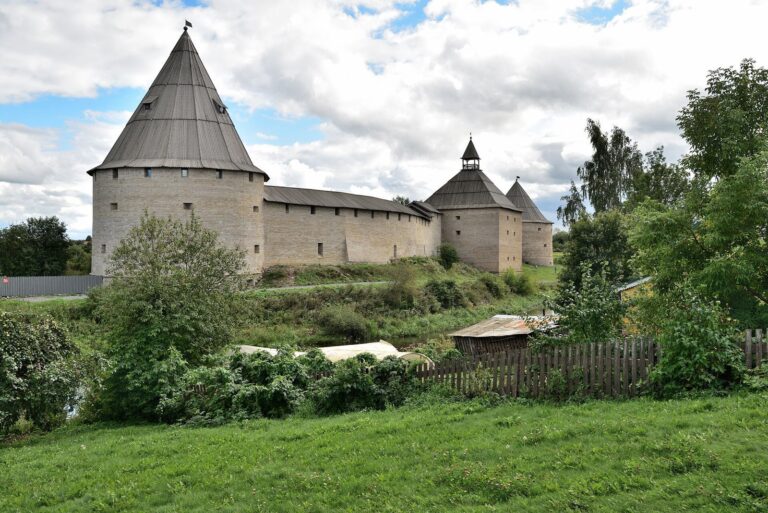
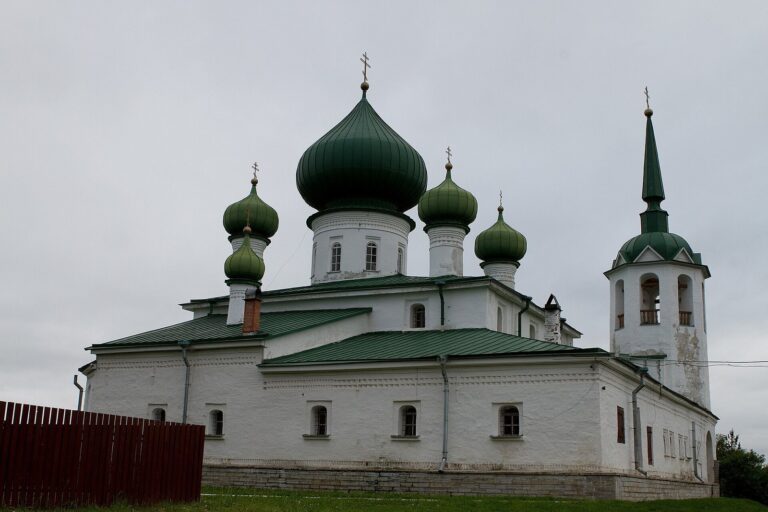
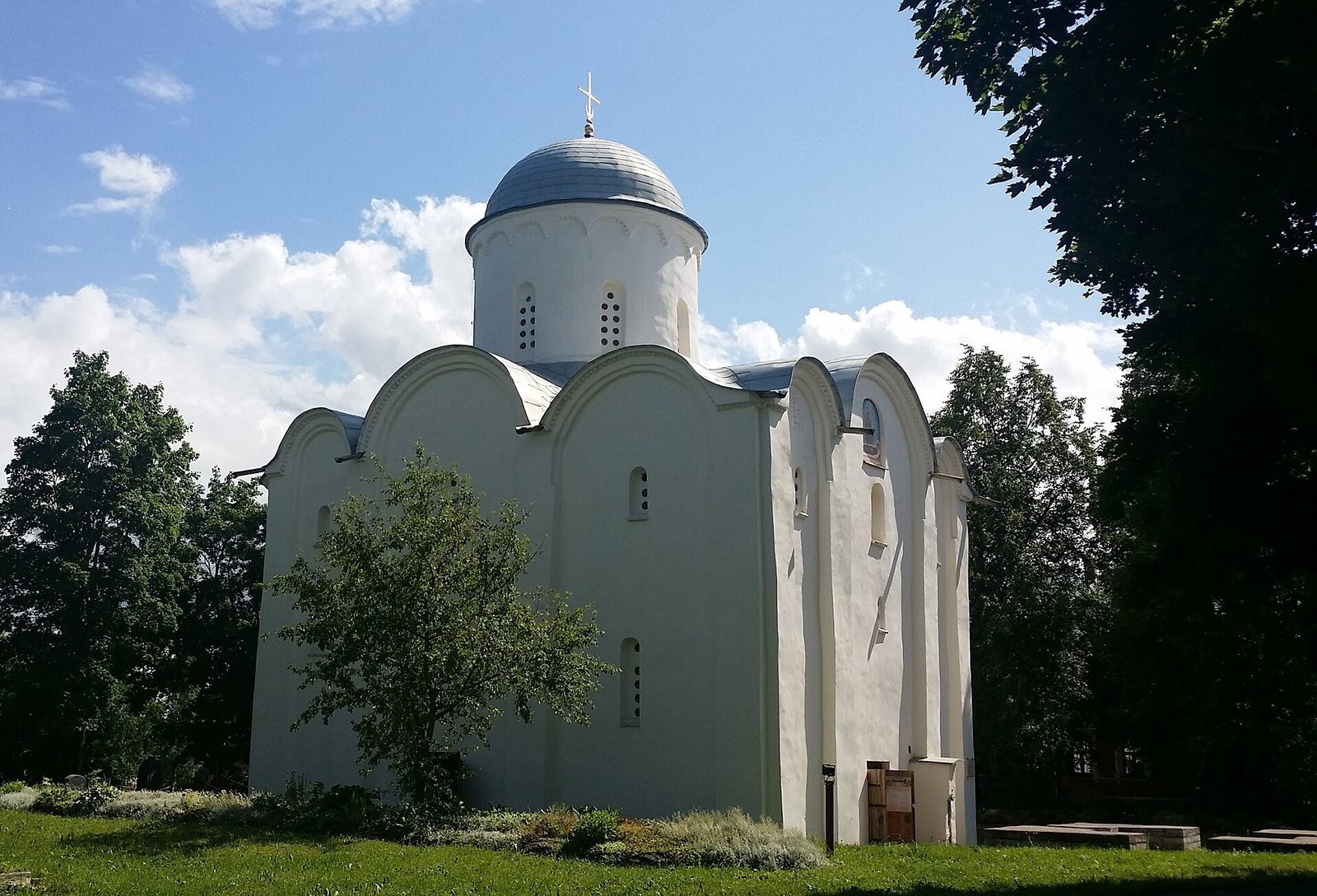
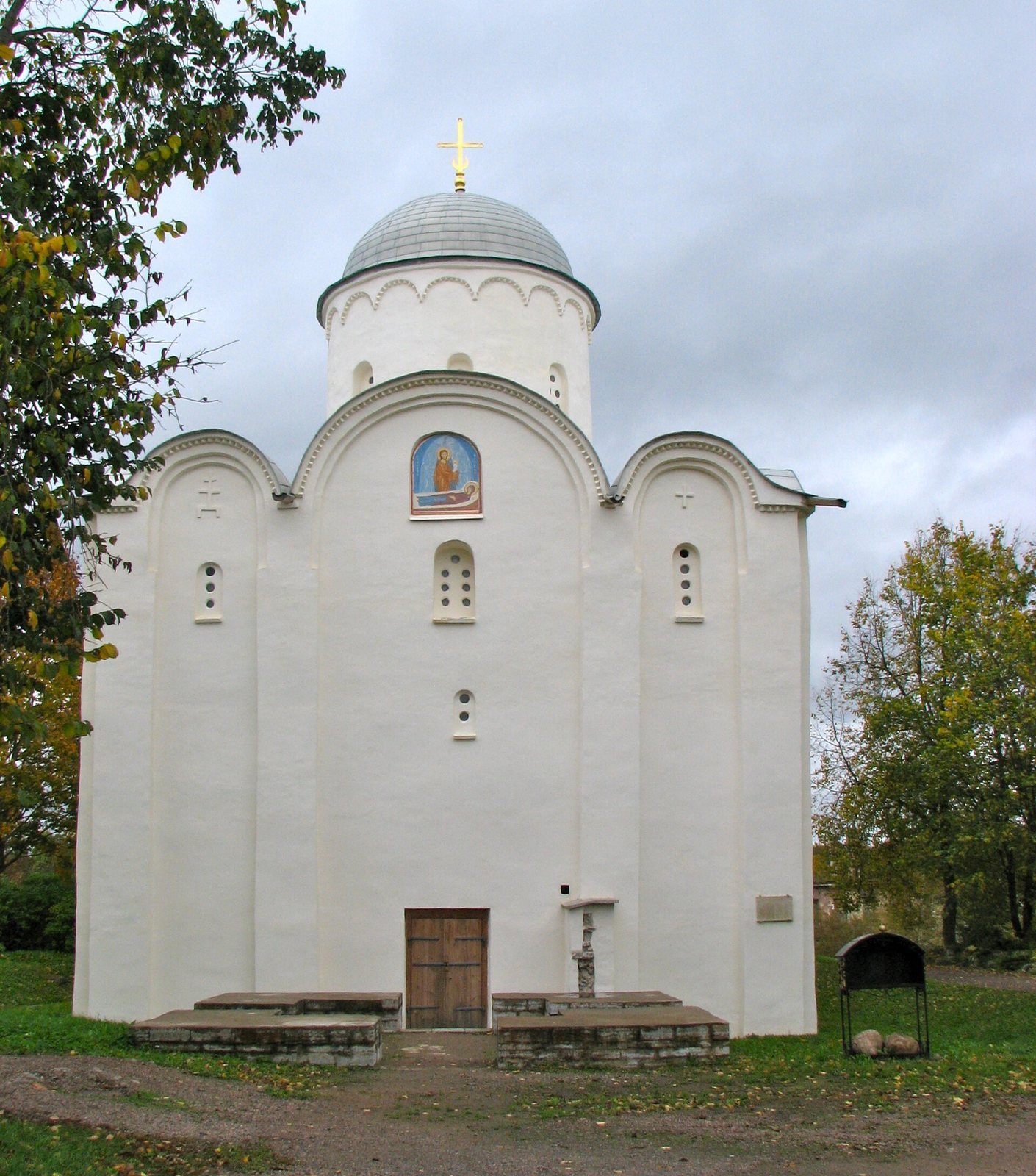
The monastery stands on the left bank of the Volkhov River, north of Staraya Ladoga Fortress. Its principal building is the Cathedral of the Dormition of the Mother of God, dated to 1154–1159. It is the northernmost church of pre-Mongol Rus, the medieval East Slavic lands before the Mongol invasions of the thirteenth century. The cathedral’s interior once held mid-twelfth-century frescoes. Surviving fragments come from the apses, or semicircular sanctuary ends, as well as the edges of windows and the pillars. They vary in size, shape, and condition.
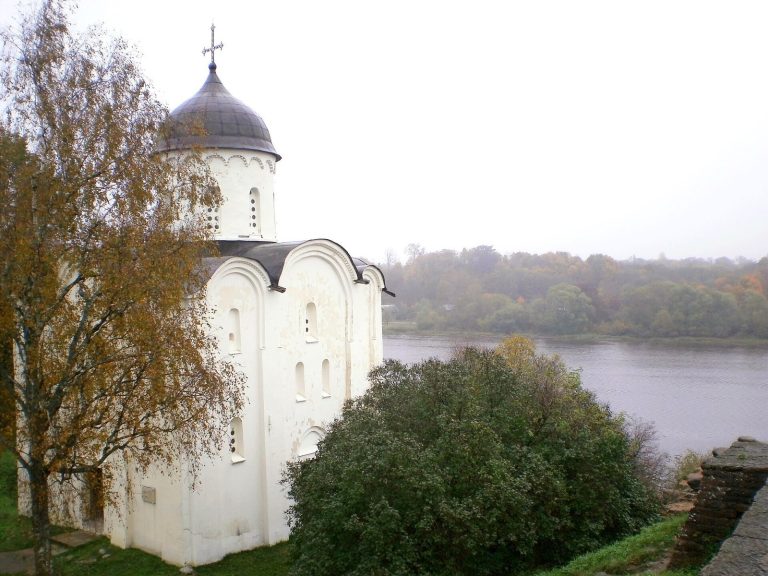
Fresco restoration has continued over many years. Work in 2004 uncovered and partly restored about 50 square metres of fragments, alongside material found earlier, including in 1980. Many fragments are now held by the Russian Museum or museums in Novgorod. Their style has been linked with ensembles in Novgorod and Staraya Ladoga from the first half of the twelfth century. Comparisons with paintings in other buildings, particularly the nearby Church of St George, have also informed efforts to explore virtual reconstructions.
Enclosure and nineteenth-century buildings
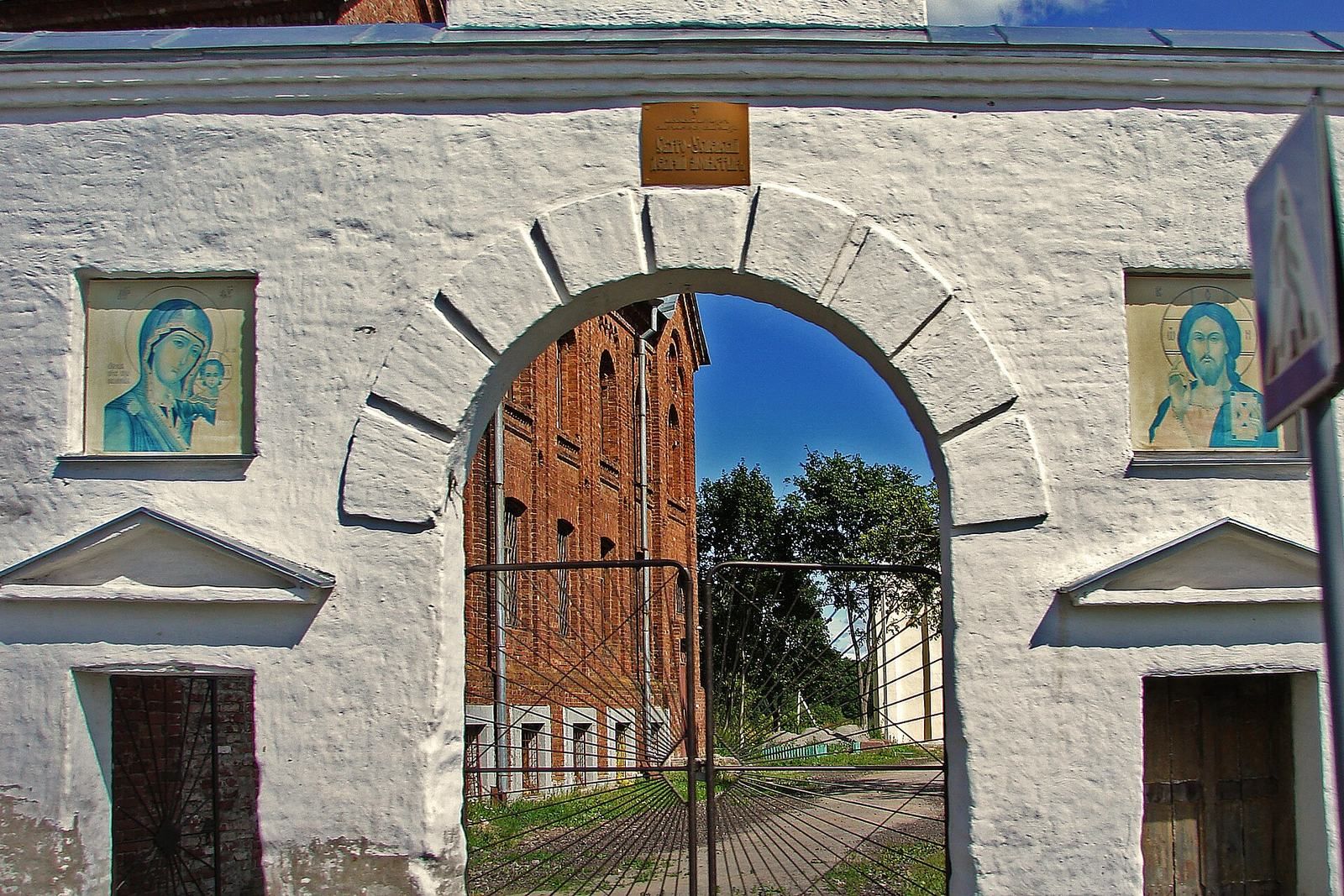
The monastery ensemble includes other churches, substantially rebuilt over time, and an enclosure that survives in part. The cathedral and enclosure have both undergone repeated restoration. The western entrance included the Holy Gates, the formal entrance to a religious enclosure.
Living quarters and service buildings
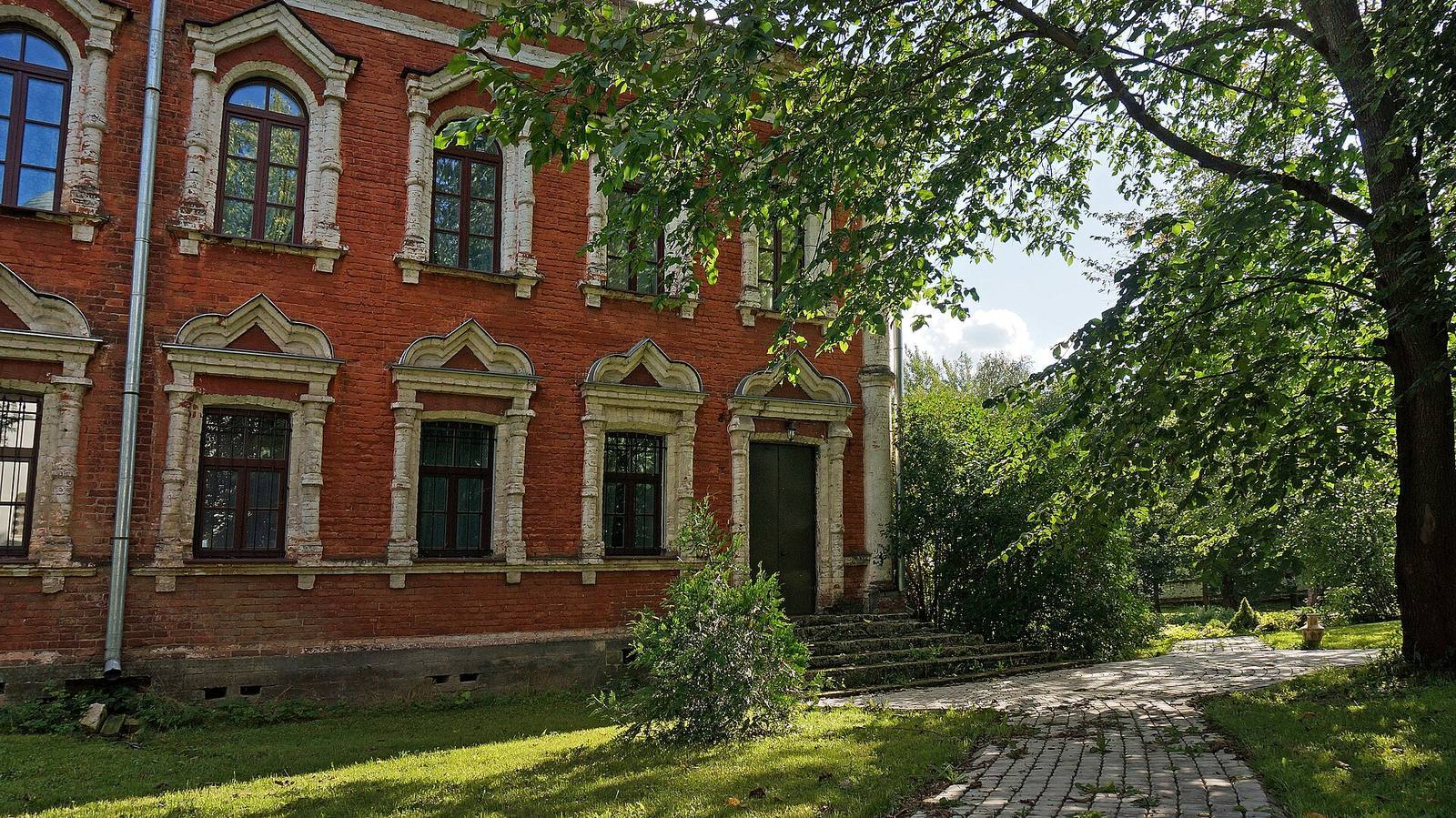
A nineteenth-century building group included a two-storey block of monastic cells beside the Volkhov, a refectory, or communal dining hall, and buildings for a carriage shed, stable, laundry, and bathhouse.
Hospital and church
A two-storey hospital building with the Church of the Exaltation of the Cross was built in 1862. The church is dedicated to the Christian feast honouring the cross. The building’s first floor contained 20 cells for elderly sisters.
Wooden houses and grounds beyond the enclosure
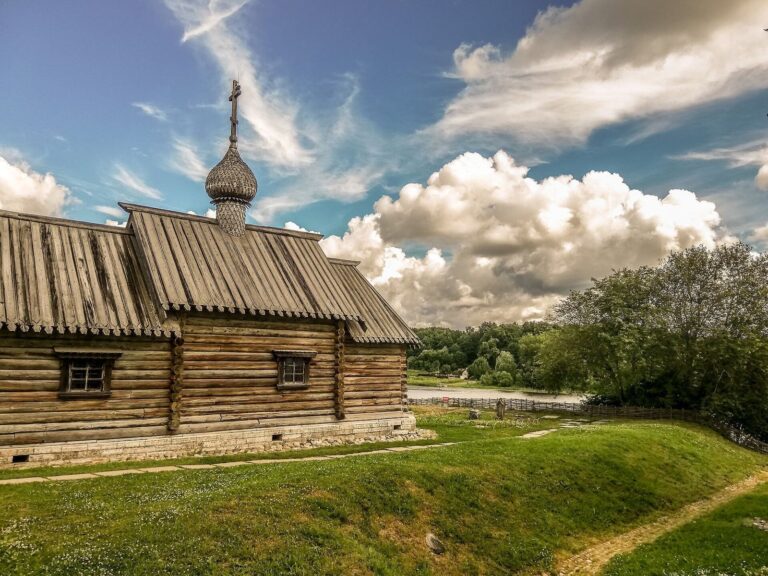
More than fifteen separate wooden houses stood within the stone enclosure. Outside it were a cemetery church dedicated to Saint Alexius, the Man of God, and a two-storey wooden guesthouse. A pier on the Volkhov was funded by the monastery. The monastery’s courtyard outbuildings currently house a hospital.