Church of Constantine and Helena: A Medieval Orthodox Church at Mangup
Site at a Glance
- Popularity
- Very Low
- Country
- Ukraine
- Primary era
- Medieval
- Eras represented
- Medieval
- Civilizations
- Byzantine
- Site type
- Religious
- Remains
- Church
On this page10 sections
History
Foundation and medieval use
The Orthodox Church of Constantine and Helena was a medieval church in Doros (Mangup), on the Mangup plateau in Crimea, Ukraine. Historian V. V. Latyshev associated its date with 1427, based on a Greek inscription. The church belonged to the Diocese of Gothia, an ecclesiastical jurisdiction in medieval Crimea. Its dedication honored Constantine I, the Roman emperor, and his mother Helena, both venerated as saints in Eastern Christianity and honored as “equal to the apostles.”
The inscription names Alexios as ruler of Theodoro and Pomorie and as the church’s founder or patron. Theodoro was a medieval principality in Crimea. The inscription gives October and the sixth indiction, a year in a recurring fifteen-year dating cycle.
Mangup fell in 1475, after which the church was destroyed. It was later restored and continued in use into the seventeenth century. It is regarded as the last Christian church on Mangup to remain in operation.
Later records and inscription history
In 1578, Polish diplomat Martin Broniewski described two Greek churches remaining at Mangup, one dedicated to Constantine and the other to Saint George. He considered both to be in poor condition. The church also appears on plans of Mangup made by Russian topographers in the 1780s, among three churches identified as Greek or Christian.
The early history of the inscribed marble slab is uncertain. It was thought to have been found between 1803 and 1805, and P. I. Sumarokov published it first. A. L. Berthier-Delagarde argued that Sumarokov had seen it after it was taken out of the church, since its detailed drawing could not have been made while it remained set in a wall. Information passed by P. I. Keppen from I. A. Stempkovsky placed the slab at Inkerman before it was taken to the estate of Taurida governor A. M. Borozdin.
Remains
Church and associated remains
Plan and walls
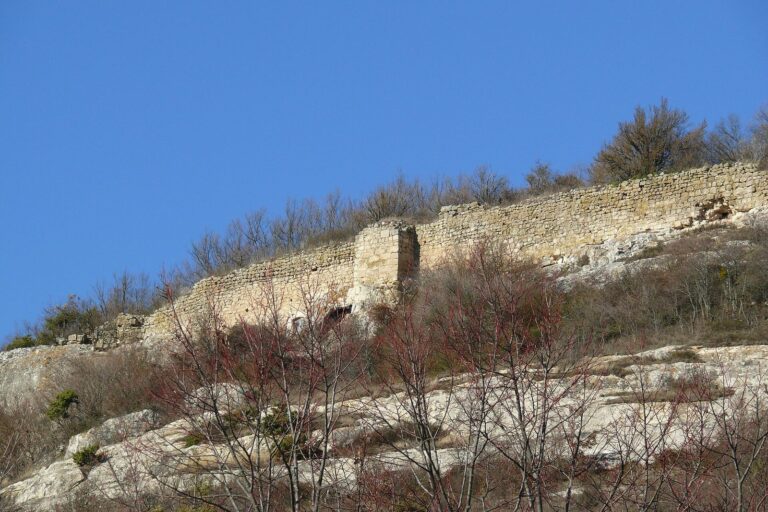
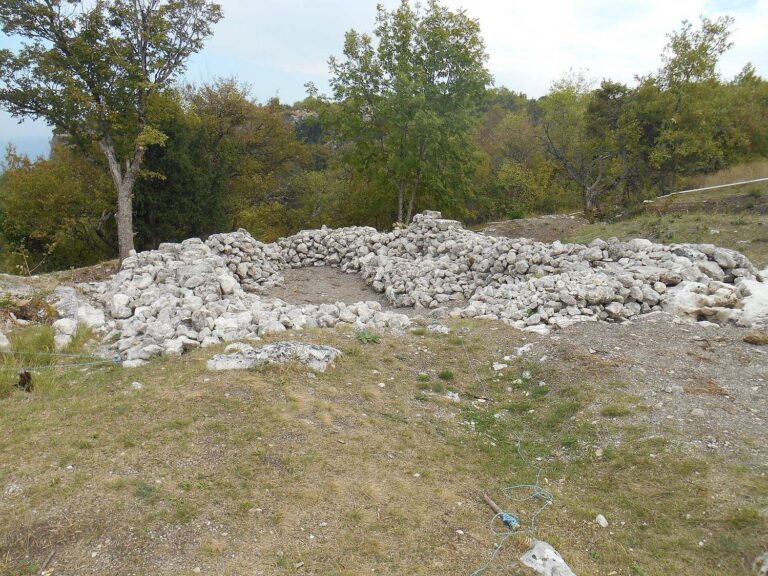
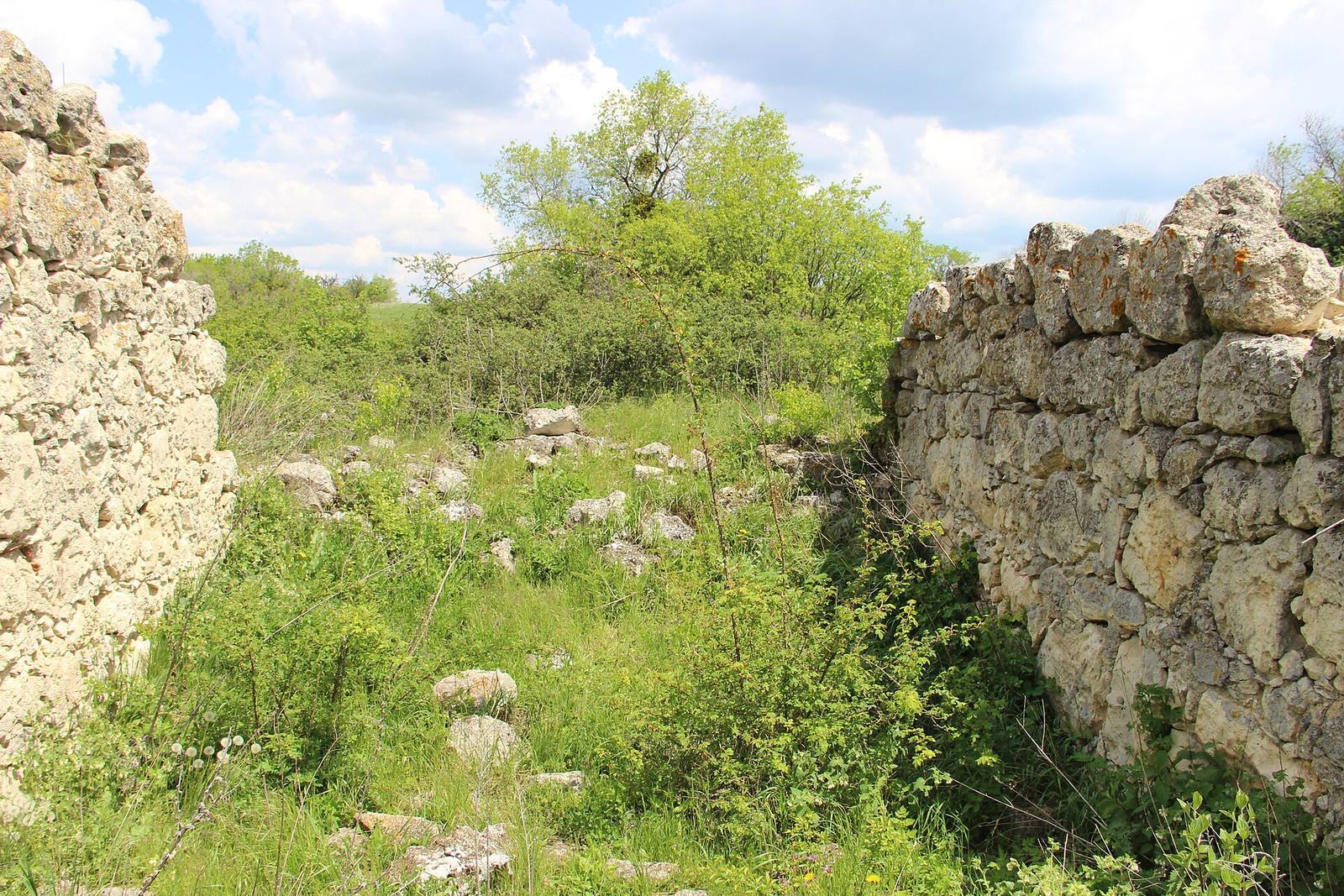
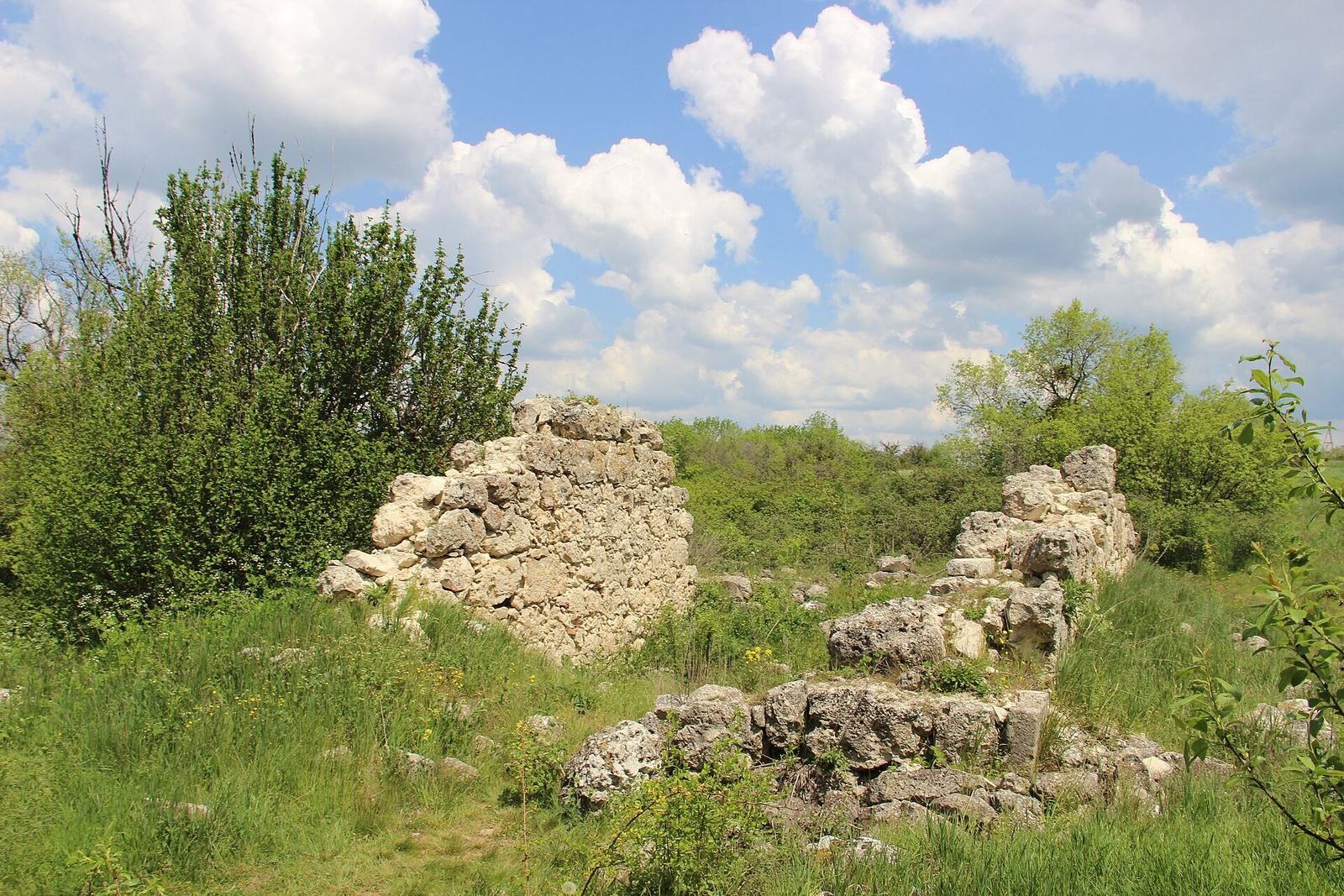
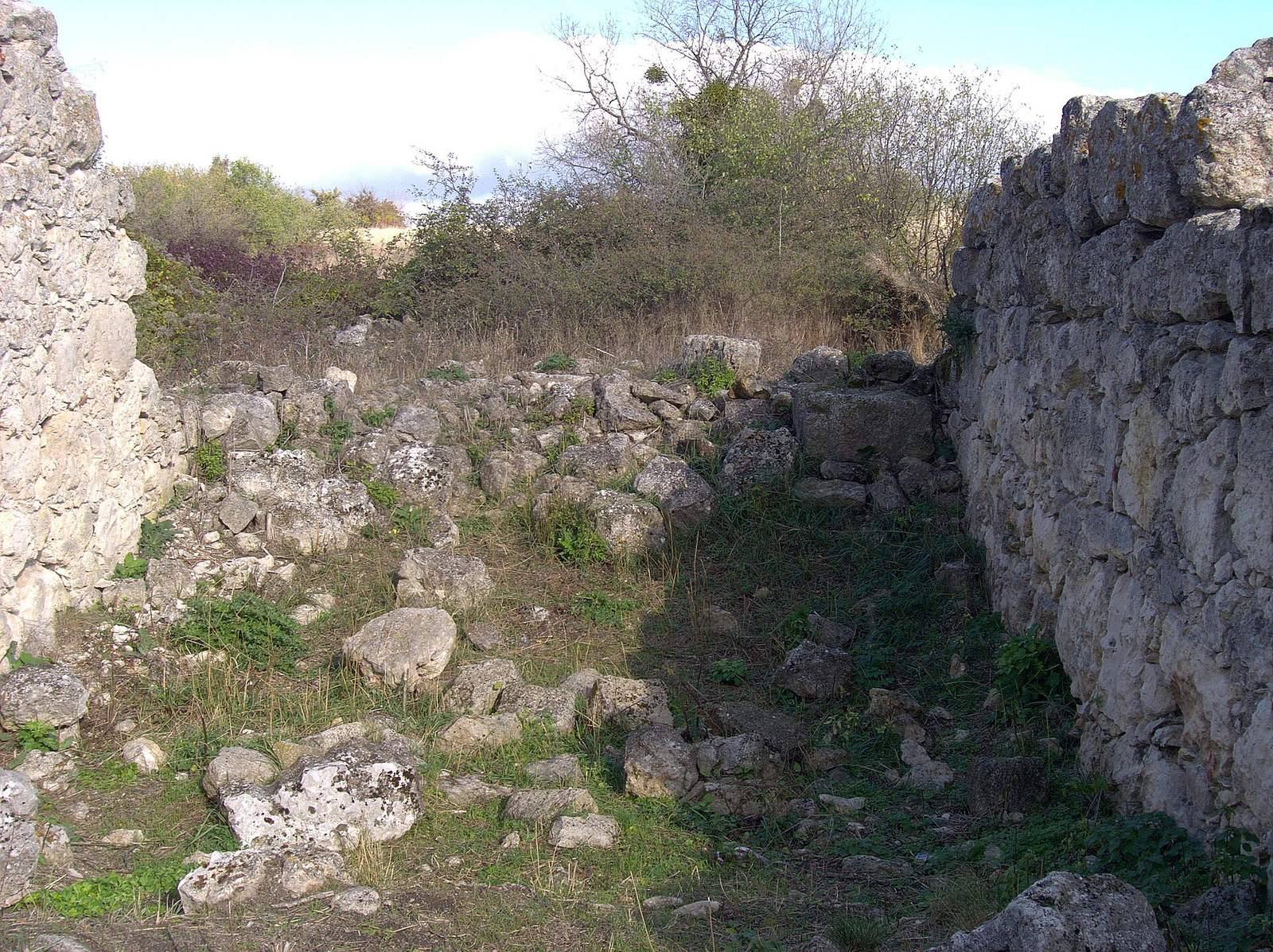
The church occupied a central part of the Mangup plateau near the upper end of a ravine. It was a single-nave basilica, a church centered on one long main space, measuring 7.3 by 4.5 metres. Its ruined walls reach about 2 metres in height in places.
Burials
A total of 175 burials have been found within and around the church. Their presence suggests that it may have served as a cemetery church.
White-marble inscription slab
A white-marble slab bearing a Greek inscription measured about 43.3 centimetres high and 131.1 centimetres wide. Its text describes a fortress as blessed and visible at the time.
Inscribed slab from a tower
In 1890, F. A. Brown found a marble slab built into one of Mangup’s towers. Removing it revealed fragments of a Greek inscription, attributed to the church and dated to the late fourteenth or early fifteenth century.
Wall paintings
Wall paintings showing saints were described in 1793. The image of Mary, the mother of Jesus in Christian belief, was singled out for its quality.