Palace Varano Dotti: A Renaissance Palace in Ferrara
Site at a Glance
- Popularity
- Very Low
- Country
- Italy
- Primary era
- Early Modern
- Eras represented
- Early Modern, Modern
- Civilizations
- Duchy of Ferrara, Papal States
- Site type
- Domestic
- Remains
- Elite Residence
On this page4 sections
History
Palace Varano Dotti is a sixteenth-century Renaissance palace in Ferrara, Italy, built for the Cortili family. It stands in an area developed through the Addizione Erculea, a major expansion of Ferrara undertaken under Duke Ercole I d’Este in the late fifteenth century.
Ownership later passed from the Cortili family to the Villafuora family and then to the Dotti family. The Arlotti and Da Varano families also owned the palace, though their places in the succession are unclear.
The Ferrarese poet Alfonso Varano lived in the palace and died there in 1788. He is especially remembered for his twelve Sacred and Moral Visions, composed in terza rima, a linked three-line rhyme form associated with Dante.
Remains
Plan and exterior
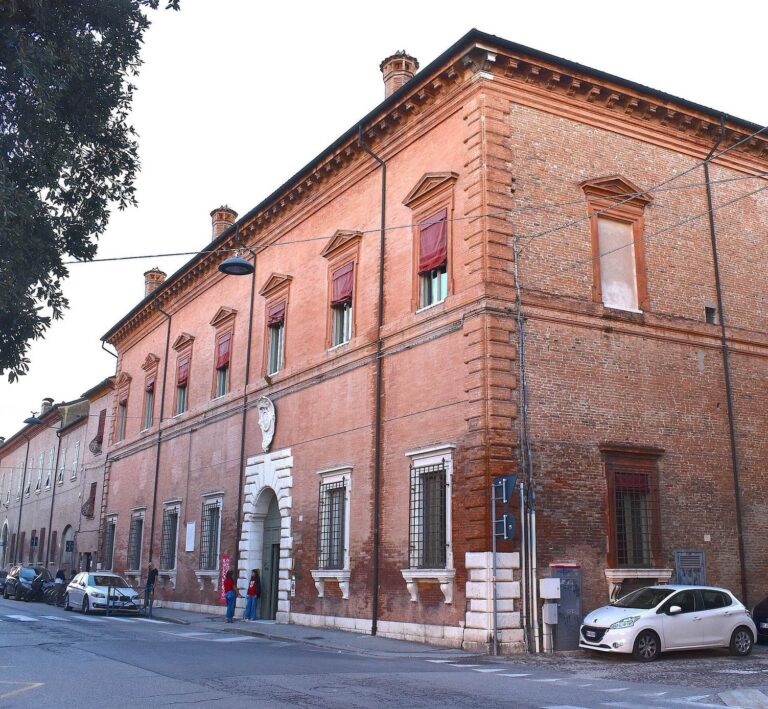
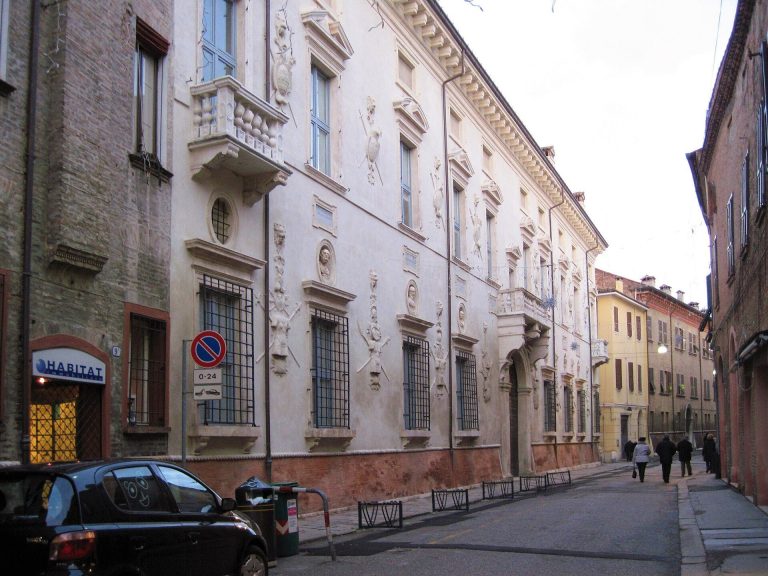
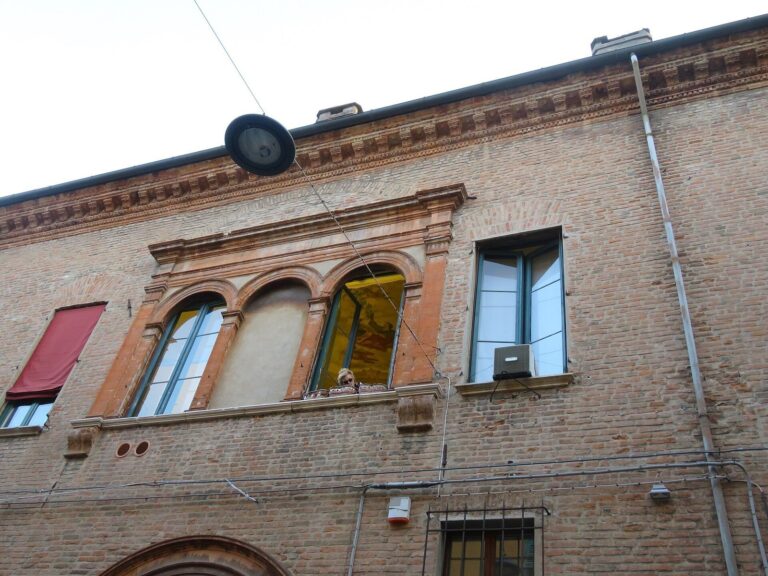
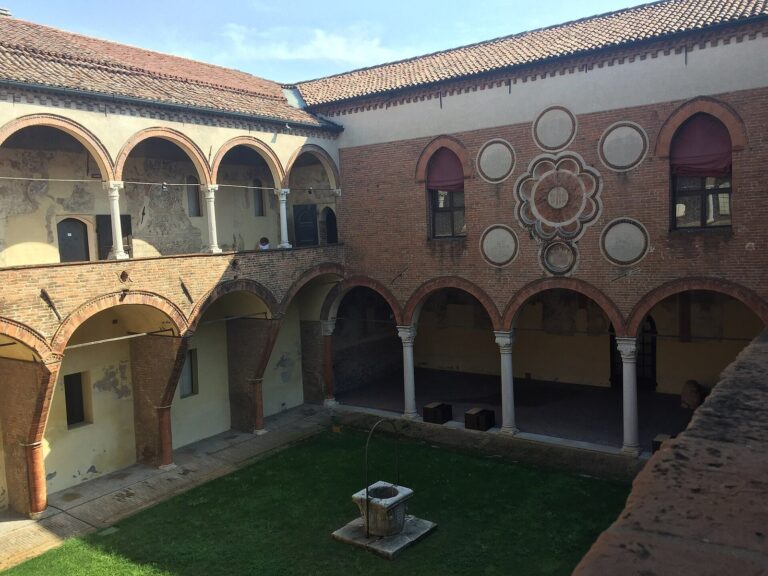
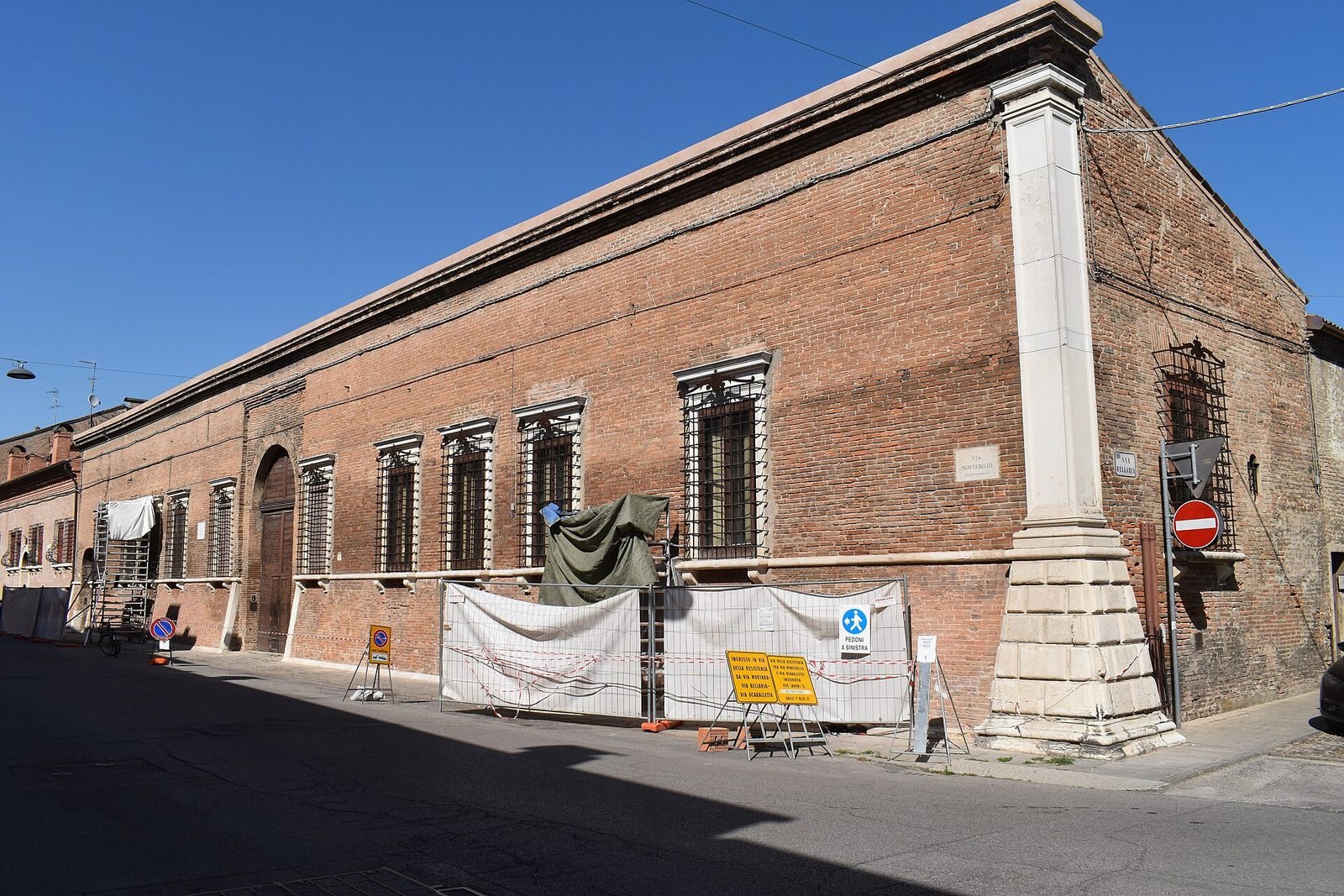
The palace has a central rectangular block flanked by two symmetrical wings. Its main façade on Via Montebello features a tall, round-arched portal built in characteristic Ferrara brick. The windows have slightly projecting white-stone frames, and a banded molding finishes the façade. At the corner with Via Bellaria, a flat, column-like strip of white marble has a projecting section of rough-faced stone. The portal opens into a vaulted passage leading to an inner courtyard, where the secondary façade stands. The walled courtyard gives access to a small park and exemplifies metaphysical Ferrarese Renaissance architecture, in which abstract geometry and enclosed spaces create an enigmatic, dreamlike effect.
Interior spaces
From the entrance, access leads to the large central hall and the building’s single raised level. The hall has a wooden ceiling divided into panels and decorated in several colors. Rooms and salons to the right have richly frescoed ceilings and stucco ornament. Myth-inspired frescoes in the salon are attributed to the school of Francesco Migliari, a nineteenth-century painter active in Ferrara. The attribution connects the work with his artistic tradition rather than identifying him as its individual painter. A distinctive octagonal bedroom is another feature of the palace.